Backup Power at Home: A Household Guide
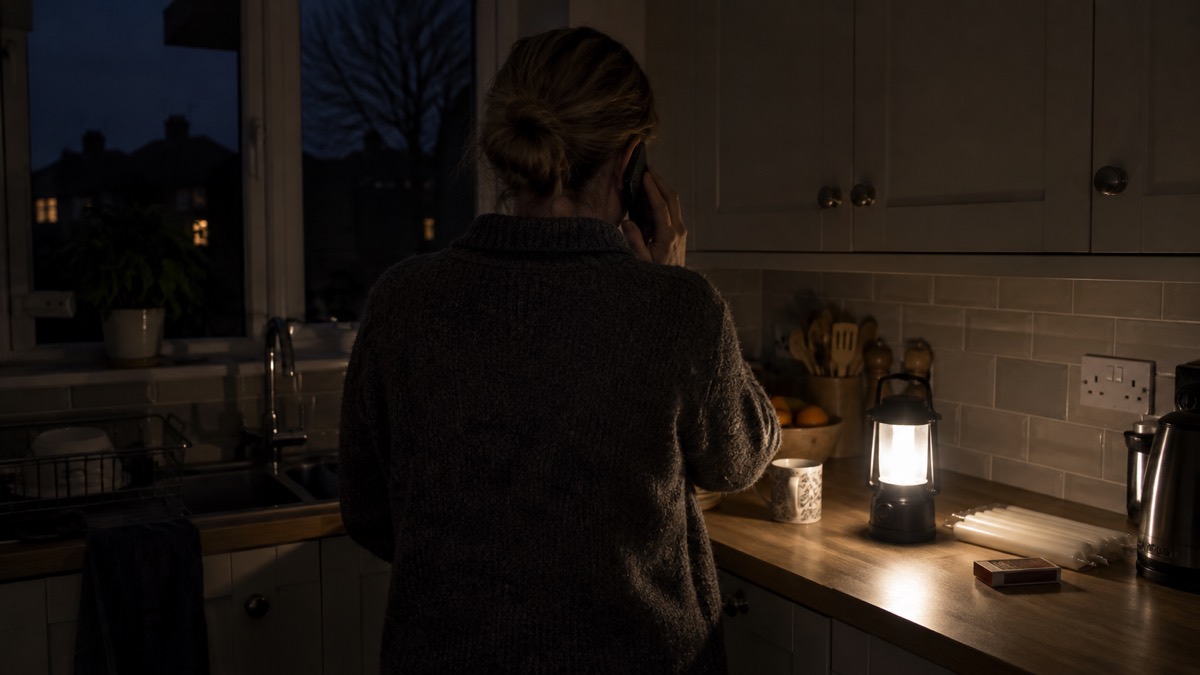
When the power goes off, first establish whether the problem is inside your home or affects the wider network. Check the trip switch near your electricity meter. If it is still on, contact your electricity network operator; if it has switched off, follow the official reset procedure, unplugging appliances if it trips again. For a wider cut, call 105 or use the Power Cut website to find the operator for your area.1
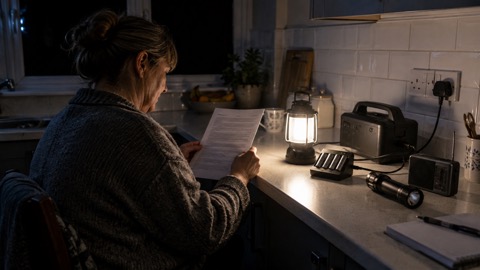
While you wait, keep fridge and freezer doors closed, switch off appliances such as straighteners and stoves, check on vulnerable neighbours and leave one light on so you know when the supply returns.3 For backup power, start with the essentials: a charged power bank for phones or compatible medical devices, reliable lighting, a radio and a battery backup for essential medical equipment.4
What to do first when the power goes off
Work through the immediate checks before setting up backup equipment. This avoids treating a tripped circuit as a network failure and reduces the chance of appliances coming back on unattended.
- Check your trip switch. It is part of the circuit-breaker fuse system near your electricity meter. If it is still on, call your electricity network operator. If it is off, switch it back on; if it switches off again, unplug all appliances and reset it. If only part of the supply has failed and the trip will not reset, contact a registered electrician.1
- Report a wider outage. Call 105 or visit the Power Cut website to be directed to the operator for your area. Use the power cuts guide to check reporting and restoration information.2
- Make the home safe. The Met Office advises switching off electrical appliances that should not be left unattended, leaving a light on and checking on neighbours.9
- Protect food and warmth. Keep fridge and freezer doors closed, and keep blankets and thick jumpers available. Tell a friend or neighbour if you are anxious.3
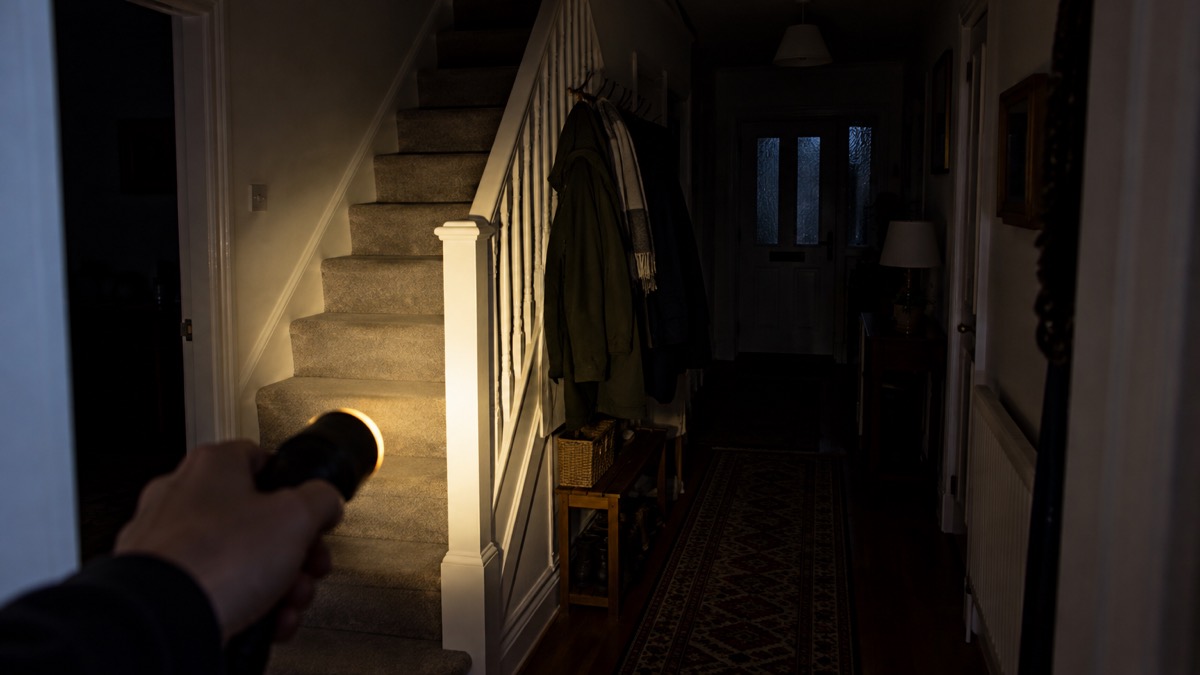
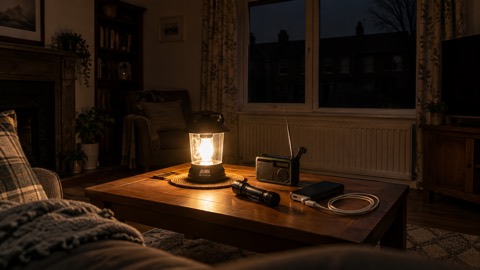
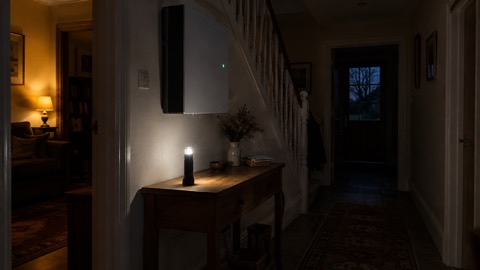
- Use safe lighting first. Make torches, lanterns and head torches your first light source. The emergency lighting guide covers these options and why candles present a fire risk when the power is off.
Keep away from hazards such as damaged power lines. Official guidance warns that electricity at high voltages can jump gaps without warning.5 If the loss of power follows flooding, turn off the electricity until a qualified electrician or utility company has checked all switches, sockets and appliances. Use a circuit breaker with electrical equipment used in or to clean and repair the property.10
Deciding what to keep running
Start with consequences rather than with a piece of kit. A phone that lets you receive updates, a medical device someone depends on and food that must stay cold present different needs. The guide to deciding what to keep running helps put those needs in order before you compare equipment.
| Household need | First provision to consider |
|---|---|
| Phone and compatible medical-device charging | A charged power bank4 |
| News and official updates | A battery or wind-up radio, trying both digital and FM stations |
| Essential medical equipment | A battery backup so it can continue during the outage8 |
| Food in the fridge or freezer | Keep the doors closed to protect the temperature3 |
| Winter health | Charged devices, a torch, spare batteries and written telephone numbers11 |
Ready Scotland advises using a battery-powered or wind-up radio during an outage and trying both digital and FM stations.12 Keep a wind-up or battery FM radio with spare batteries at home, because updates may be given on the radio.6
Once you know what matters, check the electrical demands before assuming one battery can cover everything. Watts, watt-hours and surge are the measurements that decide whether an appliance can be powered and for how long. This is particularly important where equipment starts with a higher demand than it uses while running. Avoid adding appliances merely because a backup output is available: the purpose is to keep essential services going, not to reproduce normal household electricity use.
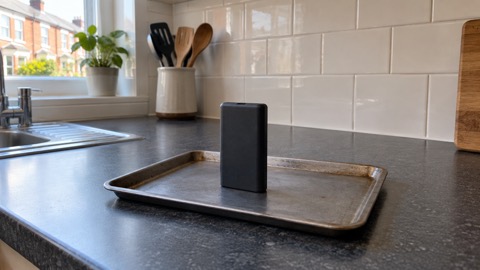
Power banks for phones and small devices
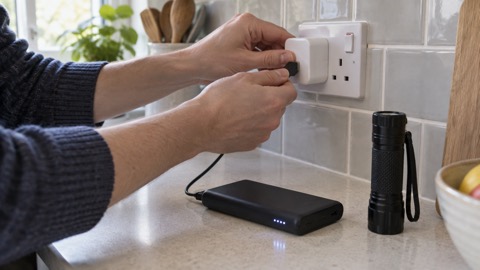
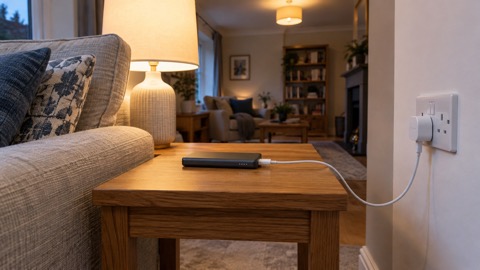
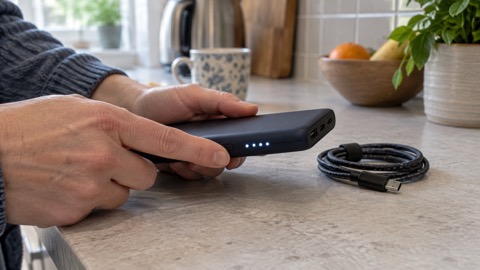
A power bank is the straightforward backup to keep charged for a phone, tablet or other compatible device. Official preparedness advice also includes compatible medical devices, but the device requirements still need to be checked.4 Keep important telephone numbers on paper as well: a charged phone is less useful if its battery runs out before you can retrieve a stored contact.11
- Keep the power bank fully charged and available rather than packed away.8
- Store a torch and spare batteries alongside it.11
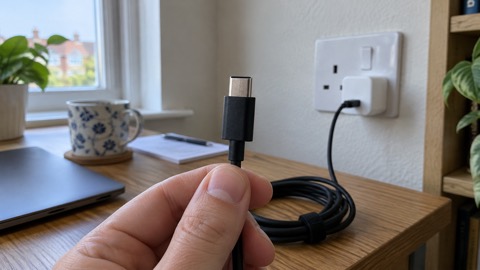
- Check cables and charging compatibility before an outage.
- Use Power Banks: Keeping Phones Charged in an Emergency for the detailed choices and USB-C charging for connectors and power delivery.
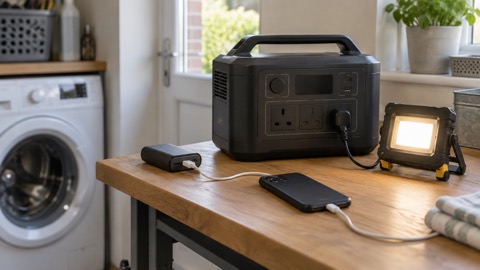
- Compare the two scales of equipment in Power Bank or Portable Power Station before relying on either for more than small devices.
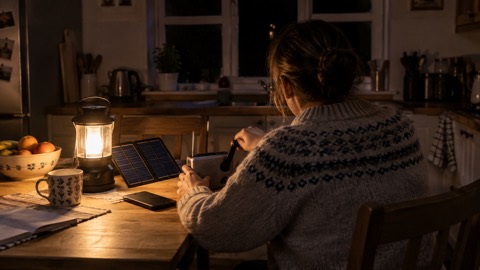
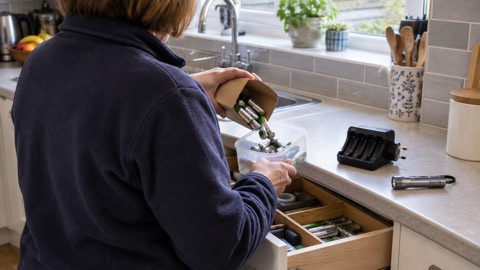
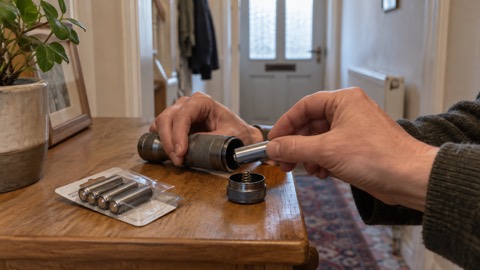
For radios, torches and other small battery-powered equipment, rechargeable AA and AAA batteries may form part of the same kit. Wind-up and small solar chargers are another subject to consider for phones and radios, alongside a conventional radio with spare batteries. Do not leave all your communications dependent on one phone or one charging accessory.
What a portable power station can run
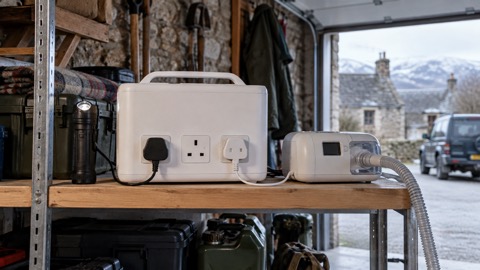
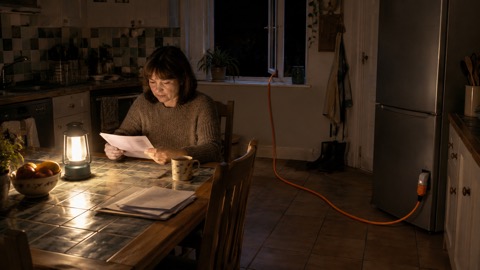
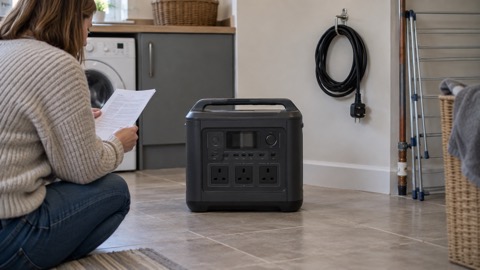
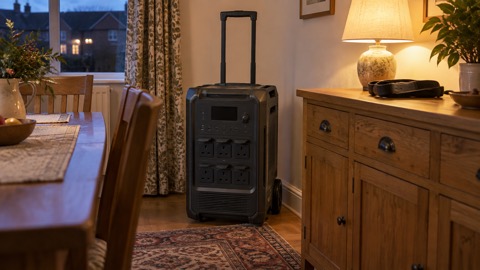
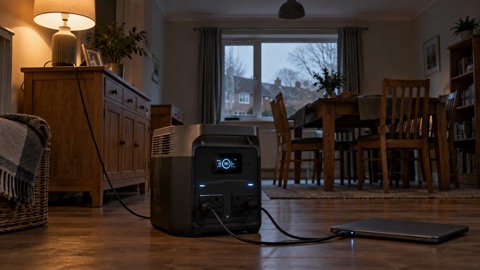
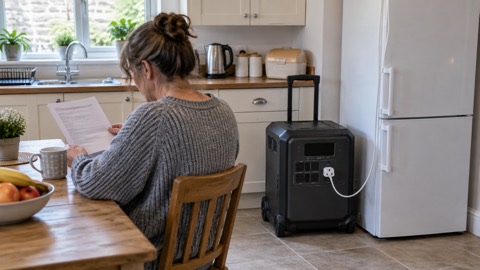
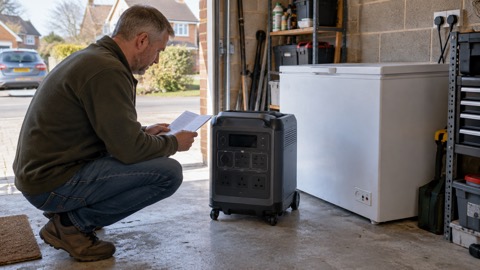
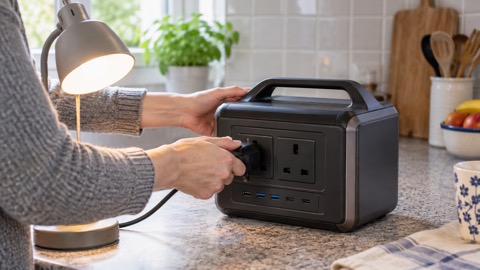
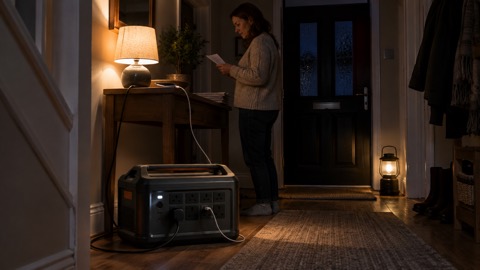
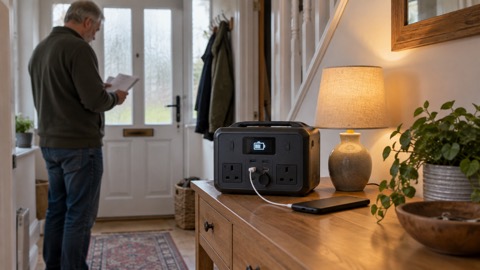
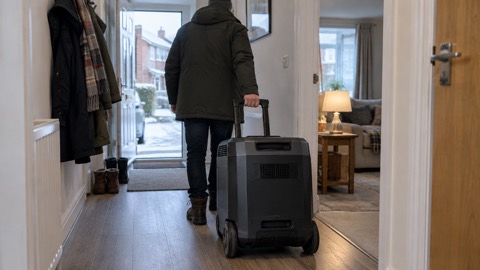
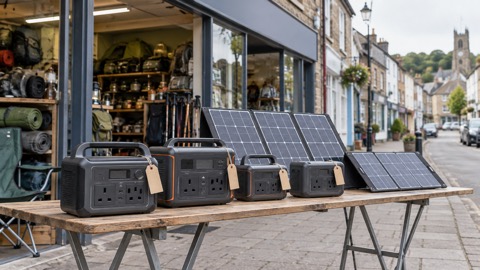
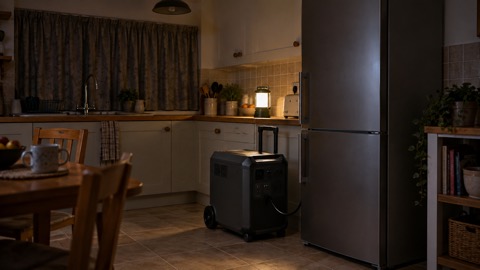
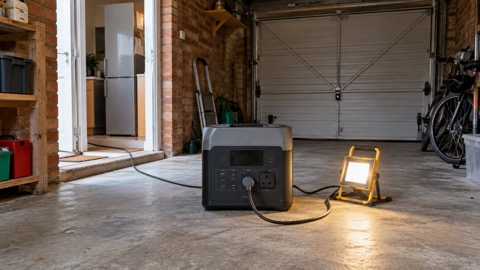
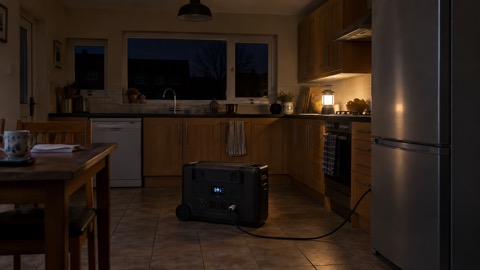
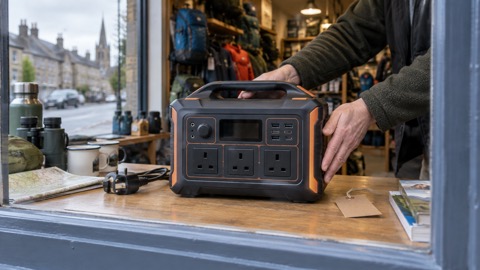
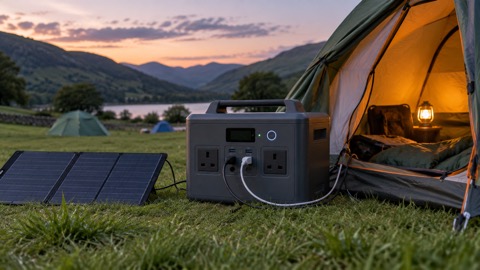
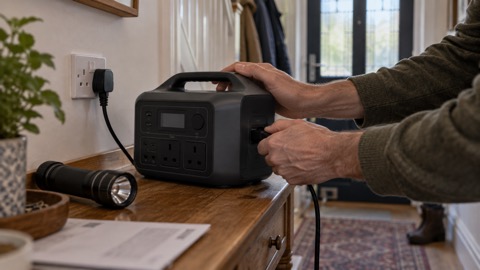
A portable power station should be matched to named appliances, not chosen on the assumption that “home backup” means the whole home. Check the appliance demand, starting surge, battery capacity and expected runtime. The portable power station guide explains the options, while capacity sizing and runtime for a fridge or laptop deal with the detailed calculations.
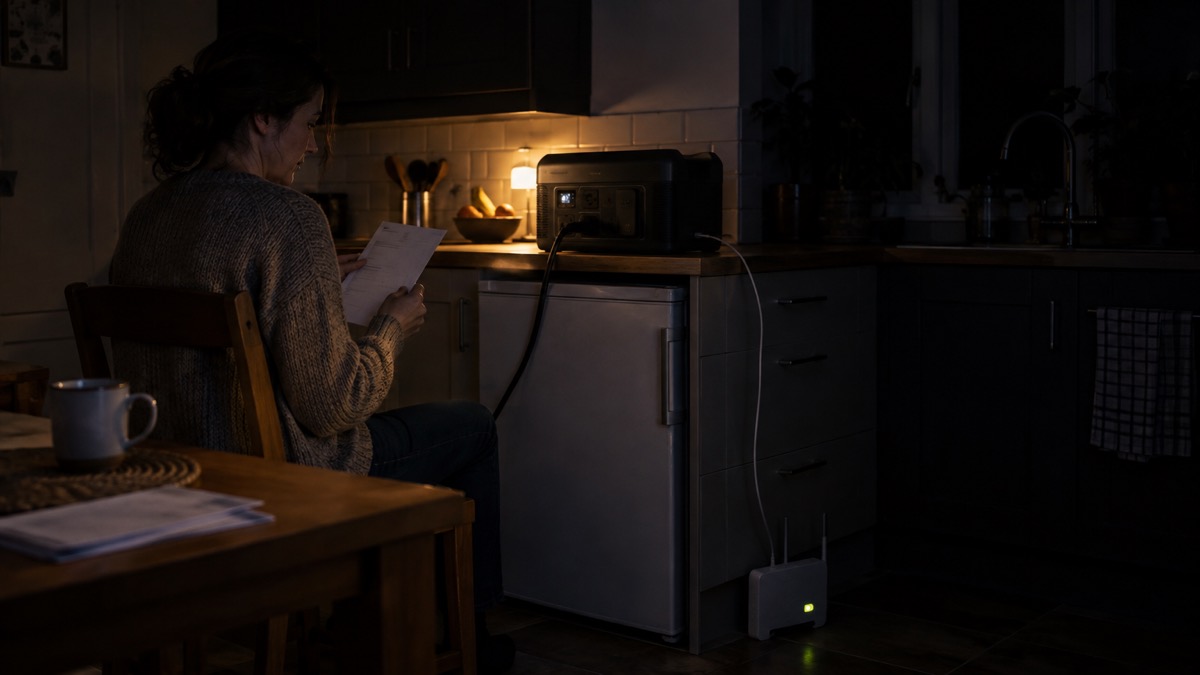
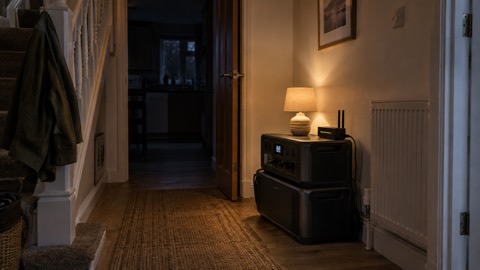
One example shows why the maker's exact wording matters. Fogstar describes one of its portable power stations as providing high-capacity LiFePO4 power for home backup, off-grid systems, campervans, workshops and mobile energy applications. The maker also lists UPS/EPS backup functionality to support backup power during mains interruptions.13
| Question before relying on a station | Where to check |
|---|---|
| Can it cover the appliances on my priority list? | Watts, watt-hours and surge |
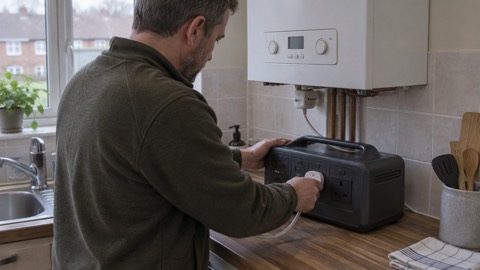
| Can it run a gas boiler? | Gas boilers in a power cut |
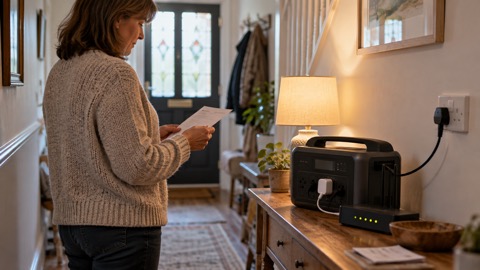
| What does its backup switchover do? | Using a power station as a UPS |
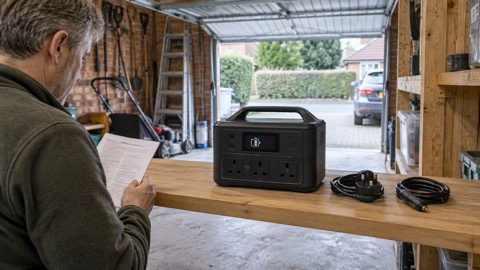
| How should it be kept between outages? | Power station storage |
| How should leads and connected loads be managed? | Extension leads and overloading |
The maker's intended uses and UPS/EPS statement do not establish a runtime for your own appliances. Treat those as separate checks, especially for medical equipment and heating controls.
Recharging from solar or the car
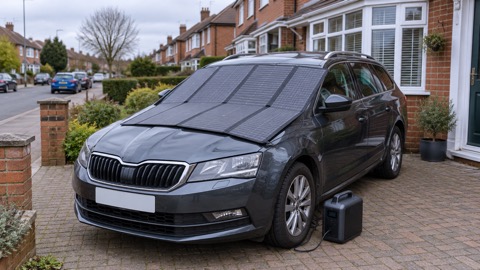
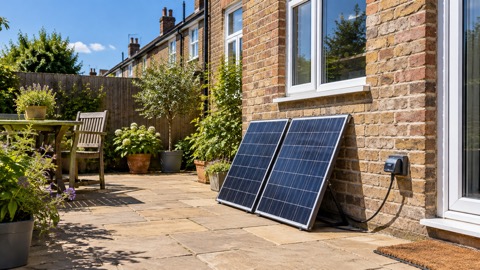
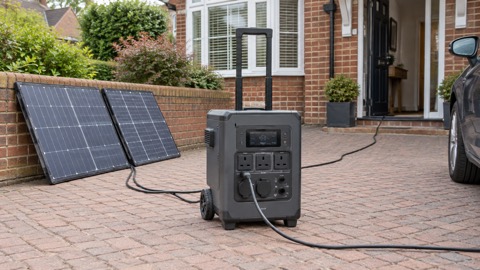
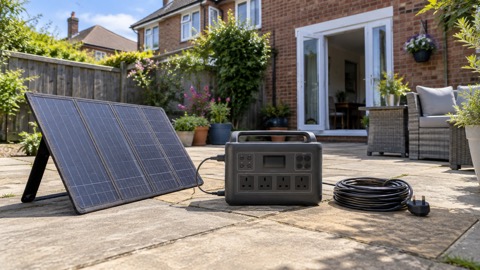
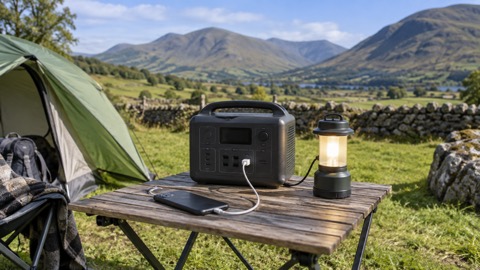
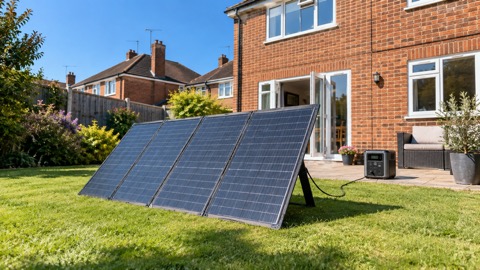
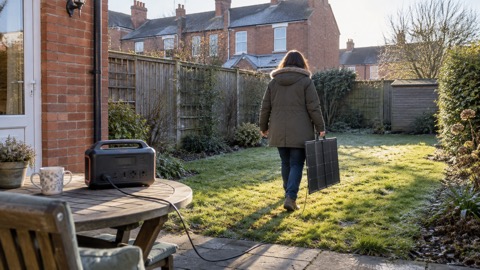
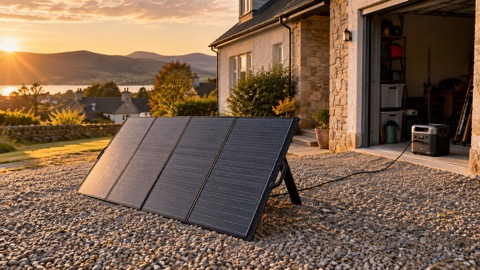
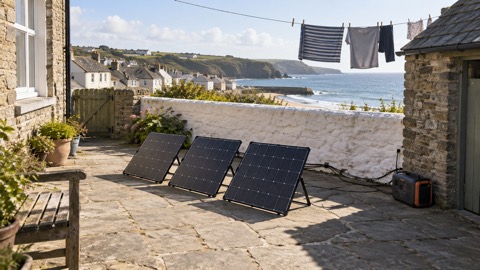
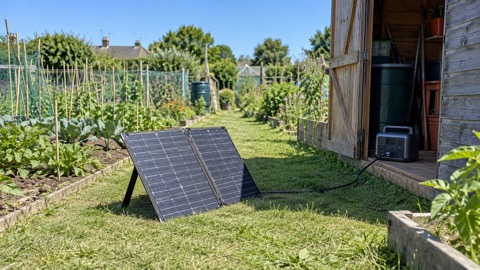
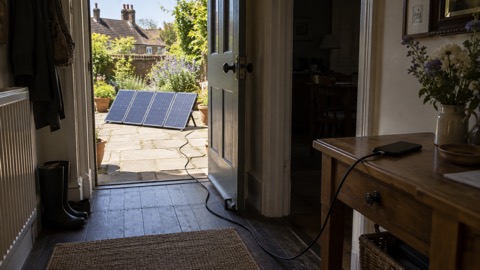
Solar and vehicle charging can be part of a plan, but neither should be assumed to work with every installation or power station. Start by distinguishing fixed rooftop solar from a portable panel used to charge a battery.
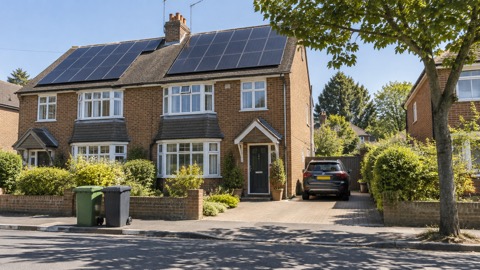
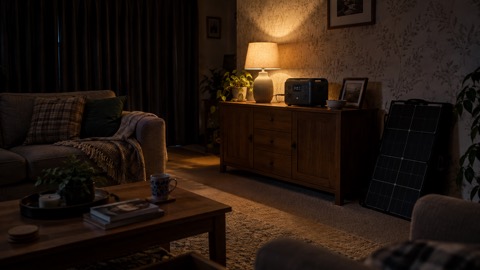
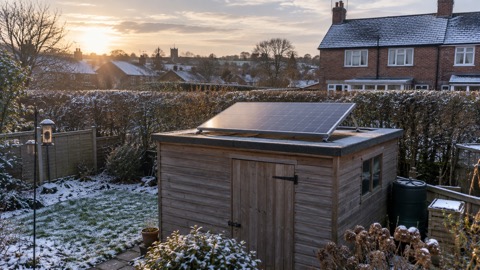
Official guidance says that some solar-panel and battery-storage installations with power backup capability can continue providing power during a cut if they are designed and configured to operate independently of the electricity grid. This may help keep essential appliances running.14 It does not mean that every home solar system supplies power when the grid fails. Do home solar panels work in a power cut? examines that distinction, and home battery storage looks at whether a battery keeps the lights on.
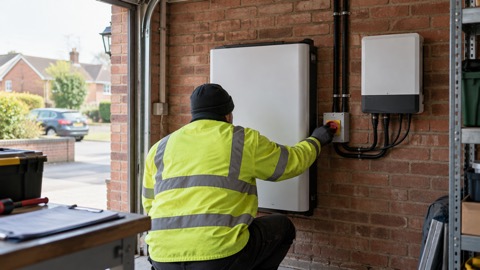
For a domestic battery, the Centre for Alternative Technology says the best setup, environmentally and financially, allows charging from the grid as well as from solar panels, and exporting from the battery to the grid during chosen periods.15 That is a fixed-storage consideration, separate from emergency charging with portable equipment.
| Charging route | What to establish before relying on it |
|---|---|
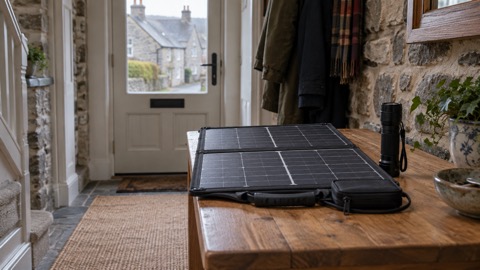
| Portable solar panel | Panel and power-station compatibility, using the portable solar guide |
| Solar charging duration | Panel size and UK charging conditions, covered in panel sizing and charging time |
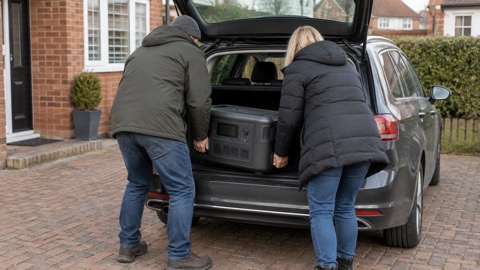
| Car charging | The specific station and vehicle arrangement, covered in charging from your car |
| Running mains equipment from a 12V source | The separate role of a 12V inverter and a suitable leisure or LiFePO4 battery |
Keeping the router and landline working
A digital landline or broadband router needs a power arrangement if you want it to remain usable during a cut. Keep a charged mobile phone and written emergency numbers as alternatives, and use the staying informed guide to plan communications beyond the broadband connection.
The landline rules depend on the customer and service:
| Situation | Official position |
|---|---|
| A landline will not work during a power cut | The provider might offer a free solution, such as a backup battery unit, for a minimum of one hour so emergency calls can be made.14 |
| A vulnerable customer has an analogue landline | The communication provider must provide a free backup battery unit. The landline would work for at least an hour, and many batteries now last much longer.6 |
Ask your landline provider which arrangement applies before an outage. The minimum one-hour provision is not a promise that every call service, router or connected handset will run for the same period without its own power arrangements.
Keep a battery or wind-up radio for updates rather than relying solely on internet access.6 Agree what will happen if somebody who needs support cannot be reached: official advice suggests arranging for you or another trusted person to visit in person if an outage happens and you cannot call.4
Power station or generator
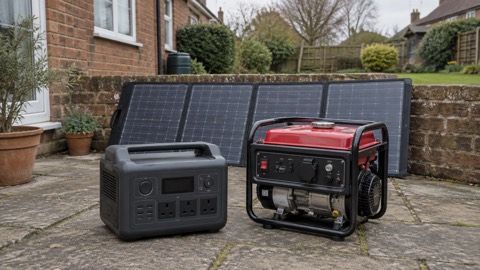
The choice starts with the load, the setting and the safety arrangements. A power station may be described by its maker for home backup and mains-interruption support, while official flood-property advice says you may need a backup generator for an electric pump if there are power cuts.13 Neither statement makes one option suitable for every household.
| Consideration | Portable power station | Portable generator |
|---|---|---|
| Supported use in this guide | The Fogstar maker lists home backup and UPS/EPS functionality.13 | Official guidance identifies possible backup for an electric pump.16 |
| What must be checked | Appliance demand, capacity, runtime and switchover | Appliance demand, safe outdoor operation and the electrical connection |
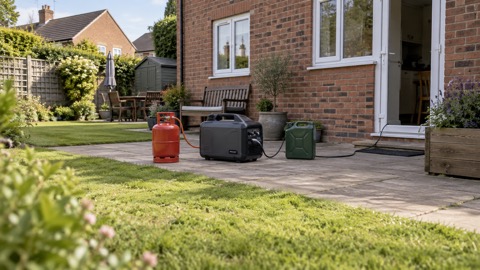
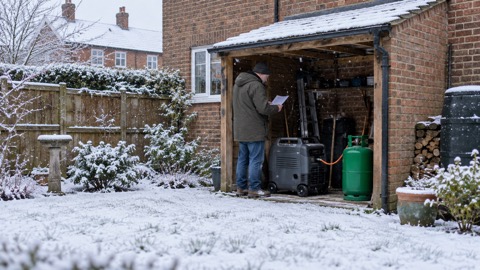
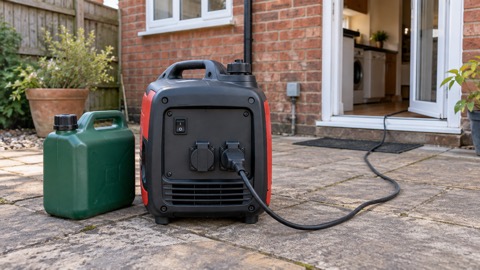
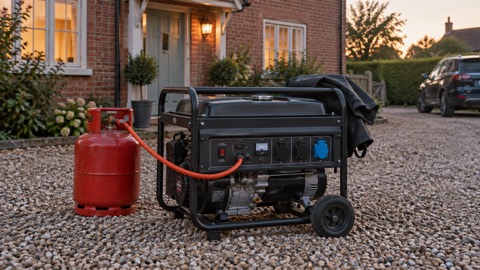
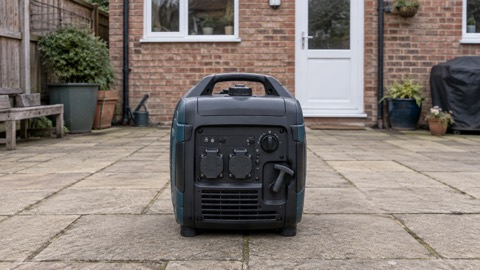
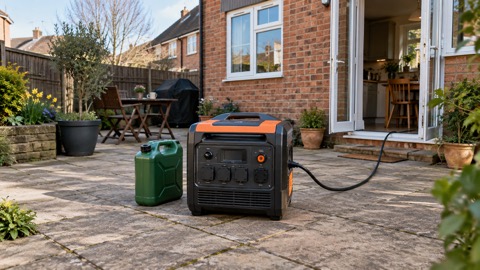
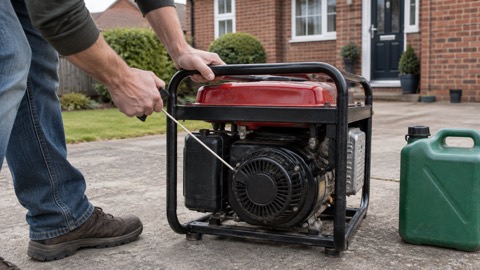
| Main safety boundary | Battery condition and safe charging | Keep outside, refuel outside and do not connect it directly to the home7 |
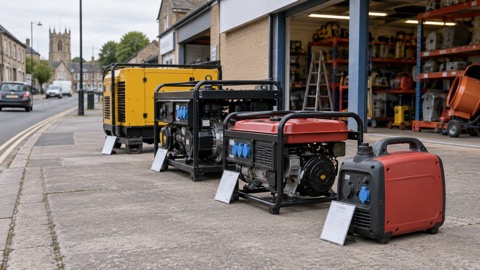
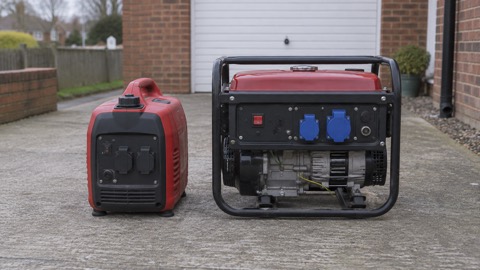
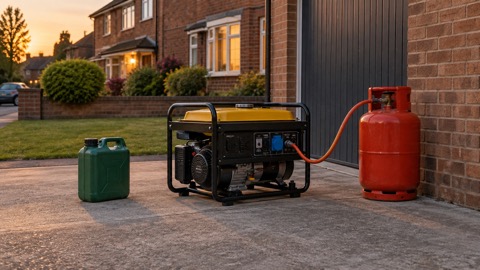
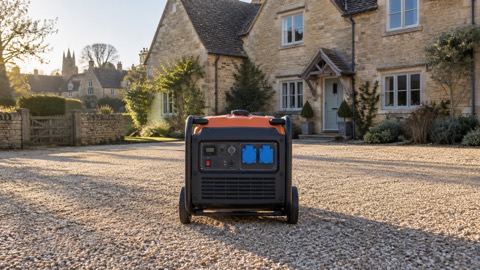
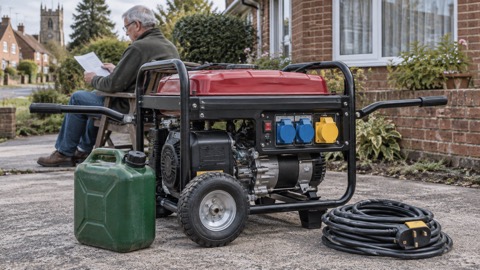
Use Portable Power Station or Petrol Generator for the full comparison. The generator types guide covers petrol, diesel, dual-fuel and inverter models, while generator sizing and runtime on a tank address the load and operating questions.
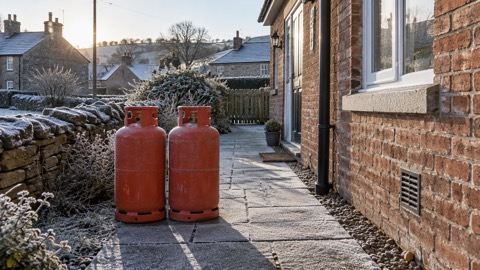
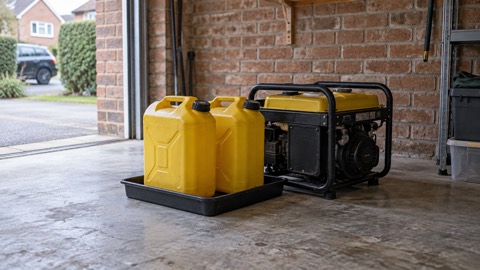
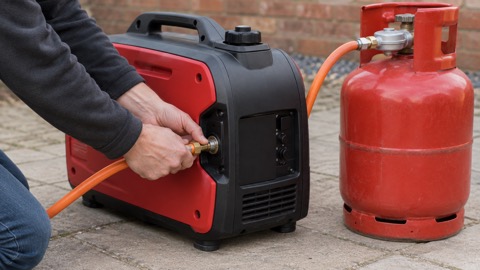
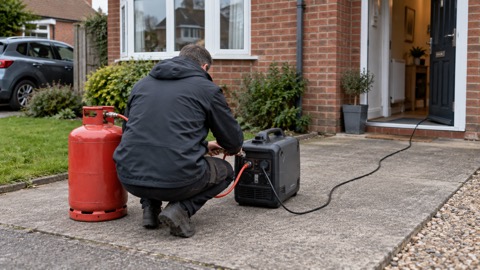
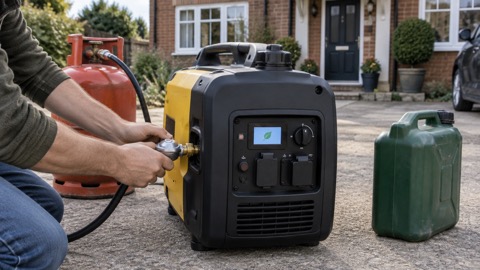
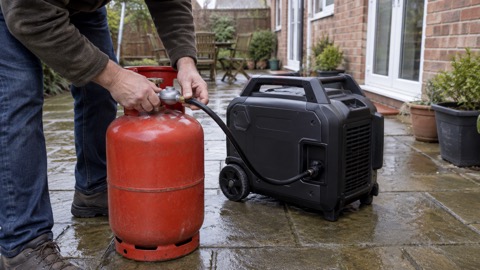
If fuel forms part of the plan, read the specific guidance on petrol storage, diesel storage and LPG cylinders and regulators. Do not let the availability of a generator lead to an unsafe indoor setup or an improvised connection to household wiring.
Using a generator safely
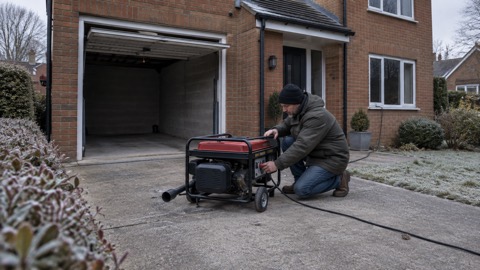
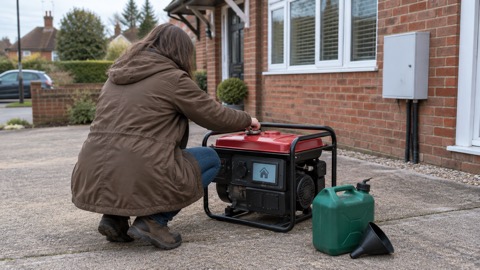
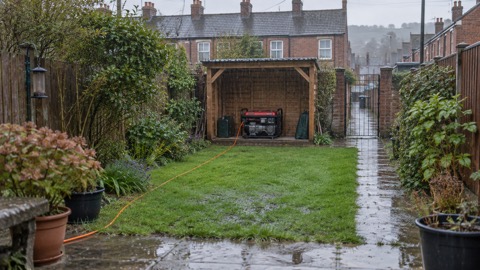
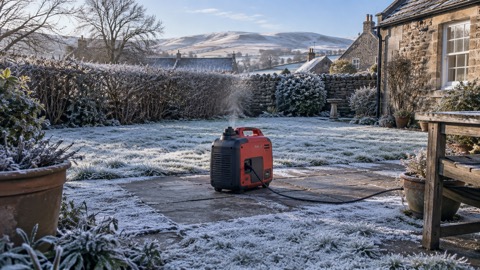
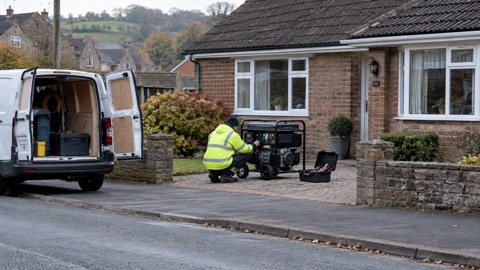
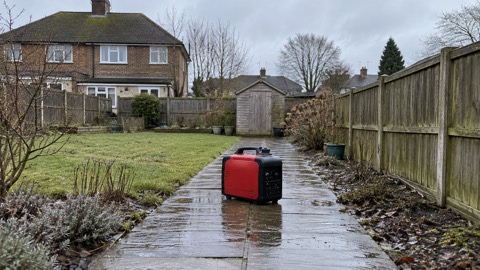
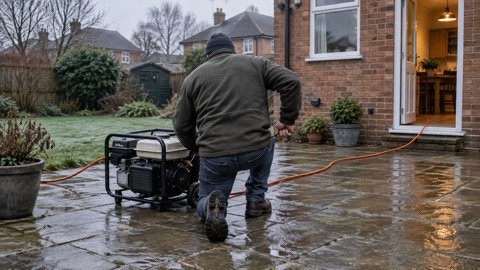
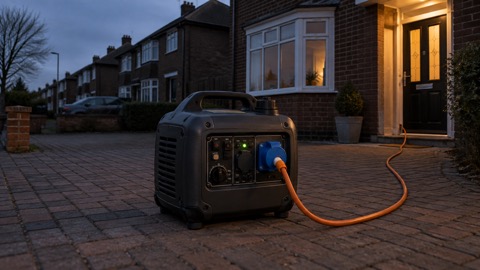
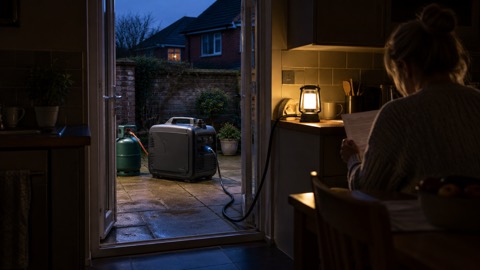
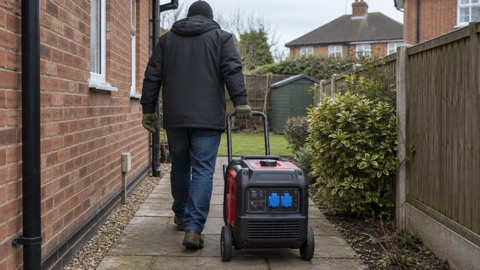
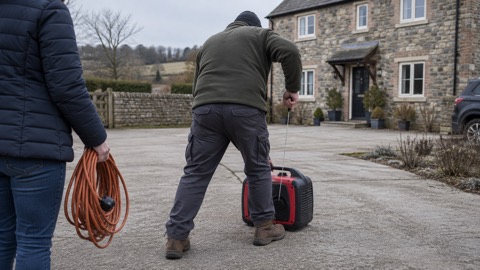
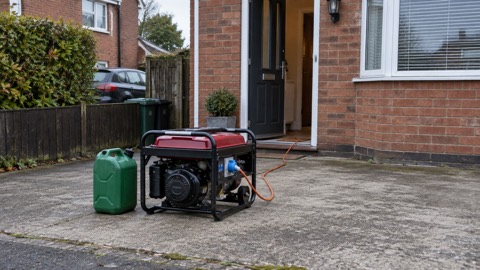
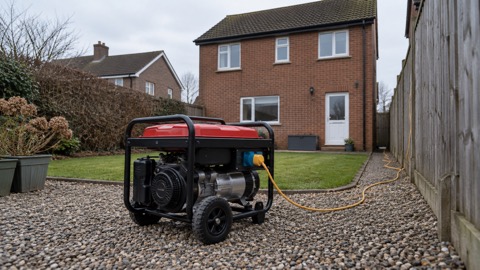
The Health and Safety Executive for Northern Ireland gives two direct instructions: “Keep your generator outside your home and fuel your generator outside.” It also warns that connecting the generator to your home could cause an electrical surge resulting in injury or death to you or your family.7
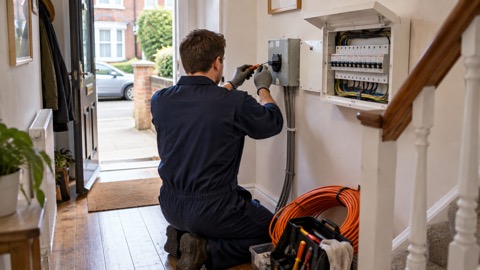
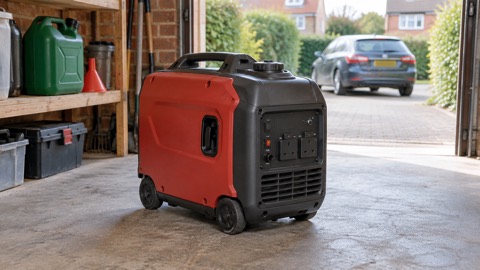
Read generator safety, running a generator indoors or in a garage and connecting backup power to the home before setting up this kind of backup.
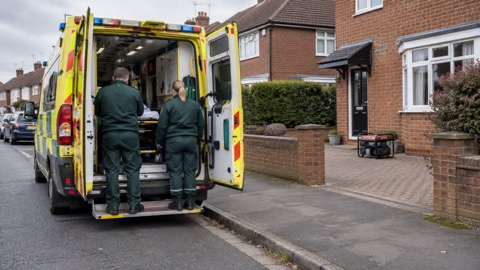
Carbon monoxide is the other central danger. The Health and Safety Executive describes it as a colourless, odourless, tasteless, poisonous gas and warns that levels can quickly kill without warning. Early symptoms include drowsiness, headaches, breathlessness and nausea.17 Cornwall Fire and Rescue Service states: “You can’t see it, taste it or smell it, but CO can kill quickly without warning.”18 The generator carbon monoxide guide covers the warning signs in more detail.
Mid and West Wales Fire and Rescue Service identifies these risk factors around fuel-burning appliances:
- incorrect or bad installation;
- no annual safety check and service;
- a blocked chimney or flue, or one that has not been swept regularly;
- no audible, working carbon monoxide alarm.19
Warning signs around appliances can include yellow or orange rather than blue flames, soot or yellow-brown staining, pilot lights that frequently blow out and increased condensation inside windows.17
Belfast City Council advises switching off the appliance immediately and opening a window or going outside if you suspect fumes. Do not use the appliance again until a registered engineer has tested it, and do not sleep in a room where you think carbon monoxide fumes are present.20
Lithium battery safety at home
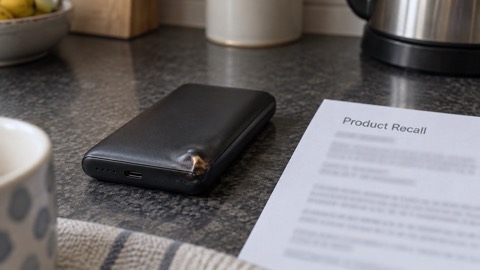
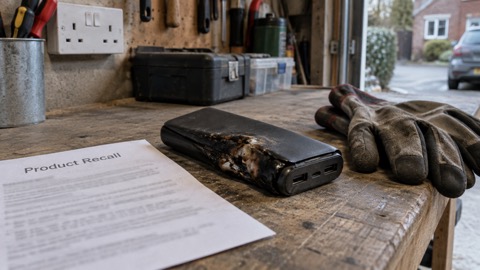
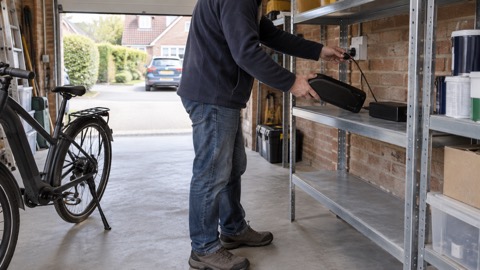
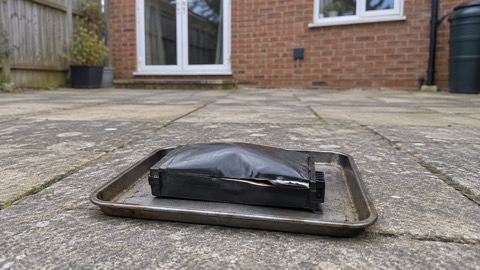
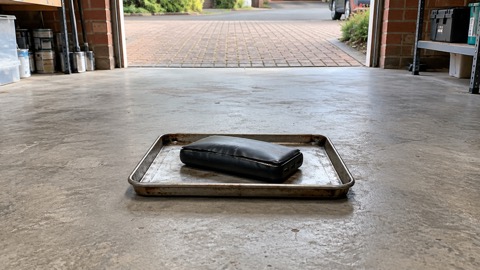
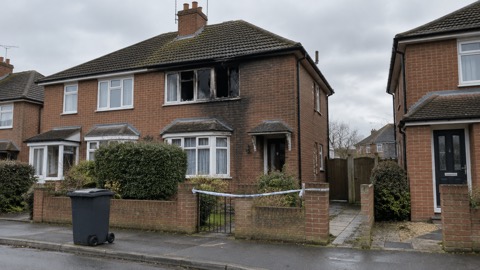
Power banks and power stations bring lithium batteries into the household backup plan, so their condition matters as much as their charge level. Surrey County Council's fire and rescue guidance says that if a battery shows signs of failure, immediately turn off the device, unplug it from the power source and remove it from your home.21
Use lithium-ion battery safety for the wider precautions and warning signs a lithium battery is dangerous to check the symptoms before handling the device. If a battery catches fire, follow the specific battery fire guidance rather than improvising.
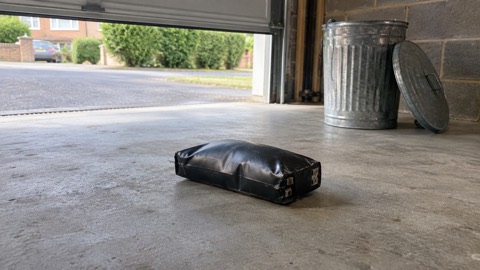
Do not put a questionable battery back into routine charging or storage. Surrey County Council advises checking your local authority's website for information on safe disposal in your area.21 The guides to damaged battery disposal and a safe charging setup provide the detailed household checks.
Getting ready before the next cut
Build one accessible kit rather than collecting separate items during an outage. The power cut backup power checklist brings the equipment together, and the winter readiness checks help you review it before cold weather.
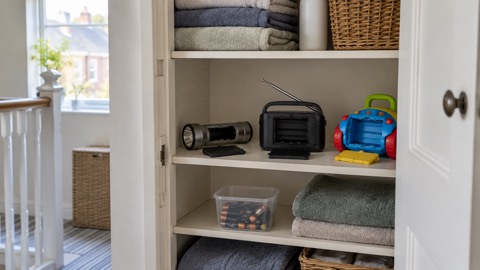
- Lighting: keep a battery-powered torch or light at home, with spare batteries. Include lanterns or head torches where they suit the household.22
- Information: keep a battery or wind-up radio and spare batteries.6
- Charging: keep a power bank charged for phones and other compatible devices.8
- Contacts: maintain a hard copy of emergency and utility numbers, not just entries stored in a mobile phone.22
- Food and water: keep at least 3 days' worth of bottled water at 3 litres per person per day, plus non-perishable food that does not need cooking.5
- Warmth: keep blankets and thick jumpers available.3
- Home knowledge: know where the utility cut-off points are and develop a home emergency plan.22
- Community: keep an eye on vulnerable neighbours and agree visiting arrangements for anyone who may need extra support.22
Official Northern Ireland advice includes keeping a supply of candles, but candles should be treated as a fire risk. Use the lighting guide to compare them with torches and lanterns rather than making a naked flame your default backup light.23
The wider emergency kit guide covers household supplies beyond power. Keep the electrical items together where they can be found in the dark, and check that the people who may need them know the plan.
Medical equipment and extra help
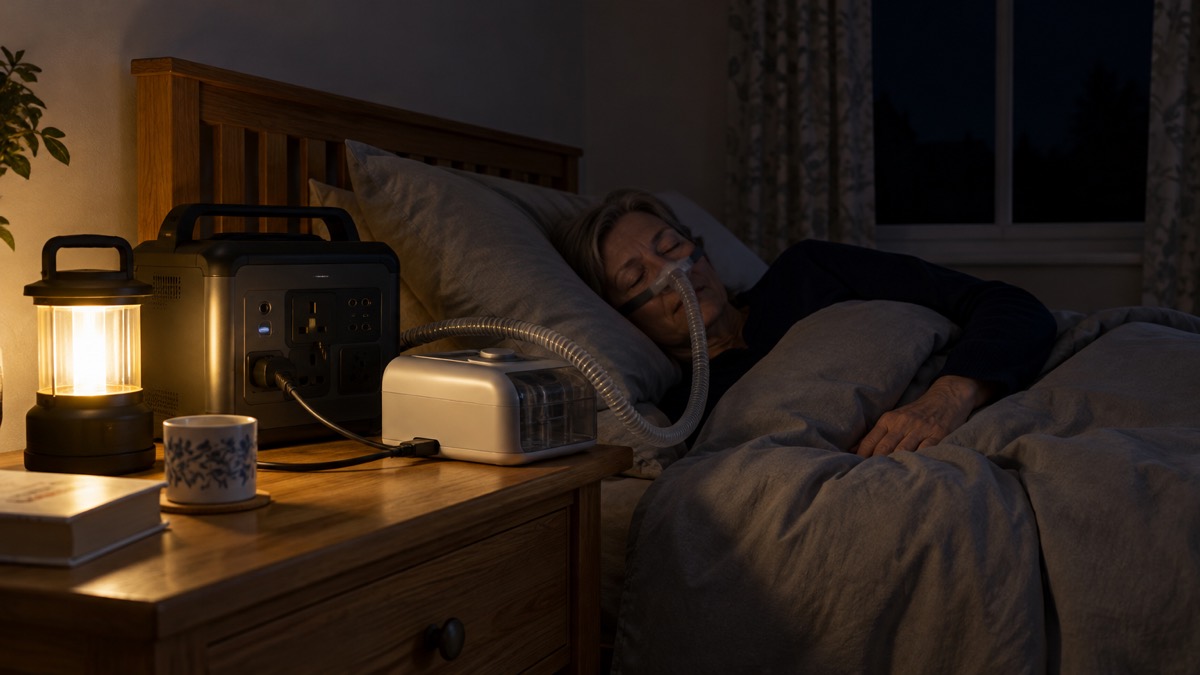
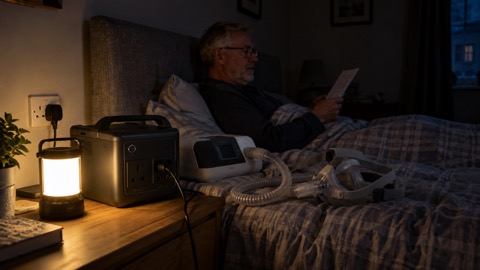
If somebody relies on electrical medical equipment or refrigerated medicines, a power cut can have a significant impact, particularly during winter.11 Make sure essential medical equipment has a battery backup so it can continue to be used while the power is out.8 Use Powering CPAP, Oxygen and Other Medical Devices From a Battery for device-specific considerations rather than assuming a general-purpose power bank or station is suitable.
Wigan Council advises households with medical equipment to keep a hard copy of emergency telephone numbers and torches close by, ensure phones are well charged and consider a battery backup for essential medical equipment.3
Put the human backup arrangements in place as well:
- Agree a plan with anyone who might need extra support, particularly if they live alone.
- Arrange for a trusted person to visit if an outage happens and you cannot call.4
- Check on vulnerable neighbours when it is safe to do so.3
- If someone relies on powered equipment, check how to join the Priority Services Register through the power cuts guide.
- Use the extra help guide to consider older, disabled and medically dependent household members in the wider emergency plan.
Keep the equipment instructions, backup provision and contact details accessible to the person who would actually have to use them during an outage.
Sources (23)
- Are You Ready? Emergency Preparedness Booklet, Culham Parish Council, September 2025
- Power, Gas and Water: What If They Fail?, Surrey County Council, 29 December 2025
- Power Cuts, Wigan Council, 29 October 2026
- Be Ready for Emergencies, UK Government Be Ready Campaign, 21 October 2026
- Power Cuts, UK Government Be Ready Campaign, 21 October 2026
- Phone and Broadband Outages, UK Government Prepare Campaign, 12 October 2026
- Safety Tips for Using a Portable Generator in an Emergency, Health and Safety Executive for Northern Ireland, 26 January 2025
- 12 Tips to Prepare for a Power Cut, Horsted Keynes Parish Council, 2026
- WeatherReady Tips for Snow and Ice, Met Office, 19 November 2025
- After Flooding, Surrey County Council, 23 September 2026
- Be Prepared for Winter Emergencies, NHS Norfolk and Suffolk Integrated Care Board, 1 October 2026
- Home Emergency Plan, Ready Scotland, 29 October 2026
- Fogstar 2.2kWh Portable Power Station, Fogstar, 25 October 2026
- Power Cuts, UK Government Prepare Campaign, 21 October 2026
- Battery Storage, Centre for Alternative Technology, 27 June 2025
- Prepare Your Property for Flooding, GOV.UK, 1 October 2009
- Carbon Monoxide, Health and Safety Executive, 2026
- Carbon Monoxide, Cornwall Fire and Rescue Service, 29 October 2026
- Carbon Monoxide Safety, Mid and West Wales Fire and Rescue Service, 29 October 2026
- Home Safety, Belfast City Council, 29 October 2026
- Lithium Batteries, Surrey County Council, 28 October 2026
- Loss of Gas and Water, Essex Prepared, 29 October 2026
- Strong Winds and Heavy Rain Warning: Information and Advice, nidirect, 27 January 2026
 What to Keep Running in a Cut
 Power During an Outage
 Watts and Watt-Hours
 Portable Power Stations
 Portable Generator Types
 Generator Safety
 LPG Cylinders and Regulators
 Connecting to Your Home's Wiring
 Home Battery Storage
 Portable Solar Panels
 12V Inverters
 Leisure and LiFePO4 Batteries
 Power Banks for Phone Charging
 USB-C Charging Explained
 Rechargeable Batteries
 Wind-Up and Solar Chargers
 Lithium-Ion Battery Safety
 Extension Leads and Overloading
 UKCA and CE Safety Markings
 Powering Medical Devices
 Running a Generator Indoors
 Carbon Monoxide from Generators
 Generator Sizing for a Power Cut
 Generator Run Time on a Tank
 Storing Petrol at Home
 Diesel Storage at Home
 Storing a Generator
 Generators in Cold Weather
 Generator Noise and Neighbours
 Power Station Capacity Sizing
 Power Station Run Time
 Power Station for a Gas Boiler
 Power Station UPS Mode
 Storing a Power Station
 Charging Below Freezing
 Power Station Fire Risk
 Solar Panel Sizing
 Solar Charging Time in the UK
 Charging from Your Car
 Plug-In Solar Panel Safety
 Solar Panels in a Power Cut
 Lithium Battery Warning Signs
 Swollen Battery Safety
 Lithium Battery Fire Safety
 Charging Overnight Safely
 Hot Power Bank While Charging
 Power Bank Lifespan
 Damaged Lithium Battery Disposal
 Safe Chargers from Marketplaces
 Battery Storage Temperature
 Removing Batteries from Storage
 Solar Generator Guide
 Running a Generator in the Rain
 Power Cut Backup Power Checklist
 Backup Power Before Winter
 Safe Battery Charging at Home
 Power Station vs Generator
 Inverter vs Open-Frame Generator
 LPG vs Petrol Generator
 Power Bank vs Power Station
 BLUETTI Apex 300 Power Station
 BLUETTI Elite 100 V2
 Anker SOLIX C2000 Gen 2
 Anker SOLIX C1000 Power Station
 EcoFlow DELTA Pro
 BLUETTI Elite 400
 Anker SOLIX C300 Power Station
 EcoFlow DELTA 3
 EcoFlow DELTA 2 and DELTA 2 Max
 EcoFlow DELTA and DELTA Max
 EcoFlow RIVER 3 and RIVER 3 Plus
 EcoFlow RIVER 2 and RIVER 2 Max
 EcoFlow Dual Fuel Generator
 BLUETTI Elite 30 V2
 BLUETTI Elite 300
 BLUETTI Elite 10 Power Station
 BLUETTI AC180 Power Station
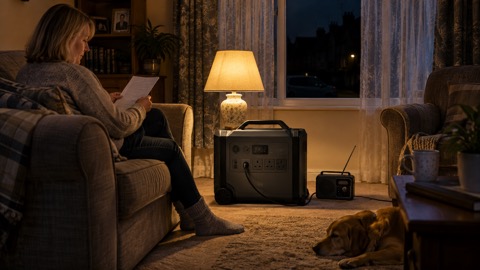 BLUETTI AC200L Power Station
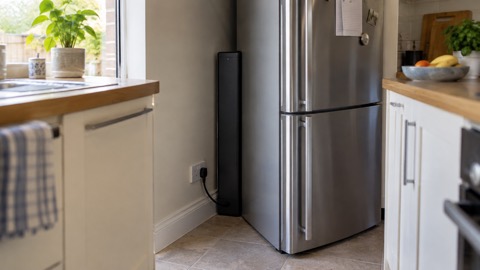 BLUETTI FridgePower
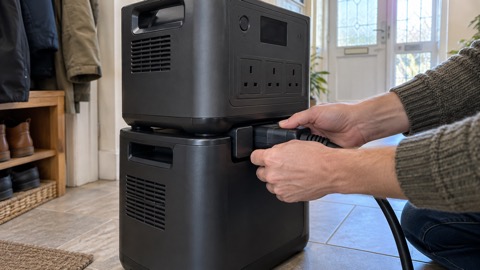 BLUETTI B500K Expansion Battery
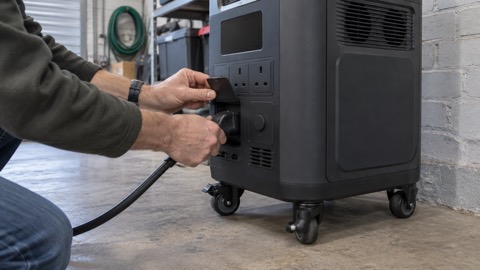 Anker SOLIX F3800 Power Station
 Anker SOLIX F3000 Power Station
 Anker SOLIX F2000 Power Station
 Anker SOLIX BP2000 Battery
 Anker SOLIX Solarbank 4 E5000
 Jackery Explorer 240 v2
 Jackery Explorer 2000 Plus
 Jackery Explorer 1000
 Goal Zero Yeti 1500
 Hyundai HPS-300 Power Station
 Honda EU70iS Generator
 Honda EU32i Generator
 Honda EG3600 Generator
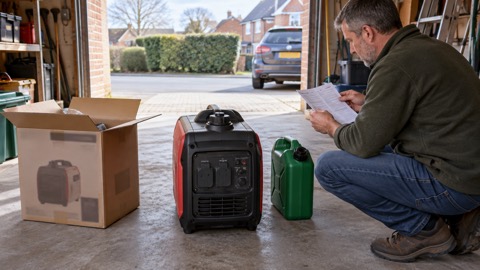 Pramac P3500i Generator
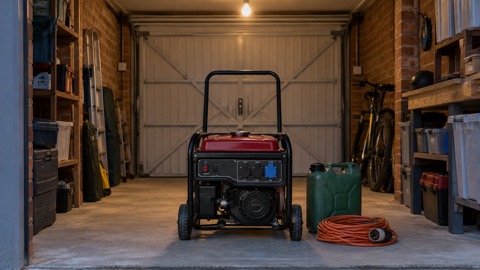 Senci SC6000-II Home Generator
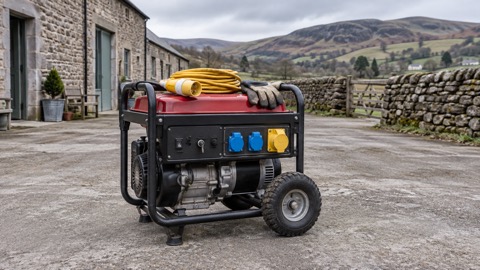 Senci SC10000-II Generator
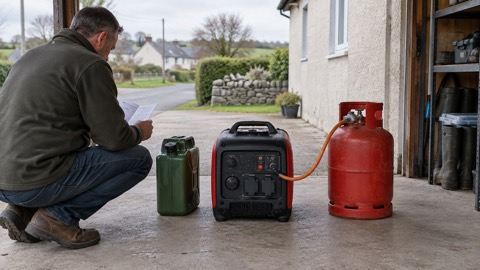 Senci SC6600iED Generator
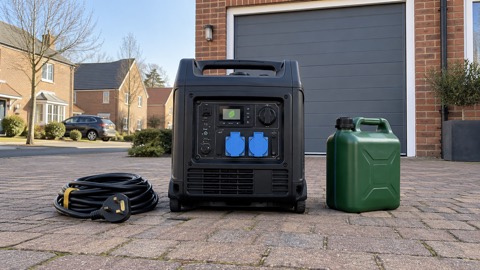 Gorilla Power GP3800iE
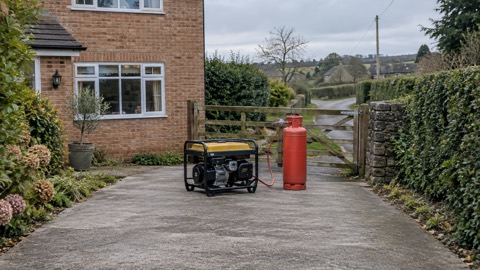 Gorilla Power GP6500E-DF
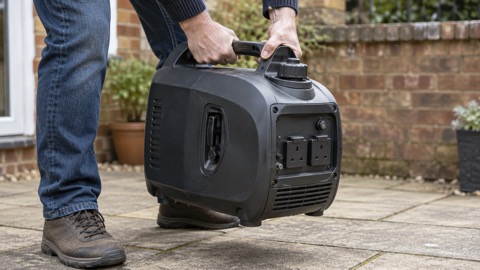 Gorilla Power GP3500i
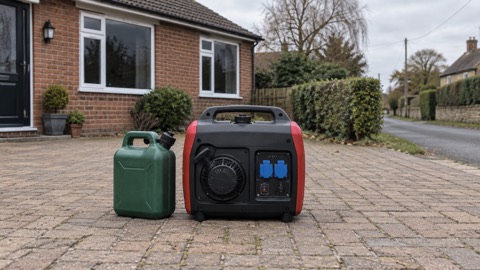 Hyundai HY2250Si Generator
 Hyundai HY1000Si Generator
 Hyundai HY2000Si Generator
 Hyundai HY3750i Generator
 Ford FG6500iSE Petrol Generator
 Ford FG2500iS Inverter Generator
 Cobra IG32ESI Generator
 Champion 3200W Petrol Generator
 Champion CPG9000E2 Generator
 Champion 3000W Atom Fusion
 Champion Atom Fusion Dual Fuel
 Champion 2200W Mighty Atom
 Champion Mighty Atom Dual Fuel
 Champion 82001i-E-DF Generator
 Champion 3500W LPG Dual Fuel
 Champion 3500W Inverter
 Champion CPG3500E2-DF Generator
 Champion CHG3500-DF Generator
 Champion CPG4000E1 Generator
 Champion 5500W Remote Start
 Champion 3600W Digital Hybrid
 Champion 3600W Inverter
 Champion 500988-DF-UK Generator
 NEBO Intrepid 1000
 NEBO 5K Powerbank
 Panasonic eneloop Batteries
 BLUETTI Elite 200 V2
 Anker SOLIX C300X Power Station
 Anker SOLIX C800 Power Station
 Hyundai HY2250SEi Generator
 EcoFlow DELTA Pro 3
 EcoFlow Smart Generator
 EcoFlow WAVE 2
 EcoFlow Power Kits
 EcoFlow 400W Solar Panel
 EcoFlow 160W Solar Panel
 EcoFlow RIVER
 EcoFlow 100W Rigid Solar Panel
 Anker 321 Power Bank Recall
 Anker A1647 Power Bank
 Anker A1652 Power Bank
 Anker A1257 Power Bank Recall
 Anker A1681 Power Bank Recall
 Anker SOLIX PS30 Solar Panel
 Anker SOLIX PS100 Solar Panel
 Anker SOLIX PS400 Solar Panel
 Anker SOLIX 100W Solar Panel
 Champion CPG3500UK Generator
 BLUETTI EP500Pro
 BLUETTI AC300 Power Station
 BLUETTI AC500 Power Station
 BLUETTI AC200MAX Power Station
 BLUETTI AC240 Power Station
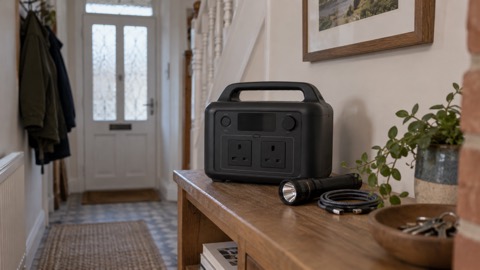 BLUETTI AC60 Power Station
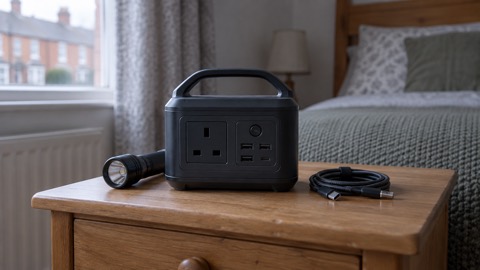 BLUETTI AC2A Power Station
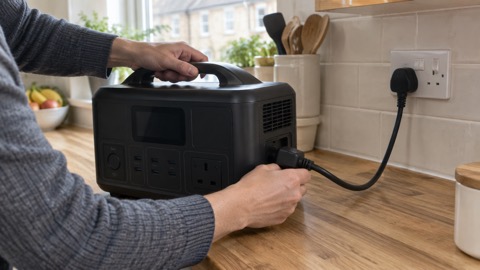 BLUETTI AC70 Power Station
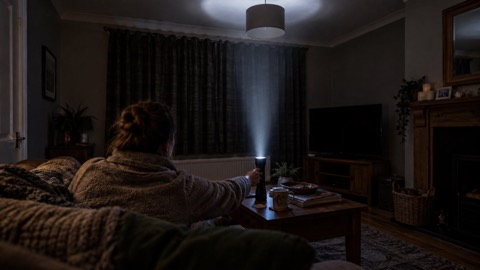 Ledlenser P7R SE Torch
 Jackery SolarSaga Panels
 Jackery HomePower 2000 Plus v2
 Jackery HomePower 1000 v2
 Jackery Solar Generator 600 v2
 Belkin BoostCharge 10K BPB002
 Belkin Playa USB-C Power Bank
 GP Lithium AA Batteries
 BioLite SolarPanel 100
 BioLite BaseCharge Power Station
 Briggs P2400 Inverter Generator
 Briggs & Stratton ProMax 7500EA
 Briggs & Stratton ProMax 9000EA
 Briggs Q6500 Petrol Generator
 Fogstar 2kWh Power Station
 DJI Power 500 Power Station