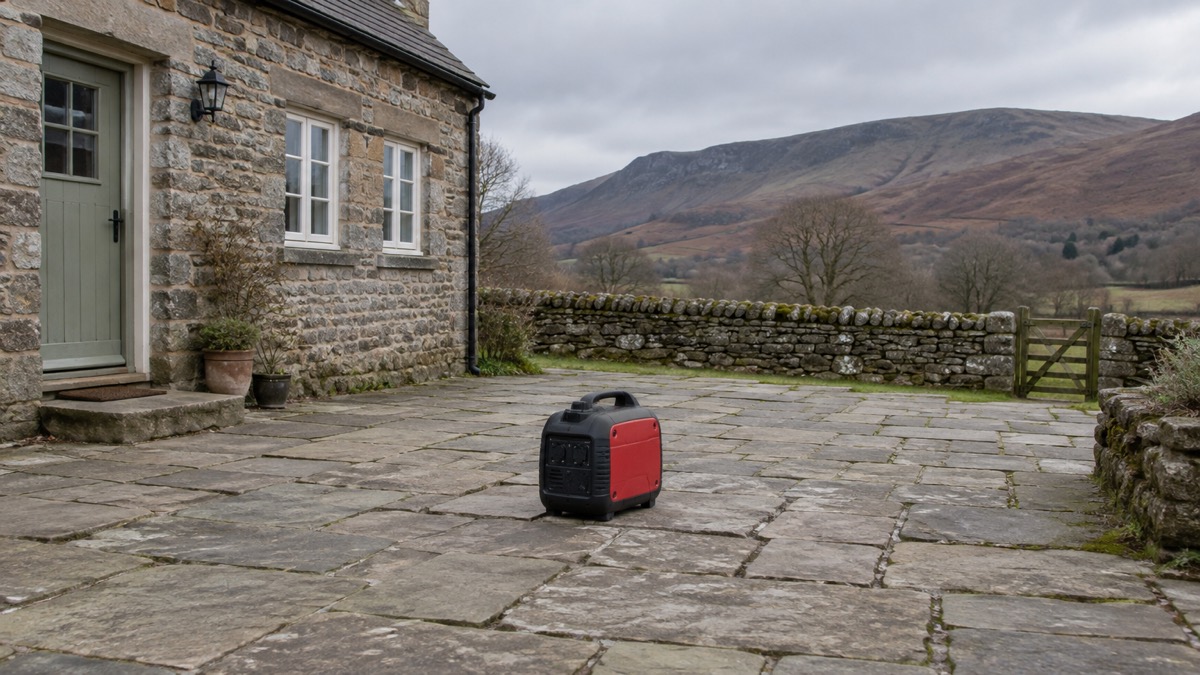
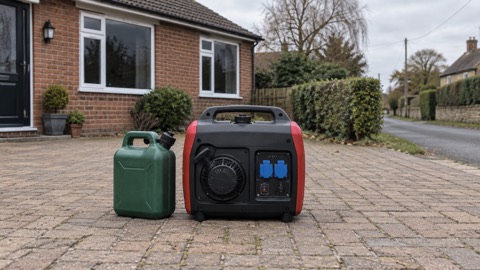
The Hyundai HY2000Si is a small petrol inverter generator: a portable unit that makes mains power for lights, a fridge, a laptop or a caravan battery when the mains fails. It is rated at 1600W with a 2000W maximum output, and the distributor states it produces a pure sine wave, the type of supply sensitive electronics expect1. It is an older model, newly redesigned for 2016, and the distributor's product page listed it as sold out when checked, so treat it as a secondhand or end-of-line buy rather than something you can order new today1.
What it suits is modest, short-term backup: a few lights, a fridge, charging phones and a caravan battery, or running a caravan's 230V sockets through the fly lead that comes with it1. It is not a whole-house solution. Its 1600W rated output sets the ceiling on what you can run at once, and its 3.8 litre tank gives up to 9 hours1.
Before you buy or use one, the safety rules matter more than the specifications. A petrol generator produces carbon monoxide, an invisible and odourless gas, so it must never run indoors, in a garage or in any enclosed space. The sections below cover what the machine can do, how long it lasts, how to run it on LPG, and how to use and store it safely.
What the HY2000Si is and who it suits
The HY2000Si is a compact, lightweight portable inverter generator built around the Hyundai HX125, a four-stroke 4.9hp recoil start petrol engine1. Recoil start means you pull a cord rather than turn a key, so there is no battery to go flat before you can start it. Inverter output technology converts the engine's power into a steady mains supply, and the distributor states the output is a pure sine wave1.
That combination suits a household that wants a modest amount of mains power for a few hours at a time, and a caravan or motorhome owner who wants to top up a leisure battery or run 230V appliances on a pitch. The distributor notes that the LPG conversion option is proving popular with caravan users1. It also suits anyone who wants a generator light enough to move: at 20kg it is a one-person lift, though the same page also gives 21kg, so treat the weight as around 20 to 21kg1.
It does not suit a household expecting to run an electric shower, an immersion heater or a whole house's circuits. Those draw far more than 1600W, and connecting a generator to your home's wiring is a separate job with its own rules. If you are weighing up a generator against a battery-based power station, the comparison of portable power stations and petrol generators sets out the trade-offs, and the guide to portable generators explains the different types.
Specifications at a glance
The figures below come from the distributor's product page. Where that page gives two different values for the same specification, both are shown, because the two listings disagree and neither has been ruled correct1.
| Specification | Figure |
|---|---|
| Rated output | 1600W1 |
| Maximum output | 2000W / 2kW1 |
| Output type | Inverter, pure sine wave1 |
| Engine | Hyundai HX125, four-stroke, 4.9hp, recoil start1 |
| Fuel | Unleaded petrol1 |
| Fuel tank | 3.8 litres (the same page also states 4.5 litres)1 |
| Run time | Up to 9 hours (the same page also states up to 8 hours)1 |
| Run time at light load | Over 12 hours1 |
| AC outlets | 2 x 230V / 13A1 |
| DC output | 12V / 8.3A, plus 1 x 12V 5Amp for charging 12V batteries1 |
| Noise | 60dB(a) at 7 metres1 |
| Weight | 20kg (the same page also states 21kg)1 |
| Dimensions | 510 x 455 x 280 mm1 |
| Warranty | 3 years, requires registration1 |
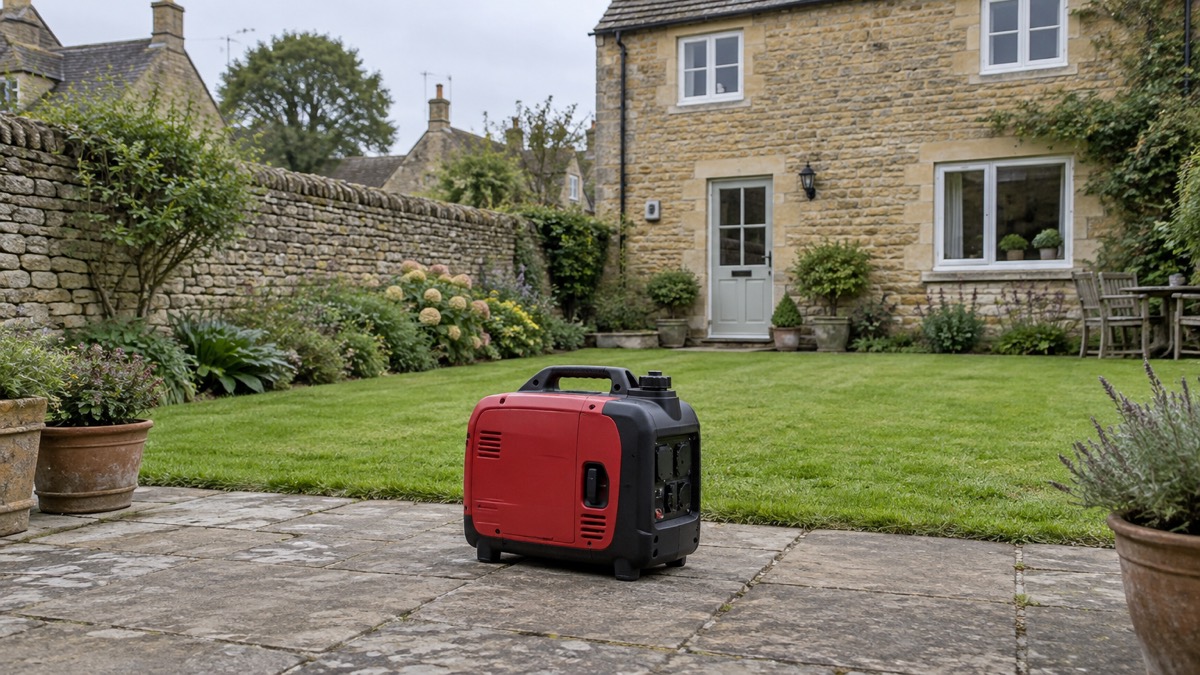
The two AC outlets are described on the same page both as 2 x 230V / 13A and as 2 x 230V standard 3 pin 13amp plug sockets, which amounts to the same thing for a UK household: ordinary three-pin sockets1. The LED display shows voltage, frequency and hour count, so you can see what the machine is doing rather than guessing1.
What it can power, and for how long
The rated output of 1600W is the figure to work from for anything that runs continuously. The 2000W maximum is headroom for a brief surge, such as a fridge compressor starting up. If you are unsure how a particular appliance's running and starting watts compare, the guide to watts, watt-hours and surge explains the difference, and what size generator you need helps you add up a household's load.
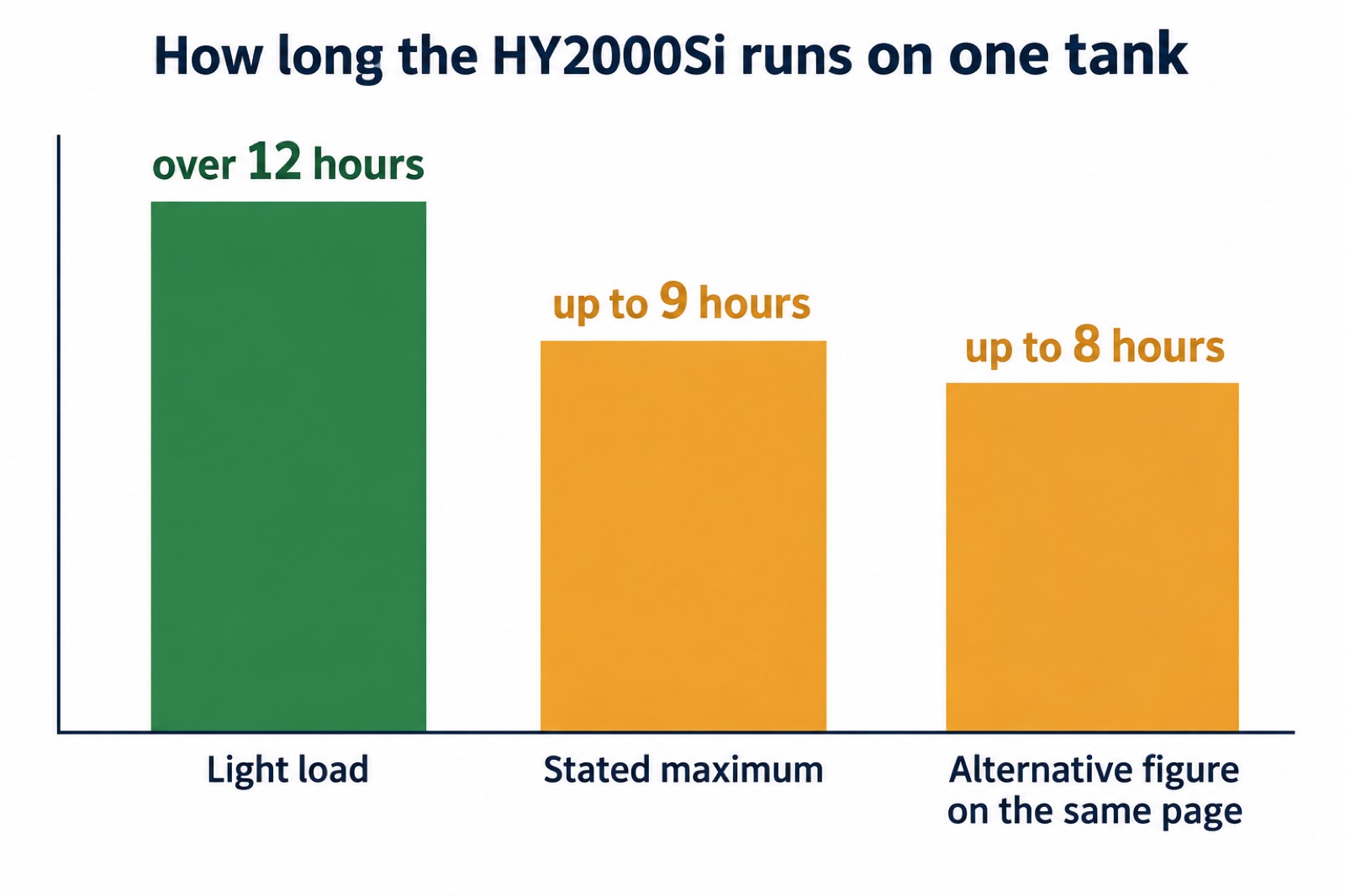
Run time depends on load. The distributor states up to 9 hours from a tank, and says it has seen over 12 hours from one tank under a light load1. The same page also gives a tank of 3.8 litres in one place and 4.5 litres in another, and a run time of up to 8 hours in another, so plan on the shorter figure if you need certainty1. For context, Honda's generator selection page describes its medium generators as giving up to three hours running time, which shows how much run time varies between machines and loads2.
The ECO setting lowers engine revs when only a small amount of energy is required, which is how you stretch a tank when you are running a few lights and a phone charger rather than a fridge1. The machine also has digital overload protection and low oil shutdown, so it will cut out rather than run itself into trouble1.
Sockets, 12V charging and the caravan fly lead
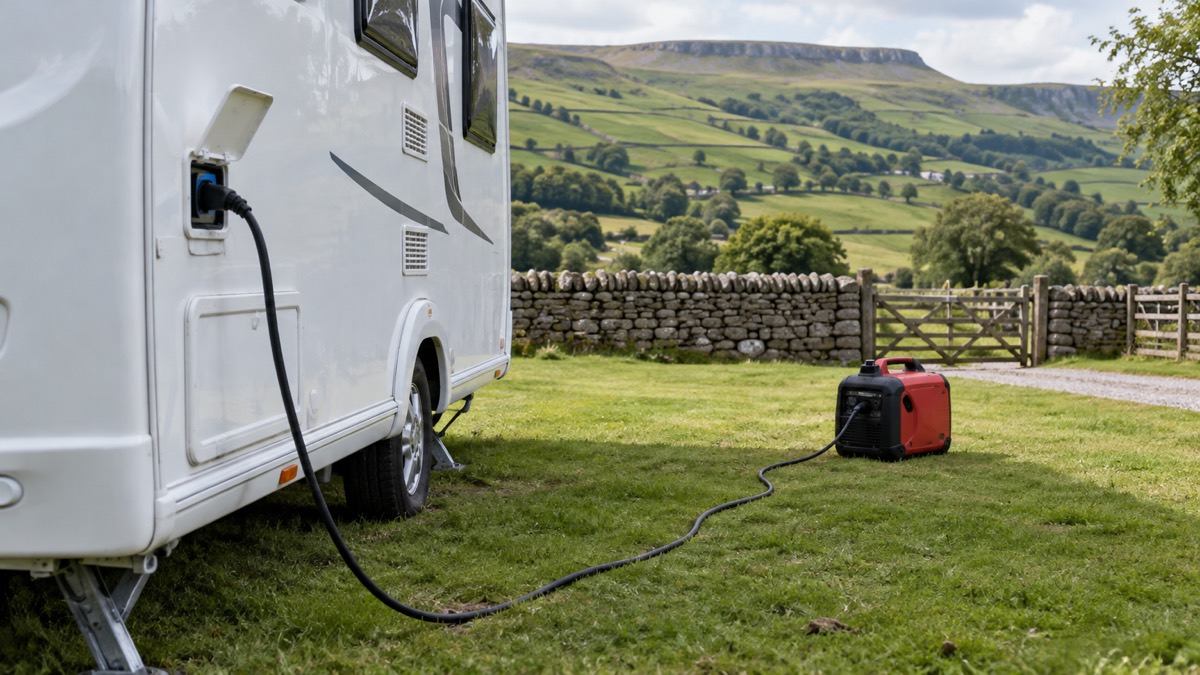
The HY2000Si gives you three ways to take power out of it. The two 230V three-pin sockets take ordinary UK plugs for lights, chargers and appliances1. The 12V / 8.3A DC output and the separate 1 x 12V 5Amp output are for charging 12V batteries directly1. And the fly lead that comes with the machine plugs straight into a caravan or motorhome's power input, feeding the unit directly1.
That last item is the reason caravan owners favour this model. A generator with a 12V charging output and a fly lead can top up a caravan battery without a separate charger3. If you are charging a leisure battery at home instead, the guide to leisure and LiFePO4 batteries covers what those batteries need, and 12V inverters explains the other direction, running mains kit from a battery.
For a household without a caravan, the 12V outputs are less useful, but they will charge a car battery or a spare leisure battery slowly. The 5Amp output is a trickle by battery-charging standards, so expect it to take time rather than revive a flat battery quickly.
Running it on LPG
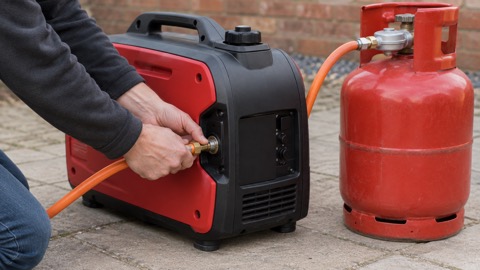
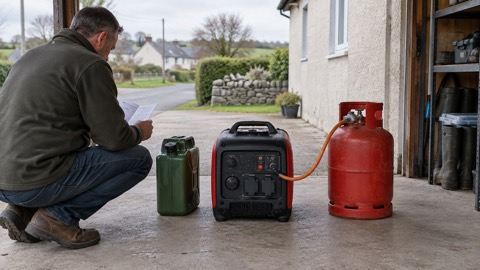
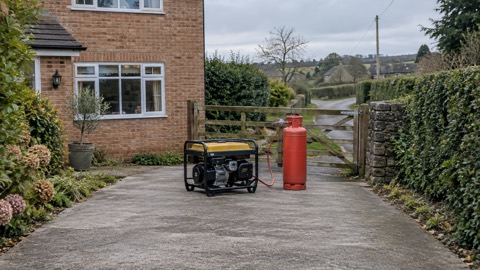
The distributor states the HY2000Si can be converted to run on LPG, and that this option is proving extremely popular with caravan users1. LPG has one clear practical advantage for backup: running time is no longer limited by the internal fuel tank, because you can use a bigger cylinder if you need a longer run4. The same point is made for Champion's dual-fuel generators, which is the general principle rather than anything specific to this machine5.
LPG also stores indefinitely in a sealed cylinder, unlike petrol, which degrades. A distributor's blog describes LPG generators as best suited to backup and long use6. That makes a converted HY2000Si a reasonable choice for someone who wants a generator that will still start after a year in the shed.
The safety rules for LPG are specific. Liquid Gas UK's guidance says to use hoses clearly marked as "High Pressure LPG" for direct connection to cylinders, or if the outlet pressure of the regulator exceeds 50 mbar7. The same body warns not to operate a regulator's mechanism using excessive force8. If you are new to cylinders and regulators, the guide to LPG cylinders and regulators covers the fittings, and LPG or petrol for emergencies weighs the two fuels.
Using it safely: carbon monoxide, fuel and electricity
A petrol generator produces carbon monoxide as it runs. It is invisible, has no smell, and can kill. The HY2000Si must never be run indoors, in a garage, in a shed, in a conservatory or anywhere the exhaust can build up, and it must be sited well away from doors, windows and vents. The guide to generator safety sets out the full rules, and carbon monoxide from generators explains the warning signs.
Fuel brings its own risks. Store petrol only in a proper container, away from the house and any source of ignition, and refuel only when the engine is cold and switched off. The guide to storing petrol at home covers the limits. On the electrical side, keep the total load within the 1600W rated output, use the machine's own sockets rather than daisy-chaining extension leads, and never plug a generator into a wall socket to backfeed the house. The guide to connecting a generator to your home's wiring explains why that is dangerous and what a proper changeover arrangement involves.
The machine's own protections help but do not replace care. Digital overload protection and low oil shutdown will stop it running into trouble, and the LED display lets you watch voltage and frequency1. Check the oil before every run, using the oil fill jug supplied, and follow the operating manual that comes in the box1.
Noise, storage and looking after it
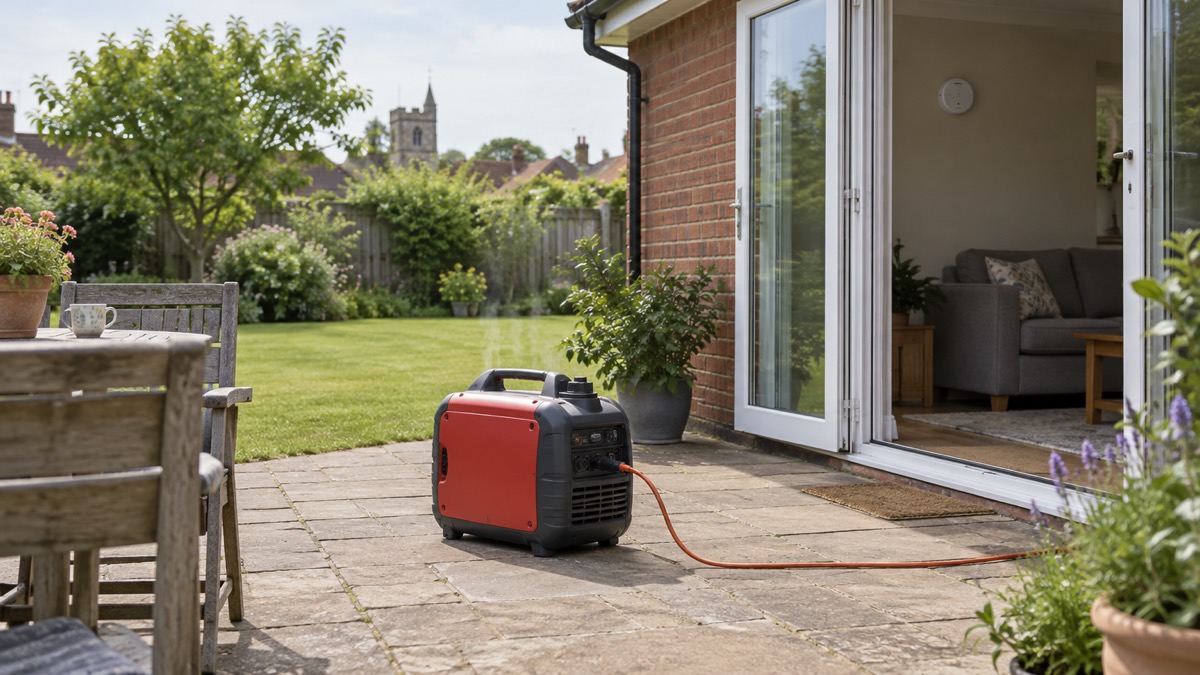
At 60dB(a) at 7 metres, the HY2000Si is quiet for a generator but not silent1. That is a working noise level, comparable to a lively conversation at that distance, and it will carry to neighbours on a still evening. Site it as far from their windows as from your own, and avoid running it late at night unless you have to. The guide to generator noise and neighbours covers the practicalities.
For storage, run the tank low or drain it if the machine will sit for months, because stale petrol is the most common reason a generator will not start. Store it somewhere dry and ventilated, not in the house, and keep the manual with it. The guide to storing a generator after a power cut sets out the routine, and will a generator start in cold weather covers winter starting.
The warranty is 3 years and requires registration, so register the machine when you buy it, whether new or secondhand with paperwork1. Keep the receipt and the manual together.
Support, warranty and where to find one
The HY2000Si is an older model, redesigned for 2016 with a slimmer case, a compact inverter board and a full LED display1. The distributor's product page listed it as sold out, with an expected delivery of 2 to 3 working days, when checked1. That means you may struggle to buy one new, and a secondhand unit is the more likely route. Check the serial number and the year of manufacture, and ask whether the 3 year warranty has been registered and whether it transfers1.
If you cannot find one, the current Hyundai range includes other inverter generators, and the Hyundai HY2250Si and Hyundai HY1000Si pages cover the alternatives in the same family. For a broader view of what is available, the backup power section sets out the options for a household, and the power cut guide covers what to do when the mains fails.
Sources (8)
- Hyundai HY2000Si 4-Stroke Petrol Inverter Generator, Just Generators, 2026-10-25
- Help Me Choose a Generator, Honda UK, 2026-10-25
- Solar Power Advice, The Caravan Club, 2026-10-25
- Champion 2200 Watt LPG Dual Fuel Inverter Generator, Champion Power Equipment UK, 2026-10-25
- Champion 3000 Watt LPG Dual Fuel Inverter Generator, Champion Power Equipment UK, 2026-10-25
- What Is an LPG Generator? Advantages and How It Compares to Petrol, Generators Direct, 2026-05-08
- LPG Hose and Connection Guidance, Liquid Gas UK, 2022
- LPG Regulator Guidance, Liquid Gas UK, 2022-04
 EcoFlow Dual Fuel Generator
 Honda EU70iS Generator
 Honda EU32i Generator
 Honda EG3600 Generator
 Pramac P3500i Generator
 Senci SC6000-II Home Generator
 Senci SC10000-II Generator
 Senci SC6600iED Generator
 Gorilla Power GP3800iE
 Gorilla Power GP6500E-DF
 Gorilla Power GP3500i
 Hyundai HY2250Si Generator