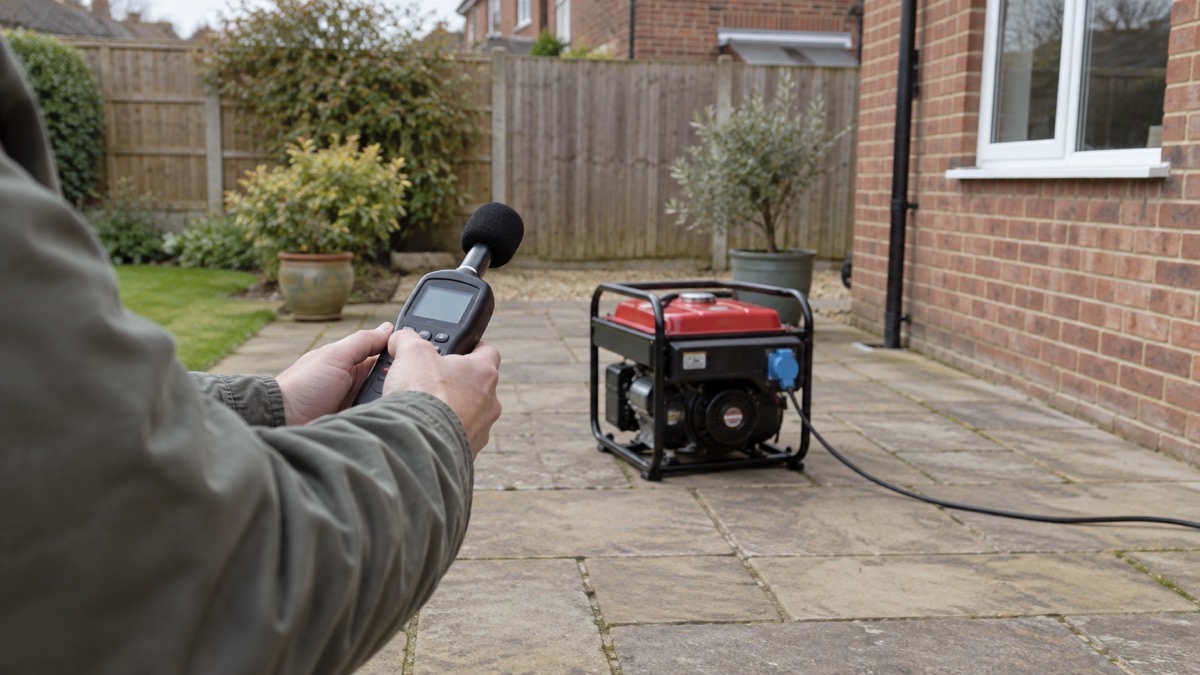
A generator's noise is usually quoted in decibels at a set distance, and the distance matters as much as the number. Industry comparisons are commonly made at 7 metres, so a figure like 58 dBA at 7 metres tells you what a neighbour standing at that distance would hear1. A typical generator can range from 60 to 100 dB, and a suitcase model under 65 dB is a reasonable threshold for one that won't interrupt a normal conversation at a distance3.
Before you buy or site one, check three things: the decibel figure, the distance it was measured at, and the load it was running under. Makers do not all measure the same way. Briggs & Stratton, for example, measures its PowerSmart Series inverter generators running at a quarter load at 7 metres from the control panel side, and notes that sound levels may vary based on proximity and location5. A number without those conditions is hard to compare with anything else.
Then think about where it goes. A generator must never run indoors or in a garage, and siting it for neighbours means putting it where exhaust fumes cannot reach anyone's home. The sections below take each of those in turn, along with what happens when your electricity network brings a generator to your door.
Noise is stated in decibels at a set distance
Noise levels are usually stated in decibels at a specified distance, and when comparing models you should check that measurements were taken under similar conditions8. That single sentence is the key to reading any generator's noise figure. A maker quoting 58 dB and a maker quoting 66 dB may be describing very different things if one was measured at 1 metre and the other at 7.
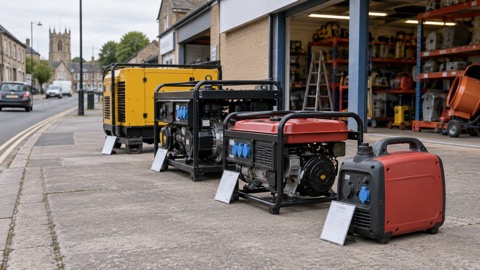
The industry convention is 7 metres, which is roughly the width of a driveway or the distance from a patio to a neighbour's fence1. Briggs & Stratton states its measurement basis plainly: a quarter load at 7 metres from the control panel side, with sound levels varying by proximity and location5. Its Q6500 QuietPower Series is quoted at 66 dB under that method, and its P2400 PowerSmart Series at 58 dB9. Champion quotes its 2200 Watt Inverter Petrol Generator at 58 dBA at 7 metres, and its 2000 Watt Inverter Generator (82001i-E) at 53 dBA at 7 metres, its lowest rating2.
There is a second labelling system to know about. To comply with EEC regulations, all generators have to be marked in LWA, a different measurement of sound taken from a different distance1. So a machine may carry one figure on its compliance plate and another in the brochure. Neither is wrong; they answer different questions. If you are comparing two models, compare like with like, and if a figure has no distance attached, treat it as a starting point rather than a verdict.
Some makers quote at 1 metre instead. Jackery states its HomePower 2000 Plus v2 at 30 dB measured at 1 metre in Quiet Mode, and its HomePower 1000 v2 at under 30 dB at the same distance11. Those are battery power stations rather than fuel generators, and the shorter distance flatters the number. Read the conditions before you read the figure.
Where generator noise comes from
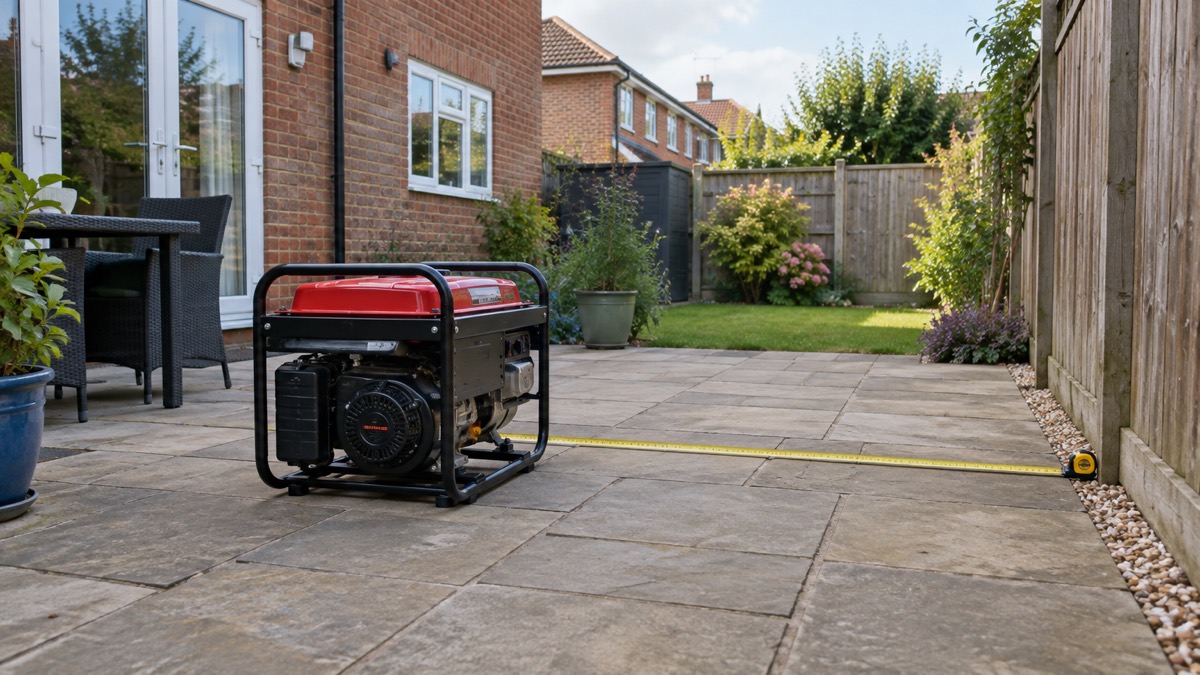
The noise a generator makes comes mainly from the engine: the combustion process, the exhaust system, the air intake and the mechanical components13. Vibrations and resonance add to it, especially where there is no proper insulation or vibration dampening13. The biggest contributors to overall noise are the engine and the cooling and exhaust systems14.
That tells you what can be done about it. An inverter generator with an economy or eco mode reduces engine speed when demand is low, which can lower fuel consumption and noise, reduce wear and extend runtime8. Running a smaller load therefore makes the machine quieter as well as more economical. A suitcase-style generator, built with a sound-insulating casing around the engine, is designed for exactly this: quiet running at modest loads4.
Honda publishes both a low-noise and a normal noise range for its generators: 83 to 92 dB(A) low noise, and 95 to 97 dB(A) normal noise15. That gap shows how much the design of the enclosure and exhaust matters, and why two machines of similar output can sound very different.
There is also a legal dimension. At night, between 11 pm and 7 am, the noise from generators should not exceed the background noise level at all14. In a quiet residential street at night, background noise is very low, so a generator running after 11 pm is likely to be heard and likely to be a problem. Plan your running hours around daytime use, and keep the machine as far from neighbouring windows as the cable run allows.
Sound output alongside the other choices: output, run time and fuel
Noise is one of seven things to weigh when picking a generator, alongside maximum output, output voltage, start method, run time, fuel used and output socket type16. It is rarely the only trade-off, and often not the first.
| What to weigh | What it means for noise and use | Example |
|---|---|---|
| Fuel type | Petrol is cheaper than diesel and quieter than diesel generators, but needs regular maintenance; diesel generally lasts longer with long running time, costs more and can be noisier17 | A petrol model with a fuel tank of around 20 litres17 |
| Start method | Electric start uses a key or switch and makes larger engines easier to operate, but the battery must be kept charged; some models keep a recoil starter as backup8 | Champion 3500 Watt Inverter uses recoil start18 |
| Output and load | Running a lower load lets eco mode cut engine speed, lowering noise and fuel use8 | EcoFlow Smart Generator quoted at 56 to 67 dB at 7 metres at full load19 |
| Run time and fuel | A fuel generator with a 1000W rating and 5L tank runs about 6 hours at 500W20 | Longer runs mean more hours of noise for neighbours |
| Portability | Fuel generators are heavy, noisy, bulky and inconvenient for long-term use20 | Weight of 50 to 70 kg on larger models20 |
| Sockets | 13 amp three-pin, blue 230V, yellow 110V industrial or 12V cigarette lighter, depending on model16 | Match the socket to the appliance |
The fuel choice deserves its own thought. Petrol is cheaper than diesel and quieter than diesel generators, but petrol models require regular maintenance17. Diesel generators generally last longer than petrol ones and have long running time, but diesel is more expensive to buy and can be noisier than petrol alternatives17. If quiet matters most, petrol or a battery power station will usually serve you better than diesel.
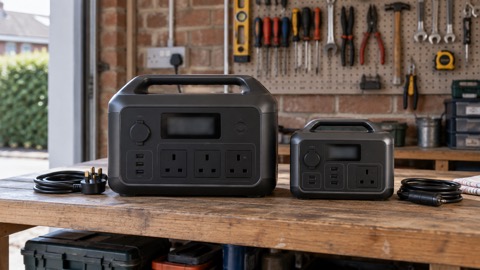
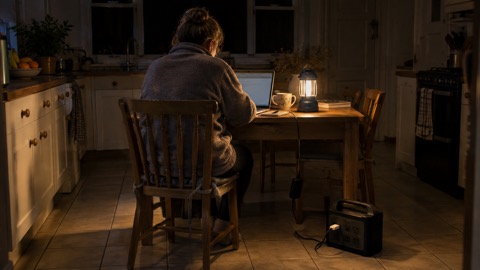
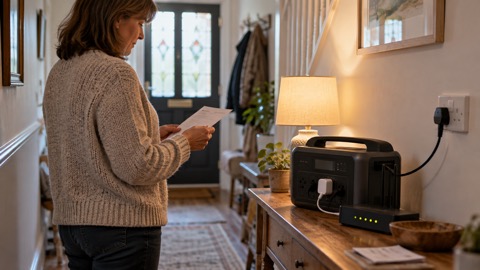
Battery power stations sidestep the noise question almost entirely. A small solar generator operates silently under 40 dB, and the Jackery Solar Generator 3000 Pro is quoted at 30 dB11. They cannot run a whole house for days, but for a fridge, lights, phones and a router they are quiet, fume-free and safe indoors. If your backup need is modest, that is worth weighing against a fuel generator before you buy.
Siting for neighbours without risking carbon monoxide
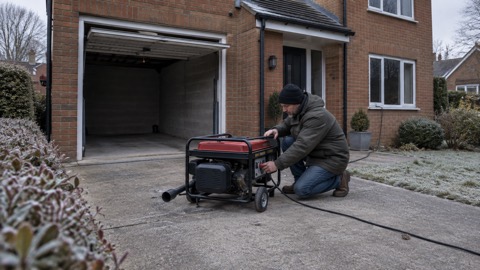
This is the section where noise takes second place to safety. If you are using a generator, be careful where you site it in case of carbon monoxide poisoning: make sure there is plenty of air flow around the generator to supply oxygen and remove the fumes7. That instruction comes from NIE Networks, and it is not negotiable for the sake of a quieter spot.
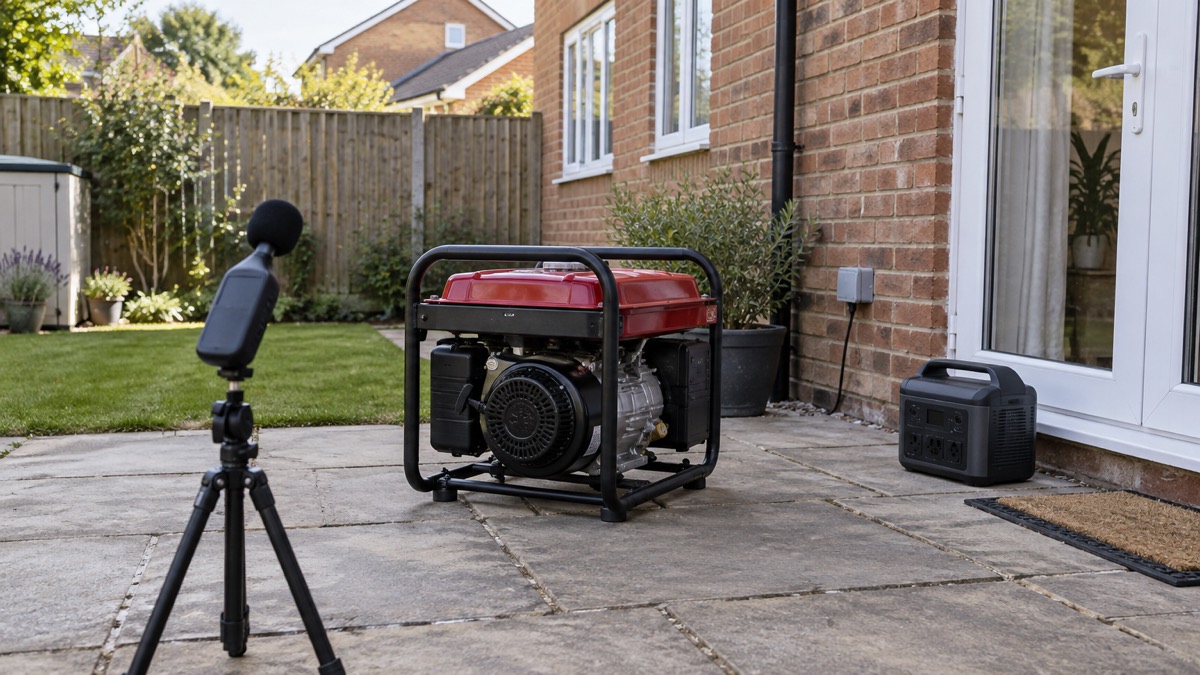
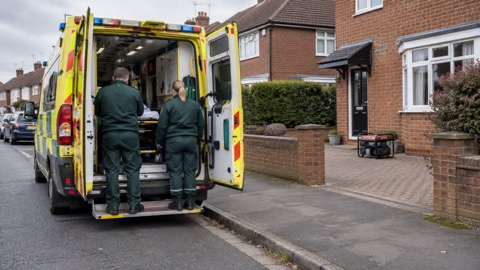
A carbon monoxide alarm is your backstop. All alarms need to hit a noise level of 85dB at a distance of 1 metre, so choose one you will hear from the rooms you use21. Even if you don't have any fuel-burning appliances in your home, carbon monoxide can seep through walls, so if you live in a semi-detached home or a terrace and your neighbour burns gas, LPG, oil or wood, the safety-first approach would be to install a carbon monoxide detector22. That cuts both ways: if you run a generator near a boundary, your neighbour's alarm may be the first warning anyone gets.
For siting with neighbours in mind, work through this list:
- Put the generator outdoors, on firm ground, with the exhaust pointing away from any building7.
- Keep it away from windows, doors and air bricks, including your neighbour's.
- Run it during the day where possible, and switch it off before 11 pm14.
- Use an eco mode or a smaller load to cut engine speed and noise8.
- Keep the cable run short and use an extension lead rated for the load, rather than long daisy-chained leads.
- Tell your neighbour in advance if you expect a long run, so a knock on the door is not the first they hear of it.
If you are thinking about connecting a generator to your home's wiring rather than running an extension lead, stop and take advice. Earthing requirements depend on the generator design, connected equipment and application, so follow the manual and seek advice from a qualified electrician where necessary8. Official guidance is blunt: it takes research by you and the advice and expertise of a qualified electrician for a generator to help you24. Our page on connecting a generator or battery to your home's wiring sets out the options.
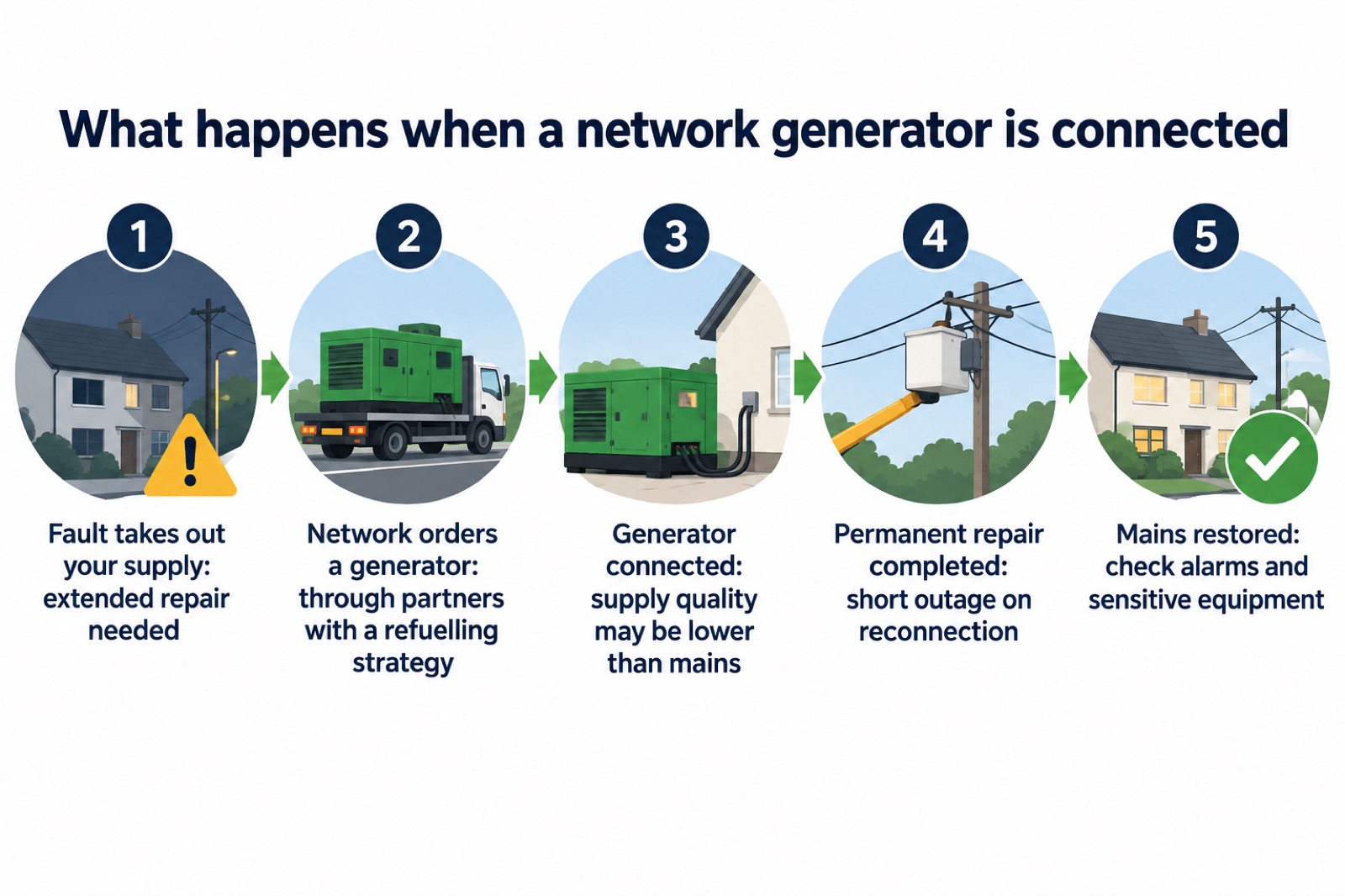
When the network brings a generator to your home
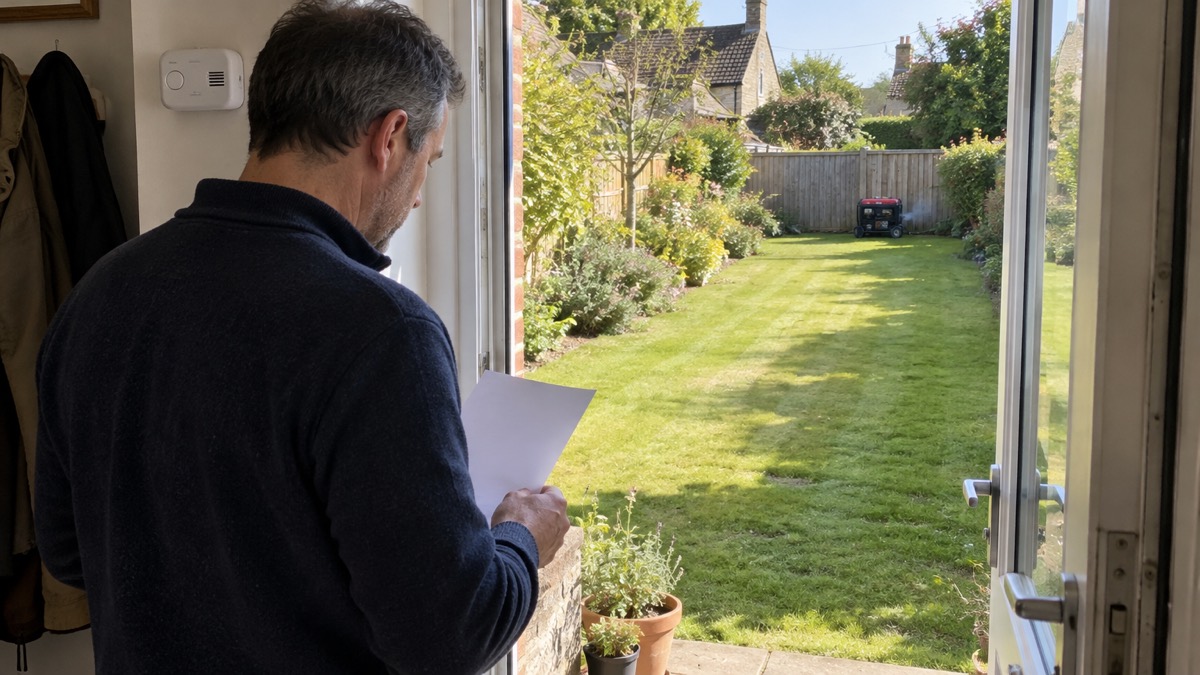
If a fault takes out your supply for an extended period, your electricity network operator may bring in a generator to restore power while permanent repairs are completed25. Generators will sometimes be used for temporarily restoring customers whilst permanent repairs are completed, and the operator will order them through network partners who ensure a robust refuelling strategy is in place and connect to the network safely25.
Who gets one? Generators are only provided in exceptional circumstances, such as for medical needs like oxygen equipment, mobility aids or end-of-life care26. In exceptional circumstances, such as weddings or funerals, Electricity North West does its best to provide a generator to minimise the impact of the power cut26. For most households, the answer is that you are expected to make your own arrangements. If someone in your home depends on powered medical equipment, tell your network operator in advance and ask about the Priority Services Register; our page on powering medical devices from a battery explains the backup options.
Two practical points if a network generator is connected to your home. First, the network orders generators through its partners, who ensure there is a robust refuelling strategy in place and connect to the network safely25. Second, you may experience a short outage whilst you are connected back to the network after the repair25. That is normal; wait for the supply to settle before switching things back on.
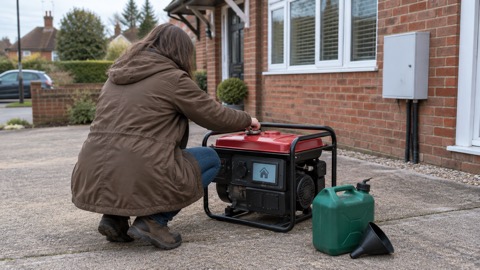
Refuelling during a long repair is handled by the network's partners, who keep the generator running25. If you are running your own machine through a long outage, follow the maker's service schedule. Champion's schedule for its inverter generators includes checking the oil level and cleaning around the air intake and muffler every 8 hours or prior to each use27. Its dual fuel guidance includes checking and adjusting valve clearance every 250 hours, to be performed by knowledgeable, experienced owners or certified service centres28. A well-maintained generator is a quieter and safer one.
Sources (28)
- Noise Level Information, Just Generators, 2026
- Noise Level Information, Champion Power Equipment, 2026
- What Size Generator Do I Need to Run a House?, Generators Direct, 2024
- The Ultimate Guide to Suitcase Generators, Generators Direct, 2026
- Portable Generator Decibel Level, Briggs & Stratton, 2026
- P2400 PowerSmart Series Inverter Generator, Briggs & Stratton, 2026
- Power Cuts Advice, NIE Networks, 2026
- Generators, Clarke International, 2026
- Q6500 QuietPower Series Inverter Generator, Briggs & Stratton, 2026
- Champion 2200 Watt Inverter Petrol Generator 110V, Champion Power Equipment, 2026
- Planned Interruptions, National Grid, 2026
- Small Generators, Jackery, 2026
- 4 Ways to Make a Generator Quieter, Generators Direct, 2024
- How Quiet Are Silent Generators?, Generators Direct, 2025
- Help Me Choose, Honda, 2026
- Generators Buyers Guide, Machine Mart, 2026
- How to Buy the Best Generator, Which?, 2026
- Champion 3500 Watt Inverter Petrol Generator, Champion Power Equipment, 2026
- Smart Generator, EcoFlow, 2026
- BLUETTI Elite 400 Portable Power Station, BLUETTI, 2026
- How to Install and Test Carbon Monoxide Detectors, Which?, 2026
- What to Do When a Carbon Monoxide Detector Goes Off, Which?, 2026
- How to Choose a Carbon Monoxide Detector, Which?, 2026
- Generators, Wiltshire and Swindon Prepared, 2026
- Restoration Following a Power Cut, Electricity North West, 2026
- Advice and Support FAQs, Electricity North West, 2026
- Champion 3600 Watt Inverter Petrol Generator, Champion Power Equipment, 2026
- Service Guide Dual Fuel Generators, Champion Power Equipment, 2026
 Power Cut Backup Power Checklist
 Backup Power Before Winter
 Safe Battery Charging at Home
 Running a Generator Indoors
 Carbon Monoxide from Generators
 Generator Sizing for a Power Cut
 Generator Run Time on a Tank
 Storing Petrol at Home
 Diesel Storage at Home
 Storing a Generator
 Generators in Cold Weather
 Power Station Capacity Sizing
 Power Station Run Time
 Power Station for a Gas Boiler
 Power Station UPS Mode