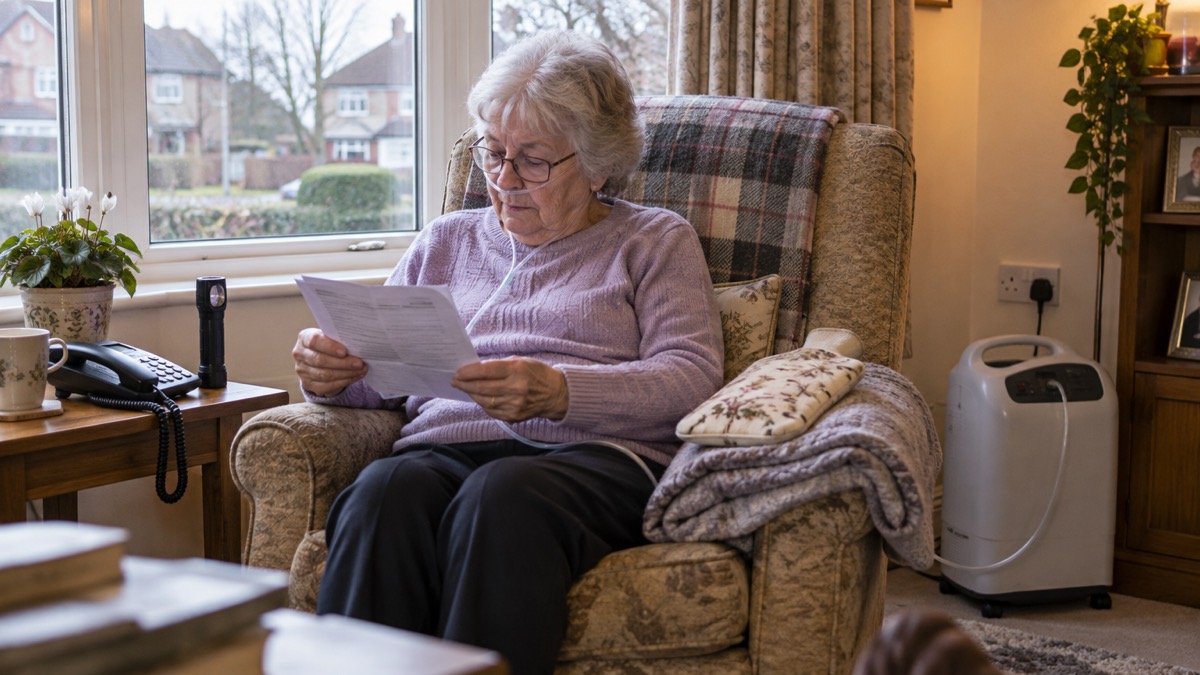
The Priority Services Register (PSR) is a free service that helps utility companies look after customers who need extra help, for example because of mobility issues, vision or hearing impairments, or because they are older or unwell1. It is available to customers in England, Scotland and Wales2, and is offered by energy suppliers, electricity and gas networks and water companies3. Your energy supplier and your network operator both keep a Priority Services Register, so if you have a different supplier for your gas and electricity, you will need to contact them separately4.
Despite that, many people who qualify are missing out. One network operator's own data suggests that little more than half of those eligible for the free assistance are currently signed up, with over 710,100 customers on its register as of January 20243. If you use medical equipment that needs power, are disabled, live with children under five, are over 60, or care for someone who is, you can probably join today.
Who can join, and what it costs
The register is deliberately broad. Official guidance says lots of households are eligible, including those with children under 52, and the eligibility list covers people who use medical or mobility equipment, have a disability, are over the age of 65, or have children under the age of 55. In Scotland, the criteria are set out as: you use medical equipment that needs power or water, you are disabled or have a long-term health condition, you live with children under 5, or you are over 6010.
Network operators publish fuller lists of circumstances that qualify. These include being of pensionable age, having a physical impairment, mental health issues, a careline system, a stair lift, hoist or electric bed, a temporary impairment such as recovering from a hospital stay, water dependency due to a health condition, or being medically dependent on showering or bathing6. Communication needs also count: being blind or partially sighted, unable to communicate in English, deaf or hard of hearing, or having a speech impairment6. One operator adds people who are chronically ill, blind or partially sighted, deaf or hard of hearing, over 60, or who temporarily need extra support4.
| Circumstance | Counts for the register? | Source |
|---|---|---|
| Children under 5 in the household | Yes | 2 |
| Over 60 (Scotland) or over 65 / pensionable age | Yes | 10 |
| Disability, long-term condition or chronic illness | Yes | 10 |
| Medical or mobility equipment needing electricity | Yes | 5 |
| Blind, partially sighted, deaf or speech impairment | Yes | 6 |
| Temporary need, such as recovering from hospital | Yes | 6 |
| Mental health issues | Yes | 6 |
Registration is free and quick to join4. You do not need to send proof of your condition; the organisations take your word for what you tell them about your situation. The register is a free GB wide service to help people who may need additional support, including when there is an interruption to supply11.
How to register: one call usually covers gas and water too
You can sign up to the Priority Services Register by contacting your utility providers7. Two kinds of company keep a register: your energy supplier, the company that provides your electricity and gas, and your network operator, the company responsible for the pipes and wires that carry electricity and gas12. If you have a different supplier for your gas and electricity, you will need to contact them separately13.
The simplest route for most people is the network operator. You can enter your postcode on the UK Priority Services Register website to see who your Distribution Network Operator (DNO) is and sign up to their Priority Services14. Operators are also proactively working with water companies to make signing up easier, and where possible will sign you up to their Priority Services as well, so one contact can cover more than one utility9.
Ways to join, using one operator as an example:
- Call 0800 294 3259 to join4
- If you use a textphone, you can join by calling 0800 316 54574
- Fill in the online form, or download the Priority Services leaflet and post it back using the freepost address4
- Water companies also take online registrations; Thames Water says customers can register online, and it is easy and quick, only taking a couple of minutes15
If you are eligible, sign up to your water supplier's Priority Service Register to let them know you need additional support, including when there is an interruption to your supply16. The organisations that keep registers include your local council, water company, and gas and electricity company17. You can also sign up on behalf of someone else who needs the help; see our page on registering a relative for extra help.
What the register gives you in a power cut

The core benefit is that the company knows about you before anything goes wrong. Members can be told in advance about planned power cuts that might affect them6, and the register provides advance notice of scheduled power cuts and priority support in an emergency2. For planned interruptions specifically, see our guide to planned interruptions and how to prepare.
During a cut, you get a dedicated 24-hour priority services phone number3, and one operator promises updates about power cuts, 24 hours a day4. The assistance provided is then assessed on a case-by-case basis and can be escalated according to the situation3. Some customers, depending upon their circumstances, may be given priority if there is a power cut9.
If you rely on medical equipment, registering matters most. NHS guidance for home ventilator users says to ensure you are registered as a priority user on a priority service register with your electricity provider, because this means you get advance notice of planned power cuts18. People who use a heart/lung machine or ventilator, a dialysis or feeding pump or automated medication, a sleep apnoea monitor or nebuliser, an oxygen concentrator, or who need refrigerated medicine are all eligible6. Our page on relying on medical equipment that needs electricity goes into what to have ready.
Beyond the cut itself, the register opens up wider support. Partner organisations can provide advice on income and benefit support, energy and tariff advice, energy efficiency, grant and heating solutions, ways to save advice, and health and wellbeing6. Eligible customers can also get a tailored billing service, free meter readings, and alternative facilities for cooking and heating if something goes wrong19.
"We will give you updates about power cuts, 24 hours a day."
Help when the water or gas goes off
The register is not only about electricity. If you are on the Priority Services Register, your water company will arrange alternative supplies for you16. That promise was tested in a real incident: when a burst water main hit supply, Thames Water says it first prioritised those who are on dialysis or medically dependent on water15. If you are on dialysis or depend on water for your health, make sure your water company knows, because that is what puts you at the front of the queue for bottled water deliveries.
The help on offer across utilities includes:
- Extra help if there is a power or water supply cut7
- Advance notice of planned power cuts or interruptions to water supply7
- Help with accessing prepayment meters7
- Receiving bills in an alternative format7
- Alternative facilities for cooking and heating if something goes wrong19
For gas, the same principle applies: sign up to your gas supplier's register as well as your electricity one, since separate suppliers need separate contact13. When a supply does go off, our guides on keeping warm without electricity and what to do when the electricity goes off cover the practical steps.
Being on the register does not get your power back sooner
This is the point most people get wrong, and it matters for your planning. Being on the register does not move you up the repair queue. Ofgem's guidance is plain: you will not receive extra payments for being on a priority service register8. Restoration times depend on the fault and the network's response, not on your registration, so treat the register as a support service, not a fast track. Our page on how long until the electricity comes back explains what actually drives repair times.
What the register does change is what happens to you while you wait: someone knows you are there, someone will contact you, and in a prolonged outage you may be offered practical help. After Storm Arwen, the regulator reviewed how network operators responded to vulnerable customers enrolled on the Priority Services Register, including whether winter preparedness campaigns reached them20. That review pushed operators to do better at contacting and supporting registered customers during long outages, which is where the register earns its keep. For very long outages, see our page on extra help from network operators.
How your details are shared and protected
Companies are explicit about what happens to your data. UK Power Networks promises to only share details as agreed with you, about your personal situation, with trusted partners or parties so they can tailor their services to help you9. Sharing your details with other utility providers, such as energy suppliers and water companies, can make life easier by giving you just one point of contact, so you only register once6. Details may also be shared with trusted charities in an emergency6.
Two firm limits apply. First, your PSR information will never be used for marketing9. National Grid puts it the same way: be assured, we will never use your details for marketing purposes6. Second, sharing only happens as agreed with you, so you can ask what would be shared and with whom when you join.
Once you have joined, you may be contacted to make sure your details are accurate and up to date9. Your details will only be shared as agreed with you, with trusted partners, so they can tailor their services to help you11. Sharing your details with other utility providers, such as energy suppliers and water companies, can mean you only have to register once, and in an emergency they may also be shared with trusted charities such as the British Red Cross12. Privacy laws will always be followed and your PSR information will never be used for general marketing14.
Keeping your entry up to date, and leaving
An out-of-date entry is much less useful than a current one, so treat the register as something to maintain. If you move home, tell these organisations your new address as soon as possible17. If your needs change, for example a new piece of medical equipment or a child turning five, contact the company and update what they hold. Once you have joined, you may be contacted to make sure your details are accurate and up to date9, but do not wait to be asked.
Leaving is as simple as joining. If you do not want to be on the PSR anymore, just ask to be removed and the company will do this for you9. With SSEN, you can email networks.priority.services@sse.com or call 0800 294 3259 and ask to be removed4. There is no notice period and no penalty.
A checklist for keeping your entry working:
- Tell the organisations your new address if you move home17
- Update your details with the company if you are already registered18
- Respond if the company contacts you to make sure your details are accurate and up to date9
- Ask to be removed if you no longer want to be on the PSR, and they will do this for you9
Northern Ireland: Customer Care Registers
The Priority Services Register itself covers Great Britain, but Northern Ireland has equivalents. If you are in Northern Ireland these are called Customer Care Registers2. They work on the same principle: the utility knows in advance who needs extra help.
For water, older people, people with a serious medical condition, or people who need extra help for any other reason can join the Northern Ireland Water customer care register to get a range of free extra services21. You can phone Waterline 24 hours a day, 365 days a year, on 03457 44008822. For electricity, if you depend on electrical equipment that is vital to your health, contact Northern Ireland Electricity (NIE) Networks, which keeps a medical customer care register23. In a gas emergency in Northern Ireland, phone 0800 002 00124. Our page on Northern Ireland power cuts and help covers the arrangements in more detail.
Sources (24)
- Be Ready for Emergencies, UK government Prepare campaign
- Power Cuts: Be Informed About Hazards, UK government Be Ready campaign
- SSEN New Year campaign highlights customers missing out on free support, Scottish and Southern Electricity Networks, 2024-01-10
- Here to Help: Priority Services, Scottish and Southern Electricity Networks
- Power shortages: parental letter, NHS, 2022-11-25
- Priority Services FAQs, National Grid
- Power, gas and water: what if they fail, Surrey County Council
- Check if you can get payment for a power cut, Ofgem
- Our PSR promise and keeping your data safe, UK Power Networks
- Flooding: get extra support through the Priority Services Register, Scottish government Ready campaign, 2026-03-24
- England and Wales domestic consumer advice, Ofgem, 2024-11
- Join your supplier's Priority Services Register, Ofgem
- Get help from your supplier: Priority Services Register, Ofgem
- Power cut support for people with lung conditions, Asthma + Lung UK, 2026-01-14
- Thames Water prioritising support: response to a burst water main, Wiltshire and Swindon Prepared, 2026-10-25
- Water supply interruptions or outages, UK government Prepare campaign, 2026-10-12
- Easy Read: disabled persons and carers, UK government Prepare campaign, 2024-07
- Home ventilator user guidance, Leeds Teaching Hospitals NHS Trust, 2024-10
- Advice for older people: ageing society, Electrical Safety First
- Review into the networks' response to Storm Arwen, Ofgem, 2022-06-09
- Strong winds and heavy rain warning: information and advice, nidirect, 2026-01-27
- Strong winds and heavy rain warning: information and advice, nidirect, 2026-01-27
- Strong winds weather warning: information and advice, nidirect, 2026-10-24
- Energy, power supply and utilities, nidirect, 2025-10-23