Heating and Cooking Without Mains Power or Gas: A Household Guide
Start by working out which supply has failed. Gas ovens, boilers, heat pumps and home internet will not work without electricity, so a working gas supply does not necessarily mean working heating or cooking. In a power cut, use blankets and layered clothing, close the doors of unused rooms and close curtains to retain heat.1 If gas alone fails, Buckinghamshire Council suggests alternative electrical heaters and cooking appliances for homes mainly powered by gas. Those alternatives will not help during an electricity cut.2
When heating is available, official cold-weather advice is to heat your home to at least 18°C.3 During a prolonged, widespread gas loss, conserve existing heat by using one or two neighbouring rooms and closing doors or hanging blankets over doorways.2 Any heater, stove or fire that burns fuel also makes carbon monoxide safety part of your plan: install alarms, maintain appliances and know when to leave.
If a carbon monoxide alarm sounds
Treat an alarm as an emergency, even if nobody feels ill. Carbon monoxide cannot be seen, heard, smelled, tasted or touched, so waiting for further signs is not a safe way to check whether the alarm is correct. Greater Manchester Fire and Rescue Service says an alarm is the only way to protect yourself because the gas is otherwise undetectable by your senses.7
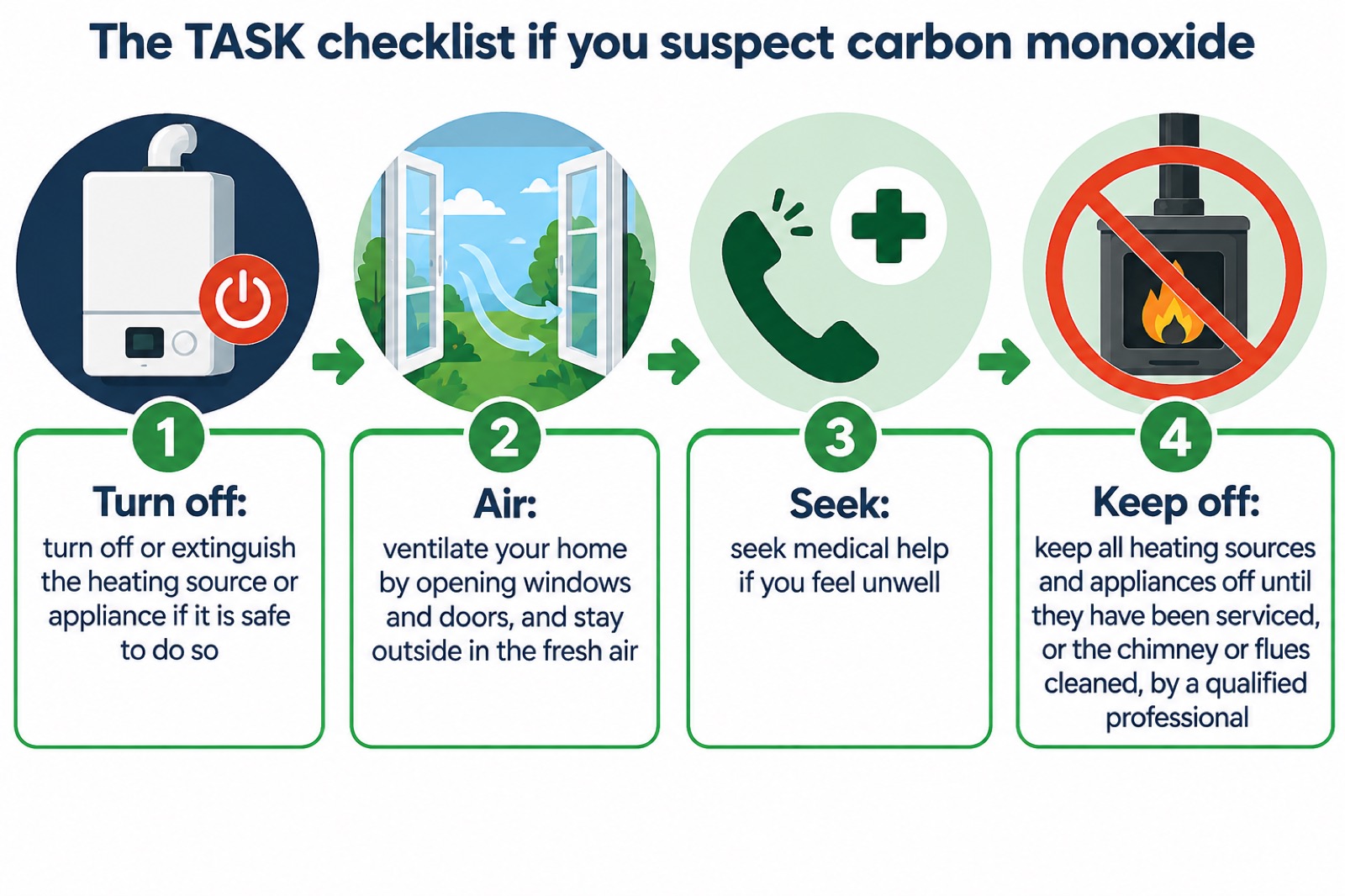
Follow the fire and rescue service's sequence:
- Turn off or extinguish fuel-burning appliances if it is safe to do so. Northern Ireland Fire and Rescue Service includes this as the first part of its carbon monoxide advice.8
- Open doors and windows, go outside and stay out. Nidirect similarly advises turning appliances off, opening windows and getting outside into fresh air.9
- Seek medical assistance if you feel unwell. For a carbon monoxide emergency where occupants are at risk, Northern Ireland Fire and Rescue Service says to call 999 and ask for an ambulance and the fire and rescue service.4
- Keep appliances off until checked. Northern Ireland Fire and Rescue Service says they should remain off until a qualified engineer has checked them. Belfast City Council likewise says not to use an appliance again until it has been tested by a registered engineer.8
The home emergencies guide covers carbon monoxide incidents alongside gas leaks and other urgent household hazards. If you smell gas around a heater or cylinder, use that guide rather than assuming the smell is carbon monoxide: carbon monoxide itself has no smell.11
Carbon monoxide signs and alarms
Carbon monoxide is a colourless, odourless, tasteless, poisonous gas produced by incomplete burning of carbon-based fuels, including gas, oil, wood and coal. The Health and Safety Executive warns that it can kill quickly without warning. Early symptoms include drowsiness, headaches, breathlessness and nausea.12 Other official symptom lists include dizziness, collapse and loss of consciousness. These symptoms can resemble flu, food poisoning, viral infection or tiredness, which can delay recognition.13
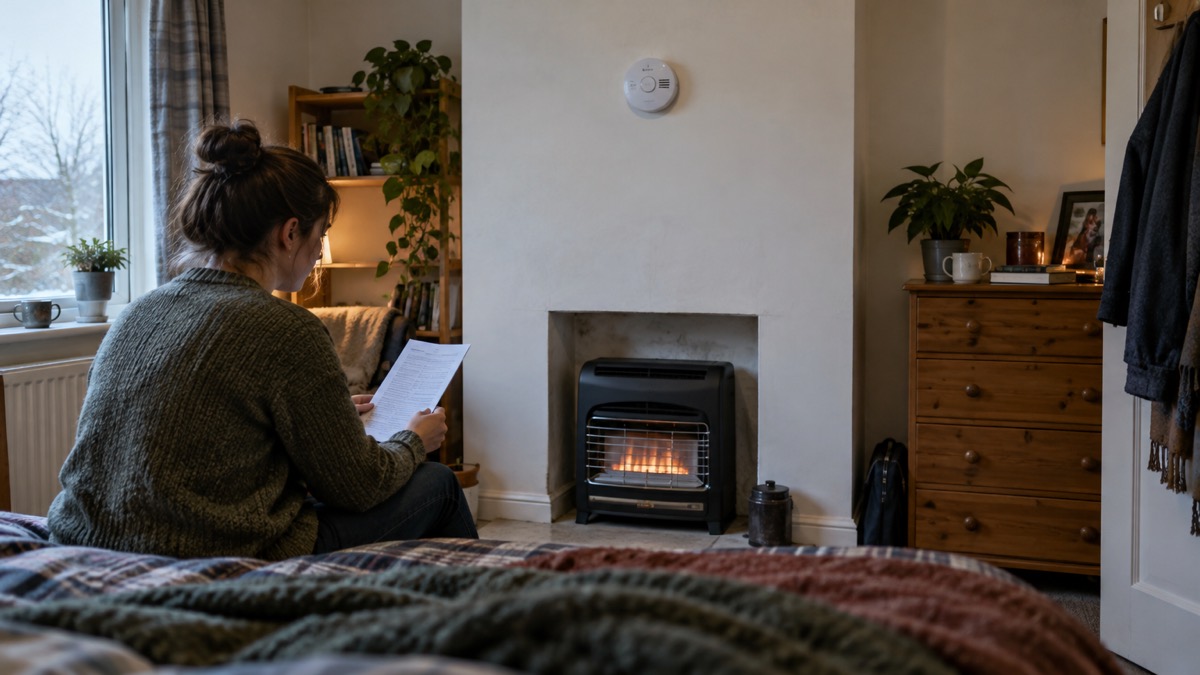
Lincolnshire County Council explains that boilers, cookers, heaters, gas fires and solid-fuel burners can produce carbon monoxide when faulty, incorrectly fitted or not regularly serviced. Blocked or poorly maintained flues, chimneys and vents are another cause.14 Risk is not confined to your own appliance: North and Mid Wales fire safety guidance says carbon monoxide can enter through shared flues or chimneys and can permeate brick walls and plaster.13
| Warning sign | What it can indicate |
|---|---|
| Yellow or orange flames rather than blue | Incomplete combustion, except on fuel-effect fires or flueless appliances that normally display this flame colour12 |
| Soot or yellow and brown staining on or around an appliance | A warning sign requiring investigation12 |
| Pilot lights frequently blowing out | A possible appliance or combustion problem12 |
| Increased condensation inside windows | Another listed sign of incomplete combustion12 |
| Headaches, dizziness, nausea or breathlessness | Possible poisoning, particularly alongside an alarm or appliance warning sign12 |
Fit a working carbon monoxide alarm and test it regularly. Derbyshire advises a battery-operated detector alongside smoke alarms, tested every week, especially when using portable heaters, open fires or stoves.5 An alarm does not replace maintenance: annual safety checks and servicing, clear flues and correct installation all matter.13 The HSE says gas work in homes must be undertaken by a Gas Safe registered engineer.15
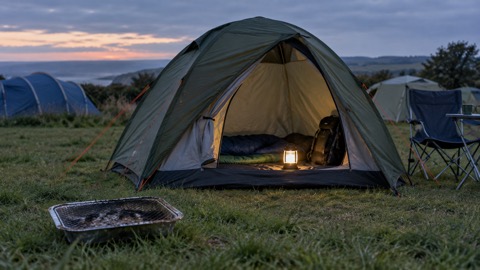
Generators and barbecues need the same seriousness. HSENI reports carbon monoxide poisoning involving petrol-powered generators in enclosed settings, and poisoning where gas or charcoal barbecues were brought into tents or other small enclosed spaces for warmth. The backup power guide and tents and caravans guide address these settings in more detail.16
Getting ready before winter
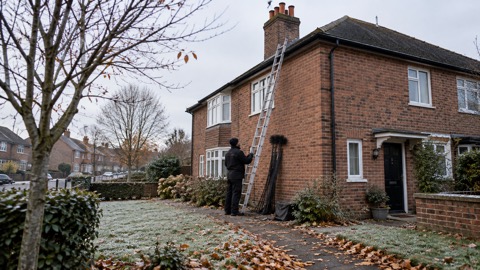
Use the before-winter checklist while heating, fuel and cooking equipment can still be checked without urgency. Preparation differs slightly depending on whether your home uses mains gas, electricity, heating oil, LPG or solid fuel.
- Service fuel-burning appliances and maintain chimneys and flues. Annual appliance safety checks and regular sweeping reduce the conditions associated with carbon monoxide poisoning.13
- Install and test alarms. Derbyshire advises weekly testing of carbon monoxide detectors and smoke alarms.5
- Keep food in the cupboards. Derbyshire also advises stocking heating oil if you use it.5
- Check stored fuel before winter. City of London guidance tells households not on mains gas or electricity to keep a supply of heating oil, LPG or solid fuel so they do not run out in winter.3
- Reduce avoidable heat loss. Lancashire Prepared includes loft insulation among its winter preparations.17
- Prepare alternatives for a gas failure. Electric heaters, microwaves and other electrical appliances can help where gas alone is unavailable, provided electricity remains on.2
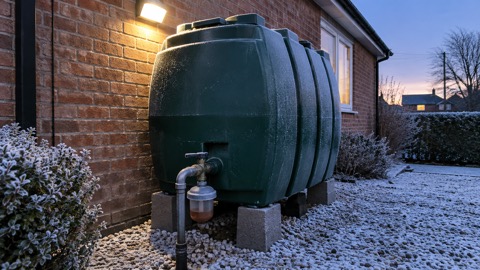
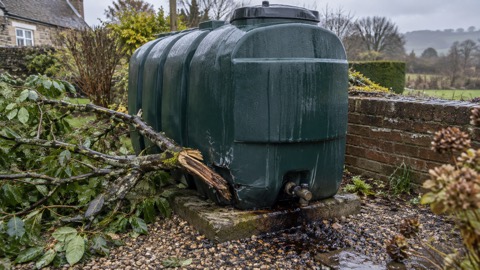
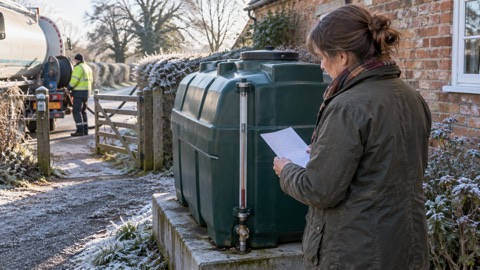
For oil-heated homes, the guides to heating oil tanks, checking a tank after a storm and the Cold Weather Priority Scheme cover supply and tank checks. A wider emergency kit should support lighting, information and other needs as well as warmth.
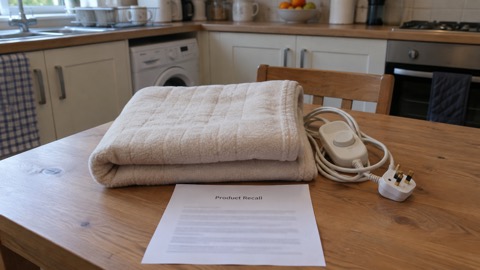
Do not leave safety checks until equipment is brought out during a failure. North Yorkshire Fire and Rescue Service advises checking that a stored heater is not subject to a product recall or repair.18 If you are considering a generator, read the backup power guidance first: generators are among the appliances associated with carbon monoxide incidents in enclosed settings.16
Keeping warm when the heating fails
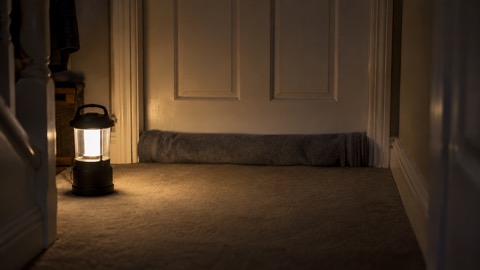
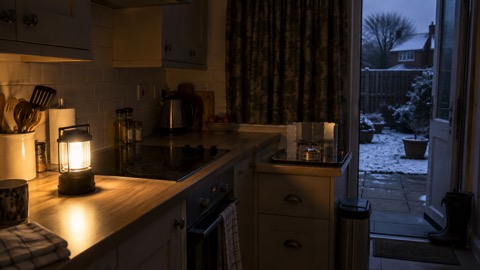
Concentrate on keeping people warm and retaining the heat already in the building. Buckinghamshire Council advises using only one or two rooms next to each other during prolonged, widespread gas loss. It notes that the kitchen will usually be the warmest room. Close doors and hang blankets over doorways to isolate the occupied space.2 The one warm room guide develops this approach, while stopping draughts explains where heat escapes.
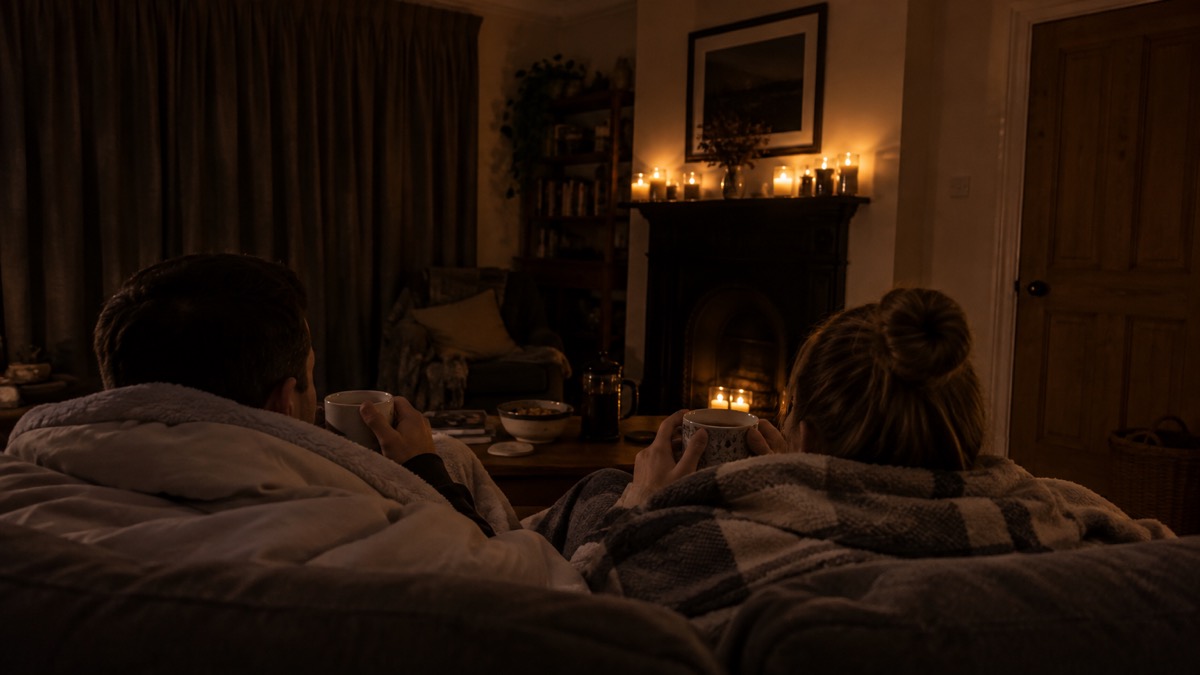
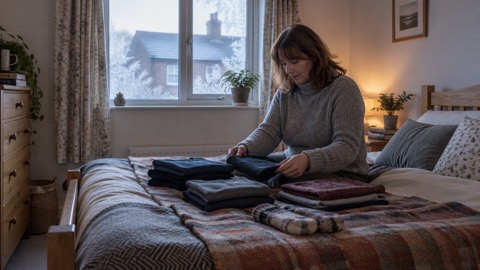
Use clothing and bedding rather than relying solely on heating the air. Government power-cut advice is to use blankets and layered clothing, close curtains and shut the doors of unused rooms.1 Eat little and often with a varied diet, keeping cupboards stocked in case you cannot leave home. For someone less mobile, North Cumbria NHS advises preparing a flask so warm drinks are available through the day and keeping a warm blanket over their knees.19
A power cut and a heating breakdown can look identical indoors but require different checks. The power cuts guide explains the electricity failure, including why boilers and heat pumps stop. The gas and heating guide covers boiler, heat pump and cold-weather condensate pipe problems. Do not assume that a gas oven provides backup cooking: it will not work without power.1
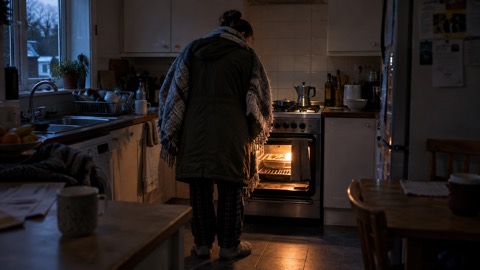
If you are tempted to use the oven as a room heater, read whether it is safe to heat your home with the oven first. Candles and tealights also introduce a naked flame into a room where bedding, curtains and blankets may have been moved closer together. Use the emergency lighting guide for lighting choices rather than treating small flames as a heating plan. Cold-weather health and hypothermia are covered in the snow and ice guide.
Portable heaters used safely
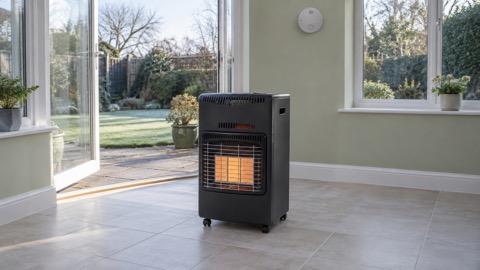
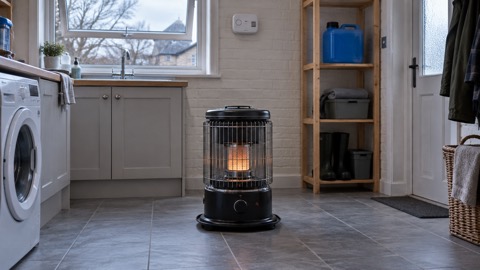
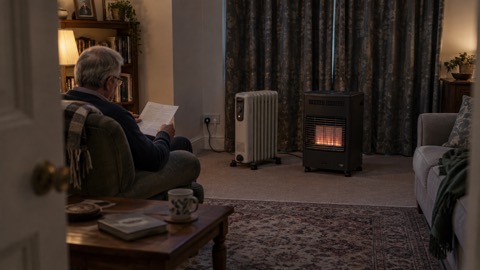
Portable heaters are unfixed electric, gas or paraffin appliances that can be moved around the home. Cheshire Fire and Rescue Service warns that they can pose a fire risk if used incorrectly.20 Choose by circumstance: an electric heater needs working electricity, while a portable gas heater uses LPG such as butane or propane and must only be used in a well-ventilated room.20
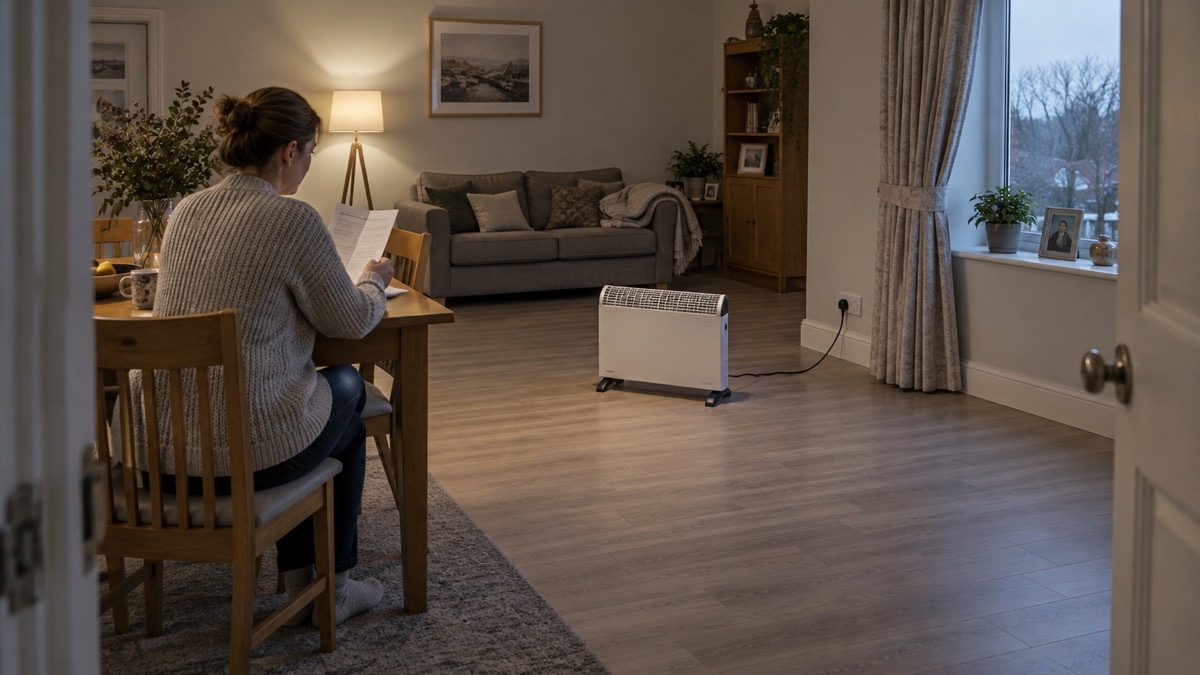
| Type | Essential limits |
|---|---|
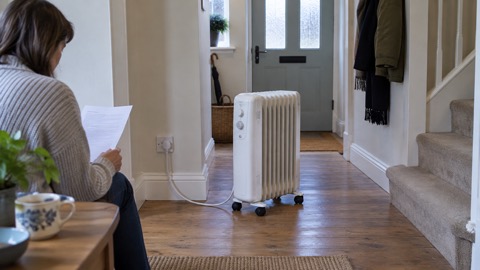
| Electric | Plug directly into a wall socket, not an extension lead; standard models must not be used in bathrooms or shower rooms18 |
| Portable gas | Never use in a bedroom; use only in a well-ventilated room and maintain the heater18 |
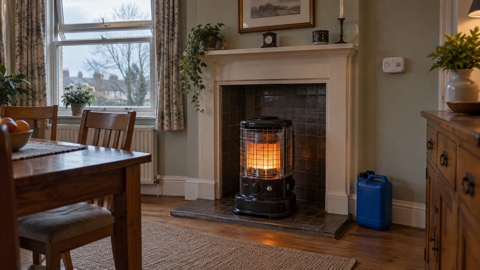
| Paraffin | It is an unfixed fuel-burning appliance, so carbon monoxide precautions and appliance maintenance apply12 |
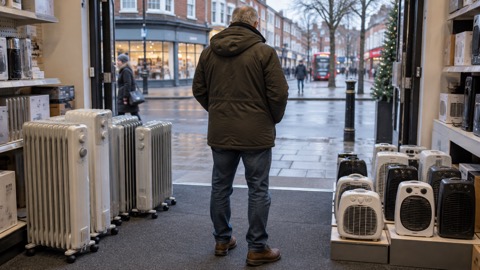
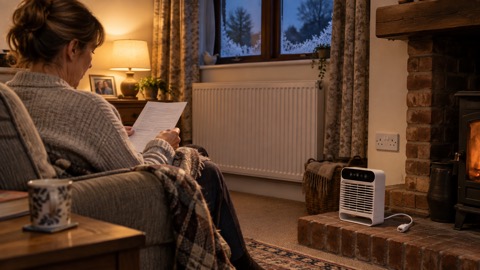
The portable heater guide explains the types, with separate comparisons of electric or gas heaters, paraffin or bottled gas heaters and oil-filled radiators or fan heaters. There is also specific guidance on using a paraffin heater indoors and a radiator fan.
For day-to-day use, follow the heater safety guide and these fire-service rules:
- Place the heater on a flat, stable surface, away from walkways and doorways, where it is unlikely to be knocked over. Warwickshire advises at least three feet from curtains, furniture, bedding or clothing; Northern Ireland Fire and Rescue Service states at least one metre from combustible materials.21
- Choose tip-over and overheating protection, and inspect for wear, damage, loose connections and debris.21
- Never leave a heater unattended, especially near children or pets. Switch it off before sleep or leaving the property.4
- Do not dry clothes on it, sit or stand close enough for clothing to catch fire, or use flammable adhesives, cleaning fluids or aerosols nearby.4
Devon and Somerset Fire and Rescue Service says most heater fires involve sitting too close, placing heaters near curtains and furniture, or drying washing. Heaters can also become trip hazards that obstruct escape.22
Gas bottles and cylinders
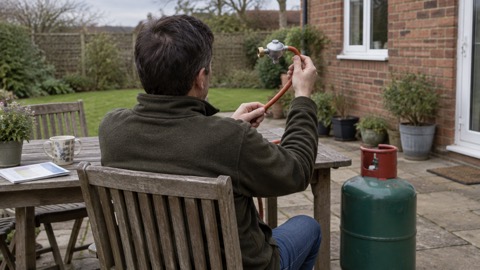
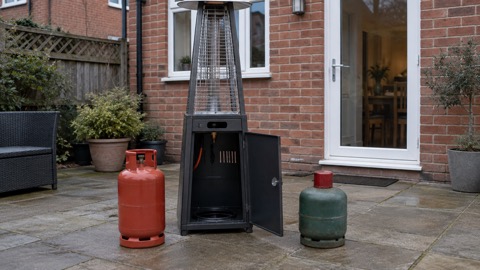
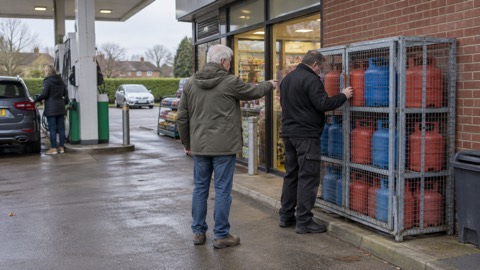
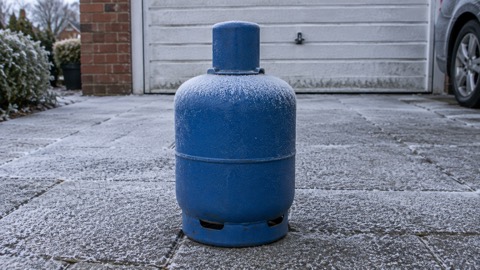
Portable gas heaters use liquefied petroleum gas, commonly butane or propane.20 The bottled gas guide explains cylinders and regulators, while butane or propane compares the fuels.
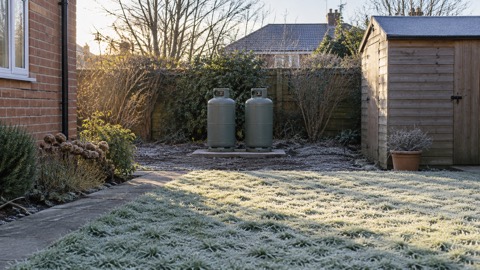
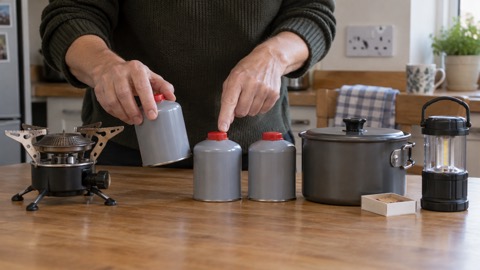
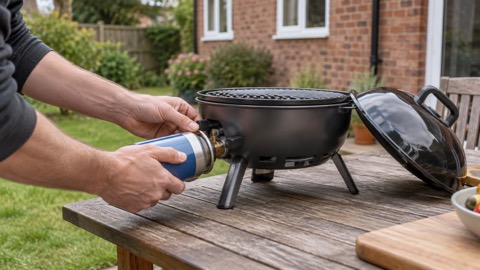
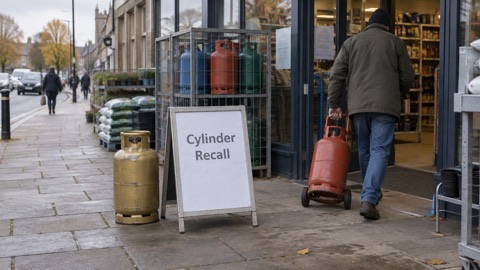
Northern Ireland Fire and Rescue Service advises against storing gas cylinders in your home. It also says to keep combustible items away from portable heaters, open fires and stoves, keep internal doors able to close, and maintain a clear escape route.4 Read where to store gas cylinders and how to change an LPG cylinder safely before moving or connecting one. Smaller stove cartridges raise separate connection and storage questions, covered in the gas cartridge guide.
Maintain the complete appliance, not just the cylinder. The HSE warns that blocked or partially blocked LPG burners can produce higher carbon monoxide levels and flame failure, and that LPG can leak from damaged hoses.15 If you smell gas around a heater or bottle, use the home emergencies guidance on gas leaks rather than continuing to operate it.
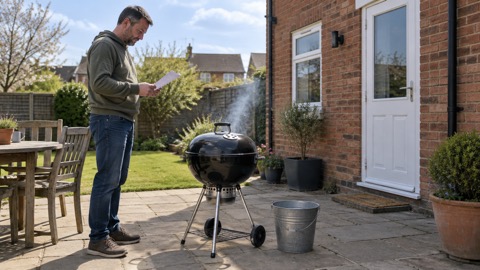
For a gas barbecue, Northern Ireland Fire and Rescue Service gives a specific shutdown sequence: turn off the gas cylinder before turning off the barbecue controls, so gas remaining in the pipework is exhausted.8 The barbecue guide explains outdoor emergency use. Never bring a gas or charcoal barbecue into a tent or small enclosed space for warmth; HSENI links this practice to carbon monoxide poisoning.16
Wood burners, open fires and chimneys
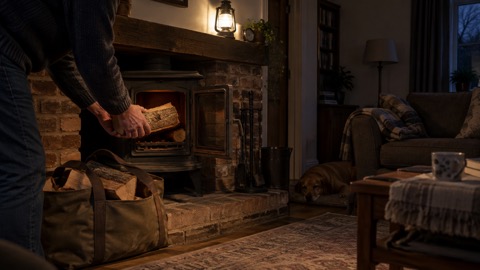
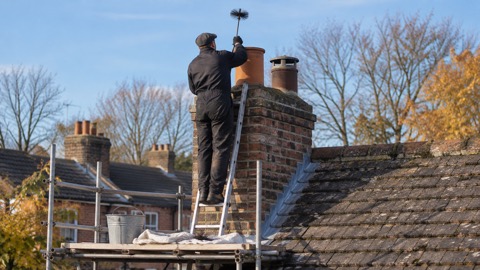
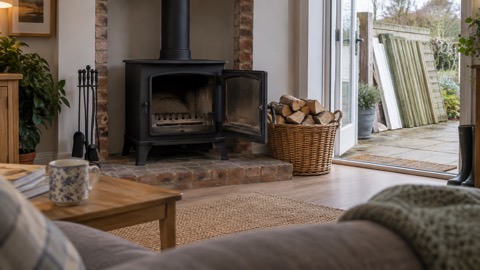
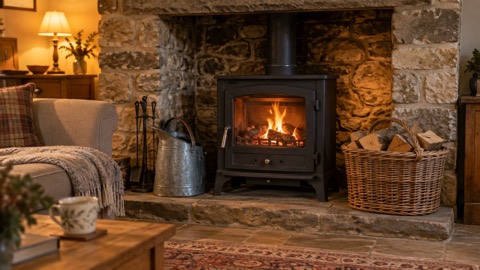
A stove or open fire can only form part of a safe backup plan if the appliance, flue and chimney are in a sound condition. Devon and Somerset Fire and Rescue Service says chimneys should be well maintained and structurally sound, only fuels appropriate to the fire should be used, and chimneys and wood-burner flues should be swept by a chimney sweep and checked by a qualified, certified chimney engineer.22
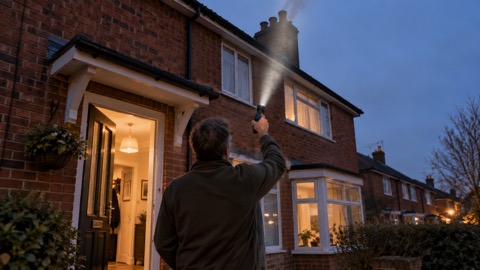
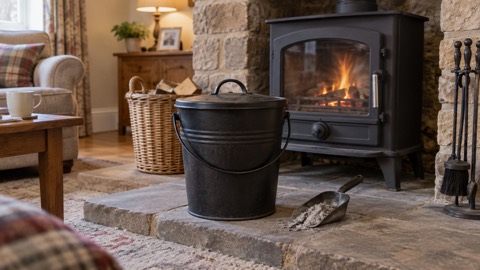
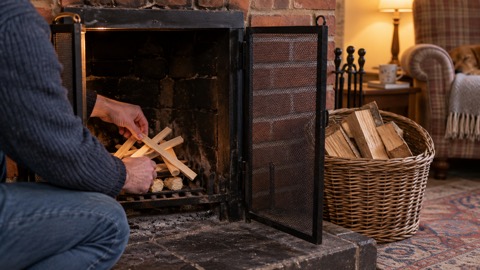
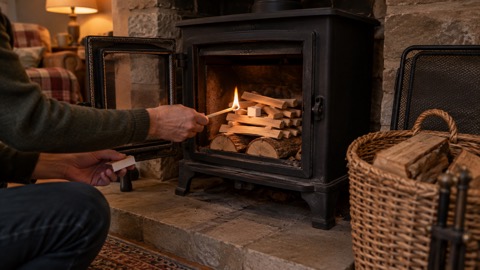
The wood burner guide covers their use during a power cut, with wood-burner safety and open-fire safety covering operation and guards. For fuel, see firewood dryness and seasoning, what wood and rubbish never to burn and smoke control areas. Do not assume an old chimney is ready: lighting an open fire after years without use addresses that situation.
Arrange chimney sweeping and checking before relying on the fire. A blocked or unswept chimney is a recognised carbon monoxide risk factor.13 Learn the warning signs in the chimney fire guide, and use the ash disposal guide when clearing the appliance.
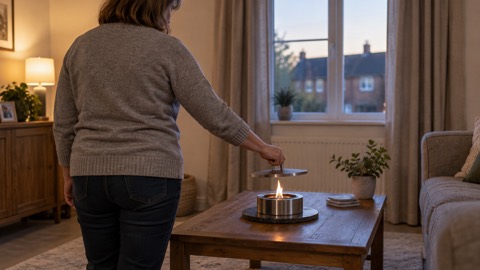
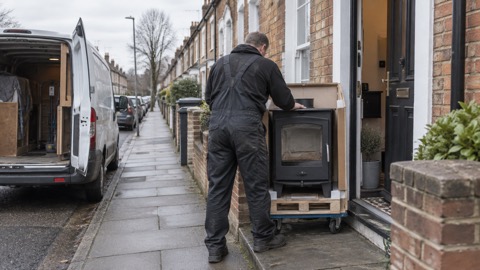
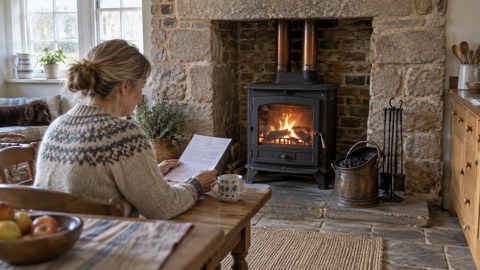
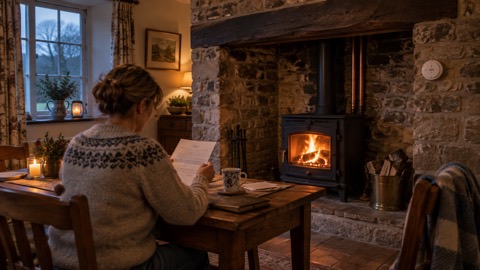
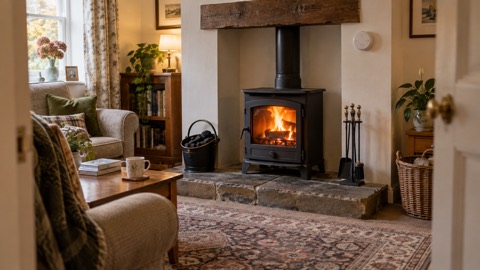
Further pages cover wood burners compared with multi-fuel stoves, a stove lighting and safety kit and bioethanol burners indoors. Individual appliance guides include the Haven wood-burning stove, Country 16B multi-fuel boiler stove, Country 16B woodburner stove and SLX 45 wood-burning stove.
Electric blankets, hot water bottles and wheat bags
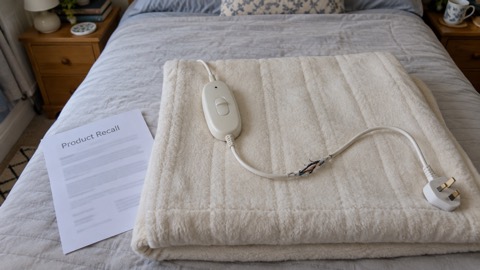
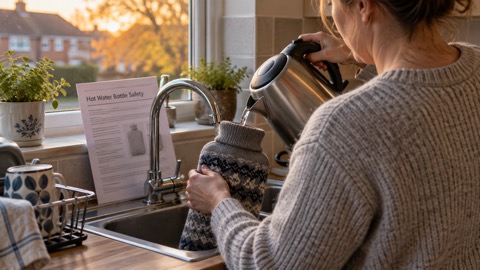
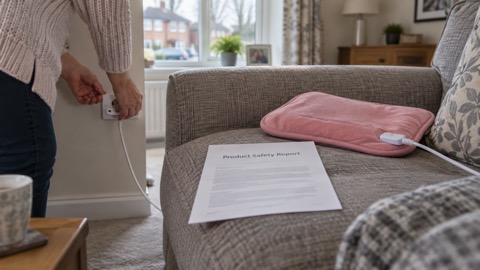
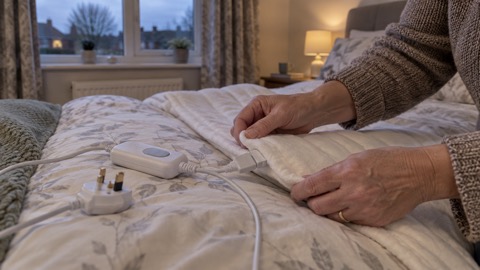
Personal warming can reduce the need to heat every room, but each item has its own limits. Suffolk's winter guidance says electric blankets should be bought new, tested every 3 years and replaced when more than 10 years old. Do not leave one folded, because folding damages the internal wiring.6 The electric blanket guide brings together checks, use and replacement.
Warwickshire County Council lists scorch marks, fraying fabric, exposed elements, creasing or folding, soiling, damp patches, damaged or missing tie tapes, worn flex and loose connections as danger signs. An old round BEAB safety mark means the blanket is more than 10 years old. Have a blanket showing these signs checked or replaced.23
| Item | Main check on this page |
|---|---|
| Electric blanket | Test every 3 years, replace after 10 years, avoid folding and inspect the fabric, elements and flex6 |
| Hot water bottle | Use the dedicated guide for safe filling, condition checks and replacement |
| Wheat bag | Use the dedicated guide for heating instructions and fire risk |
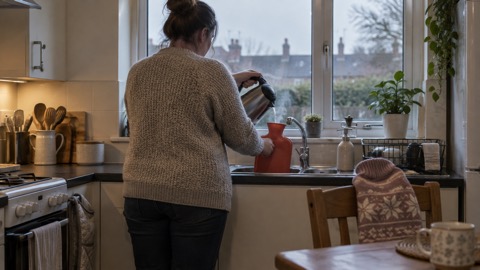
See hot water bottles: filling, checking and replacing, wheat bags and their fire risk, and the hot water bottle or wheat bag comparison. For a less mobile person, combine suitable bedding with a flask of warm drinks and a blanket over the knees, as advised by North Cumbria NHS.19
Cooking without mains power or gas
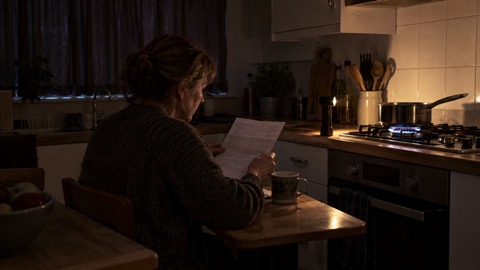
First check which appliances remain available. Gas ovens will not work without electricity, and electric alternatives such as microwaves only solve a gas failure while mains power remains available.1 The separate guide to using a gas hob when electricity is off covers that appliance.
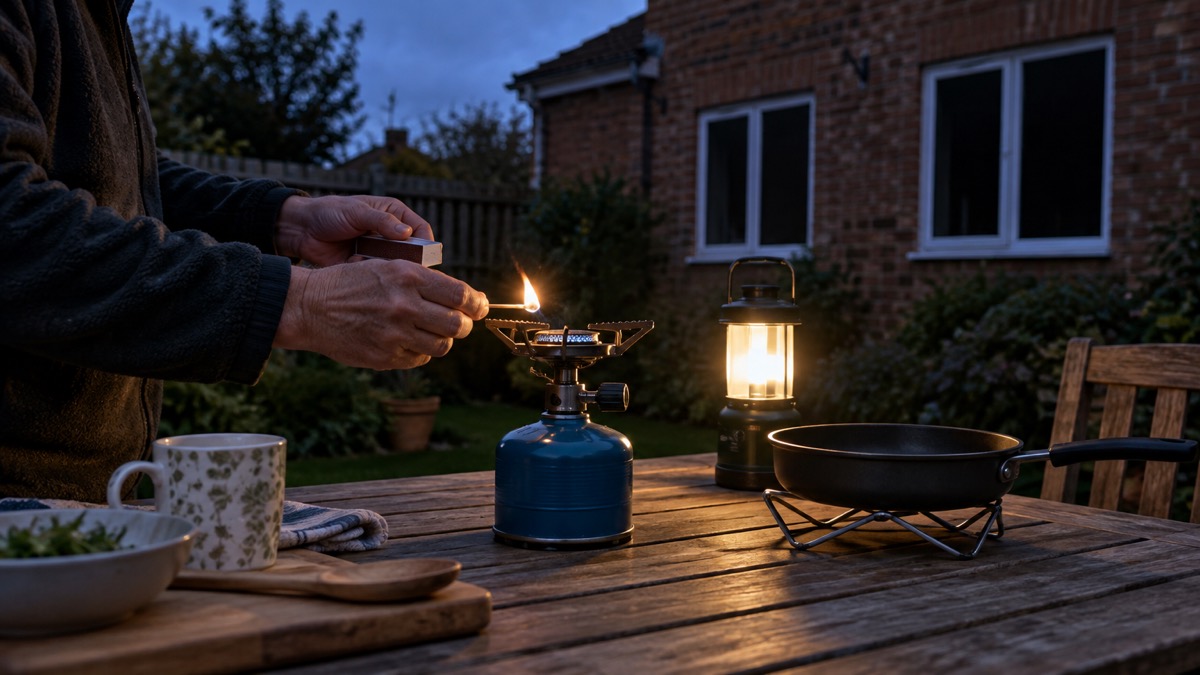
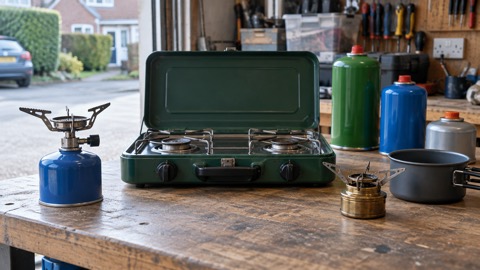
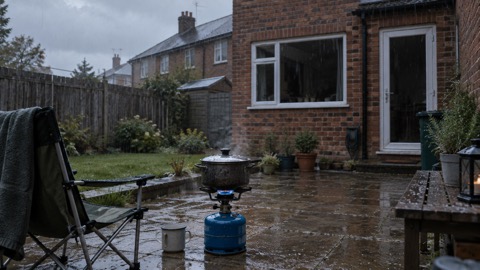
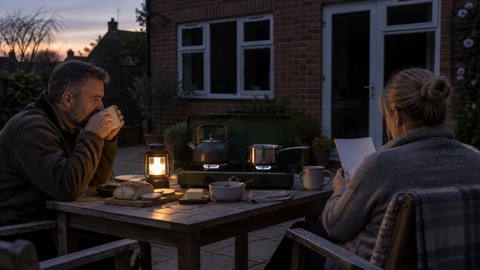
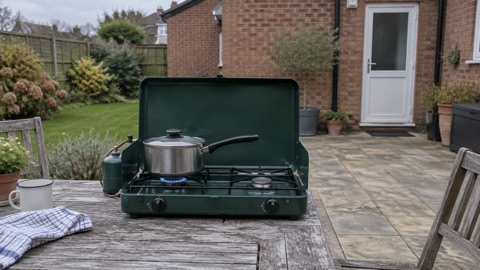
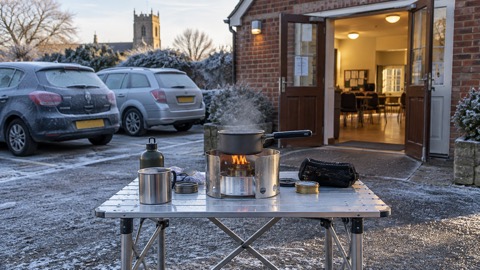
Food Standards Scotland says food can be cooked and water heated using a camping stove, barbecue or bottled gas stove, checking the manufacturer's instructions for safe use. It warns that these methods can take longer than usual, so food must be steaming hot and cooked all the way through.24
| Method | What to check |
|---|---|
| Camping or bottled-gas stove | Follow the manufacturer's instructions and allow for longer cooking24 |
| Barbecue | Never bring a gas or charcoal barbecue into a tent or small enclosed space16 |
| Existing gas oven | It will not work without electricity1 |
| Electric cooking | Suitable for a gas failure only while electricity remains available2 |
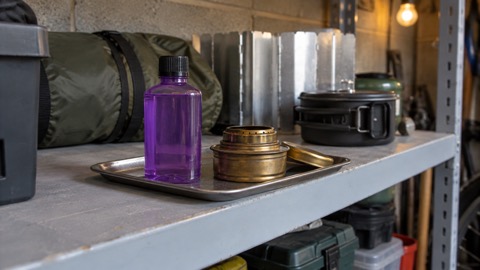
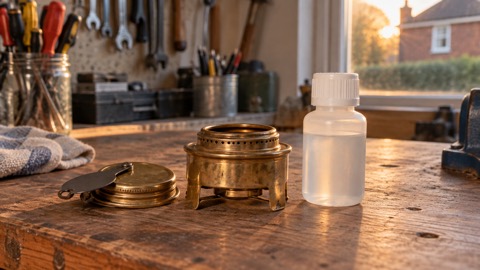
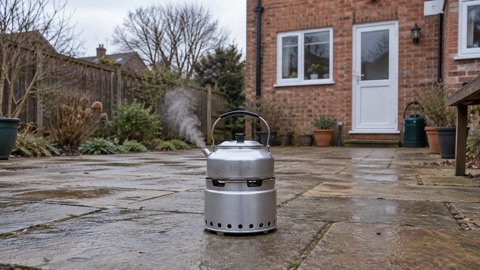
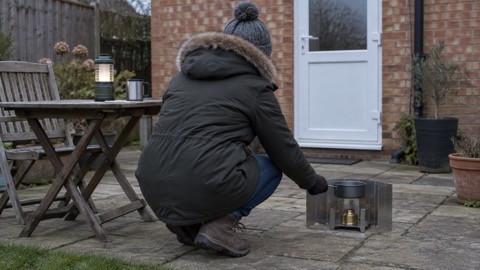
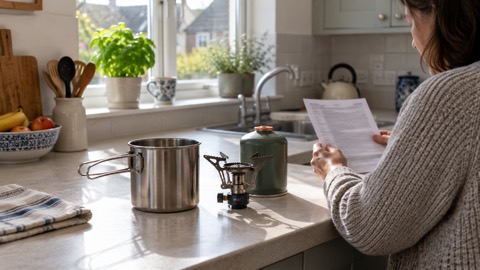
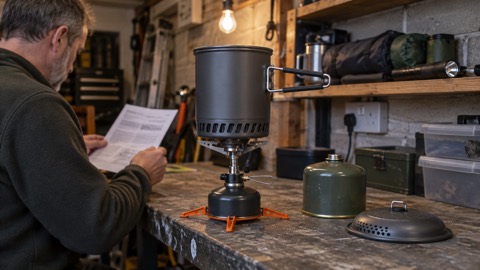
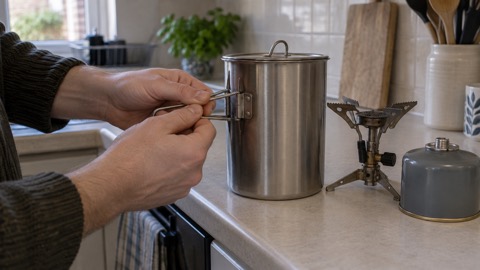
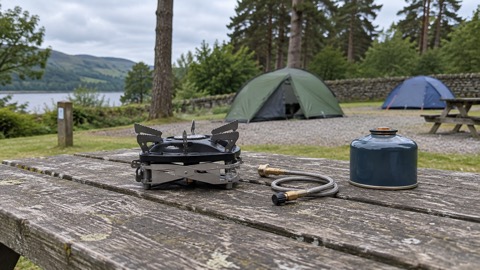
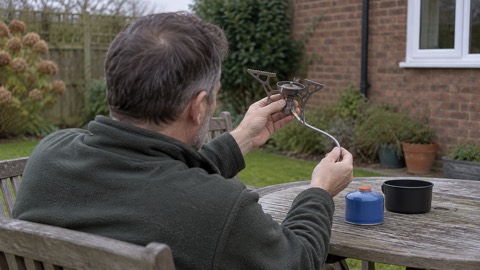
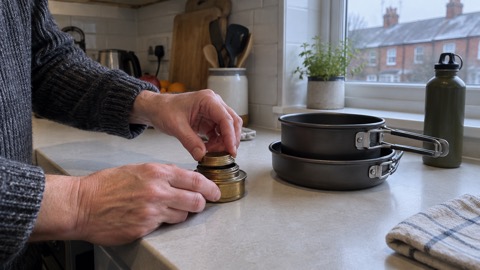
The camping stove guide explains types and choice, while camping stove safety addresses indoor use. Compare gas cartridge and spirit stoves, prepare a backup stove kit, and check spirit-burner fuel where relevant. Individual guides cover the Campingaz Camping Kitchen 2 CV, Party Grill 200, Party Grill 400 CV, Optimus Gemini II, MSR Reactor, MSR PocketRocket stove kit, MSR Trail Lite pot, OEX Folding Novo and OEX Folding Savo. Spirit-stove formats include the Trangia 25, Trangia 27, Triangel and Mini Trangia.
Fire Kills advises staying in the kitchen while cooking, never leaving pans unattended and turning off the hob if you must leave. Avoid cooking when tired or after drinking alcohol. Keep tea towels, cloths and packaging away from the hob and oven, clean the cooker, grill and oven regularly, and check the cooker is off before bed or leaving home.25 For meals without conventional cooking, including self-heating meals and flameless ration heaters, see the emergency food guide.
Cold homes and who is most at risk
Cold can affect anyone, but official guidance identifies people needing particular attention. Derbyshire Fire and Rescue Service lists people over 75 or frail older people, children under five, disabled people and those with long-term health conditions, people whose mental ill health reduces self-care, people with learning difficulties, people in deprived circumstances, and homeless or marginalised people.26 West Midlands Ambulance Service also includes people aged 65 and over, pregnant women, people on low incomes and people with mental health conditions among those at particular risk from cold weather.27
People living alone who may be unable to care for themselves are another at-risk group.17 Children, pregnant women, older people and those with heart or breathing problems are also more vulnerable to carbon monoxide.10
- Keep occupied rooms at least 18°C where heating is available.3
- Use layers, blankets, closed curtains and shut doors when heating fails.1
- Arrange support through family, friends or local organisations where cooking or self-care is difficult.28
- Use the extra help guide for older, disabled and medically dependent households, and the community resilience guide for neighbourhood support.
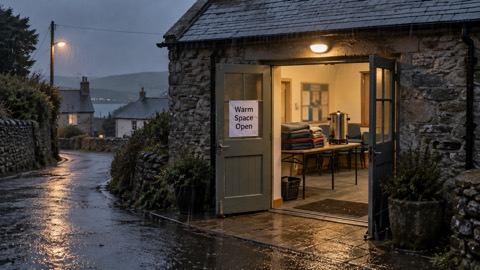
A warm space or warm hub may provide an alternative place to go. Cold-weather health and hypothermia are covered in the snow and ice guide. Do not treat symptoms such as confusion or loss of consciousness as ordinary discomfort when carbon monoxide is possible: leave and seek emergency help.4
Help with costs and who to contact
Cheshire Fire and Rescue Service states that support is available for people struggling with heating costs. The winter payments guide explains the main payment schemes, while warm spaces can provide somewhere heated outside the home. Households using heating oil can also read about the Cold Weather Priority Scheme.
If cooking is becoming difficult, Norfolk and Suffolk NHS suggests preparing larger meals and freezing portions for later, or asking family, friends and local support organisations for help.28 Prepare those portions while normal cooking and freezing are available, rather than relying on this approach during an outage.
For appliance problems, use a qualified engineer and keep a suspect appliance off until it has been checked. The HSE says household gas work must be done by a Gas Safe registered engineer.15 In Northern Ireland, Belfast City Council says complaints about fumes or carbon monoxide entering a property can be investigated by calling 028 9027 0428.10 Where occupants are at immediate risk from carbon monoxide, call 999 and ask for an ambulance and the fire and rescue service, then get out and stay out.4
Sources (28)
- Power cuts: household preparedness, UK Government Prepare campaign, 2026-10-21
- Gas supply issues and keeping warm, Buckinghamshire Council, 2026-10-29
- Advice on coping in cold weather, City of London Corporation, 2025-08-15
- Home fire safety, Northern Ireland Fire and Rescue Service, 2026-10-14
- Keep warm in winter, Derbyshire County Council, 2026-10-29
- Winter matters, Suffolk County Council, 2026-11-03
- Carbon monoxide safety, Greater Manchester Fire and Rescue Service, 2026-10-29
- Community safety advice, Northern Ireland Fire and Rescue Service, 2026-10-22
- Gas safety and carbon monoxide, nidirect, 2025-11-24
- Home safety and carbon monoxide, Belfast City Council, 2026-10-29
- Carbon monoxide, Cheshire Fire and Rescue Service, 2026-05-20
- Carbon monoxide hazards, Health and Safety Executive, 2026
- Carbon monoxide safety in your home, North and Mid Wales Fire and Rescue Service, 2026-10-29
- Fire alarms and carbon monoxide detectors, Lincolnshire County Council, 2026-10-29
- Carbon monoxide and gas-work safety, Health and Safety Executive, 2026
- Carbon monoxide risks, Health and Safety Executive Northern Ireland, 2026
- Stay warm and well this winter, Lancashire Prepared, 2026-10-29
- Heating your home safely, North Yorkshire Fire and Rescue Service, 2026-03-09
- Stay warm and well during cold weather, North Cumbria Integrated Care NHS, 2024-01-15
- Portable heater safety, Cheshire Fire and Rescue Service, 2026-05-26
- Safe portable heating, Warwickshire County Council, 2026-10-29
- Home safety partnerships, Devon and Somerset Fire and Rescue Service, 2026
- Electric blanket and portable heater safety, Warwickshire County Council, 2026-10-29
- Food safety during power cuts, Food Standards Scotland, 2026-10-25
- Fire prevention in the kitchen, UK Government Fire Kills campaign, 2026-03-25
- Cold weather health and wellbeing, Derbyshire Fire and Rescue Service, 2026-10-29
- Cold weather advice, West Midlands Ambulance Service, 2026-05-20
- Stay warm and nourished, Norfolk and Suffolk Integrated Care Board, 2026-10-16
 Keeping One Room Warm
 Clothing and Bedding for Cold
 Stopping Draughts
 Hot Water Bottle Safety
 Wheat Bags and Fire Risk
 Electric Blanket Safety
 Portable Heater Types
 Portable Heater Safety
 Wood Burners in a Power Cut
 Using a Wood Burner Safely
 Open Fires and Fire Guards
 Firewood and Seasoning Logs
 Smoke Control Areas
 Chimney Sweeping Frequency
 Chimney Fires
 Bioethanol Burners Indoors
 Camping Stoves for Power Cuts
 Camping Stove Indoor Safety
 Gas Cartridges
 Bottled Gas for Heaters
 Gas Hob in a Power Cut
 Barbecues Outdoors Only
 Warmth in Tents and Caravans
 Heating Oil Tanks in Winter
 Heating a Home with the Oven
 Paraffin Heater Indoors
 Changing an LPG Cylinder Safely
 Storing Gas Cylinders at Home
 Wood You Should Never Burn
 Disposing of Ashes Safely
 Open Fire in an Unused Chimney
 Oil Tank Leaks After a Storm
 Trangia Spirit Burner Fuel
 Before-Winter Heating Checks
 Backup Stove Kit Checklist
 Wood Burner Lighting Kit
 Electric or Gas Heaters
 Butane or Propane Gas Bottles
 Gas or Spirit Stoves
 Paraffin vs Gas Heaters
 Hot Water Bottle or Wheat Bag
 Radiator vs Fan Heater
 Wood Burner vs Multi-Fuel Stove
 Cold Weather Priority Scheme
 Warm Spaces and Warm Hubs
 Winter Heating Payments
 Campingaz Camping Kitchen 2 CV
 Campingaz Party Grill 200
 Campingaz Party Grill 400 CV
 Optimus Gemini II Stove
 Trangia 25 Large Stove
 Trangia 27 Small Stove
 Trangia Triangel Stove
 Trangia Mini Spirit Stove
 Flogas Gold Butane Cylinder
 Calor 4.5kg Butane Cylinder
 MSR Trail Lite Pot
 MSR Reactor Stove
 MSR PocketRocket Stove Kit
 Valiant Radiator Fan Recall
 OEX Folding Novo Stove
 OEX Folding Savo Stove Recall
 Charnwood Haven Wood Stove
 Charnwood Country 16B Multi-Fuel
 Charnwood Country 16B Woodburner
 Charnwood SLX 45 Wood Stove
 Trangia Mini Spirit Stove Safety