Note: the frontmatter above is superseded by the final version at the end of this thinking; the article follows with the correct frontmatter.
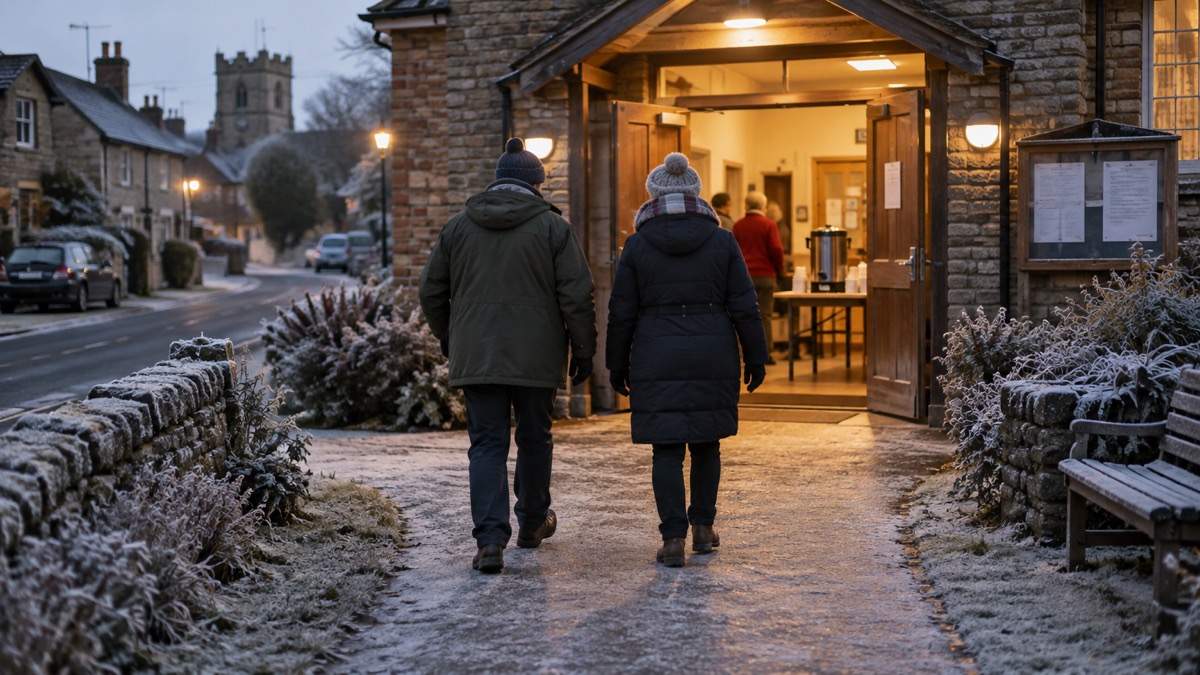
If your heating has failed, your energy bills have become unaffordable, or a power cut has left the house cold, you do not have to sit it out at home. Across the UK, councils, charities, churches, libraries and community groups open free, heated venues in winter where anyone can go to keep warm. Whatever the scheme is called in your area, the idea is the same: a warm, welcoming space for people to visit if they need it1.
Finding one is usually a matter of searching your council's website or a national map. Cumberland Council's Warm Spots scheme lets you search a map, type into a search box and select the day of the week to find venues near you1. Surrey reports over 100 Warm Welcome venues available through the national Warm Welcome campaign2. In Norfolk and Suffolk, community centres, libraries, churches, village halls and voluntary organisations may operate warm hubs during periods of cold weather, providing a safe, heated place to spend time, meet others and access local support3.
How to find a warm space near you
The quickest route is your local council's website. Wiltshire and Swindon Prepared states that local authorities provide warm spaces across the county, and all of this information is held on your Local Council website7. Council winter pages usually list the venues, their opening days and hours, and what each one offers. If your council does not use the words "warm space", look for pages on cost of living support, winter support or staying well in winter, which is where most councils publish their lists.
Several areas run searchable maps. Cumberland Council's Warm Spots page lets you find a venue by searching the map, typing into the search box, selecting the day of the week, or using the links listed below the map1. On Anglesey, you search warm spaces on Medrwn Môn's Connect Anglesey website for the list of areas that offer the service8.
The national option is the Warm Welcome Spaces Campaign. Derbyshire County Council advises that organisations or charities running a warm and welcoming space should register their venue with the campaign so local residents can find them5, and the campaign runs an online map of registered venues.
A few practical points worth checking before you set out:
- Opening days and hours, which vary by venue and often change between weekdays and weekends
- Whether the venue is wheelchair accessible, where the directory shows this4
- What is offered, since some venues provide hot drinks and food and others provide only warmth and seating
If you cannot get online, your library can help: many libraries are themselves warm spaces, and staff can point you to others nearby.
What a warm space is: free, safe and warm, with everyone welcome
A warm space is exactly what the name suggests: a heated public venue, open in winter, that you can go to without paying and without being asked why you are there. The City of London Corporation describes its Warm Spaces as providing "a place for everyone to come for warmth, activities and community in a friendly, non-judgemental way that welcomes all"9. Cumberland Council describes Warm Spots as safe and friendly public places where people of all ages can go to comfortably spend time reading, studying, chatting with others and meeting new people in their community1.
The "free and open to everyone" part matters, and it is stated consistently across schemes. Islington Council, describing its cool spaces, says "They are free to use and open to everyone"4, and warm space schemes take the same approach. Cornwall Council describes the Warm Welcome scheme as local churches, faith groups, community centres, businesses and more opening their doors to allow people to come and use their spaces, to be warm, and have some food, rather than heating their own homes10. That last phrase is the heart of it: the venue is already heated and open, and sharing that warmth costs the visitor nothing.
You do not need a referral, a booking or proof of need at most venues. Cumberland Council frames its warm spots as providing a warm, welcoming space for people of all ages to visit this winter if they need it11. Some schemes name a particular audience: the warm spaces network on Anglesey is described as offering people in Anglesey who are struggling with the cost of living a warm welcome, a warm shelter, a chat or a cup of tea8, and Public Health Scotland's keep warm, keep healthy guidance is aimed at vulnerable members of the public12. But "aimed at" is not "restricted to": the welcome is general, and nobody at the door will ask you to justify yourself.
If you are vulnerable to the cold and want support at home as well, some fire and rescue services offer free safe and well visits, which can include winter warmth advice13.
Warm spaces, warm hubs, warm spots: different names for the same help
Searching for "warm spaces near me" will not find every scheme, because councils and community groups use different names. Knowing the alternatives widens your search considerably.
| Name used | Where you will see it | What it means |
|---|---|---|
| Warm Spots | Cumberland | Safe, friendly public places for people of all ages1 |
| Warm hubs | Norfolk and Suffolk | A safe, heated place to spend time, meet others and access local support3 |
| Warm Welcome Spaces | Cornwall | Free, warm, welcoming spaces, often with food10 |
| Community Hubs | Cornwall | A network of hubs offering winter support10 |
| Warm banks | Informal press and campaign usage | Another name for the same idea |
Surrey County Council describes its warm welcomes as places to get warm, have a free hot drink and socialise with others2. Derbyshire's warm and welcoming spaces offer a place for people to meet, chat and get support and information around a wide range of different topics6. Whatever the label, the offer is the same: heat, a seat, company and, at many venues, a drink.
The same venues often serve double duty across the seasons. Surrey's guidance on community emergency information hubs notes that a hub can also act as a safe shelter, cool or warm hub, or assembly point for the community14. So a venue that appears on a summer cool spaces map may well be the same building that opens as a warm space in winter, and knowing your nearest one is useful all year round.
Where warm spaces are held: libraries, community centres, churches and more
Warm spaces are held in buildings that already exist and are already heated, which is what makes the schemes practical. In Norfolk and Suffolk, community centres, libraries, churches, village halls and voluntary organisations may operate warm hubs3. Cumberland's libraries themselves offer a warm space in all of them1.
Somerset County Council states that all Somerset libraries are Warm Welcome Spaces where you can stay warm, use facilities and access support information, and that community hubs offer warm spaces during winter where anyone can drop in15. Lancashire County Council says its libraries and family hubs have lots going on and are a good place to go to keep warm and find support16. Cornwall's Warm Welcome scheme involves local churches, faith groups, community centres, businesses and more10.
The equivalent summer schemes show the same spread of venues. Somerset's hot weather guidance notes that libraries, leisure centres, supermarkets, community venues and places of worship can often provide a cooler environment17, and London's cool spaces are suggested by boroughs, community groups, faith-based or cultural organisations and others, then validated before being listed18. The lesson for winter is the same: if a building in your area is public, heated and open, it is worth checking whether it takes part in a warm space scheme.
Some venues go further than opening a heated room. On Anglesey, Môn Actif leisure centres offer a warm space and free showers during centre opening hours in winter8, which matters if your hot water is off as well as your heating.
What you can do there: keep warm, meet people and pass the time

The primary purpose is warmth, but the point of a warm space rather than a heated waiting room is that you can spend time there comfortably. Oxfordshire County Council describes many warm spaces as your local library, "spaces where you can feel at home. They have more than books to while" away the time, including board games and jigsaw puzzles19. Surrey's warm welcomes are places to get warm, have a free hot drink and socialise with others2.
Company is a real part of the offer, not a bonus. The Keep Warm Keep Well advice from Nottinghamshire is to keep in touch with friends, family and your community20, and a warm space is one of the easiest places to do that, particularly for people who live alone. Derbyshire's warm and welcoming spaces exist precisely to offer a place for people to meet, chat and get support and information6.
What you can realistically expect to do at a warm space:
- Sit somewhere heated for as long as the venue is open
- Have a free hot drink at venues that provide one2
- Read, study or use library facilities1
- Play board games or do jigsaw puzzles at some venues19
- Chat with others and meet people in your community1
- Ask about local support and information6
Treat a warm space as a place to pass a cold afternoon or morning, not as overnight accommodation. Opening hours follow the venue's own, and most warm spaces run for a few hours on set days. Check the venue's listed opening days and hours before you set out.
Extra support some warm spaces offer
Beyond warmth and company, many warm spaces are a route to practical help. Derbyshire's warm and welcoming spaces offer support and information around a wide range of different topics6. Warm hubs in Norfolk and Suffolk are described as providing a safe, heated place to spend time, meet others and access local support3. Cornwall's Community Hubs offer a warm place to go, with the offer of hot food or drink in many locations10, and Scottish Borders resilient communities provide hot meals and assistance within community centres and village halls21.
Food support is common. Cornwall's Warm Welcome scheme describes venues allowing people to come and use their spaces, to be warm, and have some food, rather than heating their own homes10. On Anglesey, warm spaces offer a warm shelter, a chat or a cup of tea8.
Help with energy costs is also signposted. Lancashire County Council advises that you may be eligible for help with energy bills, or free improvements to your heating or insulation, particularly if you are vulnerable to the cold22. In Scotland, a new Winter Heating Payment has replaced the Cold Weather Payment23; you can read more about the payments available in England on our page on winter payments. Some areas also provide warm packs to the most vulnerable people in the community7, so it is worth asking your council or the venue what is available locally.
For heating your home more efficiently while the problem lasts, see our guides on keeping one room warm, clothing and bedding and stopping draughts.
Community hubs run by local groups
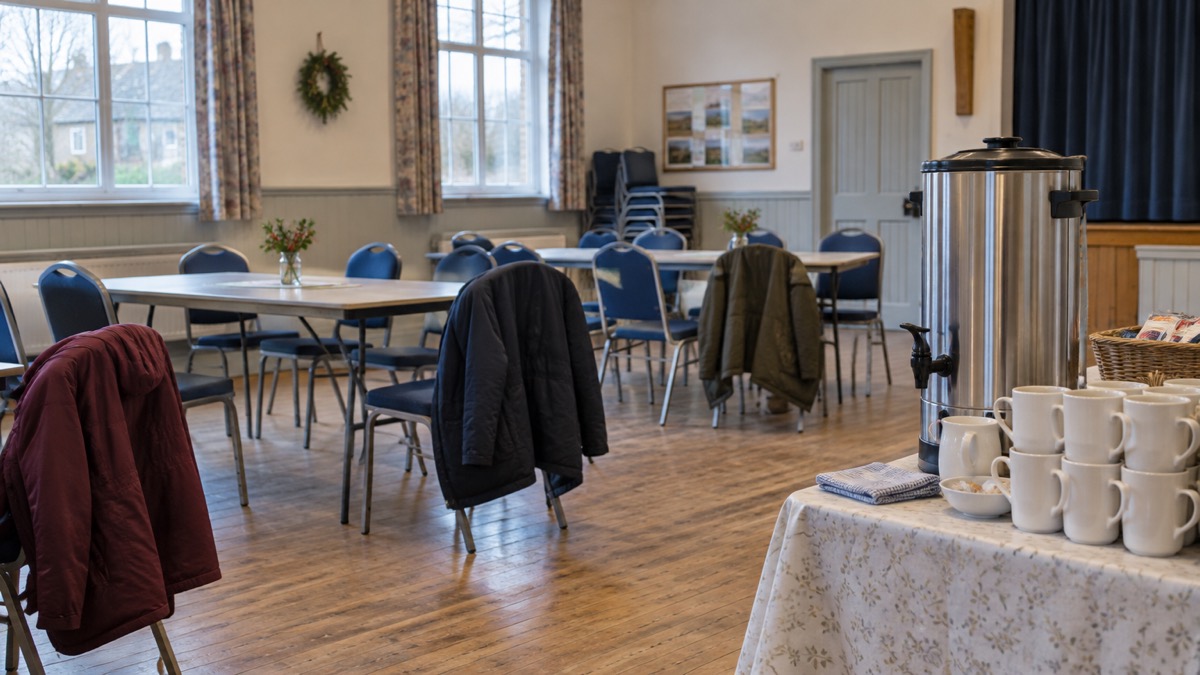
Alongside council-run warm spaces, many neighbourhoods have community hubs run by local volunteers, and these often become the warm spaces of last resort in an emergency. Surrey County Council aims to establish a network of Community Emergency Information Hubs in community venues such as village halls, faith group meeting places, sports clubs, or parish halls14. Cornwall runs a network of 35 Community Hubs across the county offering winter support10.
In Scotland, the model is well developed. NHS Highland's Keep Safe, Keep Well winter campaign describes Warm Community Hubs, known locally as Cidsin Ceilidhs, where local organisations can access a programme to heat their building and provide food and a warm space where community members can attend for a morning or afternoon; currently there are 9 organisations running this provision on a weekly basis across Uist24. In Argyll and Bute, the Third Sector Interface has collated a list of local organisations and community groups offering activities during the week in warm spaces throughout the area23.
These hubs do more than open a warm room. Wiltshire and Swindon Prepared's case study of Emergency Contact Hubs describes communities that meet regularly at their hub to develop emergency and flood plans, practice how they would set up the hub, and spread the word about its role; others, particularly in urban areas, use a different approach, signposting, messaging, and raising awareness through local events like fetes or markets25. If you want to know whether your area has one, our community resilience guide explains how to find and join local groups.
*A village hall community hub: the venue many neighbourhoods use as a warm space in winter.
Warm hubs during cold weather in Norfolk and Suffolk
Norfolk and Suffolk run warm hubs as a coordinated winter offer, and they show how the model works when it is organised across a whole area. The Norfolk and Suffolk Integrated Care Board states that across the two counties, community centres, libraries, churches, village halls and voluntary organisations may operate warm hubs, and that these venues provide a safe, heated place to spend time, meet others and access local support3.
In Norfolk, organisations and venues have opened or are opening free, warm, welcoming spaces for the public through the Warm Welcome campaign26. Norfolk Community Foundation's Surviving Winter appeal provides support to vulnerable people through the cold winter months26. The county's Stay Well This Winter campaign brings the venues, health advice and support offers together in one place, and its Stay Warm and Nourished work connects warm venues with food support3.
The Norfolk and Suffolk approach is worth studying wherever you live, because it shows the two things to look for locally: a directory of heated venues, and a route from those venues to food and support services. Across Norfolk and Suffolk, community centres, libraries, churches, village halls and voluntary organisations may operate warm hubs during periods of cold weather, providing a safe, heated place to spend time, meet others and access local support3.
Help for people running a warm hub
If you belong to a church, village hall committee, sports club or residents' group and are thinking of opening a warm space, there is official help. GOV.UK published a warm spaces evidence review and toolkit on 23 November 2023, described as "a toolkit to support organisations seeking to develop or evaluate a warm space for their local population during the winter"27. It was written to help organisations consider the merits of creating warm spaces as an intervention to support their populations during adverse cold weather, in line with the UK Health Security Agency's Adverse Weather and Health Plan, and it includes case studies, sharing examples of best and promising practice as well as signposting to resources to support organisations in developing their warm space offer27.
Registering with the Warm Welcome Spaces Campaign is free and brings awareness of your warm and welcoming space via the national campaign, the media, digital channels and an online map, help attracting volunteers, connecting with other venues, and updates, tips and resources via the campaign newsletter5. Derbyshire County Council advises that organisations or charities running a warm and welcoming space should register their venue with the campaign so local residents can find them5.
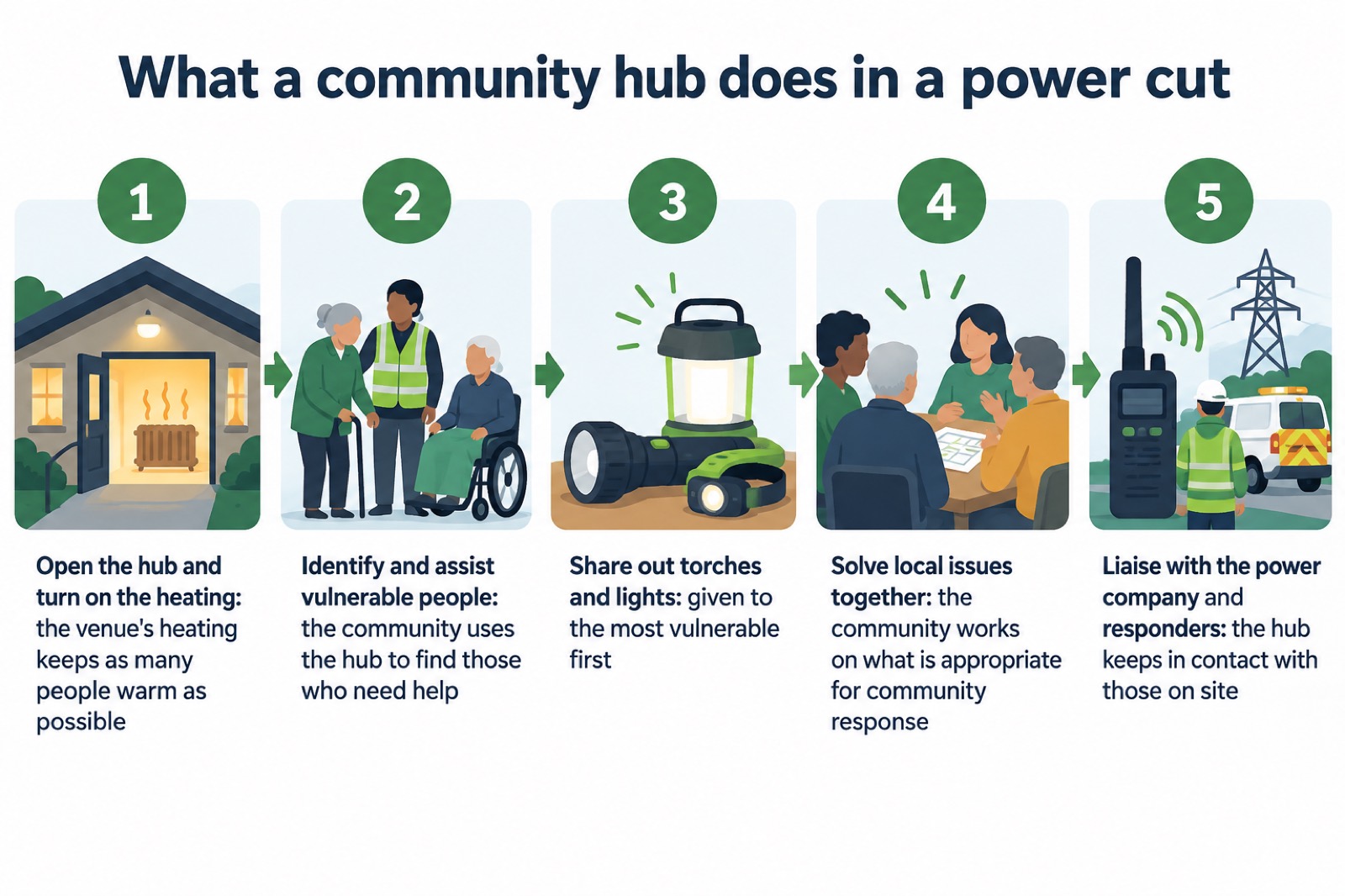
A hub can also play a defined role in a power cut. Wiltshire and Swindon Prepared's Emergency Contact Hub leaflet sets out what a community can do: use the hub to help identify and assist vulnerable people, share out any torches and lights to the most vulnerable, use any heating resources for the hub to keep as many warm as possible, work together to solve local issues deemed appropriate for community response, and liaise with the power company and responders on site28.
For more on organising with your neighbours, see our community resilience section.
When to use a warm space
Warm spaces are there for the whole winter, not only for emergencies, and you do not need to wait for a crisis. Use one when heating your home is unaffordable for a stretch, when a power cut or heating failure leaves the house cold, or simply when you would rather spend a cold day in company than alone. Cornwall's Warm Welcome scheme exists so that people can be warm and have some food rather than heating their own homes10, and that trade is worthwhile any cold day.
If the problem is a power cut rather than cost, a warm space or community hub is one part of a wider plan: keep one room warm at home, know how to use a portable heater safely, and have emergency lighting ready. Our power cuts guide and gas and heating failures guide cover those steps. The warm space is where you go when staying warm at home is not working, and knowing your nearest one before winter is one of the simplest preparations you can make.
Sources (28)
- Find and register Warm Spots, Cumberland Council, 2026
- Keeping safe in winter weather, Surrey County Council, 2026-10-22
- Stay warm and nourished, Norfolk and Suffolk Integrated Care Board, 2026-10-16
- Cool spaces, Islington Council, 2026-10-29
- Warm spaces, Derbyshire County Council, 2026-10-29
- Staying well in winter, Derbyshire County Council, 2026-10-29
- What you might need in a gas outage, Wiltshire and Swindon Prepared, 2026-10-25
- Winter ready, Isle of Anglesey County Council, 2026-10-25
- Advice on coping in the cold weather, City of London Corporation, 2025-08-15
- Winter support, Cornwall Council, 2025-01-14
- Help in winter, Cumberland Council, 2026
- Keep warm, keep healthy, Public Health Agency Northern Ireland, 2024-11-11
- Apply for a safe and well visit, Warwickshire County Council, 2026-10-29
- Set up a Community Emergency Information Hub, Surrey County Council, 2026-06-01
- Help with heating costs and staying warm, Somerset Council, 2026-10-28
- Be winter ready, Lancashire County Council, 2026-10-29
- Stay cool and safe in hot weather, Somerset Council, 2026-10-25
- Cool spaces, Greater London Authority, 2026-10-25
- Keeping warm, Oxfordshire County Council, 2026
- Keep Warm Keep Well, Nottinghamshire County Council, 2020-11
- Resilient communities, Scottish Borders Council, 2026-10-29
- Find support, Lancashire County Council, 2026-10-29
- Heat your home: managing rising costs, Argyll and Bute Council, 2024-11-20
- Keep Safe, Keep Well winter safety campaign 2024 to 2025, NHS Highland, 2024-10
- Spotlight on Emergency Contact Hubs, Wiltshire and Swindon Prepared, 2026-10-25
- Stay well this winter, Norfolk County Council, 2026-10-29
- Warm spaces in England: an evidence review and toolkit, UK Health Security Agency, 2023-11-23
- Emergency Contact Hub leaflet, Wiltshire and Swindon Prepared, 2025
 Cold Weather Priority Scheme
 Winter Heating Payments