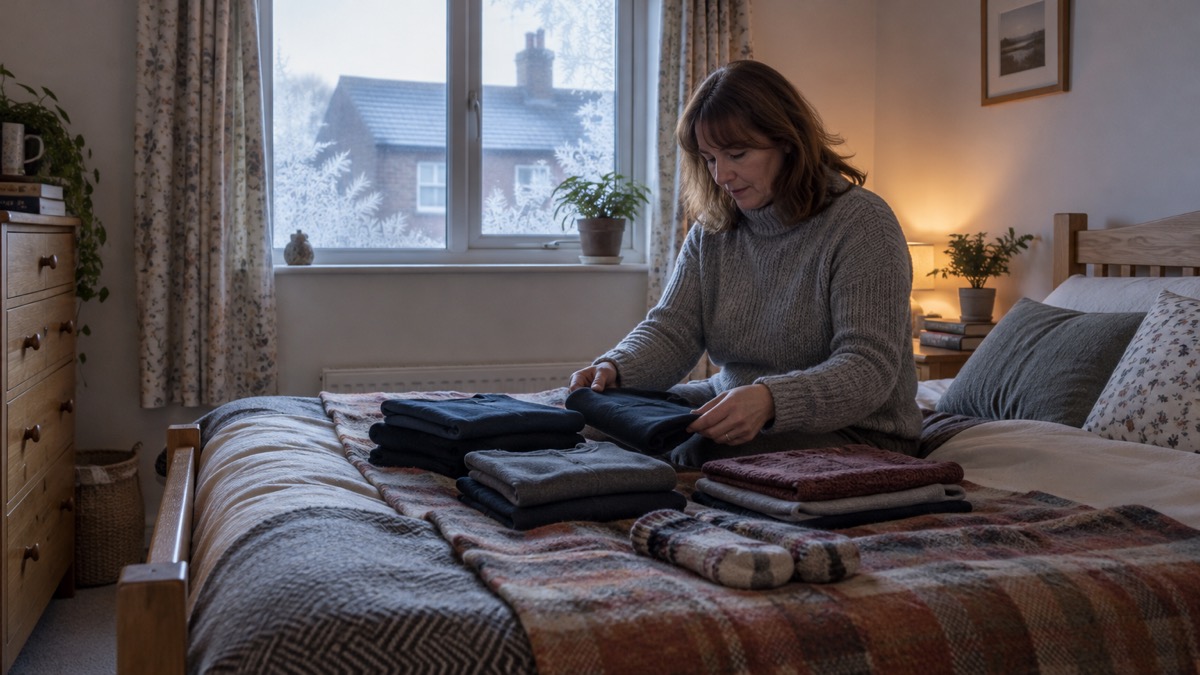
When the heating fails, costs too much to run, or simply cannot keep up with a cold snap, what you wear in bed and how you prepare the bedroom decide how well you sleep and how safe you are. The core advice from the UK Health Security Agency is simple: wear several layers of thinner clothing rather than one thicker layer, keep your bedroom windows closed at night, and try to heat the rooms you spend a lot of time in, such as the bedroom, to at least 18°C1. Northern Ireland's nidirect guidance adds the same figures for the bedroom overnight: keep the temperature above 18°C (65°F)2.
Those three habits, layers, a warm enough room and a closed window, are the backbone of sleeping warm in a cold house. Around them sit a few more: closing curtains at dusk, blocking draughts, knowing who is most at risk from a cold bedroom, and recognising when someone is getting too cold and needs medical help. This page sets out each of them, with the official figures behind them and the warning signs that matter.
Wear two or three thin layers instead of one thick one
The single most repeated piece of official cold weather advice in the UK is to layer. The UK Health Security Agency's top tips say to "wear several layers of thinner clothing; this could keep you warmer than one thicker layer"1. The London Ambulance Service puts a number on it: "Wearing two or three lighter layers can keep you warmer than one woolly or thick jumper"3. Wiltshire and Swindon Prepared, drawing on the same UK Health Security Agency advice, explains why it works: warm air gets trapped between the layers and acts as an insulator6.
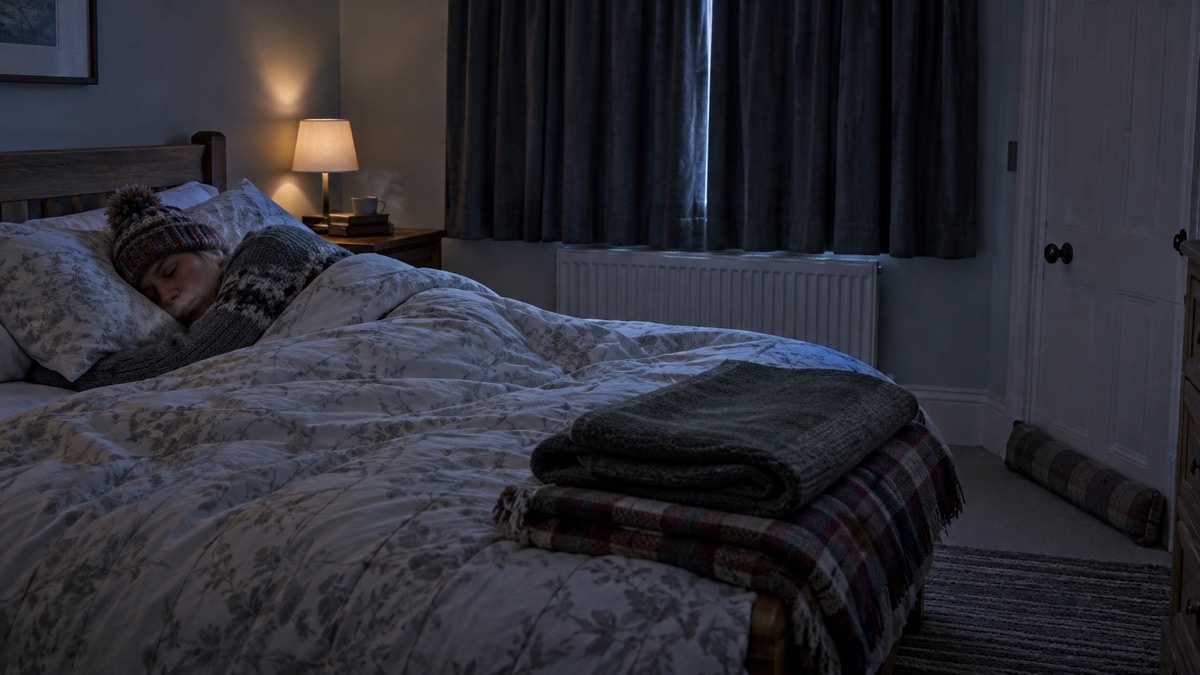
That trapped air is the whole point. One thick jumper holds one layer of still air; three thin garments hold several, and each one can be added or removed as the temperature changes through the evening and night. This matters most in a cold house, where the temperature may fall steadily after the heating goes off and you need to adjust rather than swelter or freeze.
What the layers are made of matters too. nidirect advises clothes made of wool or fleecy synthetic fibres, and notes that cotton is only effective if the garment stays dry2. That is worth remembering if you tend to sweat at night: a damp cotton base layer loses most of its value, so a fleece or wool layer next to the skin is the safer choice for a genuinely cold bedroom.
For the household as a whole, Staffordshire Council adds a practical tip for sitting still for long periods: layer up with warm clothing and use lap blankets4. If you are settling in one chair for the evening because only one room is warm, a blanket over the knees and a layer over the shoulders do more than turning the heating up. Our page on keeping one room warm when the heating fails covers how to make that room hold its heat.
Keep the bedroom at least 18°C at night if you can
The 18°C figure comes up again and again in official guidance, and it is the number to work to. nidirect says to keep the temperature above 18°C (65°F) in your bedroom2. The UK Health Security Agency says to try to heat rooms you spend a lot of time in, such as the living room or bedroom, to at least 18°C1. NHS advice for Cheshire and Merseyside says that if you can, rooms you regularly use, such as your living room and bedroom, should be at least 18°C, particularly if you have a health condition7. The West Midlands Ambulance Service gives the same figure8, and Cumbrian NHS guidance says to heat rooms you use a lot to 21°C through the day and at least 18°C at night9.
The Met Office adds an important nuance about who the overnight figure really matters for. Overnight, people who are 65 and over or who have pre-existing health conditions may find bedroom temperatures of at least 18°C are good for their health, but this may be less important if you are a healthy adult under 65 and have appropriate clothing and bedding5. In other words, the 18°C target is a health threshold for the people most at risk, not a comfort rule for everyone. A healthy adult with good layers and good bedding can sleep safely below it; an older relative or someone with a heart or lung condition should not have to.
| Room and time | Target temperature | Who it matters most for |
|---|---|---|
| Bedroom, overnight | Above 18°C (65°F)2 | People 65 and over, and people with pre-existing health conditions5 |
| Living room, through the day | Around 18 to 21°C2 | Everyone, especially if someone is at home all day |
| Rooms you use a lot | At least 18°C1 | People with health conditions7 |
| Living room, alternative figure | 21°C (70°F)10 | Given by Public Health Wales as the living room figure |
If you cannot heat every room, heat the rooms you actually use. nidirect says to heat your main living room to around 18 to 21°C (64 to 70°F)2, and Public Health Wales gives 21°C (70°F) for living rooms alongside 18°C (65°F) for bedrooms10. Heating one room properly, rather than several badly, is the affordable way to hit these numbers, and the same 18°C threshold applies overnight to the bedroom you sleep in. Our page on stopping draughts to keep heat in explains how to stop the warm air escaping once you have it.
Close windows and block draughts before bed
Closing the bedroom window at night is part of official cold weather advice. NHS Inform's prevention advice for the home includes keeping windows and internal doors shut, alongside heating your home to at least 18°C and using a room thermometer11. The reason is straightforward: an open window in freezing weather can pull the room well below the 18°C threshold, and no amount of bedding fully makes up for a room filling with cold air.
Before bed, work through the room in order:
- Air the room briefly if you want fresh air, then close the window1.
- Close the curtains at dusk to keep heat in4.
- Shut the door to hold the day's warmth in the room5.
- Put draught excluders against external doors, and check for draughts around the bedroom window itself9.
- If only one room is heated, warm the bedroom just before you go to bed rather than all day5.
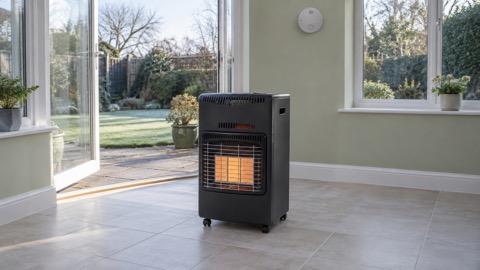
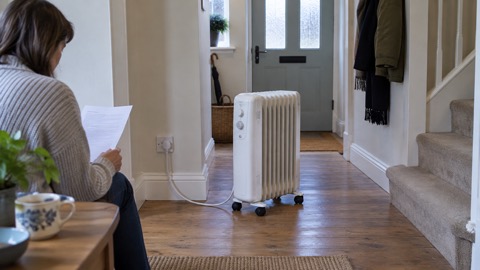
There is one exception to the closed window, and it is a safety rule that overrides the warmth rule. nidirect advises that if you use a fire or heater in your bedroom during winter, you should open the window or door a little at night for ventilation2. A fuel burning heater in a sealed sleeping room is a carbon monoxide risk, and a slightly open window is the lesser danger. If you rely on a heater at night, read our page on using a portable heater safely first.
Sleeping warm: bedding, bottles and blankets
Clothing layers work with bedding layers, and the same principle of trapped air applies to the bed. Build up thin layers of bedding rather than relying on one heavy duvet, and add blankets you can push on or off through the night as the room cools towards dawn. Keep a spare blanket folded at the foot of the bed so you can add it without getting up.
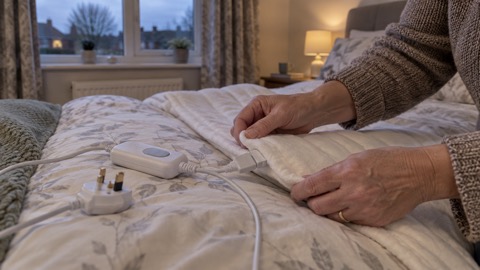
Two items deserve special care. Hanham Health surgery advises that you can use a hot water bottle or an electric blanket to keep warm in bed, but not both at the same time15. The heat from a bottle can damage the wiring of an electric blanket, and the combination is a burn and fire risk. Our pages on hot water bottles and electric blankets cover the checks and replacement intervals for each.
For babies and young children, give the sleeping space as much attention as your own. Children aged 5 and under are among the groups most at risk from cold weather8, so check the temperature of the room they sleep in and warm the bedroom and bed before bedtime, just as you would for an older person. If you are unsure whether a young child is too cold, or they seem unusually drowsy or unresponsive, get medical advice rather than relying on extra bedding alone.
Who is most at risk from a cold bedroom
Cold weather can affect anyone, but official guidance is consistent about who is most at risk. The West Midlands Ambulance Service lists people aged 65 and older, babies and children under the age of 5, people on a low income, people who have a long-term health condition, people with a disability, pregnant women and people who have a mental health condition8. NHS advice for Cheshire and Merseyside gives the same list7. NHS Inform in Scotland adds the circumstances that put people at risk beyond age and health: sleeping rough, experiencing homelessness, living in homes that are harder to keep warm, and being unable to afford fuel and heating costs16.
The South Western Ambulance Service NHS Foundation Trust gives a fuller picture of who is vulnerable in cold weather: people aged 65 years and over, those with long term health conditions including cardiovascular and respiratory diseases, pregnant individuals, children aged 5 and under, people with learning disabilities, people at risk of falls, people living alone and unable to care for themselves, and housebound individuals or people with low mobility17. If you or someone you look after is in any of these groups, the 18°C bedroom figure is not optional advice; it is the threshold the guidance is written around.
The health stakes are real. The Met Office notes that the cold thickens blood and increases blood pressure, and breathing in cold air can increase the risk of chest infections5. Oxfordshire County Council states there is a direct link between cold winter weather and a higher number of deaths, heart attacks and strokes among older people and others in at risk groups18. UK Health Security Agency guidance for adult social care managers records that deaths during the winter months are significantly higher than at other times of the year, and that longer term effects of cold include an increased risk of mental health conditions such as depression and anxiety19. None of this means a cold night is an emergency for a healthy adult, but it is why the guidance is firm about the people in these groups.
Damp and mould in a cold bedroom
A cold bedroom often becomes a damp bedroom, and damp changes the health picture. The UK Health Security Agency warns: "When a house is damp as well as cold, mould is more likely to occur. This can increase the risk of illness, especially from asthma"1. The South Western Ambulance Service NHS Foundation Trust makes the same point: cold or poor quality homes can develop mould, which increases the risk of illnesses, especially for people with asthma or respiratory conditions17.
The connection works both ways. A cold room has cold surfaces, and warm moist air from breathing, drying clothes or cooking condenses on them, which feeds mould. Closing the window all night, as the warmth advice says, holds that moisture in unless you ventilate at other times. The practical balance is to air the bedroom briefly during the day or before bed, keep some heat in the room so surfaces stay warmer, and avoid drying clothes on radiators or portable heaters in the sleeping room.
If mould has already appeared, it is a sign the room is both too cold and too damp, and it should be dealt with rather than lived with, particularly if anyone in the house has asthma. The NHS guidance on managing winter illness symptoms, staying warm, resting, drinking plenty of fluids and eating at least one hot meal a day, also helps the body cope with a home that is hard to heat20.
Signs someone is getting too cold, and when to get help
Knowing when cold has stopped being uncomfortable and started being dangerous is the most important thing on this page. The West Midlands Ambulance Service says to watch out for signs of hypothermia in cold weather8. NHS guidance on frostbite gives a plain warning sign: if the person is shivering a lot or struggling to stay awake, they may have hypothermia, meaning very low body temperature21.
If you think someone has hypothermia, the UK Health Security Agency says to contact NHS 111 for further assessment, and in an emergency dial 9991. While waiting for help, the first aid advice from NHS Inform is consistent across the UK's health services:
- Move them somewhere warm if you can, and if they cannot be moved indoors, find something for them to rest on to protect them from the cold ground, like a towel or a blanket11.
- Give them a warm non alcoholic drink and some sugary food like chocolate if they are fully awake22.
- Keep them awake by talking to them until help arrives, and make sure you or someone else stays with them22.
- Do not rub their arms, legs, feet or hands; do not use a hot bath or heat lamp to warm them up; do not apply heat directly to the skin, and wrap a hot water bottle or heat pad in a jumper or a blanket first; do not give them alcohol to drink23.
The reason for the "do not" list is that rapid or direct warming can drive cold blood back towards the heart and make things worse. NHS Inform's prevention advice for the home is the same as everything above: keep your home at a temperature of at least 18°C, keep windows and internal doors shut, wear warm clothes, and use a room thermometer11. A room thermometer takes the guesswork out of the 18°C figure, and it is worth checking the bedroom reading at night, when temperatures fall, rather than assuming the daytime figure still holds.
Checking on neighbours and relatives in a cold spell
Official advice is unanimous that a cold spell is a time to check on other people. The South Western Ambulance Service NHS Foundation Trust says to check in on your neighbours and relatives in case they need any help or support17. Hanham Health surgery gives the specifics: make sure older neighbours are warm enough, especially at night, and have stocks of food and medicines so they do not need to go out during very cold weather15. The West Midlands Ambulance Service says the same: check they have stocks of food and medicine so that they do not need to go out during very cold weather8. A community council in Wales repeats the advice for winter storms24.
When you visit, there are signs worth looking for that a home is too cold or unsafe:
- It feels cold in the house, or you keep your coat on when visiting.
- Damp patches, condensation, draughts or blocked vents.
- No central heating, or heating that is unused.
- Safety issues such as overloaded sockets, exposed wires, drying clothes on portable heaters, or furnishings too close to a heat source.
- Someone wearing lots of clothes indoors, or heating just one room.
- Struggling to keep warm: blankets or hot water bottles by the chair, curtains closed through the day.
- Poor eating habits, mobility problems, difficulty using hands, or breathing problems.
Several of these are things a visitor spots faster than the person living there. If you see them, the response is not to judge but to help: a warm drink, an extra blanket, a phone call to family, or a call to their GP or NHS 111 if their health is worrying you. UK Health Security Agency guidance for healthcare professionals notes that staff can draw on its "Helping People Living in Cold Homes" e learning module to help identify those most likely to be at risk from adverse cold weather25, and the same guidance says rooms, particularly living rooms and bedrooms, should be kept warm for people in care and in the community25. Our page on community resilience covers how neighbours can organise this before a cold spell rather than during one.
Where to get help with a cold home
If your home is cold because you cannot afford to heat it, or because it is hard to keep warm whatever you spend, there are places to turn. Oxford Health NHS Foundation Trust's falls prevention service points to Better Housing Better Health, which gives help to keep your home warm or cool26. The same service adds a health reason to even out the temperature: keep rooms at a similar temperature so you do not move between very cold and warm rooms26. Oxfordshire County Council notes that cold weather is also an issue for children and young people, and those with long term health conditions18, so help with a cold home is not only for older people.
For everyday health worries in cold weather, the South Western Ambulance Service NHS Foundation Trust says your pharmacist, GP or NHS 111 can offer advice and support17. A pharmacist is often the fastest first stop for a cough, a cold or advice on keeping well, and NHS 111 is there around the clock if you are worried and cannot wait for a GP appointment. If you think someone may have hypothermia, contact NHS 111 for further assessment, and in an emergency dial 9991.
Practical help exists on the money side too. Our page on winter payments explains the Winter Fuel Payment, Cold Weather Payment and Warm Home Discount, and our page on warm spaces and warm hubs explains how to find a heated public room near you during a cold spell. Households that need extra support because of age, disability or medical dependence can also read our guide to extra help in an emergency, which covers the Priority Services Register and similar schemes.
Sources (26)
- Top tips for keeping warm and well this winter, UK Health Security Agency, 2026
- Staying warm in winter, nidirect, 2026
- Keeping safe and well in colder weather, London Ambulance Service, 2026
- Stay warm and safe, Staffordshire Council, 2026
- Keeping your home warm in winter, Met Office, 2026
- Winter hacks this winter, Wiltshire and Swindon Prepared, 2026
- Stay well this winter, NHS Cheshire and Merseyside, 2026
- Cold weather advice, West Midlands Ambulance Service, 2026
- Cold weather warning advice, North Cumbria Integrated Care NHS, 2026
- Cold weather, Public Health Wales, 2026
- Hypothermia, nidirect, 2025
- Cold weather, Derbyshire Fire and Rescue Service, 2026
- Keeping warm or cool in extreme weather: scripts for broadcast media, UK government, 2025
- Keep warm in winter, Derbyshire County Council, 2026
- Winter health, Hanham Health Surgery, 2026
- How to stay safe in cold weather, NHS Inform, 2026
- Cold weather advice, South Western Ambulance Service NHS Foundation Trust, 2026
- Keeping warm, Oxfordshire County Council, 2026
- Supporting vulnerable people before and during cold weather: adult social care managers, UK Health Security Agency, 2025
- Stay Well This Winter 2025, NHS England, 2025
- Frostbite, NHS, 2025
- Hypothermia, NHS 111 Wales, 2025
- Hypothermia (low body temperature), NHS Inform, 2026
- Adverse weather events, Llangattock Community Council, 2026
- Supporting vulnerable people before and during cold weather: healthcare professionals, UK Health Security Agency, 2025
- Falls guidance at home, Oxford Health NHS Foundation Trust, 2026
 Before-Winter Heating Checks
 Backup Stove Kit Checklist
 Wood Burner Lighting Kit
 Keeping One Room Warm
 Stopping Draughts
 Hot Water Bottle Safety
 Wheat Bags and Fire Risk
 Electric Blanket Safety
 Portable Heater Types
 Portable Heater Safety
 Wood Burners in a Power Cut
 Using a Wood Burner Safely
 Open Fires and Fire Guards
 Firewood and Seasoning Logs
 Smoke Control Areas