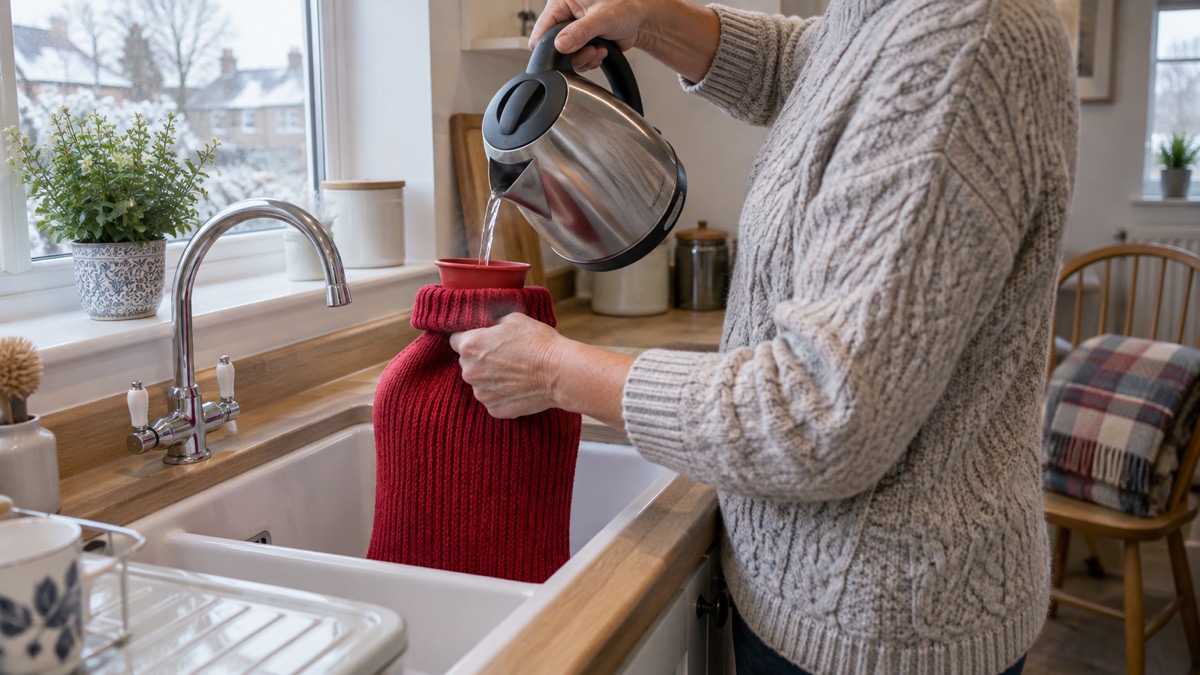
The short answer is no. Never use a hot water bottle and an electric blanket together, and that includes a blanket that is switched off at the wall. The London Assembly's cold weather guidance is blunt about it: "Never use a hot water bottle with an electric blanket"1. Diabetes UK says the same, and the Met Office adds the detail that catches people out, that you should not use a hot water bottle "even if the blanket's switched off"2.
The reason is that both items warm a bed, and neither knows about the other. A hot water bottle leaks heat and moisture into the fabric and wiring of a blanket that is designed to be used dry. A blanket, switched on or off, adds a heat source the bottle was never designed to sit against. The fire and rescue service advice is to unplug blankets before you go to bed, unless they have a thermostat control for safe all-night use3.
Used on their own, both are sensible, cheap ways to stay warm, and both are worth having ready before the heating fails. What follows is how to use each one safely, when to replace them, and who should not use an electric blanket at all.
Why the two should never share a bed
The danger is not one dramatic failure but a slow one. An electric blanket is built to warm a dry bed, and its wiring and controls sit inside fabric that is meant to stay that way. A hot water bottle puts a reservoir of hot water against that fabric for hours. If the bottle leaks, or the rubber perishes, water reaches wiring and connectors that were never designed to be wet. Even a bottle that does not leak adds heat the blanket's thermostat cannot see, so a blanket left on can keep warming a patch of bed that is already hot.
The fire and rescue services treat electric blankets as a fire risk in their own right. Their advice is to unplug blankets before you go to bed, unless they have a thermostat control for safe all-night use3. That instruction assumes the blanket is the only heat source in the bed. Add a hot water bottle and you have removed the assumption.
There is a second, quieter reason. A hot water bottle that is too hot, or used without a cover, burns skin. The advice is to wrap a hot water bottle in a towel or use a cover rather than placing it directly against the skin5. A blanket over the top of a bottle holds that heat in, so a bottle that would have been merely warm against a sheet becomes hot against skin.
Hot water bottle burns: injuries have doubled in five years
Hot water bottles cause serious burns, and the numbers are getting worse. The Royal Society for the Prevention of Accidents reports that injuries have doubled since 2019, a sustained five-year increase, with burn injuries from hot water bottles rising 11 per cent in 2024 compared to 2023 and nearly 1,000 cases in 2024, the highest annual total in more than 20 years7. The Child Accident Prevention Trust records that children are suffering serious burns after sitting or lying on hot water bottles8.
Most of these injuries are avoidable, and the causes are ordinary. The age of your bottle, using boiling water, overfilling it and even storing it incorrectly can all contribute to its deterioration9. The NHS in Norfolk and Waveney sets out the basic routine: allow the boiled water to cool for a few minutes before filling your bottle10. The Child Accident Prevention Trust adds that you should follow the instructions on the bottle, and that old bottles can break and cause serious burns, so check regularly for signs of wear and tear11.
For children the rules tighten. Never put a hot water bottle directly on a child's skin; use a cover8. For children, use cooled boiled water that is around bath temperature8. Remind older children not to sit or lie on hot water bottles8.
When to replace: two years for a bottle, ten for a blanket
Both items have a shelf life, and both are used well past it in many homes. The Child Accident Prevention Trust is clear that hot water bottles do expire, and that old bottles can break and cause serious burns4. The Salisbury NHS burns prevention booklet puts a figure on it: don't use hot water bottles more than two years old5. Most reputable manufacturers guarantee a bottle for two years from the date of purchase rather than the date of manufacture4.

The date is stamped on the bottle. A flower symbol indicates when it was made: the number in the middle is the year, the flower segments represent the 12 months of the year and the dots inside those represent the number of weeks4. Read it before you fill an old bottle, and read it again when you buy a new one, because a bottle can sit on a shelf for a while before it reaches you.
Electric blankets last longer but not forever. Electrical Safety First recommends replacing your electric blanket every ten years, and lists the signs that mean replace it now rather than at the ten-year mark: fabric worn or frayed, scorch marks or discoloration, wires visible or poking through, damage to the flexible cord, a control that buzzes or gives off a smell, or a connector that is damaged or over-heating6. London Fire Brigade gives the same list12.
| Item | Replace when | Other checks |
|---|---|---|
| Hot water bottle | More than two years old5 | Flower date symbol; wear, perishing, leaks4 |
| Electric blanket | Every ten years, or sooner on the danger signs6 | Tested every three years1; unplug before bed unless thermostatic3 |
Using each one safely on its own
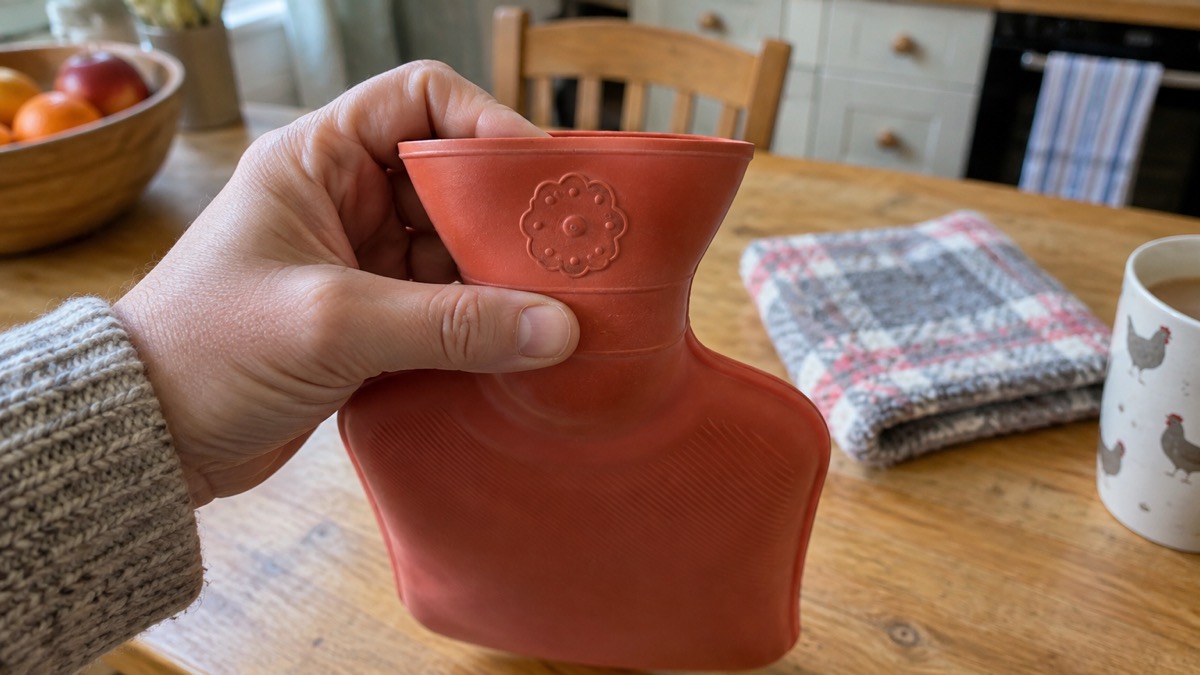
A hot water bottle is a good answer to a cold bed. Age UK suggests putting one under blankets or duvets to keep warm while sleeping13. Network operators include warmth in their power cut preparation: Northern Powergrid and SP Energy Networks both advise having extra blankets and warm clothing ready14.
The safety routine is short. Follow the instructions on the bottle11. Let boiled water cool for a few minutes before filling10. Do not overfill it, and do not store it full of water, because that degrades the rubber4. Store it away from a heat source such as an airing cupboard or radiator, and keep it clear of anything sharp4. Wrap it in a towel or use a cover rather than putting it against skin5.
Electric blankets need their own routine. Check the plug: all electric blankets must be fitted with a UK three-pin plug, and if the fuse in the 13 amp plug requires changing, a 3 amp BS 1362 fuse must be fitted6. Buy from a reputable retailer rather than a third-party seller online, as it may not have passed all the necessary safety checks6. Fire Scotland advises making sure the blanket is either Intertek BEAB approved or marked BSEN60335-2-17:2002+A1,A216.
Position matters. Over-blankets must only be positioned above the occupant of the bed, and under-blankets only under the occupant6. Do not tuck them in or fold them while in use. Store them rolled, not folded, as manufacturers often recommend17.
Who should not use an electric blanket
Some people should not use an electric blanket at all, and the reason is not age but materials. North Yorkshire Fire and Rescue Service advises never using an electric blanket if you have an air flow pressure relief mattress or use emollient creams, and to ask for non-flammable alternatives instead18. Dorset and Wiltshire Fire and Rescue Service gives the same instruction19. Emollient creams can leave a flammable residue on bedding and skin, and an air flow mattress works by moving air through the surface, which is not a safe base for a heated blanket.
The same fire service advises never using an electric blanket with an air flow mattress20. If you are unsure whether your mattress or cream falls into this group, ask your district nurse, care provider or the shop where the blanket was bought before the cold weather arrives.
For everyone else, the checks are simple. Look for danger signs such as fraying fabric or scorch marks21. After the guarantee runs out, usually at three years, the blanket should be tested and serviced regularly by the manufacturer, and a damaged or defective blanket should never be used16. The shop where you bought the blanket, or your local Trading Standards service, may be able to test it21. The London Assembly advises getting it tested every three years1, and manufacturers often recommend the same interval17.
Register your electric blanket so you can be contacted easily if there is a safety recall, and so it is easier to return a faulty product or order a repair6. When you dispose of an old one, do not put it in general domestic waste; take it to a recycling facility that accepts electric and electronic appliances, as the WEEE Directive requires6.
Keeping warm when the heating fails
A power cut in cold weather is when both items earn their place, and it is also when the temptation to use them together is strongest. Keep them apart. Have extra blankets, warm clothing and a hot water bottle ready14. If your heating runs on electricity, keep warm with extra layers and blankets on cold evenings22. Fill a vacuum flask or hot water bottle as part of storm preparation15.
For households with an electric blanket, the blanket is a useful warm layer during an outage only if you have a safe way to power it, and most do not. Plan on the bottle and the blankets instead. For more on keeping warm without mains power, see Keeping Warm Without Electricity and the Power Cut Kit Checklist.
Sources (24)
- Keeping warm, healthy and safe in cold weather, London Assembly, 2026
- Cold weather and diabetes, Diabetes UK, 2026
- Keeping your home warm in winter, Met Office, 2026
- Do hot water bottles expire?, Child Accident Prevention Trust, 2025
- Burns prevention booklet 2024, Salisbury NHS Foundation Trust, 2024
- Electric blankets, Electrical Safety First, 2026
- Keeping safe as well as warm: reducing the risk of burns from hot water bottles, RoSPA, 2025
- Hot water bottle safety, Child Accident Prevention Trust, 2026
- Autumn safety, Child Accident Prevention Trust, 2026
- Burns and scalds, NHS Norfolk and Waveney, 2026
- Burns FAQ, Child Accident Prevention Trust, 2026
- Electric blankets, London Fire Brigade, 2026
- Stay healthy in winter, Age UK, 2026
- Be prepared, Northern Powergrid, 2026
- What to do in a power cut, SP Energy Networks, 2026
- Your guide to fire safety, Scottish Fire and Rescue Service, 2023
- Keep Safe Keep Well winter safety campaign 2024-2025, NHS Western Isles, 2024
- Heating your home, North Yorkshire Fire and Rescue Service, 2026
- Electric blankets, Dorset and Wiltshire Fire and Rescue Service, 2026
- Medical equipment, North Yorkshire Fire and Rescue Service, 2026
- Fire prevention, gas safety and electric safety, Age UK, 2026
- How to prepare for the loss of electricity, Wiltshire and Swindon Prepared, 2026
- Burns and scalds | Child Accident Prevention Trust, Child Accident Prevention Trust (CAPT)
- Winter safety guide: Top tips for keeping children safe this winter, Child Accident Prevention Trust (capt.org.uk)
 Power Cut Kit Checklist
 What to Keep Charged
 Household Emergency Plan
 Food to Throw Away After a Cut
 Keeping One Room Warm
 Heating a Room With a Gas Hob
 Hot Water Bottles and Children
 Unplugging Appliances in a Cut
 Checking Your Trip Switches
 Vehicle Touches Overhead Line
 Reporting a Damaged Substation
 Protected Sites
 Heatwaves and Power Cuts
 Smart Meters and Power Cuts
 Keeping Medicine Cold