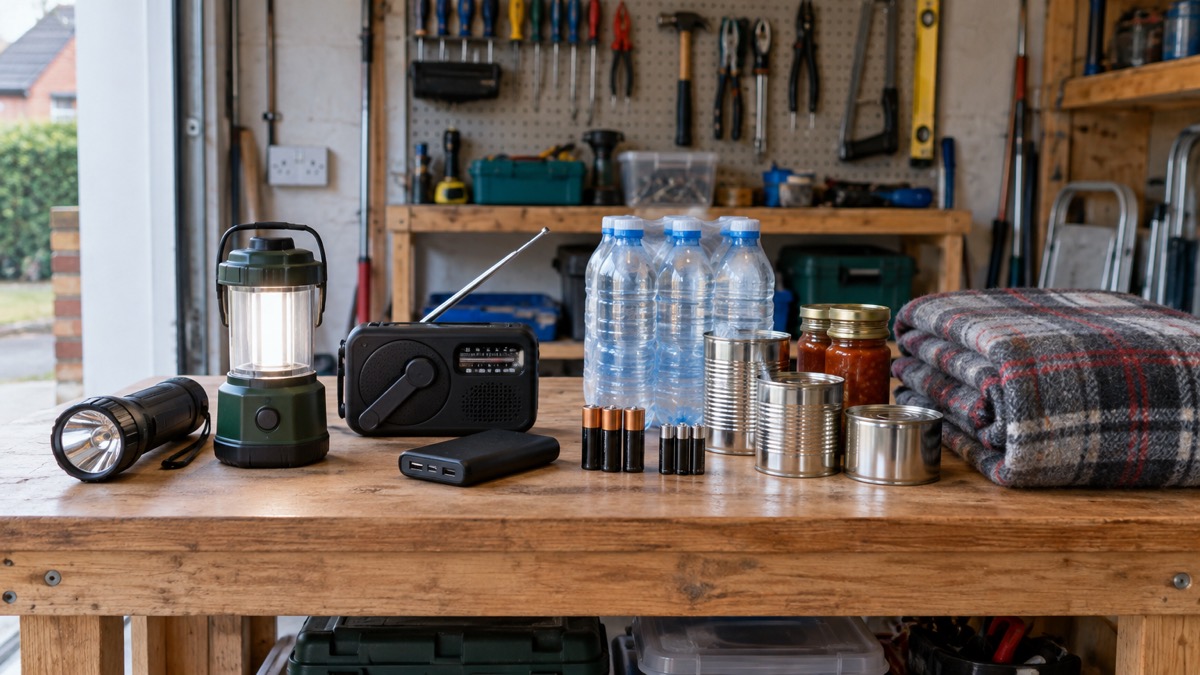
A power cut kit is not a single box you buy. It is a handful of ordinary things kept where everyone in the house can find them, checked now and then, and ready before the lights go out. The essentials named in official guidance are battery candles, torches and batteries, and a mobile phone power pack1. Add a wind-up or battery radio, an analogue phone, food that needs no cooking, bottled water and something to keep you warm, and most households are covered.
The reason to prepare is simple: people cope better with power cuts when they have prepared for them in advance, and the Met Office says it is easy to do, suggesting torches and batteries, a mobile phone power pack and other essential items1. Storms are the usual trigger. When a yellow wind warning was issued for Scotland, Northern Ireland and northern England for 27 October 2026, with gusts of 50 to 60 mph widely and 70 mph or more in coastal or exposed areas, the advice was to gather those items before the wind arrived2.
This checklist sets out what to have, why each item earns its place, and how to keep it ready. Work through it once, then revisit it when a warning is issued or the clocks change.
The power cut kit checklist
Work through this list once and put everything in one place, ideally somewhere dark-friendly and known to everyone in the home. Each item has a job.
Light without flames: torches and battery candles
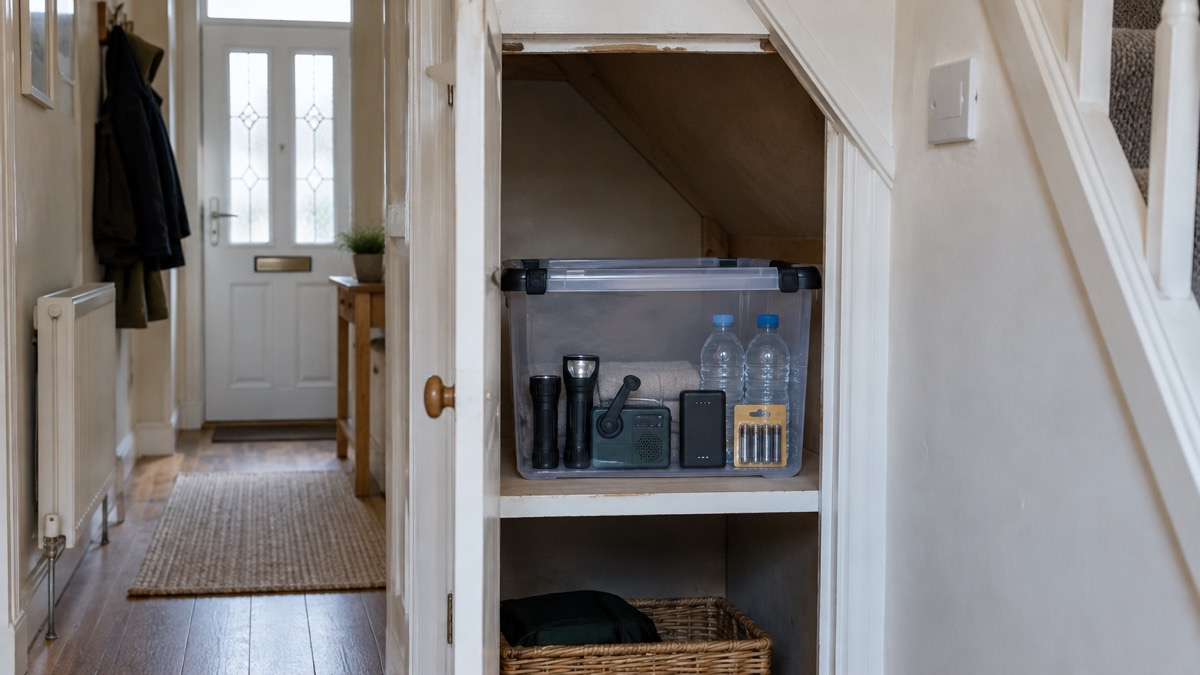
The single most important rule is to light the house without an open flame. The Scottish Fire and Rescue Service says: "During a power cut use battery-operated lights or torches as an alternative light source"15. Devon and Somerset Fire and Rescue Service puts it just as plainly, asking households to choose torches or battery-powered lights rather than candles when lighting a home without power16.
Battery candles are the compromise many households prefer. The Scottish Fire and Rescue Service suggests considering battery operated candles, "which give the same light effect without the risk from flames"9. Devon and Somerset Fire and Rescue Service makes the same point for festivities, noting that switching from traditional candles to battery-powered alternatives is a simple step that can help prevent decorations and costumes from catching fire17. Northern Ireland Fire and Rescue Service advises having a torch or battery operated candles ready to prepare for a power cut18.
Wind-up torches and lanterns go further: they need no batteries at all, so there is nothing to run flat or forget to replace10. Keep one by the bed and one wherever the family gathers.
Keeping in touch: phone, power pack, radio and analogue phone
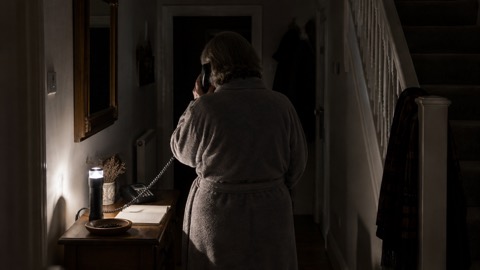
When the power goes, the phone becomes the household's link to family, to the network operator and to help. Keep your mobile charged, and consider an analogue phone, because it does not run off the main electricity supply4. A charged power pack is worth having for the same reason: even if it just charges a phone, that may be the thing you need most11.
For news, a radio beats a phone. Official guidance suggests a battery, wind-up or solar radio (AM, FM or DAB) to receive weather warnings, news updates and information from your local authority or the UK Government, with the emergency alert system as a backup if mobile networks are available3. A wind-up radio is a good purchase for a prolonged outage, and many have a point to plug your mobile phone in to keep the battery topped up20. If the power is out, use a battery-powered or wind-up radio and try both digital and FM stations; a car radio works too, but in severe weather it might be safer to stay indoors21. Keep a wind-up or battery FM radio with spare batteries at home, because updates may be given on the radio during an outage22.
| What it does | Kit | Why it suits a household |
|---|---|---|
| Light without flame | Torch, battery candle, wind-up lantern | Safe around children and pets; wind-up needs no batteries15 |
| Keeps a phone alive | Charged power pack | Charges a phone when the mains is off11 |
| Receives updates | Battery, wind-up or solar radio | Weather warnings and news when broadband and mobile fail3 |
| Makes calls on a dead mains | Analogue phone | Does not run off the main electricity supply4 |
Store the power cut helpline number, 105, on your phone in case power and mobile networks are affected14. Our guide to reporting a loss of electricity explains what to say when you ring.
Food, water and warmth that need no electricity
Hunger and cold make a power cut feel far worse than it is. Keep something available to eat that does not require electricity or heat to prepare5, and keep bottled water among your basic supplies7. If snow cuts you off, the Met Office suggests gathering torches and batteries, candles and matches, plenty of blankets and warm clothing12.
The fridge and freezer need a different kind of care. Keep the doors closed to protect the contents, and leave the appliances switched on with the door shut to maintain a low temperature5. The Met Office adds a useful trick: keep fridges and freezers closed, with a blanket over them, as they will stay cold for many hours6. Decide what you want before you open the door, then shut it again quickly. Our page on fridge and freezer food when the electricity is off takes this further.
For warmth, layers and blankets are the first answer, and a pre-warmed room is the second. Guidance for households with technology-dependent children suggests that for any planned cut you could pre-heat your home, prepare to stay in a pre-warmed room and ensure you have extra layers of blankets and clothing ready23. The same approach works for anyone. Our guides on keeping warm without electricity and how to keep warm in one room set out the detail.
Before the power goes: fuses, trip switches, alarms and batteries
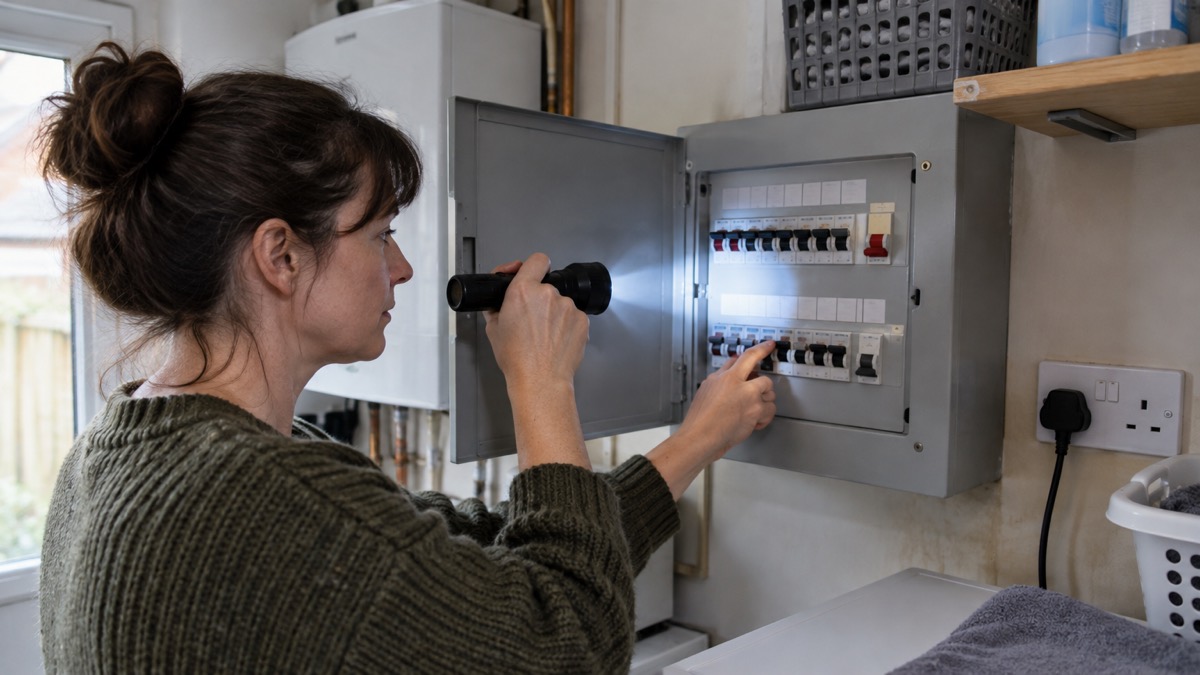
Some preparation happens before any warning. Know where your household fuses and trip switches are, so you can check whether the problem is with your electrics only18. If the trip switches are fine, check whether neighbours are without power too, which tells you it is a network fault rather than your wiring18. Our page on how to check whether it is just your trip switches walks through it.
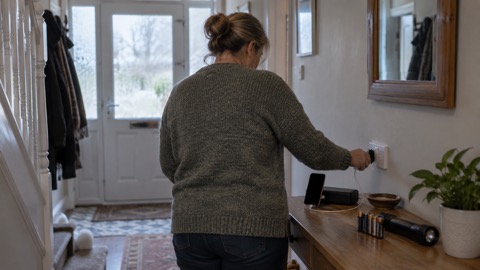
Test smoke alarms regularly, and keep a supply of new batteries in torches and radios18. A smoke alarm that relies on mains power may not work in a cut, so battery backup matters; our guide to smoke and carbon monoxide alarms that keep working without mains explains the options. Keep mobile phones, laptops, tablets and power banks fully charged, and have telephone numbers to hand, including a non-mains powered landline telephone18. If you have electric gates, make sure they are open before a storm18.
When a wind warning is issued, the Met Office advice is to prepare for power cuts in advance by gathering torches and batteries, a mobile phone power pack and other essential items2. Before a storm, also keep your property well maintained, secure loose objects such as ladders, garden furniture, wheelie bins and trampolines, close and securely fasten doors and windows, and park vehicles in a garage or clear of buildings, trees, walls and fences18. Power cuts are not likely in every strong wind, but may still occur and could affect other services such as mobile phone coverage, so be prepared for that24.
Extra help and keeping the kit ready
Some households need more than a torch. The Priority Services Register gives extra help if there is a power or water supply cut, plus advance notice of planned power cuts or interruptions to water supply, help with accessing prepayment meters, and bills in an alternative format25. If you rely on medical equipment at home, register as a priority user with your electricity provider so you get advance notice of planned power cuts3. Our guide to the Priority Services Register explains who can join, and you can also read about registering a relative for extra help.
Keeping the kit ready is a small routine rather than a big job:
- Check torches and radios work, and replace batteries before winter.
- Recharge power packs and keep phones topped up when a warning is issued2.
- Know where the kit lives, and make sure everyone in the home knows too5.
- Save key documents and information in a safe place, and consider a separate battery charger13.
- Store the power cut helpline number, 105, on your phone14.
A separate battery charger is worth considering so rechargeables can be topped up without mains power13. For the wider picture, from what to do when the lights go out to how the network restores supply, start with our household guide to power cuts, and use the household emergency plan checklist to pull the whole kit together.
Sources (25)
- 5 tips for staying safe in a thunderstorm - Met Office, Met Office
- UK weather warnings, Met Office, 2026-10-24
- Stay connected in severe weather, Ofcom, 2026-10-13
- Winter ready, Isle of Anglesey County Council
- 12 tips to prepare for a power cut, Horsted Keynes Parish Council, 2026
- What to do in a power cut, Met Office
- National Risk Register, City of York Council, 2023
- National Risk Register, Cabinet Office, 2020
- Candle safety, Scottish Fire and Rescue Service, 2024-06-12
- How to prepare for the loss of electricity, Wiltshire and Swindon Prepared
- Yourself, Wiltshire and Swindon Prepared
- Met Office WeatherReady tips for snow and ice, Met Office, 2025-11-19
- 10 things you should do now to prepare for summer, Met Office, 2026-10-25
- Top tips to be WeatherReady, Met Office, 2026-10-25
- Power cuts, Scottish Fire and Rescue Service, 2025-10-02
- Fire service sees worrying increase in carbon monoxide incidents and fire risks due to power cuts, Devon and Somerset Fire and Rescue Service, 2022-02-20
- Firefighters advise using battery tealights this Halloween, Devon and Somerset Fire and Rescue Service, 2025-10-23
- Strong winds: weather warning information and advice, nidirect, 2026-10-24
- Adverse weather events: power outages emergency contact numbers, Llangattock Community Council, 2023-10-12
- Failure of national electricity, Wiltshire and Swindon Prepared
- Emergency plan, Ready Scotland, 2026-03-24
- Phone and broadband outages, Prepare, 2026-10-12
- Parental letter re power shortages, NHS North West Children's Operational Delivery Network, 2022-11-25
- Tips for keeping safe during strong winds, North Yorkshire Fire and Rescue Service, 2023-12-20
- Accessible UK weather warnings - Met Office, Met Office
 What to Keep Charged
 Household Emergency Plan
 Emergency Numbers to Keep