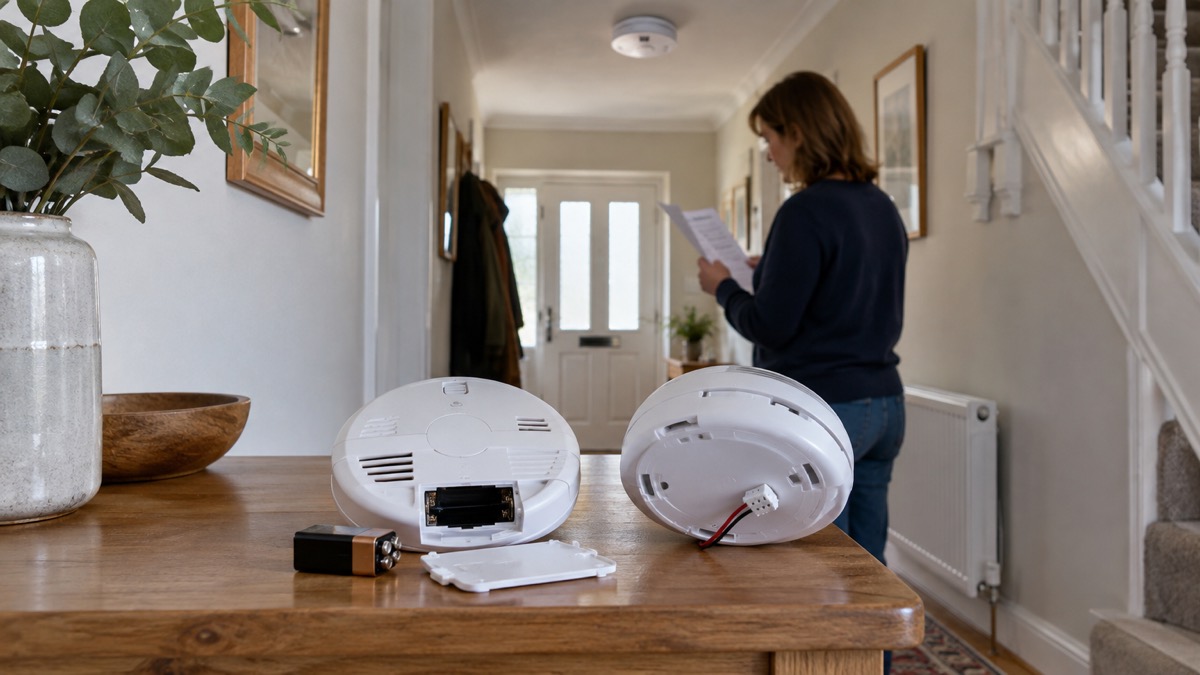
Either type protects your home. A battery alarm is the simplest to fit yourself, and a mains-wired alarm runs from your household electricity with a back-up battery for power cuts. What matters most is that you have working alarms, that you test them weekly, and that you know when their batteries and the units themselves need replacing.
If you are choosing now, the official advice leans towards a sealed ten-year battery alarm or a mains-wired unit with a back-up battery. Ten-year sealed battery smoke alarms are described as the best option by Lincolnshire Fire and Rescue, because you save on the cost of replacing batteries1. Mains-powered alarms need a qualified electrician to install them, but they have a back-up battery in case of a power cut2.
Whichever you pick, look for the British Standard Kitemark symbol, and for carbon monoxide alarms the EN50291 mark1. Then keep the alarm in working order: test it weekly, change a standard battery every year, and replace the whole unit when it reaches the end of its life.
Battery or mains: either type protects your home
The first thing to understand is that the choice is not between safe and unsafe. Mains-wired alarms use the same technology as battery-operated detectors and have the same shelf life6. What differs is how they are powered, who can fit them, and what maintenance they need from you.
A battery alarm is self-contained. You can buy one, screw it to the ceiling and be protected the same day. A mains alarm draws power from your home's wiring, so it needs a qualified electrician to install it, and it carries a back-up battery so it keeps working if the power fails2. That back-up is the part that needs your attention over the years.
For rented homes, the official guidance is specific. Where battery powered alarms are selected, alarms with sealed for life batteries rather than alarms with replaceable batteries are the better option7. Ideally alarms should be hardwired and interlinked, which is a legislative requirement for rented accommodation8. If you rent, ask your landlord which type is fitted and who is responsible for testing and replacing it.
| Type | Power source | Who fits it | Battery routine | Best suited to |
|---|---|---|---|---|
| Standard battery | Replaceable battery, often 9 volt | You | New battery every 12 months5 | Quick, low-cost cover; older homes |
| Sealed ten-year battery | Sealed lithium battery | You | None; replace the whole alarm when the battery dies4 | Anyone who wants to forget about batteries |
| Mains-wired | Household mains, with back-up battery | Qualified electrician5 | Back-up battery changed yearly9 | New builds, rewires, rented homes |
Sealed 10-year battery alarms: no yearly battery change
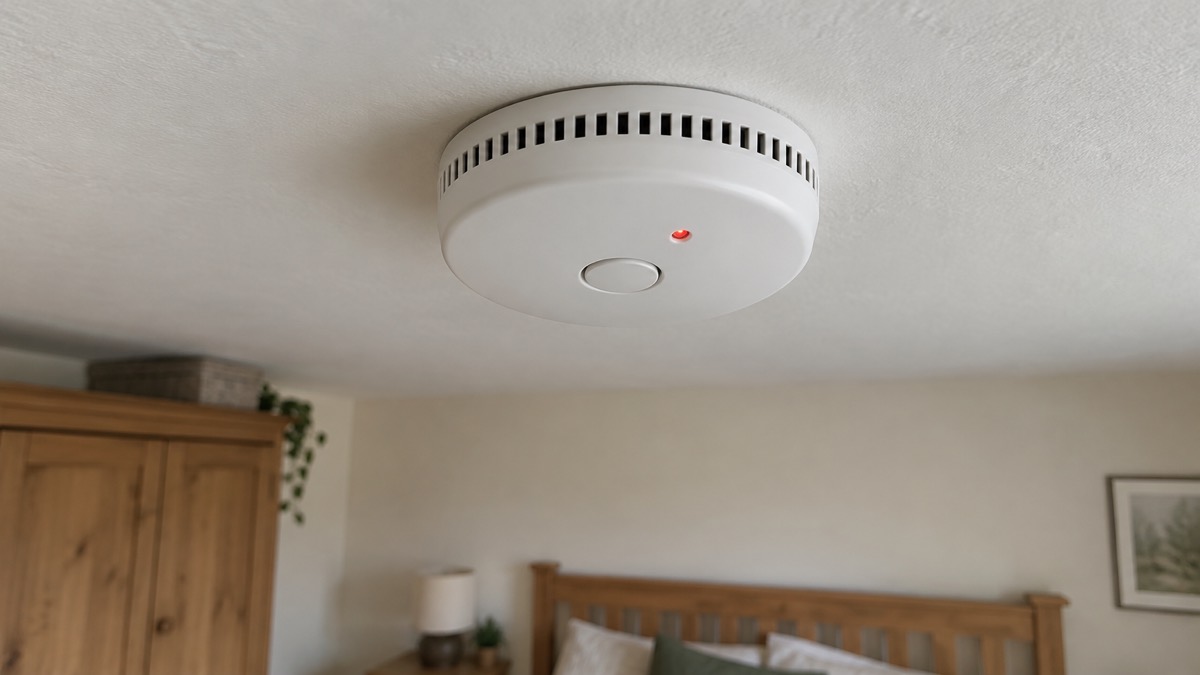
A sealed ten-year alarm is the low-maintenance option. You can buy alarms fitted with sealed 10 year batteries5, and the fire service's own units often use them: the alarms that Greater Manchester Fire and Rescue Service fits have a ten-year sealed battery which does not need to be changed3. North Yorkshire Fire and Rescue Service says the alarms it supplies have 10-year batteries and cannot be removed10.
The trade-off is that the alarm is not repairable. You can buy alarms with ten-year batteries, which provide peace of mind, but have to be replaced in their entirety when the battery eventually dies4. Scottish guidance describes long-life lithium batteries which can last up to 10 years11. If you have a ten year alarm, or a mains connected alarm, they will need to be replaced every ten years, and the date can usually be found on the alarm itself12.
A sealed compartment also has a safety benefit. Buying an alarm with a sealed battery compartment will help to prevent tampering or removal of the battery3. That matters in shared or rented homes, and in any household where someone might be tempted to silence an alarm by taking its battery out.
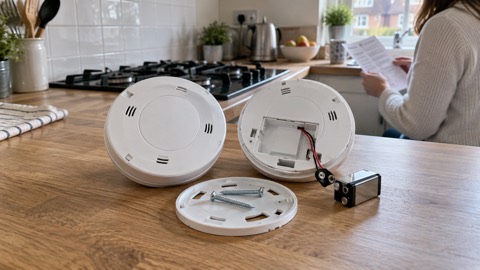
Standard battery alarms need new batteries every year
A standard battery alarm is a simple way to add cover, but it asks something of you every year. In a standard smoke alarm, the battery will need to be replaced every 12 months5. If any of your smoke alarms have a one-year battery, you must change them every year13. Basic smoke alarms run off nine volt batteries, and these should be replaced on a regular basis4.
The rule is the same across the UK's fire services. Change the battery once a year unless it is a ten-year alarm14. Replace the batteries every year if the alarm has removable batteries10. You need to replace the battery once a year or when it beeps regularly, whichever is sooner12. Change the battery every year even if it is still working15.
A few habits make this easier:
- Pick a fixed date, such as when the clocks change, and change every battery alarm then.
- Only take out the battery when you need to replace it12.
- Never disconnect or take the batteries out of your alarm if it goes off by mistake1. Silence it properly and find out why it sounded.
- Keep a spare battery of the right size in the house so a chirping alarm is fixed the same day.
If an alarm keeps beeping after a fresh battery, do not ignore it. Treat it as a fault and deal with it, rather than removing the battery and leaving the alarm dead.
Mains-wired alarms need an electrician and a back-up battery
A mains alarm is wired into your home's electricity, so it is not a DIY job. Mains alarms need to be installed by a qualified electrician5, and alarms hard wired to the mains must be fitted by a qualified electrician11. The reason is simple: the work involves your fixed wiring, and a poor connection is a fire risk in itself.
The back-up battery is what keeps the alarm alive in a power cut. Mains-powered alarms are powered by your home power supply and have a back-up battery in case of a power cut2. South Wales Fire and Rescue Service notes that electric alarms normally have a 9v back up battery in them in case you have a power cut9. Northern Ireland's guidance says smoke alarms linked to home mains electrics contain a nine volt back up battery that needs to be changed according to the manufacturer's instructions16.
That back-up does not last forever. Many hard-wired smoke alarms also have a back up battery that will need to be replaced when they fail, and signs of this include your alarm making frequent little beeps17. Change the back up battery every year; a running out battery can make the alarm beep9. If the alarm still beeps after the battery is changed, contact a qualified electrician for advice and to check your electrical supply9.
Hard-wired smoke alarms should be replaced as per the manufacturer's guidelines, and tested weekly18. If there is a problem with an alarm that is hard wired to mains electric, contact an electrician, or if in rented accommodation contact your landlord for further advice19.
Interlinked alarms: radio-linked so one sounds them all
An interlinked system is the single biggest improvement most households can make after fitting alarms at all. Some battery or mains alarms can be interlinked, so that when one alarm detects a fire they all go off together, giving a warning wherever you are in the home20. Interlinked alarms are when one alarm is triggered all the alarms will go off simultaneously21.
The linking can be wired or wireless. Linked smoke detectors are wired or wirelessly interlinked so if one alarm activates, all alarms activate22. Scottish guidance explains that both types of alarm are interlinked by radio frequency and do not need WiFi21. That last point matters: a radio-linked system keeps working when your broadband or power does not.
Interlinking is especially valuable in three situations:
- Larger homes. Interconnecting or linking alarms are useful in larger properties and for people who are D/deaf or hard of hearing4.
- Anyone who might not hear a single alarm. Some battery or mains alarms can be interlinked so that when one alarm detects a fire they all go off together, giving a warning wherever you are in the home, which helps people with mobility issues that may prevent or delay escape14.
- Households with a vulnerable person. Make sure alarms are interlinked so that when one alarm detects a fire they all go off together, giving the person early warning22.
If you already have alarms, you may be able to add linking rather than replace everything. Some systems can connect to a telecare, carecall or lifeline service23, and a radio smoke detector not only raises an audible alarm within the home but provides additional protection by raising an instant alarm call to the monitoring centre24. Ask the maker whether your model accepts a module before buying one, and check that any new unit is compatible with what you have.
Which rooms need an alarm: an LD1 system for fullest cover
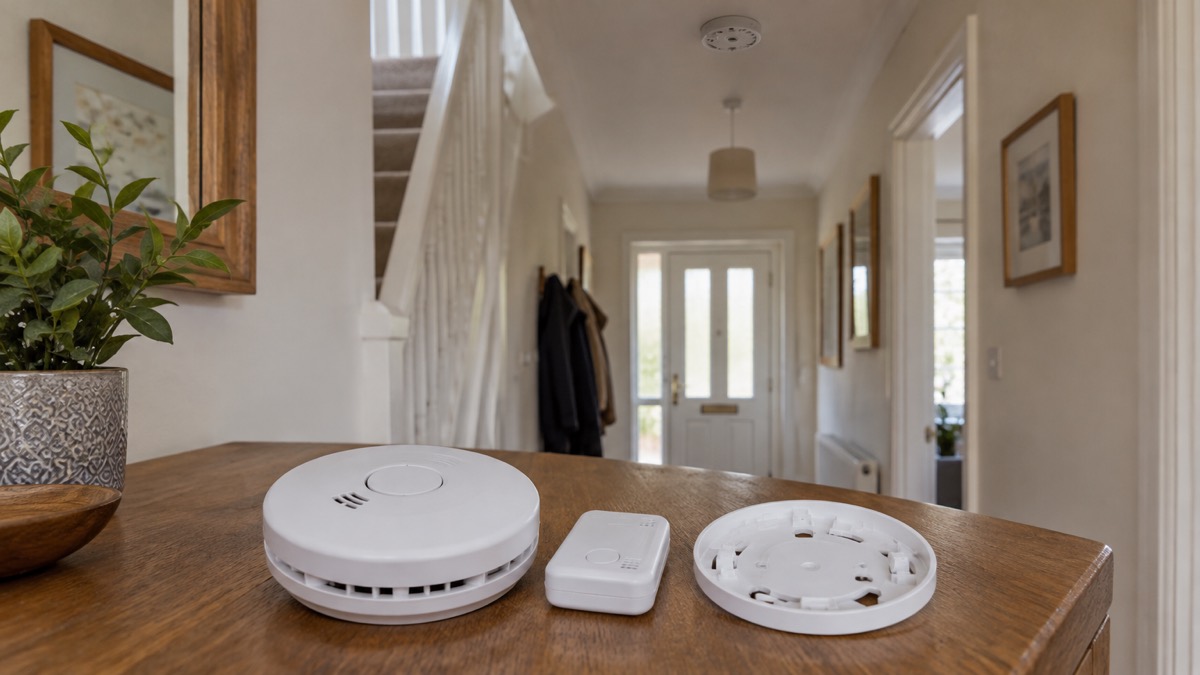
Where alarms go matters as much as which type you buy. The fullest cover is an LD1 system, which places detection in every room where a fire could start, including living rooms and bedrooms as well as the hallway and landing. Most homes have less than this, and the fire services' baseline advice is to fit at least one alarm on every level of the home and in the rooms where fires most often start.
At minimum, one smoke alarm should be installed in the room most frequently used for general daytime living purposes11. That is usually the living room, and it is the room where a fire is most likely to begin unnoticed while people are elsewhere. Add alarms in hallways and landings so you hear them at night, and consider heat alarms in kitchens and garages where smoke alarms would cause false alarms.
For a fuller system, think room by room:
- Living room: a smoke alarm, as the main daytime room25.
- Hallway and landing: smoke alarms so a fire downstairs wakes you.
- Bedrooms: smoke alarms, especially where people sleep with doors closed.
- Kitchen: a heat alarm rather than a smoke alarm, to avoid false alarms from cooking.
- Near a chimney or solid fuel appliance: follow the appliance maker's advice, and fit a carbon monoxide alarm as well.
If you are unsure how many alarms your home needs, a room-by-room plan is the place to start. Our guide to how many smoke alarms a house or flat needs sets out the options, and where to fit smoke alarms covers positions on ceilings and walls.
Recalls and safety notices for alarms and detectors
Alarms are safety equipment, so a faulty one is serious. Buy only alarms marked with a current British Standards or European (CE) safety mark, which shows they meet the relevant standard20. For smoke alarms, look out for the British Standard Kitemark and Loss Prevention Certification Board (LPCB) symbols, which show the alarm is approved and safe1. For carbon monoxide alarms, only buy alarms that have been certified to British Standard EN50291 and have the British or European approval mark, such as the Kitemark1.
Recalls do happen, and they are worth watching for. Check the batch and model of any alarm you already own against the maker's own safety notices, and follow the recall instructions if yours is affected. When you buy, make sure any alarms are marked with a current British Standards or European (CE) safety mark26. If an alarm starts to chirp, replace your alarm or its battery immediately, and certainly within seven days, as your alarm may not have enough power to warn you of a real fire after this time27.
If you are buying a combined unit, be clear what it detects. A combined smoke and carbon monoxide alarm is not the same as a heat detector, and packaging errors have caused confusion. Our guide to combined or separate alarms explains the difference, and how to check if an electrical product has been recalled covers the general process.
Getting help with choosing, fitting and guarantees
You do not have to work this out alone. Fire and rescue services across the UK offer home safety visits, and many fit free smoke alarms while they are there. The alarms they supply usually have sealed ten-year batteries: the alarms provided by Mid and West Wales Fire and Rescue Service have a 10-year battery life28, and the alarms Greater Manchester Fire and Rescue Service fits have a ten-year sealed battery which does not need to be changed3. Contact your local fire and rescue service to ask what is available where you live.
If you rent, your landlord has duties too. Ideally alarms should be hardwired and interlinked, which is a legislative requirement for rented accommodation8. Ask your landlord which alarms are fitted, when they were last tested, and who replaces the back-up battery in a mains unit.
For alarms bought yourself, keep the receipt and guarantee. If an alarm fitted by a fire service is still covered by its guarantee, the maker can help: FireAngel, for example, asks customers to call freephone 0800 141 2561 for support19. Buying an alarm with a sealed battery compartment will help to prevent tampering or removal of the battery3, which is worth considering in a shared home.
Smoke alarms can be purchased at DIY stores, hardware and electrical shops, and at some supermarkets27. Wherever you buy, check the marks before you pay, and check the replacement date on the unit.
If someone in your household is deaf or hard of hearing, specialised alarms are available: mains-powered smoke alarms with back-up batteries, and vibrating pads and flashing lights that warn people who cannot hear well21. Our guide to smoke and CO alarms for deaf and hard of hearing people explains the options, and extra help in an emergency covers support for older, disabled and medically dependent households.
Sources (28)
- Fire alarms and carbon monoxide detectors, Lincolnshire County Council, 2026
- Fire safety in the home, Suffolk County Council, 2021
- Smoke and heat alarms, Greater Manchester Fire and Rescue Service, 2026
- Smoke alarms, Devon and Somerset Fire and Rescue Service, 2026
- Smoke alarms, Staffordshire Fire and Rescue Service, 2026
- Mains wired smoke detectors, Devon and Somerset Fire and Rescue Service, 2021
- Housing standards, Cherwell District Council, 2026
- Other safety, Northern Ireland Fire and Rescue Service, 2026
- Smoke alarms, South Wales Fire and Rescue Service, 2026
- Smoke and carbon monoxide alarms, North Yorkshire Fire and Rescue Service, 2026
- Chimneys, Scottish Fire and Rescue Service, 2026
- Smoke alarms, Cornwall Fire and Rescue Service, 2021
- Fire safety advice in your flat, Greater Manchester Fire and Rescue Service, 2026
- Smoke alarms for vulnerable people, Devon and Somerset Fire and Rescue Service, 2026
- High rise homes, flats and apartments, Cheshire Fire and Rescue Service, 2026
- Fire safety and prevention, nidirect, 2025
- Stay safe at home: smoke alarms, Cheshire Fire and Rescue Service, 2026
- Safe and well booklet, Cheshire Fire and Rescue Service, 2026
- Problem with your smoke or heat alarm, Greater Manchester Fire and Rescue Service, 2026
- Smoke alarms and heat alarms, London Fire Brigade, 2026
- Smoke and heat alarms, Scottish Fire and Rescue Service, 2025
- Alarms, London Fire Brigade, 2026
- Equipment, Devon and Somerset Fire and Rescue Service, 2026
- What's available from the Telecare service, Isle of Anglesey County Council, 2026
- supporting_fire_safety_home_carers_guide_v12.pdf, Scottish Fire and Rescue Service
- Product recall: Aico Ei3014 Heat Detector, London Borough of Bromley, 2025
- Smoke alarms factsheet, Suffolk Fire and Rescue Service, 2014
- Smoke alarm maintenance and problems, Mid and West Wales Fire and Rescue Service, 2026
 Heat Alarm or Smoke Alarm
 Combined vs Separate Alarms
 Sealed or Replaceable Alarms
 Wireless or Wired Alarms
 Optical or Ionisation Alarms
 CO2 vs Powder Extinguishers