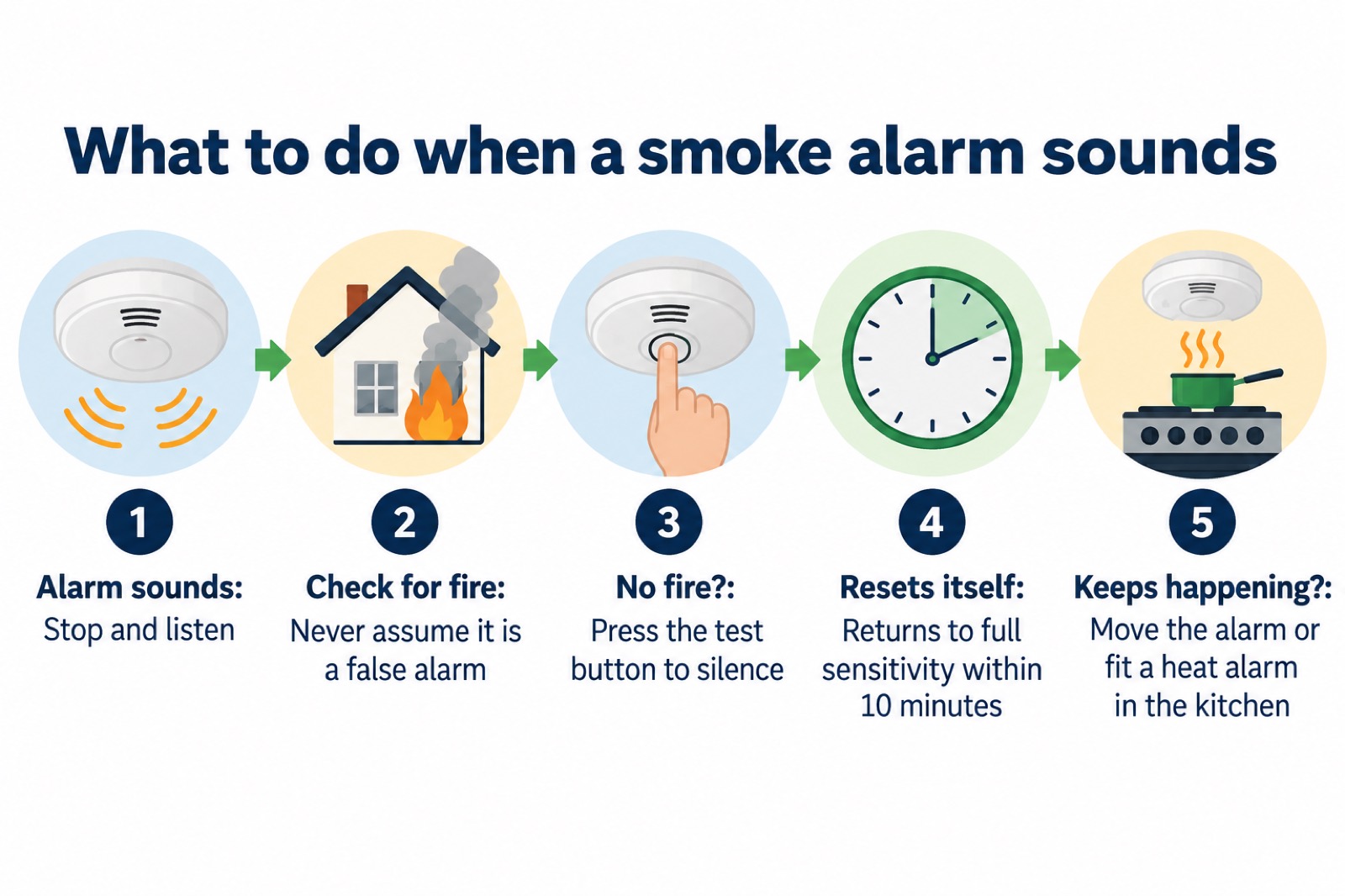
A smoke alarm that goes off while you are cooking or stepping out of the shower is a nuisance, but it is not a reason to disable it. If there is no fire, you can silence most alarms by pressing the test button, and the alarm will reset itself. On some models it pauses and returns to full sensitivity within 10 minutes1. If your alarm has no hush function, wait for it to stop.
The one thing never to do is take the batteries out. Fire and rescue services across the UK are consistent on this: if your smoke alarm goes off by mistake, do not take out the batteries3. A silenced alarm cannot warn you of a real fire, and the most common cause of false alarms, steam and cooking fumes, is easy to design out by fitting alarms in the right places5.
This page covers what to do when it goes off by mistake, why it happens, where alarms should go, how to test and replace them, and what to do if you rent, are deaf or hard of hearing, or need help checking your home.
Press the test button to silence a false alarm
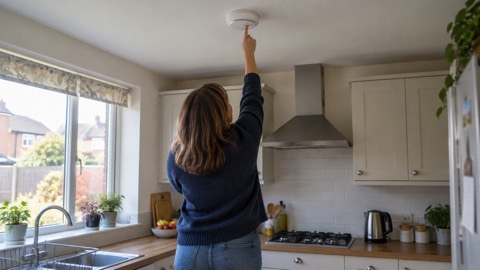
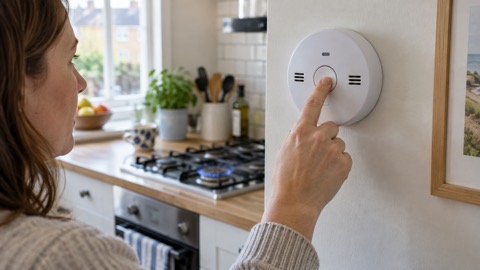
When an alarm sounds and you are certain there is no fire, the first thing to do is press the test button. Manchester Fire and Rescue Service advises that if you experience a false alarm and there is no fire, you can silence the alarm by pressing the same test button, and it will automatically reset1. On alarms with a hush feature, pressing and releasing the test button pauses the alarm, which then returns to full sensitivity within 10 minutes2.
If your alarm has no hush button, do not improvise by removing it from its base or taking out the battery. Just wait for it to stop3. The noise is unpleasant, but it is temporary; a disabled alarm is a permanent risk.
If you are cooking and the alarm sounds, talk calmly about what you are doing as you silence it, especially if children are watching. Explain that you know the alarm is telling you there is smoke from the cooking, but that if the sound was from another reason for smoke, you would get out in case there was a fire10. That way a child learns both how to deal with a nuisance alarm and why the alarm matters.
Never take the batteries out when it goes off by mistake
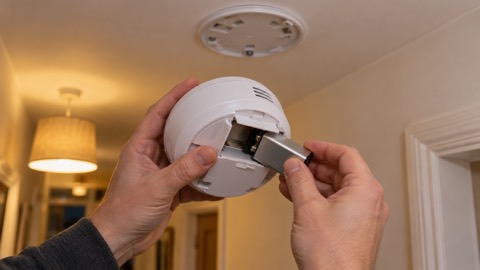
Removing the battery is the single most common way people turn a minor annoyance into a serious hazard. Fire and rescue services in England, Wales and Scotland all advise against it: never disconnect or take the batteries out of your alarm if it goes off by mistake4. If your smoke alarm goes off by mistake, do not take out the batteries; just wait for it to stop3.
Mid and West Wales Fire and Rescue Service gives the practical alternative for cooking triggers: if your smoke alarm keeps going off accidentally while you are cooking, do not remove the batteries; instead move the alarm or change it for one with a silencer button11. That is the pattern to follow for any recurring false alarm: change the alarm's position or its type, not its power supply.
If you have taken the battery out in the past, put it back now and test the alarm. If the alarm has been disabled for some time, treat it as a priority to restore it or replace it, and see Smoke Alarms: Types and How to Choose One for what to look for.
Steam and cooking fumes: the most common cause of false alarms
Steam and cooking fumes are the most common cause of false alarms, which is why fire services advise trying not to fit smoke alarms too close to the kitchen door3. The same triggers affect automatic fire alarm systems in larger buildings: they can react to steam, cigarette smoke, aerosol sprays or fumes from cooking, sometimes because detector heads are incorrectly sited or the system has not been serviced properly12.
In the home, the practical fixes are straightforward:
- Move the alarm if it sits too close to the kitchen door, where steam and cooking fumes can trigger it3.
- Fit a heat alarm in the kitchen instead of a smoke alarm, because heat alarms detect rapid temperature changes and avoid false alarms from cooking steam or smoke, such as burnt toast7.
- Ventilate when cooking or showering, and keep the bathroom door closed if a smoke alarm is nearby.
- Do not smoke indoors near an alarm; cigarette smoke is one of the triggers listed for automatic systems12.
If your alarm goes off every time you cook, the answer is not to stop cooking or to disable the alarm. It is to change where the alarm is or what kind it is. A heat alarm in the kitchen and a smoke alarm in the hall and landing is the arrangement fire services recommend6. For more on cooking safely, see Kitchen Fires: Cooking Safety and Prevention.
Where to fit an alarm so it stops going off by mistake
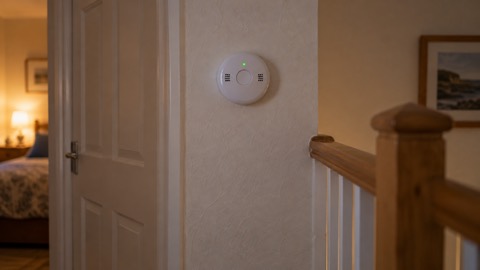
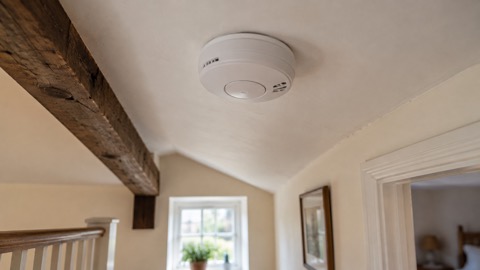
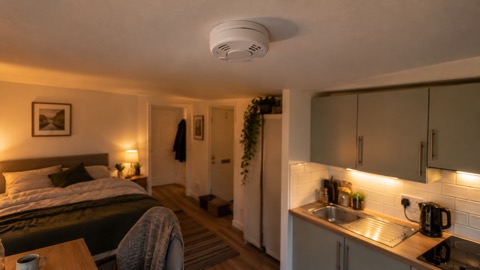
Placement decides whether an alarm is a reliable warning or a constant nuisance. The ideal position is on the ceiling, in the middle of a room, and in the hallway and landing, so you can hear an alarm wherever you are13. Fit alarms as close to the centre of the room as possible, but at least 30 centimetres (12 inches) away from any wall or light fitting8.
Do not fit smoke alarms in kitchens or bathrooms, where smoke or steam could set them off accidentally; install a heat alarm in the kitchen instead6. You need at least one smoke alarm on each level of your home6. Do not just fit a smoke alarm in your hall and landing: also fit them in any room where a fire can start, for example any room where you smoke or leave appliances plugged in4.
| Room | Best alarm | Why |
|---|---|---|
| Hallway and landing | Smoke alarm | Gives early warning on the escape route13 |
| Kitchen | Heat alarm | Detects rapid temperature changes, avoids steam and cooking fumes7 |
| Garage | Heat alarm | Recommended for garage as well as kitchen14 |
| Bathroom | No smoke alarm | Steam sets it off accidentally6 |
| Bedroom or living room with appliances | Smoke alarm | Fire can start where appliances are plugged in4 |
For a fuller room-by-room guide, see Where to Fit Smoke Alarms and Heat Alarm or Smoke Alarm: Which Goes Where.
Testing, batteries and replacing the alarm after 10 years
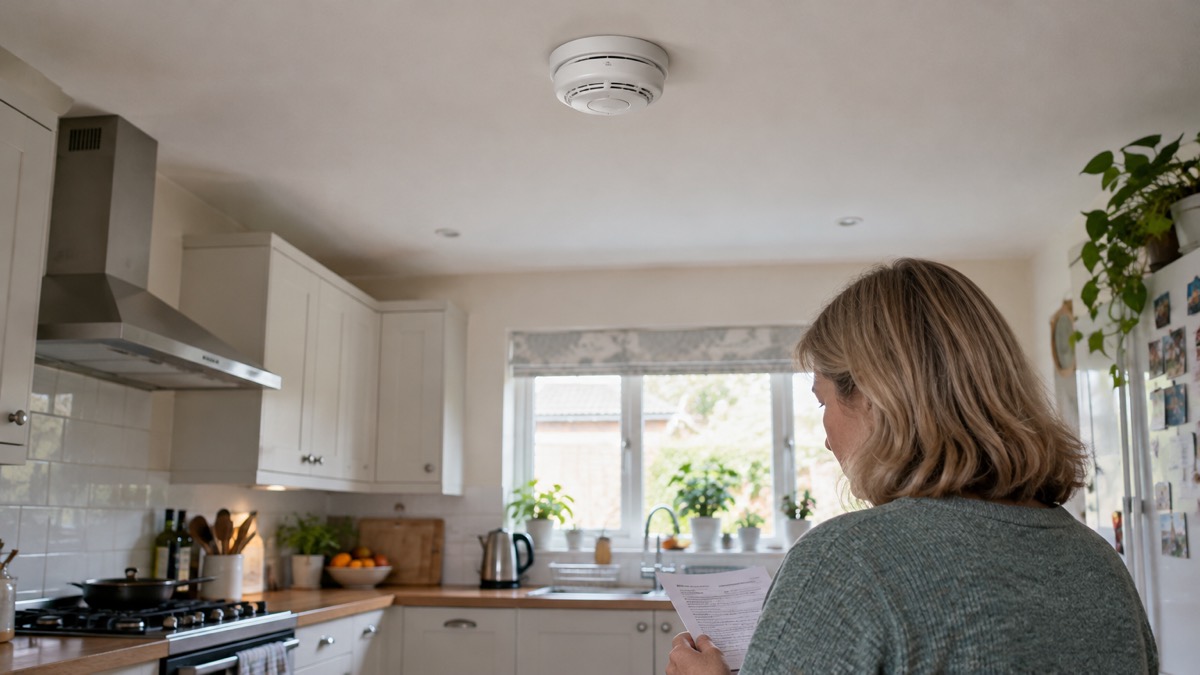
A false alarm is often the first sign that an alarm needs attention, but regular testing is what keeps it trustworthy. Test your smoke alarm every week, change the battery once a year unless it is a ten-year alarm, and after 10 years get a whole new alarm8. Fire and rescue services advise testing at least once a month by pressing the test button until the alarm sounds1. Press for 3 seconds to test, and check the manual for more information15.
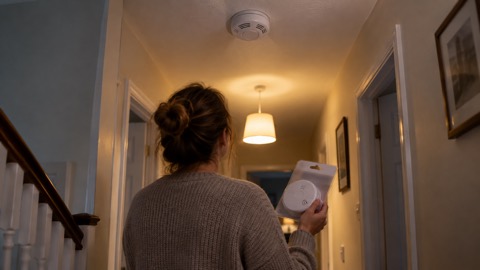
Most smoke alarms need replacing after 10 years; check your warranty and replace your alarm every 10 years8. If it is a ten-year alarm, you will need to replace the whole alarm every ten years13. Once a year, vacuum and wipe the smoke alarm casing to ensure dust is not blocking the sensor; for mains wired alarms, switch off first16.
When choosing a replacement, look out for the British Standard Kitemark and Loss Prevention Certification Board (LPCB) symbols, which show the alarm is approved and safe5. If possible, fit an optical multi sensor smoke alarm with a ten-year life span, a sealed battery compartment and a British Standard Kitemark symbol8. The National Fire Chiefs Council recommends that the smoke alarm has a sealed battery compartment to prevent tampering or removal of the battery18. For more, see When to Replace a Smoke, Heat or CO Alarm and Alarm Standards: BS 5839-6, BS EN 50291 and System Grades.
Linked and mains alarms: why they all sound together
If every alarm in your home sounds at once, that may be by design. Some alarms connect to each other so that, when one senses smoke, all the alarms sound19. You can have linked alarms installed so that when one alarm detects a fire, they all go off together20. This is useful in a large house or over several levels, where you might not hear a single alarm14.
Linked alarms are particularly valuable for people with mobility issues that may prevent or delay escape, because they give a warning wherever you are in the home21. If you live in a large house or one with more than one floor and may not hear your smoke alarm, you could ask a qualified electrician to fit linked alarms, so that when one detects a fire they all sound22.
The downside is that one trigger, such as steam from a bathroom, can set off every alarm in the house. The fix is the same as for a single alarm: correct siting, a heat alarm in the kitchen, and a hush button where available. Do not disconnect a linked system to stop nuisance alarms; ask an electrician to reposition or adjust it. For how linking works, see Interlinked Alarms: How Linking Works and Wireless or Wired Interlinked Alarms.
If you rent, are deaf or hard of hearing, or need help
Not everyone can hear, reach or test their own alarm, and the help available differs by circumstance.
Rented homes. If you live in a rented property, your landlord must ensure you have smoke alarms and make sure they are in working order at the start of a new tenancy24. The law requires landlords to ensure there are smoke alarms on every storey of their homes and check they are working at the beginning of each new tenancy25. Your landlord, at the start of your tenancy, has a responsibility to make sure the smoke alarms are working26. If an alarm is faulty, report it rather than removing it.
Deaf or hard of hearing. People who are deaf or hard of hearing need additional ways of being made aware the alarm has been activated, including vibrating pads and flashing strobe lights27. If you are deaf or hard of hearing, consider installing a smoke alarm with a strobe light and vibrating pads to alert you in case of fire28. You can get a special alarm if you are deaf, hard of hearing or have a visual impairment29. For more, see Smoke and CO Alarms for Deaf and Hard of Hearing People.
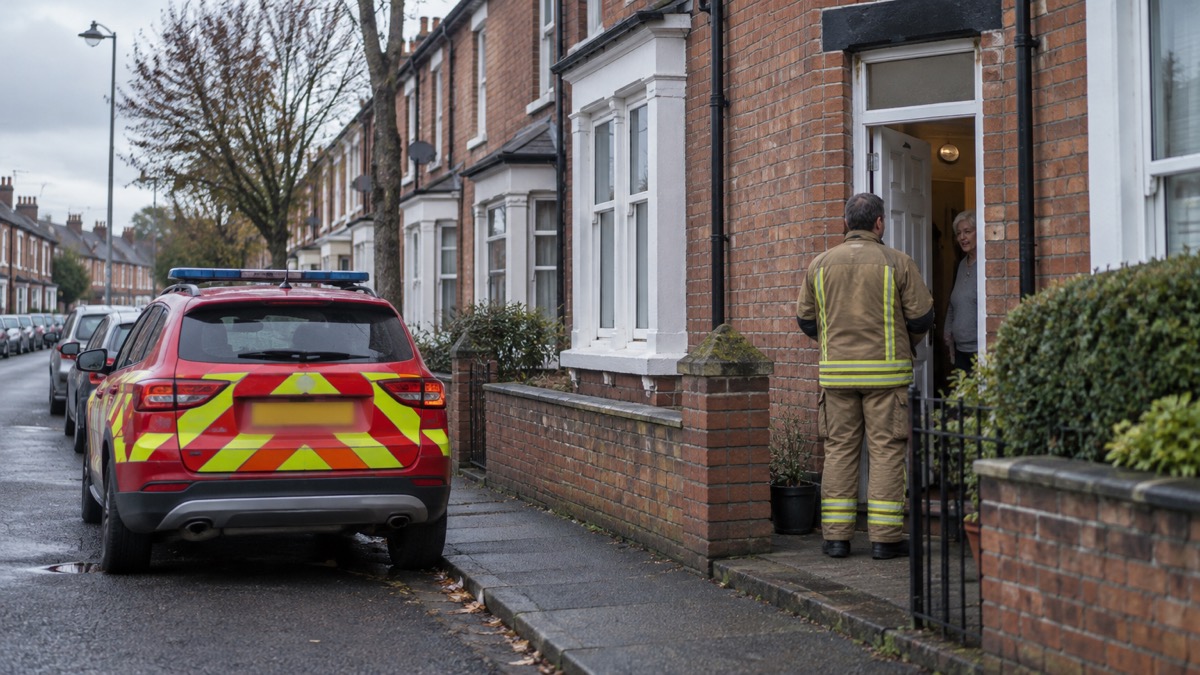
Free home fire safety check. Many fire and rescue services offer a free home fire safety check; register by completing the home fire safety check form on your local service's website30. If you do not have a working smoke alarm, they will fit one for free31. This is worth arranging if you are older, live alone, or struggle to test your alarms. See Fire Safety Checklist for Your Home for what to check before a visit.
Sources (31)
- Smoke and heat alarms, Manchester Fire and Rescue Service, 2026
- Smoke alarms, Devon and Somerset Fire and Rescue Service, 2026
- Smoke and heat alarms, Scottish Fire and Rescue Service, 2026
- Smoke alarms and heat alarms, London Fire Brigade, 2026
- Smoke alarms, Lincolnshire Fire and Rescue, 2025
- Advice for parents and guardians, Devon and Somerset Fire and Rescue Service, 2026
- Cooking, London Fire Brigade, 2026
- Smoke alarms, Staffordshire Fire and Rescue Service, 2026
- Action plan, Surrey County Council, 2026
- Talk to your children about fire safety, Devon and Somerset Fire and Rescue Service, 2026
- Older Person Safety, Mid and West Wales Fire and Rescue Service
- Automatic fire alarms, Surrey County Council, 2026
- Fire safety in the home, Suffolk Fire and Rescue Service, 2021
- Alarms and sprinklers, Warwickshire Fire and Rescue Service, 2026
- Safe and well booklet, Cheshire Fire and Rescue Service, 2026
- Smoke alarms factsheet, Suffolk Fire and Rescue Service, 2014
- Mains wired smoke detectors, Devon and Somerset Fire and Rescue Service, 2021
- Home detection position statement, National Fire Chiefs Council, 2019
- Smoke alarms, Cornwall Fire and Rescue Service, 2026
- Sight, hearing and mobility, UK Government, 2021
- Smoke alarms for vulnerable people, Devon and Somerset Fire and Rescue Service, 2026
- Fire safety for people with hearing difficulties, Devon and Somerset Fire and Rescue Service, 2026
- Smoke alarm maintenance and problems, Mid and West Wales Fire and Rescue Service, 2026
- Living alone, Staffordshire Fire and Rescue Service, 2026
- Fire safety prevention, Fire Kills, 2026
- Tenants, Devon and Somerset Fire and Rescue Service, 2026
- Smoke alarms, Surrey County Council, 2026
- For people with disabilities, Tyne and Wear Fire and Rescue Service, 2026
- Digital easy read fire safety booklet, London Fire Brigade, 2026
- Home fire safety check, Cheshire Fire and Rescue Service, 2026
- Keeping safe, Cornwall Fire and Rescue Service, 2026
 Home Fire Safety Checklist
 Bedtime Fire Safety Checks
 Fire Risk Checks for Carers
 Why a CO Alarm Is Beeping
 Smoke Alarm Keeps Chirping
 Testing Smoke and CO Alarms
 Replacing Smoke and CO Alarms
 Where to Fit Smoke Alarms
 How Many Smoke Alarms
 Where to Put a CO Alarm
 Do I Need a CO Alarm
 Can a CO Alarm Detect a Gas Leak
 Trapped by Fire What to Do
 Putting Out a Chip Pan Fire
 Electrical Fire Safety