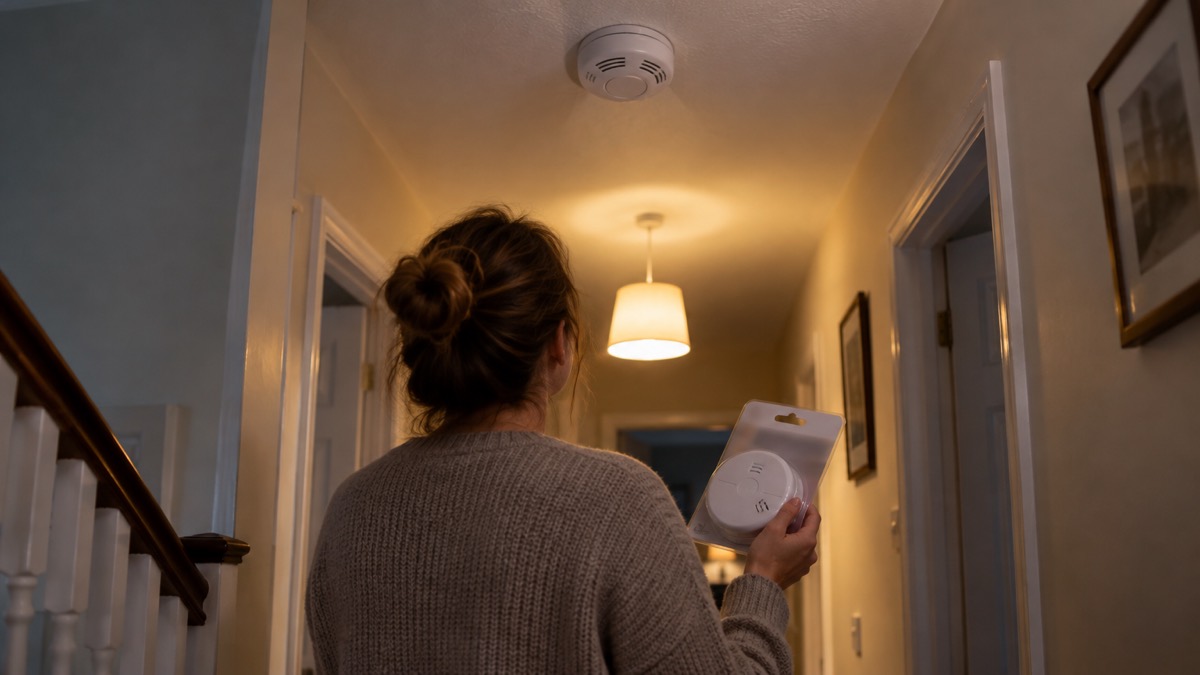
Smoke and heat alarms are usually replaced every ten years, or when the replace by date printed on the unit is reached1. Carbon monoxide alarms are different: they have a limited lifespan and lose sensitivity over time, so fire services advise replacing them according to the manufacturer's recommendations, usually every five to seven years3. A sealed ten-year battery alarm is replaced as a whole unit at the end of its life, not re-battered5.
A beeping alarm is a separate signal from the calendar. If a smoke alarm starts to beep on a regular basis, replace the battery, or replace the alarm if it has a built-in battery6. Fire and rescue services are blunt about the urgency: replace your alarm or its battery immediately, and certainly within seven days, as the alarm may not have enough power to warn you of a real fire after this time7.
The rest of this page sets out how to read the date on your alarm, what each beep means, how the ten-year rule applies to hard-wired and sealed-battery units, and what to do with the old alarm once it comes down.
Replace smoke and heat alarms every ten years
The ten-year figure is the one that matters most, and it comes from several directions. Electrical Safety First, the independent charity, advises replacing smoke and heat alarms every ten years or when the replace by date is reached10. Dorset and Wiltshire Fire and Rescue Service says most smoke alarms need replacing after ten years, and advises checking your warranty and replacing the alarm every ten years1. Greater Manchester Fire and Rescue Service gives the same figure for houses and for flats2.
The date is not a suggestion. An alarm's sensor degrades with age, and the replace by date printed on the casing is the manufacturer's own estimate of when it can no longer be relied on. That is why the advice is to replace them every ten years or when the replace by date is reached10. If your alarm was fitted in 2014 and carries a replace by date of 2024, the date wins.
Ten-year alarms and mains-connected alarms follow the same rule: they need to be replaced every ten years, and the date can usually be found on the alarm itself12. A ten-year alarm is not a ten-year guarantee that the unit will still detect smoke at year ten; it is a unit designed to last that long and then be replaced whole13.
| Alarm type | Replacement interval | Source |
|---|---|---|
| Standard smoke alarm | Every ten years, or when the replace by date is reached | 10 |
| Ten-year sealed battery smoke alarm | Replace the whole alarm every ten years | 13 |
| Mains-connected smoke alarm | Every ten years | 12 |
| Heat alarm | Every ten years, or when the replace by date is reached | 10 |
| Carbon monoxide alarm | Usually every five to seven years, per the maker | 3 |
A regular beep means the battery or alarm needs replacing now
A chirp is not background noise. If a smoke alarm starts to beep on a regular basis, you need to replace the battery, or replace the alarm if it has a built-in battery6. A running out battery can make the alarm beep, and on a mains operated alarm the back up battery should be changed every year8. For a standard battery alarm, replace the battery once a year or when it beeps regularly, whichever is sooner12.
For alarms that take a replaceable battery, the annual change is the baseline. Somerset Council advises changing the battery every year unless it is a ten-year alarm, or when you need to15. The Northern Ireland government's fire safety guidance says the same: replace the battery once per year if your alarms are designed for battery replacement16. On a mains-operated alarm, the backup battery should be changed every year, and a running-out battery can make the alarm beep11.
If the alarm still beeps after a fresh battery, or if it beeps and will not stop, the fault is in the unit. Do not silence it and carry on: replace the alarm. The same applies if the alarm fails to sound when you press the test button. Test it by pressing the button until the alarm sounds; if it does not sound, you need to replace the battery17. If a new battery does not fix it, replace the alarm.
Sealed battery alarms: replace the whole alarm, within seven days at most
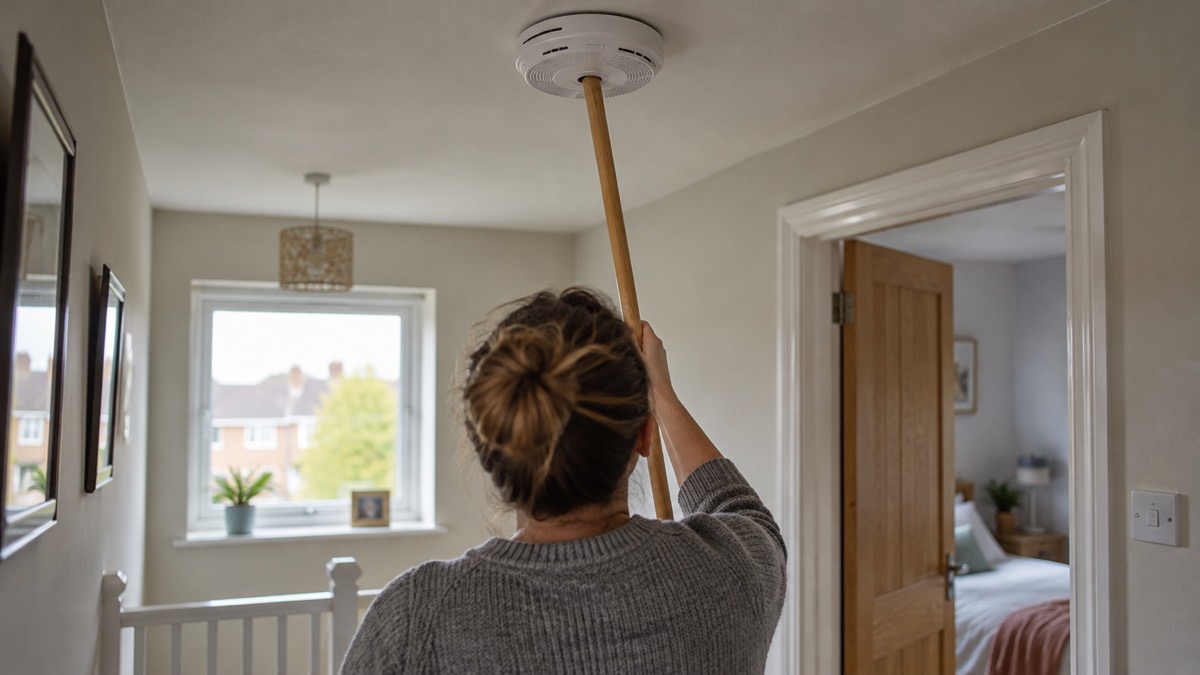
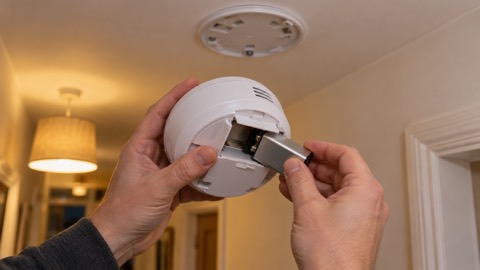
Sealed-battery alarms, often sold as ten-year alarms, cannot be re-battered. Some alarms are fitted with ten-year or long-lasting sealed batteries, and these should not be removed or replaced, as doing so will damage the alarms beyond repair5. When the battery in one of these reaches the end of its life, the alarm tells you by chirping, and the answer is a new alarm.
The seven-day limit applies here too. Replace your alarm or its battery immediately, and certainly within seven days, as your alarm may not have enough power to warn you of a real fire after this time7. A sealed alarm that has started to chirp is not a working alarm on borrowed time; it is an alarm that may not wake you.
This is also where the ten-year rule and the beep rule meet. A sealed ten-year alarm that starts chirping at year eight is replaced at year eight, not year ten. The replace by date is a maximum, not a target.
Hard-wired alarms follow the same ten-year rule
Mains-wired alarms are not exempt because they have no battery to change. Age UK advises that hard-wired smoke alarms should still be tested monthly and replaced every ten years20. The Scottish Government's guidance for Scottish homes says mains-wired alarms should be replaced every ten years21. Dorset and Wiltshire Fire and Rescue Service advises that mains-wired as well as battery-operated devices should be replaced every ten years, or sooner if they do not respond properly when tested9.
The "or sooner" is the part people miss. A hard-wired alarm that fails its monthly test, or that sounds weakly, or that will not silence, is due for replacement regardless of its age. The same applies if the alarm has been painted over, damaged, or exposed to heavy dust or fumes.
Hard-wired alarms also have a backup battery, and that battery needs changing every year; a running-out battery can make the alarm beep11. If your hard-wired alarm beeps and a new backup battery does not stop it, the unit itself is the problem.
Replacing a hard-wired alarm is not a like-for-like swap for a householder with no electrical experience. The unit is connected to the mains, so the circuit must be isolated before the old alarm comes down. If you are not confident doing that, use a qualified electrician. The ten-year rule tells you when; it does not tell you to do the wiring yourself.
Replace earlier if an alarm is faulty
The ten-year rule is a backstop, not a licence to keep a faulty alarm. Fire and rescue services advise householders to check their smoke alarms, never remove the batteries, and if the alarm is faulty, replace it immediately22. That instruction comes from the Northern Ireland Fire and Rescue Service, issued after two house fire fatalities in one day, and it is as direct as safety advice gets.
What counts as faulty? An alarm that does not sound when tested, an alarm that beeps persistently after a new battery, an alarm with a damaged or painted casing, and an alarm that has been exposed to conditions it was not designed for. Any of these means replacement now, whatever the date on the unit.
If you rent, the responsibility is shared. Landlords must repair or replace smoke and carbon monoxide alarms if they are reported as faulty23, and in England the amended regulations require them to do so as soon as reasonably practicable after being notified19. Tell your landlord or letting agent in writing, and if the alarm is not fixed, contact your local council's housing team.
How to find the date and decide what to do
Every alarm carries a date, usually on the back or the side of the unit. Look for a manufacture date or a replace by date. Fire and rescue services advise replacing smoke and heat alarms every ten years or when the replace by date is reached10, so the printed date is the one that decides it. If you cannot find a date, treat the alarm as due for replacement.
A simple routine keeps you ahead of it:
- Check the date on every alarm in the home, and note it somewhere you will see it again.
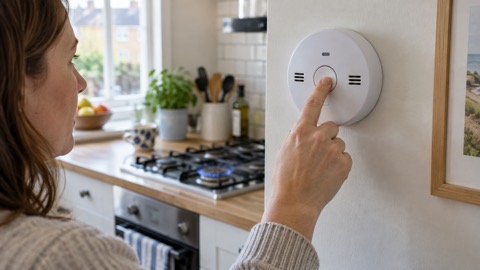
- Test monthly by pressing the button until it beeps2. Some fire services advise testing every week24.
- Change replaceable batteries once a year, or when the alarm beeps, whichever is sooner12.
- Replace the whole alarm at ten years for smoke and heat alarms10, and at five to seven years for carbon monoxide alarms unless the maker says otherwise3.
- Replace immediately if the alarm is faulty, fails its test, or will not stop beeping after a new battery22.
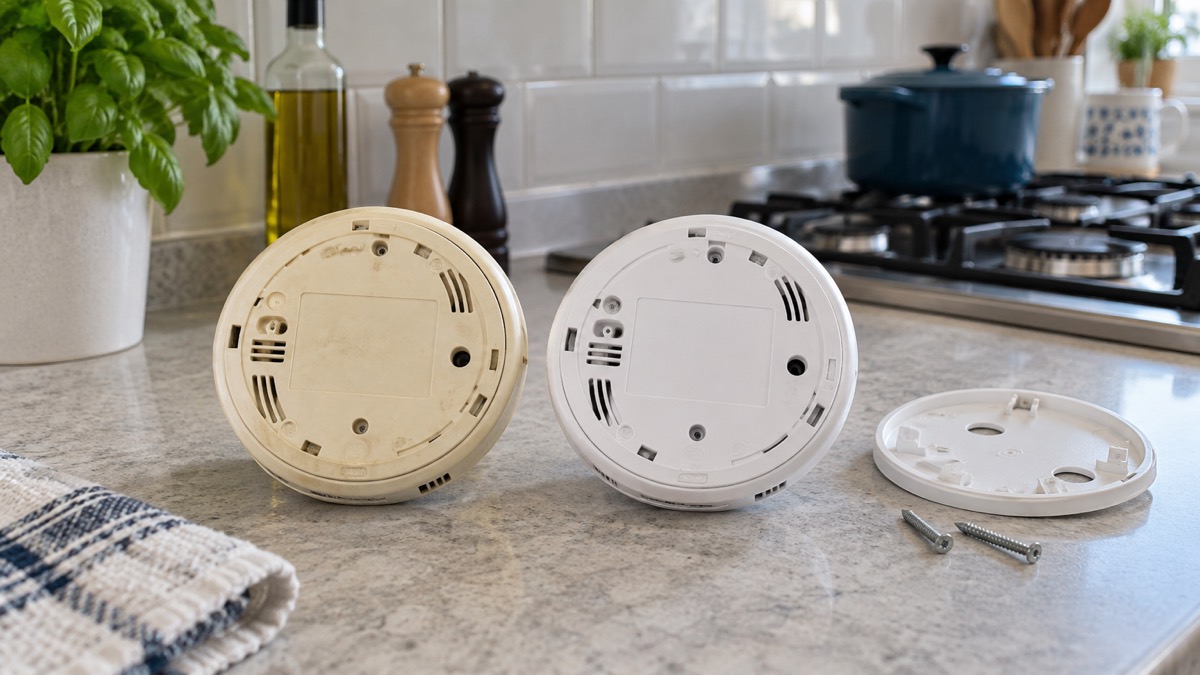
If you are replacing alarms anyway, it is worth thinking about what you are replacing them with. The choice between sealed ten-year and replaceable battery alarms affects how you maintain them, and the choice between battery and mains alarms affects who can fit them. If your alarms are interlinked, replacing one may mean replacing the set, which is covered in interlinked alarms.
Carbon monoxide alarms: five to seven years, or when they chirp
Carbon monoxide alarms do not follow the ten-year smoke alarm rule. They have a limited lifespan and may lose sensitivity over time, so fire services advise replacing the detector according to the manufacturer's recommendations, usually every five to seven years3. One NHS burns prevention booklet gives a shorter figure still, advising replacement of carbon dioxide detectors every five years25; that is the shortest figure in the official guidance, and the maker's own instructions should be checked for your model.
An independent testing organisation, Which?, notes that all CO detectors have a set lifetime which can be as long as ten years, and that chirping every 30 seconds is the sign that your alarm is ready to be replaced26. That is not a contradiction of the five to seven year advice so much as a reminder that the maker's stated life is the one that applies to your unit. If your alarm's instructions say ten years, ten years is the maximum; if they say five, five is the maximum.
Test carbon monoxide alarms regularly and replace the batteries as needed4. A CO alarm is not a substitute for servicing your appliances: the alarm will not go off if you are being exposed to lower levels of carbon monoxide, so it should not be used as a substitute for regular servicing of appliances27.
If your CO alarm sounds, do not wait to replace it: get everyone into fresh air and follow the advice on what to do if your CO alarm sounds. For the symptoms to watch for, see carbon monoxide poisoning symptoms.
Recalls and guarantees: when the maker, not the calendar, decides
Sometimes an alarm is replaced because it is recalled, not because it is old. A recall notice names the exact model and batch, so check your alarm against it rather than assuming your unit is affected.
Check recalls if your alarm is a model you have had for a while, and register new alarms with the maker where that is offered. The government's product recall pages list current recalls, and our guide to checking whether an electrical product has been recalled explains how to search them.
Guarantees are a separate matter. One fire service support article advises checking whether the battery needs replacing, or whether the guarantee on the alarm has expired and you need to replace the whole unit28. A guarantee that has expired does not by itself mean the alarm is unsafe, and a guarantee still in date does not extend the ten-year rule. The date on the unit decides replacement; the guarantee decides who pays.
Replacing all your alarms at once, and disposing of the old ones
If your alarms were all fitted on the same day, they will all reach their replace by date together, and replacing them as a set is the simplest approach. It also means you are not left with a mix of old and new units, some of which may be near the end of their life. If you have added alarms since, replace each one when its own date arrives.
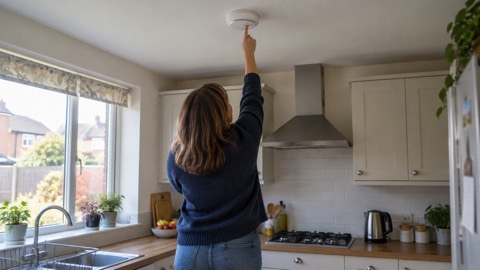
Before you dispose of an old alarm, clean and check the ones you are keeping. Vacuum and wipe the smoke alarm casing once a year to ensure dust is not blocking the sensor; for mains-wired alarms, switch off first29. Dust is a common cause of false alarms, and a clean alarm is easier to test honestly.
Old alarms should not go in the general waste. Take them to your local household waste and recycling centre, or ask your council about small electrical recycling.
If you are replacing alarms because someone in the home is deaf or hard of hearing, or because you are not sure the current set is right for the property, the guides on smoke alarms: types and how to choose one and smoke and CO alarms for deaf and hard of hearing people set out the options. For a full walk-through of what to check and when, use the fire safety checklist for your home.
Sources (29)
- Smoke alarms for vulnerable people, Dorset and Wiltshire Fire and Rescue Service, 2026
- Fire safety advice in your flat, Greater Manchester Fire and Rescue Service, 2026
- Smoke alarms and CO detectors, Warwickshire County Council, 2026
- Safe home heating, Warwickshire County Council, 2026
- Fire safety in the home, Westminster City Council, 2017
- Fire alarms and carbon monoxide detectors, Lincolnshire County Council, 2026
- Problems with smoke alarms, Dorset and Wiltshire Fire and Rescue Service, 2026
- Smoke alarms, Dorset and Wiltshire Fire and Rescue Service, 2026
- Mains-wired smoke detectors, Dorset and Wiltshire Fire and Rescue Service, 2021
- Plugs and fuses, Electrical Safety First, 2026
- Smoke alarms, South Wales Fire and Rescue Service, 2026
- Smoke alarms, Cornwall Council, 2021
- Fire safety in the home, Suffolk County Council, 2021
- Fire safety in the home, UK Government, 2022
- Household fire safety, Somerset Council, 2025
- Fire safety and prevention, nidirect, 2025
- Stay safe in the home, Mid and West Wales Fire and Rescue Service, 2019
- Additional advice for tenants, Greater Manchester Fire and Rescue Service, 2026
- Housing standards, Cherwell District Council, 2022
- Fire prevention, gas safety and electric safety, Age UK, 2025
- Fire and smoke alarms in Scottish homes, Scottish Government, 2024
- NIFRS issues safety plea following two house fire fatalities in one day, Northern Ireland Fire and Rescue Service, 2025
- Smoke alarms, Cheshire Fire and Rescue Service, 2026
- Smoke alarms, Staffordshire Fire and Rescue Service, 2026
- Burns prevention booklet 2024, Salisbury NHS Foundation Trust, 2024
- Carbon monoxide alarm review, Which?, 2026
- Carbon monoxide: general information, UK Government, 2022
- Problem with your smoke or heat alarm, Greater Manchester Fire and Rescue Service, 2026
- sfrs-smoke-alarms-factsheet, Suffolk Fire and Rescue Service
 Home Fire Safety Checklist
 Bedtime Fire Safety Checks
 Fire Risk Checks for Carers
 Why a CO Alarm Is Beeping
 Smoke Alarm Keeps Chirping
 Testing Smoke and CO Alarms
 Where to Fit Smoke Alarms
 How Many Smoke Alarms
 Where to Put a CO Alarm
 Do I Need a CO Alarm
 Can a CO Alarm Detect a Gas Leak
 Trapped by Fire What to Do
 Putting Out a Chip Pan Fire
 Electrical Fire Safety
 Appliances Left On Overnight