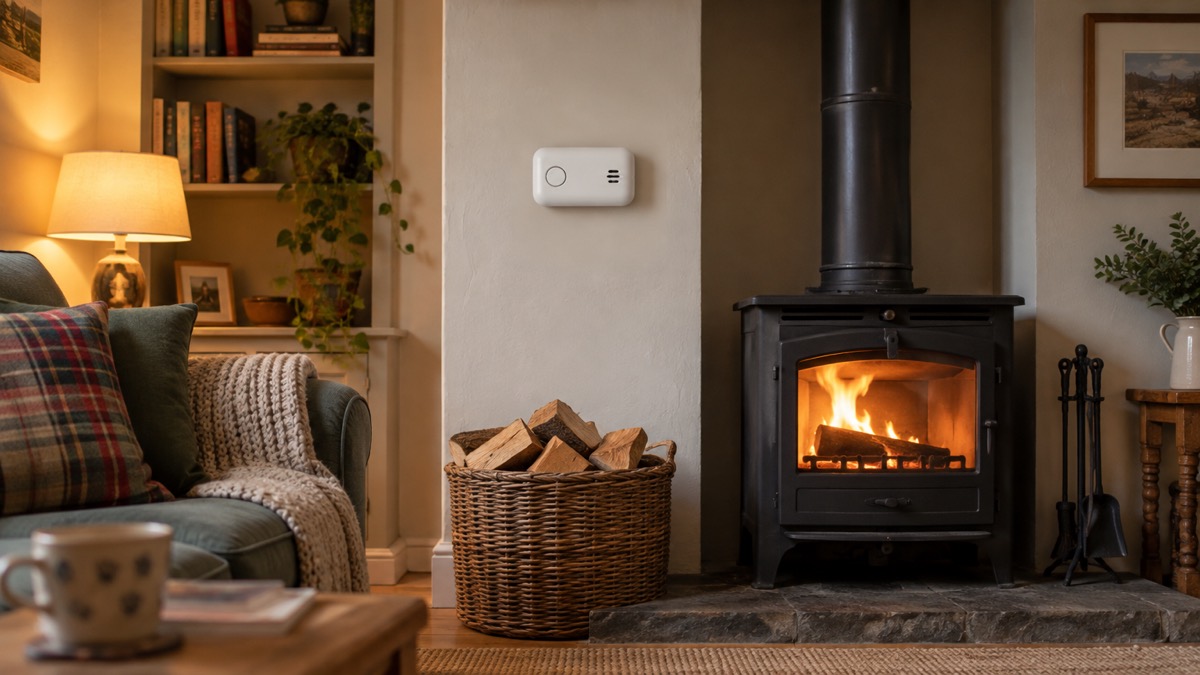
If your home burns gas, oil, coal or wood, you need a carbon monoxide alarm, and you need one in every room where that burning happens. The NHS is direct about it: get one alarm for each room of your home containing appliances that burn gas, oil, coal or wood1. That covers a gas boiler, a gas fire, a gas hob, an open fire, a wood burner and a paraffin heater. If your home is powered entirely by electricity, you do not need one2.
Carbon monoxide is a gas you cannot see, smell or taste, and an alarm is the only thing in the house that will warn you it is there. Its job is narrow and vital: to alert you and give you time to get out of the building safely3. It does not stop the gas being produced, and it does not replace having your appliances serviced and your flues checked4.
So the practical answer has two halves. Fit alarms where the fuel is burned, and keep the appliances that burn it in good order. This page sets out who needs an alarm, where it goes, how often to test it, what the law requires of landlords, and what to do about alarms when you go away.
Homes that burn gas, oil, coal or wood need an alarm
The test is simple: does anything in your home burn fuel? If it does, you need an alarm in the room where it burns. Guidance from Warwickshire County Council puts it plainly: if you have a fuel-burning boiler, fire or stove, whether it runs on gas, LPG, oil or wood, you should have an alarm in every room where fuel is burned, and a home powered entirely by electricity does not need one2.
Fire and rescue services across the country say the same thing in their own words. Devon and Somerset Fire and Rescue Service says you should have an alarm in every room containing boilers, cookers, ovens, open fires or wood burners8. Greater Manchester Fire and Rescue Service recommends placing one in rooms with a fixed combustion appliance, such as a gas fire, gas boiler, log burner or open fireplace9. The NHS adds its own list, covering appliances that burn gas, oil, coal or wood10.
That list matters because people often think only of the boiler. A gas hob in a kitchen, a wood burner in a living room and an open fire in a front room are all sources, and each needs its own alarm in that room. A single alarm in the hallway will not reliably pick up carbon monoxide building in a closed kitchen or a bedroom above a boiler.
All-electric homes do not need one
If nothing in your home burns fuel, there is no carbon monoxide to detect. Warwickshire County Council's guidance is unambiguous: if you live in a house or flat that is entirely powered by electricity, you will not need a carbon monoxide detector2. Which? repeats the same point, adding that if you do have a fuel-burning boiler, fire or stove you should have one in every room where fuel is burned11.
The position changes the moment you add a fuel-burning appliance. A new gas hob, a wood-burning stove or a gas fire means you now have a source, and you should fit an alarm in that room. If you are unsure whether an appliance burns fuel, check its manual or ask the installer.
Where to fit a carbon monoxide alarm
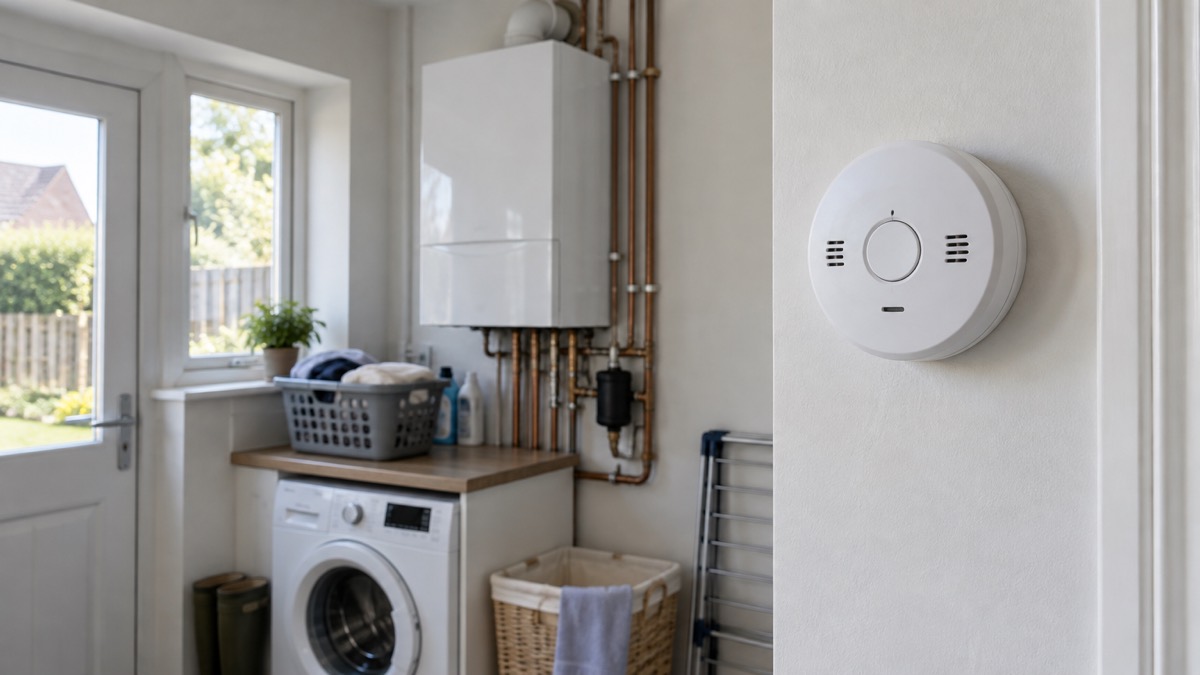
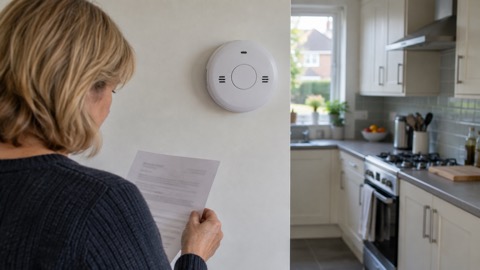
Placement is where most people get this wrong, usually by fitting one alarm in a hallway and hoping it covers the house. It will not. Fit one in each room where fuel is burned, and site it so it can be heard.
The general rule is to put the alarm near the appliance, usually 1 to 3 metres away, and to follow the instructions that come with your specific alarm5. Guidance for rented homes is more precise: fit it in every room used as living accommodation that contains a fixed combustion appliance, apart from gas cookers, at head height on a wall or shelf, about 1 to 3 metres from the potential source12. Warwickshire County Council advises mounting it on the wall or ceiling as the manufacturer instructs, at a height of 1 to 3 metres above the ground, away from obstacles or ventilation sources, and making sure it can be heard from all areas of the house2.
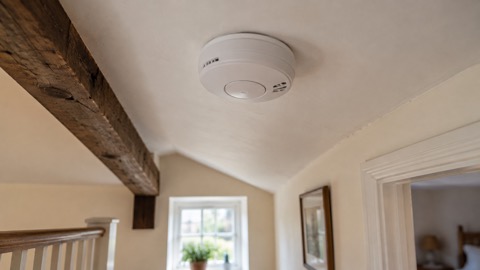
North Wales Fire and Rescue Service adds the detail that decides many installations: the alarm must be 1 to 3 metres away from the appliance3. In a room with a sloping ceiling, site it at the highest point of the ceiling, and keep it above the line of any doors or windows in the room13.
Beyond the room itself, alarms should ideally be near bedrooms and living areas, so that they wake you6. Every household should have at least one alarm, with additional units recommended for each floor, near sleeping areas, and close to potential sources such as gas appliances, wood-burning stoves or an attached garage2.
| Where | What the guidance says |
|---|---|
| In the room with the appliance | One alarm per room containing a fuel-burning appliance1 |
| Distance from the appliance | Usually 1 to 3 metres away5; the alarm must be 1 to 3 metres from the appliance3 |
| Height | Head height on a wall or shelf12; 1 to 3 metres above the ground2 |
| Wall mounting | At least 150mm down from the ceiling13 |
| Sloping ceilings | At the highest point of the ceiling13 |
| Doors and windows | Above the line of any doors or windows in the room13 |
| Rest of the home | Ideally near bedrooms and living areas6; additional units for each floor and near sleeping areas2 |
Why an alarm does not replace servicing your appliances
An alarm is a warning, not a fix. The Health and Safety Executive for Northern Ireland is firm on this: carbon monoxide alarms can help alert you to the dangers if gas escapes, but they must never be regarded as a substitute for the proper installation, maintenance, servicing and cleaning of appliances that use gas, coal, oil or any other solid fuel4. Devon and Somerset Fire and Rescue Service says the same: detectors are not a substitute for proper installation and maintenance of fuel-burning appliances8.
The reason is straightforward. An alarm tells you carbon monoxide is present. It does not tell you why, and it does not stop the appliance producing more. A blocked flue, a poorly maintained boiler or a faulty appliance will keep generating carbon monoxide whether or not an alarm is fitted. Servicing catches those faults before they become dangerous.
Public Health Wales makes the point in its winter guidance: know the symptoms of carbon monoxide poisoning and have a working alarm, but fitting an alarm should not be used instead of regular checks of appliances14. Staffordshire County Council advises anyone using gas, wood or coal appliances to ensure they are serviced and to consider a carbon monoxide alarm15. The NHS advises getting appliances serviced regularly and fitting an alarm wherever there are flame-burning appliances or open fires16.
Suffolk Fire and Rescue Service sums up the limitation: these alarms may warn you of the presence of carbon monoxide, but they are not a replacement for regularly servicing household appliances17.
Testing your alarm every month
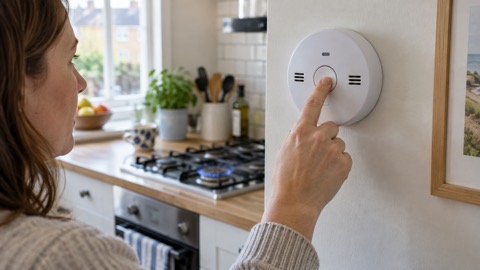
A carbon monoxide alarm that is not working is worse than none, because it gives false reassurance. Test it once a month. Warwickshire County Council advises testing alarms at least once per month2, and Devon and Somerset Fire and Rescue Service says to test your smoke alarms and carbon monoxide alarms once a month7. Surrey County Council goes further, advising that carbon monoxide detectors should be installed in every room with a gas or solid fuel burning appliance, and that alarms should be tested weekly alongside your smoke alarms18.
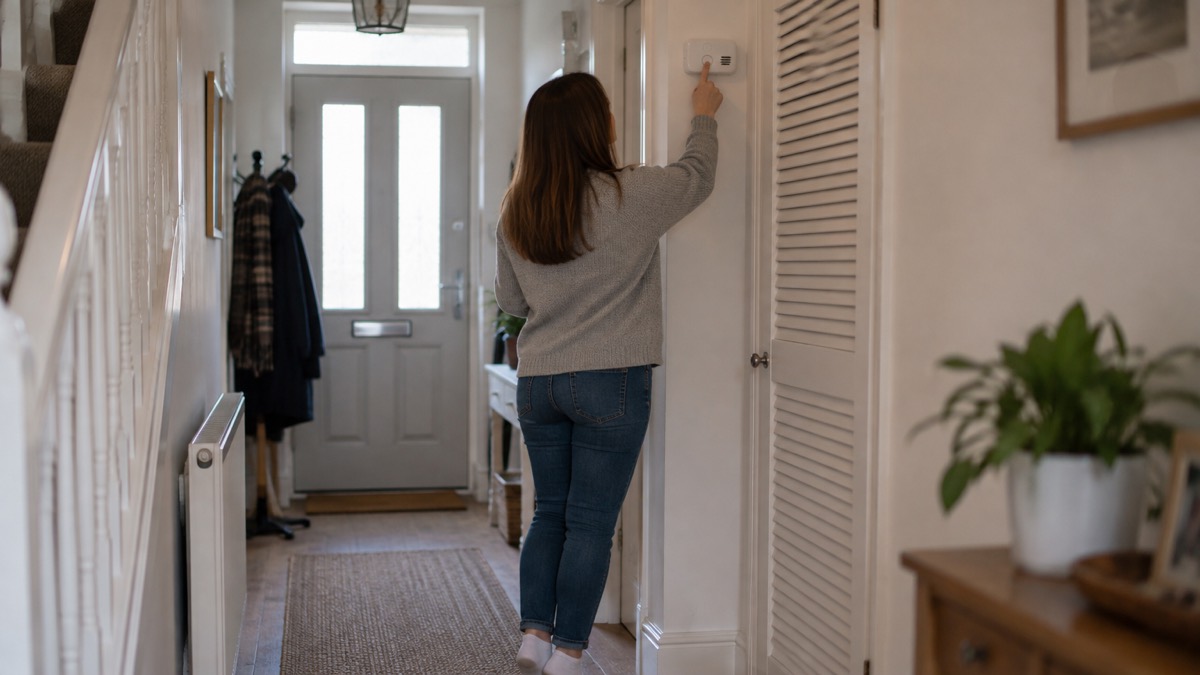
Whichever routine you adopt, the point is regularity. Pick a fixed day, test every alarm in the house, and replace batteries or the whole unit as the manufacturer instructs. If an alarm starts beeping for no obvious reason, do not assume it is a fault: check the manufacturer's guidance and treat any alarm activation as a possible real event until you know otherwise.
What the law requires of landlords
If you rent, your landlord has legal duties. In England, landlords must ensure a carbon monoxide alarm is fitted in any room used as living accommodation that contains a fixed combustion appliance, excluding gas cookers, and must check it is working at the start of the tenancy19. Cornwall Council's fire and rescue service explains that landlords must supply a carbon monoxide detector and alarm in any room used wholly or partly as living accommodation that contains a solid fuel burning combustion appliance20.
The legal basis is the Smoke and Carbon Monoxide Alarm Regulations, amended in 2022. North Yorkshire Fire and Rescue Service explains that under the amendment all relevant landlords must ensure a carbon monoxide alarm is fitted in any room used as living accommodation containing a fixed combustion appliance, excluding gas cookers21. Wiltshire and Swindon Prepared notes that landlords of private residential rental properties in England are required by law to install a carbon monoxide alarm in any room containing a solid fuel burning appliance, such as coal or wood burning fires and stoves22.
Landlords must also have smoke detectors on each floor20. Cherwell District Council advises that alarms in rented homes should comply with British Standards BS 5029112.
| Nation | What the guidance says |
|---|---|
| England | Landlords must fit a CO alarm in any room used as living accommodation with a fixed combustion appliance, excluding gas cookers, and check it at the start of the tenancy19 |
| Scotland | Where there is a carbon-fuelled appliance or a flue, a carbon monoxide detector is required, and it does not need to be linked to the fire alarms23 |
| Wales and Northern Ireland | Arrangements differ; see the dedicated page on Wales and Northern Ireland alarm rules |
If your landlord has not provided an alarm where one is required, ask in writing and keep a copy. If you are a landlord yourself, fit the alarm, check it at the start of each tenancy, and keep a record.
Do alarms need to be linked to each other?
No. A carbon monoxide alarm does not need to be linked to your smoke alarms. The Scottish Government's guidance on what each home needs says a carbon monoxide detector does not need to be linked to the smoke alarms24, and the Scottish Fire and Rescue Service says the same25. The Scottish fire alarm standard also confirms that where there is a carbon-fuelled appliance or a flue, a carbon monoxide detector is required and does not need to be linked to the fire alarms23.
That said, linking has practical value. If your CO alarm is in a boiler room at the back of the house and your bedroom is at the front, an unlinked alarm may not wake you. The priority is that the alarm can be heard from bedrooms and living areas6. If it cannot, either move it or choose a linked system. For more on how linking works, see Interlinked Alarms: How Linking Works.
Taking an alarm on holiday
Carbon monoxide does not stay at home, and neither should your protection. Which? advises that if you go to a holiday cottage in the UK or a hotel, it should be fitted with carbon monoxide detectors, and notes that alarms are small, light and easy to pack if you are travelling abroad11.
A travel alarm gives you the same early warning in unfamiliar accommodation that you have at home, where you know the appliances and their history. If you are staying somewhere with a gas boiler, a gas fire or a wood burner, and you cannot see a carbon monoxide alarm, ask the owner or the hotel. For more on choosing an alarm to take with you, see Carbon Monoxide Alarms: What They Do and How to Choose.
What to do if your alarm sounds
An alarm's purpose is to alert you to carbon monoxide and give you time to exit the building safely13. If it sounds, act on that. Get everyone out into fresh air, including pets, and do not go back in until you have been told it is safe. Call the gas emergency number for your area if you have a gas supply.
Do not assume it is a false alarm. Carbon monoxide poisoning can develop gradually, and the symptoms are easy to mistake for other illnesses. For the signs to look for, see Carbon Monoxide Poisoning Symptoms, and for step-by-step instructions, see What to Do If Your CO Alarm Sounds or You Suspect Carbon Monoxide.
Some households have extra protection. Anglesey Council's Telecare service offers a carbon monoxide detector that raises an audible alarm within the home and also sends an instant alarm call to a monitoring centre when carbon monoxide levels rise, for example from a blocked flue or a faulty appliance26. That is worth knowing about if you or someone you care for would not hear or act on an alarm alone.
Sources (25)
- Carbon monoxide poisoning, NHS, 2025-06-12
- Safe home heating, Warwickshire County Council, 2026-10-29
- Carbon monoxide, Health and Safety Executive for Northern Ireland, 2026
- Kitchen safety, Devon and Somerset Fire and Rescue Service, 2026
- Safe home heating, Warwickshire County Council, 2026-10-29
- Advice for parents and guardians, Devon and Somerset Fire and Rescue Service, 2026
- Carbon monoxide, Devon and Somerset Fire and Rescue Service, 2026
- Carbon monoxide, Greater Manchester Fire and Rescue Service, 2026-10-29
- Poisoning, NHS, 2025-06-12
- What to do when a carbon monoxide detector goes off, Which?, 2026-07-14
- Housing standards, Cherwell District Council, 2026-10-29
- CO Awareness, North Wales Fire and Rescue Service
- Weather and health, Public Health Wales, 2026-07-16
- Stay warm and safe, Staffordshire County Council, 2026
- Poisoning :: Healthier Together, Healthier Together (NHS)
- Carbon monoxide factsheet, Suffolk Fire and Rescue Service, 2014-01-09
- Fire safety at home, Surrey County Council, 2026
- Prevention - Fire Kills, Fire Kills (firekills.campaign.gov.uk)
- Fire safety in rented accommodation, Cornwall Council, 2026-10-29
- Smoke and carbon monoxide alarms, North Yorkshire Fire and Rescue Service, 2026-02-20
- Carbon monoxide: the silent killer, Wiltshire and Swindon Prepared, 2026-10-25
- Your guide to fire safety, Scottish Fire and Rescue Service, 2023-11-03
- What each home needs, Scottish Government, 2024-08-14
- Carbon monoxide detectors, Scottish Fire and Rescue Service, 2024-04-16
- What's available from the Telecare service, Isle of Anglesey County Council, 2026-10-29
 Home Fire Safety Checklist
 Bedtime Fire Safety Checks
 Fire Risk Checks for Carers
 Why a CO Alarm Is Beeping
 Smoke Alarm Keeps Chirping
 Testing Smoke and CO Alarms
 Replacing Smoke and CO Alarms
 Where to Fit Smoke Alarms
 How Many Smoke Alarms
 Where to Put a CO Alarm
 Can a CO Alarm Detect a Gas Leak
 Trapped by Fire What to Do
 Putting Out a Chip Pan Fire
 Electrical Fire Safety
 Appliances Left On Overnight