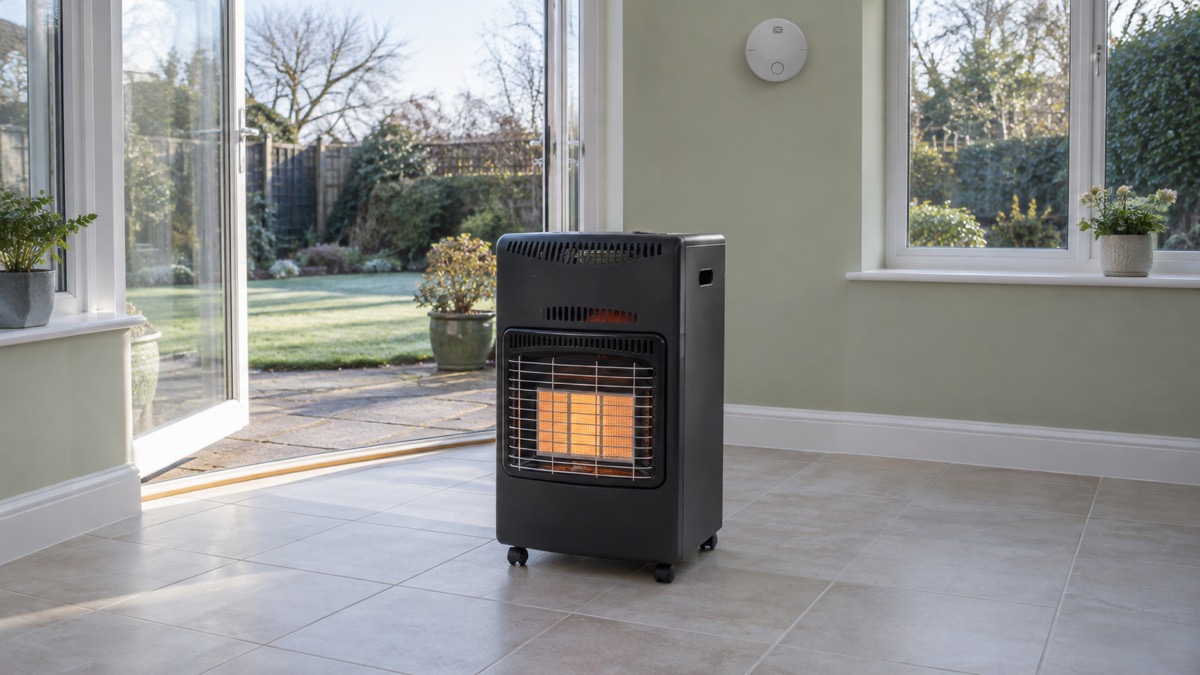
A portable heater is any heating appliance that is not fixed in place: an electric, gas or paraffin heater you can move around the home1. Used correctly, these heaters are a practical way to warm one room when the central heating fails or when you want to heat only the space you are sitting in. Used carelessly, they are one of the most common causes of house fires: Warwickshire County Council's fire safety advice states that portable heaters start fires in England every day2, and Mid and West Wales Fire and Rescue Service reports that more than 100 people die and nearly 1,000 are injured each year in the UK as a result of fires caused by heaters3.
The rules that keep you safe are short and the same whichever type you own. Keep every heater at least 1 metre from curtains, furniture, bedding and anything else that burns4. Plug electric heaters into a wall socket, never an extension lead6. Never use a standard portable heater in a bathroom, and never take a portable gas heater into a bedroom6. If you burn gas or paraffin, fit a carbon monoxide alarm in the same room7. This page explains each type, what it does, and the checks to make before you switch it on. For the wider picture of staying warm when the heating fails, see heating and cooking without mains power and keeping one room warm.
Electric, gas and paraffin: the three types
Portable heaters are unfixed appliances that can be moved around the home, and the types people use fall into three families by the fuel they use: electric heaters that run off the mains, gas heaters that burn LPG, such as butane or propane, and paraffin heaters that burn liquid fuel11. The type decides everything else that matters to a household: whether it works in a power cut, whether it needs ventilation, whether it needs fuel storing, and what kind of fire risk it carries.
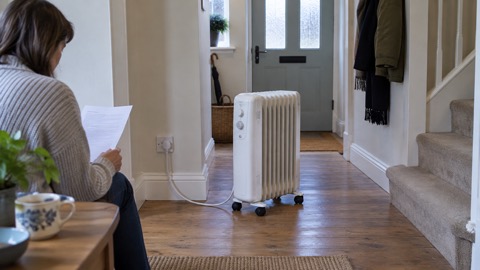
Electric heaters need mains power, so they are useless during a power cut, but they produce no flame and no exhaust gases indoors. Within this family, an oil-filled radiator is a portable electric heater that looks like a fitted wall radiator: inside it, oil heats up and is pushed around the radiator's fins, giving a steady, gentle warmth to the room12. Fan heaters and other direct-element heaters warm a space faster but push heat at you rather than around the room. If you are weighing these two up, see oil-filled radiator or fan heater.
Portable gas heaters burn Liquefied Petroleum Gas, LPG, supplied as butane or propane in cylinders1. Devon and Somerset Fire and Rescue Service describes their appeal plainly: they can be moved anywhere and they heat the room they are in quickly, but they require you to change the gas cylinders, which can be a hassle and also poses fire risks7. Because they keep working when the electricity is off, they are the type most households think of for a power cut, but they carry the responsibilities described later on this page: ventilation, a carbon monoxide alarm and safe cylinder handling. The choice of gas is covered in bottled gas for heaters and stoves and butane or propane.
Paraffin heaters burn liquid fuel fed through a wick. They also work without electricity, but they need more looking after: Derbyshire County Council's winter advice includes ensuring paraffin heaters are thoroughly cleaned and the wick checked and trimmed13, and the Scottish Fire and Rescue Service warns never to buy one second-hand because they can be dangerous14. Mid and West Wales Fire and Rescue Service adds a point worth knowing before you choose: LPG and paraffin portable heaters are an expensive way to heat rooms9. For a fuller comparison, see paraffin or bottled gas heaters.
| Type | Needs mains power? | Fuel | What it does well | What you must manage |
|---|---|---|---|---|
| Electric (fan, oil-filled radiator) | Yes | Electricity | No flame or indoor exhaust; steady warmth from an oil-filled radiator | Wall socket only; no use in a power cut |
| Portable gas | No | LPG (butane or propane) cylinders | Heats a room quickly; works in a power cut | Ventilation, CO alarm, cylinder changes |
| Paraffin | No | Liquid paraffin via a wick | Works in a power cut | Wick cleaning and trimming, fuel storage, higher running cost |
Keep every heater at least 1 metre from curtains, furniture and bedding
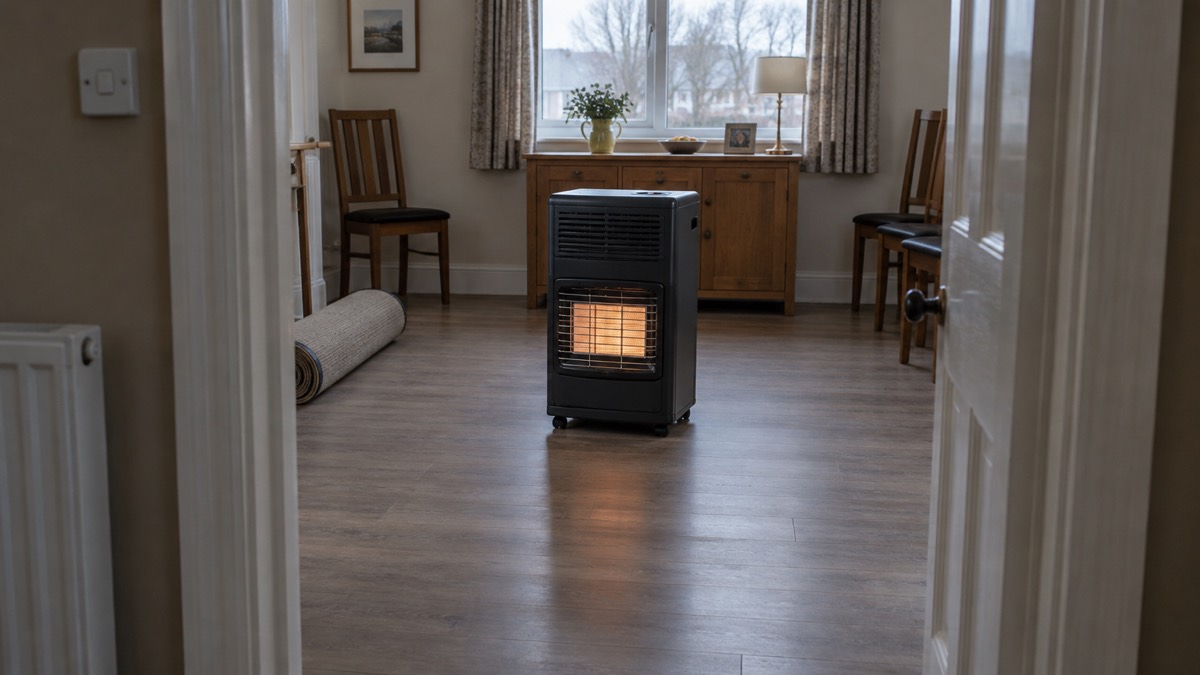
This is the single most important rule on the page, and every fire and rescue service in these sources states it. Warwickshire County Council says to place a portable heater on a flat, stable surface at least three feet, which is 1 metre, from flammable materials such as curtains, furniture, bedding or clothing2. Lincolnshire County Council puts it from the person's side too: do not sit too close, keep at least 1 metre away4. Devon and Somerset Fire and Rescue Service says the same for gas and electric heaters: keep your heater at least one metre away from furniture and curtains5. Armagh City, Banbridge and Craigavon Borough Council, writing for Northern Ireland, gives the fullest list of what counts: maintain at least 3 feet (1 metre) of clearance around the heater, away from curtains, bedding, furniture, paper and other flammables8.
The reason is simple and is stated by Devon and Somerset Fire and Rescue Service's home safety partnership team: most fires started by heaters are caused by sitting too close to them, placing them near curtains and furniture, or using them to dry washing15. That last cause deserves its own warning. Washing hung on or near a heater, or on a clothes airer pushed close to it, is a classic fire start, and it often happens overnight when nobody is watching.
Where to put a portable heater
Placement comes down to three things: the surface, the surroundings and the traffic. Warwickshire County Council advises placing the heater on a flat, stable surface, making sure it is not obstructed by any objects, and putting it somewhere it is unlikely to get knocked over, away from walkways and doorways2. Greater Manchester Fire and Rescue Service says the same in fewer words: put your heater on a level surface, well away from anything that could knock it over10.
A doorway or a busy walkway is the worst spot in the house. A heater standing where people pass it several times an hour will eventually be clipped by a hip, a vacuum cleaner or a door, and a fall onto carpet or curtains can end in a fire. Devon and Somerset Fire and Rescue Service's home safety partnership team also notes that portable heaters have been a trip hazard in real incidents, making escape more difficult when a fire did start15. A heater lying across the escape route is dangerous twice over: it can start the fire and then block the way out.
Check the surroundings each time you move the heater, not just the first time. Curtains move in a draught, bedding gets rearranged, and furniture gets shifted when cleaning. The 1 metre rule applies to wherever the heater is standing now, not where it stood last week. Also check that the heater has a safety guard over the hot parts: Derbyshire County Council's advice is to make sure portable heaters have a safety guard and are not placed near furniture, beds or curtains13, and the same wording appears in its keep-warm-in-winter guidance16.
Plug electric heaters into a wall socket, not an extension lead
Every fire and rescue service source on this page gives the same instruction for electric heaters. North Yorkshire Fire and Rescue Service: plug electric heaters into a wall socket, not an extension lead, because extension leads can easily be overloaded and cause fires6. Greater Manchester Fire and Rescue Service: electric heaters should be plugged into a wall socket, and you should not use an extension lead, as they can be overloaded and cause fires17. Armagh City, Banbridge and Craigavon Borough Council explains the mechanism: heaters draw a lot of power and can cause cords to overheat, leading to fires, so plug directly into a wall outlet and do not use extension cords or power strips8.
Devon and Somerset Fire and Rescue Service generalises the rule to anything that produces heat: a toaster, air fryer or kettle should have its own wall socket, not an extension lead18. Cheshire Fire and Rescue Service's safe and well booklet says to use only gang-type extension leads, never block adaptors, and never to overload the socket the lead is plugged into19. The same principle applies beyond heaters: fridges and freezers should be installed close to a wall socket rather than run off an extension lead, and washing machines, tumble dryers and dishwashers should be plugged straight into a wall socket with no adaptors, as they can cause electricity overloads.
Before you plug in, check the socket itself. Warwickshire County Council advises ensuring the outlet is in good condition and can handle the heater's power requirements2. A socket that is loose, scorched, or already feeding other high-draw appliances is not the right one for a heater.
Portable gas heaters: ventilation and carbon monoxide
A portable gas heater burns butane or propane, and anything that burns fuel can produce carbon monoxide (CO) if the burn is incomplete. The NHS lists gas or paraffin heaters among the appliances that can produce carbon monoxide20, and Lincolnshire County Council names portable heaters using LPG specifically among the causes of carbon monoxide in the home21. Cornwall Fire and Rescue Service includes heaters among the sources of carbon monoxide alongside cookers and fireplaces22. Carbon monoxide has no smell and no taste, and it kills without warning, which is why the alarm matters more than any amount of care with the heater itself.
Devon and Somerset Fire and Rescue Service states the rule directly: using gas heaters carries the risk of carbon monoxide poisoning, so you should have a carbon monoxide alarm in the same room7. North Yorkshire Fire and Rescue Service adds the ventilation condition: portable gas heaters must not be used in bedrooms and should only be used in well ventilated rooms6. A living room with the door ajar and a trickle of air moving is a different proposition from a small sealed bedroom with the window shut.
The same warning applies with more force to equipment that was never meant for indoors. Devon and Somerset Fire and Rescue Service warns that BBQs, camping stoves and patio heaters are designed for use outdoors in well-ventilated areas and pose a fire risk and a risk of carbon monoxide poisoning23, and Cheshire Fire and Rescue Service's camping safety advice lists camping stoves, camping heaters, lanterns, charcoal grills and disposable barbecues as fuel-burning equipment to keep outside21. If you are considering a camping stove for cooking in a power cut, read is it safe to use a camping stove indoors?.
Changing a gas cylinder safely
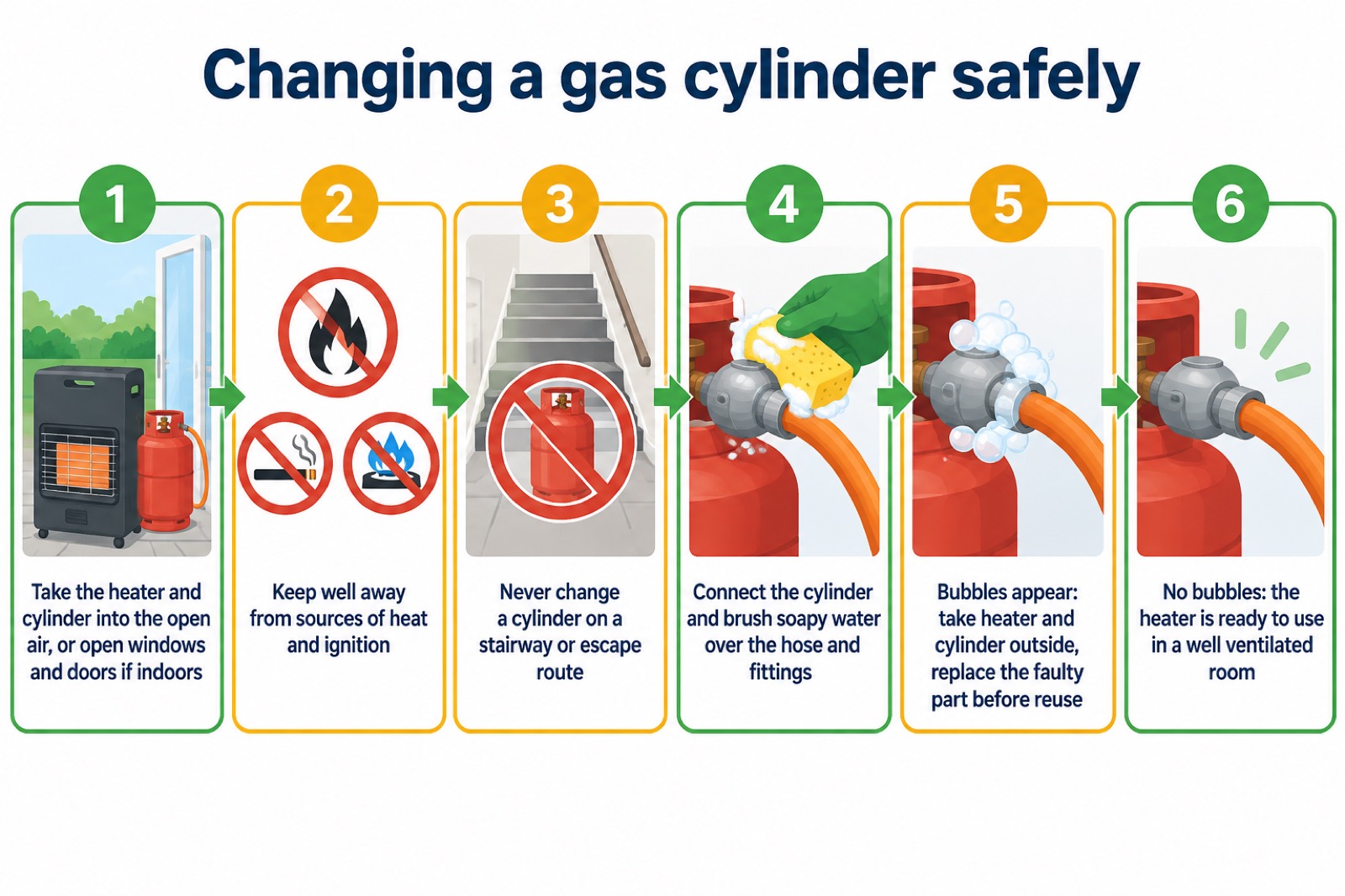
Cylinder changes are the moment when gas heaters go wrong. The Scottish Fire and Rescue Service states that accidents from portable gas heaters happen due to gas leaks during appliance assembly or cylinder or cartridge changes14. The routine below follows the fire and rescue services' own instructions.
- Change the cylinder in the open air if you can. Greater Manchester Fire and Rescue Service says gas heater cylinders should be changed in the open air; if you have to change them indoors, make sure all rooms are ventilated and open windows and doors10.
- Keep the change away from heat and ignition. North Yorkshire Fire and Rescue Service says to change cylinders in a well-ventilated place and away from sources of heat and ignition6.
- Never change a cylinder on a stairway or other escape route, Mid and West Wales Fire and Rescue Service instructs9.
- After connecting, brush soapy water onto the flexible hose and fittings to check for leaks. If bubbles appear, take the heater and cylinder into the open air and do not use them until the faulty part has been replaced9.
- Store spare cylinders properly. Store them outside, away from direct sunlight and freezing temperatures7; see where to store gas cylinders at home.
For paraffin heaters, the fuel itself needs managing. The Scottish Fire and Rescue Service says to keep spare fuel outside the home, with no more than 23 litres (5 gallons), and preferably only 9 litres (2 gallons), kept in purpose-made containers stored away from sources of heat14.
Rooms where a portable heater must never go
Two rooms are ruled out outright by North Yorkshire Fire and Rescue Service: standard portable heaters, gas and electric, must not be used in showers or bathrooms, and portable gas heaters must not be used in bedrooms6. The bathroom ban covers every standard portable heater, not just gas: water and electricity in the same small room, and damp air around any heater, make for a combination the fire and rescue service will not endorse. The bedroom ban on gas heaters is about carbon monoxide in a room where you sleep with the door shut and the window closed.
Beyond those two, apply the ventilation rule to every other room. A gas heater belongs in a room with some air movement, not a sealed box room. And wherever the heater stands, be careful about where you put it: there have been instances where portable heaters become a trip hazard, making escape more difficult15.
Check a stored heater for recalls before you use it
Many households keep a portable heater for emergencies: it sits in a cupboard or garage for years and comes out when the boiler fails or the power is off. North Yorkshire Fire and Rescue Service has a specific instruction for exactly that situation: check that your heater is not subject to a product recall or repair6. Recalls are issued for heaters of every type, and a heater bought years ago may have been recalled since it was put away. The government's product safety alerts, reports and recalls pages list them, and the same service advises registering the heater when you purchase it, so you will be made aware of any product recalls or safety information released later7.
Before each winter, and before first use after storage, Warwickshire County Council advises performing routine inspections of the heater for any signs of wear, damage or loose connections, and keeping it clean and free of debris2. For a paraffin heater that means the wick as well: check and trim it, and clean the heater thoroughly13. A heater that has been knocked about in a garage, had something stacked on it, or grown dusty and damp is not the same appliance it was when it was put away.
This is also where second-hand heaters need care. The Scottish Fire and Rescue Service says never buy a second-hand paraffin heater, as they can be dangerous14. Any second-hand heater carries the same problem as a stored one, made worse: you do not know its history, and recalls will never reach you because the maker has no record of you as an owner. Check the recall lists and inspect it before use. A seasonal check of all your heating kit is worth building into your routine: see the before-winter checklist for your heating and stove.
Who needs to take extra care
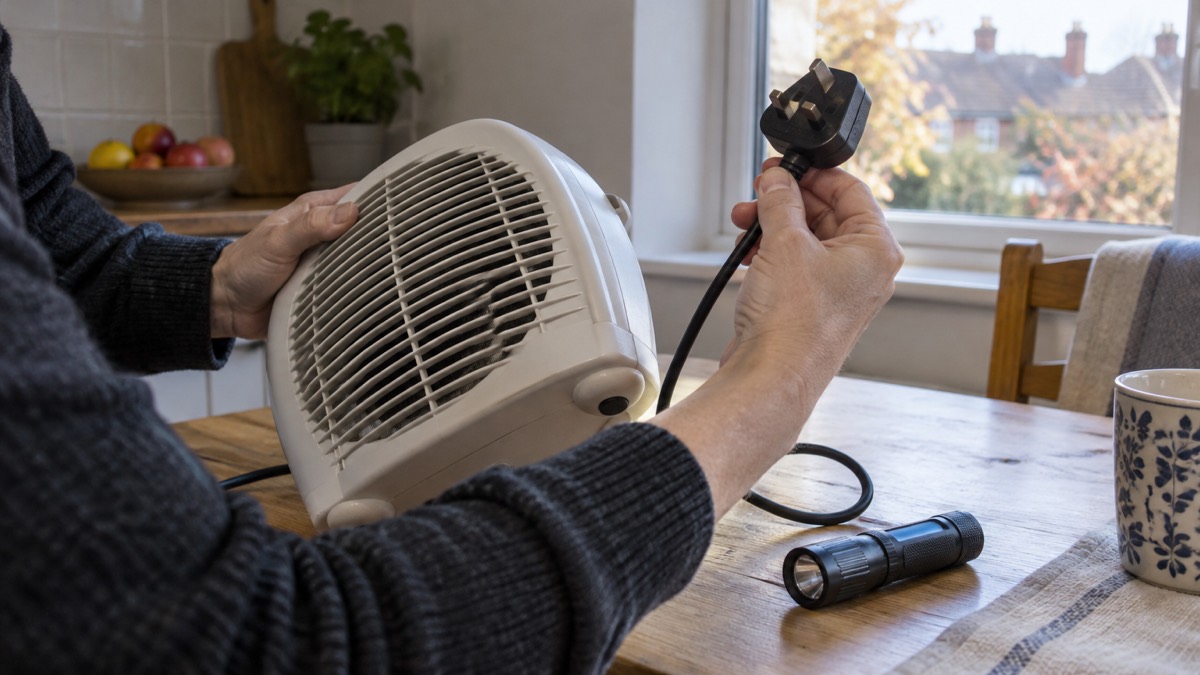
People with mobility issues. The London Fire Brigade warns that people with mobility issues are especially at risk of tripping or falling onto a heater, so where heaters are placed is important24. If you or someone you look after is unsteady on their feet, the placement rules on this page matter more, not less: the heater goes out of the walking line, away from walkways and doorways, on a surface it cannot be knocked from, and where a fall would not land on it. Tip-over protection, which switches the heater off automatically if it is toppled, is worth having in any household and essential in this one2. See also extra help in an emergency.
Children and pets. The same clearance and guard rules apply, and a heater stands where a small person or animal cannot pull its cable or bump it over. Portable heaters should never be used if your pet is in the same room and you cannot watch them, as pets could knock them over and hurt themselves or cause a fire. Pet heating equipment is not exempt from recalls either: the government has issued a product safety notice for a reptile heat lamp sold to pet owners25, so check pet heaters against the recall lists too. See pets and animals in an emergency.
Choosing the safety features in the first place. Warwickshire County Council advises opting for portable heaters that have essential safety features such as tip-over and overheating protection, which switch the device off automatically if these hazards are sensed2. Armagh City, Banbridge and Craigavon Borough Council's list for space heaters adds overheat protection, tip-over shutoff, a flame-out sensor and thermostat controls8. These features do not replace the 1 metre rule or the wall socket rule; they are the last line behind them.
Choosing between the types
If you are deciding what to buy, work from what your household actually needs it to do. An electric heater suits a household that wants to warm one room while the mains is on, with no fuel to store and no fumes to manage; an oil-filled radiator is a portable electric heater that looks like a fitted wall radiator, with oil heated inside and pushed around its fins. A gas heater suits a household that wants heat that keeps working through a power cut and is prepared to store cylinders, change them safely, ventilate the room and keep a carbon monoxide alarm in the same room5. A paraffin heater also works without mains power but demands the most maintenance: it must be thoroughly cleaned and the wick checked and trimmed, and its spare fuel must be stored outside the home, no more than 23 litres and preferably only 9 litres, in purpose-made containers away from sources of heat.
The detailed comparisons are gathered in electric or gas portable heaters and paraffin or bottled gas heaters. Whatever you choose, the safety rules on this page are the same for all of them, and the fuller day-to-day guidance is in using a portable heater safely at home.
Sources (25)
- Portable heaters, Cheshire Fire and Rescue Service
- Safe home heating, Warwickshire County Council
- Wresogyddion symudol, Mid and West Wales Fire and Rescue Service
- Heaters and electric blankets, Lincolnshire County Council
- Heaters, Devon and Somerset Fire and Rescue Service
- Heating your home, North Yorkshire Fire and Rescue Service
- Heater safety, Devon and Somerset Fire and Rescue Service
- Safe use of heaters and generators, Armagh City, Banbridge and Craigavon Borough Council
- Portable heaters, Mid and West Wales Fire and Rescue Service
- Stay warm safely this winter, Greater Manchester Fire and Rescue Service
- Staying warm, Cheshire Fire and Rescue Service
- Equipment for carers, Devon and Somerset Fire and Rescue Service
- Snow buddies, Derbyshire County Council
- Heating and gas, Scottish Fire and Rescue Service
- Home safety partnerships, Devon and Somerset Fire and Rescue Service
- Keep warm in winter, Derbyshire County Council
- Stay fire safe, Greater Manchester Fire and Rescue Service
- Staying safe this season, Devon and Somerset Fire and Rescue Service
- Safe and well booklet, Cheshire Fire and Rescue Service
- Carbon monoxide poisoning, NHS
- Fire alarms and carbon monoxide detectors, Lincolnshire County Council
- Carbon monoxide, Cornwall Fire and Rescue Service
- Stay warm safely in winter, Devon and Somerset Fire and Rescue Service
- Portable heaters, gas fires and open fires | London Fire Brigade, London Fire Brigade
- Product Recall: Nomoy Pet Reptile Heat Lamp (2305-0095) - GOV.UK, GOV.UK (Office for Product Safety and Standards)
 Before-Winter Heating Checks
 Backup Stove Kit Checklist
 Wood Burner Lighting Kit
 Keeping One Room Warm
 Clothing and Bedding for Cold
 Stopping Draughts
 Hot Water Bottle Safety
 Wheat Bags and Fire Risk
 Electric Blanket Safety
 Portable Heater Safety
 Wood Burners in a Power Cut
 Using a Wood Burner Safely
 Open Fires and Fire Guards
 Firewood and Seasoning Logs
 Smoke Control Areas