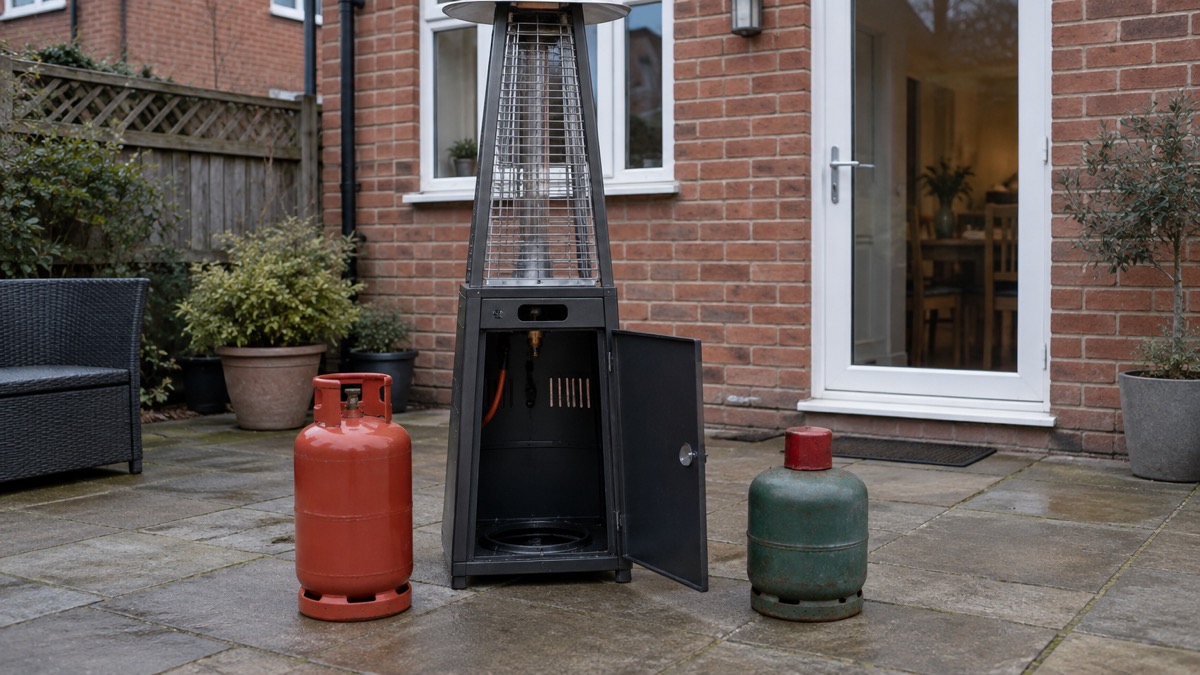
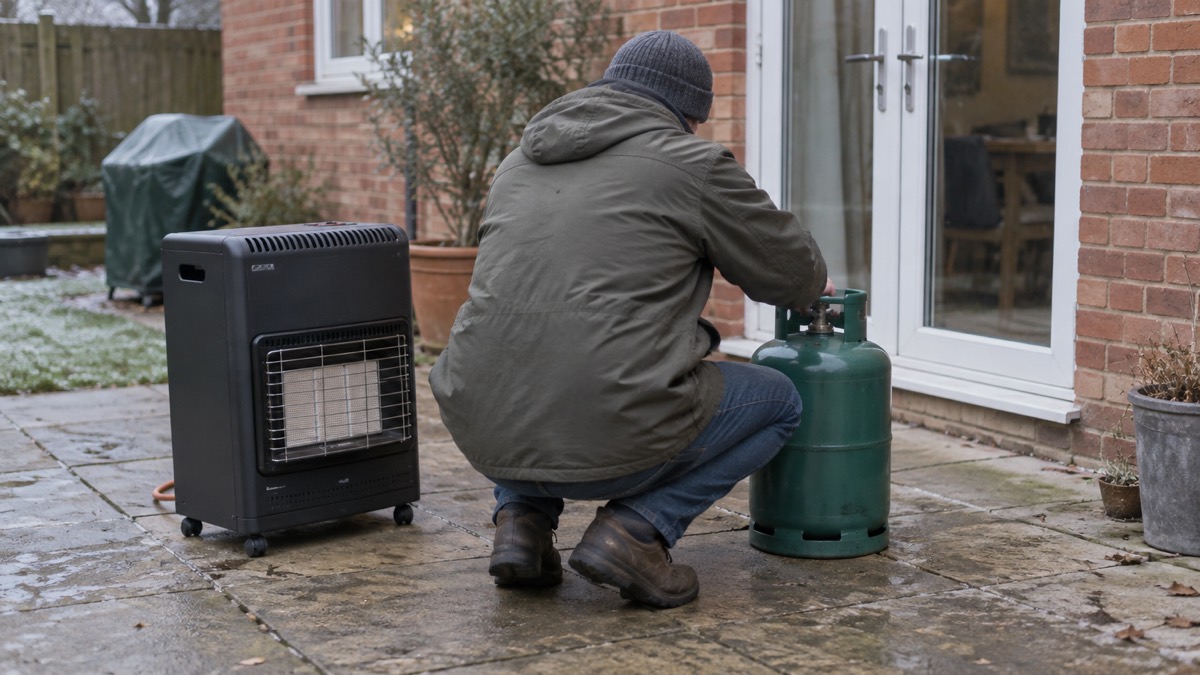
Changing an LPG cylinder is a short job, but the order of the steps is what keeps it safe. Close the valve on the empty cylinder before you disconnect anything, fit the new cylinder and regulator properly, and do not open the new valve until the appliance is securely connected1. Do the swap in the open air if you can, or open doors and windows first so the space is well ventilated3.
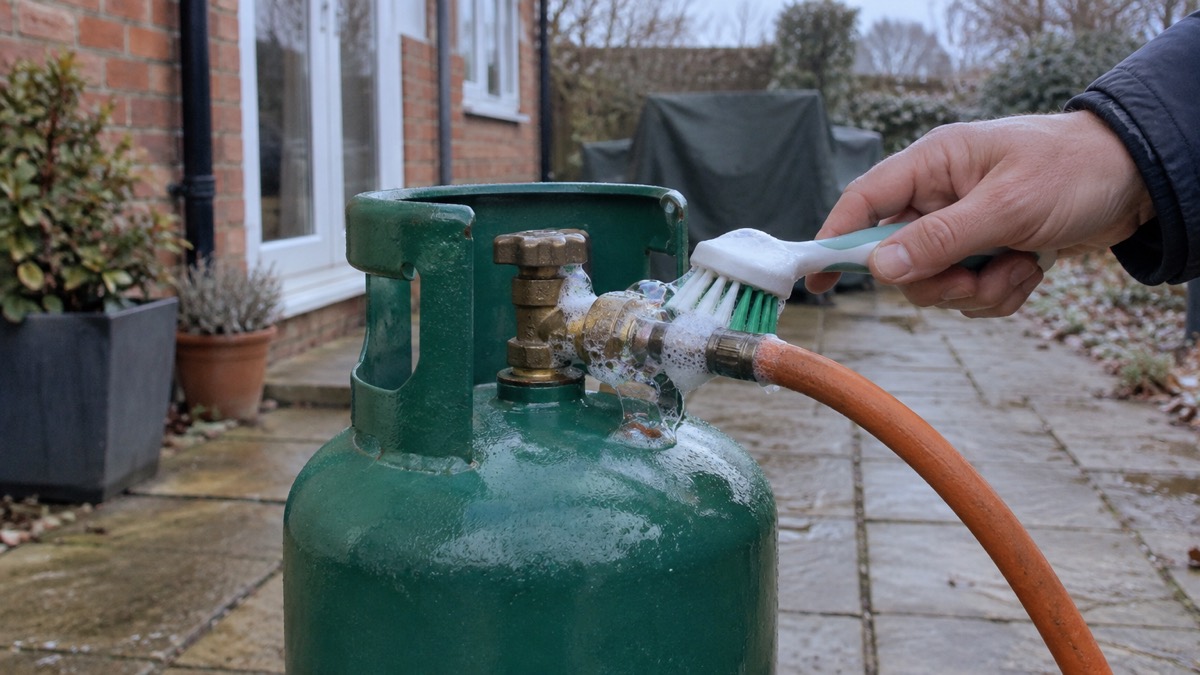
Once the new cylinder is connected, check the joint with soapy water brushed onto the hose and fittings, and watch for bubbles. Never use a flame to look for a leak1. If you find one, take the heater and cylinder into the open air and do not use them until the faulty part has been replaced1.
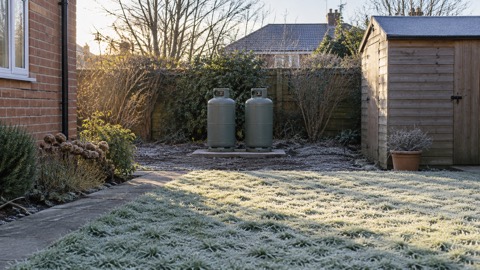
Where the cylinder lives matters as much as how you change it. Store spare cylinders outside where possible, upright, and never in basements, near drains, under the stairs or in a cupboard with an electric meter or equipment1. If you smell gas, open a window if you can and leave the property immediately6.
Before you start: check the new cylinder and the area
Before you touch the old cylinder, set the scene. Fire and rescue services advise changing gas cylinders in the open air if possible, or opening doors and windows to give good ventilation3. Northern Gas Networks, which runs the gas network in the north of England, puts it the same way for bottled gas: use and change canisters in a well-ventilated, open space, follow the manufacturer's guidelines and turn the supply off properly first5. North Yorkshire Fire and Rescue Service adds that the cylinder should be changed away from sources of heat and ignition4.
Have the new cylinder ready before you start, and check it is the right one. The Health and Safety Executive advises ensuring that the correct size and type of gas bottle is being used7. If you are unsure which gas your appliance takes, ask your LPG supplier rather than guessing8.
Then check the area itself:
- Keep the cylinder away from heat and ignition sources while you work4.
- Never change a cylinder on a stairway or any other escape route1.
- Never smoke while changing gas9.
- Make sure the tap or valve on the appliance is turned off before you begin3.
If you rely on gas for heating, it helps to know how the appliance fits into your wider plan. Our guide to bottled gas for heaters and stoves explains butane, propane and regulators, and portable heaters sets out the electric, gas and paraffin options side by side.
How to disconnect the empty cylinder
The single most important step comes first: close the valve on the empty cylinder before you disconnect the heater1. Liquid Gas UK, the trade body for the LPG industry, gives the same instruction for patio heaters: make sure any hand valve on the cylinder to be replaced is closed before removing the regulator10.
Then work in this order:
- Turn off the appliance and check the valve on the empty cylinder is closed1.
- Undo the regulator or connection from the cylinder valve. If it is a propane cylinder with a screw connection, remember it is a left-hand thread, so undo it clockwise and use a correct spanner10.
- Take the regulator off and set the empty cylinder aside, valve closed and cap or plug fitted11.
- Do not open the valve on the new cylinder yet1.
Liquid Gas UK is firm about what happens to a cylinder once it is off the appliance: when a cylinder or cartridge is not connected, always keep the valve closed and replace the cap or plug in its outlet connection, even when it is empty11. And never cut a cylinder or cartridge, even when empty, because it will still contain flammable gas11.
If you are changing a cylinder on a caravan or camping set-up, the rules tighten. Gas cylinders should be kept outside the caravan, turned off unless they are designed to run continuously, and only changed when they are completely empty12. Several fire and rescue services repeat the same point for caravans and camping: change gas bottles only when completely empty14.
Fitting the new cylinder and regulator
The regulator is where most problems start, because it has to match two things at once. Liquid Gas UK advises that the outlet pressure of the regulator must be the same as the inlet pressure requirement of the appliance, and that it must be the correct size for the cylinder valve. Never force it onto one of the wrong size17. The same guidance says: do not force a regulator onto the cylinder valve if it does not fit easily17.
A few fitting points decide whether the joint is sound:
- Thread direction: most screwed connections, apart from special cylinders such as Camping Gaz, Calor 340 or Primus, use a left-hand thread and tighten in the opposite direction to a normal screw17.
- Hose slope: where the regulator is not fitted directly to the cylinder outlet, secure it higher than the cylinder outlet so the hose slopes downwards from the regulator to the cylinder valve17.
- Pressure match: check the regulator's outlet pressure against what the appliance needs before you connect17.
Once the regulator is on and the appliance is securely connected, you can open the valve on the new cylinder1. If anything about the regulator is unclear, Liquid Gas UK's advice is simple: if in doubt, contact your LPG supplier8.
| Check | What to look for | Source |
|---|---|---|
| Regulator pressure | Outlet pressure matches the appliance's inlet requirement | 17 |
| Regulator size | Correct size for the cylinder valve, never forced | 17 |
| Thread | Most screwed connections are left-hand thread | 17 |
| Hose position | Regulator higher than the cylinder outlet, hose sloping down | 17 |
| Gas type | Correct size and type of bottle for the appliance | 7 |
Checking for leaks with soapy water, never a flame
Once everything is connected and the new valve is open, test the joint before you rely on it. Fire and rescue services advise brushing soapy water onto the flexible hose and fittings and watching for bubbles1. For gas barbecues the advice is the same: brush soapy water around the joints and watch for bubbles, tighten to fix but do not overtighten3. Liquid Gas UK likewise says to check for leaks with a soapy water solution18.
If the soapy water shows bubbles, stop. Take the heater and cylinder outside, and do not use them until the faulty part has been replaced1. Do not try to seal a leaking joint with tape or by tightening harder than the fitting allows.
Regular servicing catches problems the soapy water will not. The Northern Ireland Government advises regularly getting gas appliances serviced19, and fire and rescue services advise having gas appliances and flues checked once a year20. Northern Ireland Fire and Rescue Service adds that if you suspect a leak you should not use the heater, and that it should be serviced regularly by a qualified engineer22.
Where an LPG cylinder must never be stored
Storage is where a small mistake can become a serious one, because a leaking cylinder left in the wrong place lets gas collect where it cannot escape. Store spare cylinders outside where possible, and never in basements, near drains, under the stairs or in a cupboard containing electric meters or equipment1. Manchester Fire and Rescue Service gives the same list for gas heaters2, and North Yorkshire Fire and Rescue Service adds that cylinders should be stored safely outside the home, out of direct sunlight, and not on balconies4.
Cheshire Fire and Rescue Service advises storing cylinders outside, away from direct sunlight and freezing temperatures22. For caravans, gas cylinders should be kept outside the caravan12, and fire services add that they should be stored away from caravans and vehicles12.
| Place | Store a cylinder there? | Source |
|---|---|---|
| Outside, upright, out of direct sunlight | Yes, where possible | 1 |
| Basement or cellar | No | 1 |
| Under the stairs | No | 1 |
| Cupboard with an electric meter or equipment | No | 1 |
| Near drains | No | 1 |
| On a balcony | No | 4 |
| Inside a caravan | No, keep it outside | 12 |
Spare cylinders must be stored upright1. If a cylinder is not connected, keep the valve closed and the cap or plug fitted11. Our page on where to store gas cylinders at home goes further into siting and ventilation.
If you smell gas: what to do now
A gas smell means act first and investigate later. The London Resilience Partnership's advice is direct: if you smell gas, open a window if you can and leave the property immediately6. Buckinghamshire Council gives the same instruction to open doors and windows23.
Liquid Gas UK adds a step that matters if the fire service is coming: tell them there is LPG on the premises, leave the premises and go to a safe place24. North Yorkshire Fire and Rescue Service advises that if you suspect a leak you should turn off the main cylinder valve, open all doors and windows, and not smoke or turn on any electrical switches until you are given the all clear12. Electricity North West, the network operator, gives the household version: open doors and windows, turn off gas at the meter unless the meter is in a cellar, do not use electric switches and extinguish naked flames25.
If a cylinder is leaking indoors and it is safe to move it, Liquid Gas UK advises moving it outdoors to a well-ventilated place where the leaking gas cannot find its way into a building, basement, cellar or drain11.
For the wider picture on gas escapes, carbon monoxide and what to do after an incident, see our guide to gas and heating failures and home emergencies.
Returning empty cylinders and keeping a spare
Empty cylinders are not rubbish. Liquid Gas UK states that LPG cylinders remain the property of the gas company that supplied them, and that you should always return cylinders to your supplier or their nearest stockist11. Refillable cylinders are the property of the gas supplier and must be returned to the distributor or dealer; under no circumstances should they be refilled or disposed of11. Never attempt to refill a cylinder yourself11.
Small numbers of empty gas cartridges can be recycled or put in normal refuse, but significant quantities should be dealt with by arrangement with the local authority or a specialist waste contractor11. Under no circumstances should cartridges be thrown onto fires11. London Fire Brigade advises ensuring empty cylinders are collected regularly26.
If you depend on gas for heat, keeping one spare cylinder means you are never caught out. Store it as the rules above require, outside and upright, and change the appliance only when the cylinder in use is completely empty12. Our before-winter checklist and backup stove kit checklist help you plan the rest of the set-up.
Sources (26)
- Portable heaters, Mid and West Wales Fire and Rescue Service, 2026-10-29
- Portable heaters, Manchester Fire and Rescue Service, 2026-10-29
- Barbecue safety, Manchester Fire and Rescue Service, 2026-10-29
- Heating your home, North Yorkshire Fire and Rescue Service, 2026-03-09
- Outdoor appliance safety, Northern Gas Networks, 2026-10-21
- Preparing yourself for emergencies, London Resilience Partnership, 2026-10-25
- Gas safety FAQs, Health and Safety Executive, 2026
- Old regulator on an LPG cylinder, Liquid Gas UK, 2026-10-25
- Fire safety outdoors, GOV.UK, 2022-05-25
- LPG patio heater guidance, Liquid Gas UK, 2022
- LPG safety data sheet, Liquid Gas UK, 2022
- Caravans and camping, North Yorkshire Fire and Rescue Service, 2026-05-13
- Caravan safety, Cheshire Fire and Rescue Service, 2025-07-26
- Caravans and mobile homes, Devon and Somerset Fire and Rescue Service, 2026
- Caravan fire safety, Mid and West Wales Fire and Rescue Service, 2023
- Portable heaters, Manchester Fire and Rescue Service, 2026-10-29
- LPG regulator guidance, Liquid Gas UK, 2022-04
- Propane vs butane, Liquid Gas UK, 2026-10-25
- Gas safety and carbon monoxide, nidirect, 2025-11-24
- Chimney safety, Manchester Fire and Rescue Service, 2026-10-29
- Open fires, Devon and Somerset Fire and Rescue Service, 2026
- Home fire safety, Northern Ireland Fire and Rescue Service, 2026-10-14
- Gas supply issues, Buckinghamshire Council, 2026-10-29
- Safety advice, Liquid Gas UK, 2026-10-25
- Gas and carbon monoxide safety, Electricity North West, 2026-10-25
- Portable heaters, gas fires and open fires, London Fire Brigade, 2026-10-25
 Before-Winter Heating Checks
 Backup Stove Kit Checklist
 Wood Burner Lighting Kit
 Heating a Home with the Oven
 Paraffin Heater Indoors
 Storing Gas Cylinders at Home
 Wood You Should Never Burn
 Disposing of Ashes Safely
 Open Fire in an Unused Chimney
 Oil Tank Leaks After a Storm
 Trangia Spirit Burner Fuel