Emergency Food: A Household Guide to Stores, Safety and Meals Without Power
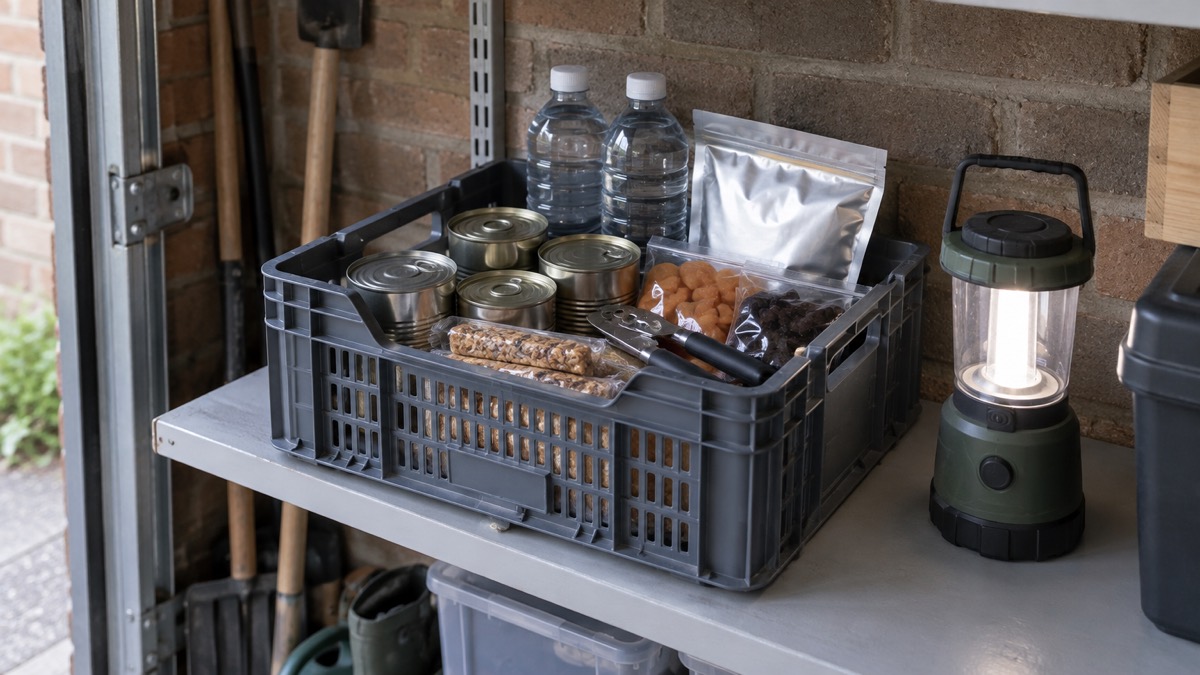
Keep three days of non-perishable food at home, choosing food with a long shelf life that does not need refrigeration or cooking. Suitable examples include tinned meat, fish or vegetables, dried fruit and nuts. Official guidance also recommends buying food your household would usually eat, which makes rotation easier and avoids keeping an emergency store nobody wants to use.1
If the power fails, eat chilled fridge food first, then defrosted frozen food that does not need cooking, followed by room-temperature perishable food. Save tinned, bottled and dried food for later. Keep the freezer closed while the power is off, and throw away food if you are unsure whether it is safe.2
A useful emergency food supply is therefore more than a collection of tins. It needs a tin opener, drinking water, no-cook meals, suitable food for babies, special diets and pets, and a way to keep everything in date. A power outage can also close grocery shops and other services, disrupt water and transport, and cause food spoilage, so do not assume that you will simply be able to shop as usual.3
What to eat first when the power goes
Food Standards Scotland gives a clear order that protects food safety and reduces waste. Chilled food comes first because it deteriorates quickest. Room-temperature tinned, bottled and dried foods come last because they do not depend on the fridge or freezer.2
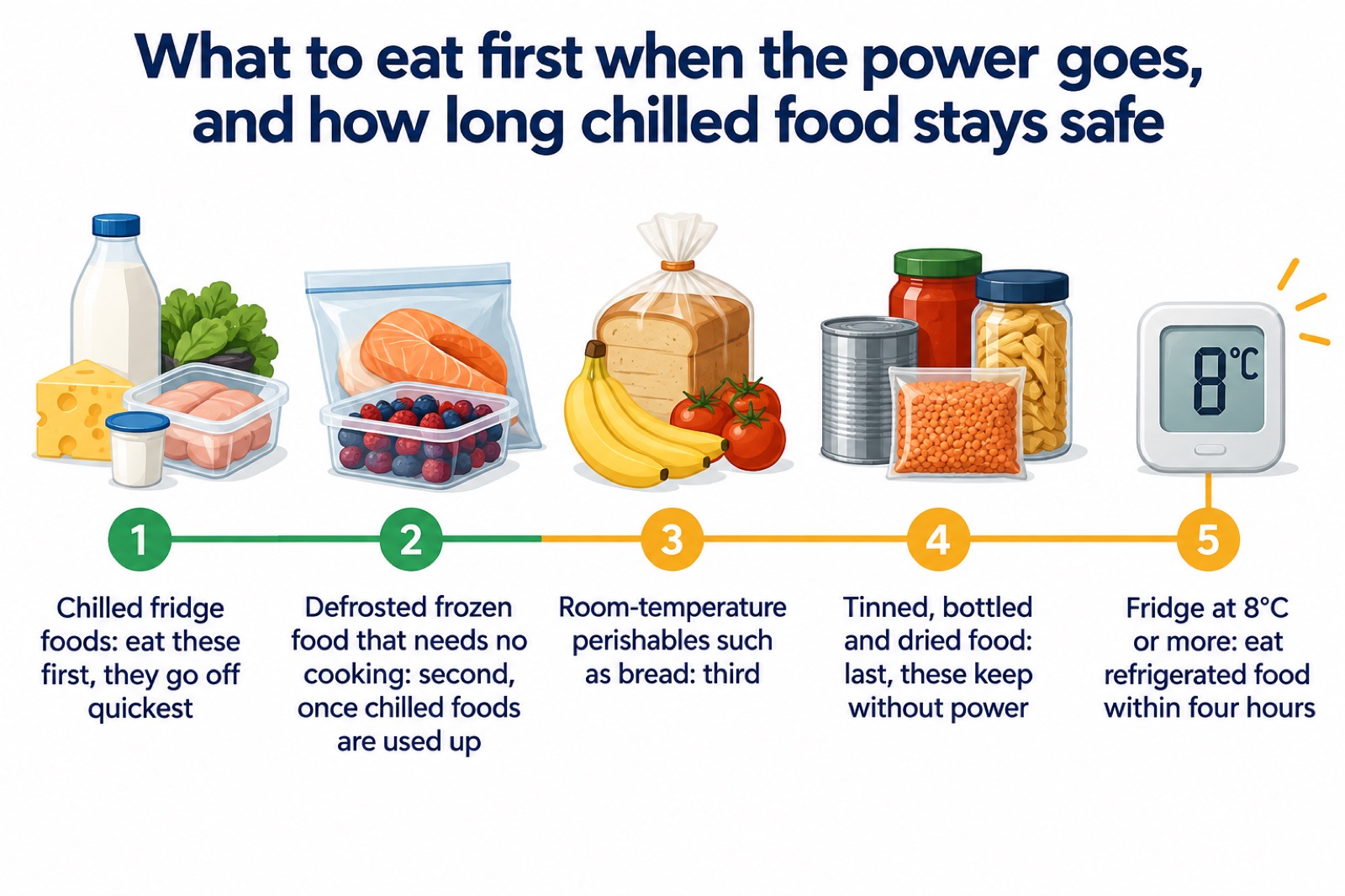
- Use chilled fridge foods. Plan simple meals around these before opening your emergency tins.
- Use defrosted frozen food that does not need cooking. Do not rely on being able to cook or reheat it if electricity remains off.
- Use room-temperature perishable food, such as bread.
- Move on to room-temperature tinned, bottled and dried food. This is the part of your store designed to wait until later.2
Public Health Wales advises turning off large appliances, particularly cookers and electric fires, until power returns. Keep the freezer closed. If its food has defrosted by the time the power comes back, throw it away. North Yorkshire Fire and Rescue Service applies the same firm rule to food after a fire or power loss: if in doubt, throw it out.5
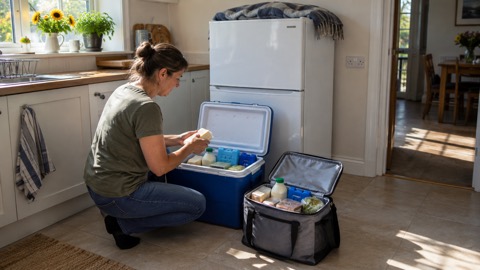
Do not taste food to decide whether it is safe. NHS Borders warns that food does not have to look, smell or taste off to be dangerous, and some bacterial toxins are not destroyed by cooking. The detailed guides to fridge and freezer temperatures, keeping leftovers in the fridge and refreezing defrosted meat deal with those specific decisions. A cool box or cool bag may form part of your plans, while the wider power cut guide covers the rest of the household response.
Report a power cut or request information by calling 105, free of charge, to reach the local network operator. Keep food safety decisions separate from the question of when electricity will return.7
Cooking safely without power
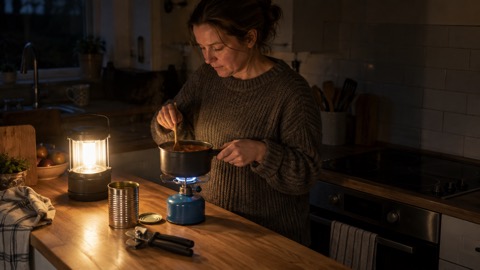
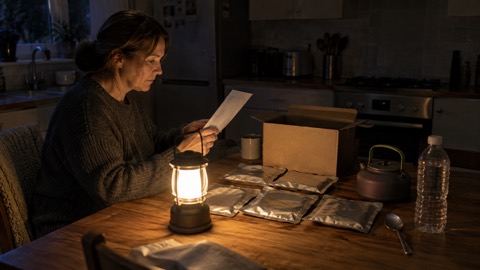
The simplest emergency meal is one that needs no cooking at all. Cornwall Council advises households that cannot cook without electricity to keep ready-to-eat food, while Lancashire Prepared recommends food items that do not require electricity to prepare. This avoids making an already difficult situation depend on fuel, equipment or ventilation.8
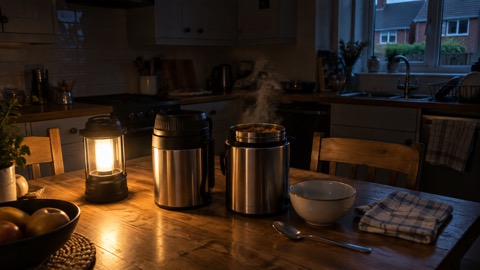
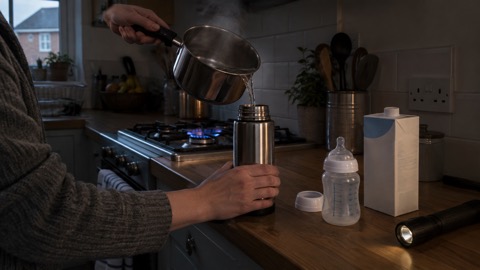
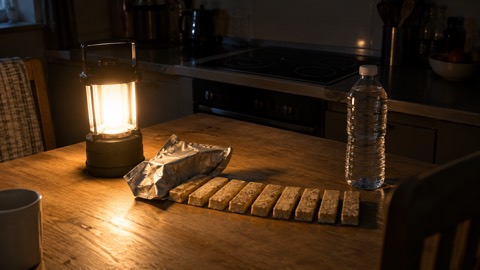
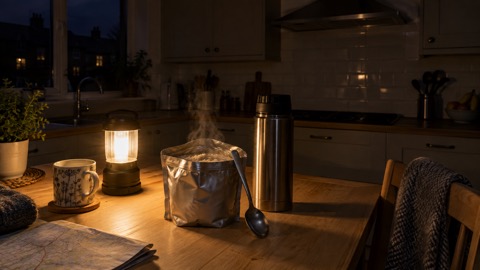
Build a small no-cook menu from familiar foods rather than relying on one improvised meal. Tinned meat or fish, fruit, vegetables, cereal bars, crackers and UHT milk can provide variety without using the cooker. The guide to meals without power develops no-cook and low-fuel ideas, while food flasks covers keeping a prepared hot drink or meal insulated. Neath Port Talbot's emergency kit advice also suggests taking ready-to-eat food, a warm drink in a flask and bottled water if you have to leave home.10
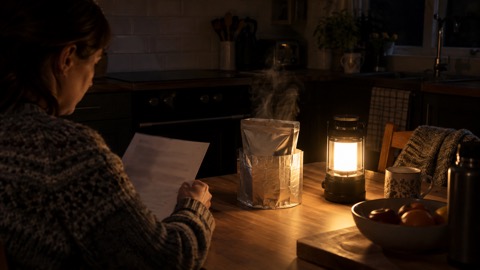
Flameless self-heating food pads are another option for warming food without a flame. Greater Manchester Fire and Rescue Service describes them as suitable for outdoor activities, emergency preparedness, catering and travel. Read the self-heating meals guide before relying on this format.11
For camping stoves and barbecues, keep the food planning separate from the fire and ventilation decisions and follow the dedicated heating and cooking guidance. Do not treat outdoor cooking equipment as a straightforward replacement for the kitchen cooker.
Water matters as much as fuel. You need it for drinking, cooking and rehydrating dried meals, and restrictions can change what is safe to use. Follow the relevant notice and use the household water guide for drinking water, food preparation, and boil or do-not-drink notices. The guides to preparing freeze-dried meals and using cold water cover those meal-specific questions.
If you intend to power a cool box from a battery or power station, include it in your wider backup power planning rather than assuming it will run indefinitely.
What to keep in the store
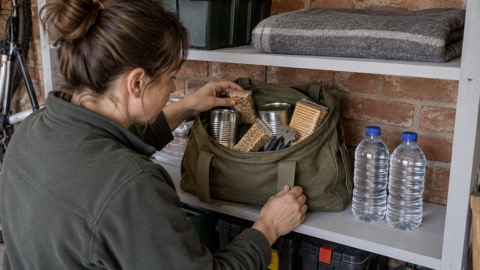
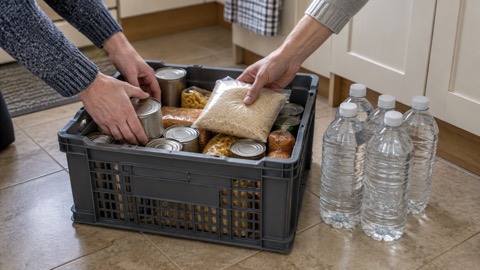
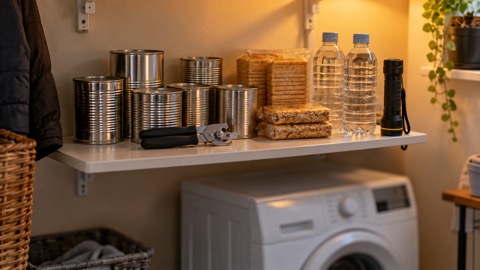
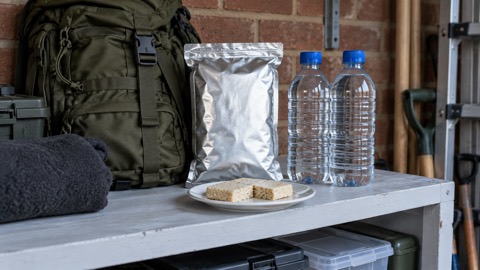
Greater Manchester's resilience guidance recommends bottled water and non-perishable tinned food that does not need cooking, such as ready-to-eat tinned meat, fruit or vegetables, together with a tin opener. Add ready-made baby formula and pet food where needed.12
| Store cupboard group | Practical examples |
|---|---|
| Ready-to-eat tinned food | Meat, tuna, fruit, vegetables and soup13 |
| Dry and long-life snacks | Crackers, cereal bars, biscuits, boiled sweets, dried fruit and nuts1 |
| Drinks and milk | Bottled water, canned or boxed juices, UHT milk and powdered milk13 |
| Household-specific food | Infant food, food for special diets and pet food12 |
| Essential equipment | Tin opener, eating utensils, paper cups and plates, and paper towels12 |
Denbighshire's emergency supplies guidance emphasises foods that can be eaten readily without heating or water. North Hertfordshire also lists cereal and fruit bars, with a reminder to keep them up to date. Hillingdon advises keeping tinned food and bottled water at home in case you need to stay indoors, and including long-life food and snacks in an accessible grab bag.13
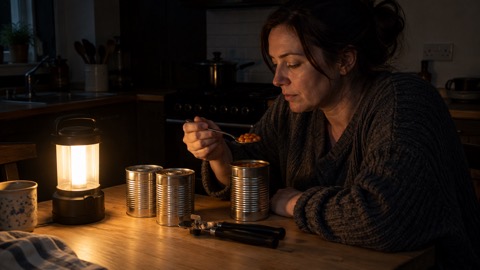
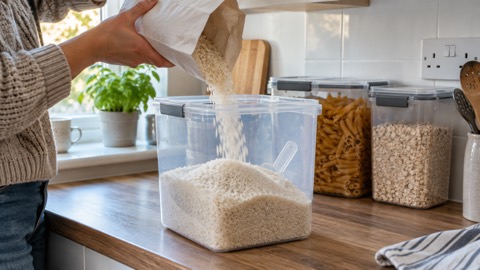
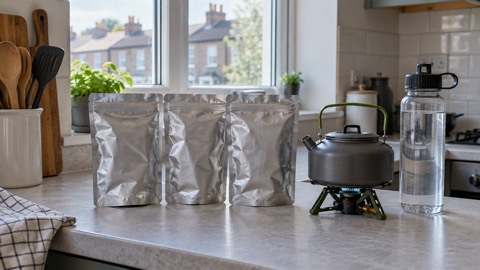
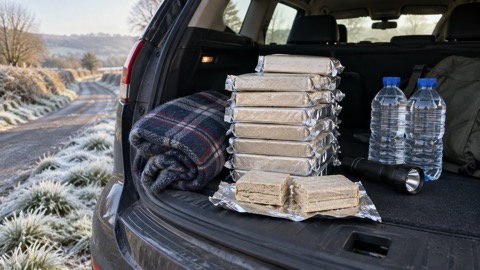
Use the store cupboard checklist and the guide to what to store to turn these categories into a household list. For individual formats, see the guidance on tinned food, rice, pasta, oats and pulses, freeze-dried meals, ration packs and ration bars. The comparisons of tinned or freeze-dried meals and freeze-dried or dehydrated food explain the different formats.
Specialised products are not a requirement for a basic store, but the site also covers Expedition Foods Emergency Rations for 1 Week, Expedition Foods Rolled Oats, Apple and Blackcurrant, NRG-5 Emergency Food Ration and NRG-5 ZERO for readers researching those named products.
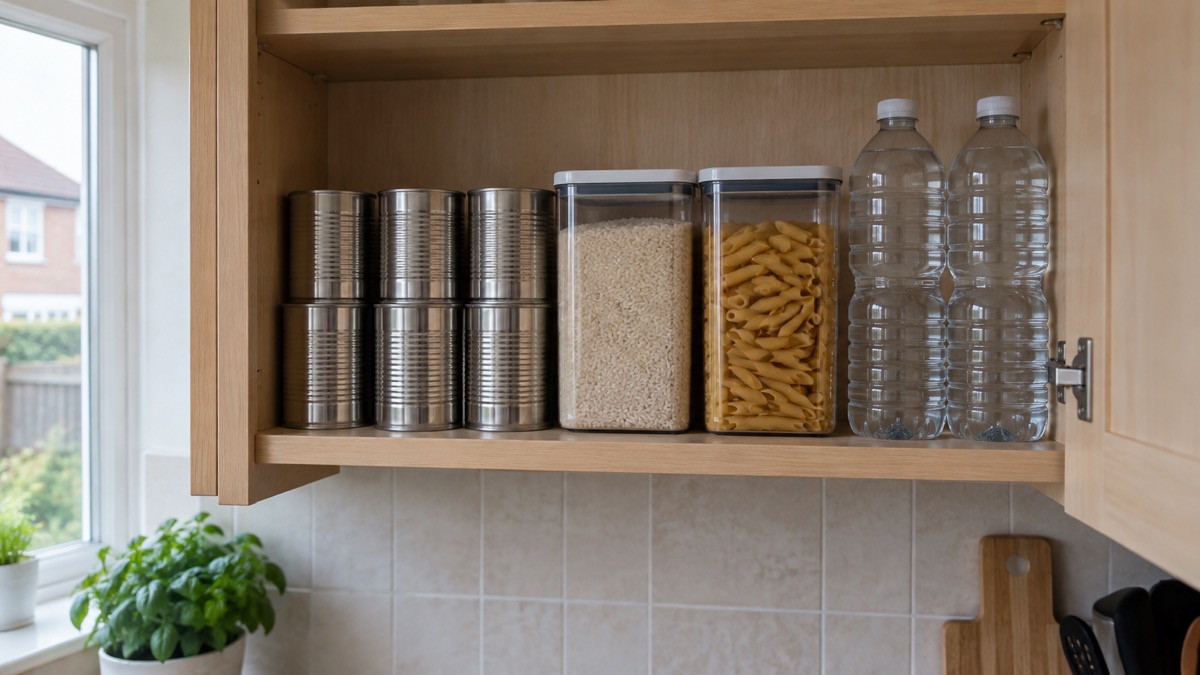
How much food to store
Start with three days of non-perishable food. The Be Ready checklist states this directly, and Argyll and Bute Council recommends at least three days' supply of food, bottled water and other essentials, including medicines. Its advice specifically favours tinned and dry foods that store safely without electricity. West Yorkshire's Community Risk Register likewise lists non-perishable food and bottled water for three days.1
| Planning point | What to do |
|---|---|
| Starting quantity | Keep non-perishable food for three days1 |
| Power-independent choices | Include tinned and dry foods that store safely without electricity16 |
| Water | Store bottled water alongside the food7 |
| Household needs | Include medicines, baby supplies, special-diet food and pet supplies where required14 |
| Usability | Choose food you would usually eat and keep a tin opener with it1 |
The guide to how much emergency food to store per person deals with household quantities in more detail. If you are beginning from an ordinary weekly shop, starting a store cupboard step by step shows how to build the supply without making it separate from everyday meals.
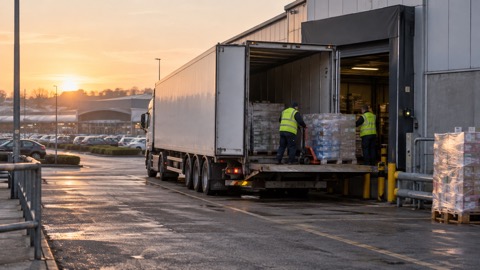
Three days of food should not depend on shops reopening immediately. Wiltshire and Swindon Prepared notes that a power outage can close grocery shops, petrol stations, cash machines and other services. Its advice is to avoid relying on fresh or perishable food and keep longer-lasting products such as tins for emergencies.3
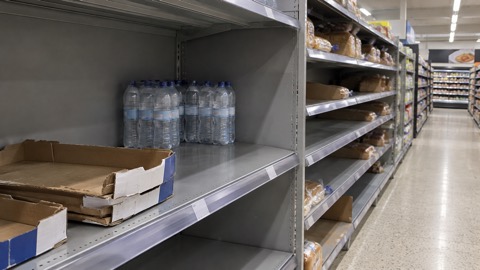
For wider context, the National Audit Office reported on 4 September 2026 that Defra had largely relied on the private sector to manage food supply disruption and that its actions had not been sufficient to ensure resilience to catastrophic events. The supply chain guide and the account of what disappears from shops first examine those issues. The pandemic food supplies guide looks at Covid-19, while growing your own vegetables covers a separate, longer-term household activity rather than a substitute for an emergency store.17
Babies, special diets and pets
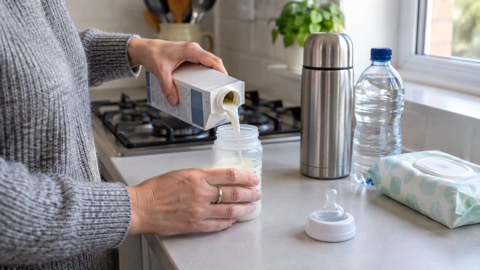
An emergency store must reflect the people and animals who will actually use it. Be Ready advises including ready-made baby formula and pet food if needed, alongside non-perishable food that does not need cooking and a tin opener. Ready-made formula avoids assuming that electricity, hot water or normal kitchen facilities will be available.4
North Hertfordshire's household guidance includes baby supplies such as nappies and ready-made formula. It also notes that additional water may be needed for pets, making baby formula and medical devices. Plan that water explicitly rather than taking it for granted from the household's drinking supply. The dedicated guide to making up baby formula in a power cut covers that situation in detail.14
Denbighshire includes food for infants and people on special diets in its emergency food list. Keep suitable foods that the person already eats, and do not assume that an ordinary ration or standard tinned meal will meet every dietary requirement. The guides to babies, young children and medical diets and emergency food for medical, religious and allergy diets provide the detailed planning routes.13
Lincolnshire's emergency kit advice includes pet food, treats and other pet care items where required. The Be Ready checklist also pairs pet food with bottled water. Keep these supplies with your wider pet emergency preparations, rather than expecting animals to share the household's meals.18
Older and disabled people, and anyone who needs help shopping or preparing food, may need additional arrangements. The extra help guide covers support for older, disabled and medically dependent households.
Keeping the store safe and in date
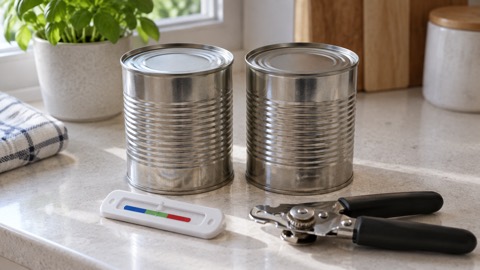
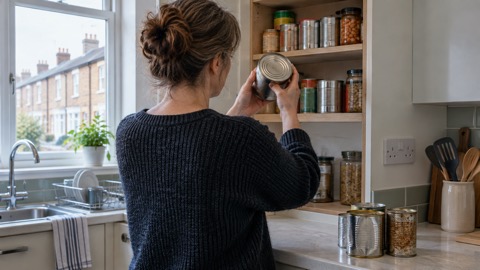
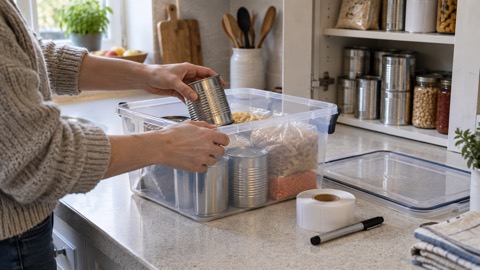
Check that emergency tins and long-life snacks remain in date, and keep a tin opener with them. Nottinghamshire County Council includes exactly these items in its household preparedness advice. A store is not useful if nobody knows whether its contents are still suitable or cannot open them without the usual electric equipment.19
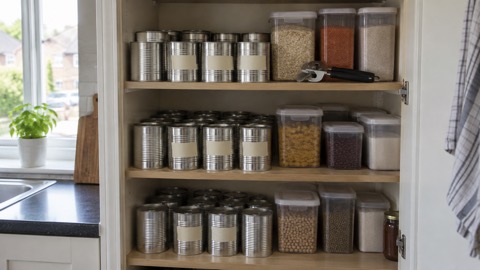
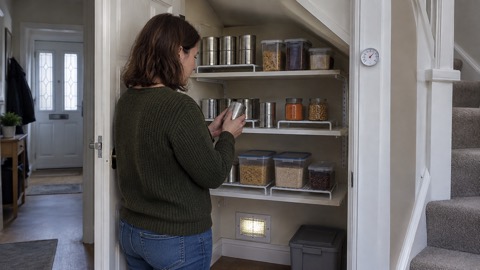
Denbighshire offers a straightforward rotation method: replace the whole food side of the kit every six months and live off the replaced food for a few days. This uses the food rather than discarding it, tests whether the meals suit the household and avoids frequent piecemeal changes. Replace what you eat so that the kit returns to its intended three-day supply.13
- Put newly bought food behind older stock and use the older items first.
- Check dates whenever you rotate the kit.
- Keep the tin opener, utensils and other accessories with the food.
- Replace baby, special-diet and pet supplies as needs change.
- Follow the detailed first in, first out rotation guide and the explanation of use by and best before dates.
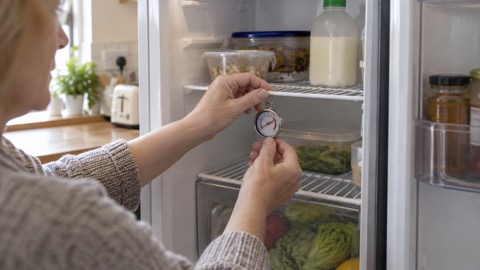
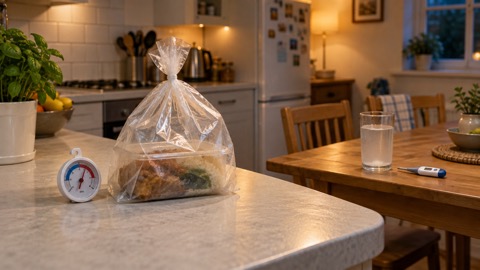
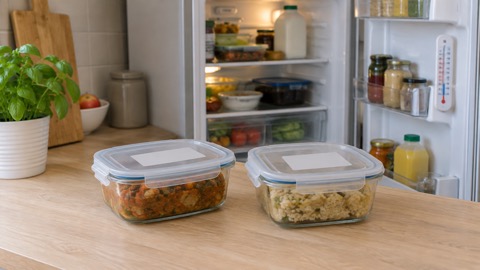
Storage conditions matter alongside dates. NHS Borders advises keeping perishable food below 5°C, observing use-by dates on wrapped food and eating food within 3 or 4 days of opening. Those rules concern perishable food, not a reason to extend the life of something that shows signs of spoilage.20
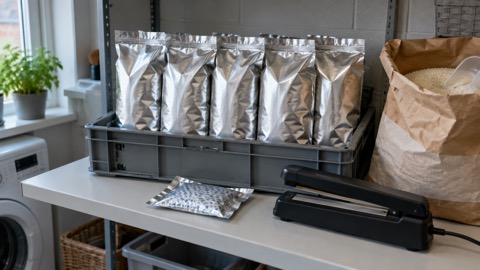
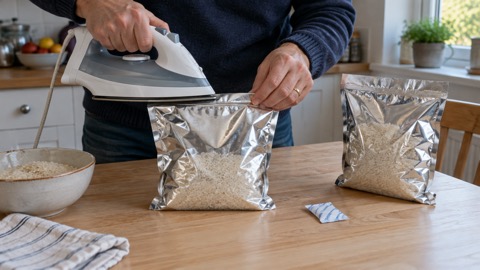
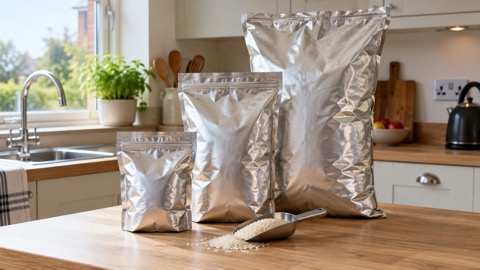
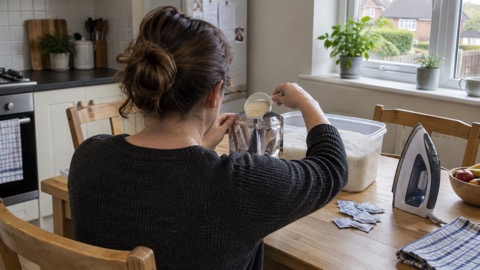
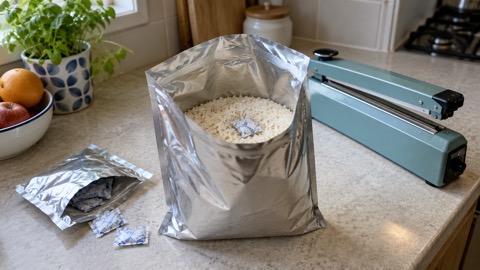
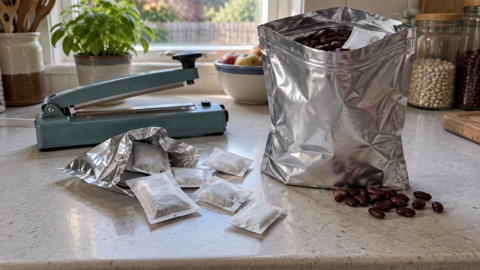
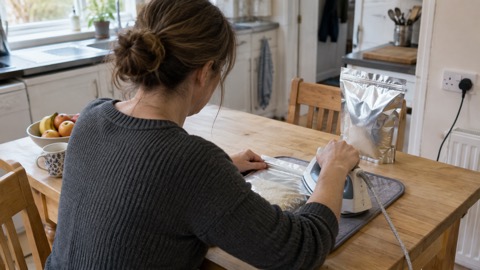
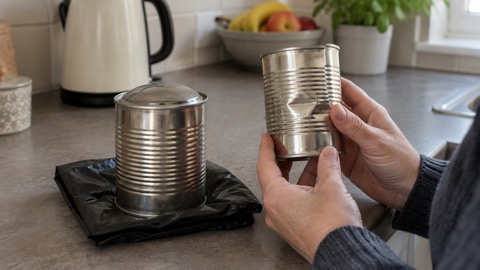
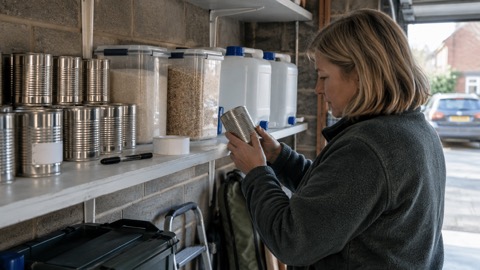
Use the guides to cool, dry, pest-free storage, food after a flood, flood-safe storage locations and dented or swollen tins for particular risks. Longer-term dry storage is covered by the long-term storage kit checklist, Mylar bags and oxygen absorbers, oxygen absorber timing, Mylar bag shelf life, bag sizes, food-grade safety, silica gel sachets, Mylar bags or glass jars and sealing without a heat sealer.
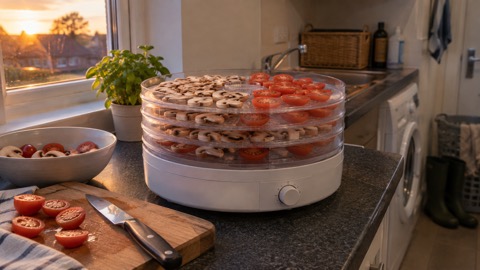
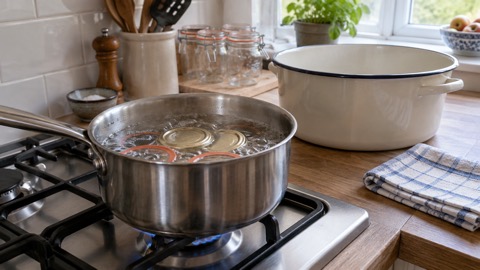
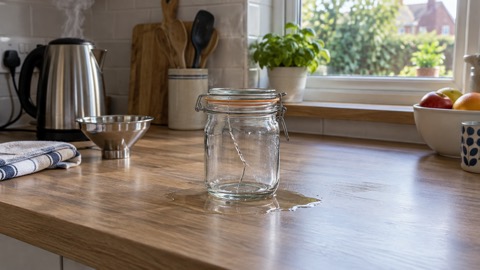
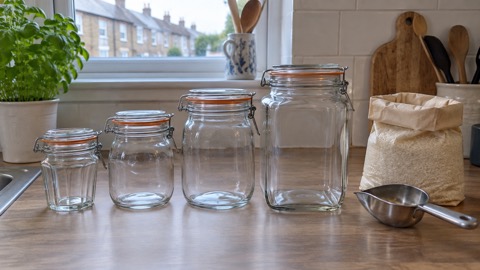
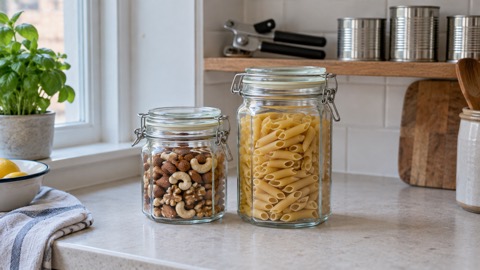
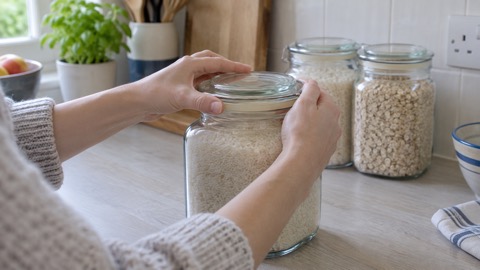
For home preserving, follow the dedicated guidance on preserving safely, dehydrating food, sterilising jars, pouring boiling water into glass jars and recognising spoiled preserves. Container and absorber product pages cover the Kilner Clip Top Jar, Facetted Clip Top Jar, Round Twist Top Jar, Hexagonal Twist Top Jar, Universal Push Top Jar and OxyFree Oxygen Absorbers.
Clean hands when water is short
Food Standards Scotland advises washing hands thoroughly with soap before preparing food or eating. Where there is no access to clean water, use alcohol-based sanitiser. Its flooding advice also says that alcohol gels or wet wipes can be used to clean hands before handling food when there is no running water.21
Greater Manchester's resilience guidance offers a way to conserve a limited supply: fill a large bowl, such as a washing-up bowl, with water and add soap or household disinfectant. Keeping water use to a minimum helps the alternative supply last longer.12
Government power-cut advice also permits alcohol-based hand sanitiser for hands, and antibacterial sprays or wipes for surfaces and utensils, when the water supply is affected. Keep these cleaning items accessible with the emergency food rather than assuming the usual sink and tap will be available.22
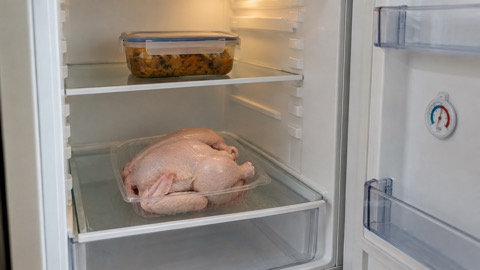
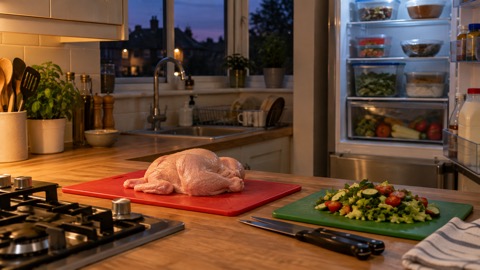
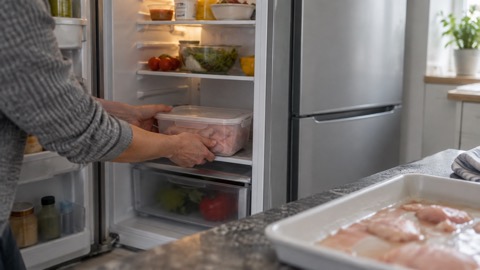
Clean hands are only one part of safe preparation. Shropshire Council advises keeping work surfaces and utensils clean and disinfecting them with antibacterial spray. Anyone with diarrhoea, vomiting or nausea should not prepare food for others. Keep raw and ready-to-eat foods apart, use different boards, and store raw meat in sealed containers at the bottom of the fridge when normal refrigeration is operating.23
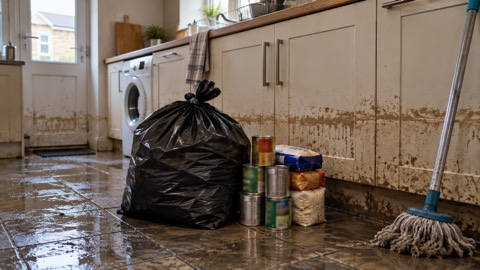
If flood water has entered the kitchen or reached stored food, use the specific food after a flood guidance rather than treating ordinary hand cleaning as enough to make affected food safe.
Food poisoning: signs and when to get help
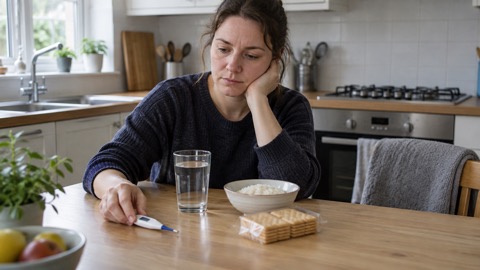
Food poisoning is an illness caused by eating or drinking something contaminated. Common symptoms are diarrhoea, sickness, stomach pains and sometimes a high temperature or fever. NHS Inform says symptoms usually begin within 1 to 2 days, but can start a few hours later or several weeks later. Symptoms may last only a day or continue for one or two weeks.23
Most people recover within a few days without treatment, but the illness can be serious for some groups. Those at higher risk include babies and young children, older people, pregnant women, people with weakened immune systems and those with an existing illness. Somerset Council also advises pregnant women to take particular care with food and drink and follow advice from their doctor or midwife.25
Babies, young children, pregnant women, older people and those with weak immune systems should contact their GP if badly affected. In most cases, Shropshire Council says a GP will not prescribe medication because it will not speed recovery, and will instead advise drinking regularly to avoid dehydration. Antibiotics can be used for some types of infection. Diagnosis of bacterial or parasitic food poisoning normally involves testing a stool sample.23
NHS Inform advises against alcohol, caffeine, fruit juice and fizzy drinks during recovery. Do not make baby formula weaker, do not give children under 12 medicine to stop diarrhoea, and do not give aspirin to children under 16.24
Prevention matters because warm food can allow bacteria to multiply rapidly. NHS Borders explains that some bacteria can divide every 20 to 30 minutes, allowing one germ to produce up to 16 million others within 8 hours. It also warns that food need not look, smell or taste off to be dangerous. Cook food thoroughly, especially meat, until it is piping hot in the middle, and do not reheat food more than once.20
The detailed guides cover food poisoning symptoms and help, salmonella, E. coli, listeria and other causes, raw meat, poultry and eggs, reducing botulism risk and staying off work or school.
Help with food if you are struggling
An emergency store is not always easy to establish, and illness, disability, isolation or disruption can make shopping difficult even when food is available locally. Argyll and Bute Council advises offering to help with grocery shopping or other essential tasks. Check on neighbours who may need practical assistance, and use the community resilience guide to organise that help safely.16
The Covid-19 experience showed why access matters. The British Red Cross reported that food insecurity among UK adults rose from 7.63 per cent in 2018 to 16.2 per cent after lockdown, and its July 2020 report examined food insecurity, information barriers and responsibility for food provision. Those historical schemes should not be assumed to remain open now.29
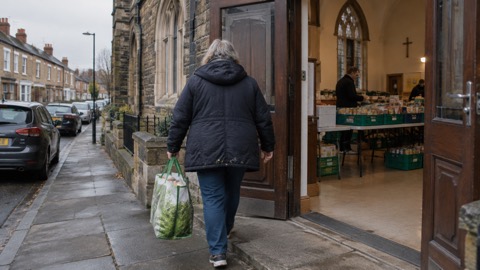
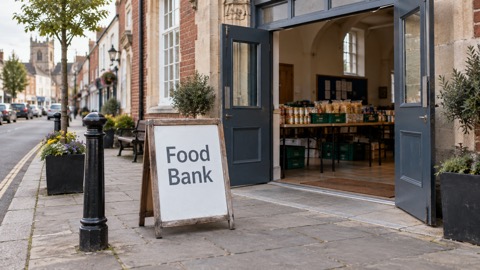
For current routes, use the guide to emergency food help, food banks, councils and local support. It sits alongside the practical explanation of getting a food bank voucher referral and the guide to the Healthy Start scheme, including who qualifies and what it provides.
Older and disabled people, and households managing medical diets, may need help with both obtaining food and preparing it. The extra help guide brings those emergency arrangements together. If you can assist someone else, offering a food shop or another essential task is a direct action recommended by official severe-weather guidance.16
Recalls, allergy alerts and reporting illness
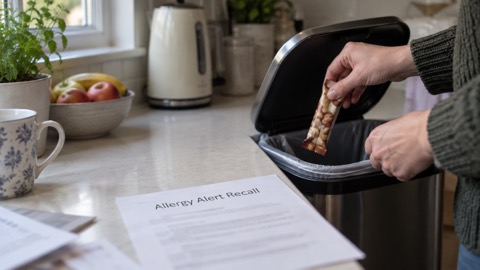
Sign up to the Food Standards Agency's food and allergy alerts service to receive notifications when it publishes a product recall. Recall notifications explain the risk and advise what to do if you bought the affected product. Allergy alerts provide information about allergy-related recalls. The FSA service applies to England, Northern Ireland and Wales.30
Food Standards Scotland explains that an Allergy Alert is issued when allergy information on a food label is missing or incorrect, requiring affected foods to be recalled from consumers. Incorrect or missing allergen information can therefore be the reason for a recall even where the problem is the label rather than a visible defect in the food.31
The FSA issues Product Recall Information Notices to tell consumers and local authorities about food problems. In some cases it issues a Food Alert for Action, giving local authorities details of specific action to take on consumers' behalf. Check the notice itself and follow its product-specific instructions rather than assuming that every product from the same maker is affected.32
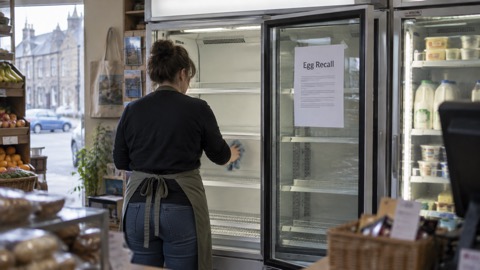
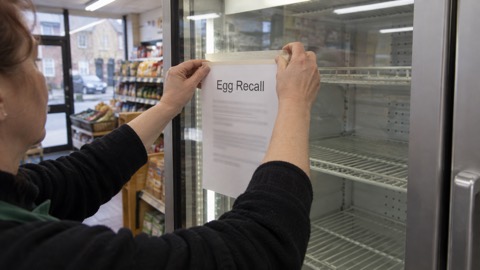
A dated example shows why the details matter. On 10 October 2026, the FSA issued a Food Alert for Action concerning eggs from one Ukrainian food business after investigations found salmonella enteritidis. For eggs not covered by that alert, its advice remained that thoroughly cooked, hygienically handled eggs should not present a food safety risk. It also advised infants, young children, pregnant people and older adults to eat raw or lightly cooked eggs only if they carry the British Lion mark or are produced under the Laid in Britain scheme.33
Report suspected food poisoning or a food problem to the relevant local authority. Somerset Council provides an online reporting route, while Belfast City Council explains that it may ask what and where you ate, your symptoms, recent travel, whether a GP took a stool sample and whether others who ate with you became ill. The reporting illness guide explains how to take that step.26
Sources (33)
- Be Ready Checklist, Be Ready, 2026
- Food safety during power cuts, Food Standards Scotland, 2026-10-25
- What is a national power outage, Wiltshire and Swindon Prepared, 2026-10-25
- Preparing for power cuts, Be Ready, 2026-10-21
- Weather and health, Public Health Wales, 2026-07-16
- Steps after a fire, North Yorkshire Fire and Rescue Service, 2026-06-17
- Community Risk Register, West Yorkshire Prepared, 2025
- Storm preparation, Cornwall Council, 2026-10-29
- How to prepare for a power cut, Lancashire Prepared, 2026-10-29
- Emergency kit checklist, Neath Port Talbot Council, 2026-10-29
- Barbecue safety and self-heating food pads, Greater Manchester Fire and Rescue Service, 2026-10-29
- Preparing for loss of essential services, Greater Manchester Combined Authority, 2026-10-29
- Emergency supplies kit, Denbighshire County Council, 2020
- Preparing for emergencies, North Hertfordshire District Council, 2015-01-12
- Household emergency plan, Hillingdon Council, 2026-10-29
- Be prepared at home and in your community, Argyll and Bute Council, 2026
- Resilience of the food supply chain to disruptions, National Audit Office, 2026-09-04
- Get help and advice in an emergency, Lincolnshire County Council, 2026-10-29
- Preparing for an emergency, Nottinghamshire County Council, 2026-10-29
- Food poisoning prevention and advice, NHS Borders, June 2014
- Food safety during flooding, Food Standards Scotland, 2026-10-25
- Food safety in a power cut, GOV.UK, 2023-07-26
- Food poisoning and waterborne infections, Shropshire Council, 2026-10-29
- Food poisoning, NHS Inform, 2026-08-17
- Food poisoning, Belfast City Council, 2026-10-29
- Food poisoning, Somerset Council, 2026-07-09
- Food poisoning advice, Northumberland County Council, 2026-08-11
- Poisoning first aid, NHS Inform, 2026-07-24
- Access to food in emergencies: learning from Covid-19, British Red Cross, 2020-07
- Food recalls and allergy alerts, Food Standards Agency, 2026-07-07
- Why food is recalled, Food Standards Scotland, 2026-10-25
- Product Recall Information Notice, Food Standards Agency, 2026-10-21
- Food Alert for Action concerning eggs, Food Standards Agency, 2026-10-10
 How Much Emergency Food to Store
 What to Store in an Emergency
 Starting a Store Cupboard
 Shelf Life and Date Labels
 Rotating Your Food Store
 Long-Term Storage Conditions
 Meals Without Power
 Self-Heating Meals
 Tinned Food Guide
 Rice, Pasta and Pulses Storage
 Freeze-Dried Meals
 Emergency Ration Packs
 Emergency Ration Bars
 Mylar Bags and Oxygen Absorbers
 Cool Boxes and Cool Bags
 Food Flasks and Insulation
 Fridge and Freezer Temperatures
 Handling Raw Meat and Eggs
 Food Poisoning Symptoms
 Food Poisoning Bacteria
 Reporting a Food Problem
 Food After a Flood
 Getting Emergency Food Help
 Babies and Medical Diets
 UK Supply Chain Disruption
 Food Supplies in a Pandemic
 Safe Home Preserving
 Drying Food at Home
 Baby Formula in a Power Cut
 Refreezing Defrosted Meat
 Leftovers in the Fridge
 Reducing Botulism Risk
 Sterilising Jars
 Spotting Spoiled Preserved Food
 Boiling Water in Glass Jars
 Mylar Bag Food Shelf Life
 Mylar Bag Sizes
 Are Mylar Bags Food Safe
 Oxygen Absorber Activation
 Silica Gel With Stored Food
 Freeze-Dried Meal Shelf Life
 Cold Water Freeze-Dried Meals
 Preparing Freeze-Dried Meals
 What Sells Out First
 Special Diet Emergency Food
 Flood-Safe Food Storage
 Food Bank Voucher Referral
 Sealing Mylar Bags by Hand
 Dented or Swollen Tins
 Food Poisoning Time Off Work
 Long-Term Storage Kit Checklist
 Store Cupboard Checklist
 Freeze-Dried vs Dehydrated Food
 Mylar Bags vs Glass Jars
 Tinned vs Freeze-Dried Food
 Healthy Start Scheme
 Expedition Foods 1 Week Rations
 NRG-5 Emergency Ration
 NRG-5 ZERO Ration
 Kilner Clip Top Jar
 Kilner Facetted Clip Top Jar
 Kilner Round Twist Top Jar
 Kilner Hexagonal Twist Top Jar
 Kilner Universal Push Top Jar
 Expedition Foods Rolled Oats
 OxyFree Oxygen Absorbers