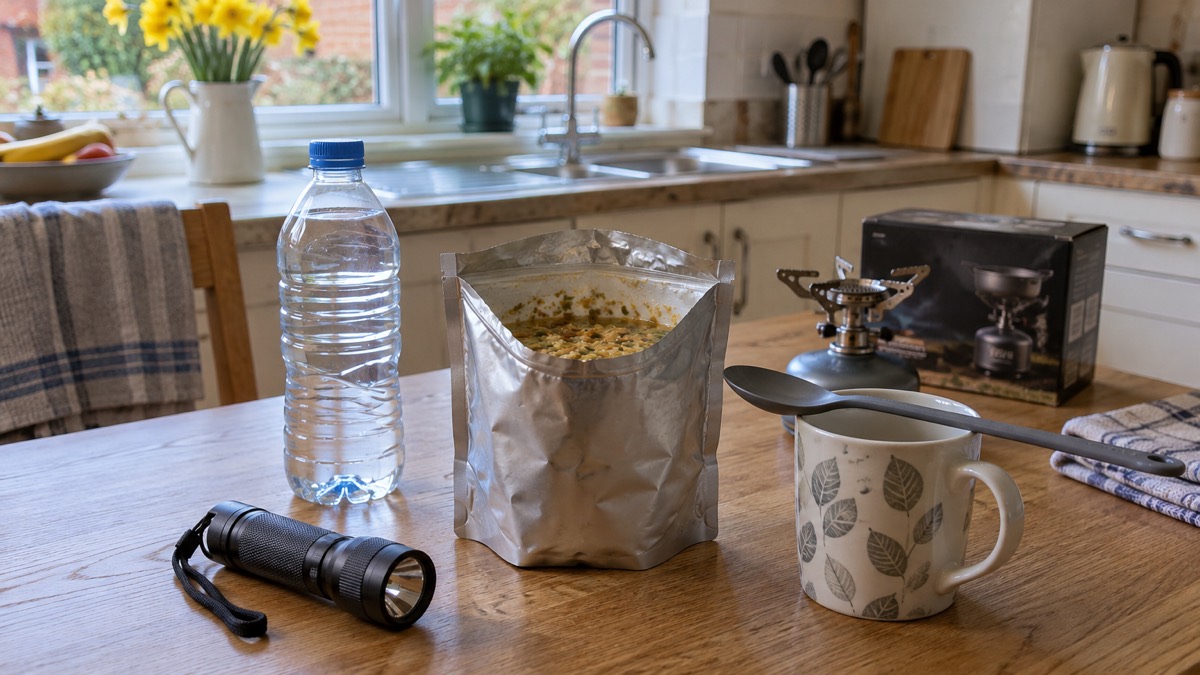
Yes. Most freeze-dried meals will rehydrate in cold water, but they take longer than the packet suggests and the result is not quite the same as a hot meal. The water you add must be safe to drink, and you need to give the food enough time and stirring to soften fully. If you have no safe water at all, a freeze-dried meal is the wrong choice: keep no-cook, no-water foods for that situation.
The key is patience and enough water. Cold water works its way into the food more slowly than hot, so a meal that takes a few minutes with boiling water may need considerably longer with cold. Stir it, reseal the pouch, and leave it. Check the thickest pieces, usually pasta or rice, before you eat.
This page explains how to rehydrate a freeze-dried meal with cold water, how long to allow, how much water to add, and when cold soaking is not the right approach. It also covers water safety, because the water you add is only as safe as its source.
Yes, most freeze-dried meals rehydrate in cold water, but more slowly
Freeze-dried food is made by removing the water from a prepared meal, leaving a dry, lightweight block or loose pieces. To eat it, you add water back. The food absorbs that water and softens. Hot water speeds this up because heat makes the food take up water faster and makes the texture more palatable. Cold water does the same job, but the process is slower and the result may be firmer.
The practical consequence is time. A meal that is ready in minutes with boiling water may need a much longer soak with cold. The exact time depends on the meal: loose grains and small pieces soften faster than large pasta shapes or whole rice. There is no single figure that covers every meal, so treat the packet time as a guide for hot water and add extra time when using cold.
Cold rehydration suits situations where you have safe water but no way to boil it: a power cut, a gas failure, or a camping stove you cannot use safely indoors. It does not suit situations where water itself is scarce. Emergency guidance is clear that when you are putting together food for a disruption, you should select foods that require no refrigeration, preparation or cooking, and little or no water, and that are compact and lightweight3. A freeze-dried meal needs water, so it belongs in your store only alongside a planned water supply.
If you are building a store from scratch, the emergency food guide explains how freeze-dried meals fit alongside tinned and dry foods, and the freeze-dried meals page covers what they are and how to choose them. For the water side, see the water guide.
Soaking time: cold water against hot
Hot water is faster because heat drives the water into the food and softens starches. Cold water still works, but you should expect to leave the meal far longer and to check it before eating. The table below sets out the difference in approach rather than exact minutes, because the right time depends on the meal.
| Factor | Hot water | Cold water |
|---|---|---|
| Speed | Fast, often minutes | Slow, often much longer |
| Texture | Softer, more like a cooked meal | Firmer, especially pasta and rice |
| Fuel needed | Yes, to boil water | None |
| Water safety | Boiled water is safe | Must be safe to drink from the start |
| Suits | Meals with large pasta or rice | Loose grains, small pieces, mild weather |
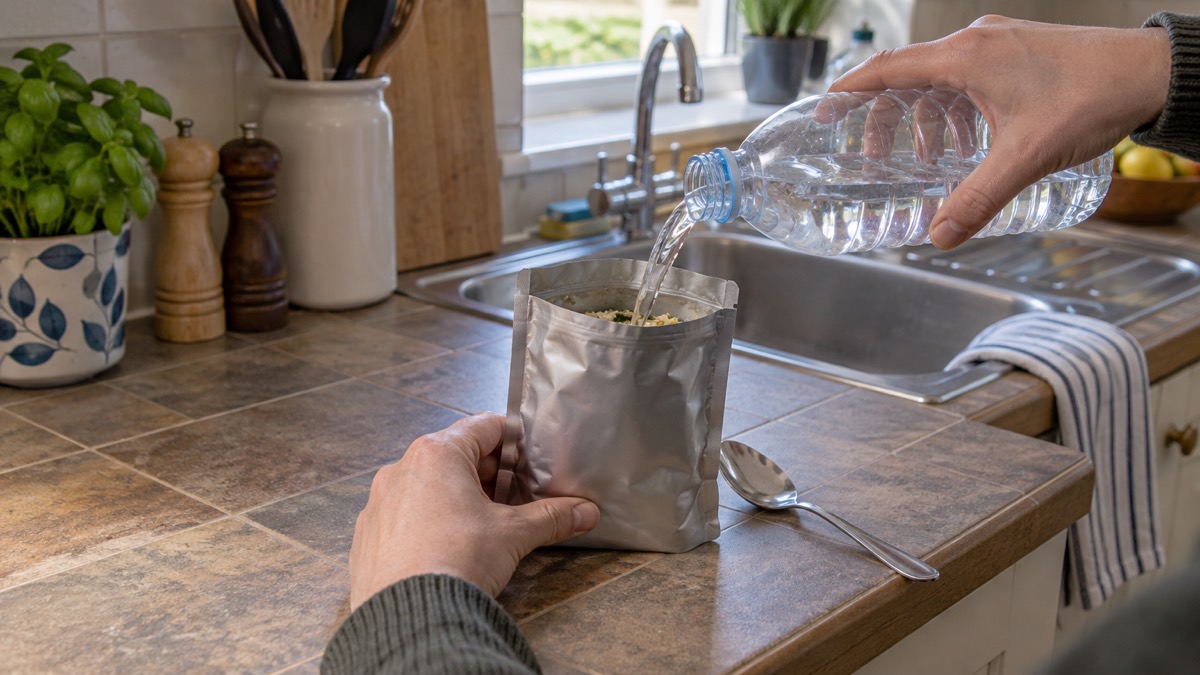
The general principle is to give cold water more time than you think it needs, stir once or twice, and test the thickest piece. If the centre is still hard, reseal and wait. Do not add a large extra volume of water in one go, because that dilutes the meal and makes it soupy.
There is a seasonal angle. In cold weather, official health guidance encourages people to have plenty of hot food and drinks, and to try to have at least one hot meal a day along with regular hot drinks, because food gives you energy and helps keep your body warm4. A cold-soaked meal is still food and still gives energy, but in a cold snap a hot meal is preferable if you can manage it. In hot weather, official advice points the other way: eat cold foods, particularly salads and fruit with high water content, and do not stop eating6. A cold rehydrated meal fits hot weather better than cold.
How to rehydrate a meal with cold water
The method is simple, but the order matters. Work cleanly, use safe water, and give the food time.
- Wash your hands or clean them. If you have no running water, official guidance says you can use alcohol gels or wet wipes to clean hands before handling food8.
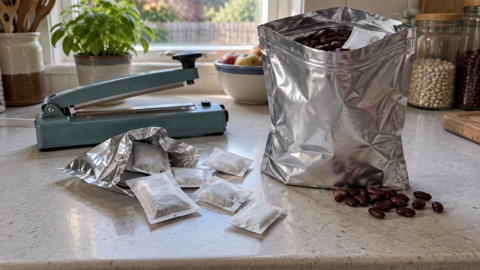
- Open the pouch and remove any oxygen absorber or desiccant sachet. These are not food. Set them aside and keep them away from children and pets.
- Add safe water a little at a time. Follow the packet quantity if you have it. Stir as you go so the water is absorbed evenly rather than pooling at the bottom.
- Reseal the pouch and leave it. Cold water needs longer than hot. Leave it well beyond the hot-water time on the packet.
- Stir and check partway through. Look at the thickest pieces. If they are still hard, reseal and wait longer.
- Eat it soon after it is ready. Once water is added, the meal is a moist prepared food. Do not leave it standing for hours and then eat it.
If you are using hot water, the same steps apply, but the soak is much shorter. The how to prepare a freeze-dried meal page covers the hot-water method in detail.
Water safety: use only water that is safe to drink
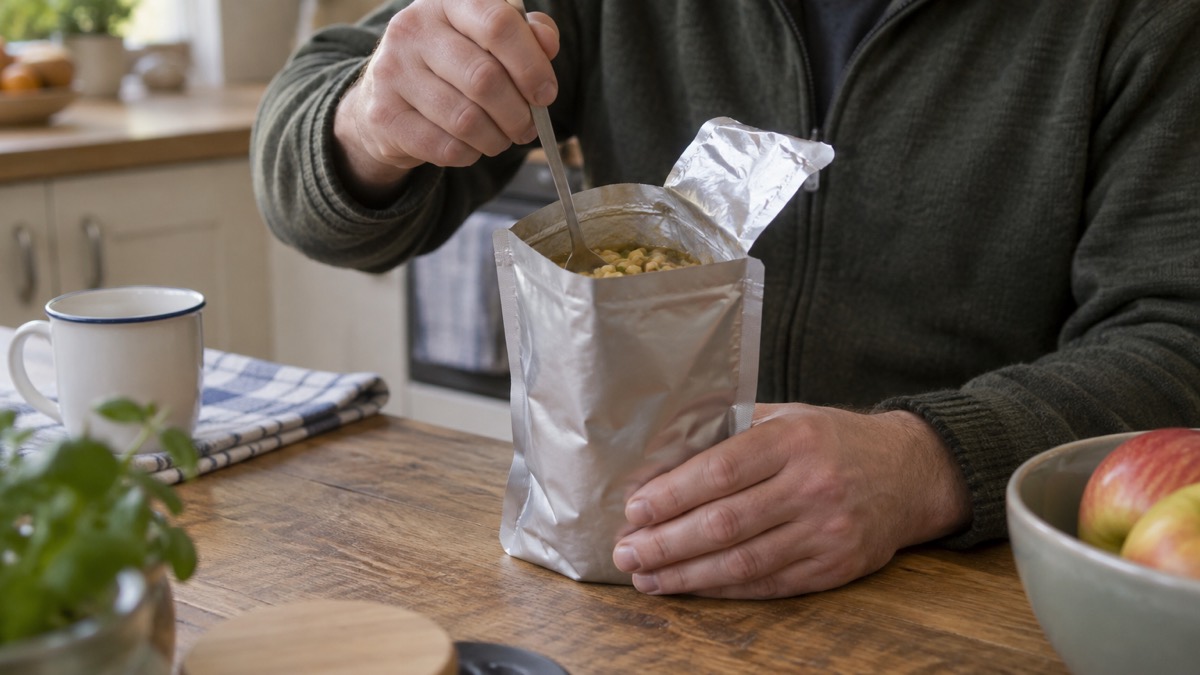
The water you add to a freeze-dried meal becomes part of the meal, so it must be safe to drink. Official guidance is to use only the cold tap water for drinking, cooking and making infant formula9. If you are using stored or bottled water, make sure it has been kept clean and covered.
Not all taps are equal. The Drinking Water Inspectorate advises that you should ideally only use a tap connected to the mains water supply for drinking, food preparation or teeth cleaning10. Cold water in bathrooms and washrooms is not recommended for drinking, because it may come from a tank that is not suitable for drinking water purposes11. In a normal home this matters little, but in a disruption, when you are filling containers from whatever tap works, it matters a great deal. Use the kitchen cold tap if it is running, or bottled or properly stored water.
If your water supply is interrupted or you are on a private supply, follow the advice of your water company or local authority. If you have been told to boil your water, use only boiled water for drinking, brushing teeth and preparing food2. Water that has been boiled can be stored in a covered container in the fridge for up to 48 hours12. For more on storing and treating water, see the water section.
When cold soaking does not work well
Cold soaking is a useful fallback, but it is not right for every meal or every situation. There are three main cases where it lets you down.
When water is scarce. A freeze-dried meal needs a meaningful amount of water to rehydrate. If your water supply is limited, using it to soak a meal may not be the best use of it. Emergency guidance recommends keeping foods that need little or no water, are compact and lightweight, and require no cooking3. Ration bars and ready-to-eat foods are better when water is tight. The ration bars page and the no-cook meals page cover the alternatives.
When the meal is heavy on pasta or rice. Large pasta shapes and whole rice take the longest to soften in cold water. If you have any way to heat water, use it for these meals. If you do not, allow extra soaking time and check the pieces carefully before eating.
When the weather is cold and you need warmth. Official health guidance in cold weather encourages hot food and drinks, and at least one hot meal a day where possible4. A cold meal is still nourishment, but it does not give the same comfort or warmth. If you can boil water, even a small amount, use it.
There is also a practical limit on how long you can leave a rehydrated meal. Once water is added, the food is moist and should be eaten promptly. Do not treat a soaked meal as shelf-stable.
If you are choosing between types of emergency meal, the tinned or freeze-dried comparison sets out the trade-offs, and the freeze-dried shelf life page explains how long the dry meals keep before you open them.
Sources (12)
- Benefits of Freeze-Dried Food - Expedition Foods, Expedition Foods
- Weather and health, Public Health Wales
- Create a flood pack, Bradford Council
- Keeping warm, healthy and safe in cold weather, London Assembly
- Stay well in winter, Met Office
- How to keep cool this summer, Lancashire County Council
- Hot weather advice, Central East ICB
- Flooding food safety advice, Food Standards Scotland
- Lead poisoning, NHS Inform
- Water storage tanks and cisterns, Drinking Water Inspectorate
- Taste and odour in drinking water, Drinking Water Inspectorate
- Private water supplies, Argyll and Bute Council
 Long-Term Storage Kit Checklist
 Store Cupboard Checklist
 30-Day Household Checklist
 Baby Formula in a Power Cut
 Refreezing Defrosted Meat
 Leftovers in the Fridge
 Reducing Botulism Risk
 Sterilising Jars
 Spotting Spoiled Preserved Food
 Boiling Water in Glass Jars
 Mylar Bag Food Shelf Life
 Mylar Bag Sizes
 Are Mylar Bags Food Safe
 Oxygen Absorber Activation
 Silica Gel With Stored Food