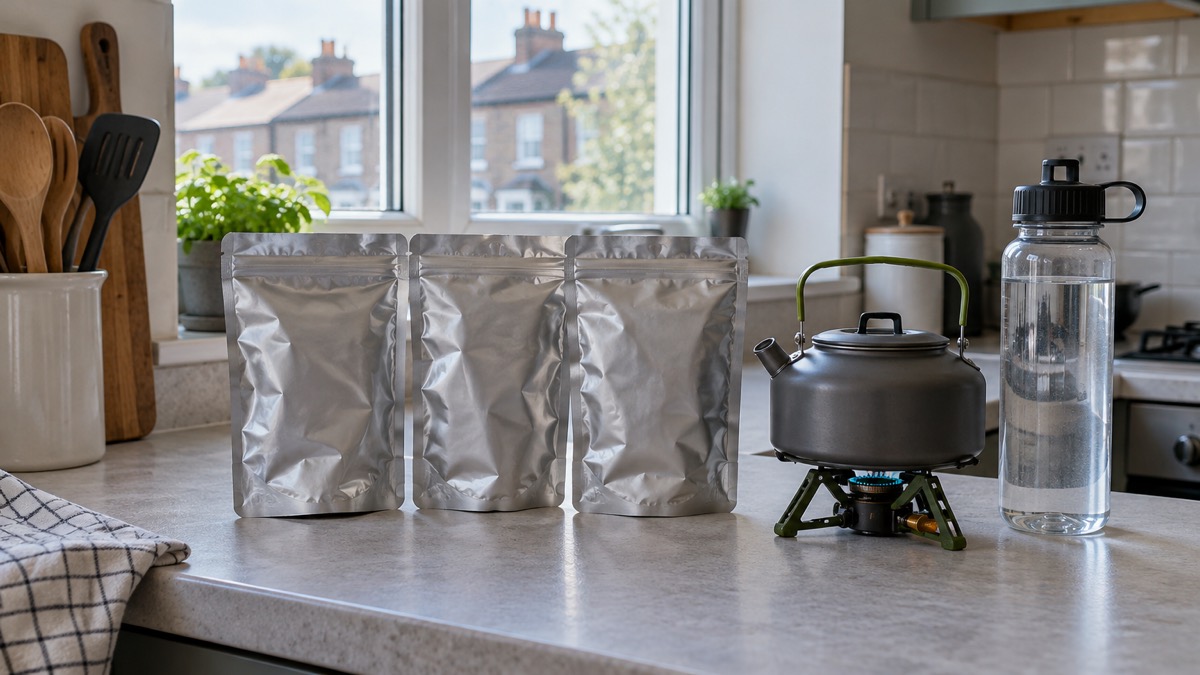
Freeze-dried meals are dried, ready-to-cook meals sold in sealed packets: you add water, wait for the food to rehydrate, and eat. They are one option among several for a UK household's emergency food store, and their strengths and weaknesses sit in three places: how long they keep, how much water and heat they need, and how much they weigh if you have to carry them. This page explains what they are, how to choose between them and other store-cupboard food, and how to prepare and store them safely.
The government's Be Ready checklist advises every household to keep non-perishable food for 3 days, and says it is best to buy food you would usually eat1. Freeze-dried meals can form part of that store, but they are not a complete answer on their own, because they need water, and ideally hot water, to become a meal. Council emergency-kit guidance is blunt about the priority: choose foods that require no refrigeration, no preparation or cooking, and little or no water, and pick items that are compact and lightweight2. That points to a mixed store, with freeze-dried meals alongside tins, dried fruit and other ready-to-eat food.
What freeze-dried food is, and where it fits in your store
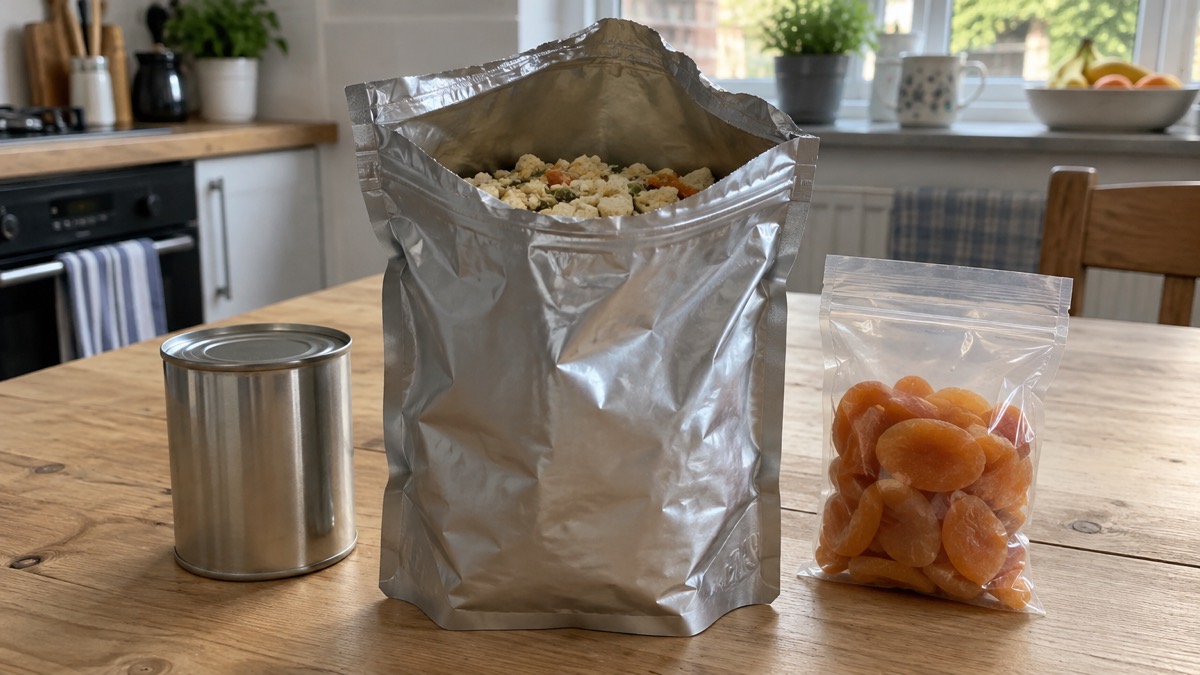
Freeze-dried food is food that has been dried so that almost all of its water has been removed, leaving it light, dry and stable at room temperature. It is one branch of a wider family of dried foods: the Food Standards Agency in Scotland notes that best-before dates appear on a wide range of foods including frozen, dried and tinned foods, such as canned tomatoes, bread and cereal3. Dried fruit, powdered milk and packets of dried meals all sit in this category, and they share the properties that matter in an emergency: no refrigeration, no freezer, and a long storage life in the right conditions.
Where freeze-dried meals fit in your plans depends on the emergency. Food Standards Scotland advises that during a power cut you use up foods in a fixed order: first chilled fridge foods, then defrosted frozen food that does not need cooking, then room-temperature perishable food such as bread, and finally room-temperature tinned, bottled and dried food4. Freeze-dried meals sit in that last group, the food you turn to when the fridge and freezer are spent. That is exactly their job: they are the food that is still there on day two or three, or the food you pack when you leave home.
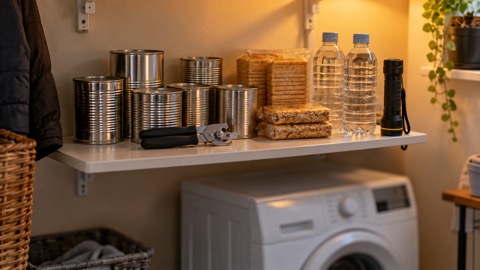
The government's Be Ready checklist describes the store-cupboard ideal as food with a long shelf life that does not need refrigeration or cooking, giving tinned meat, fish or vegetables, dried fruit and nuts as examples, and adds that it is best to buy food you would usually eat1. Denbighshire Council's emergency supplies guidance makes the same point from the other direction: store foods you can readily eat without heating or water, such as ready-to-eat meats or tuna, fruit, vegetables, canned or boxed juices, UHT milk, soup, high-energy foods like crackers or cereal bars, and food for infants or people on special diets6.
That last point matters when you choose. A packet meal that needs boiled water is not "ready to eat", so it should not be the only thing in your kit. Pair it with food that needs nothing at all. Our pages on what to keep in an emergency store cupboard and how much emergency food to store per person set out the fuller picture, and tinned or freeze-dried meals compares the two directly.
Choosing meals: water, heat, calories and weight
Four things decide whether a given freeze-dried meal suits your household: how much water it needs, whether that water must be hot, how much food you get for the packet's weight, and whether the people in your house will eat it.
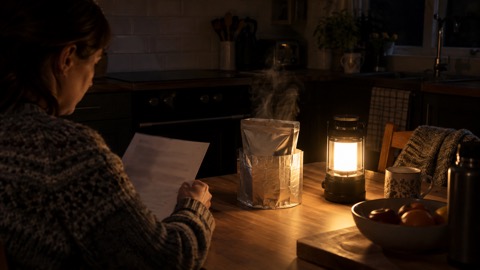
Council flood-pack guidance is explicit on the first two: select foods that require no refrigeration, preparation or cooking, and little or no water, and select items that are compact and lightweight2. Freeze-dried meals score well on weight and compactness, because drying removes most of the water that makes fresh food heavy. They score less well on water: every meal needs water added back, and most are designed to be made up with hot water. If your emergency plan assumes a power cut, ask yourself honestly whether you can boil water in it. Our guides on heating and cooking without mains power or gas and meals without power cover the options, and self-heating meals and flameless ration heaters describe the packets that heat themselves.
| What you need from the food | Freeze-dried meal | Tinned food | Dried staples (rice, pasta, oats) |
|---|---|---|---|
| Water needed | Yes, added back to the meal | No | Yes, for cooking |
| Heat needed | Usually, to boil water | No, tins are safe eaten cold4 | Yes, to cook |
| Weight and bulk | Light and compact2 | Heavier | Light but needs cooking |
| Best role | Meals when you can boil water | First-line no-cook food | Bulk calories with a stove |
On calories, the same principles apply as to any emergency food: match what you buy to the people eating it. Denbighshire's guidance includes high-energy foods like crackers or cereal bars and food for infants or persons on special diets6, and our page on emergency ration packs explains how calories and weight are usually balanced in purpose-made rations. If anyone in the household has a medical, religious or allergy-based diet, see emergency food for medical, religious and allergy diets and babies, young children and medical diets in an emergency before you buy a multipack of anything.
The final test is the household one. The Be Ready checklist's advice to buy food you would usually eat1 is the single most useful rule in this whole subject: a packet meal nobody will touch is not emergency food, it is cupboard clutter. Try one at home on an ordinary evening, note how it is made, how long it takes and what it tastes like, and then decide how many belong in your store.
Shelf life and dates: what the label tells you
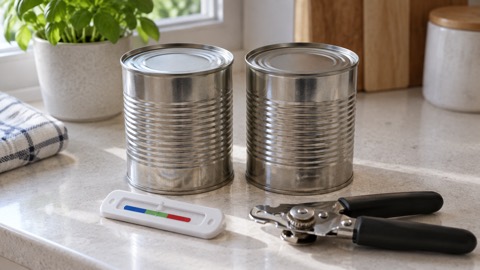
Dried foods, including freeze-dried meals, carry a best-before date rather than a use-by date. The Food Standards Agency in Scotland explains the difference: use-by dates are about safety and usually appear on foods like raw meat or fish, cooked sliced meats and some dairy products, while best-before dates appear on a wide range of foods including frozen, dried and tinned foods3. A best-before date is a statement about quality, not a cut-off after which the food becomes unsafe.
That distinction does the heavy lifting in an emergency store. Food Standards Scotland advises that food normally stored at room temperature will continue to be safe to eat, as you usually would eat it, even if the best-before date has passed4. So a dried meal a year past its best-before is not automatically waste: the date tells you when the maker expects it at its best, not when it becomes dangerous. Use your judgement on quality, and keep packets sealed and dry. Our page on how long freeze-dried emergency meals keep covers the specifics, and shelf life, use by and best before dates explained explains the labelling system.
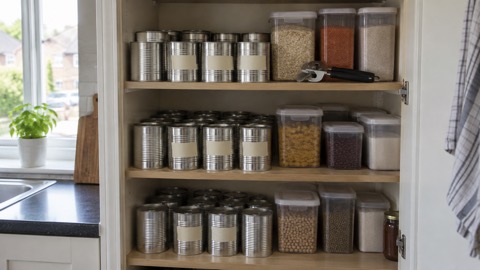
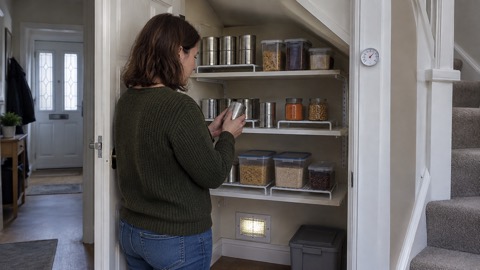
Storage conditions decide how long that quality lasts. Denbighshire Council advises keeping tinned foods in a dry place where the temperature is fairly cool, and storing boxed food in tightly closed plastic or metal containers to protect it from pests6. The same logic applies to packet meals: dry, cool, sealed, and off the floor. See keeping a long-term store cool, dry and free of pests and, if you are packing dry food for the very long term, mylar bags and oxygen absorbers for dry stores.
Freeze-dried, dehydrated or tinned: which food for which job
Households do not have to pick one type of preserved food, and the official guidance never asks them to. Each type does a different job, and the strongest store mixes them.
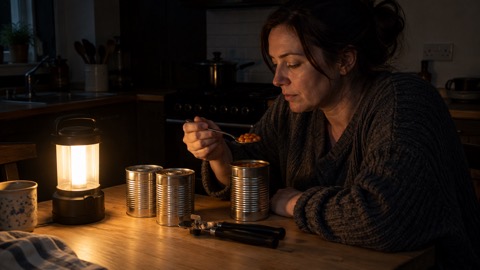
Tinned food is the no-cook backbone. Food Standards Scotland notes that some foods, such as tinned foods, are safe to eat without heating through, and advises eating these after the perishable foods that need chilled storage4. In a power cut, that makes tins the food you open on day one, while the fridge is still holding cold. Our page on tinned food covers shelf life, damaged cans and opening tins without power.
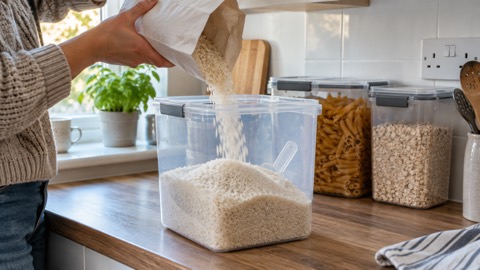
Dried staples such as rice, pasta, oats and pulses store well and keep for a long time, but they all need cooking water and heat, so they belong in a store that also has a stove. See rice, pasta, oats and pulses for long-term storage. Home-dried food, made in a dehydrator or oven, is a different product again: drying food at home with a dehydrator or oven explains that route, and freeze-dried or dehydrated food sets the two side by side.
Freeze-dried meals sit between these: lighter than tins, quicker to prepare than dry staples, but dependent on a water supply. Denbighshire's kit list captures the mix a household should aim for, with ready-to-eat meats, tuna, fruit, juices, UHT milk, soup, crackers, cereal bars, biscuits, boiled sweets and powdered milk alongside each other6. The Be Ready checklist's simpler version is tinned meat, fish or vegetables, dried fruit and nuts1. Whichever mix you build, the test is the same: for the first hours of an emergency you need food that needs nothing, and for the days after you need food that keeps.
Preparing a meal: water, heat and hygiene
Preparing a freeze-dried meal is simple in principle, and everything around it is about the water. Our step-by-step guide, how to prepare a freeze-dried meal, covers the practical detail; the safety points are these.
First, the water itself. If your supply is from a private source or is under advisory after flooding or other disruption, Argyll and Bute Council's guidance on private water supplies is that water needs only to be brought to the boil, and it can then be stored in a covered container in the fridge for up to 48 hours7. Boiling is the step that matters; a rolling boil is enough. NHS inform's general advice on preparing and cooking food safely is the baseline for everything else: cool cooked food quickly, within 2 hours, before refrigerating8.
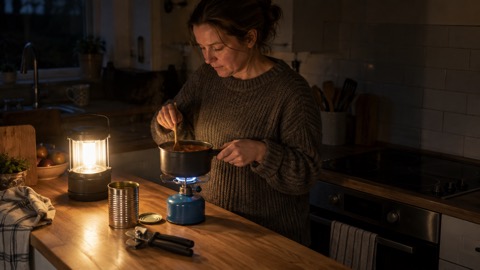
Second, heat is optional for safety but not always optional for the meal. Many packets are designed for hot water, and in cold weather a hot meal is worth real effort: Nottinghamshire Council advises having at least one warm meal each day and drinking warm drinks in winter9, and Lancashire County Council's winter advice is to stock up on essentials such as long-life milk and bread in the freezer10. A flask keeps a drink warm without any fuel: see food flasks and vacuum insulation for hot meals. In hot weather the calculus flips, and Lancashire's heat advice is to eat cold foods, particularly salads and fruit with high water content11. For the question of whether a meal can be made up cold at all, see can you make freeze-dried meals with cold water.
Third, treat what you have made as cooked food. NHS inform advises cooling cooked food as quickly as possible, within 2 hours, and then placing it in the fridge8; Food Standards Scotland says to eat leftovers within 2 days12; and Shropshire Council's guidance is to cool leftovers quickly, get them into the fridge within one and a half hours, and eat them within two days13. In an emergency without refrigeration, the safer course is to make up only what will be eaten at the time, which is where single-serving packets earn their place.
Meat, fruit and vegetables in dried form
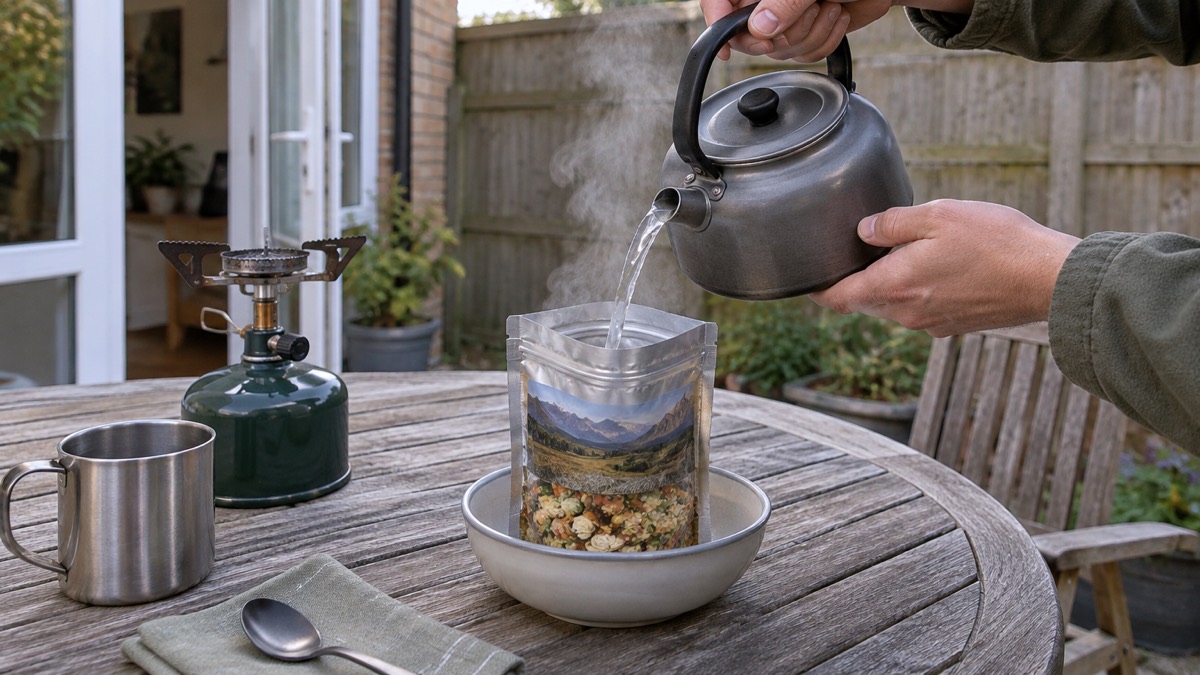
Freeze-dried meals commonly contain meat, and dried fruit and vegetables are sold both inside meals and on their own. Neither needs the raw-food handling you may be used to, but each has its own notes.
Dried meat in a packet meal has been cooked and dried before packing, so it is not raw meat and does not need chilled storage while it sits in the packet. What does apply is the cooked-food rule above: once rehydrated, the meal is cooked food, and leftovers need cooling and refrigerating. NHS inform's advice on freezing meat and fish, that you can freeze all types of meat, fish and poultry as long as they are within their use-by date and wrapped properly8, is about your ordinary kitchen, not your packet store.
Dried fruit and vegetables count towards a healthy diet in an emergency just as they do ordinarily. The NHS Norfolk and Suffolk guidance for winter advises including plenty of fruit and vegetables, whether fresh, frozen, tinned or dried14. Dried fruit keeps without refrigeration and needs no cooking, which makes it a useful item in an emergency kit, and Denbighshire's list includes fruit and vegetables among the foods to store6. NHS inform adds one quality note worth knowing: extreme cold can affect the quality of foods with a high water content, such as fresh fruit and salad vegetables like cucumber and tomatoes8, which is one reason drying exists at all.
If someone in the household is vulnerable to illness, the ordinary food-poisoning precautions still matter around any rehydrated food: Shropshire Council advises storing raw meat in sealed containers at the bottom of the fridge, using different boards for raw and ready-to-eat foods, and keeping the two apart13. Our pages on food poisoning and handling raw meat, poultry and eggs safely cover the detail.
Carrying meals if you have to leave home
Evacuation is where freeze-dried meals earn their keep, because weight is the constraint that matters when you are walking with a bag.
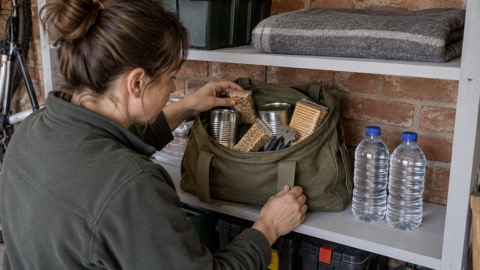
Moray Council's emergency advice is that if there is time, you should take any medication, warm clothes, any special foods, personal documents and valuables with you, and before you leave make sure fires are off or out, switch off gas and electricity, and lock doors and windows15. Neath Port Talbot Council's kit guidance for leaving home says to take ready-to-eat food, a warm drink in a flask and bottled water5. Lincolnshire's advice adds a household member that people forget: take your pets with you16.
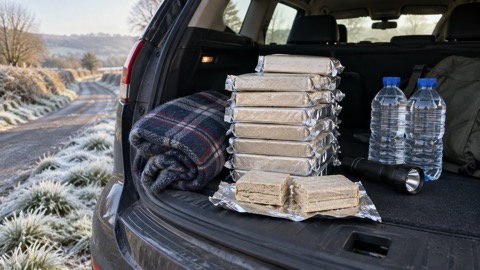
Notice that the official evacuation list says ready-to-eat food, not food that needs boiling. That is deliberate. In the first hours of an evacuation you may have no heat source, no kettle and no safe water, so the food in your grab bag should be food you can open and eat: tins with a ring pull or a can opener, cereal bars, dried fruit, biscuits. Freeze-dried meals come into their own once you are somewhere with water and a way to boil it, such as a rest centre with power, a car kettle, or a camping stove used safely outdoors. Denbighshire's kit list, with its ready-to-eat meats, tuna, crackers and cereal bars6, is a sound model for the grab bag itself.
For households that include someone vulnerable, Lancashire's winter advice is to make sure they are stocked up with enough food supplies for a few days in case they cannot go out10. A light, compact packet meal store is well suited to that, because it can sit in a cupboard for years and be there when a snowfall or illness closes the door on shopping. Our emergency kit page sets out the rest of what goes in a grab bag, and water in an emergency covers how much water to store, which is the other half of any freeze-dried plan.
After a power cut or flood: what to keep and what to throw
Freeze-dried and other dried food is the food most likely to survive an emergency intact, because it never depended on the fridge or freezer in the first place. But the aftermath has rules of its own, and they are mostly about everything else in the kitchen.
In a power cut, your fridge should keep food at a safe temperature for up to four hours, and the food in your freezer should stay frozen up to 48 hours if it is full, or about 24 hours if it is half full, with the doors kept closed4. Walsall's resilience guidance adds to keep fridges and freezers closed, with a blanket over, as they will stay cold for hours17, and a parish council tip sheet gives the same figures, noting a full freezer holds a safe temperature for approximately 48 hours, or 24 hours if half full, if the door remains closed18. Food Standards Scotland's order of use, chilled food first and dried food last4, tells you what to eat while the clock runs. Government guidance confirms that a power outage of less than 4 hours is unlikely to affect the safety of food in chilled or frozen storage19.
Floods are harsher. Food Standards Scotland advises discarding food in refrigerators or freezers if the appliances have come into contact with flood water, because the seals are not watertight20. Runnymede Borough Council advises that any food which has come into contact with flood water should be disposed of immediately, preferably double-bagged in plastic refuse sacks and put out for the next refuse collection21. Government flooding recovery guidance adds a practical note: check with insurers before disposal, because food may be insured22. Sealed packets and tins that stayed dry above the water line are a different matter, but if in doubt, throw it out: our page on food after a flood works through the decisions.
The wider lesson for a store is placement as much as content. Sussex's resilience guidance notes some food can last up to 8 hours in a fridge and freezer kept closed after a power cut23, which is why the dried food in your cupboard, not the food in your appliances, is what carries you past the first day. If you live somewhere that floods, where to keep an emergency store if your area floods is worth reading before you decide which shelf the packets go on.
Getting started with a freeze-dried store
If you have read this far and want to act, the sequence is short. Decide how much food you are storing, using the government's benchmark of non-perishable food for 3 days1 and our how much emergency food to store per person page. Build the store from food you would usually eat1, mixing no-cook food such as tins and dried fruit with packet meals for the days when you can boil water. Try one packet meal at home first. Store everything dry, cool and sealed against pests6, and rotate it so the best-before dates never get far away4. Keep water stored to match, because every packet meal is a promise to add water back.
The pages that follow from here: starting a store cupboard supply step by step, emergency store cupboard checklist and long-term food storage kit checklist turn the principles into a shopping and packing list.
Sources (23)
- Be Ready Checklist, UK Government Be Ready campaign, 2026
- Create a Flood Pack, Bradford Council
- Use By and Best Before Dates, Food Standards Scotland, 2026
- Food Safety in the Kitchen: Power Cuts, Food Standards Scotland, 2026
- NPT Prepared Emergency Kit Checklist, Neath Port Talbot Council, 2026
- Emergency Supplies Kit, Denbighshire County Council, 2020
- Private Water Supplies, Argyll and Bute Council, 2026
- Preparing and Cooking Food Safely, NHS inform, 2025
- Keeping Warm in Winter, Nottinghamshire County Council, 2026
- Keeping Warm and Well During Winter, Lancashire County Council, 2026
- How to Keep Cool This Summer, Lancashire County Council, 2026
- Food Safety in the Kitchen: Chilling, Food Standards Scotland, 2026
- Food Poisoning and Waterborne Infections, Shropshire Council
- Stay Warm and Nourished, NHS Norfolk and Suffolk, 2026
- Emergency Preparations You Can Do, Moray Council, 2026
- Get Help and Advice in an Emergency, Lincolnshire County Council, 2026
- Community Risk Register Guidance, Walsall Healthcare NHS Trust, 2023
- 12 Tips to Prepare for a Power Cut, Horsted Keynes Parish Council, 2026
- Food Safety in a Power Cut: Advice for Consumers, UK Government, 2023
- Food Safety in the Kitchen: Flooding, Food Standards Scotland, 2026
- Flooding Aftercare, Runnymede Borough Council, 2026
- How to Recover From Flooding, UK Government, 2023
- Preparing for an Emergency: Be Ready, Stay Safe, Act Now, Sussex Resilience Forum, 2025
 Long-Term Storage Kit Checklist
 Store Cupboard Checklist
 30-Day Household Checklist
 How Much Emergency Food to Store
 What to Store in an Emergency
 Starting a Store Cupboard
 Shelf Life and Date Labels
 Rotating Your Food Store
 Long-Term Storage Conditions
 Meals Without Power
 Self-Heating Meals
 Tinned Food Guide
 Rice, Pasta and Pulses Storage
 Emergency Ration Packs
 Emergency Ration Bars