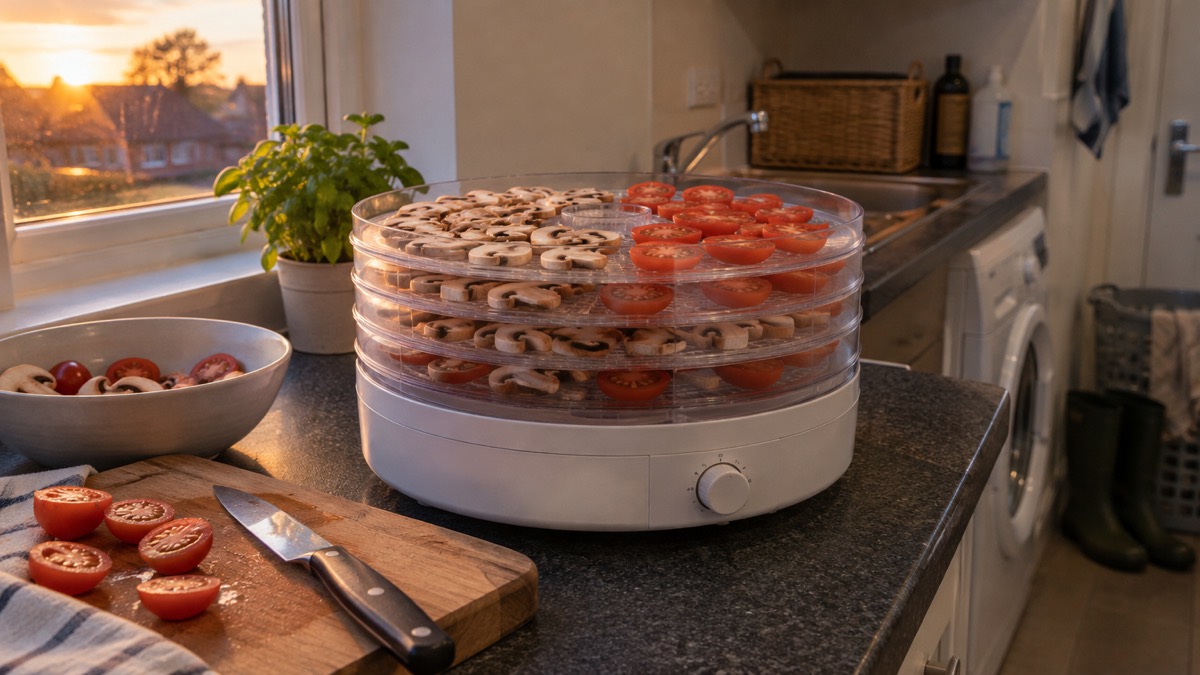
Drying food at home is a way of preserving it by taking the water out, and it works because bacteria, moulds and yeasts all need moisture to grow. Government guidance on home food preservation describes drying as one of the common methods of curing, which it defines as "preserving foods by adding salt or other ingredients to draw out moisture", alongside salting and smoking1. What you are left with is food that is lighter, smaller and far less prone to spoiling than the fresh original, which is why dried goods have a place in an emergency store cupboard alongside tins and dry staples.
Before anything goes into a dehydrator or oven, it must be washed and prepared properly. NHS Inform Scotland's advice is plain: "always wash fruit and vegetables before you eat them to remove any surface dirt or bacteria", and the same logic applies before you dry them, because drying concentrates whatever is on the surface rather than removing it2. This page covers how drying works, how to wash produce without spreading bacteria around your kitchen, how a dehydrator compares with an oven, what official guidance says about drying meat and smoking, and how to store and check what you have made.
How drying preserves food
Drying preserves food by removing the water that microorganisms need to live and multiply. Government guidance groups it with salting and smoking under curing, defined as drawing moisture out of food, and it stands alongside two other home preservation methods with different mechanisms: canning, which the guidance describes as "putting food into airtight jars or cans and then heating them for a specified temperature and time period to destroy bacteria and other microorganisms", and pickling, which submerges food in acidic solutions like vinegar or brine, without oxygen, to prevent microbiological growth1.
The distinction matters when you are choosing how to preserve something. Canning and pickling work by killing or excluding microorganisms in food that still contains water. Drying works by making the food an environment those organisms cannot live in. That is also why the way you dry matters: food that is dried too slowly, at too low a temperature, or in humid air can spend a long time in the middle ground where bacteria are not yet stopped but are warm enough to multiply. Official advice for anyone preserving food at home is to "use reputable instructions and follow them exactly including temperatures and processing times"1. Do not improvise times or temperatures; use a tested recipe from a reputable source and stick to it.
The same guidance sets out the hygiene that applies throughout: wash your hands thoroughly before, during and after preparing food; clean and sanitise work surfaces and equipment; use fresh ingredients; use suitable containers and check them for damage, discarding damaged ones; sterilise containers when instructed; label and date what you make; use it within the recommended shelf life; and check stored foods regularly for spoilage1. Each of those steps is covered in the sections below.
| Method | How it preserves | What it needs from you |
|---|---|---|
| Drying (a curing method) | Draws out moisture so microorganisms cannot grow | Warm, dry, moving air; reputable instructions followed exactly1 |
| Salting (a curing method) | Salt draws moisture out of the food | Measured quantities from a tested recipe1 |
| Smoking (hot) | Heat and smoke kill bacteria and reduce moisture | Often combined with curing for long-term storage1 |
| Canning | Heating sealed jars or cans to destroy microorganisms | Specified temperature and time, airtight seals1 |
| Pickling | Acid and no oxygen prevent microbiological growth | Vinegar or brine of correct strength, airtight jars1 |
If you are weighing dried food against other long-life options for your store, see the comparison in freeze-dried or dehydrated food and the wider guide to preserving at home safely.
Wash fruit and vegetables before you dry them
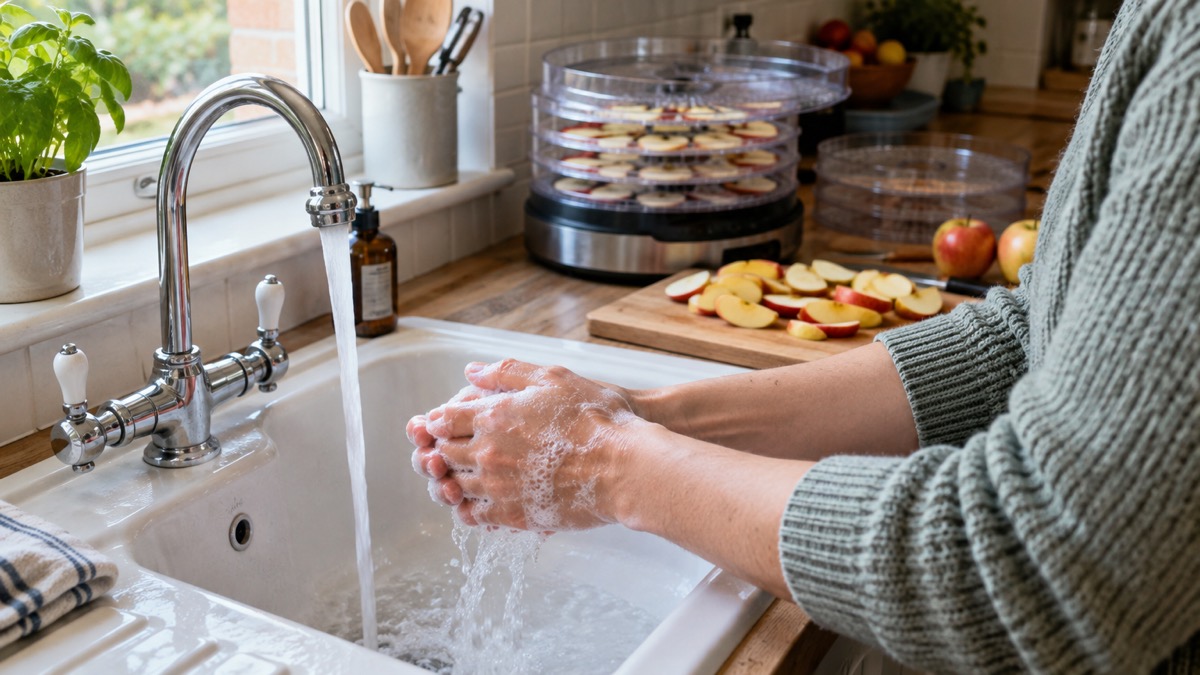
Everything you dry should be washed first. NHS Inform Scotland's instruction is to always wash fruit and vegetables before you eat them to remove any surface dirt or bacteria, and it notes that peeling or cooking can also remove these germs2. Drying does neither of those things reliably: it holds the food at warm temperatures for hours, and anything on the surface, soil, bacteria, chemical residues, stays with the food. Washing first is what removes it.
Several official sources repeat this instruction for good reason. Public Health Scotland's advice on listeria is to wash fruit and vegetables before eating them raw, and to wash hands with soap and warm water before preparing food, including when opening packaged foods3. UK Government advice on cryptosporidiosis is to always wash and/or peel fruits and vegetables before eating them4. Wandsworth Borough Council's advice on chemical incidents is to wash and/or peel all fruit and vegetables before eating5. The common thread is that produce can carry contamination you cannot see, and washing is the step that deals with it.
Wash your hands properly before you start. NHS Inform Scotland describes the method: wet your hands and apply soap, rub your hands together to make a lather, scrub the backs of your hands, between your fingers and under your nails, rinse well with warm water, and dry thoroughly using a clean towel2. Just One Norfolk's advice for preventing accidents and illness at home adds that you should wash hands with soap and water for at least 20 seconds before eating or handling food6. Wash again after handling raw food such as raw meat, uncooked eggs and unwashed fruit and vegetables, after touching the bin, going to the toilet, blowing your nose or touching your pets2.
One situation needs extra care: if your water supply is under a boil water notice, Food Standards Scotland advises that if it is recommended you boil water before use, you should do this before using it to prepare or cook food, especially when washing fruit and vegetables if they are to be eaten raw7. Dried fruit and vegetables are often eaten without further cooking, so treat them the same way and wash them in water that has been boiled and cooled.
Washing without spreading bacteria around the kitchen
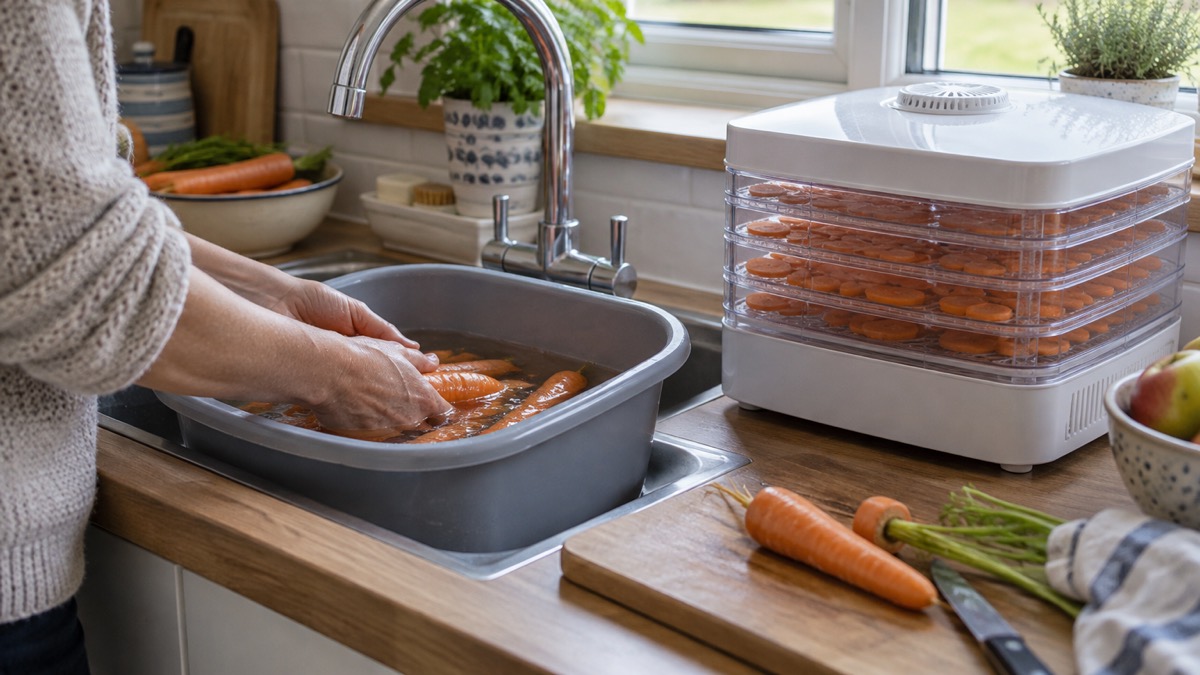
How you wash matters as much as whether you wash. NHS Inform Scotland gives a specific method for avoiding cross-contamination: rub raw vegetables in a bowl of fresh water to reduce splashing2. Splashing is a real route for bacteria to reach ready-to-eat food and surfaces, so a bowl is safer than holding produce under a running tap. Ready Scotland's water-saving advice points the same way for dishes: wash using a basin or bowl rather than running the tap8.
Cross-contamination, as NHS Inform Scotland defines it, is the spread of bacteria from one object to another, for example when raw food touches or drips onto cooked foods, utensils or surfaces2. Its advice for avoiding it in the kitchen covers the whole preparation process:
- Keep raw meat and unwashed vegetables separate from ready-to-eat foods during storage and preparation2
- Use different chopping boards, plates and utensils for raw and cooked food, or wash them thoroughly between uses2
- Wash your hands, worktops and utensils thoroughly after touching raw meat, poultry, fish and eggs2
- Keep raw meat in a sealed container at the bottom of the fridge2
- Never wash raw meat2
- Use separate shopping bags for raw and ready-to-eat foods2
Wash worktops, utensils and chopping boards with warm, soapy water before and after food preparation to prevent bacteria from spreading2. Food Standards Scotland adds that you should always clean surfaces, utensils, plates and hands thoroughly after they have touched raw or thawing meat, to stop bacteria spreading around the kitchen9. If you have no running water, for example during a supply interruption, Food Standards Scotland says you can use alcohol gels or wet wipes to clean hands before handling food7.
Ready-to-eat labels, and when you must still wash, peel or cook
Bagged salads, prepared fruit and similar products sometimes say they have been washed. The rule from NHS Inform Scotland is to check the label, because "unless the packaging says it's ready to eat then you must wash, peel or cook them before eating"2. If the label does say ready to eat, you can use the contents as they are, though you should still wash your hands before opening and handling the pack, as Public Health Scotland advises3.
Labels also govern storage, and storage governs safety. Food Standards Scotland advises that storage instructions provided on the label should be followed to keep the food safe, for example "store in a refrigerator", and that a best-before date will only be valid if the food is stored according to the instructions on the label10. The same principle applies to anything you dry yourself: the shelf life you can rely on is the one earned by correct storage, which is why labelling and dating your own jars and packets, as official preservation guidance instructs, matters so much1. For more on dates and what they mean, see shelf life, use by and best before dates explained.
Dehydrator or oven: both dry with moving warm air
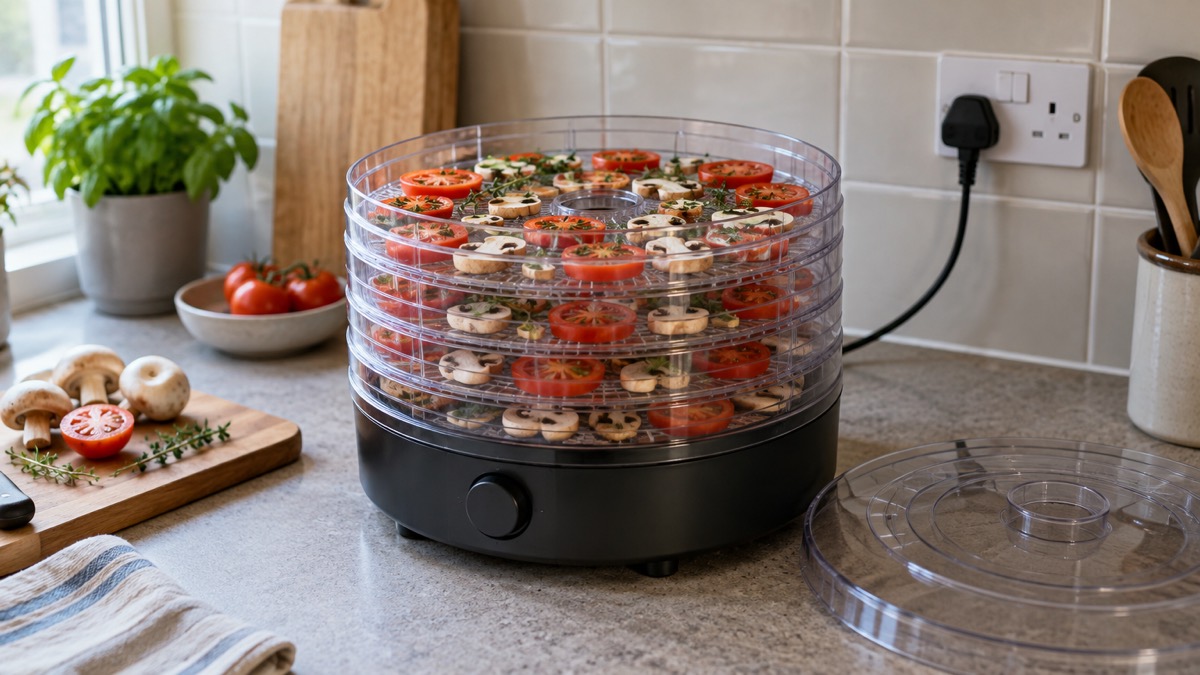
A food dehydrator and a domestic oven do the same job in the same way: warm air is moved over the food to carry moisture away, and the drying happens over hours at temperatures set high enough to remove water but not to cook the food1. A dehydrator is built around that single job, with a fan, a low and steady heat source and stacked trays; an oven can do it with the door slightly open or the fan running to let moist air escape. Whichever you use, the same principle applies: keep the temperature high enough to remove water but not so high that the food cooks1, and let the drying run to completion rather than stopping early.
Two safety points deserve emphasis. The first is ventilation. Wiltshire and Swindon Prepared's guidance on drying and heating warns: "It's very important to ensure heaters, dryers or fires are well-ventilated to avoid carbon monoxide poisoning"11. Any appliance that burns fuel to produce heat, including paraffin or gas heaters sometimes used to warm a drying space, produces carbon monoxide if ventilation is poor. An electric dehydrator or electric oven does not, but if you are tempted to speed drying with any fuel-burning heater, do not do it in a closed room.
The second point is that drying works best when the surrounding air is dry. The same physics that dries your food dries a flooded house, and official flood-recovery guidance describes it plainly: heating and good ventilation help the drying process, and fans, air conditioning units and dehumidifiers all help by removing water from the air12. North Yorkshire Fire and Rescue Service notes you can hire dehumidifiers, which remove water from the atmosphere13. The lesson for the kitchen is the reverse image: on a humid day, or with a steaming pan on the hob, your dehydrator is working against wetter air and drying takes longer. Drying on a dry day with good air movement in the room is faster and more reliable.
Drying meat safely: curing, smoking and raw-meat hygiene
Meat is the category where drying goes most obviously wrong, and official guidance is careful about it. Drying meat is a curing method, and government guidance describes curing as preserving foods by adding salt or other ingredients to draw out moisture, with smoking, salting and drying as the common methods1. The salt is not optional flavouring: in traditional cured and dried meats it is part of what makes the food safe, which is why a tested recipe must be followed exactly, in its quantities as well as its times and temperatures1.
Smoking is related but not the same as drying. Government guidance distinguishes the two forms. "Hot Smoking uses heat and smoke to kill bacteria and reduce moisture, but for long-term storage it's often combined with curing." Cold smoking is weaker still: it "adds smoky flavour but doesn't fully preserve food. Products usually need curing first and still require refrigeration unless properly dried"1. So a hot-smoked product is safer than a cold-smoked one, but neither is a shelf-stable dried product unless curing and drying have done their work. If you smoke at home, treat the result as guidance describes it: refrigerate it unless it has been properly dried, and do not assume smoke alone has preserved it.
Raw meat hygiene applies before any of this. Cornwall Council's advice is to always keep raw and defrosting meat at the base of the refrigerator, below everything else, and to prepare and store raw meat and ready-to-eat food separately14. If you are drying meat that was frozen, defrost it properly first: NHS Inform Scotland advises defrosting in a sealed container at the bottom of the fridge, and notes that partially defrosted food may not cook evenly, meaning harmful bacteria may survive2. Food Standards Scotland adds that defrosting meat, fish and poultry should be kept covered or in a sealed container on the bottom shelf of the fridge so liquid cannot drip onto other food9. For more on this, see handling raw meat, poultry and eggs safely and the causes of illness covered in salmonella, E. coli, listeria and other bacteria.
How long dried food keeps, and how to store it
Dried food lasts because it is dry, and it stays safe only while it stays dry. Official guidance for home preservation is to label and date preserved foods, use them within the recommended shelf life, and regularly check stored foods for spoilage1. That recommended shelf life comes from the reputable instructions you followed, so record it on the label at the moment you make the food, not from memory later.
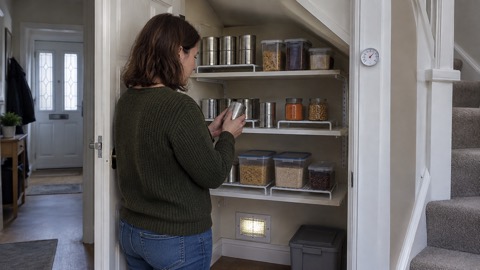
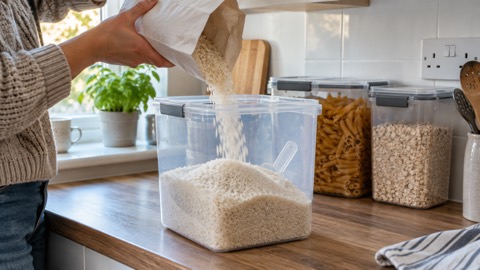
Storage conditions are the other half of the bargain. Denbighshire Council's emergency supplies guidance advises keeping tinned and dry foods in a dry place where the temperature is fairly cool, and storing boxed food in tightly closed plastic or metal containers to protect it from pests15. Airtight containers matter for dried food generally: NHS Inform Scotland notes that cold air will cause foods to dry out further, and advises always storing frozen foods in airtight containers or freezer bags2, and the same logic of sealed protection against air, moisture and pests applies to your dried stores. For dry goods held for the long term, see mylar bags and oxygen absorbers for dry stores and keeping a long-term store cool, dry and free of pests.
It is worth seeing drying in context against the foods it replaces or complements, because the contrast shows what drying buys you:
| Food | How long it keeps | Condition |
|---|---|---|
| Leftovers in the fridge | Eat within two days | Cooled quickly and refrigerated within one and a half hours16 |
| Defrosted meat and fish | Cook and eat within 24 hours | Defrosted in the fridge in a sealed container2 |
| Frozen meat and fish | Try to eat within 3 to 6 months | Quality, not safety, is the limit2 |
| Chilled food in a power cut | Fridge holds a safe temperature for up to four hours | Doors kept closed17 |
| Chilled food stored outside | Safe while it is 8°C or lower | Sealed container, out of direct sunlight, protected from animals17 |
| Dried food | Within the recommended shelf life of the recipe | Stored dry, cool, sealed and pest-free, checked regularly for spoilage1 |
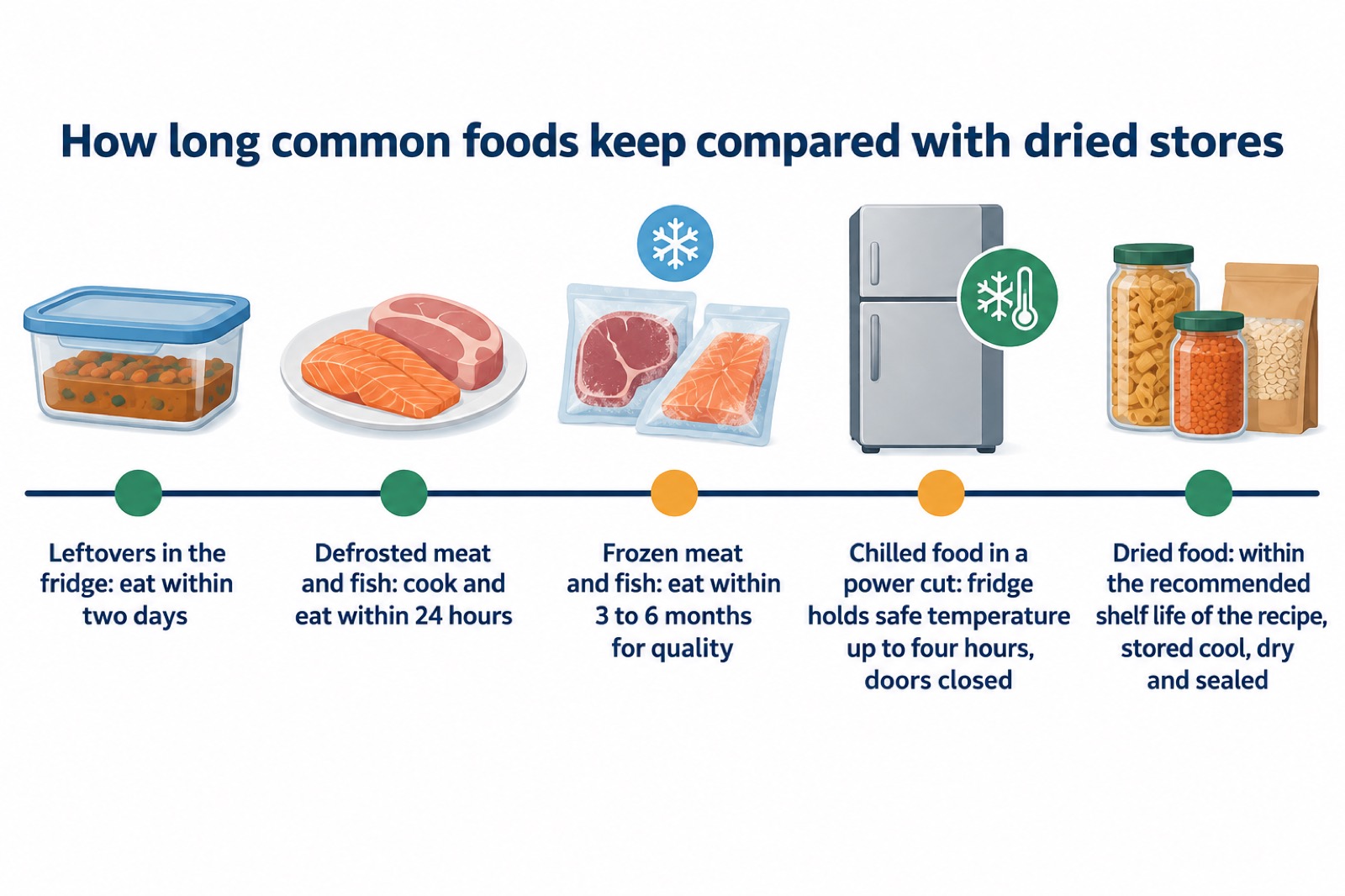
The power-cut row explains why dried food earns its place in a store cupboard. Dried food needs no cold chain, no cooking, no power. That is why Denbighshire's emergency kit guidance lists foods you can readily eat without heating or water, including fruits and high-energy foods like crackers and cereal bars15, and why the Government's power-cut preparedness advice is to store non-perishable food that does not need cooking, plus a tin opener18. Dried fruit, vegetables and properly cured meats fit that list exactly. For planning your own store, see what to keep in an emergency store cupboard and how much emergency food to store per person.
What to keep away from dehydration
The word dehydration cuts both ways: while your food is losing water, make sure the people in your household are not. NHS guidance on dehydration is to drink fluids regularly, with water or diluted sugar-free squash as good choices, and to drink enough during the day so that your pee is a pale colour, drinking more when there is a higher risk of dehydrating, such as being sick, sweating due to hot weather or exercise, or diarrhoea19.
Some drinks work against you. The Government's Beat the Heat advice states that alcohol has a dehydrating effect on the body, so it is a good idea to choose alcohol-free options or alternate alcoholic drinks with a glass of water20, and Ready Scotland's hot-weather advice is to limit the amount of alcohol you drink, as it can cause dehydration8. Northern Ireland's nidirect advice is to try to avoid alcohol, tea and coffee, as these can cause dehydration21. Guy's and St Thomas' heatwave advice is to prevent dehydration by drinking cold drinks regularly, such as water and diluted fruit juice, while avoiding caffeine, drinks high in sugar and excess alcohol22. Beat the Heat adds that fruit juice, smoothies and soft drinks can be high in sugar, with water, diluted squash and lower fat milks as better choices20.
Food helps too. nidirect advises avoiding heavy and hot food in hot weather, noting that fruit and salads can help keep you hydrated21. Central and East Northamptonshire's healthy living advice is not to stop eating in hot weather, but to try smaller, more frequent light meals incorporating lots of fruits and salad, which are full of water and will help hydrate you23. Guy's and St Thomas' also suggests cold and water-rich foods like iced lollies for someone with heat exhaustion22. Drying fruit at home is, among other things, a way of keeping that water-rich food available in a form that lasts, but remember that dried fruit has had most of its water removed: it is a store-cupboard food, not a substitute for drinking.
Where to get help and more information
If you think food you have dried or preserved has made someone ill, the advice depends on how unwell they are, and the details are covered in food poisoning: symptoms, who is at risk and when to get help and reporting food poisoning or a food problem to your council. Shropshire Council's guidance on food poisoning and waterborne infections includes the prevention basics that apply to any home food work: hand washing with anti-bacterial soap, and keeping work surfaces and utensils clean and disinfected16. It also advises that anyone with diarrhoea, vomiting or nausea must not prepare food, and that food should not be prepared too far in advance, being kept either piping hot or refrigerated until served16.
For the wider task of building and rotating a household food store, start with emergency food: a household guide and starting a store cupboard supply step by step, and keep stocks turning over with rotating your store: first in, first out. If your area floods, note that dried stores need protecting from flood water like everything else; the rules are in food after a flood: what to keep and what to throw away.
Sources (23)
- Consumer advice for food preservation at home, UK Government, 2026-10-26
- Preparing and cooking food safely, NHS Inform Scotland, 2025-02-21
- Listeria, Food Standards Scotland, 2026-10-25
- Cryptosporidium: public advice, UK Government, 2023-11-01
- Chemical accidents and toxic fumes, Wandsworth Borough Council, 2023-04-13
- Preventing accidents at home, Just One Norfolk, 2026-10-28
- Food safety in the kitchen: flooding, Food Standards Scotland, 2026-10-25
- Hot weather advice, Ready Scotland, 2026-03-24
- Chilling, Food Standards Scotland, 2026-10-25
- Use by and best before dates, Food Standards Scotland, 2026-10-25
- Flooding and health: safely cleaning your home, Wiltshire and Swindon Prepared, 2026-10-25
- Flooding and health - Public Health Wales, Public Health Wales
- Steps after a fire, North Yorkshire Fire and Rescue Service, 2026-06-17
- Infectious diseases, Cornwall Council, 2026-10-29
- Emergency supplies kit, Denbighshire County Council, 2020
- Food poisoning and waterborne infections, Shropshire Council, 2026-10-29
- Food safety in the kitchen: power cuts, Food Standards Scotland, 2026-10-25
- Be informed about hazards: power cuts, UK Government, 2026-10-21
- Dehydration, NHS, 2026-05-01
- Beat the heat: staying safe in hot weather, UK Government, 2026-07-21
- Hot weather advice, nidirect, 2026-10-05
- Heatwave advice, Guy's and St Thomas' NHS Foundation Trust, 2026-06
- Hot weather advice, NHS Central and East Northamptonshire Integrated Care Board, 2026-08-04
 Long-Term Storage Kit Checklist
 Store Cupboard Checklist
 30-Day Household Checklist
 How Much Emergency Food to Store
 What to Store in an Emergency
 Starting a Store Cupboard
 Shelf Life and Date Labels
 Rotating Your Food Store
 Long-Term Storage Conditions
 Meals Without Power
 Self-Heating Meals
 Tinned Food Guide
 Rice, Pasta and Pulses Storage
 Freeze-Dried Meals
 Emergency Ration Packs