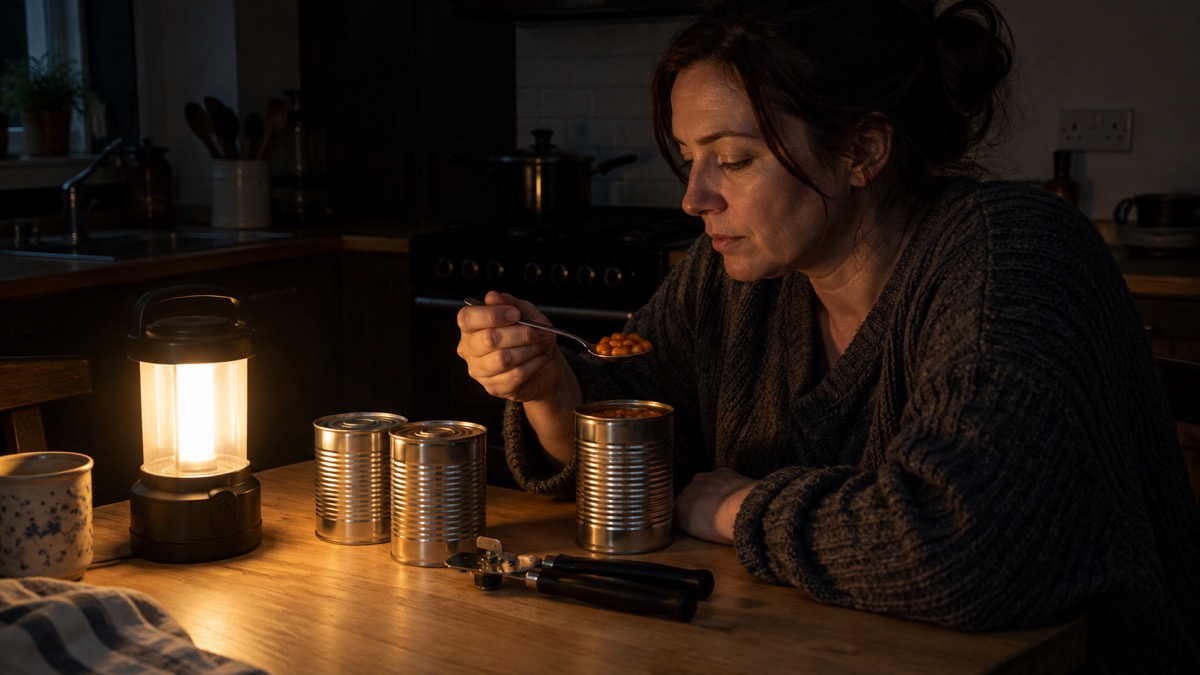
Tinned food is the backbone of a UK emergency store: it keeps for years without power, needs no cooking if you choose ready-to-eat varieties, and survives floods and storms better than almost any other packaging. The rule that matters most is simple. Food Standards Scotland advises that food normally stored at room temperature, which includes tins, continues to be safe to eat even after its best before date has passed, as long as it has been stored as the label instructs1. Canned goods, grains and freeze dried food can all be considered emergency food, because they can keep families nourished for a longer period even with blackouts2.
The other side of tinned food safety is knowing what to throw away. Government flood advice is blunt: discard any food in porous or damaged packaging, including crushed, dented or swollen cans3. A bulging tin is never worth the risk, and the same applies after a fire or a flood. This page sets out the dates, the storage rules, the warning signs and the practical bits, including why a manual tin opener belongs in every emergency kit.
Best before dates on tins: about quality, not safety
A best before date and a use by date do different jobs, and mixing them up is the most common mistake households make with a store cupboard. Food Standards Scotland explains that a best-before date is about food quality: after this date the food will be safe to eat but its flavour, colour or texture might not be as good7. Best-before dates appear on a wide range of foods, including frozen, dried and tinned foods such as canned tomatoes, bread and cereal7. A use-by date is about safety: even if food looks and smells fine, it should not be eaten past its use-by date, as it might contain harmful bugs that could make you sick7.
For tins, this distinction works in your favour. Food Standards Scotland's power cut guidance states plainly that food normally stored at room temperature will continue to be safe to eat as you usually would, even if the best before date has passed1. The UK government's power cut advice agrees: food that is normally stored at ambient temperature will continue to be safe to eat, and some foods such as tinned foods are safe to eat without heating through8.
Two conditions attach. First, a best-before date is only valid if the food is stored according to the instructions on the label7. For tins, Denbighshire's emergency supplies guidance advises keeping tinned foods in a dry place where the temperature is fairly cool9. Second, the rule is about tins and other ambient-stored food, not everything in the cupboard: raw meat and poultry must never be eaten past their use-by date2, and the sniff test is no substitute for a date. Food Standards Scotland warns it is not suitable to use the sniff test to determine if food is safe to eat, because food can look and smell normal past the use-by date and still contain harmful bugs7.
A few prepacked foods carry no date at all: vinegar, cooking salt, solid sugar, sweets consisting almost solely of flavoured or coloured sugars, and chewing gums and similar products are exempt from date labelling7. Some milk and dairy products carry a best-before date rather than a use-by date because of the technologies used in production and the testing applied to them7, but those are chilled products, not store cupboard ones.
If you are building a store and want the fuller picture of dates and rotation, see Shelf Life, Use By and Best Before Dates Explained and Rotating Your Store: First In, First Out.
Once a tin is open: decant, chill, use within 2 days
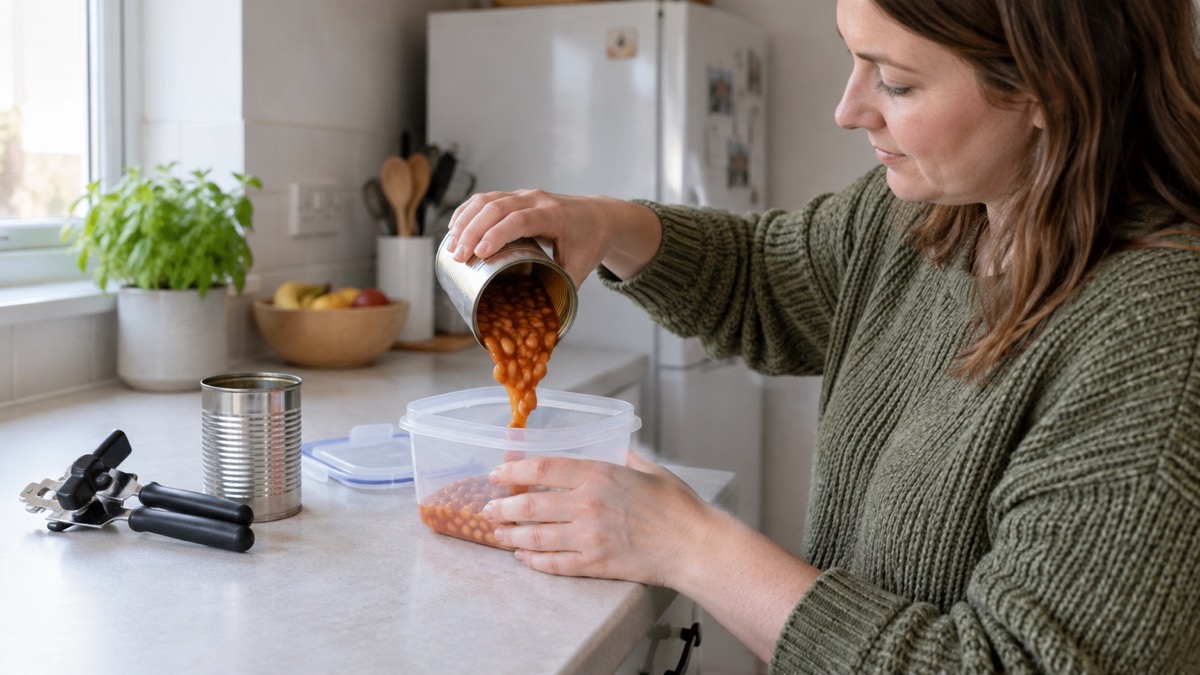
An opened tin is not a storage container. Food Standards Scotland advises putting tinned food into a clean bowl or container in the fridge once it is opened, and specifically not storing it in the opened can2. The reason is chemical: in an opened can, the food and tin are exposed to air, which means the tin might transfer to the food more quickly2.
How long the food then keeps depends on what it is. If the label does not show any storage instructions and it is a type of food that goes off quickly, put it in the fridge and eat it within 2 days2. The Food Standards Agency's listeria advice gives the same working rule: follow the storage instructions on the label and use opened foods within 2 days unless the packaging says otherwise10. NHS inform Scotland agrees that you should not keep leftovers for longer than two days11, and Shropshire Council advises cooling any leftover food quickly, putting it in the fridge within one and a half hours, and eating it within two days4.
The container matters as much as the timing. Food Standards Scotland suggests opting for clean, sealable and reusable containers instead of cling film where you can2, and warns against storing food in containers that have been used for other purposes2. Keep raw meat in sealed containers at the bottom of the fridge, away from ready-to-eat food, so nothing drips onto your decanted leftovers4.
When the power is off
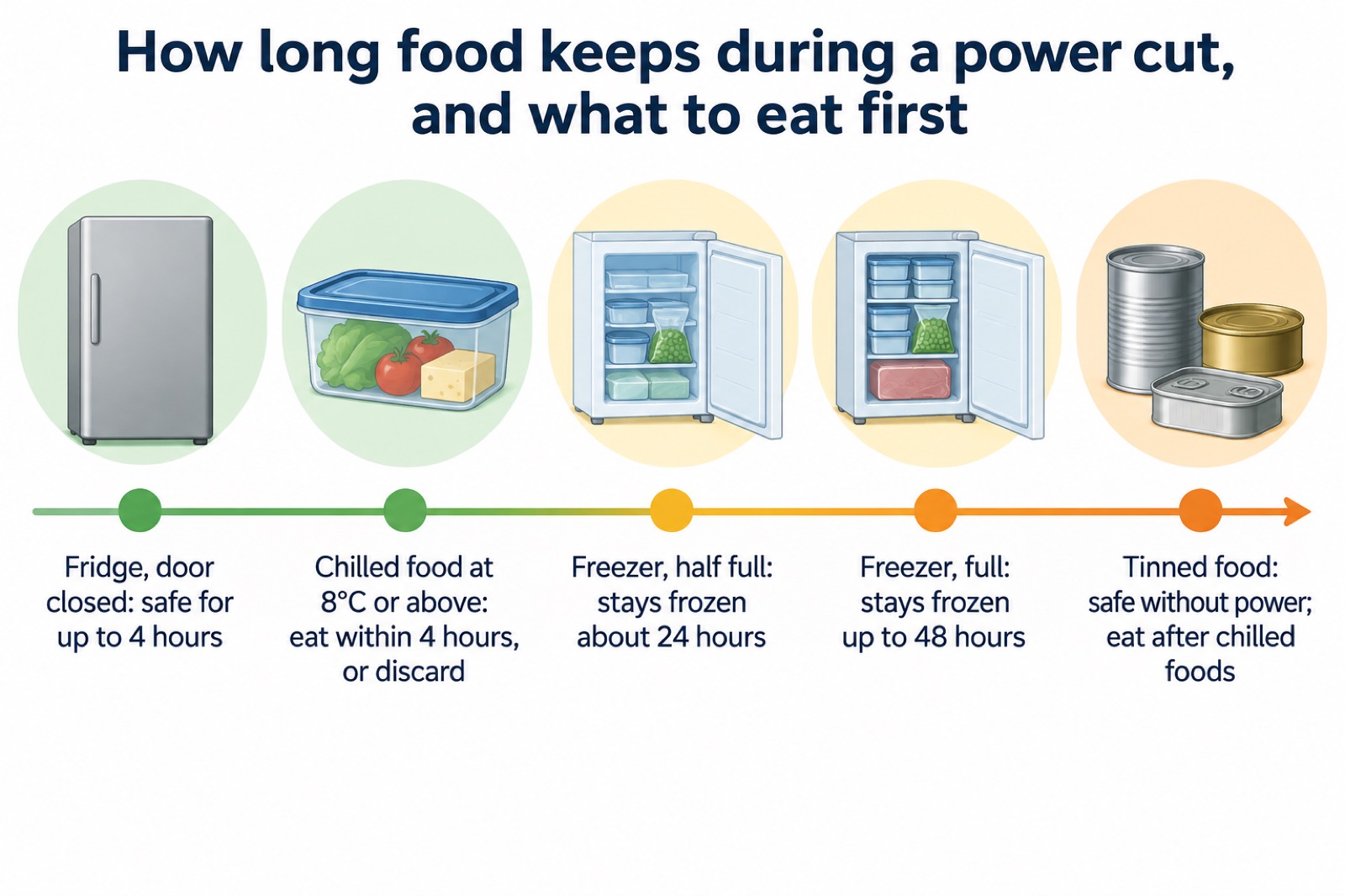
A power cut changes the arithmetic, because an open tin of food now depends on a fridge that is not running. Keep the fridge door closed as much as you can, and check the temperature before you rely on it. If the temperature rises to 8°C or more, eat food that normally needs refrigeration within four hours1. The government advice is firmer still: foods needing refrigeration should be discarded after 4 hours if the fridge temperature has reached 8°C or above, unless power is restored within that time8.
The order you eat things in matters. As chilled foods go off quickest, use them up first before other foods during a power cut1. Tinned food comes last in that sequence precisely because it does not need the fridge at all. A freezer buys you more time: food should stay frozen up to 48 hours if the freezer is full, or about 24 hours if it is half full, with the door kept closed1. Sussex's resilience guidance notes some food can last up to 8 hours if the fridge and freezer are kept closed12. For the wider picture, see Power Cuts: A Household Guide and Meals Without Power: No-Cook and Low-Fuel Ideas.
Never reuse empty tins, and the resealable exception
Empty tins are tempting as makeshift pans or storage pots, especially in an emergency when normal kitchenware may be out of reach. Do not do it. Food Standards Scotland advises you do not reuse empty tins to cook or store food, because in an opened can the food and tin are exposed to air, which means the tin might transfer to the food more quickly2. The same guidance warns against storing food in containers that have been used for other purposes2.
There is one exception, and it is a genuine one rather than a loophole. The advice does not apply to foods sold in cans that have resealable lids, such as golden syrup and cocoa, because these foods do not react with the can2. A tin of golden syrup with its plastic lid back on can go back in the cupboard as the maker intended. That exception covers foods designed from the outset to live in a resealable can; it does not extend to an ordinary tin you have opened and improvised a lid for.
Two related rules from the fire and rescue service and NHS inform Scotland are worth having in mind if you are cooking during an emergency. North Yorkshire Fire and Rescue Service warns never to use metal in microwaves13, which rules out any thought of reheating food in a tin that way. And NHS inform Scotland advises you should only ever reheat food once11, so plan portions before you decant.
Damaged, swollen and contaminated tins: what to throw away
This is where tinned food safety stops being about dates and becomes about the condition of the can. Government flood advice instructs consumers to discard any food in porous or damaged packaging, and specifically includes crushed, dented and swollen cans3. The same advice covers food in packaging with screwcaps, snap lids, pull tops, crimped or metal caps, home canned foods and any permeable packaging, because these may not be fully waterproof3.
The government's home preservation guidance extends the rule beyond floods: do not eat preserved food if containers are bulging, leaking, damaged or heavily rusted, if food shows mould or spoilage, or if you are unsure it was preserved safely14. A bulge is the single most serious sign, because it can indicate gas produced by bacteria inside the sealed can, including the bacteria that cause botulism.
"discard any food in porous or damaged packaging, this includes crushed/dented/swollen cans"
After a flood
Flood water is treated as contaminated, and food safety advice reflects that. Food Standards Scotland says canned food may be kept if undamaged, as long as the cans are cleaned and sanitised before opening15. The UK government's flood advice says food in water-resistant packaging, including undamaged metal cans, sealed pouches and tetra packs, can be kept if not damaged, but the outside of the packaging must be cleaned and sanitised first to avoid cross-contamination3. North Warwickshire's flood health advice goes further on what cannot be saved: discard any food which has been in contact with sewage or floodwater, including tins which may have been contaminated16. Tewkesbury's flood recovery leaflet is equally direct: do not attempt to salvage damaged food, including tins, as they may be contaminated17.
The practical sequence after flood water reaches your food cupboard is therefore: throw away anything damaged or in non-waterproof packaging, clean and sanitise the outside of undamaged cans before opening them, and never try to rescue a dented or swollen tin. Full detail is in Food After a Flood: What to Keep and What to Throw Away and Is It Safe to Eat From a Dented or Swollen Tin.
After a fire
Heat is the enemy tins share with everything else in a kitchen. Cheshire Fire and Rescue Service advises that tinned food should be thrown out if the tin has bulged or been subjected to heat18. A fire does not have to reach the cupboard directly: prolonged heat from a nearby blaze is enough to affect the contents and the can itself. If in doubt after any fire in the home, treat exposed tins as lost and check the rest of your store for damage.
Botulism: what it is and how to cut the risk
Botulism is a rare but serious illness caused by Clostridium botulinum, and tinned and preserved food is one of the routes the Food Standards Agency's guidance covers. The FSA publishes specific advice on what you can do to reduce the risk of becoming ill due to Clostridium botulinum19. Following that advice, alongside the storage and date checks already described on this page, is the practical way to cut the risk from your own store cupboard.
The warning signs to act on are the ones already listed above, because they are the same signs: bulging containers, leaking or damaged or heavily rusted containers, food showing mould or spoilage, and any preserved food you are unsure about14. The government's preservation guidance tells consumers not to eat preserved food in any of those conditions14. Never open a bulging tin to check, and never taste food from a suspect container to test it.
Storage discipline is the other half of the risk reduction. Chilling food properly stops harmful bacteria from growing20, and NHS inform Scotland describes chilling as making sure foods are stored at the correct temperature to prevent growth of harmful bacteria11. Northumberland Council's infectious disease guidance adds a useful rule for cooked food: never let it sit at room temperature for more than 4 hours, and store leftovers in the fridge as soon as they have cooled21. For the fuller picture of the illness itself, see How to Reduce the Risk of Botulism From Food and Food Poisoning: Symptoms, Who Is at Risk and When to Get Help.
Freeze-dried tins: long life sealed, short life opened
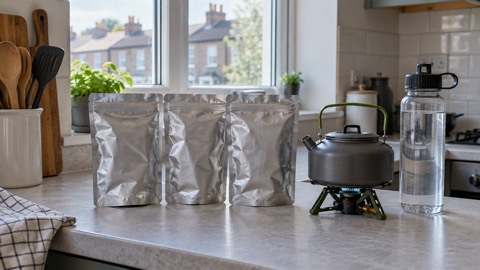
Freeze-dried meals in tins sit alongside ordinary tinned food in many emergency stores, and their shelf life is their main selling point. The maker of the Survivor Foods range states its tins are designed to be light-weight and easy to store, with a 25-year shelf life6, and lists the shelf life of its Porridge with Strawberries as up to 25 years6. That is a maker's own figure for its own product, so treat it as the manufacturer's claim rather than an independent test.
Once opened, the picture changes sharply. The maker states contents should be used immediately once open, though product resealed using the plastic lid has been found to be acceptable up to one week after opening6. So an opened freeze-dried tin is not a week-long larder in the way a jar of golden syrup is: the maker's own position is immediate use, with one week as the outside limit only if the plastic lid is used.
That makes freeze-dried tins a different tool from ordinary tins. A tin of beans can be opened, half used, decanted and finished over two days in the fridge2. A freeze-dried tin is best treated as an all-in-one meal for a household or group, opened when everyone can eat it. For comparisons of the two approaches, see Freeze-Dried Meals: What They Are and How to Choose, Tinned or Freeze-Dried Meals and How Long Freeze-Dried Emergency Meals Keep.
| Ordinary tinned food | Freeze-dried tins | |
|---|---|---|
| Unopened shelf life | Safe past best before date if stored as labelled1 | Maker states up to 25 years6 |
| Once opened | Decant to a clean container, fridge, use within 2 days2 | Use immediately; up to 1 week if resealed with plastic lid, maker states6 |
| Needs cooking? | Ready-to-eat varieties need no cooking22 | Prepared with water, not cooking |
| Resealable? | No, except ranges like golden syrup and cocoa2 | Yes, with plastic lid6 |
How much tinned food to keep, and the tin opener that goes with it
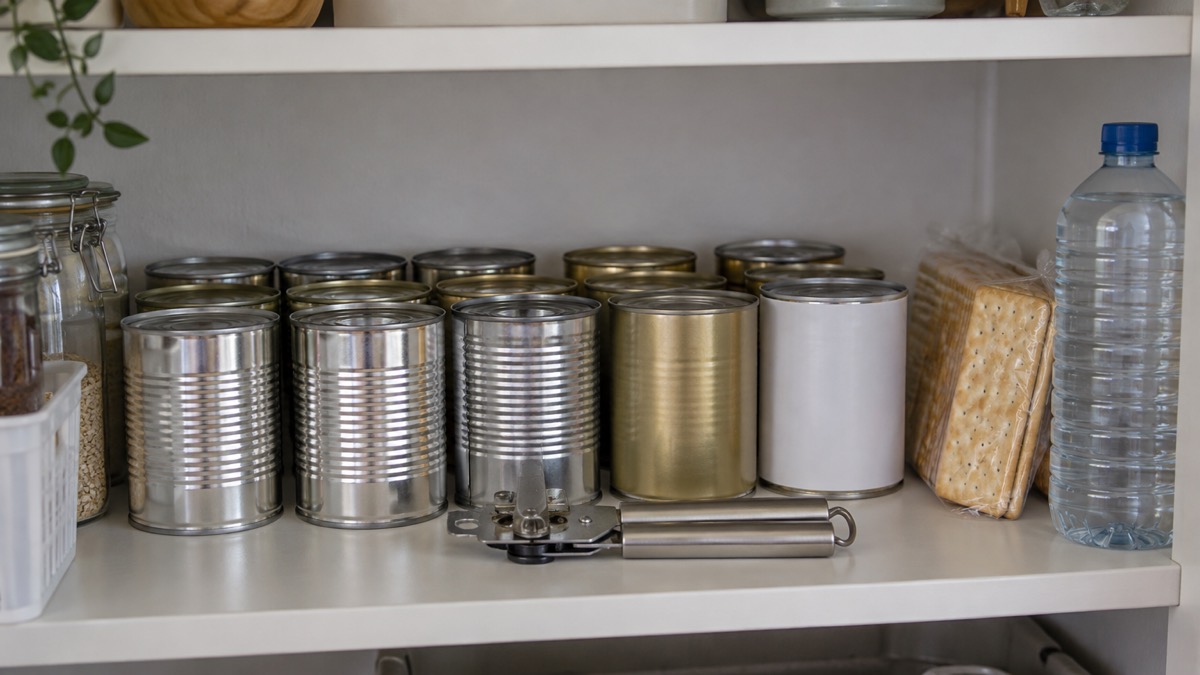
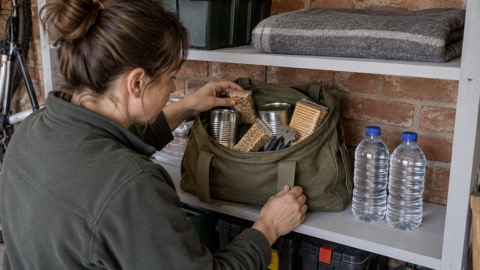
Every UK emergency preparedness source converges on the same core figure: three days. The government's Be Ready checklist advises non-perishable food for 3 days, meaning food with a long shelf life that does not need refrigeration or cooking, such as tinned meat, fish or vegetables, dried fruit and nuts, and it is best to buy food you would usually eat23. Denbighshire's emergency supplies guidance warns you may have to survive on your own for up to three days or more in a major emergency covering a widespread area9. Greater Manchester's resilience guidance gives the same shopping list: bottled water and non-perishable tinned food that does not need cooking, like ready-to-eat tinned meat, fruit or vegetables, plus a tin opener, and ready-made baby formula and pet food if needed24.
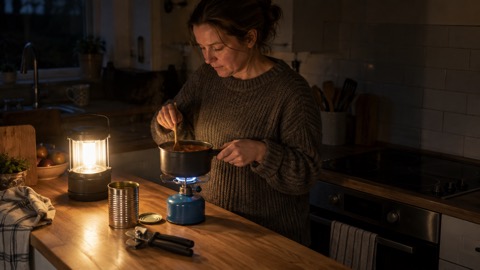
The tin opener is not a footnote. Every official list names it alongside the food itself23, because a store of tins without a way to open them is useless, and in a power cut an electric opener on the worktop is dead weight. Keep a manual opener with the food, and check it works when you rotate the store. Nottinghamshire's emergency guidance lists in-date tinned food and a tin opener, or long-life snacks, among kit to keep ready25.
What to buy follows one principle: food your household will actually eat. The Be Ready checklist's advice to buy food you would usually eat23 matters because a store you rotate through ordinary meals never sits unopened for years, and nothing is wasted when a use-by item approaches its date. Ready-to-eat varieties, tinned meat, fruit and vegetables, need no cooking at all22, which is what you want if the power is off and cooking fuel is limited. In cold weather, the City of London Corporation advises stocking up on tinned and frozen food so you do not have to go out when it is too cold26.
Households with pets or babies should add their supplies to the same store. Wiltshire and Swindon Prepared advises a couple of days' supply of pet food, ideally tinned or long lasting27, and the government's power cut guidance says to include ready-made baby formula and pet food if needed22. Denbighshire's guidance adds a note on rationing: food, unlike water, may be rationed safely, except for children and pregnant women9. For quantities per person, see How Much Emergency Food to Store per Person, and for the full kit, Emergency Store Cupboard Checklist.
Storing the store
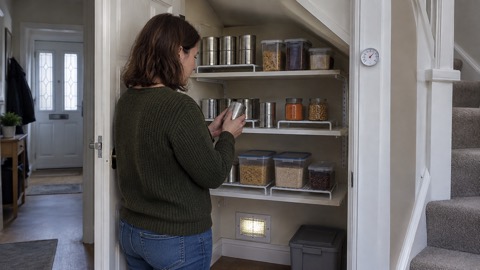
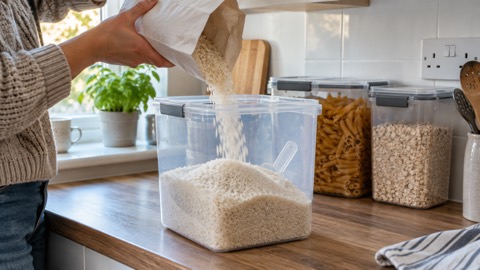
Keep tinned foods in a dry place where the temperature is fairly cool9. Food Standards Scotland advises keeping cupboard and pantry food in sealed bags or containers to keep it fresh and stop anything falling into the food by accident2, which matters for boxed and dried goods alongside your tins. Denbighshire's guidance adds that to protect boxed food from pests, you should store it in tightly closed plastic or metal containers9. If your area floods, where you keep the store matters as much as what is in it: see Where to Keep an Emergency Store If Your Area Floods and Keeping a Long-Term Store Cool, Dry and Free of Pests.
Frequently asked questions
Is tinned food safe to eat after its best before date? Yes. Food Standards Scotland advises that food normally stored at room temperature, which includes tinned food, continues to be safe to eat even after the best before date has passed, provided it has been stored as the label instructs. The date is about quality, not safety: after it, the flavour, colour or texture might not be at its best, but the food is still safe. A use-by date is different and must always be followed.
Can I put an open tin straight into the fridge? No. Food Standards Scotland advises putting the contents into a clean bowl or container in the fridge once the tin is opened, rather than storing food in the opened can. In an opened can the food and tin are exposed to air, and the tin may transfer to the food more quickly. Use a clean, sealable, reusable container and eat the food within 2 days unless the label says otherwise.
Do the fridge rules apply to tins with resealable lids? No. The advice about decanting does not apply to foods sold in cans with resealable lids, such as golden syrup and cocoa, because these foods do not react with the can. You can keep these in their own tin with the lid back on. The exception is specific to resealable cans of this kind, not to ordinary tins you have opened.
Is freeze-dried food a good choice for an emergency store? It can be. Freeze-dried meals are light and long lasting, and the maker of one UK range states a shelf life of up to 25 years for its tins. Once opened, the maker says contents should be used immediately, though product resealed with the plastic lid has been found acceptable up to one week after opening. Compare tinned and freeze-dried options before deciding what suits your household.
Does the botulism advice differ across the UK? The Food Standards Agency's botulism guidance applies to England, Northern Ireland and Wales. Food Standards Scotland issues its own consumer advice covering Scotland, and its guidance on dates, storage and power cuts is consistent with the FSA's. The practical advice is the same everywhere: never eat from bulging, leaking, damaged or heavily rusted containers.
How much tinned food should I keep for an emergency? The UK government's Be Ready checklist advises non-perishable food for 3 days, with a long shelf life and no need for refrigeration or cooking, such as tinned meat, fish or vegetables. Buy food you would usually eat, keep a tin opener with it, and include ready-made baby formula and pet food if your household needs them. Rotate what you store so nothing goes past its best.
Sources (27)
- Food safety in the kitchen: power cuts, Food Standards Scotland, 2026-10-25
- Food storage advice, Food Standards Scotland, 2026-10-25
- Food safety after a flood: consumer advice, UK Government, 2018-01-09
- Food poisoning and waterborne infections, Shropshire Council, 2026-10-29
- National Resilience Household Emergency Plan English, beready.campaign.gov.uk (National Resilience / Be Ready campaign)
- Porridge with Strawberries, Survivor Foods Range, Expedition Foods, 2026-10-29
- Use by and best before dates, Food Standards Scotland, 2026-10-25
- Food safety in a power cut: advice for consumers, UK Government, 2023-07-26
- Emergency Supplies Kit, Denbighshire County Borough Council, 2020
- Listeria, Food Standards Scotland, 2026-10-25
- Preparing and cooking food safely, NHS inform Scotland, 2025-02-21
- Preparing for an emergency: be ready, stay safe, act now, Sussex Resilience Forum, 2025-10
- Stay safe in the kitchen this autumn, North Yorkshire Fire and Rescue Service, 2025-10-01
- Consumer advice for food preservation at home, UK Government, 2026-10-26
- Food safety in the kitchen: flooding, Food Standards Scotland, 2026-10-25
- Cleaning up after a flood: health advice, North Warwickshire Borough Council, 2024
- After a flood: flood recovery leaflet, Tewkesbury Borough Council, 2023
- After a fire: the clean up, Cheshire Fire and Rescue Service, 2023-06-22
- Botulism (Clostridium botulinum), Food Standards Agency, 2026-06-25
- Chilling, Food Standards Agency, 2017-12-18
- Infectious diseases control, Northumberland County Council, 2026-10-28
- Power cuts: be informed about hazards, UK Government, 2026-10-21
- Be Ready Checklist, UK Government, 2026-10-21
- Loss of essential services, Greater Manchester Combined Authority, 2026-10-29
- Preparing for an emergency, Nottinghamshire County Council, 2026-10-29
- Advice on coping in the cold weather, City of London Corporation, 2025-08-15
- Your pets, Wiltshire and Swindon Prepared, 2026-10-25
 Long-Term Storage Kit Checklist
 Store Cupboard Checklist
 30-Day Household Checklist
 How Much Emergency Food to Store
 What to Store in an Emergency
 Starting a Store Cupboard
 Shelf Life and Date Labels
 Rotating Your Food Store
 Long-Term Storage Conditions
 Meals Without Power
 Self-Heating Meals
 Rice, Pasta and Pulses Storage
 Freeze-Dried Meals
 Emergency Ration Packs
 Emergency Ration Bars