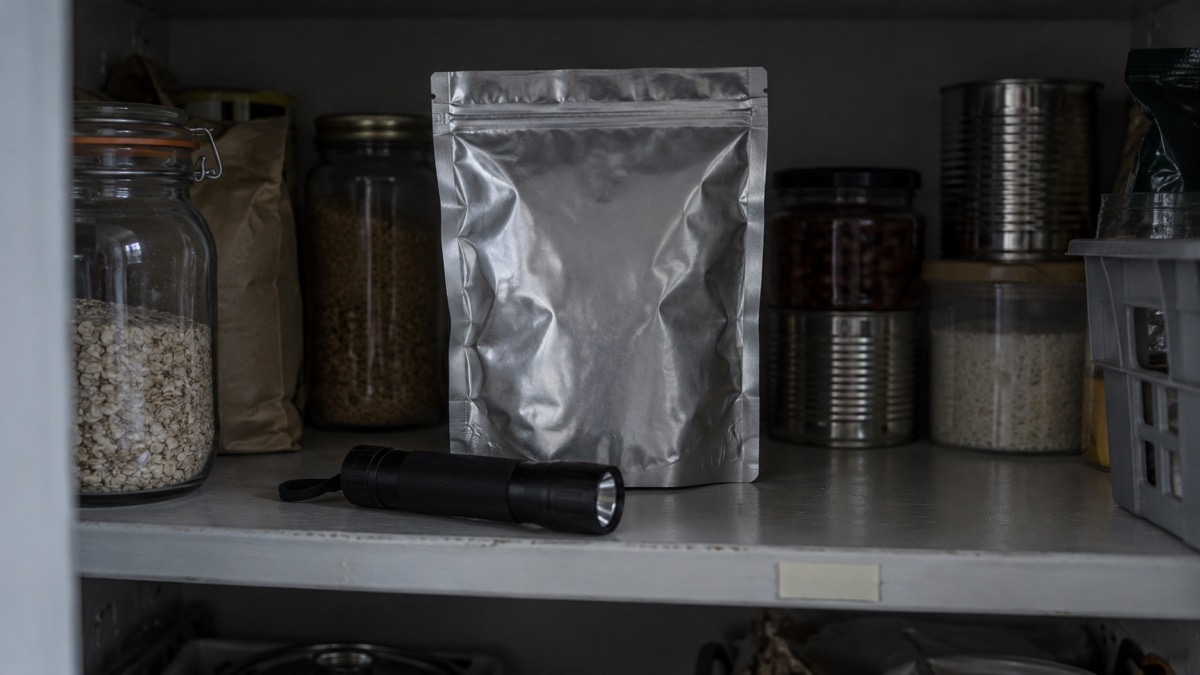
Freeze-dried emergency meals are bought for one reason: they sit in a cupboard for a long time and are still there when the power fails. How long they keep is decided less by the meal itself than by how it is packed and how you store it. A sealed pouch, kept cool, dry and dark, is built to last; the same pouch in a hot loft or a damp garage is not.
The date on the pack is the place to start, but read the wording. A use-by date is a safety date: official guidance says food should not be eaten past it even if it looks and smells fine, because it might contain harmful bugs that could make you sick1. A best-before date is about quality, and it is only valid if the food is stored according to the instructions on the label1. That single sentence is the whole storage argument in miniature.
For planning, official guidance suggests keeping three days' supply of bottled water and ready-to-eat food that will not spoil2, and the Be Ready checklist asks for non-perishable food for 3 days3. Freeze-dried meals fit that brief well, provided you also store the water to rehydrate them and check the dates before you come to rely on them.
Shelf life depends on how the meals are packed
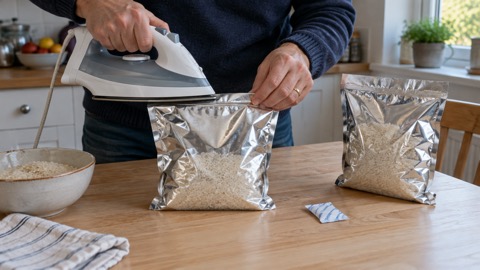
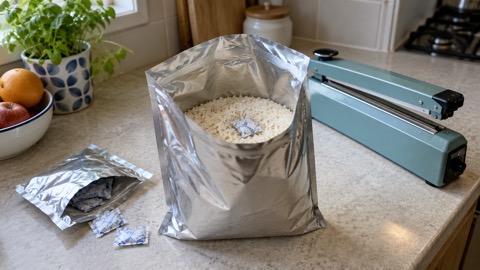
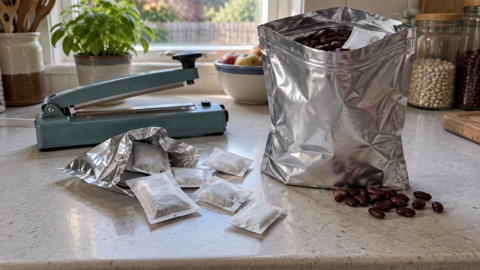
A freeze-dried meal is dried and then sealed into a pouch that keeps moisture and air away from it. That barrier, not the recipe, is what gives the meal its long life. Once the seal is broken or the pouch is punctured, the meal behaves like any other dried food exposed to the air: it starts to take up moisture and lose quality.
This is why the same meal can have very different useful lives depending on its packaging. A sealed, undamaged pouch is a store item. An opened or torn one is a meal to eat soon. Official guidance draws the same line for preserved food generally: do not eat it if containers are bulging, leaking, damaged or heavily rusted, if food shows mould or spoilage, or if you are unsure it was preserved safely5.
For comparison, the food in your fridge and freezer during a power cut has a much shorter window, and it varies with the appliance. Official guidance says a fridge should keep food at a safe temperature for up to four hours with the doors kept closed, and a freezer should stay frozen up to 48 hours if full or about 24 hours if half full6. Independent network guidance puts freezers at 24 to 48 hours depending on how full they are7, and one network says 15 to 24 hours if you can avoid opening it8. The documents give different figures because the answer depends on the appliance and how it is used.
| Food type | How long it keeps | Source |
|---|---|---|
| Sealed freeze-dried pouch | Set by the date on the pack, valid only if stored as labelled | 1 |
| Fridge food in a power cut | Up to four hours, doors closed | 6 |
| Freezer food in a power cut | Up to 48 hours if full, about 24 if half full | 6 |
| Chilled food once the fridge reaches 8°C or more | Eat food that normally needs refrigeration within four hours | 6 |
Check the date on the pack before you rely on it
Before a freeze-dried meal goes into your emergency store, read the date and the wording around it. Most prepacked foods carry either a use-by or a best-before date, though some foods carry neither1. The two mean different things and call for different behaviour.
A use-by date is the one to obey without argument. Official guidance is clear that even if food looks and smells fine, it should not be eaten past its use-by date, as it might contain harmful bugs that could make you sick1. Public health advice for households repeats the same instruction: check the use-by dates on food and make sure you use the food before the date expires9.
A best-before date is a quality marker. Official guidance says it is safe to use smell or how it looks to decide if food can be eaten when it carries a best-before date, giving the examples of looking for mould on bread or checking whether biscuits have gone stale1. Best-before dates appear on a wide range of foods, including frozen, dried and tinned foods1.
The practical habit is simple: check the dates on your emergency food regularly, so nothing is past its use-by date when you need it. Official guidance for household emergency packs is to regularly check the expiry dates on first aid supplies and food to confirm they are not past their use-by dates4. Do it when you check your smoke alarms, or when the clocks change, and the store looks after itself.
Storage that keeps freeze-dried meals at their best
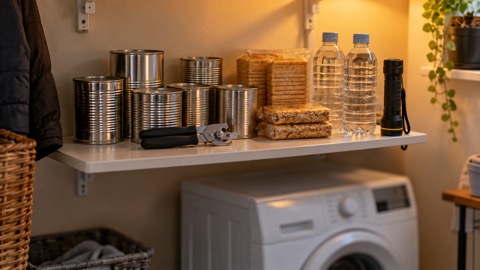
Store freeze-dried meals the way you would store any long-life dry food: cool, dry, dark and out of reach of pests. The label instructions are the standard to meet, because the date depends on them1. A cupboard inside the house, away from the oven, radiator and sunny windowsill, is the right sort of place.
Keep pouches off the floor and away from anything that could pierce them, and keep them out of damp. If your area floods, think about height as well as temperature: official flood guidance says food in water-resistant packaging such as metal cans, sealed pouches and tetra packs can be kept if it is not damaged, but the outside of the packaging needs cleaning and sanitising first to avoid cross-contamination10. That is a recovery instruction, not a reason to store food at ground level in a flood-prone building.
There is a wider point about how much to keep and where. Official guidance for a loss of utilities suggests three days' supply of bottled water and ready-to-eat food that will not spoil2. The Be Ready household plan asks for non-perishable food to last at least 3 days that does not require cooking or refrigerating, such as tinned meat, fruit or vegetables, plus a tin opener11. A council emergency kit list asks for at least three days' supply of non-perishable food12, and another suggests enough food and bottled drinking water to last three days13. Freeze-dried meals earn their place in that store because they need no cooking and no fridge, but they do need water.
What shortens shelf life: heat, damp, light and air
Four things work against a stored freeze-dried meal, and all four are avoidable.
- Heat speeds up the changes that make dried food stale. A loft in summer or a shelf above a radiator is a poor home for a pouch.
- Damp is the enemy the packaging exists to defeat. Once moisture gets in, through a failed seal or a punctured wall, the meal's quality falls away.
- Light degrades food over long periods. A dark cupboard is better than an open shelf.
- Air matters for the same reason as damp: the sealed pouch is meant to keep it out, and an opened one lets it in.
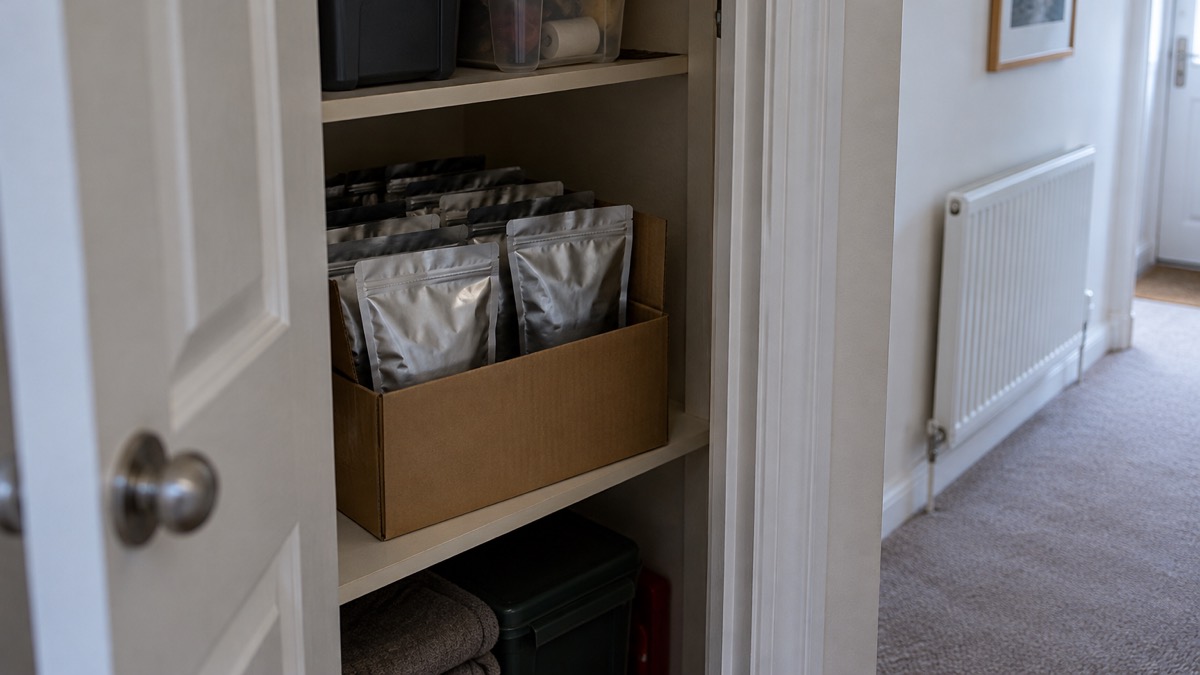
The label instruction is the benchmark for all of this, because a best-before date is only valid if the food is stored according to the instructions on the label1. If you cannot meet those instructions, the date on the pack overstates what you have.
The same principles explain why fridge and freezer food behaves as it does in a power cut. Independent guidance says fridges and freezers can stay cold for a long time depending on their age, how fresh the food is, whether the doors are kept closed, and how full they are14. Network advice is consistent: keep the doors closed and limit opening them so food stays cold for longer15. Other guidance gives 15 to 24 hours in the freezer and 4 to 6 hours in the fridge if you can avoid opening it8. Where the figures differ, the safe course is the shorter one.
Signs a pack has gone past its best
Judge the pack before you judge the meal. A freeze-dried pouch that is bulging, leaking, damaged or heavily rusted should not be eaten, and neither should food that shows mould or spoilage or that you are unsure was preserved safely5. These are the official warning signs, and they apply to sealed pouches as much as to any other preserved food.
For a pouch that is intact and within its date, the best-before rule applies: it is safe to use smell or appearance to decide whether food can be eaten when it carries a best-before date1. If a meal smells wrong or has changed in a way that puts you off, do not eat it. If it carries a use-by date, the date decides, not your nose1.
Damage can also come from outside the pouch. If a pack has been punctured, crushed or soaked, treat it as compromised even if the date is some way off. The same logic applies after a flood: food in water-resistant packaging such as sealed pouches can be kept if it is not damaged, but the outside needs cleaning and sanitising first10. If the packaging itself is damaged, it does not meet that test.
Where to get help on food safety in an emergency
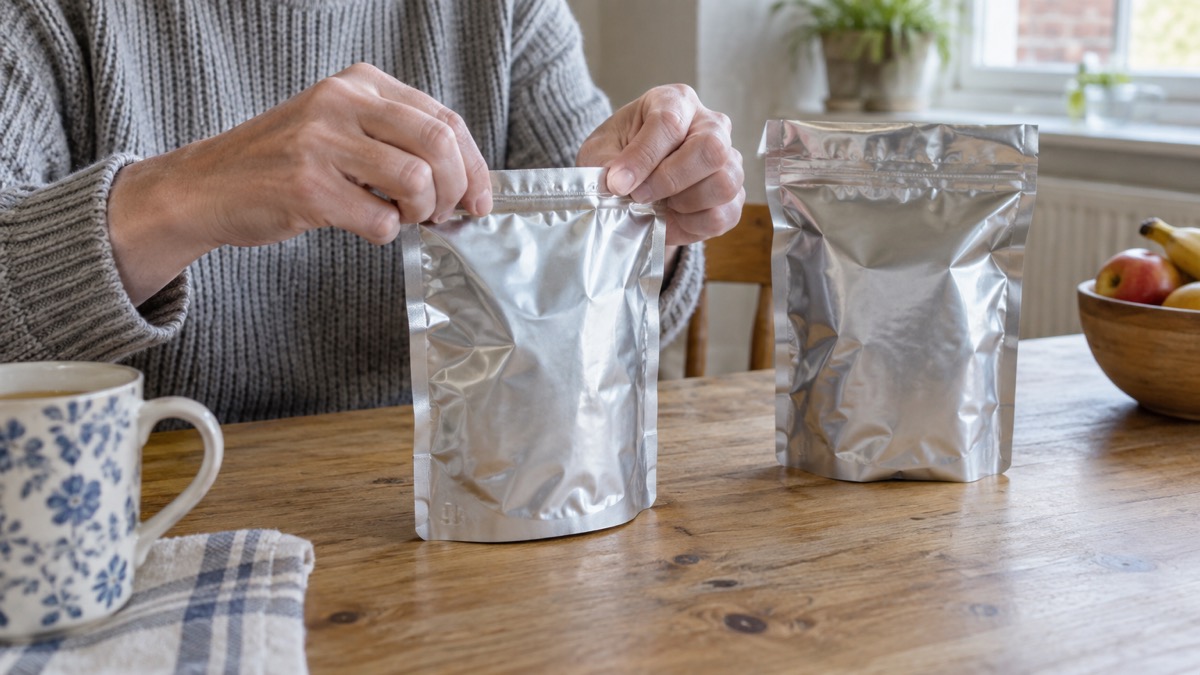
If you are unsure whether food is safe, the official food safety agencies are the place to look: Food Standards Scotland publishes consumer advice on power cuts, storage, chilling and flooding6, and the Food Standards Agency's consumer guidance covers preserving food at home5. Your local council's environmental health team can also advise on food safety.
For the store itself, official guidance is to keep food with a long shelf life that does not need refrigeration or cooking, such as tinned meat, fish or vegetables, dried fruit and nuts, and to buy food you would usually eat3. A council emergency kit list suggests bottled water and ready-to-eat food that will not go off19, and another advises avoiding fresh or perishable food and keeping longer-lasting products such as tinned food for emergencies20. Freeze-dried meals sit alongside those, and the freeze-dried meals guide explains what they are and how to choose them.
If you need help getting food in an emergency, see getting emergency food help. For households with babies, young children or medical diets, the special diets and babies guide covers what to keep and who to ask. And if someone becomes seriously unwell, the fire and rescue service's winter safety advice is to call 999 immediately21.
Sources (21)
- Use-by and best-before dates, Food Standards Scotland, 2026-10-25
- Loss of utilities, Birmingham City Council, 2026-10-29
- Be Ready checklist, UK Government, 2026
- Prepare for emergencies, Dumfries and Galloway Council, 2026
- Consumer advice for food preservation at home, GOV.UK, 2026-10-26
- Power cuts, Food Standards Scotland, 2026-10-25
- Power cut, Energy Networks Association, 2026-10-25
- Emergency power cuts, NIE Networks, 2026-10-25
- Infectious diseases control, Northumberland County Council, 2026-10-28
- Flooding, Food Standards Scotland, 2026-10-25
- Be Ready household emergency plan, UK Government, 2026
- Get help and advice in an emergency, Lincolnshire County Council, 2026-10-29
- Emergency pack, Lancashire Prepared, 2026-10-29
- Tips to help you during a power cut, Electricity North West, 2026-10-25
- What to do in a power cut, Northern Powergrid, 2026-10-26
- Be prepared, Northern Powergrid, 2026-10-26
- Food storage, Food Standards Scotland, 2026-10-25
- Chilling, Food Standards Scotland, 2026-10-25
- Emergency kit checklist, Neath Port Talbot Council, 2026-10-29
- What is a national power outage, Wiltshire and Swindon Prepared, 2026-10-25
- Winter safety, North Wales Fire and Rescue Service, 2026-10-29
 Long-Term Storage Kit Checklist
 Store Cupboard Checklist
 30-Day Household Checklist
 Baby Formula in a Power Cut
 Refreezing Defrosted Meat
 Leftovers in the Fridge
 Reducing Botulism Risk
 Sterilising Jars
 Spotting Spoiled Preserved Food
 Boiling Water in Glass Jars
 Mylar Bag Food Shelf Life
 Mylar Bag Sizes
 Are Mylar Bags Food Safe
 Oxygen Absorber Activation
 Silica Gel With Stored Food