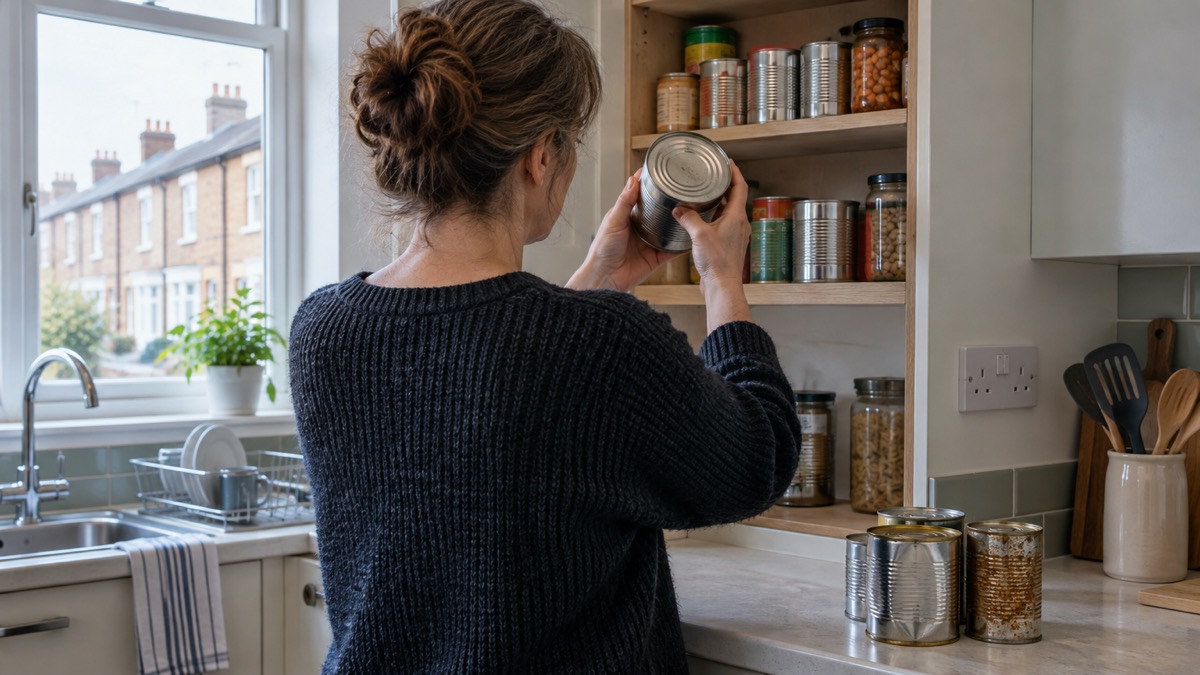
If you are standing in front of a bulging tin, a cloudy jar or a pack that got damp and wondering whether it is still safe, the answer is simpler than it feels: do not taste it to find out. Government consumer advice is clear that preserved foods which have not been prepared correctly may not look, smell or taste unusual, so you cannot rely on appearance, smell or taste to decide whether food is safe to eat1. The signs that do matter are the physical ones: containers that are bulging, leaking, damaged or heavily rusted, and food showing mould or spoilage1.
So the rule for a household is to check the container, not the contents. If a tin is swollen, a jar seal has broken, a pack is damp or infested, or you simply cannot remember how something was preserved, it goes out. The same applies after a power cut or a flood, where the clock matters: throw away food from a fridge if the electricity has been off for more than 4 hours, and from a freezer if it has been off for more than 24 hours2.
This page takes each kind of stored food in turn, from tins and jars to dried and vacuum-packed goods, explains what the dates on the label actually mean, and sets out where to get advice if you think something you ate has made you ill.
Throw it out without tasting: the signs that preserved food has gone off
The single most useful habit is to stop using your senses as a test. Government consumer advice for home food preservation says plainly that preserved foods which have not been prepared correctly may not look, smell or taste unusual, and tells people not to rely on appearance, smell or taste to decide whether food is safe to eat1. That is why a jar of something that smells perfectly fine can still be the wrong thing to eat.
Instead, work through a short checklist of what you can actually see and feel. Government advice lists the conditions under which preserved food should not be eaten: containers that are bulging, containers that are leaking, damaged or heavily rusted, food that shows signs of mould or spoilage, and any case where you are unsure it was preserved safely1. If any of those apply, the food goes, and it goes without a spoonful first.
The same guidance asks households to understand the preservation method they are using, to follow trusted instructions exactly, and to avoid taking risks if they are unsure whether a food has been preserved safely1. That last point covers the common case where you find an unlabelled jar at the back of a cupboard and cannot remember when it was made or how it was processed. Uncertainty is itself a reason to throw it away.
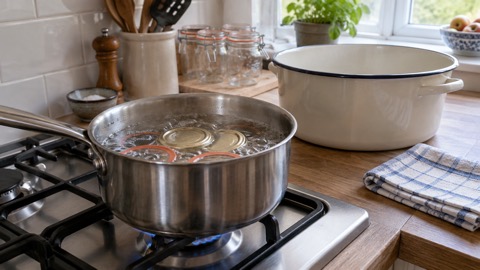
If you preserve at home, the practical lesson is to label everything with what it is and when it was made, and to follow one trusted set of instructions rather than improvising. Our guide to preserving at home safely covers jams, pickles and bottling in more detail, and how to sterilise jars deals with the step most often rushed.
Cans: bulging, leaking, rusted or dented along the seam
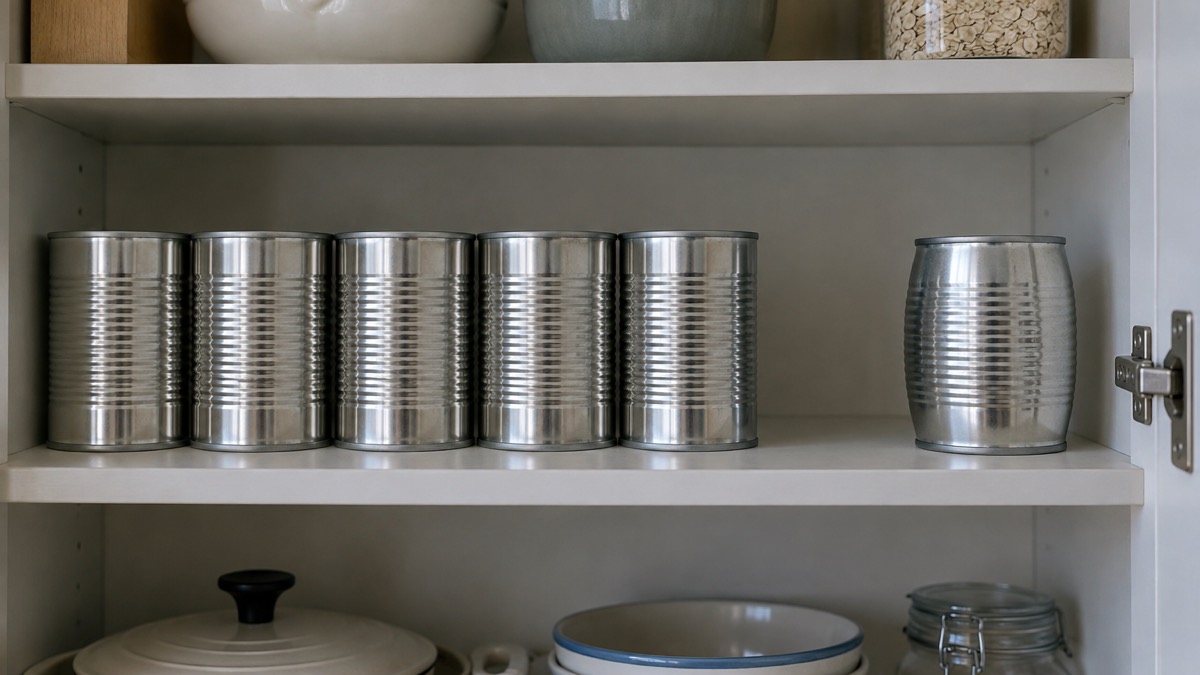
Tins are the backbone of most household stores, and they are robust, but they are not indestructible. Government consumer advice lists bulging, leaking, damage and heavy rust among the reasons not to eat preserved food1. A tin that has swollen at the end has something happening inside it that you cannot see, and a tin that is leaking has lost the seal that kept it safe.
Rust matters because it eats into the metal. A little surface discolouration on a tin stored in a damp shed is one thing; heavy rust that has begun to pit the can is another, and government advice treats heavily rusted containers as a reason to throw the food away1. Dents are worth a closer look too, particularly along the seams at the top and bottom, where the seal is made. If a dent has creased or split a seam, the tin is no longer sealed, whatever the contents look like.
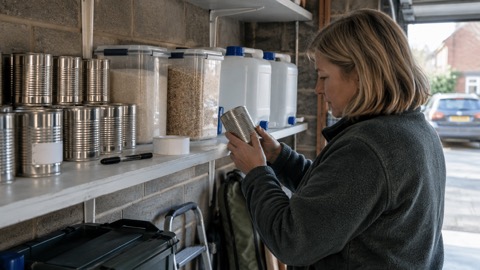
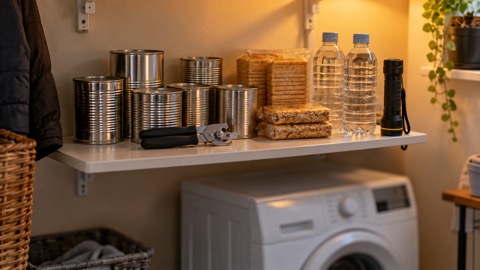
Storage makes a difference to how long tins stay sound. Official emergency supplies guidance advises keeping tinned foods in a dry place where the temperature is fairly cool, and storing boxed food in tightly closed plastic or metal containers to protect it from pests4. A cool, dry cupboard is far kinder to a tin than a garage that swings between damp and heat. Our page on tinned food goes further into shelf life, damaged cans and opening without power, and there is a separate answer on whether it is safe to eat from a dented or swollen tin.
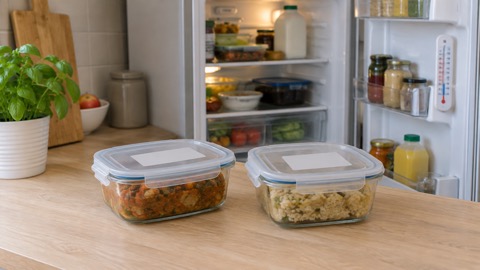
Once a tin is opened, the advice changes. Official guidance says to put the contents into a clean bowl or container in the fridge once it is opened, and not to store it in the opened can5. An open tin in the fridge is not a safe container, so decant what you are not using straight away.
Jars and bottles: broken seals, cloudy liquid and mould
Glass jars and bottles let you see the food, which is helpful, but the seal is what keeps it safe. A jar whose lid has lost its vacuum, whose clip has sprung, or whose contents are showing mould should not be eaten: government advice lists food showing mould or spoilage among the reasons to throw preserved food away1. Do not scrape mould off the top and carry on. What you can see is only part of what is there.
Cloudy liquid in a jar or bottle is harder to judge, because cloudiness is not always a sign of spoilage. In drinking water, for example, milky or cloudy water is often just air, and the test is to fill a glass and leave it to stand: the water should clear from the bottom up, which shows it is air6. If it does not clear, or there is an unusual smell or taste, or it persists beyond 24 hours, you are advised to contact your water supplier7. That is a water-quality test rather than a food test, but it shows the principle: cloudiness alone is not proof either way, and where you cannot be sure, you ask rather than guess.
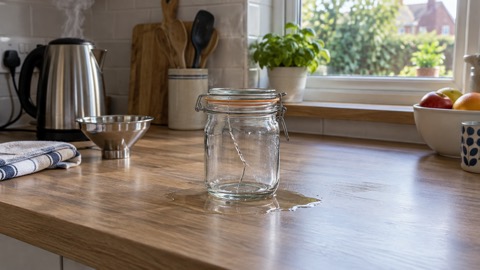
For preserved food, the safer approach is to treat a broken seal or visible spoilage as decisive and to throw the jar away. If you make your own preserves, the quality of the jar and lid matters. Our guide to the Kilner Clip Top Jar explains how that style of jar seals, and how to sterilise jars covers preparing them before filling.
Dried and vacuum-packed food: damp, smells and pests
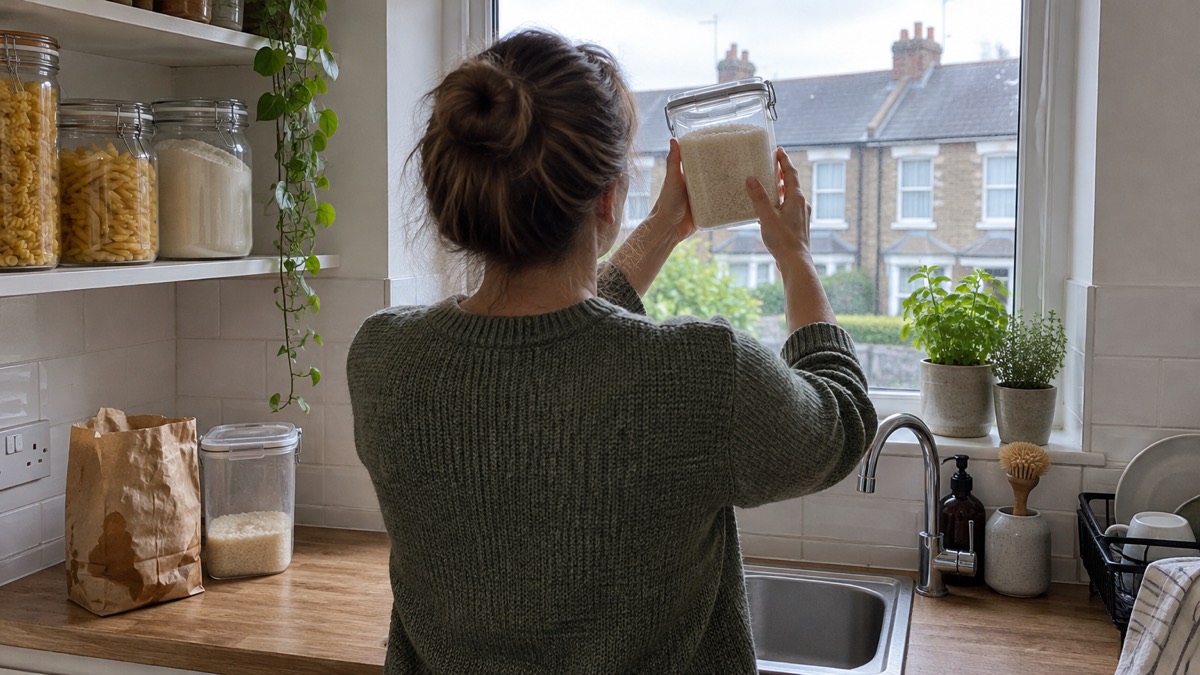
Dried foods and vacuum-packed goods fail in quieter ways than tins. Damp is the main enemy: once a pack has taken in moisture, the food inside can spoil even though the outside looks normal. Official emergency supplies guidance advises keeping tinned foods in a dry place where the temperature is fairly cool, and storing boxed food in tightly closed plastic or metal containers to protect it from pests4. The same logic applies to rice, pasta, oats and pulses: keep them dry, keep them sealed, and keep them where mice and insects cannot get at them.
Pests are a clear signal. If you find droppings, gnawed packaging, webbing or live insects in a pack, the food is contaminated and should be thrown away rather than sorted through. Smells are a weaker signal for dried goods than for fresh food, because a musty or stale smell may be the first thing you notice, but the absence of a smell proves nothing. Government advice is explicit that you should not rely on appearance, smell or taste to decide whether preserved food is safe1.
Vacuum-packed food has its own tell: the pack should be tight against the food. A pack that has lost its vacuum, gone slack, or filled with liquid is no longer sealed as it was, and the safe course is to throw it away. Our pages on dry staples and on keeping a long-term store cool, dry and free of pests set out how to store these foods so they last.
Use-by and best-before dates on stored food
The two dates on food do different jobs, and knowing which is which tells you whether you can use your judgement. A use-by date is about food safety: after this date the food is not safe to eat, and it is used on foods that go off quickly3. Even if food looks and smells fine, it should not be eaten past its use-by date, because it might contain harmful bugs that could make you sick3. Use-by dates usually appear on foods like raw meat or fish, cooked sliced meats, and some dairy products3.
A best-before date is about quality rather than safety. It is safe to use smell or how the food looks to decide whether it can be eaten if it has a best-before date, for example by looking for mould on bread or checking whether biscuits have gone stale3. Best-before dates appear on a wide range of foods, which can include frozen, dried and tinned foods, such as canned tomatoes, bread and cereal3. Some milk and dairy products may carry a best-before date rather than a use-by date, because food businesses use certain technologies during production and the products are tested to make sure they are safe3.
| Date on the label | What it means | Can you use your judgement? | Typical foods |
|---|---|---|---|
| Use-by | About food safety; after this date the food is not safe to eat3 | No, do not eat it past the date even if it looks and smells fine3 | Raw meat or fish, cooked sliced meats, some dairy products3 |
| Best-before | About quality; safe to use smell or appearance to decide3 | Yes, check for mould or staleness3 | Frozen, dried and tinned foods, canned tomatoes, bread, cereal3 |
Two conditions sit behind both dates. A best-before date will only be valid if the food is stored according to the instructions on the label3. And if the label does not show any storage instructions and it is a type of food that goes off quickly, official guidance is to put it in the fridge and eat it within 2 days5. Defrosted food should be used within 1 to 2 days after it has been defrosted, as it will go off in the same way as if it were fresh8. Our page on shelf life, use by and best before dates explains the system in full.
Food after a power cut or a flood
Power cuts and floods are when stored food is most likely to be lost, and both come with clear time limits. If a power cut has affected your home and you have no electricity supply, it is important to continue to store and prepare food safely9. The two figures to remember are 4 hours for a fridge and 24 hours for a freezer: throw away food from a fridge if the electricity has been off for more than 4 hours, and from a freezer if it has been off for more than 24 hours2.
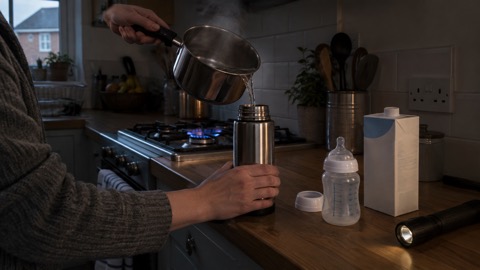
While the power is out, limit how often you open the fridge or freezer so food stays cold for longer, and if you can, stock up on non-perishable food and bottled water and use a vacuum flask to store hot water10. Watch defrosting meat closely: if meat, fish or foods containing them have started to get soft, throw them away, and be careful of liquid coming out of defrosting raw meat, as it could spread bacteria to other foods11. Check that fridges and freezers are working properly afterwards, for example by checking that your food is remaining cold or frozen12.
Floodwater is a separate hazard. Do not eat any food that has been in contact with floodwater13. Food in water-resistant packaging such as metal cans, sealed pouches and tetra packs can be kept if it is not damaged, but the outside of the packaging will need to be cleaned and sanitised first to avoid cross-contamination14. If your electricity is off after a flood, do not eat fresh food from a fridge after 4 hours or from a freezer after 24 hours15. If you are covered for loss of perishable goods, make a list of all the foods you throw away16. Our guide to food after a flood covers the clean-up in detail.
Where to get advice after possible food poisoning
If you think you have food poisoning, official guidance is to visit your doctor as soon as possible; they might ask you to submit a sample for examination, or you can request to submit one17. Food poisoning is infectious, and you should contact your council for advice if you think you have it18. When a council receives a food poisoning notification, it contacts the person with symptoms and asks what and where they ate, details of the symptoms, whether they were abroad, whether the GP took a faecal sample, and whether others who ate with them had symptoms18.
Know the symptoms so you can judge when to seek help. They include nausea, diarrhoea which may contain blood or mucus, lack of energy and weakness, loss of appetite, a fever of 38C or above, aching muscles and chills19. Symptoms may last for only a day or continue for one or two weeks20. Seek medical advice if you have symptoms of severe dehydration, are vomiting constantly and unable to keep down fluids, have bloody diarrhoea, have diarrhoea for more than 7 days or vomiting for more than 2 days, have returned from a part of the world with poor sanitation in the past few weeks, or have kidney disease, inflammatory bowel disease or a weak immune system along with diarrhoea and vomiting19.
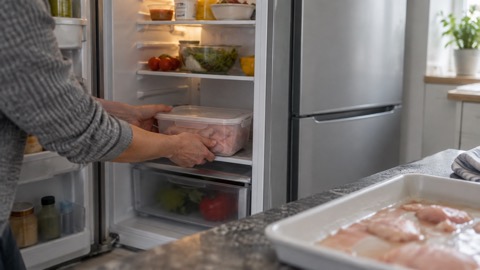
Prevention while you clear up matters too. Store raw meat in sealed containers at the bottom of the fridge, use different boards for raw and ready-to-eat foods, and keep raw and ready-to-eat foods apart20. Check use-by dates and use food before the date expires17. And when a fridge or freezer has been through a fire or a power loss, the rule is simple: if in doubt, throw it out21.
If you need help replacing lost food, our guide to getting emergency food help explains food banks, councils and local support, and food poisoning: symptoms, who is at risk and when to get help goes further into symptoms and risk groups.
Sources (21)
- Consumer advice for food preservation at home, GOV.UK, 2026-10-26
- After a flood, GOV.UK, 2026-10-29
- Use-by and best-before dates, Food Standards Scotland, 2026-10-25
- Emergency supplies kit, Denbighshire County Council, 2020
- Food storage, Food Standards Scotland, 2026-10-25
- How to guides - Discoloured or aerated water - Affinity Water, Affinity Water
- White or Cloudy Water - Drinking Water Inspectorate, Drinking Water Inspectorate
- Chilling, Food Standards Scotland, 2026-10-25
- Strong winds: weather warning information and advice, nidirect, 2026-10-24
- Be prepared, Northern Powergrid, 2026-10-26
- Planned power cuts, SSEN, 2026-10-25
- Beat the heat: keep cool at home checklist, GOV.UK, 2026-07-21
- Clearing flood, Oxford City Council, 2026-10-29
- Food safety in the kitchen: flooding, Food Standards Scotland, 2026-10-25
- Recovering from a flood, Wiltshire and Swindon Prepared, 2026-10-25
- What to do after a flood, Natural Resources Wales, 2026-10-29
- Infectious diseases control, Northumberland County Council, 2026-10-28
- Food poisoning, Belfast City Council, 2026-10-29
- Food poisoning, NHS Inform, 2026-08-17
- Food poisoning and waterborne infections, Shropshire Council, 2026-10-29
- Steps after a fire, North Yorkshire Fire and Rescue Service, 2026-06-17
 Long-Term Storage Kit Checklist
 Store Cupboard Checklist
 30-Day Household Checklist
 Baby Formula in a Power Cut
 Refreezing Defrosted Meat
 Leftovers in the Fridge
 Reducing Botulism Risk
 Sterilising Jars
 Boiling Water in Glass Jars
 Mylar Bag Food Shelf Life
 Mylar Bag Sizes
 Are Mylar Bags Food Safe
 Oxygen Absorber Activation
 Silica Gel With Stored Food
 Freeze-Dried Meal Shelf Life