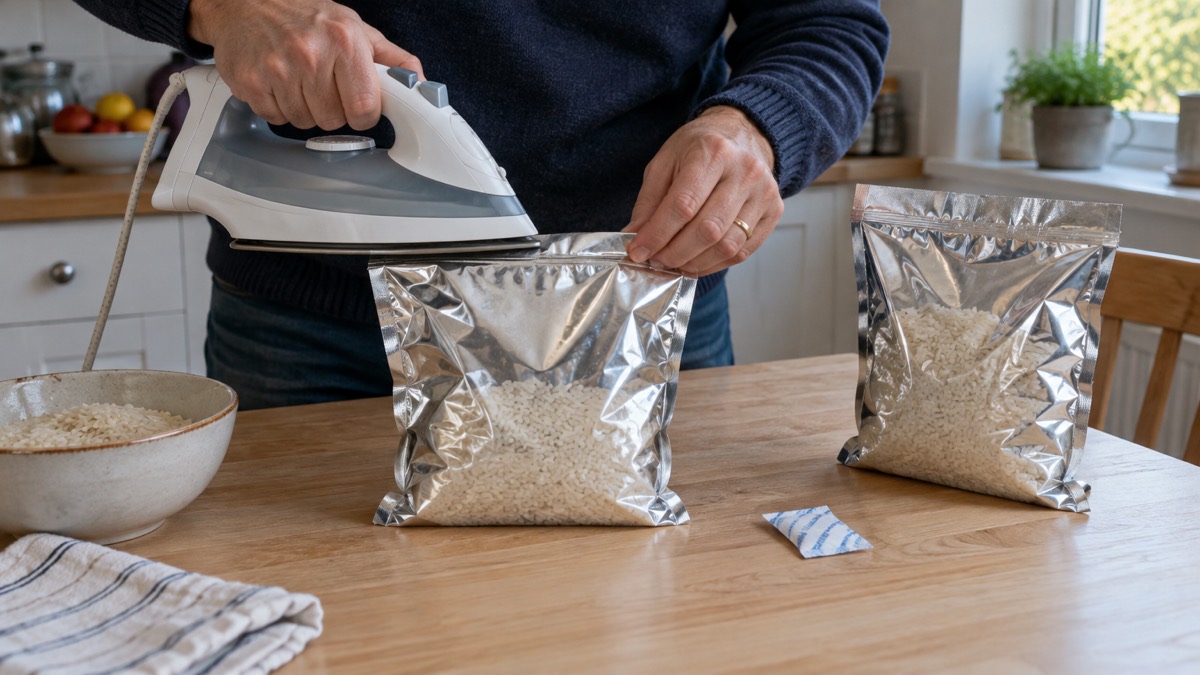
Food sealed in Mylar bags with oxygen absorbers can last for decades, but only if you choose the right foods and seal them properly. The longest-lived dry staples, such as honey, salt, sugar, hard wheats and oats, are quoted at a 30-year shelf life, sometimes longer1. Freeze-dried fruits, vegetables, just-add-water meals and real meats come in at approximately 25 to 30 years1. Most dehydrated products, such as dried fruits, vegetables, powders and soya protein, are quoted at about 15 to 20 years1.
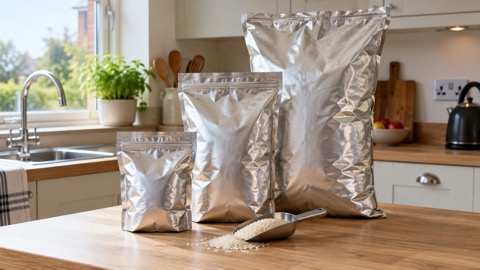
The bag is only part of the system. Mylar bags protect their contents against oxygen, heat, pests, light and moisture, and the small bags sold for food storage can be used with 50cc oxygen absorbers and 10g silica gel desiccants2. The absorber removes the oxygen that would otherwise let food spoil; the bag keeps moisture and pests out. Get either wrong and the shelf life you were counting on does not happen.
This page covers what to put in the bags, how to seal them, how to store the sealed bags, and what makes stored food go off early. It is about dry storage only. For the wider picture of what to keep and how much, start with Emergency Food: A Household Guide to Stores, Safety and Meals Without Power.
Which foods suit Mylar bag storage
Mylar bags with oxygen absorbers are for whole, dry foods. The foods that keep longest are the ones with almost no moisture and no oil in them: honey, salt, sugar, hard wheats and oats, at a 30-year shelf life and sometimes longer1. Freeze-dried foods, including fruits, vegetables, just-add-water meals and real meats, are quoted at approximately 25 to 30 years1. These are the foods the method was designed around.
Dehydrated foods sit a step below. Dried fruits, vegetables, powders and textured vegetable protein (soya protein) are quoted at about 15 to 20 years1. That is still a long time, but it is half the life of the dry staples, and it reflects what is in them: more natural moisture and, in some cases, more oil.
| Food type | Quoted shelf life | Notes |
|---|---|---|
| Honey, salt, sugar, hard wheats, oats | 30 years, sometimes longer1 | The longest-lived group |
| Freeze-dried fruits, vegetables, meals, meats | Approximately 25 to 30 years1 | Light, dry, keeps well sealed |
| Dried fruits, vegetables, powders, soya protein | About 15 to 20 years1 | Shorter life than the dry staples |
What does not suit the method is anything moist or oily. Fresh food, cooked food, meat, cheese, butter and wet preserves all carry water or fat that an oxygen absorber cannot deal with, and sealing them in a bag does not make them keep. Store those by their normal dates and normal rules instead. The Food Standards Agency in Scotland advises eating leftovers within 2 days3, which is a useful reminder of how short ordinary food life is compared with a sealed dry store.
If you are building a store from scratch, the choice of what to seal is the same choice as what to keep at all. What to Keep in an Emergency Store Cupboard sets out the range, and Rice, Pasta, Oats and Pulses for Long-Term Storage covers the staples that seal best.
How to seal Mylar bags with oxygen absorbers
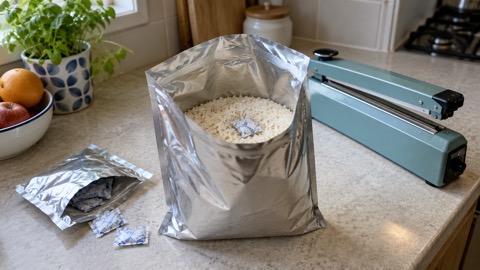
Sealing is a short job done in one sitting, and the order matters. Work in a dry room, fill the bag, add the absorber, then seal and check before the absorber has had time to do its work in open air.
- Choose a food-grade bag. Use a bag sold for food, such as the Mylar Ziplock Bag, which is sold to protect against oxygen, heat, pests, light and moisture2.
- Fill with dry, whole food. Leave enough headroom above the food to seal the bag cleanly.
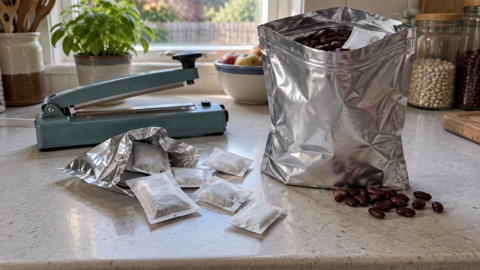
- Add the oxygen absorber. The bag is sold as compatible with 50cc oxygen absorbers and 10g silica gel desiccants2. Match the absorber to the bag size and the amount of food.
- Seal the bag. Press out as much air as you can, then close the seal. If you do not have a heat sealer, How to Seal Mylar Bags Without a Heat Sealer covers the alternatives.
- Check the seal straight away. A good seal holds the bag tight around the food with no soft spot along the seam. If air moves in or out, reseal it.
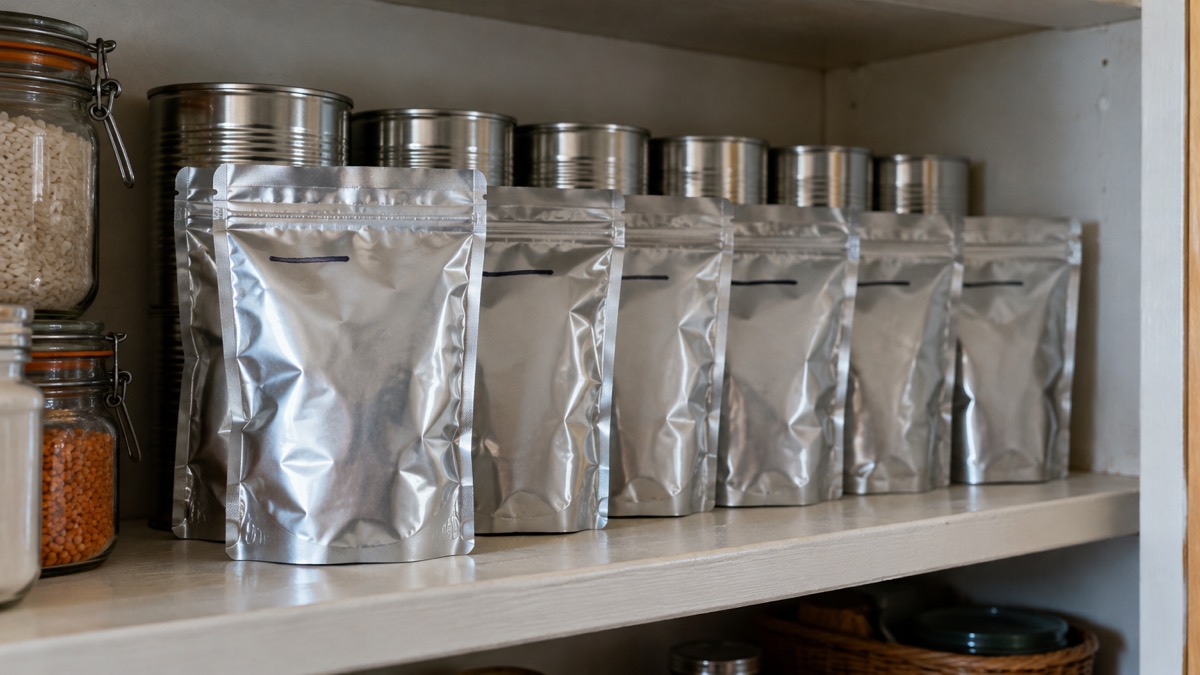
- Label and date the bag. Write what is inside and the date sealed, so you can rotate the store later.
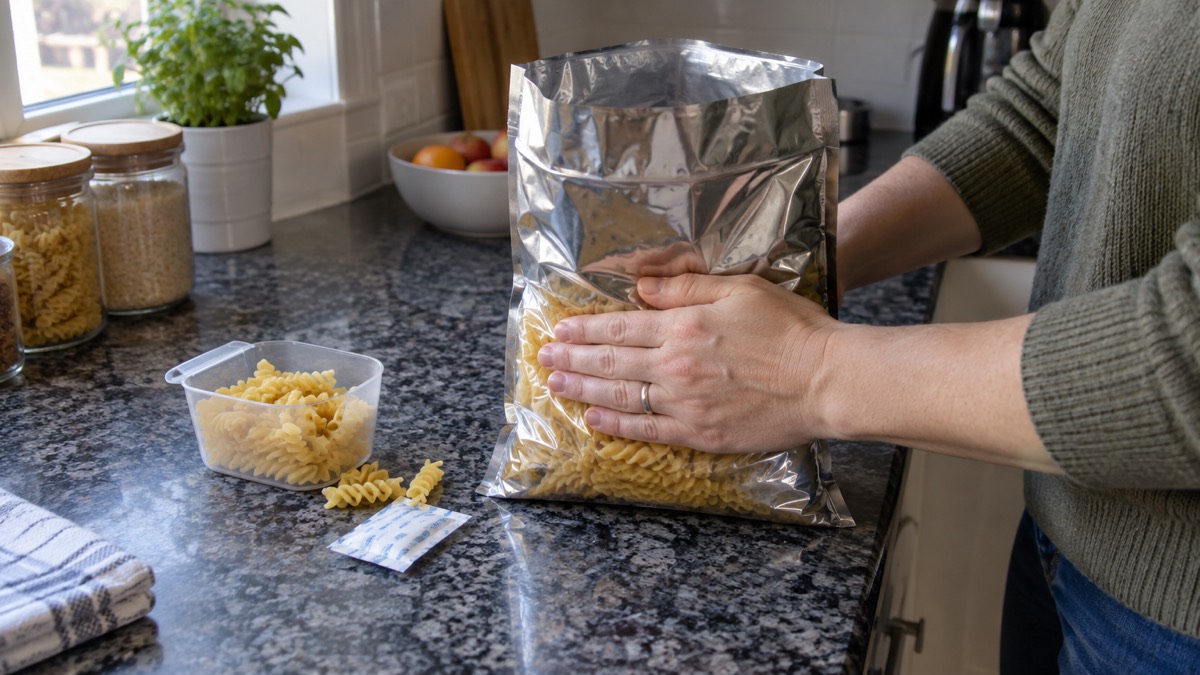
Two accessories are worth understanding before you buy. Oxygen absorbers are single-use: once opened they start working, and they cannot be recharged at home. How Quickly Oxygen Absorbers Work Once Opened explains the timing. Silica gel desiccants take up moisture rather than oxygen, and Using Silica Gel Sachets With Stored Food covers when they help.
Storing sealed bags inside plastic buckets
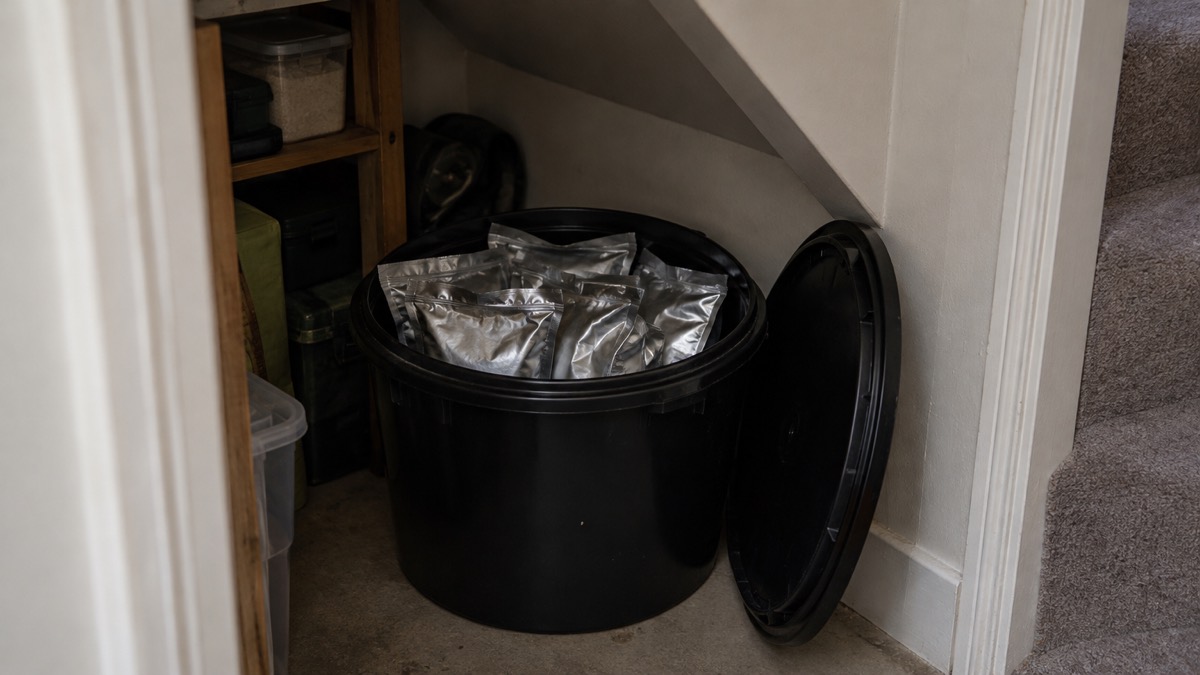
Sealed bags are usually put inside a rigid container, most often a plastic bucket, to keep them dark, protect them from pests and stop them being punctured. The bag does the sealing; the bucket does the protecting. Keep the bucket closed, keep it somewhere cool and dry, and keep it off a floor that could get wet.
The principle is the same one that makes foil packaging work for other long-life products. LifeSaver, which sells water filter cartridges, states that its foil-sealed cartridges can be stored for 10+ years6, and explains that the extended shelf life comes from the aluminium barrier foil, which has a water vapour diffusion rate that is 80 times slower than standard packaged polyethylene7. The same logic applies to a Mylar bag: the barrier is what keeps moisture out, and the bucket protects the barrier.
| Container | What it does | What to watch |
|---|---|---|
| Mylar bag | Protects against oxygen, heat, pests, light and moisture2 | Punctures, weak seams |
| Plastic bucket | Holds bags, keeps them dark and protected | Keep closed, keep dry, keep off the floor |
Where you put the bucket matters as much as what is in it. A cool, dark, dry cupboard inside the house is better than a garage or loft, where heat and damp shorten storage life. If your area floods, keep the store high up rather than at floor level; Where to Keep an Emergency Store If Your Area Floods covers this in detail. Keeping a Long-Term Store Cool, Dry and Free of Pests goes further on conditions.
What shortens storage life
A quoted shelf life assumes the food was dry, the bag was sealed, and the store stayed cool and dry. Break any of those and the food will not last as long as the label suggests.
- Moisture in the food. Wet or damp food spoils inside a sealed bag. Dry it properly first, or do not seal it.
- Oil in the food. Oily foods go rancid over time whatever the packaging. Keep to the dry, whole foods the method is designed for.
- A failed seal. A bag that lets air in is no better than an open bag. Check every seal, and check again when you rotate.
- Heat and light. Mylar protects against light and heat only while it is intact and stored sensibly. A hot loft or a sunny garage works against you.
- Pests and punctures. Rodents and sharp edges can breach a bag inside a bucket. Keep the bucket closed and off the floor.
- Time itself. Even the best store has a date. Honey, salt, sugar, hard wheats and oats are quoted at 30 years, sometimes longer1, but that is a maximum, not a guarantee.
For comparison, ordinary food storage is measured in hours and days, not decades. A fridge keeps food at a safe temperature for up to four hours during a power cut if the door stays closed8, and a full freezer holds its temperature for around 48 hours, or 24 hours if it is half full9. A household emergency kit is usually built around non-perishable food for at least three days, including a can opener if needed14. A sealed dry store is what lets you plan beyond that.
Rotating the store and keeping it honest
A long shelf life is only useful if you can find the oldest bag when you need it. Rotate first in, first out: use the oldest bags first, replace what you use, and write the date on every bag when you seal it. Check the store at least once a year, looking for failed seals, damp, pests and bags that have been pushed to the back.
The same discipline applies to bought long-life food. Expedition Foods states that its meals have a long shelf life of up to 5 years15, and its Rolled Oats, Apple and Blackcurrant are quoted at up to 5 years5. Those are shorter than a sealed dry store, so they need rotating sooner. Rotating Your Store: First In, First Out sets out a simple system.
Where to get help and further reading
If you are building a store for the first time, Starting a Store Cupboard Supply Step by Step walks through it, and How Much Emergency Food to Store per Person helps you size it. For the bags themselves, Mylar Bags and Oxygen Absorbers for Dry Stores is the main page, with What Size Mylar Bag You Need for Rice, Pasta and Beans and Are Mylar Bags Food Grade and Safe for Food alongside it. If you are weighing up containers, Mylar Bags or Glass Jars for Dry Food compares the two.
If money is tight, Getting Emergency Food Help: Food Banks, Councils and Local Support explains where to turn, and How to Get a Food Bank Voucher Referral covers referrals. For households with babies or medical diets, Babies, Young Children and Medical Diets in an Emergency sets out what to plan for.
Sources (15)
- Benefits of Freeze-Dried Food, Expedition Foods, 2026-10-28
- Mylar Ziplock Bag 10cm x 15cm, Mylar Shop, 2026-10-23
- Chilling, Food Standards Scotland, 2026-10-25
- Porridge with Strawberries, Survivor Foods Range, Expedition Foods, 2026-10-29
- Rolled Oats, Apple and Blackcurrant, Expedition Foods, 2026-10-29
- Cube Replacement Cartridge Foil Sealed, LifeSaver, 2026-10-28
- LifeSaver Jerrycan Replacement Cartridge Foil Sealed, LifeSaver, 2026-10-29
- Power Cuts: Helpful Tips, Electricity North West, 2026-10-25
- Power Cut Advice: Hot Weather, National Grid, 2026
- Tips to Prepare for a Power Cut, National Grid, 2026-10-25
- How Do I Keep Food Safe, NIE Networks, 2026-10-25
- Power Cut, Energy Networks Association, 2026-10-25
- Food Safety in the Kitchen: Power Cuts, Food Standards Scotland, 2026-10-25
- Homeowner Useful Information, National Grid, 2021
- Expedition Foods 14 Day Ration Pack, Expedition Foods, 2026-10-29
 Long-Term Storage Kit Checklist
 Store Cupboard Checklist
 30-Day Household Checklist
 Baby Formula in a Power Cut
 Refreezing Defrosted Meat
 Leftovers in the Fridge
 Reducing Botulism Risk
 Sterilising Jars
 Spotting Spoiled Preserved Food
 Boiling Water in Glass Jars
 Mylar Bag Sizes
 Are Mylar Bags Food Safe
 Oxygen Absorber Activation
 Silica Gel With Stored Food
 Freeze-Dried Meal Shelf Life