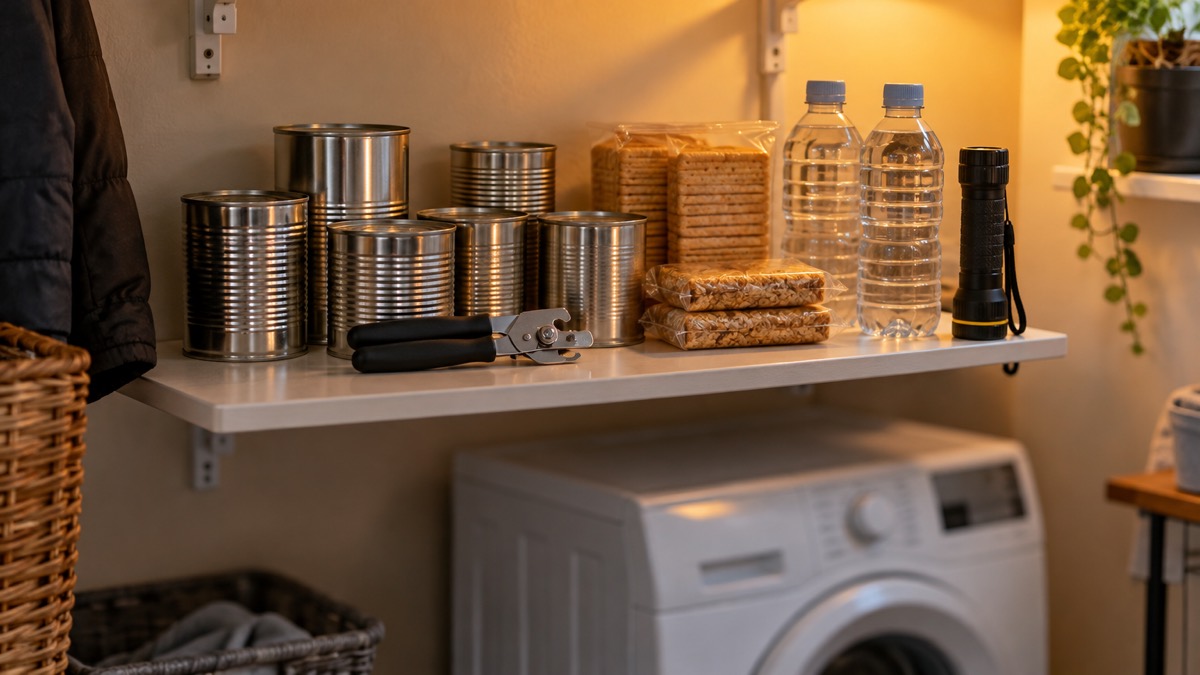
Most UK households already hold enough food to get through a short disruption. Official guidance from the Be Ready campaign asks for non-perishable food for three days: food with a long shelf life that does not need refrigeration or cooking, such as tinned meat, fish or vegetables, dried fruit and nuts1. The same checklist says it is best to buy food you would usually eat, and to check your cupboards first to see what essentials you already keep at home2.
That is the whole idea behind an emergency store cupboard. You are not buying a separate category of food. You are making sure the ordinary food in your kitchen would carry you for a few days if the shops were shut, the power was off or the roads were blocked, and that you know what to eat first when the fridge stops working.
This checklist sets out what to keep, how much, how to store it and how to use it in the right order. It follows the common three-day baseline, notes where councils recommend longer, and points to the pages that go deeper on each part.
The emergency store cupboard checklist
Work through this list once, then keep it topped up. Each item earns its place because it needs no power, no cooking and no shopping trip to use.
Everyday food you already buy counts as emergency food
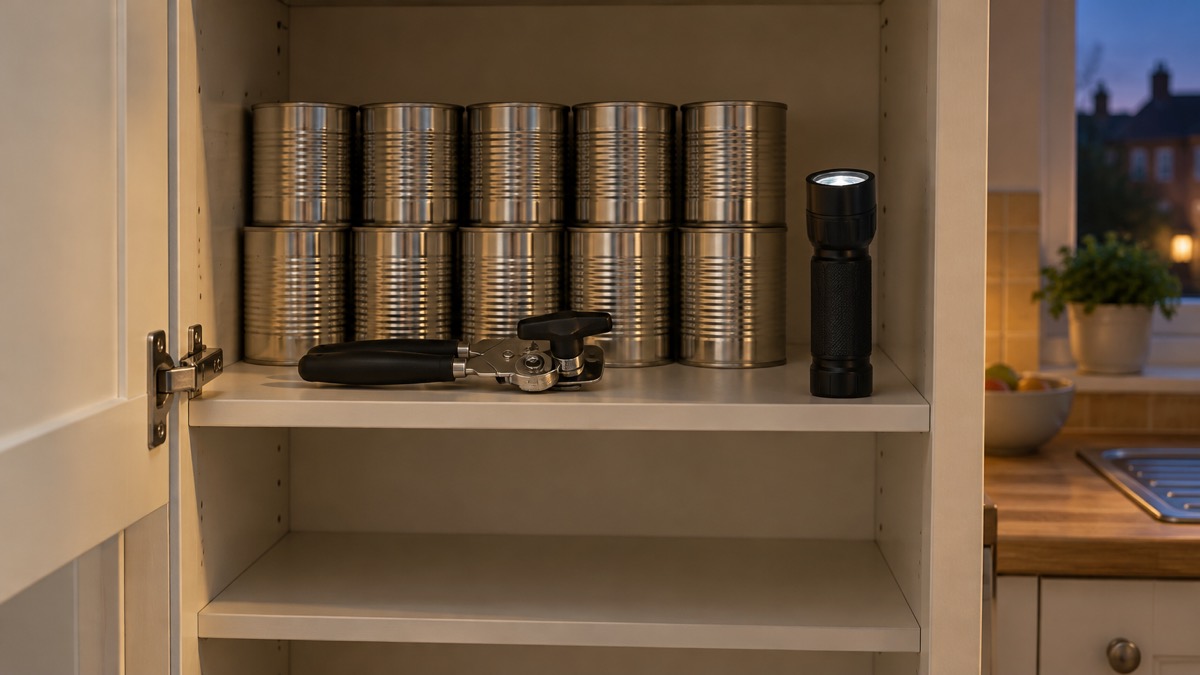
The most useful step is not a shopping list but a look inside your kitchen. One council suggests asking yourself a simple question: how much food do you have in your fridge or cupboard, and could you last a day or two without going to the shops16? For most households the answer is yes, once the store is organised.
Official guidance is consistent that emergency food should be ordinary. The Be Ready checklist describes it as food with a long shelf life that does not need refrigeration or cooking, gives tinned meat, fish and vegetables, dried fruit and nuts as examples, and adds that it is best to buy food you would usually eat17. That matters for two reasons. Food you already like gets eaten and replaced, so nothing sits at the back of the cupboard for years. And in a stressful few days, familiar meals are easier to face than unfamiliar ration packs.
The same principle runs through council lists across the UK. Birmingham's emergency supplies guidance names long-life food such as canned food, dried food and energy bars14. Denbighshire's supplies kit suggests foods that can be readily eaten without heating or water, such as ready-to-eat meats or tuna, fruits, vegetables, canned juices, UHT milk, soup, crackers, cereal bars, biscuits and boiled sweets7. Wiltshire's kit list keeps it simpler still: bottled water and dried foods such as cereal bars18.
So the test for anything you add is straightforward. Will it keep without a fridge? Can it be eaten without cooking? Would your household actually eat it? If the answer to all three is yes, it belongs in the store.
How much to keep: three days, or longer
Three days is the figure most UK guidance settles on, but it is a baseline rather than a rule. The table below shows what different official sources recommend, so you can judge how far to go.
| Source | Recommended food store |
|---|---|
| Be Ready campaign checklist | Non-perishable food for 3 days1 |
| Lancashire Prepared | Enough food and bottled drinking water to last three days3 |
| Dumfries and Galloway Council | Enough emergency food for three days and a can opener19 |
| West Yorkshire Prepared | Food and bottled water for 3 days, and do not rely on the fridge or freezer15 |
| Renfrewshire Council | Supplies to meet essential household needs for at least 3 days20 |
| Birmingham City Council | Enough supplies for at least 72 hours14 |
| Central Bedfordshire Council | A Home Emergency Kit for at least 7 days of disruption5 |
| Culham Parish booklet | Emergency reserves for up to ten days, including food and water6 |
The pattern is clear: three days is the common floor, and a small number of councils and local guides suggest planning for longer. Ready Scotland's emergency kit guidance asks for 3 days' supply of bottled water and food that does not need cooking and will not go off, or that you rely on11. Argyll and Bute asks for at least three days' supply of food, bottled water and other essentials, including medicines, and notes that tinned and dry foods store safely without need for electricity9.
How far beyond three days you go is a judgement for your household. A larger store helps if you live somewhere remote, if someone in the house has limited mobility, or if you would rather not shop in the first days of a disruption. Our guide to how much emergency food to store per person works through quantities.
Tins, grains and freeze-dried food: what keeps longest
Long shelf life is the quality that matters most, and tinned and dry foods are the ones official guidance keeps returning to. Argyll and Bute names tinned and dry foods as storing safely without need for electricity9. The NHS in Norfolk and Suffolk suggests keeping a supply of long-lasting cupboard essentials such as tinned vegetables, beans, pulses, soup and pasta8. Lancashire County Council's winter guidance adds long-life milk and bread kept in the freezer10.
The three broad options compare like this:
| Type | What it does well | What to watch |
|---|---|---|
| Tins | Long shelf life, no cooking needed, food you already eat1 | Needs a manual can opener3; do not reuse empty tins for storage21 |
| Dry staples (pasta, rice, oats, pulses) | Store safely without electricity9 | Usually need cooking, so pair with no-cook food1 |
| Freeze-dried meals | Specialist long-life meals, bought ready-made | A specialist alternative to tins, not a replacement for an ordinary cupboard |
Tins are the backbone for most households because they need no cooking and no water. Keep a supply of long-lasting cupboard essentials such as tinned vegetables, beans, pulses, soup and pasta18. Food Standards Scotland also advises against reusing empty tins to cook or store food, because once a can is opened the food and tin are exposed to air and the tin may transfer to the food more quickly21.
Dry staples such as rice, pasta and pulses are cheap and keep well, but most need cooking and water, so they work alongside no-cook food rather than instead of it. Our pages on tinned food and dry staples go into shelf life and storage in more detail.
Freeze-dried meals are the specialist end of the market. They are bought ready to use and are worth considering if you want a very long-lasting store or lightweight food for a grab bag. They are not necessary for a three-day cupboard, and nothing in official household guidance suggests making them at home. If you want to know how they compare, see tinned or freeze-dried meals and freeze-dried meals: what they are.
Using the fridge and fresh food first, then the cupboard
When the power goes, the order you eat in matters as much as what you have stored. Food Standards Scotland is direct: chilled foods will go off the quickest, so use these up first before other foods during a power cut22. The UK government's food safety guidance sets out the full order4:
- Foods that need refrigeration.
- Defrosted frozen food that does not need cooking.
- Room-temperature perishable food, such as bread.
- Room-temperature canned, bottled and dried food.
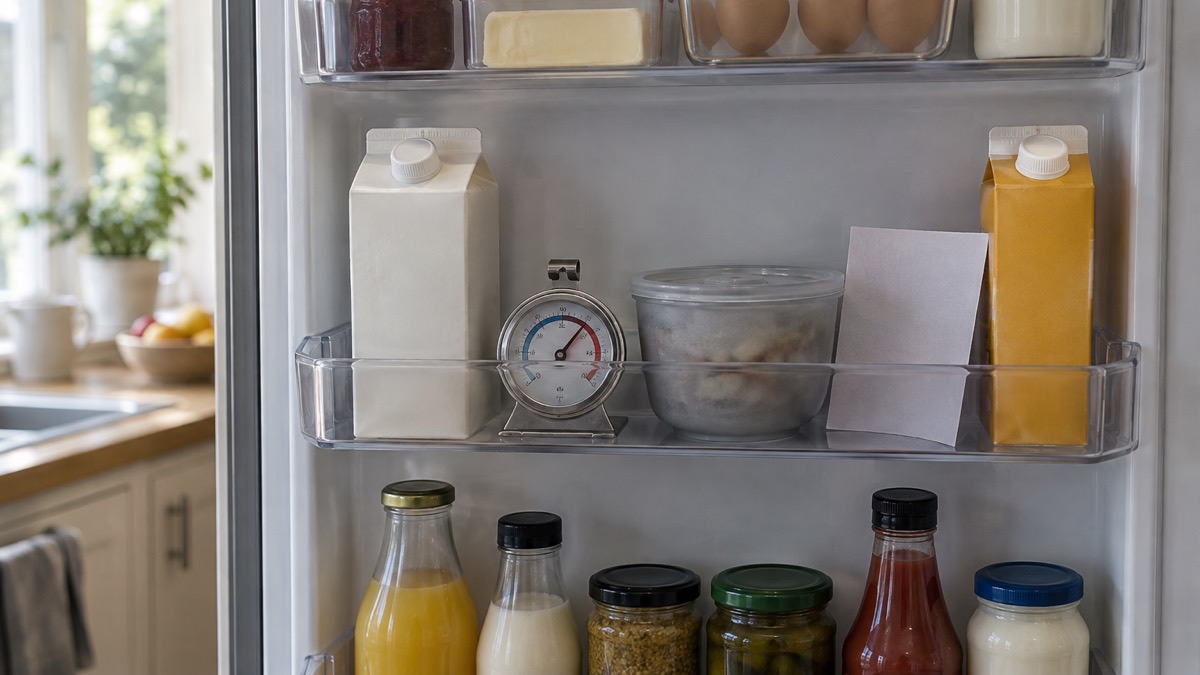
This is why the cupboard is the backstop rather than the first resort. Fresh food, chilled food and the freezer hold the best meals, and a power cut gives you a window to use them. Only when those are gone do you move to the tins and dry goods, which will keep for days regardless.
Two practical points help. First, keep the storage area dry and not too warm, and follow any storage instructions on the label, since some foods need the fridge once opened21. Second, if you have to leave home in a hurry and there is time to gather things safely, take essential medicines, your phone and charger, cash and cards, spare clothes and blankets, and games or a child's special toy alongside your food23.
Rotating the store so nothing is wasted
A store that is never used becomes a store that is out of date. The simplest rotation is to eat from it. Keep newer items at the back and older ones at the front, use the store as part of normal meals, and replace what you use on the next shop.
Denbighshire's guidance offers a more structured approach: replace the whole food side of the kit every six months and live off the replaced food for a few days, which avoids monthly changes7. That has the advantage of testing whether your household actually likes what is stored, and of refreshing everything at once.
Whichever method you choose, check dates as you go. North Hertfordshire's guidance suggests non-perishable items such as canned food with a can opener, cereal and fruit bars, and adds that these should be kept up to date26. Nottinghamshire's advice is similar: keep a supply of bottled water, ready-to-eat food such as tinned food, and a tin opener in your home13.
A short rotation routine:
- Monthly: glance at the front row and use anything close to its date in normal cooking.
- Every six months: check the whole store, replace what is low, and eat a meal or two from it.
- After any use: write the item on the next shopping list so the gap is filled.
Our guide to rotating your store sets out first in, first out in more detail, and shelf life, use by and best before dates explains what the dates on tins and packets actually mean.
Where to get help if the store runs out
A three-day store is designed to bridge a short gap, not to replace normal shopping indefinitely. If a disruption lasts longer, or money is tight, help is available.
Follow the advice of the emergency services during any incident27. For food specifically, local councils hold information on support during emergencies, and food banks and community groups can help with immediate needs. Our guide to getting emergency food help explains food banks, councils and local support, and how to get a food bank voucher referral covers the referral route.
If you have a baby, a medical diet or a religious or allergy requirement, plan the store around it rather than assuming standard items will do. Our pages on babies, young children and medical diets and emergency food for medical, religious and allergy diets cover the alternatives.
Sources (27)
- Be Ready for Emergencies, Be Ready campaign, 2026
- Be Ready Checklist, Be Ready campaign, 2026
- Emergency Pack, Lancashire Prepared, 2026
- Food Safety in a Power Cut: Advice for Consumers, GOV.UK, 2023
- Emergency Kits and Grab Bags, Central Bedfordshire Council, 2026
- Are You Ready Booklet, Culham Parish Council, 2025
- Emergency Supplies Kit, Denbighshire County Council, 2020
- Stay Warm and Nourished, NHS Norfolk and Suffolk, 2026
- Winter Weather: Ready, Be Prepared, Argyll and Bute Council, 2026
- Keeping Warm and Well During Winter, Lancashire County Council, 2026
- Emergency Kit, Ready Scotland, 2026
- Your Pets, Wiltshire and Swindon Prepared, 2026
- Preparing for an Emergency, Nottinghamshire County Council, 2026
- Are You Ready, Birmingham City Council, 2026
- Household Emergency Plan, West Yorkshire Prepared, 2020
- What Is a National Power Outage, Wiltshire and Swindon Prepared, 2026
- Be ready for emergencies - Be Ready, prepare.campaign.gov.uk (Be Ready campaign)
- Planning for an Emergency Kit, Wiltshire Council, 2026
- Prepare for Emergencies, Dumfries and Galloway Council, 2026
- Prepare Your Home for Emergencies, Renfrewshire Council, 2025
- Food Storage, Food Standards Scotland, 2025
- Power cuts | Food Standards Scotland, Food Standards Scotland
- Emergency Kit Checklist, nidirect, 2026
- Food Safety After a Flood: Consumer Advice, GOV.UK, 2018
- Flood Recovery Information, Devon County Council, 2026
- Preparing for Emergencies, North Hertfordshire Council, 2026
- Emergency Advice, Belfast City Council, 2026
 Long-Term Storage Kit Checklist
 30-Day Household Checklist
 Emergency Plan Template