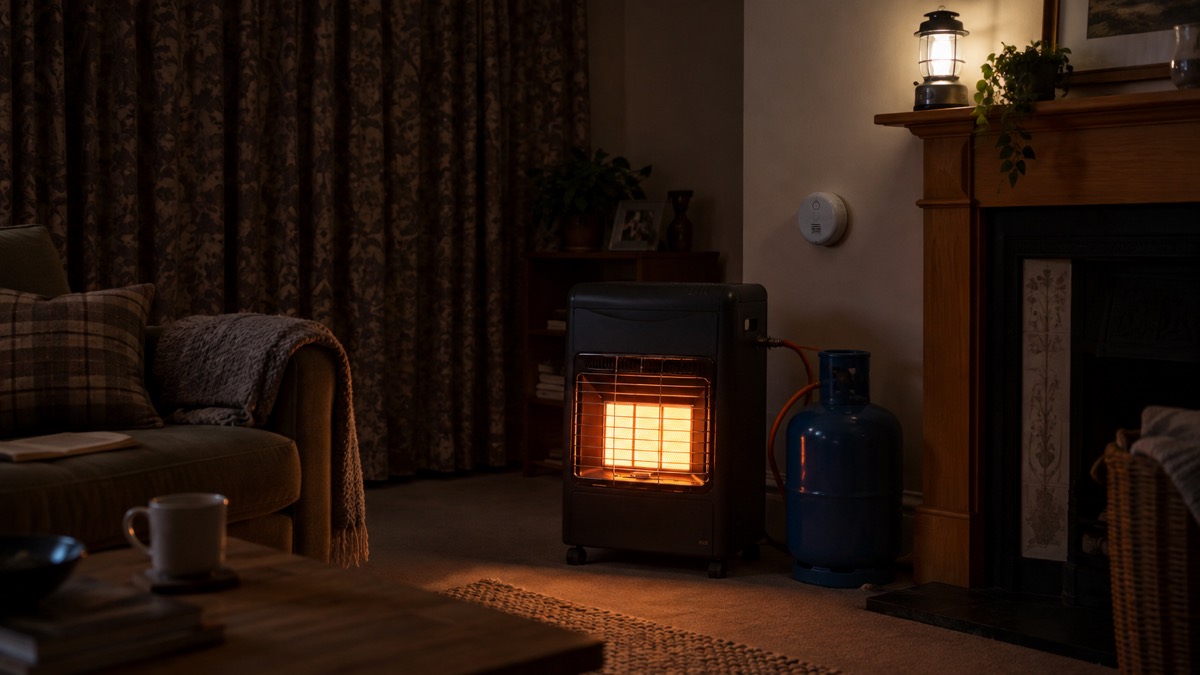
When the heating goes off in a power cut, the instinct is to bring heat indoors: a barbecue under the patio door, a gas heater pulled into the living room, a generator in the hallway. That instinct is the danger. Carbon monoxide is a colourless, odourless, tasteless and highly poisonous gas, formed by the partial combustion of fuel such as wood, coal and gas, and you cannot see, smell or taste it1. It reduces your body's ability to carry oxygen, which can quickly make you seriously ill3, and at very high levels death may occur within minutes4.
The scale of the risk is real but modest, and the figures differ between official documents. The Met Office advises that every year around 30 people die following accidental exposure to high levels of the gas5, while HSE statistics reported by the Greater London Authority put the figure at around seven deaths each year6. Both are official; the difference reflects what each counts. What matters for your household is that these deaths cluster in exactly the situations a power cut creates: cold homes, improvised heating and closed windows.
If you suspect carbon monoxide right now, the short version is this: stop using the appliance if you can, open doors and windows, get everyone outside into fresh air and stay out, and call the National Gas Emergency Service on 0800 111 999 if you think a gas appliance is involved7. If anyone is finding it hard to breathe, has suddenly become confused or has lost consciousness, call 999 immediately1.
Carbon monoxide poisoning symptoms: what to look for
The NHS lists the symptoms of carbon monoxide poisoning as a headache, dizziness, feeling sick or being sick, feeling weak, tiredness and confusion, chest and muscle pain, shortness of breath, your face turning hot and red (flushing), and loss of vision1. Devon and Somerset Fire and Rescue Service add that a headache is the most common symptom, and that symptoms can develop quickly or over a number of days or months15. The symptoms can feel like flu, fatigue, food poisoning, a hangover or a virus, but without a temperature, and they worsen the longer you are exposed2.
A tension-type headache is the most common symptom of mild carbon monoxide poisoning4. At higher levels of exposure, the symptoms escalate: nidirect lists impaired mental state and personality changes that can look like intoxication, vertigo, ataxia (loss of physical co-ordination), breathlessness and tachycardia (a heart rate of more than 100 beats per minute), chest pain caused by angina or a heart attack, seizures, and loss of consciousness4. Wiltshire and Swindon Prepared, drawing on UK Health Security Agency guidance, describe the same pattern: low-level exposure over a long period brings headache, tiredness, confusion, dizzy spells, stomach pain, nausea and vomiting and shortness of breath, while high-level exposure over a short period brings breathlessness and chest pain, seizures, a racing heartbeat, loss of co-ordination, vertigo, feelings of intoxication and confusion, and loss of consciousness11.
| Exposure level | Typical symptoms |
|---|---|
| Mild, low level | Tension-type headache, dizziness, nausea, feeling weak, tiredness, confusion1 |
| Higher level | Intoxication-like behaviour, vertigo, loss of co-ordination, breathlessness, racing heart, chest pain, seizures4 |
| Very high level | Loss of consciousness; death may occur within minutes4 |
The NHS notes that symptoms may take a few hours or days to start after exposure, so it is important to get medical advice quickly even if you feel well at first16. And there is one symptom pattern that matters more than any single item on the list, which the next section covers.
Symptoms that ease when you go outside point to carbon monoxide
The single most useful clue is the pattern, not the symptom. The NHS states it plainly: the symptoms may come and go, they may get worse when you spend time in an affected room or building, and get better when you leave or go outside1. NHS 111 Wales gives the same advice17.
That pattern is what separates carbon monoxide from almost everything else. Flu does not switch off when you step into the garden. nidirect lists the warning signs that should make you suspect carbon monoxide poisoning4:
- Other people in your house, flat or workplace fall ill with similar symptoms
- Your symptoms disappear when you go away and return when you come back
- Your symptoms tend to be seasonal, for example headaches more often during the winter when the central heating is used more often
- Your pets also become ill
If two or more of those fit your household, treat it as carbon monoxide until proved otherwise. Get out, get air, and follow the steps below.
Carbon monoxide or flu: the temperature test
Early symptoms of carbon monoxide poisoning can be confused with food poisoning, viral infections, flu or simple tiredness, as the HSE warns2. NHS Scotland's clinical guidance says the same: early symptoms are often mistaken for mild flu-like illnesses or food poisoning18.
There is one clear difference. nidirect states that the symptoms of exposure to low levels of carbon monoxide can be similar to those of food poisoning and flu, but unlike flu, carbon monoxide poisoning does not cause a high temperature (fever)4. If you or your family have headaches, nausea and tiredness with no fever, and especially if several of you have them at once, or they ease when you leave the house, suspect carbon monoxide rather than flu and act on it.
What to do if you suspect carbon monoxide
The fire and rescue services in Northern Ireland teach a simple sequence, and it is worth memorising before you need it19:
- Turn off or extinguish all fuel-burning appliances if it is safe to do so
- Open all doors and windows to increase ventilation, go outside and stay out
- Seek medical assistance if you feel unwell
- Keep all appliances turned off until checked by a qualified engineer
North Yorkshire Fire and Rescue Service add the two calls to make: open windows and doors, turn off appliances and leave the property, and call the National Gas Emergency Service on 0800 111 9998. The National Gas Emergency Service is free and available 24 hours; if you think a gas appliance is leaking carbon monoxide, call it immediately on 0800 111 99920. In Northern Ireland, the Fire and Rescue Service gives the Gas Emergency Service freephone number as 0800 002 00110, so use that number there.
If you think you have been exposed to low levels, seek medical advice from your GP4. If you or your family experience symptoms and believe you may have been exposed, the HSE says you should seek urgent medical advice from either your GP or an A&E department21, and the Health and Safety Executive for Northern Ireland says the same22. Your house will also need to be checked for safety before anyone returns4.
When to call 999 or go to A&E
Call 999 or go to A&E if you think you or someone else has been exposed to carbon monoxide and any of the following apply, per the NHS1:
- You are finding it hard to breathe
- You have suddenly become confused
- Someone has lost consciousness
- You are feeling weak
- You have chest or muscle pain
NHS 111 Wales gives the same list and adds an important instruction: do not drive to A&E. Ask someone to drive you or call 999 and ask for an ambulance17. The NHS general poisoning guidance adds what to do in the worst case: start CPR if someone is unresponsive and not breathing, and do not give the person anything to eat or drink16.
The Northern Ireland Fire and Rescue Service advises that for a carbon monoxide emergency where occupants are at risk, you call 999 and ask for an ambulance and the Fire and Rescue Service, and get out and stay out10. Wiltshire and Swindon Prepared put it the same way: if someone is showing signs of poisoning or has collapsed, get them outside, call 999 and ask for an ambulance11.
In hospital, you will usually have tests to check the level of carbon monoxide in your blood, and if the level is high, you may be given oxygen through a mask17. The NHS notes that you may need to be checked in hospital especially if you have symptoms of severe poisoning such as difficulty breathing or lost consciousness, you are pregnant, you are a child or older person, or you have anaemia or a condition affecting your lungs, heart or blood vessels17.
Who is most at risk
Carbon monoxide does not affect everyone equally. nidirect identifies the groups most vulnerable: children, students, the elderly, pregnant women and anyone with heart or breathing problems23. Public Health Wales' guidance adds the housebound to that list24, and NHS Scotland's Chief Medical Officer guidance names older people, children, pregnant women and their babies, and those with breathing problems or cardiovascular disease25. The NHS Learning Hub notes that carbon monoxide can disproportionately affect vulnerable people and unborn babies26.
The reason is physiological. When blood cells carry carbon monoxide they cannot carry oxygen, starving the heart of oxygen so it cannot work as well as it should27. A smaller body, a developing baby, or a heart and lungs already under strain have less reserve. If someone in your household falls into one of these groups, be stricter still about the rules in the rest of this page: no unvented flame indoors, ventilation always open, and a working alarm in every room with a fuel-burning appliance.
Long periods of significant exposure can cause serious complications, including brain damage and heart problems, and in very severe cases death4. That is why the low-level, slow-build cases in the FAQ matter as much as the dramatic ones.
Heaters, fires and cookers used for warmth: how to use them safely
The appliances that can cause carbon monoxide are the ordinary ones, as NHS 111 Wales lists: gas boilers, gas cookers and clay ovens, gas or paraffin heaters, wood, gas and coal fires, and portable generators17. North Wales Fire and Rescue Service add wood-burning and multi-fuel stoves, open fires and coal fires, barbecues and charcoal, portable heaters and generators, and petrol and diesel engines3. nidirect lists the common sources as a blocked chimney or flue, a boiler, exhaust fumes, a range or cooker, a portable heater or fireplace, a clothes dryer or water heater, and barbecues or grills23.
Using gas heaters and boilers more in winter raises the risk of carbon monoxide poisoning, as the Scottish Government's Ready Scotland campaign warns, so have regular gas safety checks and fit a carbon monoxide alarm28. The rules for using any of these safely during a cut are consistent across the fire and rescue services and official guidance:
- Ventilation first. Ensure good ventilation in the room where the heater is being used, per the Northern Ireland Fire and Rescue Service19. When drying clothes after a flood, Wiltshire and Swindon Prepared warn that heaters, dryers or fires must be well-ventilated to avoid carbon monoxide poisoning12.
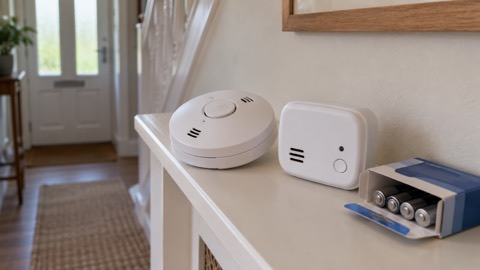
- An alarm in the same room. Devon and Somerset Fire and Rescue Service warn that using gas heaters carries the risk of carbon monoxide poisoning, so you should have a carbon monoxide alarm in the same room29.
- Stop anything you suspect. Stop using appliances you think might be making carbon monoxide, such as a boiler, cooker or heater, if you can20.
- Gas work by a registered engineer only. Gas work undertaken in homes and certain commercial premises must be done by a Gas Safe registered engineer, per the HSE30. nidirect lists the risk factors: an appliance not installed by a Gas Safe registered installer, not working correctly, not checked or maintained correctly, not enough fresh air in the room, or a blocked chimney or flue31.
Portable gas heaters deserve a specific word. They can be moved anywhere and heat the room they are in quickly, but they require changing gas cylinders, and accidents happen due to gas leaks during appliance assembly or cylinder or cartridge changes, as the Scottish Fire and Rescue Service warn32. Never change a cylinder on a stairway or other escape route32. For a fuller discussion of whether a gas hob can heat a room at all, see our page on heating with a gas hob, and for keeping warm without any flame, see keeping warm without electricity.
Where a generator or barbecue must never go
This is the section that saves lives in a power cut, because it is exactly the improvisation people reach for. The rule is absolute and every fire and rescue service in these islands states it the same way.
Barbecues. Never use a barbecue indoors; burning or smouldering fuel can cause carbon monoxide poisoning, per the Northern Ireland Fire and Rescue Service10. Wiltshire and Swindon Prepared go further: never take portable or disposable barbecues, grills or charcoal fuel burners into your home or any confined space such as a tent, houseboat or caravan11. The Health and Safety Executive for Northern Ireland notes that carbon monoxide poisoning can also occur when people bring gas and charcoal barbecues into tents and other small enclosed spaces, sometimes in an attempt to keep warm22. A barbecue that has finished cooking is not safe: smouldering charcoal keeps producing the gas10.
Generators. Do not use petrol or diesel generators or other similar fuel-driven equipment indoors because their exhaust gases contain carbon monoxide, per Wiltshire and Swindon Prepared12. The nidirect storm guidance is blunter still: never use standby generators indoors, as the fumes from the engine can be lethal13. The same guidance warns that if you are without electricity, using equipment such as kerosene heaters, charcoal grills (barbecues) and portable generators indoors can cause carbon monoxide poisoning13.
Camping stoves and patio heaters. Devon and Somerset Fire and Rescue Service warn that barbecues, camping stoves and patio heaters are designed for use outdoors in well-ventilated areas and pose a fire risk and a risk of carbon monoxide poisoning14.
For any fuel-burning equipment used indoors at all, the nidirect guidance requires two things: good ventilation, and use with a carbon monoxide alarm13. If you are considering a generator for backup power, read our backup power guide first: battery power stations produce no exhaust and can run a room's essentials indoors safely, which a petrol or diesel generator cannot.
Warning signs at home: yellow flames, soot and blocked vents
Because you cannot see, smell or taste the gas5, you have to read the appliance instead. The HSE and the fire and rescue services give the same short list of physical signs that an appliance is producing carbon monoxide2:
- Yellow or orange flames rather than blue flames, except fuel effect fires or flueless appliances which display this colour flame anyway
- Soot or yellow/brown staining around or on appliances, or on and around boilers, stoves or fires11
- Pilot lights that frequently blow out
- More condensation inside windows than usual
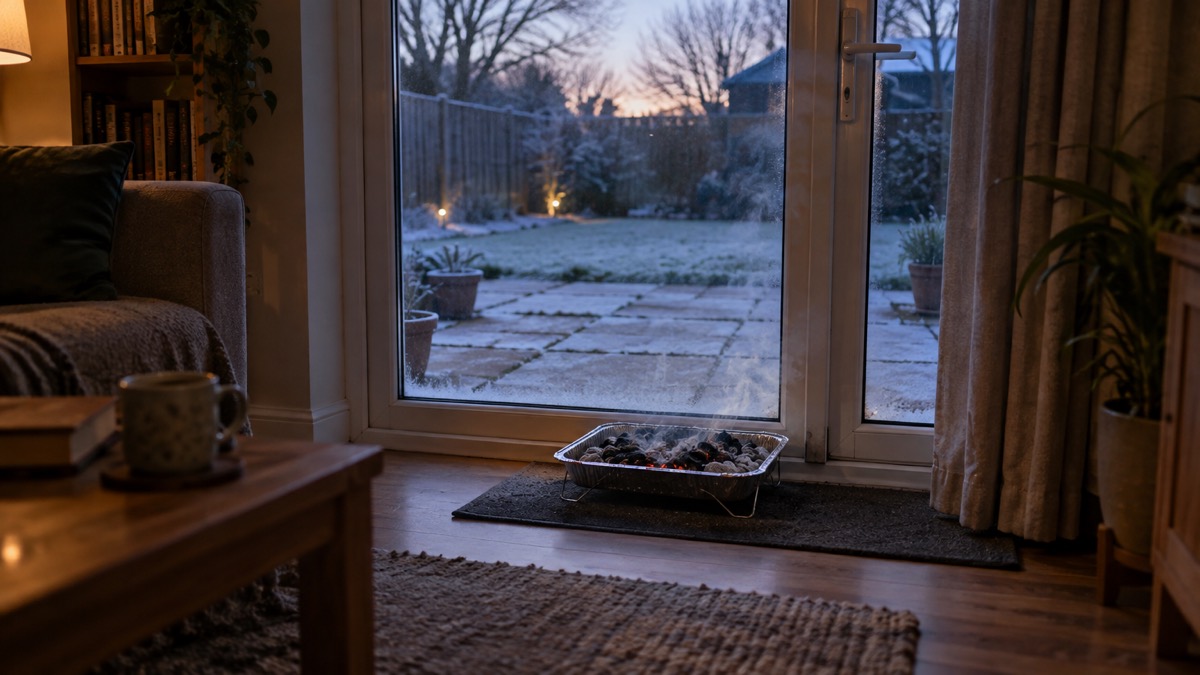
The HSE explains the mechanism: yellow or orange rather than blue flames indicate incomplete combustion, and carbon monoxide may be produced30. The underlying causes are usually one of the five that nidirect lists: an appliance not installed by a Gas Safe registered installer, an appliance not working correctly, an appliance not checked or maintained correctly, not enough fresh air in the room, or a blocked chimney or flue31. The Greater London Authority summarises the same point for tenants: carbon monoxide from gas appliances is caused by flues and appliances that have not been properly installed, taken care of, or are poorly ventilated6.
If you see any of these signs, stop using the appliance, ventilate, and get a registered engineer to check it before it runs again. For alarms that keep working when the mains is off, see our page on smoke and carbon monoxide alarms without mains power.
Caravans, tents, boats and holiday lets
Carbon monoxide is not only a house problem. nidirect notes that incidents and fatalities relating to carbon monoxide also occur in holiday homes, caravans and on board boats, where faulty gas cookers, appliances or petrol-powered generators have led to poisoning23, and the Health and Safety Executive for Northern Ireland repeats the warning22. Public Health Wales' guidance notes that carbon monoxide may be in the home, car, workplace or in tents or caravans24.
The rules travel with you. Never take a portable or disposable barbecue, grill or charcoal fuel burner into a tent, caravan or houseboat11. Take a carbon monoxide alarm with you, and check it works before every trip. In a holiday let, find the alarm when you arrive and check it is working; if it sounds, leave immediately, call the emergency services if anyone feels unwell, and do not re-enter until it has been declared safe3.
Getting through the cut safely
The pattern in nearly every carbon monoxide death during a power cut is the same: cold, dark, an improvised flame, and a closed room. The safe alternatives are unglamorous but effective. Layer clothing, keep to one warm room, use hot water bottles safely, and rely on battery lighting rather than candles: see our guides on keeping warm without electricity, keeping warm in one room, emergency lighting and staying safe in the dark. Keep the power cut kit stocked with a battery-powered carbon monoxide alarm alongside the torches, and keep the emergency numbers written down where you can find them in the dark, including 0800 111 999.
If you rely on medical equipment or need extra support during outages, join the Priority Services Register with your network operator, and check on neighbours who may be improvising heat in ways they should not: our neighbours checklist covers what to ask.
Sources (32)
- Carbon monoxide poisoning, NHS, 2025-12-16
- Carbon monoxide in construction and the home, Health and Safety Executive, 2026
- Carbon monoxide safety at home, North Wales Fire and Rescue Service, 2026
- Carbon monoxide poisoning, nidirect, 2024-12-16
- Keeping your home warm in winter, Met Office, 2026-10-26
- Gas safety for tenants, Greater London Authority, 2026-10-25
- Strong winds weather warning: information and advice, nidirect, 2026-10-24
- Smoke and carbon monoxide alarms, North Yorkshire Fire and Rescue Service, 2026-02-20
- Carbon monoxide detectors, Scottish Fire and Rescue Service, 2024-04-16
- Home fire safety, Northern Ireland Fire and Rescue Service, 2026-10-14
- Carbon monoxide: the silent killer, Wiltshire and Swindon Prepared, 2026-10-25
- Flooding and health: safely cleaning your home, Wiltshire and Swindon Prepared, 2026-10-25
- Strong winds and heavy rain warning: information and advice, nidirect, 2026-01-27
- Stay warm safely this winter, Devon and Somerset Fire and Rescue Service, 2026
- Carbon monoxide, Devon and Somerset Fire and Rescue Service, 2026
- Poisoning, NHS, 2025-06-12
- Carbon monoxide poisoning, NHS 111 Wales, 2025-10-02
- Carbon monoxide poisoning clinical guidance, NHS Scotland, 2013-12-12
- Other safety advice, Northern Ireland Fire and Rescue Service, 2026-10-22
- Carbon monoxide information, Sheffield Yorkshire Smokefree NHS, 2026-10-25
- Gas safety FAQs, Health and Safety Executive, 2026
- Carbon monoxide, Health and Safety Executive for Northern Ireland, 2026
- Gas safety and carbon monoxide, nidirect, 2025-11-24
- Carbon monoxide poisoning algorithm, Public Health Wales, 2016-10
- Carbon monoxide CMO letter, NHS Scotland, 2011-11-17
- Preventing exposure to carbon monoxide, NHS Learning Hub, 2026-10-26
- Carbon monoxide information, Wakefield Yorkshire Smokefree NHS, 2026-10-26
- Cold, snow and ice, Ready Scotland, 2026-03-25
- Heater safety, Devon and Somerset Fire and Rescue Service, 2024-11-20
- Carbon monoxide: hazardous substances, Health and Safety Executive, 2026
- Carbon monoxide, Doncaster and Bassetlaw Teaching Hospitals NHS Foundation Trust, 2026-10-25
- Heating and gas safety, Scottish Fire and Rescue Service, 2024-11-21
 Power Cut Kit Checklist
 What to Keep Charged
 Household Emergency Plan
 Reporting a Power Cut
 What to Do in a Power Cut
 Getting Ready for a Power Cut
 Fridge and Freezer Food
 Keeping Warm Without Electricity
 Central Heating Without Power
 Cold Homes and Health
 Staying Safe in the Dark
 Smoke and Carbon Monoxide Alarms
 How Long Until Power Returns
 When the Power Comes Back
 Fallen Overhead Lines