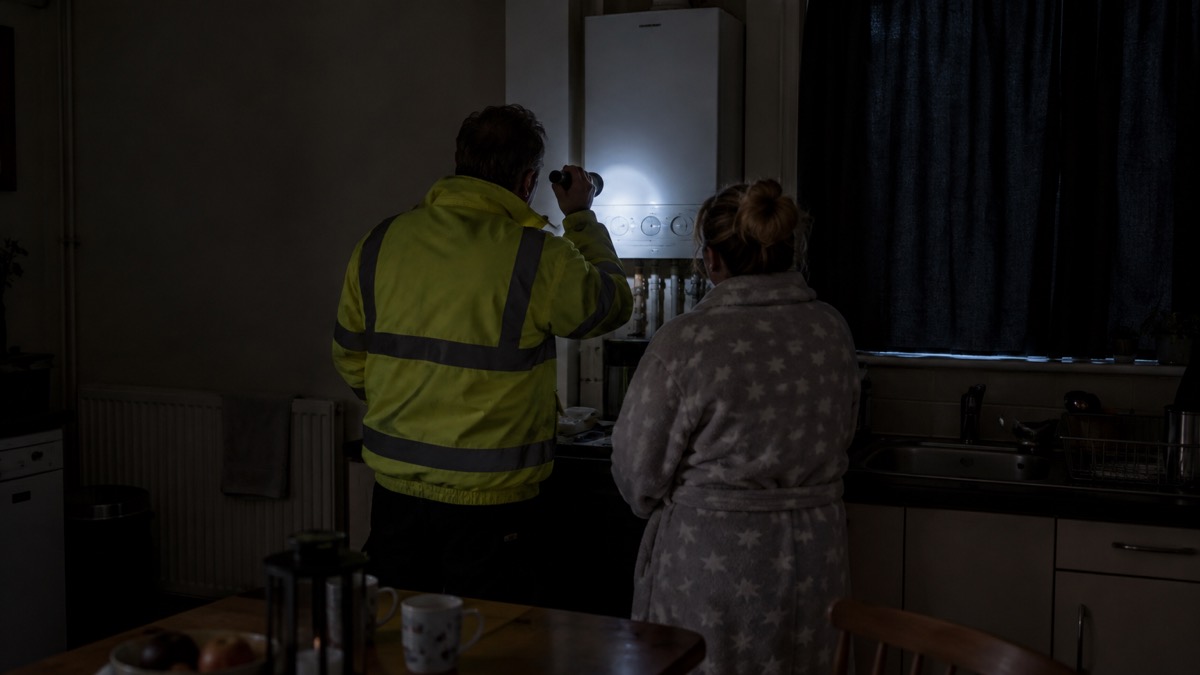
For most UK households, the answer is no: gas central heating will not work in a power cut. Although the fuel itself is gas, a modern boiler needs mains electricity for its pump, fan and controls, and the government's power cut guidance is blunt about it: "Gas ovens, boilers, heat pumps and your home internet won't work without power"1. Oil boilers and heat pumps stop for the same reason. When the electricity goes off, your radiators go cold with it.
That catches many people out the first time, because the gas supply itself usually keeps flowing. A gas hob or a gas cooker will often still light during an outage, since they can be lit without mains power, but the central heating system as a whole will not run2. If your heating and hot water come from an electric source, such as storage heaters or an electric shower, those stop too, because electric cookers and other electric appliances will not work during a power cut2.
The good news is that most power cuts are short, and there are practical things you can do before, during and after one to keep warm and get the heating back safely. This page covers why the boiler stops, how to keep warm while it is off, whether backup power can help, what to do if you smell gas, who is legally allowed to work on your boiler, and the Radio Teleswitch meter change that is already affecting some households' heating and hot water.
Why the boiler stops when the electricity goes off
A gas central heating system is not just a gas appliance. The boiler has an electric fan to push the flue gases out, an electric pump to circulate water through the radiators, and electric controls that ignite the burner and respond to the thermostat and timer. Take away the mains supply and none of that works, however much gas is in the pipe. The government's power cut guidance lists gas ovens, boilers and heat pumps among the things that "won't work without power"1. Oil-fired boilers are in the same position, and heat pumps are electric to the core, so every common central heating type in the UK stops in an outage.
What still works depends on how the appliance uses gas. Food Standards Scotland notes that "electric cookers will not work during a power cut, but gas cookers are more likely to function"2. A gas hob with a manual ignition can usually be lit, which is why some households keep a small camping stove or the hob itself in mind for boiling a kettle during an outage. But do not mistake a working hob for a working heating system: the hob heats the pan, not the radiators, and using a gas hob to heat a room is a separate question with its own safety issues, covered on our page about heating a room with a gas hob.
Before you assume the network is down, check whether the problem is inside your home. If your neighbours still have power but your home does not, the fault may lie with the fuses or trip switches in your own property rather than the network. A tripped switch can stop the boiler on its own, and resetting it is a job you can do yourself, unlike work on the gas side of the appliance. Our page on checking your trip switches walks through it. If the whole street is off, report it by calling 105 or through your local network operator's website3.
Keeping warm while the heating is off
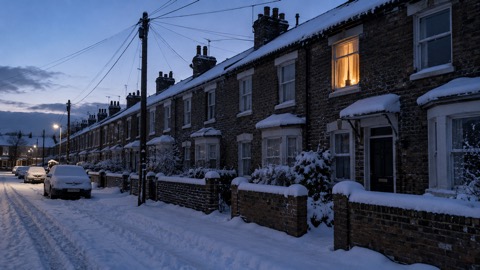
With the boiler off, the aim is to keep body heat in rather than to heat the whole house. The Met Office's advice for storms and power cuts is simple: "If it's cold, wrap up warm and close internal doors to keep the heat in"7. Anglesey Council in Wales adds the same measures from the other direction: keep extra blankets nearby and close shutters, blinds or curtains to help keep the heat in8. Layers of clothing and blankets hold warmth against the skin far better than one thick garment, and closed doors and curtains stop the heat you already have draining into unused rooms.
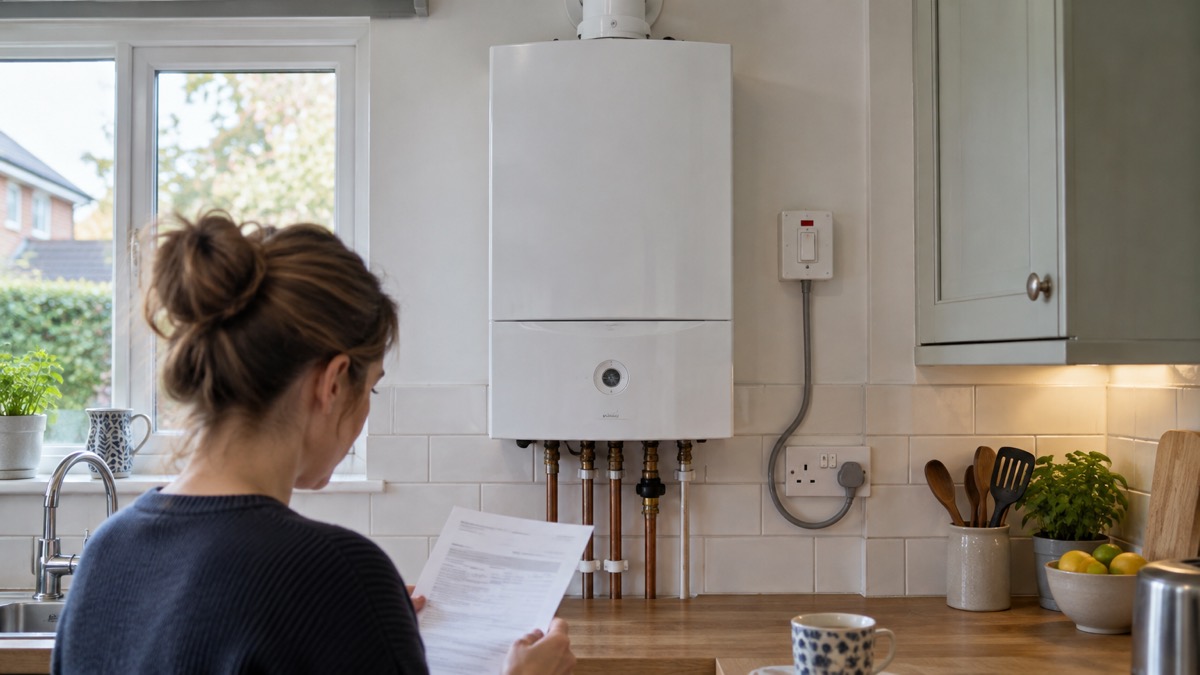
The most effective trick is to shrink the space you are heating. Wiltshire and Swindon Prepared, writing about gas outages, advises you to "think about only keeping one room warm rather than trying to heat the whole house"5. Choose one room, ideally small, with the door closed, and gather the household there with blankets, warm drinks and a torch. Our page on keeping warm in one room sets out how to do it, and the wider keeping warm without electricity guide covers the rest of the house.
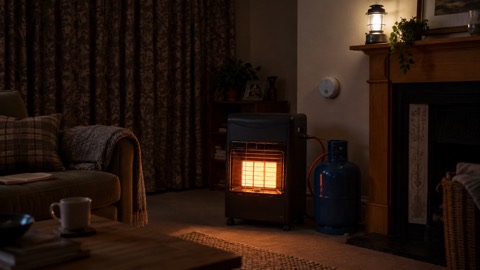
If you have an alternative heater that does not need mains electricity, use it with care. The Met Office's winter weather blog notes that "portable heaters are a good alternative if heating systems are down"9, but the fire and rescue services are clear about the risks. Scottish Fire and Rescue Service warns that during a power cut "our firefighters can be called to fires started by candles or portable heaters"10, and its standing advice is to switch off portable heaters when you go out, when you are not in the room, or when you go to bed10. Never use portable gas cylinder heaters in high rise flats10.
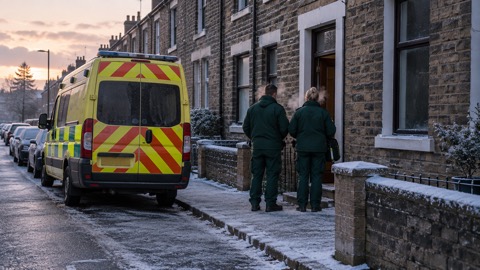
Cold itself is a health risk if the outage drags on, particularly for older people, young children and anyone with a long-term condition. If it is cold, wrap up warm and close internal doors to keep the heat in12. Keep extra blankets nearby and close curtains, blinds or shutters to help hold the warmth in a room12. If someone becomes very cold, drowsy or confused, seek medical help. Our page on cold homes and health explains the warning signs of hypothermia and who is most at risk.
One further point if you are leaving home rather than sheltering in it: Lancaster City Council advises that if you plan to be away for several days in freezing weather, you should "ensure your central heating still runs through to prevent pipes freezing and cracking"13. That assumes the power is on; if the house may lose supply while you are away, ask a plumber about draining down or frost protection before winter.
Running a boiler from a power station or generator: only with a safe connection
Because the boiler's electrical needs are modest, people naturally wonder whether a portable power station or generator could keep it running through an outage. In principle a boiler can run from backup power, but the connection is the whole question, and the answer is not a plug-in lead from the generator to the boiler.
SSEN, a Scottish network operator, is direct about it: "Only a qualified electrician can connect a generator safely"14. A generator connected incorrectly can back-feed the network, endangering engineers working on the lines, and can create fire and electric shock risks in your own home. If you want a setup that can power your boiler during outages, have a qualified electrician design and install the changeover arrangement before winter, not improvise one in the dark. Our backup power at home guide explains the options, from small power stations for phones and lighting to fixed installations.
It also helps to know that a widespread shortage is managed, not sudden. National Grid ESO will act before power is cut off: it will ask for more power to be generated, ask large businesses to reduce how much power they are using, and pay customers to use less energy at times of need15. Households are not cut off without warning unless there is a fault or storm damage. If a national shortage ever did lead to planned rota disconnections, our page on rota disconnections explains how they would work and how to find your block letter.
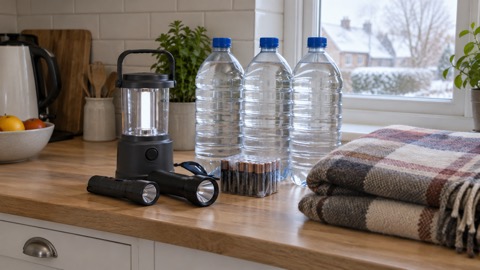
For most households, the realistic plan is not to run the boiler from backup power but to keep warm without it, keep a torch and a charged power bank to hand, and wait for the network to be restored. Our power cut kit checklist and what to keep charged pages cover the rest.
Electric heaters and storage heaters on backup power
If you are considering backup power for heating, be realistic about what it can do. Electric heaters are among the most power-hungry appliances in the home, and a small backup setup that will run lights and phone chargers all evening will not run an electric heater for long. The practical approach during an outage is the one above: keep one person in one warm room, in layers, rather than trying to replace the central heating.
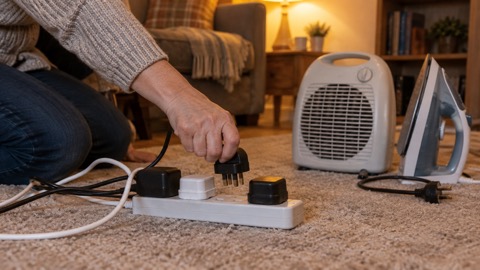
Wherever you use a plug-in electric heater, placement matters. Wiltshire and Swindon Prepared advise you to "think about where you put them so they are away from anything that can catch fire"5. That applies doubly in a power cut, when you may be using heaters in unfamiliar spots, running extension leads, or lighting candles as well. Keep heaters clear of curtains, bedding and furniture, and follow the fire service's rule of switching them off when you leave the room or go to bed10.
Storage heaters are a special case, because they are designed around electricity. They charge up on off-peak electricity and release the stored heat through the day. In a power cut they cannot charge, and they will only give out whatever heat is already stored in their bricks, which will fade as the outage goes on. Treat them as unavailable during an outage and fall back on the wrap-up-warm measures above. If your storage heaters are on an Economy 7 or similar tariff controlled by an old Radio Teleswitch meter, read the RTS section below, because the change to that system can affect your heating and hot water even when the power is on.
If you are on a prepayment meter, there is an added risk to plan around. Ofgem's consumer advice notes that "if you forget or cannot afford to top up there is a risk that you will lose access to heat and power (called 'self-disconnection')"16. Keep your meter topped up ahead of cold weather, and if you are struggling, contact your supplier: help is available before the credit runs out.
If you smell gas: open the windows and leave the switches alone
A power cut does not normally cause a gas leak, but storms, floods and heating work can, and the correct actions are the same whatever the cause. They are also the same across England, Scotland, Wales and Northern Ireland, because they come from national gas safety rules.
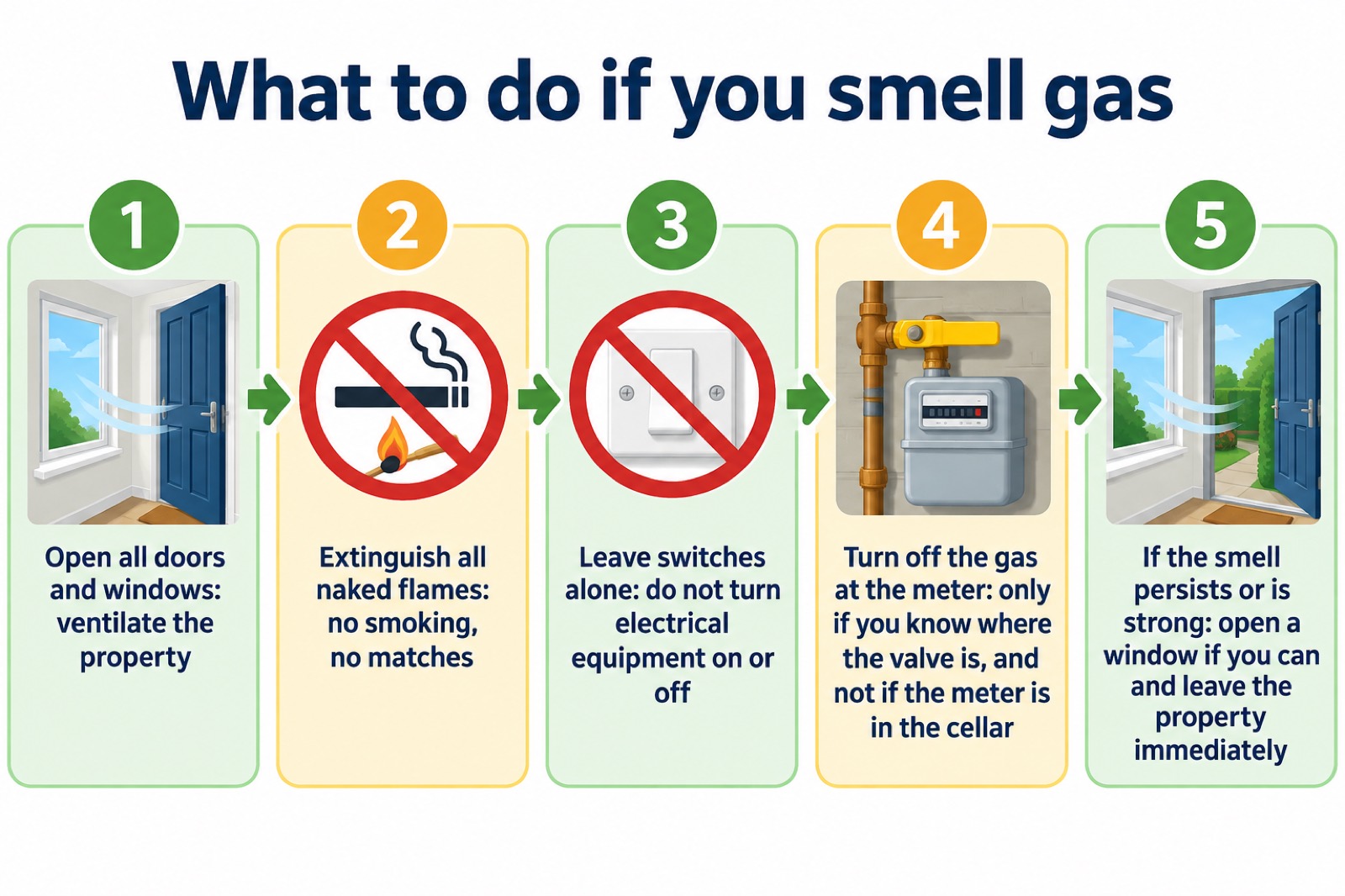
The core instructions, from nidirect and repeated by councils and resilience partnerships across the UK, are:
- Open all doors and windows4
- Turn off the gas supply at the meter, unless the meter is in the cellar, in which case do not enter the cellar if the smell is coming from there17
- Extinguish all naked flames, and do not smoke or strike matches17
- Do not turn any electrical equipment, power or light switches on or off4
- If the smell is strong or persists, open a window if you can and leave the property immediately19
The switch rule is the one people most often get wrong. Operating a light switch, even switching something off, can create a small spark inside the switch that is enough to ignite gas. The Health and Safety Executive's advice for a suspected leak is to open all the doors and windows and shut off the gas supply at the meter control valve if you know where it is20. Devon and Somerset Fire and Rescue Service adds the same warning for tenants: "Don't smoke or strike matches. Don't turn electrical switches on or off"18.
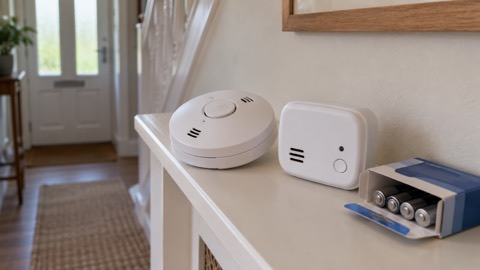
The same ventilation rule applies if you suspect an appliance is spilling carbon monoxide: the HSE advises you to open all doors and windows to ventilate the room20. Carbon monoxide has no smell, so an audible carbon monoxide alarm is the only reliable warning. Our pages on carbon monoxide risks when the heating is off and on alarms that keep working without mains cover what to install and where.
If your home has been flooded, do not simply relight the boiler when the power returns. Wiltshire and Swindon Prepared advise: "If you have gas or oil central heating, make sure to get it checked by a qualified engineer before turning it on"21. Water and heating systems do not mix, and a flooded boiler or flue can be dangerous in ways that are not visible.
Only a Gas Safe registered engineer can work on your boiler
When the power comes back and the boiler will not restart, or when you want the system checked after a flood or a leak, the law is clear about who may do the work. The Health and Safety Executive states that gas work undertaken in homes and certain commercial premises must be done by a Gas Safe registered engineer22, and Wiltshire and Swindon Prepared put it plainly: "any work on appliances (e.g. cookers, boilers or fires) has to be carried out by a Gas Safe Registered engineer"5. That covers fitting, fixing and servicing23.
The boundaries are worth knowing. A non-registered person may carry out "wet work", installing the water pipes and radiators for a heating system, but any work on the gas boiler itself, and the final connection of the water pipework to the boiler, must be done by a Gas Safe registered engineer24. A Gas Safe registered engineer must fit and check a gas appliance; a non-registered engineer may not24. And it is not acceptable for a registered engineer to knowingly sign off gas work carried out by someone who is not registered: where that happens, both the registered and the unregistered installer may face prosecution24. Even a former gas fitter may not carry out the annual safety checks: those must be done by a Gas Safe registered engineer24.
Gas Safe Register is the Health and Safety Executive appointed provider of the gas installer registration scheme25, and it has replaced the old CORGI registration25. If you remember CORGI badges from years ago, that is the old scheme; today the mark to look for is Gas Safe.
Checking an engineer is genuine
All Gas Safe registered engineers carry ID cards which tell you which appliances they are qualified to work on, with their competencies clearly marked on the back of the card20. Check the card covers the work you need, not just that a card exists. There are several ways to verify registration:
| How to check | What to do | What you get |
|---|---|---|
| The ID card | Look at the competencies marked on the back | Which appliances the engineer is qualified to work on20 |
| Check an Engineer service | Input the licence number from the engineer's ID card on the Gas Safe Register website | Pictures of the registered engineers and details of their qualifications20 |
| Find an Engineer service | Enter your postcode on the Gas Safe Register website | Local registered engineers26 |
| Text service | Text Gas and the business registration number to 85080 | A text back confirming whether the registration number is registered26 |
| Photo verification | After confirming registration, reply with Photo and the engineer's licence number | The engineer's photograph sent to your phone, if the engineer has signed up26 |
| Freefone helpline | Call 0800 408 5500 | Find and check engineers by phone26 |
If an engineer recommends that more work needs to be done on your appliance, the Gas Safe Register advises you to always follow the advice given; if in doubt, follow it in the interim and contact the Gas Safe Register for further advice20. And if you suspect someone is working on gas appliances without being Gas Safe registered, you can make a report to the Gas Safe Register through its website27.
To stay ahead of the annual check, use the Register's reminder service: give them the date your appliances are due to be checked and they will drop you a single email each year to remind you23. West Midlands Ambulance Service also advises households to have heating and cooking appliances checked by a Gas Safe registered engineer to make sure they are working properly and are safe12.
Radio Teleswitch meters: heating and hot water that may stop working as normal
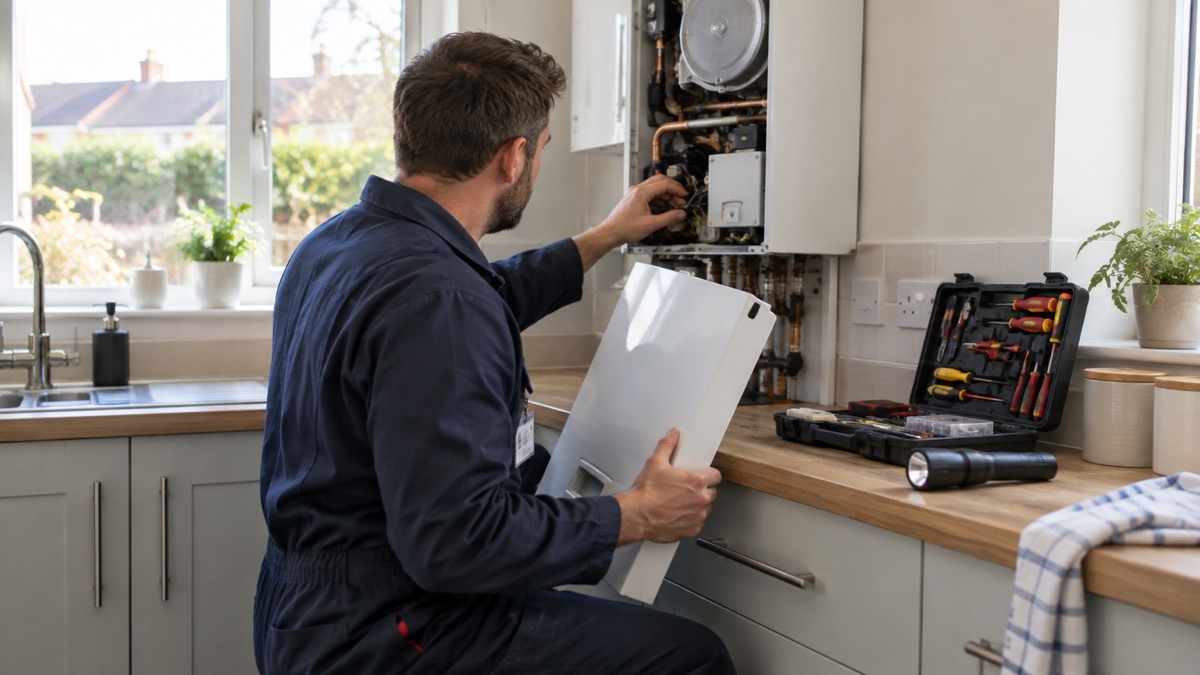
A separate issue affects some households even when the power is on. The Radio Teleswitch Service, or RTS, also known as Dynamic Teleswitch Service (DTS), is an old radio signal used to tell certain electricity meters when off-peak rates apply. It is reaching the end of its operational life, and from 30 June 2025 a phase out began of the RTS functionality for small groups of meters at a time, with customers informed directly6.
The switch-off affects energy customers who have an RTS meter in their home6. The practical consequence is that heating and hot water supply may stop functioning as normal6. Many RTS households have storage heaters or immersion heaters that are controlled by the meter's off-peak signal, so if your hot water or heating comes on at odd times, or stops coming on at all, the RTS phase-out may be the reason rather than a fault in the appliance.
RTS meters are most common in homes with electric heating, particularly in Scotland, but households with them exist across Britain. If you are not sure whether you have one, an RTS meter usually has a separate teleswitch unit or a marked RTS display; your supplier can confirm it from your account.
What to ask your electricity supplier about an RTS meter
Your energy supplier, not the network operator, is responsible for sorting out your metering. Ofgem's consumer advice states that electricity suppliers should ensure all RTS meter customers have appropriate metering arrangements in place at least 3 to 4 months before any end date16. So the first question to ask your supplier is simple: do I have an RTS meter, and when will it be phased out?
Then ask what the replacement will be. Most households will be moved to a modern meter, but the type matters. If the replacement is a prepayment meter, be aware of the risk Ofgem describes: if you forget or cannot afford to top up, you risk losing access to heat and power, called self-disconnection16. Suppliers agreed in February 2023 to stop force-fitting prepayment meters, or switching smart meters to prepayment mode, without the customer's consent16, so you have a say in the decision and should use it.
A few practical points to keep in mind:
- If your supply is cut off because of a faulty energy meter, contact your energy supplier rather than the network operator3
- For an unplanned power cut, report it to your local network operator using their website, or call 105 for free3
- Keep the power cut helpline number, 105, somewhere accessible at home28
- If your gas supply is off in an unplanned cut, you can claim £70 extra for every additional 24 hours your gas supply is off, increasing depending on how long the supply is off29
If you rely on your electricity supply for health reasons, or someone in the household does, also ask about the Priority Services Register, which gives extra help during outages. Our page on planning for a power cut and the household emergency plan checklist cover the rest of the preparation.
When the power comes back: restarting the heating
Once the electricity is restored, most boilers will simply restart when you switch them back on, and the clock or timer will need resetting if it does not have a battery backup. If the boiler does not fire, check its own power switch and the household trip switches before calling anyone, and check whether the programmer has reverted to a default schedule.
Do not open the boiler's casing or attempt any work on the gas side yourself: that is the Gas Safe registered engineer's job, by law22. If the boiler ran dry, was flooded, or you smelled gas at any point, get it checked by a qualified engineer before turning it on21. Our page on what to check and switch back on when the supply returns covers the rest of the house, and how long until the electricity comes back explains what to expect while you wait.
For the longer term, the measures on this page are the same ones that carry you through any winter outage: know that the boiler stops with the mains, have blankets and torches ready, keep one room warm, treat gas with respect, and keep the Gas Safe Register's details to hand. The power cuts section of this site brings the rest together.
Sources (29)
- Power cuts: be informed about hazards, prepare.campaign.gov.uk
- Food safety in the kitchen: power cuts, Food Standards Scotland
- Check if you can get payment for a power cut, Ofgem
- Energy, power supply and utilities, nidirect
- What you might need in a gas outage, Wiltshire and Swindon Prepared
- The Radio Teleswitch Service switch-off: what you need to know, Wiltshire and Swindon Prepared
- Stay safe in a thunderstorm, Met Office
- Winter ready, Isle of Anglesey County Council
- Met Office weather ready: tips for snow and ice, Met Office
- Power cuts at home, Scottish Fire and Rescue Service
- Strong winds and heavy rain warning: information and advice, nidirect
- Cold weather advice, West Midlands Ambulance Service NHS Trust
- Be prepared, Lancaster City Council
- Your planned power cut explained: network maintenance and inspection, SSEN
- What are electricity rota loads?, Wiltshire and Swindon Prepared
- England and Wales energy domestic consumer advice, Ofgem
- Power, gas and water: what if they fail, Surrey County Council
- Safety at home: tenants, Devon and Somerset Fire and Rescue Service
- Preparing yourself for emergencies, Greater London Authority
- Gas safety: frequently asked questions, Health and Safety Executive
- Flooding and health: safely cleaning your home, Wiltshire and Swindon Prepared
- Carbon monoxide: hazardous substances, Health and Safety Executive
- Gas safety for tenants, Greater London Authority
- Landlords: gas safety checks and who can carry them out, Health and Safety Executive
- Chief Medical Officer's report, NHS Scotland
- How to check a Gas Safe registered engineer or business, Health and Safety Executive
- Gas safety: owner-occupier frequently asked questions, Health and Safety Executive
- 10 things you should do now to prepare for summer, Met Office
- Plan for a power cut, Ofgem
 Power Cut Kit Checklist
 What to Keep Charged
 Household Emergency Plan
 Reporting a Power Cut
 What to Do in a Power Cut
 Getting Ready for a Power Cut
 Fridge and Freezer Food
 Keeping Warm Without Electricity
 Cold Homes and Health
 Carbon Monoxide Risks
 Staying Safe in the Dark
 Smoke and Carbon Monoxide Alarms
 How Long Until Power Returns
 When the Power Comes Back
 Fallen Overhead Lines