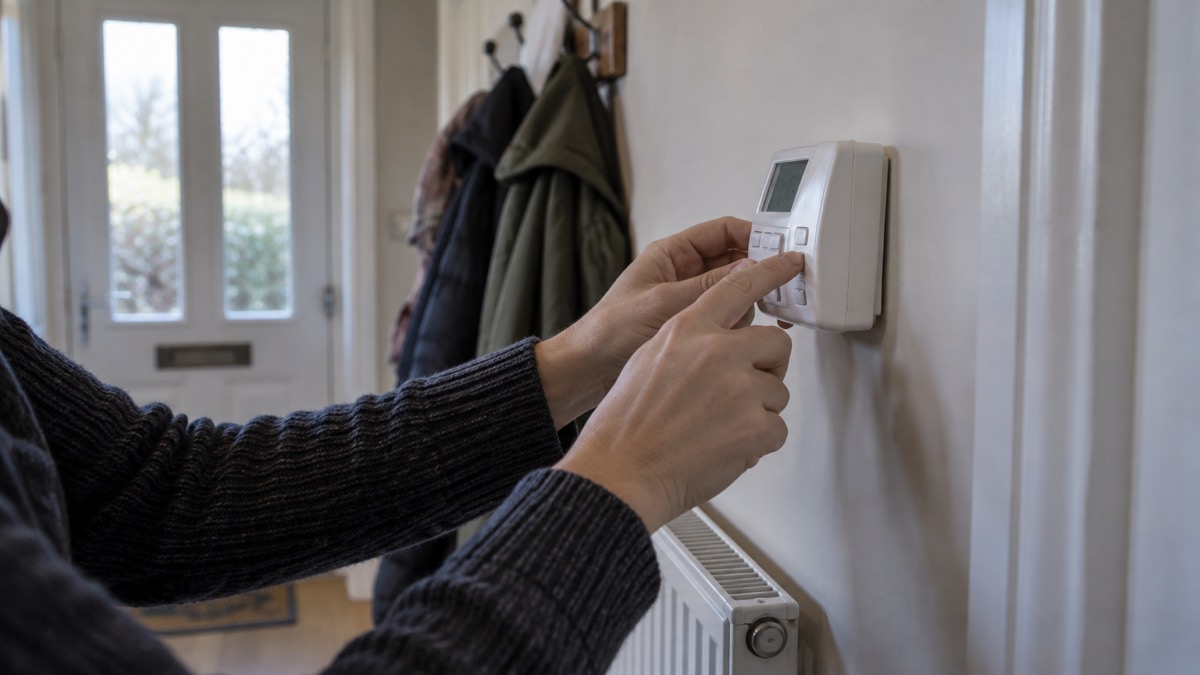
A heating programmer that has lost its settings after a power cut is behaving normally, not breaking. Most programmers and thermostats keep time and schedule in memory that depends on mains power, so when the supply goes off the clock stops or resets, and the heating and hot water come back on the wrong schedule or not at all. The first thing to do when the power returns is check the clock and the timer, then put your schedule back.
Your boiler should restart by itself. SGN, a gas network operator, says that when the electricity supply returns, your boiler should work without any intervention1. Most boilers use electricity for pumps, fans and electronic controls, which is why they stop during a cut, but they should come back when power does1. If the boiler stays silent while the programmer is lit, the problem is likely the boiler rather than the programmer.
The work after an outage is mostly small: reset the clock, check the thermostat timer, reprogramme the schedule, and check that the frost protection setting is still where you left it. This page sets out why settings are lost, what to check first, how to tell a reset from a fault, and how to keep your settings through the next cut.
Why a programmer loses its settings when the power goes off
A programmer is an electric timing device. It runs a clock, holds a schedule in memory and switches the boiler and hot water on and off at set times. All of that depends on the mains supply. When the power goes off, the clock stops or resets, and the schedule may be held only while the unit has power. That is why the heating can come on at the wrong time, or not at all, after an outage.
The same applies to the thermostat. One network operator's advice after a cut is to check the timer to make sure it is correct, and to reset the timer and thermostat as soon as the electricity comes back on6. Another council's guidance is to reset the clocks on any electric timing devices and check the timer on your thermostat is correct2. Neither is a sign of a fault: it is the expected behaviour of equipment that keeps time using mains electricity.
Modern heating systems add another layer. Heat pumps stop during a planned outage and resume normal operation once power returns7. Solar panels, heat pumps, EV chargers and batteries automatically switch off during a power cut to protect the home and engineers, and should not be damaged8. Smart equipment such as boiler controls can be affected when power goes off and comes back on, and one operator advises disconnecting smart equipment before a planned cut8. None of this means the equipment is broken, but it does mean the settings need checking once the power is back.
Check the clock and time first
Before you touch the schedule, check the clock. A programmer with the wrong time will run the right schedule at the wrong hours, so the heating may come on at midnight and stay off in the morning. Council guidance after a power cut is to reset the clocks on any electric timing devices and check the timer on your thermostat is correct2. One network operator puts it plainly: check your timer to make sure it is correct, and reset the timer and thermostat as soon as your electricity comes back on6.
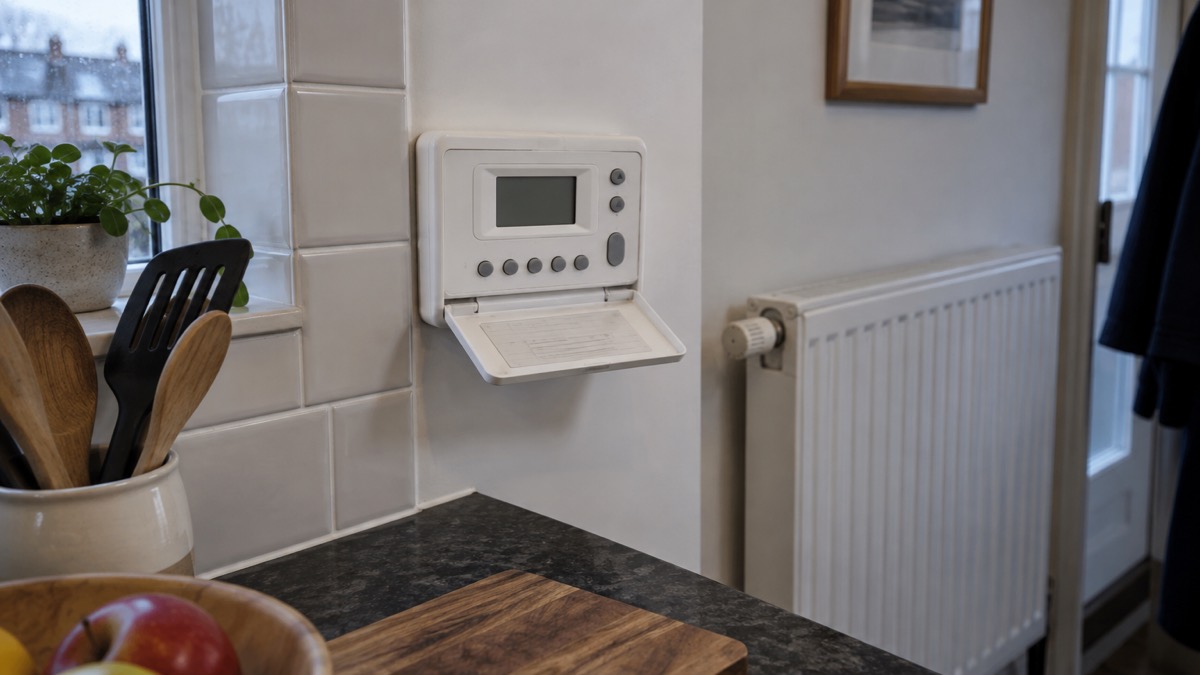
Some equipment will not work at all until its clock is set. One operator notes that some equipment such as ovens may not work until the clock has been reset9. The same principle applies to heating controls: set the time first, then the schedule.
If the power has not come back when you expected, check before you assume a fault. For a planned cut, 5 pm is the latest time one network operator will turn the power back on10. Emergency power cuts are normally restored after the three hours, unless operational reasons prevent it, and power might be switched off or reconnected around 30 minutes before or after the published time4. For planned cuts, one source says power should be back within one hour after the expected time of reconnection11. If it is not, report it: call 105 or use the Power Cut website to be directed to the operator for your area5.
Resetting the heating and hot water schedule
Once the clock is right, put the schedule back. Lancashire Preparedness advises that you may need to reprogramme many of your electronic devices after a power cut3. For heating, that means the on and off times for heating and hot water, the temperature settings, and any holiday or frost mode.
Work through it in this order:
- Set the clock to the correct time and date2.
- Check the thermostat timer and reset it if it is wrong6.
- Re-enter the heating on and off times for each day.
- Re-enter the hot water times if your system has a cylinder.
- Check the frost protection setting is still on and set to the temperature you want.
- You may need to reprogramme many of your electronic devices8.
If your system has a hot water cylinder, the programmer usually controls the cylinder's heating times as well as the radiators, so both schedules need checking. If you have a combi boiler, hot water is usually on demand and the programmer mainly controls the heating, but the clock still matters for the heating schedule.
Boiler or programmer: telling a reset from a fault
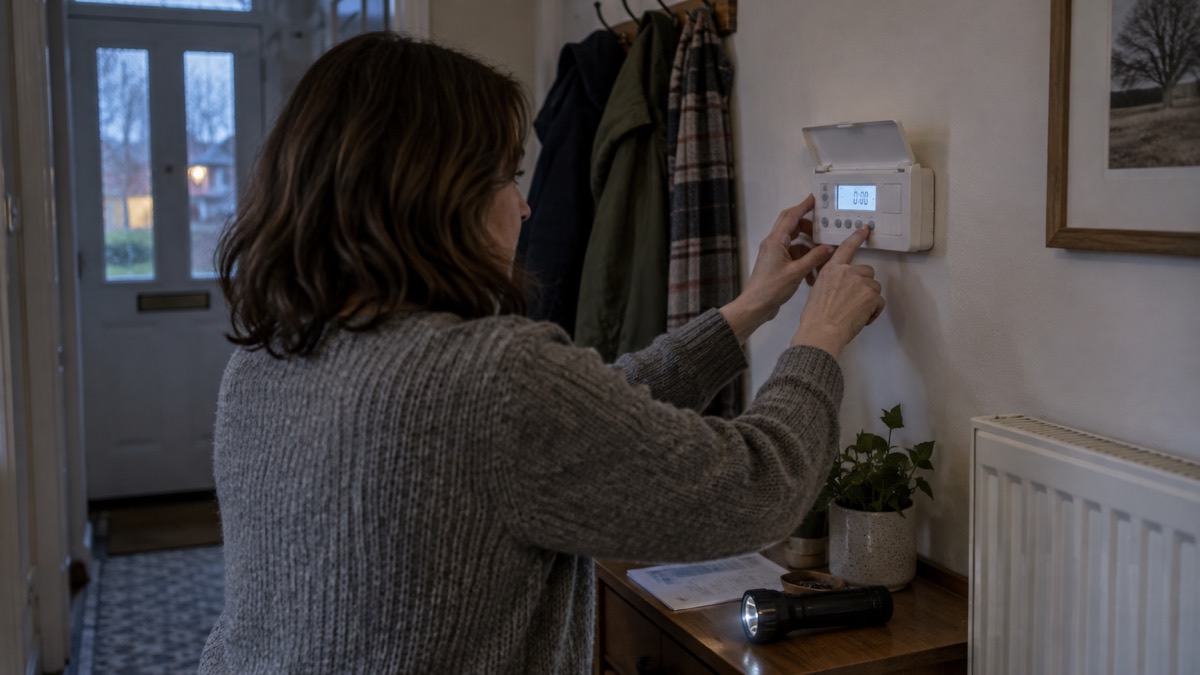
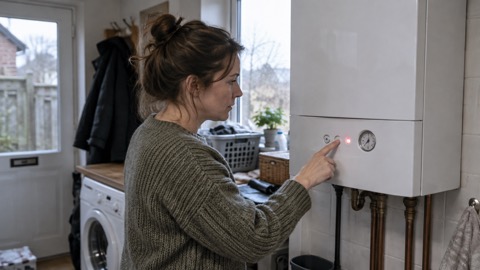
The useful test is simple. If the programmer display is lit and the clock is running but the boiler does nothing, the problem is likely at the boiler. If the boiler fires when you press the programmer's override or advance button, the programmer is working and the schedule is the issue.
SGN's guidance is that when the electricity supply returns, your boiler should work without any intervention1. If it does not, and the problem is unrelated to the power cut, you will need to contact a Gas Safe registered engineer to come out and take a look12. Northern Gas Networks gives the same advice: if your boiler is not working, but is unrelated to a power cut, contact a Gas Safe registered engineer, via the Gas Safe Register website or 0800 408 550013.
A flashing display can be either. On one Ideal boiler, a flashing L and 4 means reset the boiler, while a flashing L and C means the boiler has been reset too many times in 15 minutes, and the maker's instruction is to turn the power to the boiler on and off again to reset14. Check your own maker's fault code list before resetting repeatedly. Our guide to boiler fault codes, flashing lights and lockouts explains what the common codes mean, and how many times it is safe to reset a boiler lockout covers the reset limit.
Keeping your settings through the next power cut
You cannot stop a power cut resetting a programmer that depends on mains power, but you can make the recovery quick and keep the house safe in the meantime.
Before a planned cut:
- Turn the temperature settings down a couple of hours before the power is due to be switched off, so the fridge and freezer hold their cold9.
- Disconnect smart equipment such as boiler controls before the power goes off and comes back on8.
- Fill a flask with hot water and make up a hot water bottle if you get advance notice15.
- Keep a mobile phone charged and write down important phone numbers15.
During the cut:
- Leave a light on so you know when power is restored16.
- Switch off all electrical appliances that should not be left unattended, ready for when the power comes back on17.
- Keep fridge and freezer doors closed2.
After the cut:
- Reset the clocks on electric timing devices and check the thermostat timer2.
- You may need to reprogramme many of your electronic devices3.
- Check the frost protection setting.
- Check on vulnerable neighbours or family15.
If you have a heat pump, it will stop during the outage and resume normal operation once power returns7. Our guide to heat pump breakdowns in cold weather covers what to check if it does not.
When to call a heating engineer
Call a Gas Safe registered engineer when the boiler does not restart after the power returns and the programmer is working, when the boiler shows a fault code you cannot clear with a single reset, or when you smell gas or see other warning signs. If you have been disconnected from the gas, electricity, oil or water supply, you must use a qualified engineer to get reconnected13.
If your electricity has not been restored, contact your network operator first. One operator asks customers to call its helpline on 03457643643 if supply has not been restored after four hours19. More widely, call 105 or visit the Power Cut website to be directed to the operator for your area5. If you spot damaged or dangerous electrical equipment, including during or after a power cut, report the problem, but call 999 in an emergency5.
If you rent your home and a heating appliance has been disconnected, the landlord must provide the tenant with emergency heating, contacting the local authority for more information, while arranging remedial work by a Gas Safe registered engineer20. Our guide to broken boilers in rented homes sets out what your landlord must do.
If your home has been affected by a fire, and you have been disconnected from the gas, electricity, oil or water supply, you must use a qualified engineer to get reconnected21. Firefighters may have turned off or disconnected your supplies, and only a qualified trade person should reconnect you22.
For the wider picture, see our guides to power cuts, gas and heating failures and backup power at home.
Sources (22)
- Boiler not working, SGN, 2026
- Power cuts, Wigan Council, 2026
- Loss of essential services, Lancashire Preparedness, 2026
- Emergency power cuts, Electricity North West, 2026
- Power, gas and water: what if they fail, Surrey County Council, 2025
- Tips to help you during a power cut, Electricity North West, 2026
- Planned power cuts, SSEN, 2026
- Your planned power cut explained, SSEN, 2026
- Tips to prepare for a power cut, Electricity North West, 2026
- Planned power cuts, Electricity North West, 2026
- Preparing for a power cut, Centre for Sustainable Energy, 2026
- Incidents, SGN, 2026
- Boiler not working, Northern Gas Networks, 2026
- Boiler fault codes, Ideal Heating, 2026
- Storm advice, Power Cut 105, 2026
- Types of power cut, Power Cut 105, 2026
- 3 tips for staying safe in lightning - Met Office, Met Office
- Power cuts | Scottish Fire and Rescue Service, Scottish Fire and Rescue Service
- Emergency power cuts, NIE Networks, 2026
- Gas safety FAQs, Health and Safety Executive, 2026
- After a house fire, British Red Cross, 2026
- After a fire, Oxfordshire County Council, 2026
 Checks Before Calling Engineer
 Boiler Checks When Moving In
 Power Cut Kit Checklist
 Stop a Condensate Pipe Freezing
 Repressurising a Combi Boiler
 Hot Water but No Radiators
 Resetting a Boiler Lockout
 Boiler Leaking Water
 Boiler Overheating
 How to Bleed a Radiator
 Boiler On When Away in Winter
 Missed Reconnection Visit
 Prepayment Credit but No Gas
 Low Supply Pressure
 Checking a Network Engineer's ID