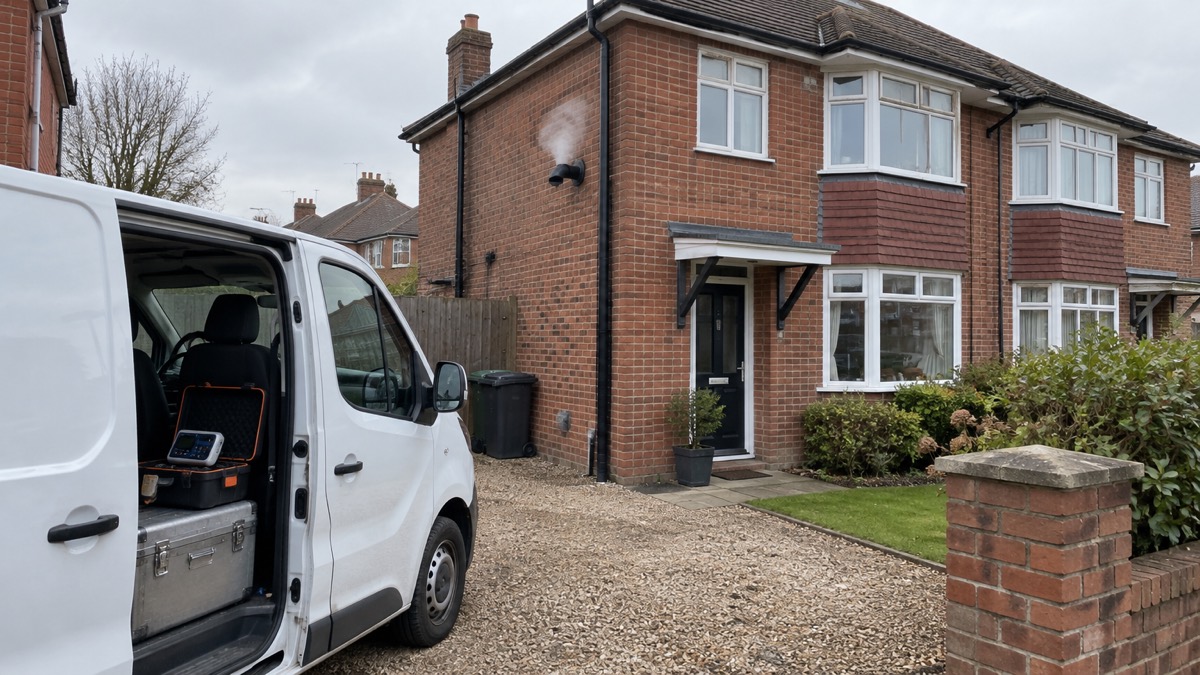
Only an engineer on the Gas Safe Register may legally work on the gas appliances in your home: fitting, fixing and servicing boilers, gas fires and most types of gas cookers is reserved to registered engineers by law1. Anyone else who carries out that work, including a competent friend, a general handyman or you yourself, is breaking the law2. The rule exists because faulty gas work kills: badly fitted or poorly maintained appliances produce carbon monoxide, and the Health and Safety Executive states plainly that gas work undertaken in homes and certain commercial premises must be done by a Gas Safe registered engineer3.
Finding a registered engineer is straightforward. The Gas Safe Register website has a Find an Engineer service where you enter your postcode and are shown local registered engineers, and there are more than 120,000 registered engineers across more than 60,000 registered businesses to choose from4. Before letting anyone start work, ask for their Gas Safe Register ID card: it carries their photo and their own unique licence number, and the back lists exactly which gas appliances they are qualified to work on5. You can confirm the licence number by texting Gas and the seven digit number to 85080, by using the Check an Engineer service online, or by calling the free helpline on 0800 408 55004.
Why the law reserves gas work to registered engineers
Gas Safe Register is the Health and Safety Executive appointed provider of the gas installer registration scheme8, and the legal position is unambiguous. Only Gas Safe registered engineers can work on gas and fit, fix and service boilers, gas fires and most types of gas cookers in your home: it is the law1. Argyll and Bute Council puts the same rule in plain terms: only a Gas Safe registered engineer should carry out the work, and if someone other than a registered engineer does so, they are breaking the law2. The Health and Safety Executive confirms that a Gas Safe registered engineer must fit and check a gas appliance, and that a non-registered engineer may not9.
This is not a paperwork technicality. Gas appliances that are wrongly fitted or badly maintained can leak gas or produce carbon monoxide, and the consequences are serious. That is why fire and rescue services across the UK repeat the same instruction: have appliances checked every year by a Gas Safe registered engineer10, have them serviced regularly by a Gas Safe registered engineer11, and never attempt DIY repairs on gas appliances13.
The rule applies to every kind of gas work in the home, not just boilers. Any work on appliances such as cookers, boilers or fires has to be carried out by a Gas Safe registered engineer, including after a gas leak has been stopped and made safe14. Gas space heaters must be serviced annually by a qualified Gas Safe registered engineer, and repairs to them must only be carried out by a Gas Safe registered engineer15. If you have any concerns about unsafe gas equipment, contact a Gas Safe registered engineer, who can inspect the equipment and make any repairs16.
One point catches people out: registration alone is not enough, because not every registered engineer is qualified for every job. Not all engineers can work on caravans or non-domestic properties, so check that any gas engineer is on the Gas Safe Register and that they are appropriately qualified to undertake the work you need2. The ID card, covered below, is how you do that.
Finding an engineer near you
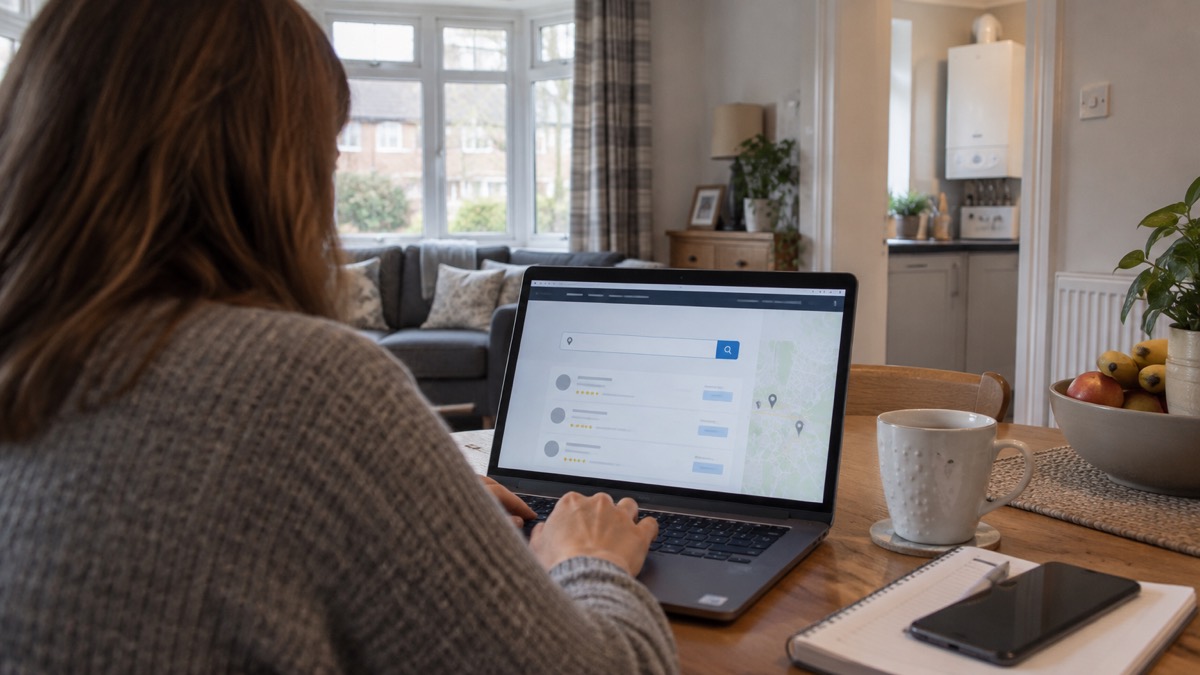
The quickest route is the Gas Safe Register website. It has a Find an Engineer service where you can find a local registered engineer simply by inputting your postcode4. The Health and Safety Register's own checking page describes the same service: use Find an Engineer on the Gas Safe Register website by entering your postcode, or call the freefone helpline on 0800 408 55005. Northern Gas Networks, a gas network operator, directs customers the same way: visit gassaferegister.co.uk to find an engineer near you17.
If you would rather speak to someone, the free helpline on 0800 408 5500 will help you find and check engineers18. You do not need to know anything about your boiler to ring it: say your postcode and what has gone wrong, and they will point you to registered engineers in your area.
There are more than 120,000 Gas Safe registered engineers working for more than 60,000 registered businesses, so in most areas you will have a choice1. When you contact a business, remember that both the business and the individual engineer matter: you can check that the engineer or the business is on the Gas Safe Register website9, and the text checking service covers both, as set out below.
Different circumstances call for slightly different approaches:
| Your situation | How to find the right engineer |
|---|---|
| Routine annual service | Find an Engineer by postcode on the Gas Safe Register website, or call 0800 408 55004 |
| Boiler or appliance breakdown | Same route; if you smell gas or suspect a leak, the National Gas Emergency Service makes the property safe first, then any appliance work must be carried out by a Gas Safe registered engineer14 |
| Suspected carbon monoxide | Get a Gas Safe registered engineer to inspect your gas appliances and flues to see if there is a dangerous problem10 |
| After a flood | Ask a Gas Safe registered engineer to do an inspection before using any gas appliance again20 |
| Caravan or non-domestic property | Check the engineer is qualified for that work, as not all are2 |
The ID card: what to look for before work starts
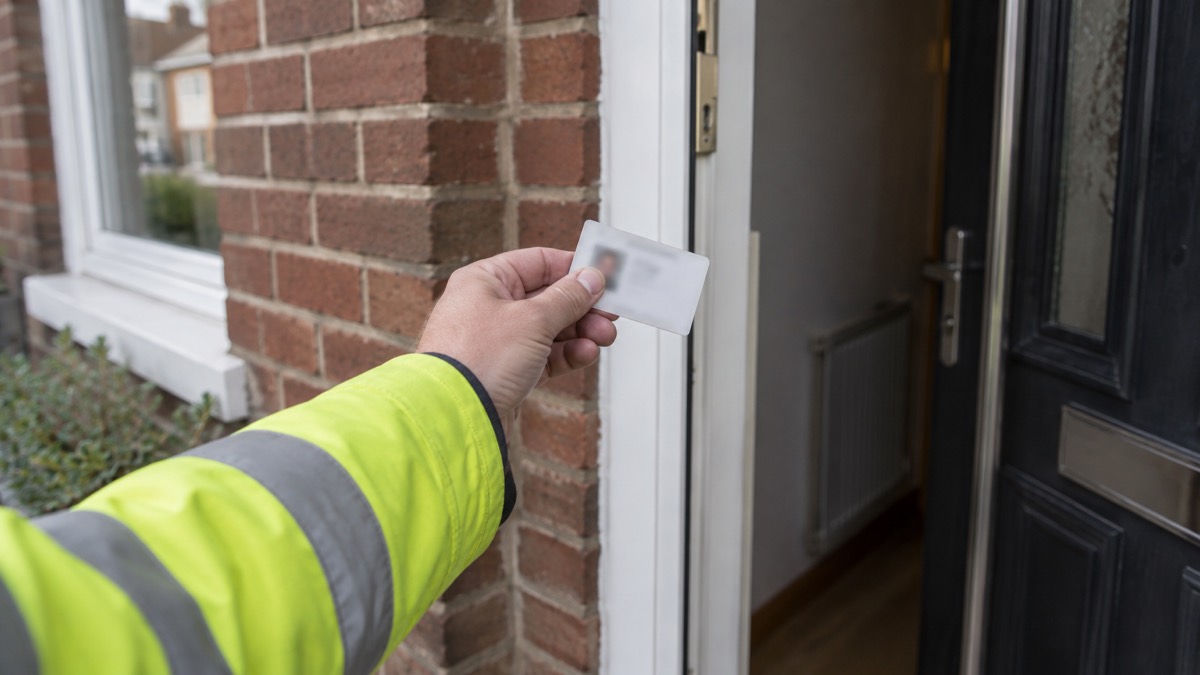
Every engineer on the Gas Safe Register carries an ID card with their own unique licence number and a photograph4. All Gas Safe registered engineers carry ID cards which tell you which appliances they are qualified to work on, and those competencies are clearly marked on the back of the card4. Warwickshire County Council's home heating safety advice is to check their Gas Safe ID cards, which should display their photo and details of their gas registration7, and the Greater London Authority tells tenants to make sure you always check the engineer's Gas Safe Register ID card6.
So there are three things to check, in order:
- The photo. The card carries the engineer's photograph; make sure the person holding it is the person on it4.
- The licence number. Every engineer has their own unique licence number on the card4. Confirm it is registered using one of the checking services below.
- The back of the card. The competencies listed there tell you which gas appliances that engineer is qualified to work on4. An engineer registered for boilers may not be registered for gas fires or cookers, so match the list to your job.
The Gas Safe Register website also offers a Check an Engineer service: input the licence number from the engineer's ID card and you will see pictures of the registered engineers and details of their qualifications4. That lets you compare the photo on your screen with the person at your door, which is the strongest check available to a householder.
Confirming a licence number: by text, online or by phone
The Gas Safe Register provides three ways to confirm that an engineer or business is genuinely registered, and all of them are free to use.
By text. Consumers can check an engineer is registered by texting Gas and the engineer's seven digit licence number to 85080, and you will receive a text message confirming if the licence card number is registered4. The same service works for businesses: text Gas and the business registration number to 85080 and you will receive a text back confirming whether the registration number is registered4. Check both if you can: the engineer at your door and the firm that sent them.
By photo message. After confirming an engineer's registration, you can reply with the word Photo and the engineer's licence number, and the engineer's photograph will be sent to your phone, providing the engineer has signed up to this service5. Not every engineer has signed up, so a photo not arriving is not on its own proof of a problem, but when one does arrive you can match it against the person standing in your kitchen.
Online. Use the Check an Engineer service on the Gas Safe Register website by inputting the licence number from the engineer's ID card, which shows pictures of the registered engineers and details of their qualifications4. You can also check that the engineer or the business is on the Gas Safe Register website directly9.
By phone. Call the freefone helpline on 0800 408 55004. Separately, the Gas Safe Register offers technical support for registered gas engineers themselves on a technical helpline, 0800 508 55771; that line is for engineers, not for householders checking registration.
When carbon monoxide is suspected
If your carbon monoxide alarm sounds, or someone in the household has symptoms that point to carbon monoxide, get a Gas Safe registered engineer to inspect your gas appliances and flues to see if there is a dangerous problem; the contact route is the Gas Safe Register on 0800 408 550010. The Health and Safety Executive states that gas work undertaken in homes and certain commercial premises must be done by a Gas Safe registered engineer3, and carbon monoxide is the reason why: a badly burning appliance can fill a room with a gas you cannot see or smell.
Two things should happen together, not instead of each other. First, protect health: if symptoms suggest carbon monoxide poisoning, seek medical help, and the fire and rescue services advise fitting a carbon monoxide detector21. Second, find the source: have your heating and cooking appliances checked by a Gas Safe registered engineer to help protect you from exposure to high levels of carbon monoxide, as Sussex resilience guidance for cold weather puts it22. North Yorkshire Fire and Rescue Service adds that you should have any gas appliances serviced regularly by a competent person, and that engineers should be Gas Safe registered23.
A carbon monoxide alarm is a warning device, not a fix. As Northamptonshire Fire and Rescue Service puts it:
If you suspect carbon monoxide, get everyone out into fresh air, then contact the right body for your fuel. You can report carbon monoxide incidents to HETAS by email or on 01684 27817024. When using pumps and generators to clear flood waters, the Gas Safe Register advises following the manufacturer's instructions and making sure there is enough ventilation to prevent potential carbon monoxide exposure from exhaust gases25.
That is the division of work: the alarm tells you something is wrong, and only a registered engineer can find out what and put it right. If the emergency services or the gas network attend first, an engineer will be sent to make the property safe19, but making the property safe is not the same as repairing the appliance: any work on appliances such as cookers, boilers or fires has to be carried out by a Gas Safe registered engineer afterwards14. Our page on unsafe appliances covers the warning signs, and home emergencies covers the immediate steps.
If the engineer says more work is needed
Sometimes an engineer inspects an appliance and finds a fault they cannot fix on the spot, or recommends replacement parts or a full replacement. The Gas Safe Register's advice to householders is clear:
"If your engineer recommends that more work needs to be done on your appliance always follow the advice given. If you have doubts over the advice follow it in the interim period and contact Gas Safe Register website for further advice."4
In practice that means: if the engineer tells you not to use the boiler until a part is replaced, do not use it, even if you plan to get a second opinion. Following the advice in the interim period keeps the household safe while you check, and the Gas Safe Register website and helpline will give you further advice on whether the recommendation is sound4. This matters most with carbon monoxide risks, where continuing to use an appliance against advice can be dangerous.
If you rent, the position is different: your landlord must arrange an annual gas safety check by a Gas Safe engineer where there are any gas appliances13, and gas appliances must be checked by a registered Gas Safe engineer every year26. Our page on broken boilers in rented homes sets out what your landlord must do and when.
Reporting someone working on gas without registration
If you suspect that someone is working on gas appliances without being Gas Safe registered, you can make a report to the Gas Safe Register through their website4. To report someone working without registration, call Gas Safe Register on the free phone number 0800 408 55001. Argyll and Bute Council adds a second route: if an organisation advertises as Gas Safe but is not on the register, report it to Trading Standards2.
The law has teeth on both sides of the arrangement. The Health and Safety Executive warns that it is not acceptable for a Gas Safe registered engineer to knowingly sign off gas work carried out by a person who is not registered, and that where this occurs, both the registered and unregistered installer may face prosecution9. So the "friendly registered engineer who signs off my DIY work" arrangement is not a loophole: it is an offence for both of you.
Reporting protects other households as well as your own. Unregistered gas work is one of the main ways dangerous appliances enter homes, and the reports the Register receives from the public are how it finds them.
Oil and solid fuel heating: OFTEC and HETAS
Gas Safe registration covers gas. If your home runs on oil or solid fuel, the equivalent registers are different, and Public Health Wales lists all three side by side: for gas, the Gas Safe Register on 0800 408 5500; for oil, OFTEC on 0845 658 5080; for solid fuel, HETAS on 0845 634 562627.
| Fuel | Register | Phone |
|---|---|---|
| Gas | Gas Safe Register | 0800 408 550027 |
| Oil | OFTEC | 0845 658 508027 |
| Solid fuel | HETAS | 0845 634 562627 |
Public Health Wales directs householders to HETAS for registered professional engineers for solid fuel appliances29, and to Gas Safe for gas appliances30. The same numbers appear in official carbon monoxide guidance, which lists OFTEC for oil and biofuel on 0845 658 5080 and HETAS for solid fuel on 0845 634 562628. The Northern Ireland Fire and Rescue Service gives the OFTEC number in the same form31.
The same principles carry across. A solid fuel or biomass appliance should be worked on by a HETAS registered engineer32. An oil boiler should be serviced by an OFTEC registered technician; our page on oil boiler breakdowns covers what to do when one stops working. Whatever the fuel, the annual check matters, and the same yearly rhythm is the safe habit for owner-occupiers.
Checks after floods, and the yearly routine
Two situations deserve a special mention because households often get them wrong. The first is after a flood. If you use gas heating or gas appliances in your home, you will need to get a Gas Safe registered engineer to do an inspection after a flood20. Flood water can reach burners, flues and electrical controls inside an appliance, and damage that is invisible from outside can make the appliance unsafe to relight. Do not attempt to restart a boiler or cooker that has been under water: wait for the inspection. Our flooding guide covers the wider clear-up.
The second is the annual routine. Our page on appliance safety checks explains how often and who gets them free, and boiler servicing explains what the engineer actually checks.
Sources (31)
- Gas Safety at Home, RoSPA, 2026
- Gas Safety, Argyll and Bute Council, 2026
- Carbon Monoxide: Hazardous Substances, Health and Safety Executive, 2026
- Gas Safe Register: Domestic FAQs, Health and Safety Executive, 2026
- Checking a Gas Engineer Is Registered, Health and Safety Executive, 2026
- Gas Safety for Tenants, Greater London Authority, 2026
- Safe Home Heating, Warwickshire County Council, 2026
- Chief Medical Officer's Update on Carbon Monoxide, Scottish Government, 2011
- Landlords: Gas Safety Checks and Who Can Carry Them Out, Health and Safety Executive, 2026
- Carbon Monoxide Safety, Manchester Fire and Rescue Service, 2026
- Carbon Monoxide: Stay Safe at Home, Cheshire Fire and Rescue Service, 2026
- Gas Safe Register: FAQs for Owner-Occupiers, Health and Safety Executive, 2026
- Fire Kills: Prevention Advice, Fire Kills campaign, 2026
- What You Might Need in a Gas Outage, Wiltshire and Swindon Prepared, 2026
- Safe Use of Heaters and Generators, Armagh City, Banbridge and Craigavon Borough Council, 2026
- Energy, Power Supply and Utilities, nidirect, 2025
- Boiler Not Working, Northern Gas Networks, 2026
- Gas safety advice - Cadent Gas Ltd, Cadent Gas Ltd
- Gas Supply Issues, Buckinghamshire Council, 2026
- After a Flood: Clearing Up, nidirect, 2026
- Heating and Chimney Safety, Manchester Fire and Rescue Service, 2026
- Be Ready, Stay Safe, Act Now, Sussex Resilience Forum, 2025
- Smoke and Carbon Monoxide Alarms, North Yorkshire Fire and Rescue Service, 2026
- COleaflet-220525.pdf
- Household Fire Safety, Somerset Council, 2025
- Carbon Monoxide (CO), Public Health Wales, 2025
- CO Diagnosis Algorithm, Department of Health, 2015
- Cold Weather and Health, Public Health Wales, 2026
- Weather and Health, Public Health Wales, 2026
- Safer Together: Fire Risk Identification and Management, Northern Ireland Fire and Rescue Service, 2021
- Chimney Fire Safety Campaign, North Yorkshire Fire and Rescue Service, 2023
 Appliance Safety Checks
 Extra Support for Households