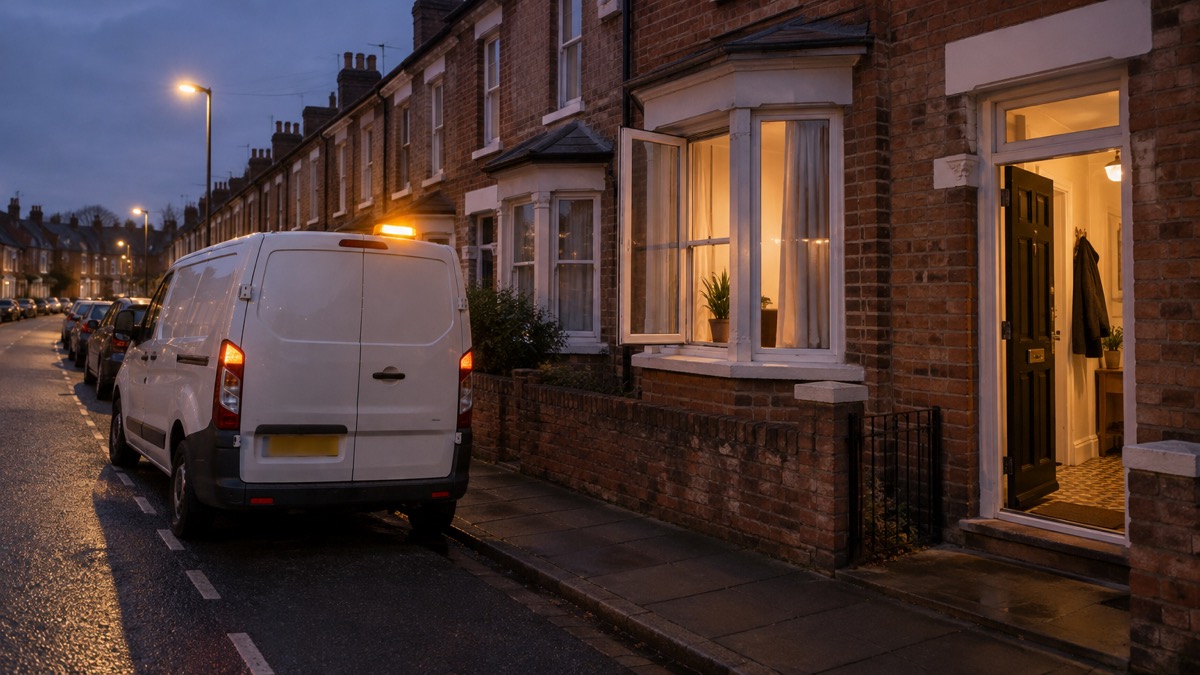
The national gas emergency number for Great Britain is 0800 111 999. It is free to call, and it is open 24 hours a day, seven days a week, 365 days a year1. One number covers the whole of England, Wales and Scotland, whether you smell gas inside your home, outside it, or anywhere in your street3.
Ring it if you smell gas, if you suspect a leak, if you have low gas pressure, or if you suspect carbon monoxide4. You should also use it to report a gas or carbon monoxide emergency, or if a gas pipeline is struck, even if there is no obvious leak5. The service will send out an engineer to keep you and your property safe6.
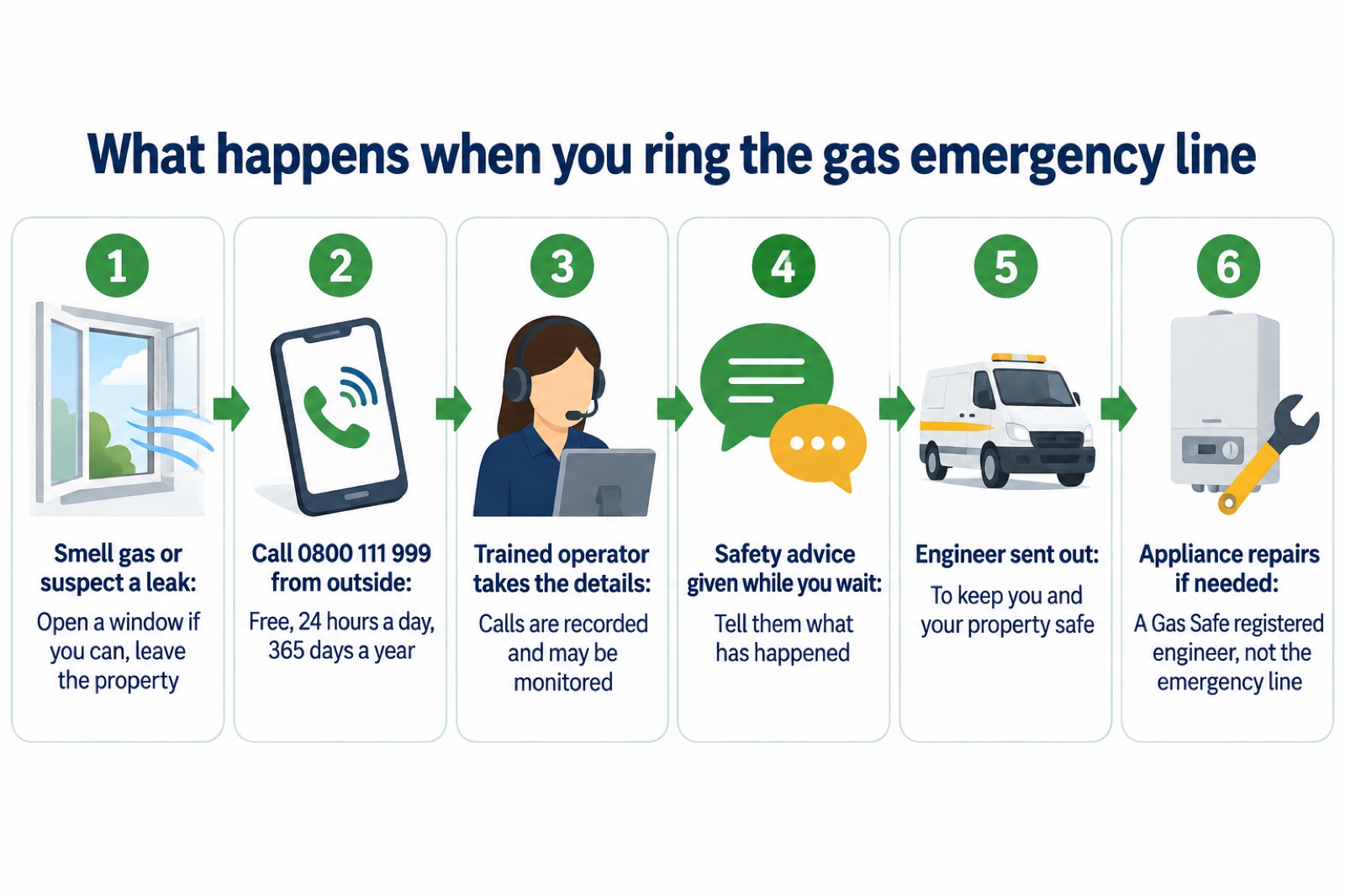
Before anything else, if you can smell gas right now: open a window if you can, leave the property, and call 0800 111 999 from outside7. Do not smoke, light matches, or use any naked flames until you are sure there is no leaking gas present7. If there is a fire, get out, stay out and call 9999.
If you smell gas: what to do straight away
A gas smell is an emergency, and the steps you take in the first minute matter. Local resilience guidance across England is consistent on what to do, and the order is always the same: ventilate if you safely can, get out, then call.
- Open doors and windows if you can. Open a window on your way out to let gas escape. Only do this if it does not delay your escape7.
- Leave the property immediately. Do not stop to collect belongings, and do not go back in to open more windows7.
- Call 0800 111 999 from outside. Use a mobile or a neighbour's phone. The number is free and staffed 24 hours a day1.
- Do not smoke or use naked flames. Do not smoke or use any naked flames until you are sure there is no leaking gas present7.
- Do not turn electrical switches on or off. This includes light switches, and it includes turning things off as well as on, because either can create a spark8.
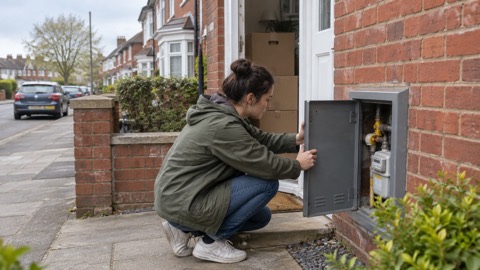
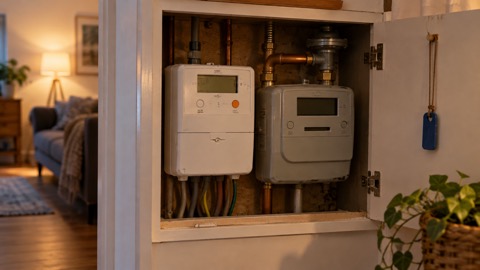
- Turn off the gas at the meter if you can do so safely. Turn off the emergency control valve in the meter box, unless the meter is in the cellar, in which case do not go down to it8.
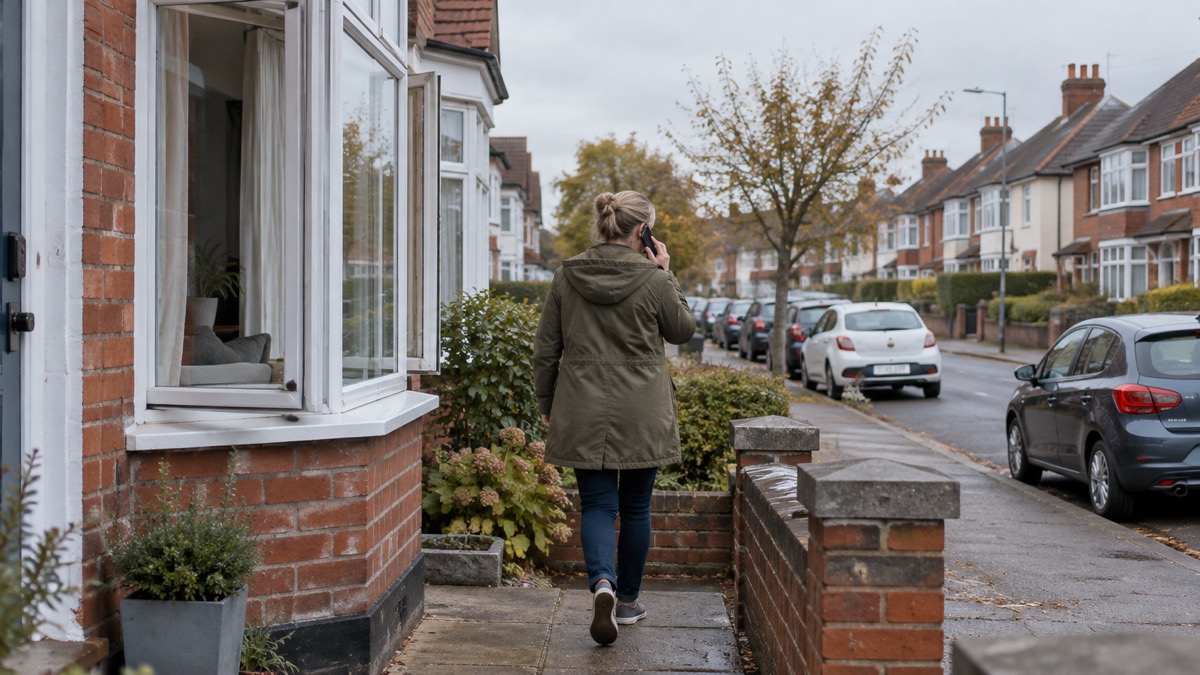
The emergency service exists for exactly this situation. If you smell gas or think you may have a gas leak somewhere, you should call the emergency service straightaway, and you can also call the fire and rescue service12. Whether the smell is inside or outside your property, the same free 24 hour national number applies3. If you smell gas during a flood or after storm damage, the same applies: contact the gas emergency service13.
If you have been evacuated, or you left home because of a smell and are wondering when it is safe to return, call the 24 hour Gas Emergency Number on 0800 111 999 and tell them what has happened, and receive safety advice before going back in. This applies even if the suspected source is not a gas appliance14.
What not to touch, and where not to go
The danger from a gas leak is fire and explosion, and a single spark is enough to set leaking gas alight. That is why the official advice is specific about the things people instinctively do when they smell gas, and why each of them is a mistake.
The two points people most often get wrong are these. First, do not operate any electrical switches, either to turn something on or off, and make sure any naked flames are extinguished8. Second, if the gas leak is in a cellar or basement, do not enter it: the National Gas Emergency Service's advice is to evacuate the building instead8.
Avoid using electrical switches of any kind, and contact the emergency gas helpline on 0800 111 999 immediately15. If a fire has already started, the fire service's advice is plain: get out, stay out and call 9999. Never go back inside a burning or gas-filled building for any reason.
For the wider set of home emergencies, including burst pipes and carbon monoxide, see our home emergencies guide.
When to ring: smells, low pressure and suspected carbon monoxide
The emergency line is for genuine emergencies, and the network operator's own guidance sets out when it applies. Only call the national gas emergency number 0800 111 999 if you have a gas emergency, smell gas, have low gas pressure, or suspect carbon monoxide4.
Smell of gas, inside or outside. Any smell of gas, whether inside your home, in the street, or around a neighbour's property, is a reason to call3. You do not need to know where it is coming from. That is the engineer's job.
Low gas pressure. If your hob burns weakly or your boiler will not run because the supply pressure has dropped, ring the emergency line. Low pressure can indicate a problem on the network, and it is one of the four situations the line exists for4. Our page on low supply pressure goes into this in more detail.
Suspected carbon monoxide. Carbon monoxide has no smell, but the signs that point to it are treated as an emergency in the same way as a gas smell. If you suspect carbon monoxide you should ring the national gas emergency number on 0800 111 999, and that is for free, and they are open 24 hours seven days a week17. If you think your appliance is spilling carbon monoxide, call the National Gas Emergency Service on 0800 111 99918. If you suspect carbon monoxide poisoning, you call the National Gas Emergency Service on 0800 111 99919.
If you suspect carbon monoxide, open all doors and windows, move outside into fresh air, and call the Gas Emergency Service on 0800 111 99920. If you think there is an immediate danger, call the Gas Emergency Helpline on 0800 111 999 or the relevant service for your area21. Tenants in rented homes are given the same number to call if they smell gas or suspect a carbon monoxide leak22. If anyone has symptoms of carbon monoxide poisoning, seek medical advice as well; the NHS also directs people to call the free National Gas Helpline immediately on 0800 111 99923.
A struck pipeline. Use the same number to report a gas or carbon monoxide emergency, or if a gas pipeline is struck, even if there is no obvious leak5. If you are digging and hit a buried pipe, this is exactly what to do, and our page on hitting a buried pipe while digging covers how to avoid it in the first place.
What the emergency service cannot help with
The emergency line is not a repair service. The gas emergency number cannot help you with boiler or appliance issues4. This distinction matters, because ringing the emergency line for a broken boiler delays help for households with real emergencies, and it will not get your heating back on any faster.
The engineer who comes out is there to make the situation safe, not to service or repair your appliances. A boiler that will not fire, a fault code on the display, a leaking pipe, cold radiators, or a boiler that has locked out are all matters for a Gas Safe registered engineer, not the emergency service. Our guides on boiler breakdowns in cold weather, boiler fault codes and finding a Gas Safe registered engineer cover these situations.
| Situation | Who to call |
|---|---|
| Smell of gas, inside or outside | National Gas Emergency Service, 0800 111 9993 |
| Low gas pressure | National Gas Emergency Service, 0800 111 9994 |
| Suspected carbon monoxide | National Gas Emergency Service, 0800 111 99917 |
| Pipeline struck while digging | National Gas Emergency Service, 0800 111 9995 |
| Fire | 999, get out and stay out9 |
| Boiler or appliance breakdown | A Gas Safe registered engineer, not the emergency line4 |
If you are unsure whether your problem counts as an emergency, ring the emergency line anyway and describe what you can smell, hear or see. The operator is trained to judge the situation, and it is far better to be told it is not an emergency than to sit on a real leak.
What happens when you ring
When you call 0800 111 999, you will be put through to a trained operator who will take all the details12. Tell them what has happened and receive safety advice24. All calls to the National Gas Emergency Service are recorded, and may be monitored12, which is standard for emergency lines and helps ensure the advice you are given is correct.
The operator will ask where you are, what you can smell or see, and whether anyone is still in the property. Follow their instructions while you wait. The service is available 24 hours a day, 365 days a year and will send out an engineer to keep you and your property safe6.
The engineer who arrives works for the gas network, not for your gas supplier, and their job is to make the property and the area safe. That may mean finding and stopping a leak, isolating the supply at the meter, or making safe an appliance that is spilling carbon monoxide. It does not mean repairing your boiler: appliance issues are outside what the emergency number can help with4.
If the engineer has to isolate your supply or turn off an unsafe appliance, you will then need a Gas Safe registered engineer to carry out repairs before the supply is restored. Our pages on unsafe appliances, getting your supply back on after an outage and what help there is if your appliance is condemned explain what follows.
Textphone, relay and BSL access
The emergency line is not voice-only. For textphone (minicom) users, the emergency number is 0800 371 7875. If you use a textphone or minicom at home, keep this number written down beside it, because the main 0800 111 999 number is set up for voice calls.
Households that use relay services or British Sign Language interpretation can reach the emergency line through those services in the usual way, dialling 0800 111 999 as the number to be connected to. BSL users can call the National Gas Emergency number using the SignLive service, which gives access to an online interpreter, and a textphone service is available on 18001 then 0800 371 7876.
If you are deaf, hard of hearing or otherwise likely to need help communicating in an emergency, it is worth registering with your gas network's priority services in advance. Our page on extra support from networks and suppliers explains what registration involves and what it entitles you to.
Different numbers: Northern Ireland, the Isle of Man and the Channel Islands
The 0800 111 999 number covers England, Wales and Scotland only. If you live in, or are staying in, any of the following, you need a different number.
| Where you are | Gas emergency number |
|---|---|
| England, Wales and Scotland | 0800 111 9991 |
| Northern Ireland | 0800 002 00110 |
| Isle of Man | 0808 1624 44425 |
| Guernsey | 01481 74900025 |
| Jersey | 01534 75555525 |
In Northern Ireland, if you smell gas, call the NI Gas Emergency Service on 0800 002 00126. The same safety steps apply before you call: the Utility Regulator's consumer guidance for Northern Ireland advises that if you smell gas, you should turn off the emergency control valve in the meter box and contact the 24 hour Gas Emergency Service immediately on 0800 002 00127. As elsewhere, do not go to a meter in a cellar, and leave the property before calling if you can.
The Isle of Man and Channel Islands numbers come from the Gas Safe Register's emergency guidance, which lists them alongside the mainland number25. If you are travelling between these islands and the mainland, note the difference before you go, because dialling 0800 111 999 from Belfast, Douglas or St Helier will not reach your local emergency service.
Bottled and bulk LPG: ring your supplier instead
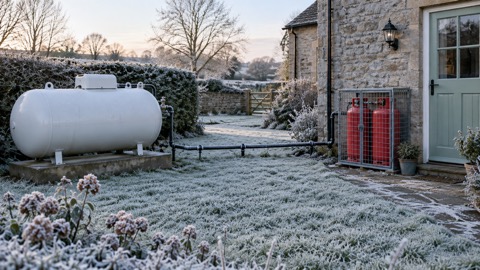
Homes that run on LPG rather than mains gas are not covered by the national emergency line at all. This applies for bulk and metered LPG supplies, where you should use the contact number on the bulk storage vessel or the meter. For cylinder supplies, check your local telephone directory for your supplier's contact details25.
This matters most in winter. Snow and ice can block regulators and valves on outdoor tanks and cylinders, and problems after snowfall need your supplier's emergency line, not 0800 111 999. Our page on LPG homes: bulk tanks, cylinders and running out in winter covers what to check and what to keep ready. If there is a fire involving an LPG cylinder or tank, call 99928.
The Flogas Gold butane cylinder recall
One LPG matter deserves particular attention. If you have a Flogas tank or cylinder that is damaged, dented, punctured or leaking, call the Flogas emergency team immediately on 03457 200 10029.
If you have one of these cylinders, stop using it. All affected customers should contact Flogas on 0330 041 6629 or cylinder.recall@flogas.co.uk for collection and a free replacement29. Do not attempt to empty or vent the cylinder yourself, and keep it outdoors and away from buildings until it is collected.
Getting ready before anything goes wrong
Emergencies are easier to handle when the numbers are already to hand. Local preparedness guidance across the country makes the same suggestion: keep a written list of emergency numbers, including the gas emergency line, where the whole household can find it2.
- Write 0800 111 999 on a card on the fridge or beside the meter box, and note the textphone number 0800 371 787 if anyone in the household uses one5.
- If you are in Northern Ireland, the number is 0800 002 00110; on the Isle of Man, 0808 1624 44425.
- If your home runs on LPG, write your supplier's emergency number on the tank or cylinder store25.
- Know where your emergency control valve is, and make sure everyone in the household could turn it off in the dark8.
- If you rent, your landlord must keep gas appliances safe; our page on broken boilers in rented homes explains your landlord's duties.
- Consider a carbon monoxide alarm, and check it regularly; the fire and rescue service treats suspected carbon monoxide as a reason to ring 0800 111 99917.
For the wider picture of gas and heating failures, including supply interruptions, planned works and long outages, start with our gas and heating failures guide. If a failure has already left you without heating, our guide to heating and cooking without mains power or gas covers how to stay warm in the meantime.
Sources (30)
- Surrey Prepared ICE template, Surrey County Council
- Carbon monoxide poisoning, NHS
- Prepare your household for emergencies, Westminster City Council
- Winter safety, Wales & West Utilities
- Energy outages, National Energy System Operator
- What you might need in a gas outage, Wiltshire and Swindon Prepared
- Prepare yourself, Greater Manchester Combined Authority
- West Mercia Risk Register, West Mercia Resilience Forum
- Know your escape plans, Manchester Fire and Rescue Service
- Energy, power supply and utilities, nidirect
- Preparing for an emergency: be ready, stay safe, act now, Sussex Resilience Forum
- Action to take if you smell gas, Cornwall Council Fire and Rescue Service
- Help during flood, GOV.UK
- Carbon monoxide: the silent killer, Wiltshire and Swindon Prepared
- Safe home heating, Warwickshire County Council
- 24 hour emergency numbers, Cornwall Council
- Carbon monoxide, Manchester Fire and Rescue Service
- Gas safety FAQs, Health and Safety Executive
- Smoke and carbon monoxide alarms, North Yorkshire Fire and Rescue Service
- Carbon monoxide leaflet, Bedfordshire Fire and Rescue Service and Cadent
- Carbon monoxide, Devon and Somerset Fire and Rescue Service
- Safety at home for tenants, Devon and Somerset Fire and Rescue Service
- Carbon monoxide safety, London Fire Brigade
- Preparing yourself for emergencies, Greater London Authority
- What to do in a gas emergency, Gas Safe Register
- Emergency planning, Belfast City Council
- Consumer Guide, Utility Regulator Northern Ireland
- Information Sheet, Liquid Gas UK
- Product recall: Flogas Gold Butane Gas Cylinder, London Borough of Bromley, 2024-12-10
- Are You Ready booklet, Culham Parish Council
 Checks Before Calling Engineer
 Boiler Checks When Moving In
 Power Cut Kit Checklist
 When the Mains Supply Goes Off
 Getting Supply Back After Outage
 Compensation for Supply Cuts
 Planned Pipe Works
 Help During a Long Outage
 Prepayment Meters
 LPG Homes in Winter
 Oil Boiler Breakdowns
 Boiler Breakdown in Cold Weather
 Boiler Fault Codes
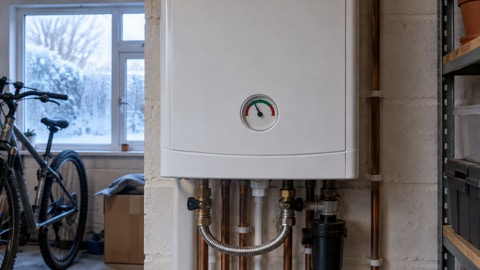 Boiler Pressure Gauge
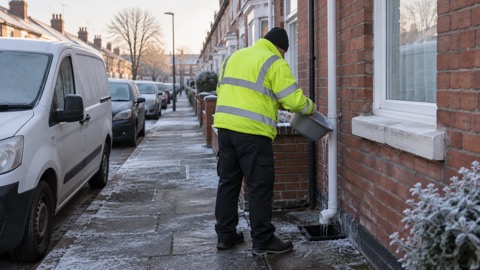 Frozen Condensate Pipes