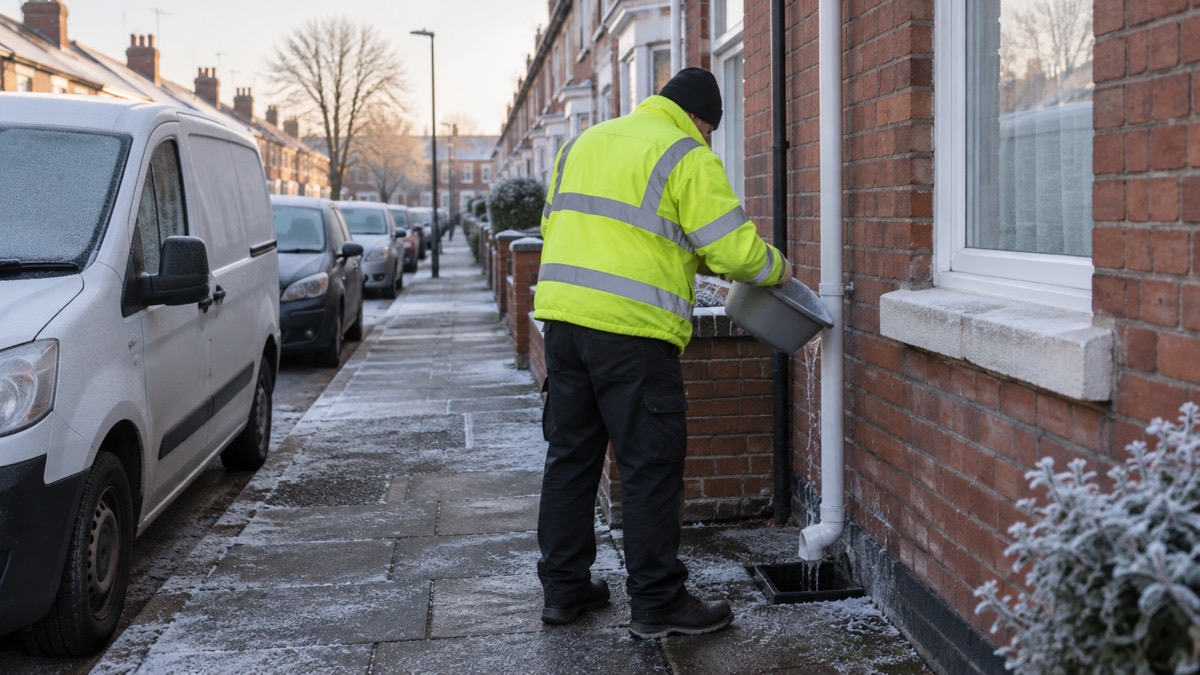
A frozen condensate pipe can stop your boiler working in freezing weather, and it is often something you can put right yourself. The condensate pipe is a small plastic pipe that carries away the water your boiler produces, usually running from the boiler to a drain, sometimes on the outside of your home1. If your pipe is located outdoors, it is far more vulnerable to freezing during cold weather, which can block the flow and cause the boiler to shut down2. The result is no heating and no hot water, usually with a gurgling noise from the boiler during attempted ignition and, on a boiler with a digital display, an error code.
The fix, in short: find the pipe outside, thaw it slowly with warm (never boiling) water or a hot water bottle, then reset the boiler. Only attempt this on a pipe you can reach safely at ground level; never attempt to thaw a pipe that is at height, and if you are unsure, call a professional3. If the pipe will not thaw or the boiler will not restart, a Gas Safe registered engineer is the right person to call, and the Gas Safe Register's free helpline is 0800 408 55001.
This page walks through each step: how to recognise the signs, how to find the frozen section, how to thaw it safely, when to reset, when to call an engineer, and what to change so it does not happen again. For the wider picture of boilers failing in cold weather, see Boiler Breakdowns in Cold Weather: What to Do.
Why the pipe freezes and why the boiler stops
A condensate pipe is a small pipe that carries away the water produced by your boiler. It is usually connected to your boiler, made of plastic, and found either on the wall outside your home or underneath the boiler2. Most modern boilers are condensing boilers, which are highly efficient because they capture and reuse heat that would normally be lost when producing heating and hot water6. That process produces liquid condensate: Worcester Bosch states that a condensing boiler in operation can produce up to 2 litres of condensate an hour4.
Condensate pipes are commonly found in properties with a combi boiler as well as other modern boilers7. In cold weather, the water inside the pipe can freeze, and because water expands when it freezes, the ice blocks the pipe8. When the condensate cannot drain away, the boiler shuts down, displays an error message, and you are left without central heating or hot water, with the risk of a large water bill if the pipe bursts or leaks7. The Chartered Institute of Plumbing and Heating Engineering (CIPHE) notes that when temperatures drop below freezing, the condensate pipe on condensing boilers may freeze, causing the boiler to shut down3.
The boiler switching off is actually a protective action, not a breakdown in itself. Wales & West Utilities puts it plainly: if your boiler has stopped working in the cold, the chances are you have frozen boiler condensate pipes9. That is good news, because a frozen condensate pipe is one of the few winter boiler failures a householder can safely put right without tools or training.
The signs: gurgling, an error code and no heating
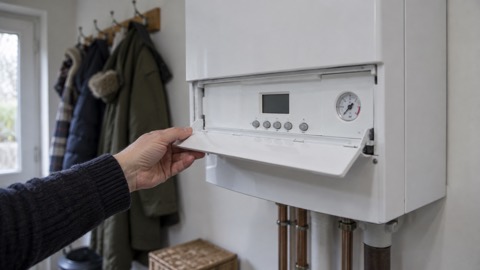
The classic picture is a boiler that stops working during a freeze, leaving you without heating or hot water, and a gurgling noise coming from the boiler or from the condensate pipe outside2. If your boiler has a digital display, you might see an "EA" error code, which Worcester Bosch lists alongside the gurgling noise as a symptom of a frozen condensate pipe4. Error codes vary between makers, so check your boiler's own literature too; our page on Boiler Fault Codes, Flashing Lights and Lockouts Explained covers what different displays mean.
Baxi adds a further warning sign: water pooling around the condensing boiler or near the pipe's exterior exit, which can happen when thawed water cannot properly drain6. Wessex Water lists the visible signs to look for on any frozen pipe: frost or condensation around it, a noticeable bulge, or small cracks10. A bulge or cracks mean the ice has already deformed the pipe, and that is a job for a plumber rather than a thawing job for you.
Not every winter boiler failure is a frozen condensate pipe. Low pressure, a lockout for another fault, or a problem with the gas supply can all stop a boiler in cold weather. SGN advises that if you do not think a frozen condensate pipe is causing your boiler problems, you should contact a Gas Safe registered engineer to check your boiler2. Before calling anyone, run through the quick checks on our Checks to Make Before Calling a Boiler Engineer page.
Finding the pipe and the frozen section
Look for an outdoor pipe, usually white plastic and similar to a waste pipe, which is connected to your boiler4. It typically runs from the boiler, through the wall, and down the outside wall to a drain2. Some condensate pipes run internally to a soil stack or internal drain, and these rarely freeze; it is the external run, or the section in an unheated garage or loft, that causes trouble.
To find the frozen section, check the pipe for ice or frost along its length6. Thames Water notes that in cold weather you can usually spot a frozen pipe by the light coating of frost around it11. The freeze is most likely where the pipe is exposed to the wind, where it runs horizontally, or at the open end near the drain. SGN gives a simple test: check the end of the pipe. If water is not coming out, you can see ice, or it feels very cold, it is probably frozen2.
If the frozen pipe is inside a wall, ceiling, garage, outbuilding, attic or basement, the search is slightly different. Wessex Water advises starting with the places that are easy to reach and most likely to freeze, such as garages, outbuildings, attics and basements, and says that for a pipe in a wall or ceiling you can feel the surface, which should feel cold where the pipe is frozen10.
Thawing the pipe safely: warm water, never boiling
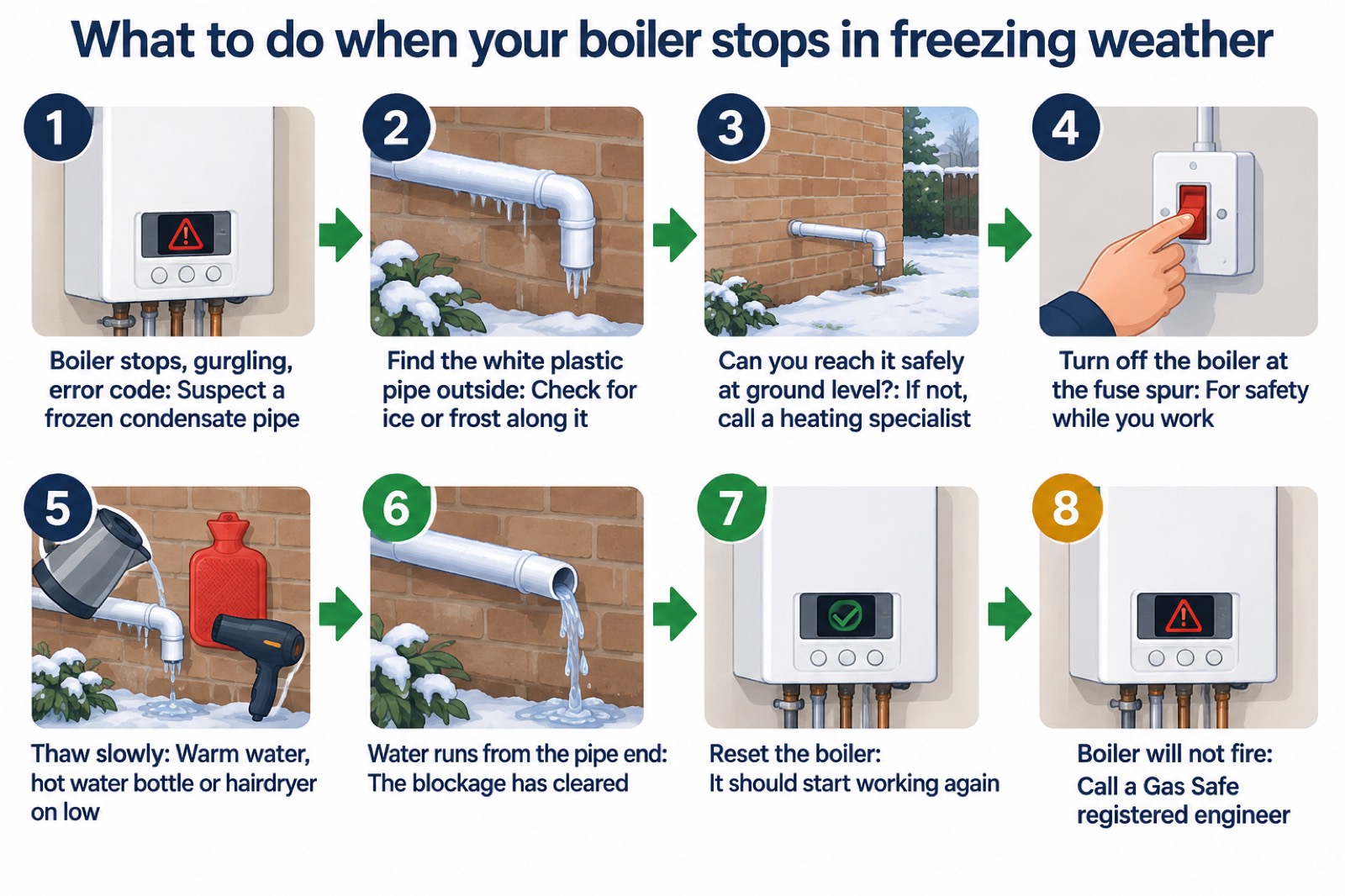
Once you have found the frozen section and you can reach it safely at ground level, the method is simple and slow. The consistent advice from gas networks, water companies and boiler makers is to warm the pipe gradually:
- Turn off the boiler at the fuse spur switch first, which Baxi advises to ensure safety while you work6.
- Pour warm, not boiling, water along the length of the pipe using a jug or watering can1. SGN notes you might need a few kettles or jugs to defrost the pipe2.
- Or hold a hot water bottle or warm heat pad against the pipe, working along the frozen sections12.
- Or use a hairdryer on a low or warm setting, keeping it moving to distribute the heat evenly and keeping a safe distance to prevent overheating the pipe6.
Never pour boiling water on the pipe. Boiling water can crack or deform plastic pipework, and the sudden temperature change does the job no better than warm water poured patiently. The Met Office's general advice on frozen pipes is to thaw them slowly, with hot water bottles or towels soaked in hot water14, and Portsmouth Water similarly advises hot water bottles or a hairdryer on a warm setting13. Cornwall Fire and Rescue Service adds a firm rule for any frozen pipe: do not use a naked flame to thaw it15.
Indoor and hard-to-reach sections
For internal pipes, hold a hot water bottle against the pipe2. This is also the safest option for any section you cannot drench with water, such as a run behind a cupboard or through a garage. Wessex Water suggests wrapping the affected pipe in towels to start warming it and absorb condensation, securing them with cable ties if needed, then placing a hot water bottle on top of the towels10. For a pipe frozen inside a wall or ceiling, Wessex Water says you could use a space heater to apply direct heat to the affected area, but do not leave heaters unattended for long periods as they can overheat10.
Only thaw a pipe you can reach at ground level
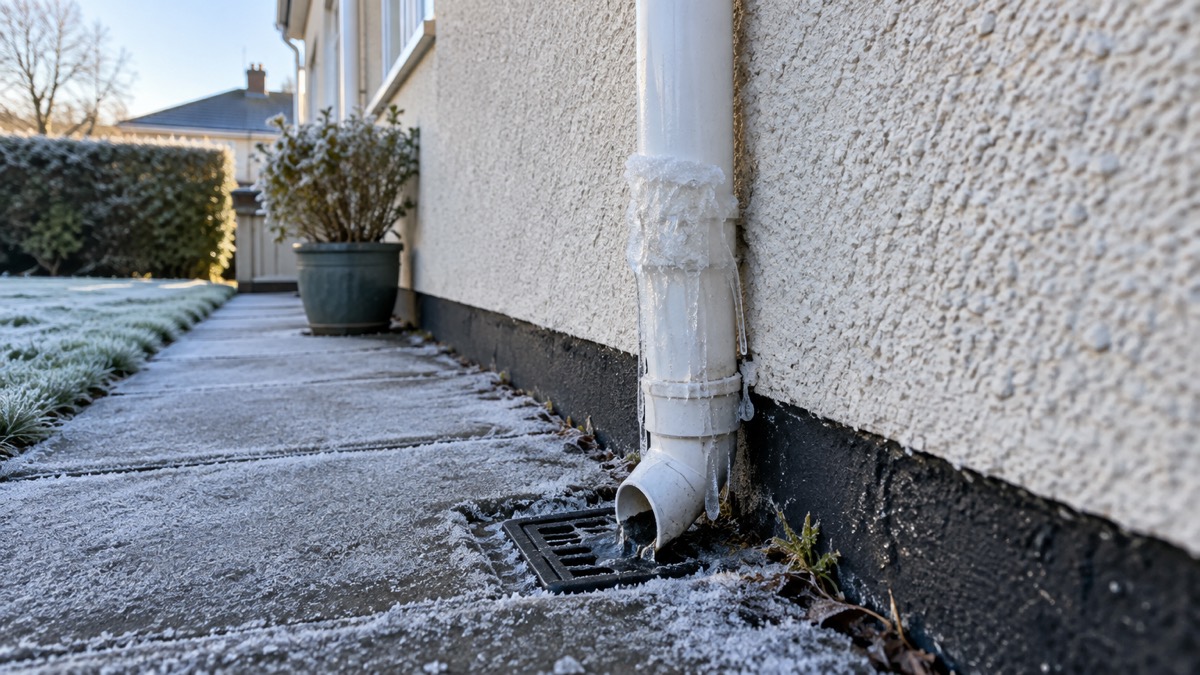
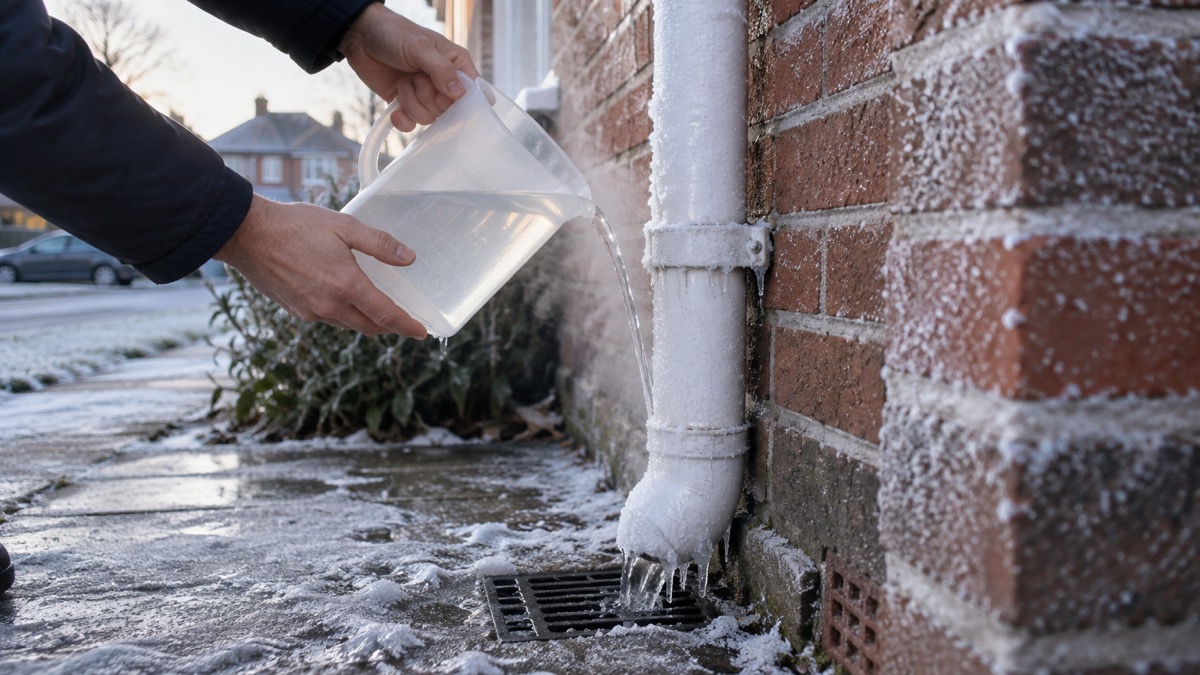
The Chartered Institute of Plumbing and Heating Engineering is blunt on this point: you should only ever attempt defrosting condensate pipes that are at ground level, and only if you feel confident to do so. If the pipe is higher, or you are unsure, call a professional heating specialist3. A ladder, an icy path and a jug of hot water are a bad combination, and a fall will turn a heating problem into a medical one. The Humber Local Resilience Forum's winter guidance adds a related step for frozen supply pipes: open the tap nearest to the frozen pipe to allow the melted water to flow out16, which for a condensate pipe is effectively the open end at the drain.
Resetting the boiler once the pipe has thawed
When water runs freely from the end of the pipe, the blockage has gone and you can bring the boiler back. SGN's instruction is simple: reset your boiler, and if the pipe has defrosted your boiler should start to work2. The reset button is usually on the front of the boiler or behind a small flap; your boiler's manual will show where. If you are not sure how your particular model resets, our page on How Many Times Is It Safe to Reset a Boiler Lockout? explains the process and the limits.
Wales & West Utilities adds a note of patience: if the boiler fires up it should work normally, and if not, try again. If the pipe remains frozen or the boiler will not fire, call a Gas Safe registered engineer or your gas supplier9. Give the thaw a few minutes and a second pour of warm water before concluding the pipe is still blocked, since ice further along the run can take longer to clear than the section you can see.
Once the boiler is running, keep an eye on it for the rest of the cold spell. Baxi advises resolving the signs swiftly to prevent additional damage occurring, and says consulting a qualified engineer can provide peace of mind and ensure safe, efficient operation6. If the boiler runs but the pipe gurgles, or water pools at the boiler or the pipe exit, the pipe may be partly blocked rather than frozen, and that needs a professional.
When to call a Gas Safe registered engineer
Call an engineer rather than thawing the pipe yourself in these situations:
- The pipe is not reachable safely at ground level, or you do not feel confident3.
- The pipe has thawed and the boiler still will not fire after a reset or two9.
- The pipe is bulging, cracked or leaking, which means the ice has damaged it10.
- You cannot find any frozen section and suspect a different fault2.
- Water is pooling around the boiler and does not stop after the pipe clears6.
For any work on the boiler itself or on gas pipework, the person must be on the Gas Safe Register. The Health and Safety Executive, which regulates gas safety in the home, says consumers can call the freefone helpline on 0800 408 5500 to find and check a registered engineer17. Manchester Fire and Rescue Service gives the same number for getting a Gas Safe registered engineer to inspect gas appliances and flues where there is a dangerous problem5. NHS winter advice echoes it: contact a Gas Safe registered engineer to make sure heating and cooking appliances are working properly18. Our page on Finding a Gas Safe Registered Engineer and Checking Their Card explains how to verify an engineer before letting them work on your boiler.
For the condensate pipe itself, which carries waste water rather than gas, a WaterSafe Register-approved plumber is also a valid choice: Watersafe advises calling one for further advice on frozen condensate boiler pipes7, and the Met Office suggests contacting an approved plumber via watersafe.org.uk if you need help with frozen pipes generally14. If you ever smell gas, that is a different emergency entirely: leave the house and call the National Gas Emergency Service, covered in The National Gas Emergency Service: When to Ring and What Happens.
Stopping it freezing again: insulation
Once you have thawed the pipe once, you will not want to do it every cold night. The first line of defence is insulation. SGN confirms you can add insulation to the pipe outside, and that insulation can be bought from any DIY store2. Watersafe advises insulating the pipe with foam insulation, and insulating outside taps and pipes in unheated areas the same way7. Official winter guidance from Essex Prepared and the government's cold weather advice both list insulating pipes as a core preparation19, and the Met Office includes insulating your hot water cylinder and pipes in its advice on keeping your home warm in winter21.
Not all foam sleeves are equal for an outdoor pipe. Worcester Bosch's installation guidance is specific: insulate the pipework with Class "O" insulation with an outer coating that is weatherproof4. Ordinary loft-style foam sleeves degrade in sunlight and rain, and a soaked sleeve can make freezing more likely, so look for insulation with a weatherproof outer layer for any external run. Oxfordshire's public health guidance suggests wrapping insulation around pipes as a DIY measure, or hiring a handyperson to install it if you cannot reach the pipe safely22. For more detail, see our dedicated page How to Stop a Condensate Pipe Freezing.
Be realistic about what insulation can do. Worcester Bosch states that even when a pipe is installed in accordance with the manufacturer's instructions and British Standards, in prolonged sub-zero external weather temperatures there is still a potential for freezing4. Insulation slows the loss of the pipe's warmth; it does not add heat. If your area is prone to severe cold, Baxi suggests considering pipe heating solutions, systems that provide gentle warmth and prevent the pipe freezing even in extreme conditions6.
Heating settings that help in a cold snap
The way you run your heating during a freeze changes the risk of the pipe freezing again. A boiler that fires periodically keeps warm condensate flowing through the pipe, which is far better than a cold, still pipe full of standing water. That is why the advice for cold weather is to leave your heating on a low setting when you are not in the house, and to get your boiler serviced regularly, rather than letting the system go cold for long stretches.
Worcester Bosch notes a trade-off worth knowing: turning the thermostat to maximum increases the surface temperature of your radiators, and the boiler runs at a marginally decreased efficiency during this time4. In practice, that means maximum heat is a short-term measure for the worst nights, not a setting to leave in place all winter. A lower, steady level of heating through a cold snap protects the pipe at less cost. Kidney Care UK's cold weather advice, written for people who must keep warm for health reasons, also suggests hot water bottles and heat pads or gloves as personal warmth while the heating catches up23.
If you are using portable heaters or a hairdryer during the thaw, treat electrical safety seriously. Electrical Safety First's guidance on appliance ratings is the reference point for not overloading sockets when running heaters in cold weather24. And if you leave the home during a freeze, the question of whether to leave the heating on is covered in Should You Leave the Boiler On When Away in Winter?.
What an installer can change: routing, size and fall
If your condensate pipe freezes repeatedly, the pipe itself may be the problem, and a heating engineer or installer can change it. Worcester Bosch's guidance for external condensate pipes running to an external drain sets out what that run should look like4:
| Requirement | Specification |
|---|---|
| Diameter | At least 32mm4 |
| Length | As short as possible, no longer than 3m4 |
| Fall | Continuous, away from the boiler, at a minimum 3 degree angle4 |
| Bends | As few as possible4 |
| Insulation | Fully insulated, Class "O" with a weatherproof outer coating4 |
A narrow pipe, a long run, a shallow fall or a series of bends all make freezing more likely, because each slows the condensate on its way out and leaves water sitting in the pipe. The most effective change is often the route itself: Worcester Bosch advises re-routing the pipe so that it terminates internally, and calls this the preferred method where possible4. An internal termination to a soil stack or internal drain takes the pipe out of the sub-zero air entirely.
Worcester Bosch suggests contacting your installer, or a local accredited installer, for an assessment and advice on reducing the risk of freezing condense4. If you rent, a boiler that repeatedly fails in cold weather is something your landlord must address, as covered in Broken Boilers in Rented Homes: What Your Landlord Must Do.
If it keeps happening, or you need extra support
The condensate pipe problem, and the fix, are the same wherever you live: the pipe, the freezing risk and the thawing method do not change between nations. What differs is who to contact for help, and our page on Which Network Operator Covers Your Home identifies your local gas network.
If losing heating for even a few hours is dangerous in your household, because of age, disability or a medical condition, register for extra support in advance. Networks and suppliers keep priority registers for households that need them, explained in Extra Support From Networks and Suppliers for Vulnerable Households and our wider Extra Help in an Emergency guide. Watersafe's advice on protecting against frozen pipes is worth reading before every winter8, alongside the general winter checks in Storms, Snow and Ice: A Household Guide.
Sources (24)
- Boiler not working, Northern Gas Networks
- My boiler isn't working, SGN
- Plumbing emergencies, Chartered Institute of Plumbing and Heating Engineering
- Frozen condensate leaflet, Worcester Bosch, November 2018
- Carbon monoxide: Gas Safe helpline, Manchester Fire and Rescue Service
- Why your condensate pipe freezes, Baxi
- Winter plumbing advice, Watersafe
- How do I protect against frozen pipes?, Watersafe
- Winter safety, Wales & West Utilities
- Thawing frozen pipes, Wessex Water
- No water or low pressure, Thames Water
- LOGICPLUS-Combi-User-Guide-10.2023-UIN-237662-A01.pdf, Ideal Heating (Ideal Boilers Ltd)
- Wrap up flyer, Portsmouth Water
- Frozen or burst pipes, Met Office
- Snow and ice in Cornwall, Cornwall Council Fire and Rescue Service, October 2025
- Winter readiness leaflet, Humber Local Resilience Forum, August 2024
- Gas safety FAQs: domestic, Health and Safety Executive
- Stay well this winter, NHS Cheshire and Merseyside
- Winter preparedness, Essex Prepared
- Top tips for keeping warm and well this winter, GOV.UK
- Keeping your home warm in winter, Met Office
- Beat the Heat, Oxfordshire County Council
- Keeping warm and well in cold weather, Kidney Care UK, October 2025
- Ratings of electrical appliances, Electrical Safety First
 Checks Before Calling Engineer
 Boiler Checks When Moving In
 Power Cut Kit Checklist
 National Gas Emergency Service
 When the Mains Supply Goes Off
 Getting Supply Back After Outage
 Compensation for Supply Cuts
 Planned Pipe Works
 Help During a Long Outage
 Prepayment Meters
 LPG Homes in Winter
 Oil Boiler Breakdowns
 Boiler Breakdown in Cold Weather
 Boiler Fault Codes
 Boiler Pressure Gauge