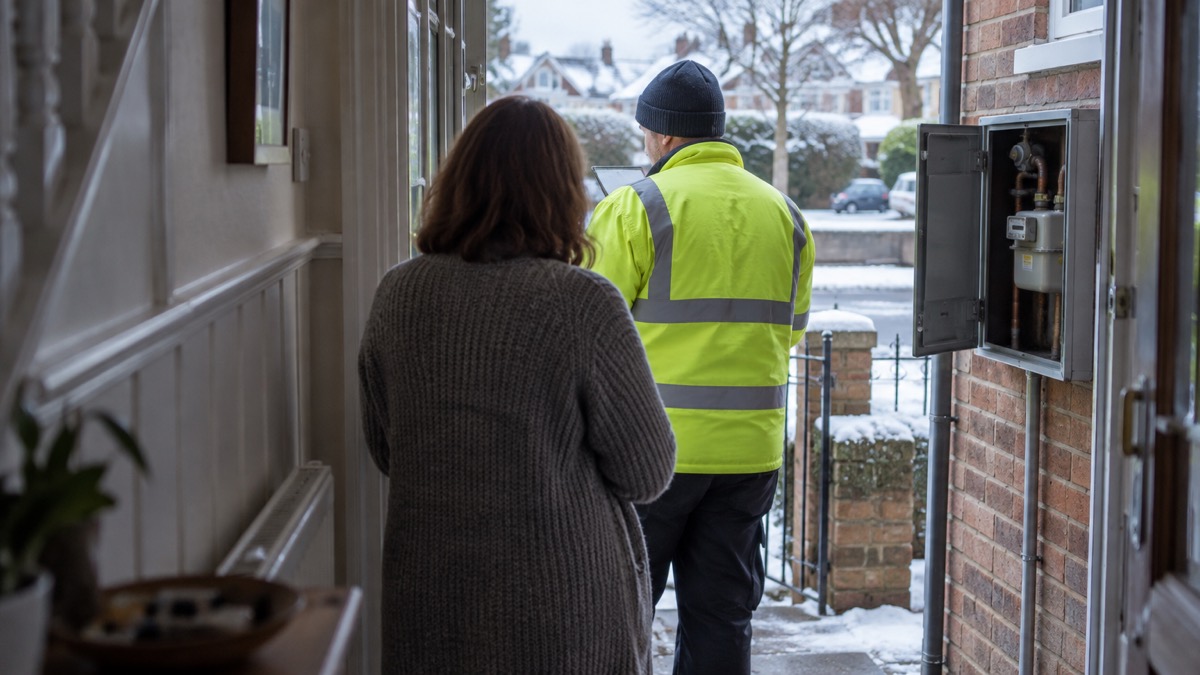
When the gas goes off in your area and comes back on again, it does not come back the way electricity does. A power cut can be restored from a substation in one go. Gas cannot, because a network full of air is a network full of danger. Every affected home has to be visited, checked and relit by a qualified person, one at a time, and that is why reconnection after a gas outage takes longer than most households expect.
The single most important rule is this: if the gas supply was turned off, a professional must turn it back on. Do not attempt to do this yourself1. That applies whether you turned off the valve at your meter, the fire and rescue service disconnected you, or the network shut your street down. The number to ring for anything to do with gas safety is the National Gas Emergency Service on 0800 111 999, available 24 hours a day, 365 days a year2.
Do not turn your gas supply back on yourself
This is the point every official source in the country makes in the same words, and it is worth understanding why. Lincolnshire Council's emergency advice is blunt: "If you turn the gas off, a professional must turn it back on. Do not attempt to do this yourself."1 Surrey's guidance gives the reason in one line: it must be turned on again by a professional "for safety reasons"6. The Royal Borough of Windsor and Maidenhead's home emergency plan puts a warning box around it: "you can turn the water and electricity back on yourself but NOT the gas. This must be done by a qualified engineer."7 The national Be Ready household plan says exactly the same8.
The reason is what happens inside your pipes. When supply is interrupted, gas can drain out of the pipework and air can get in. If you open the valve and let gas flow into a pipe that is full of air, or try to relight a boiler or hob yourself, you can create a flame where there should be none, or push unburned gas into your home. The Health and Safety Executive explains the network side of the problem: "The gas network cannot simply be switched back on since the order in which premises are restored must be coordinated to ensure that pressure in the network is maintained."4 Pressure has to be managed across the whole street at once, and that is a job for the network operator, not the householder.
The rule holds after every kind of incident, not just a network outage. Devon and Somerset Fire and Rescue Service advises anyone recovering from a fire to "get advice before reconnecting gas, electric or water supplies; never attempt to reconnect yourself."9 Runnymede Borough Council's flooding guidance says electricity and gas supplies should not be turned back on until you have had professional advice that it is safe to do so10, and Essex Prepared tells households recovering from any emergency that if they turned gas off, it must be turned on again by a professional for safety reasons11.
What happens when the gas goes off in your area
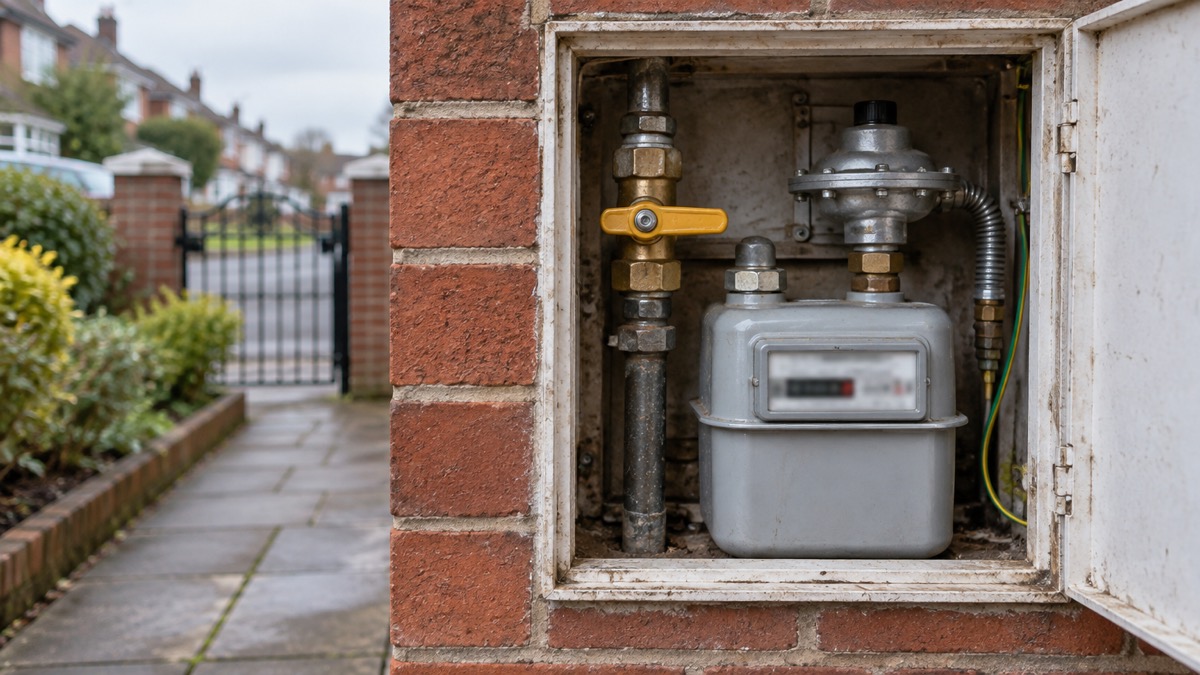
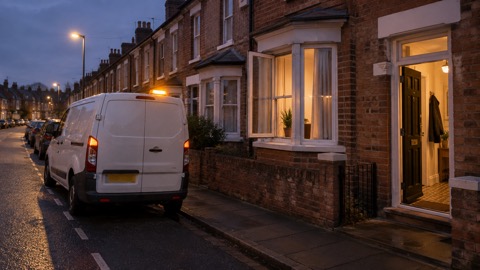
A gas outage usually starts one of two ways: a problem on the network, such as a damaged pipe or a loss of pressure, or an emergency in your own home. Either way, the first response is the same. Ring the National Gas Emergency Service on 0800 111 999 and an engineer will be sent out to keep you and your property safe2. Culham Parish Council's "Are You Ready" booklet describes the sequence: "An engineer will be sent to make the property safe. If the gas is lost for a long period, National Grid will send you details about the incident."3
Behind the scenes, the network operator works to keep the system stable. The Welsh Government's resilience guidance explains that following an incident on the gas network, operators may follow emergency procedures to balance and maintain pressure by stopping supply to large industrial users, with critical sites protected and other disconnections evenly distributed12. In other words, homes are protected for as long as possible, and industry is cut first. Westminster City Council's guidance for residents adds that if gas is lost for a long period, National Grid will keep all residents and the estate office up to date, including when supplies can safely be restored and what alternative heating and cooking provisions are being made13.
If the outage follows a fire in your home, the disconnection may already have been done for you: Cheshire Fire and Rescue Service notes that the fire and rescue service or British Gas will turn off or disconnect your supply14. If it follows a flood, the picture is different again. Surrey's flood aftercare guidance says you will need to turn off the gas supply to appliances that have been flooded or where vents and flues may have been affected, and to contact your utility company if in any doubt15. The West Midlands Local Resilience Forum's community risk register puts the rule simply: turn off electricity and gas supplies if they have been in contact with water and get them checked prior to using them again16.
What this means for you as a household is a waiting game with three jobs in it: keep warm and fed without mains gas, keep in touch with updates from the network, and be at home when the engineer calls. Our page on help from networks during a long outage covers what support is available while you wait, and our guide to heating and cooking without mains power or gas covers the practical side of managing without a boiler.
Engineers visit every affected home, and priority customers come first
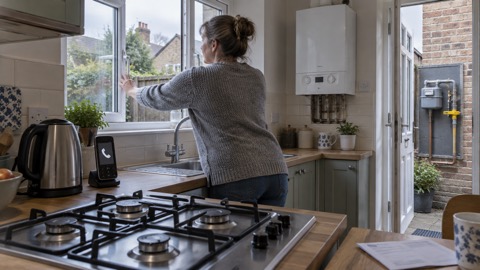
Restoring gas is not a matter of throwing a switch at the end of your road. Because pressure has to be built up and held across the network, and because every home's pipework has to be purged and checked before gas flows again, engineers visit every affected property. The National Gas Emergency Service will send out an engineer to keep you and your property safe2, and each customer is then revisited by the team who carry out safety checks and restore the gas supply to the home.
Someone normally has to be in for that to happen. If you are out when the engineer calls, the supply to your home stays off until a return visit can be arranged, which can add hours or days to your wait. Our page on what to do if you missed the reconnection visit explains the steps to take.
Not every household waits in the same queue. Priority customers are visited first, and the way to be one of them is to join the Priority Services Register before anything goes wrong. It is a free service that can give extra help if your electricity, gas or water stops working17. Surrey's adults' services describe what it can include: access to bottled water during a water supply interruption, priority assistance, and tailored support if there is a power or gas outage18. Derbyshire's keeping warm in winter guidance lists benefits such as advance notice of power cuts19, and Surrey also notes priority fault repair from communications providers20. The Greater London Authority's cold weather advice puts the core promise plainly: if you are eligible to join and your gas, electricity or water supply is cut off, your suppliers will know you need extra support21.
Eligibility generally turns on age, disability, health conditions or circumstances that mean a loss of supply is more than an inconvenience for you. You can ask your gas supplier, electricity supplier or water company to add you, and Oxford Health NHS Foundation Trust describes it as a free service that can give extra help if your electricity, gas or water stops working17. Our page on extra support from networks and suppliers explains who qualifies and how to sign up.
There is a second kind of priority at the network level. The National Risk Register records that in a severe infrastructure emergency, priority of gas supply would be given to domestic users, because they take longer to reconnect following disconnection for safety reasons, with some critical sites prioritised for supply22. So in a widespread incident, homes come before factories, but homes also take longer to restore, which is the trade-off every household should understand.
Switching off your emergency control valve
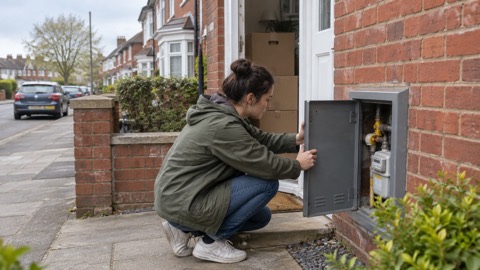
There are times when you should turn the gas off yourself, and knowing how before an emergency matters: make sure you know how to turn off your gas, water and electrical supplies in an emergency23. The valve you need is the gas emergency control valve, normally next to your meter.
Ready Scotland's flooding guidance gives the instruction for imminent flooding: turn off the electricity to your home by tripping the main switch in your fuse box, and turn off the gas emergency control valve, normally near your meter24. Natural Resources Wales describes where the controls usually sit: the gas valve is usually next to the gas meter, the electricity main is usually a red switch on the fuse box, and the water stopcock is usually under a kitchen sink or where the pipe enters the home25.
To turn the gas off, turn the valve handle a quarter turn until it sits across the pipe. It is stiff by design, so use a firm hand. Then leave it alone. Once it is off, the rule from the top of this page applies: a professional must turn it back on, and you should not attempt to do this yourself1.
Why there is often no confirmed time for getting gas back
When households ring during an outage, the honest answer they usually get is that there is no firm time, and the official risk assessments explain why. The Health and Safety Executive, describing the lessons of a previous large-scale supply emergency, states that isolating and then restoring gas supplies for so many domestic consumers is a complex process that could take weeks or months to achieve4. That is the worst case, not the typical one, but it sets the scale of what a whole-network restoration involves.
The National Risk Register adds detail on what can follow a major loss of gas supply. In the event of a prolonged electricity supply shortfall after gas infrastructure is damaged, rolling power cuts lasting 3 hours at a time may be required to balance supply and demand27, and the 2025 register repeats that rolling power cuts lasting up to 3 hours may be needed28. A cyber attack on gas infrastructure is assessed as potentially worse: restoration of the affected gas infrastructure could take approximately 3 months, and recovery could take longer than expected depending on the sophistication of the attack and damage to the system22.
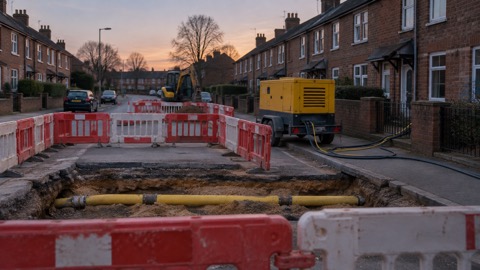
For an ordinary street-level outage, restoration is measured in hours or days rather than months, but the shape is the same: the network is stabilised first, then homes are restored one by one, and your home's turn depends on where you sit in that sequence. Buckinghamshire Council's gas supply issues guidance says that if the gas is lost for a long period, National Grid will send you details about the incident5, so watch for letters, cards and local updates rather than expecting a single fixed time at the outset.
While you wait, the practical advice from Essex Prepared's loss of gas and water guidance is worth following29:
- Keep a battery powered torch or light at home
- Have a battery or wind-up radio
- Have a home phone that does not need electricity to work
- Keep a list of emergency contact numbers for utilities companies, on paper as well as in your mobile
- Know where the cut-off points in your home are for utilities
- Keep an eye on your vulnerable neighbours
Our emergency kit and staying informed guides cover these in more detail.
If you smell gas or suspect carbon monoxide
Gas and carbon monoxide emergencies do not wait for a convenient moment, and reconnection is exactly the time they are most likely: appliances are being relit, pipes have been disturbed, and flues may have been affected. Warwickshire County Council's home heating safety advice tells you what to look and listen for: the smell of gas, a distinctive sulphur-like odour, or hissing sounds near gas appliances or gas meters30.
If you smell gas, Buckinghamshire Council's advice is to open doors and windows5, and Warwickshire adds the rest: avoid using electrical switches, avoid naked flames, and contact a Gas Safe registered engineer or the emergency gas helpline on 0800 111 999 immediately30. Richmond's utilities failure guidance lists the full set of actions: opening doors and windows, turning the gas off at the meter unless the meter is in the cellar or basement, and avoiding the use of any naked flames or electrical switches26.
Carbon monoxide has no smell, so you need its signs instead. The Health and Safety Executive lists the symptoms to look out for: headaches or dizziness, breathlessness, nausea, loss of consciousness, tiredness, pains in the chest or stomach, erratic behaviour and visual problems32. Wiltshire and Swindon Prepared adds a warning sign at the appliance itself: an unfamiliar or burning smell when gas or oil appliances are on, and pilot lights that frequently blow out31. If you or your family experience these symptoms and believe you may have been exposed to carbon monoxide, the HSE says you should seek urgent medical advice from either your GP or an A&E department32. Northern Ireland's nidirect storm advice likewise tells anyone affected by carbon monoxide poisoning to call the relevant emergency advice line33.
Letting the engineer in: checking their ID
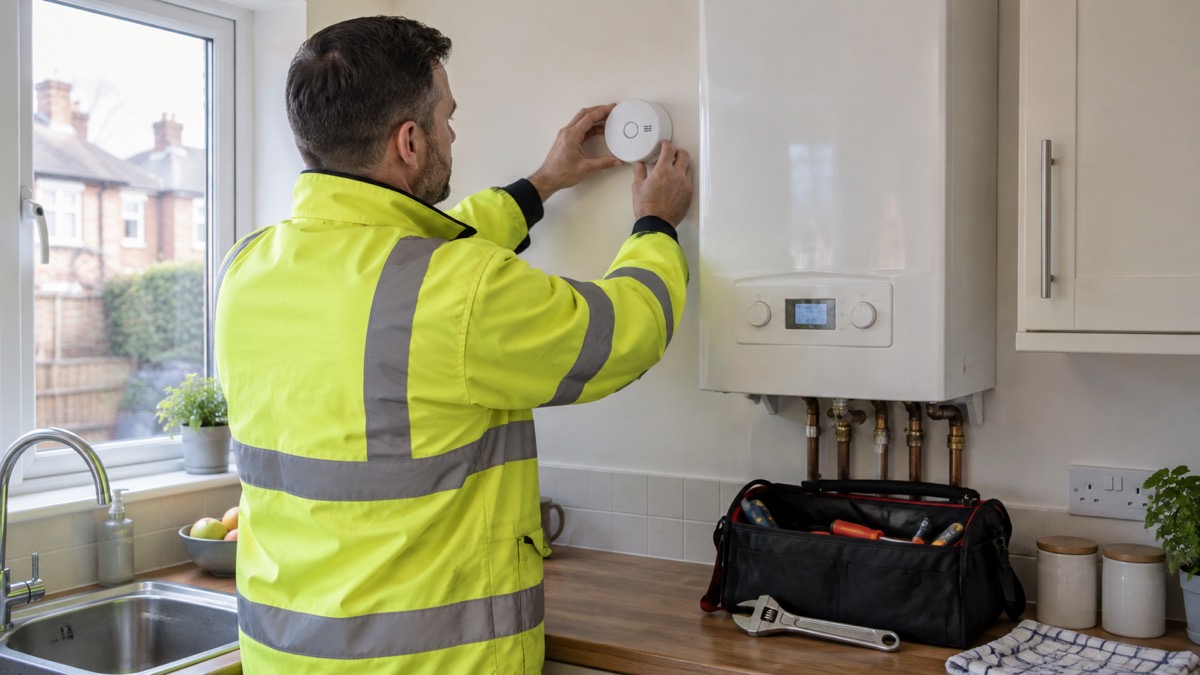
When a stranger knocks and offers to turn your gas back on, check who they are before you let them in. This is standard official advice, not suspicion for its own sake. Warwickshire County Council tells householders to check Gas Safe ID cards, which should display the engineer's photo and details of their gas registration30, and the West Midlands risk register advises getting gas appliances checked annually by a Gas Safe registered engineer and always checking IDs before allowing anyone into your home34.
The Health and Safety Executive explains how to verify a card properly. The Gas Safe Register website offers a "Check an Engineer" service: by inputting the licence number from the engineer's ID card, consumers will be able to see pictures of the registered engineers and details of their qualifications32. If the face on the website does not match the face at your door, or the licence number does not check out, do not let them in and ring the emergency number to check.
Remember also that the engineer who restores your supply and the engineer who works on your appliances may not be the same person. Wiltshire and Swindon Prepared notes that any work on appliances, such as cookers, boilers or fires, has to be carried out by a Gas Safe registered engineer2. The network engineer makes your supply safe and relights what can be relit; anything beyond that needs a registered engineer of your own. Our page on finding a Gas Safe registered engineer and checking their card and our narrow guide on how to check a network engineer is genuine cover this in detail.
Calling the National Gas Emergency Service: 0800 111 999, 24 hours a day
Every thread of this page leads back to one number. The National Gas Emergency Service is available 24 hours a day, 365 days a year and will send out an engineer to keep you and your property safe2. Wiltshire and Swindon Prepared stress that it is very important to call the 24 hour Gas Emergency Number on 0800 111 999 and tell them what has happened31. The West Midlands Local Resilience Forum gives the same number for reporting a gas or carbon monoxide emergency, or if a pipeline is struck, even if no gas leak has occurred34.
The number works at all hours. Derbyshire County Council's emergency contacts page states that for out-of-hours periods, before 9am or after 5pm Monday to Friday, at weekends and bank holidays, suspected gas leaks should be reported by telephone on 0800 111 99935. After flooding, Nottinghamshire County Council's recovery guidance gives the same contact for gas, and 105 for electricity36.
Ring it for any of these:
- You can smell gas or hear hissing near an appliance or the meter30
- You suspect carbon monoxide, or someone has symptoms of it32
- Your gas was turned off and you need it restored1
- A pipeline has been struck, even if no leak is visible34
- You need help reaching or turning off your valve2
Our page on the National Gas Emergency Service explains what happens when you ring, and our guide to what to do when the mains supply to your home goes off covers the first steps of an outage. If your boiler will not relight once the supply is back, start with our checks to make before calling a boiler engineer, and see boiler breakdowns in cold weather and no hot water for what to do next.
Sources (36)
- Get help and advice in an emergency, Lincolnshire County Council, 2026
- What you might need in a gas outage, Wiltshire and Swindon Prepared, 2026
- Are You Ready booklet, Culham Parish Council, 2025
- Gas supply emergencies, Health and Safety Executive, 2026
- Gas supply issues, Buckinghamshire Council, 2026
- Prepare for emergencies: homes, Surrey County Council, 2026
- Emergency home emergency plan, Royal Borough of Windsor and Maidenhead, 2026
- Be Ready Household Emergency Plan, Be Ready Campaign, 2026
- After an incident: fire, Devon and Somerset Fire and Rescue Service, 2026
- Flooding advice, Runnymede Borough Council, 2026
- Step 3: recovering from an emergency, Essex Prepared, 2026
- Resilience and risks in Wales, Welsh Government, 2026
- Prepare your household for emergencies, Westminster City Council, 2014
- Power supplies after a fire, Cheshire Fire and Rescue Service, 2023
- After a flood, Surrey County Council, 2026
- West Mercia Community Risk Register, West Midlands Local Resilience Forum, 2023
- Guidance at home, Oxford Health NHS Foundation Trust, 2026
- Wellbeing and safety, Surrey County Council, 2026
- Priority Services Register, Derbyshire County Council, 2026
- Priority Services Register, Surrey County Council, 2026
- Keeping warm, healthy and safe in cold weather, Greater London Authority, 2026
- National Risk Register, HM Government, 2023
- Preparing for an emergency, Nottinghamshire County Council, 2026
- Severe weather: rain and flooding, Ready Scotland, 2026
- Preparing for a flood, Natural Resources Wales, 2026
- Utilities failure, London Borough of Richmond upon Thames, 2026
- National Risk Register 2023, HM Government, 2023
- National Risk Register 2025, HM Government, 2025
- Loss of gas and water, Essex Prepared, 2026
- Safe home heating, Warwickshire County Council, 2026
- Carbon monoxide: the silent killer, Wiltshire and Swindon Prepared, 2026
- Gas safety FAQs, Health and Safety Executive, 2026
- Strong winds weather warning information and advice, nidirect, 2026
- West Mercia Risk Register V4, West Midlands Local Resilience Forum, 2025
- Emergency contacts, Derbyshire County Council, 2026
- After a flood: further support, Nottinghamshire County Council, 2026
 Checks Before Calling Engineer
 Boiler Checks When Moving In
 Power Cut Kit Checklist
 National Gas Emergency Service
 When the Mains Supply Goes Off
 Compensation for Supply Cuts
 Planned Pipe Works
 Help During a Long Outage
 Prepayment Meters
 LPG Homes in Winter
 Oil Boiler Breakdowns
 Boiler Breakdown in Cold Weather
 Boiler Fault Codes
 Boiler Pressure Gauge
 Frozen Condensate Pipes