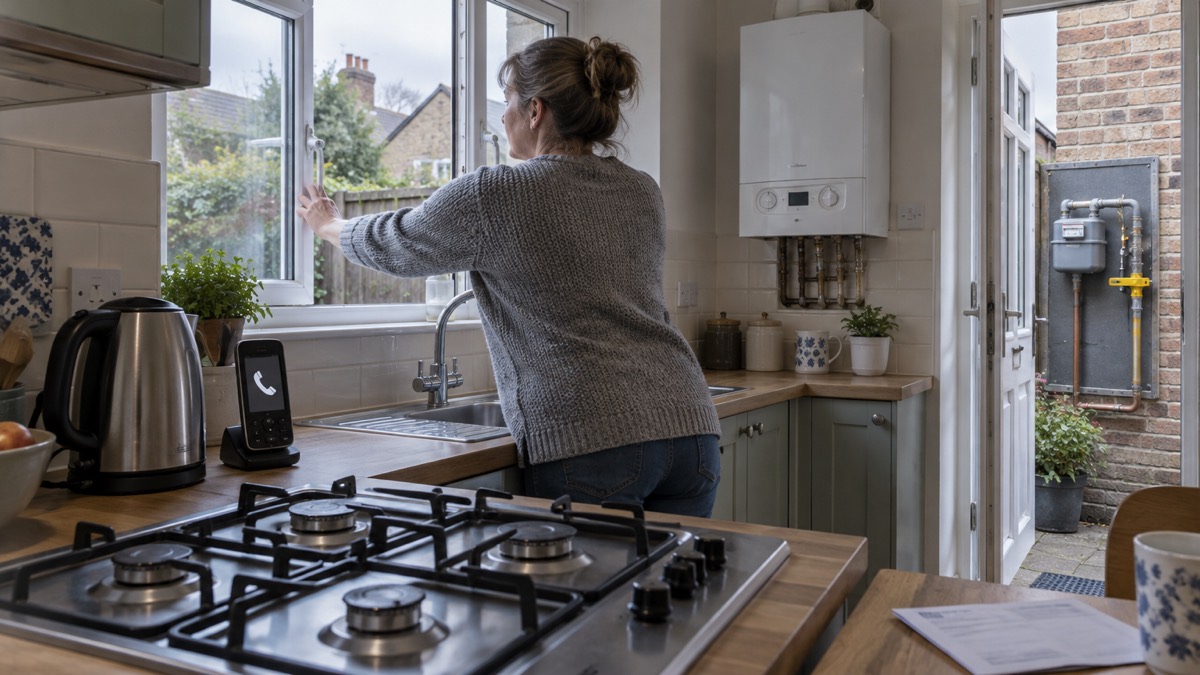
When the gas supply to your home goes off, the first thing to do is call the National Gas Emergency Service on 0800 111 9991. That single freephone number covers gas emergencies in your home or business, and it is the one to ring whether you have lost supply, you can smell gas, or a pipeline has been struck1. It is free, it runs around the clock, and the service is available 24 hours a day, 365 days a year2. If you can smell gas, an engineer will be with you within the hour, seven days a week, 24 hours a day, according to Manchester Fire and Rescue Service3.
While you wait, your job is to make your home safe and to avoid anything that could ignite gas. Open doors and windows, do not smoke or use naked flames, do not touch electrical switches, and turn the gas off at the meter if you know where the valve is and can reach it safely4. An engineer will be sent to make the property safe4. You should never try to turn the supply back on yourself: restoring a gas network is a coordinated process, and in a large-scale event it can take weeks or months to complete6.
This page walks through each step in the order you need it: the call, the immediate safety actions, the valve at your meter, what happens next, and how long a widespread outage can last. If you want the wider picture of heating failures, start with our guide to gas and heating failures.
Gas gone off? Call 0800 111 999 first
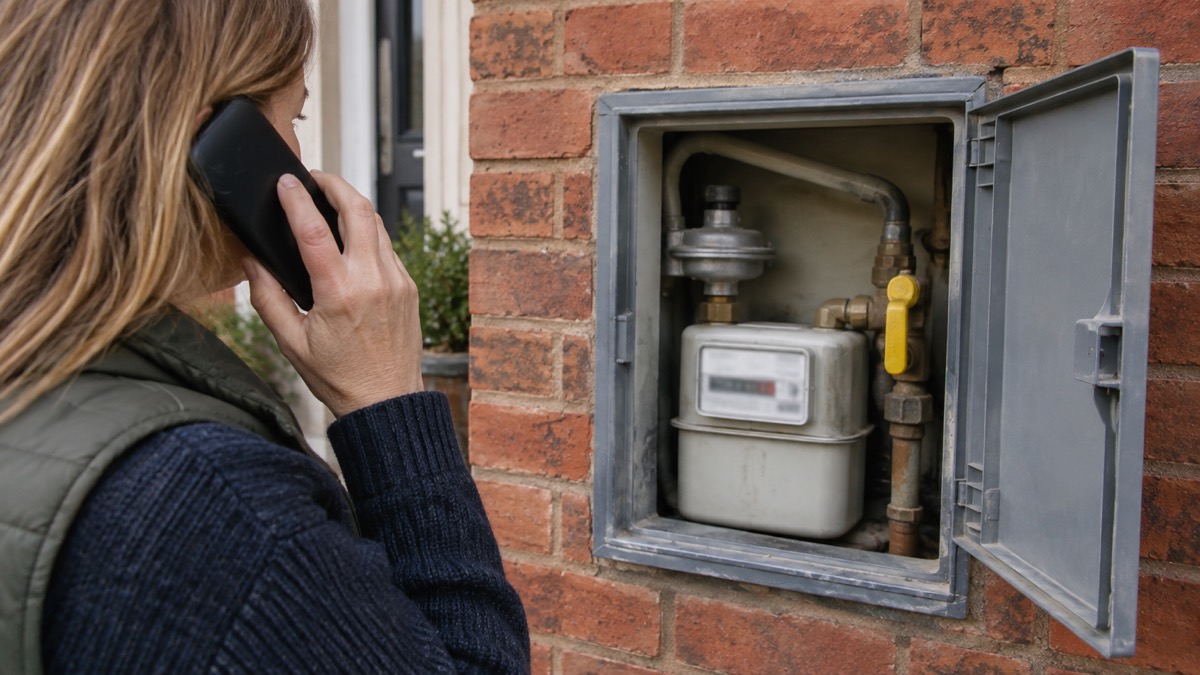
Whatever has happened, the first call is the same one. Ready Scotland lists the number plainly: "Gas emergencies: 0800 111 999"1. The same number appears in guidance from fire and rescue services, councils and the NHS across the UK3. You do not need to know which company operates the pipes in your street, and you do not need to be a customer of anyone in particular: the emergency service is free to call and is there for anyone who smells gas, loses supply or sees a pipeline damaged.
Call before you do anything else that takes time. The operator will ask what has happened and will give you safety advice while an engineer is on the way11. If the gas is lost for a long period, National Grid will send you details about the incident, so it matters that the network knows your home is affected4. The service is available 24 hours a day, 365 days a year, and will send out an engineer to keep you and your property safe2.
One part of the UK uses a different number. In Northern Ireland, the Northern Ireland Fire and Rescue Service advises calling the Gas Emergency Service on freephone 0800 002 001, 24 hours, in the event of a gas leak8. If you are in Northern Ireland, use that number; everywhere else in Great Britain, use 0800 111 999.
You should also use the emergency number to report a gas or carbon monoxide emergency, or if a gas pipeline is struck, even if there is no obvious leak9. Striking a buried pipe while digging is more common than people expect, and the network would rather send an engineer to an undamaged pipe than miss a real one. Our page on hitting a buried pipe while digging covers that situation in full.
If you smell gas: no switches, no flames, open windows
The immediate actions are the same in guidance from every official body, and each one exists because gas needs only a small spark to ignite. The Health and Safety Executive (HSE), the national regulator for gas safety, tells households to open all the doors and windows and shut off the gas supply at the meter control valve if you know where it is5. Guidance on suspected leaks adds the two prohibitions that matter most: do not smoke or turn on any electrical switches until you have been given the all clear12.
The reason for the switches rule is that flicking a light on or off, either way, creates a small spark inside the switch. The same logic applies to anything electrical in the property. Guidance on gas cylinders in caravans and camping gives the same instruction in that setting: turn off the main cylinder valve, open all doors and windows, and do not smoke or turn on any electrical switches until given the all clear13.
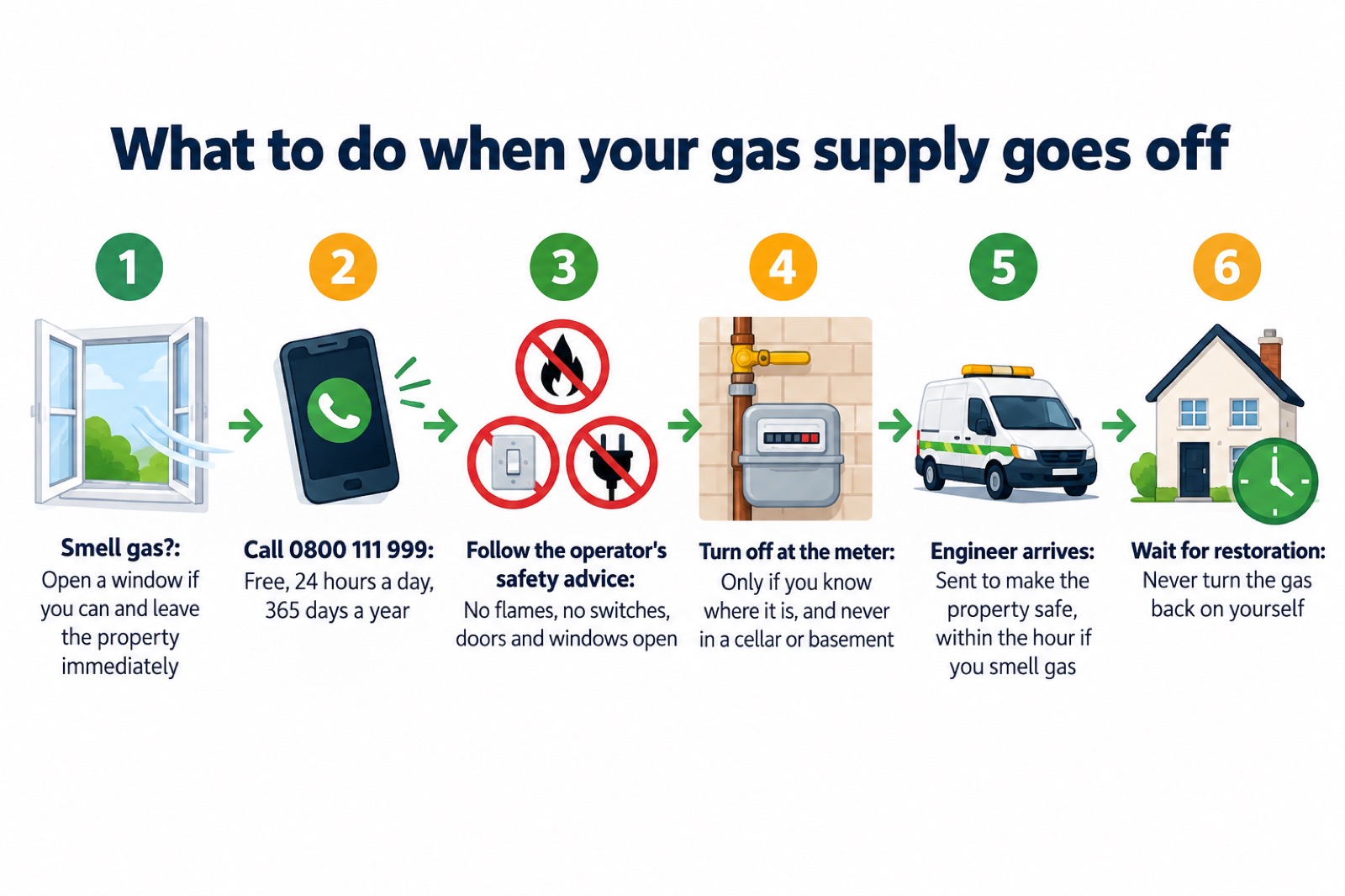
The sequence, in order:
- Open doors and windows to let gas disperse4.
- Do not smoke, light anything, or use naked flames12.
- Do not turn any power or light switch on or off12.
- Turn off the gas at the meter if you know where the valve is and it is safe to reach5.
- If the smell is strong, open a window if you can and leave the property immediately, and call 0800 111 999 from outside10.
If your supply has gone off but there is no smell of gas, the urgency is lower but the call is the same. A loss of supply with no smell usually points to a network problem rather than a leak in your home, and the operator can tell you whether there is a known incident in your area.
Where you must never go: a cellar or basement with a gas leak
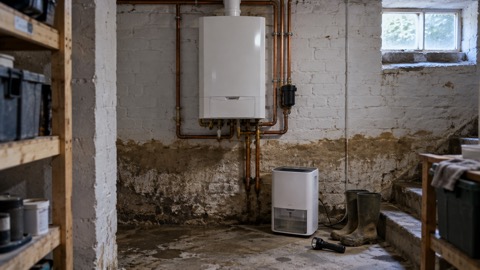
There is one firm exception to the advice about turning off the meter, and it appears in guidance from Surrey, Richmond, Devon and Somerset Fire and Rescue Service and Wiltshire preparedness partners alike: do not go into the cellar or basement to switch off the meter if the meter is there7. Surrey Council's emergency planning advice is explicit: open doors and windows, turn off the gas supply at the meter unless the meter is in the cellar, extinguish all naked flames, do not turn any power or light switch off or on, and do not enter the cellar if the smell is coming from there7. Richmond Council in London gives the same rule: turn the gas off at the meter unless the meter is located in the cellar or basement14.
The reason is simple. Gas collects in low, enclosed spaces, and a cellar or basement is exactly that. Entering it puts you in the highest concentration of gas in the building, and one spark there, from a switch, a torch or your own footwear, is enough to cause an explosion. Wiltshire and Swindon Prepared put it plainly: if there is a smell of gas in the cellar or basement, wait outside or with a neighbour2.
So the rule for the valve is conditional, and it is worth being clear about the two cases:
| Where your meter is | What to do |
|---|---|
| In the kitchen, hallway, cupboard or outside wall | Turn off the gas at the meter control valve if you know where it is5 |
| In a cellar or basement, or the smell is coming from there | Do not go in. Leave the property and wait outside or with a neighbour2 |
Devon and Somerset Fire and Rescue Service gives the same advice to tenants in rented homes: do turn off the gas at the meter unless the meter is in a cellar or basement16. Being a tenant changes nothing here. The emergency control valve belongs to the installation, not to the landlord, and using it in an emergency is both safe and expected.
Your emergency control valve and when to turn it off
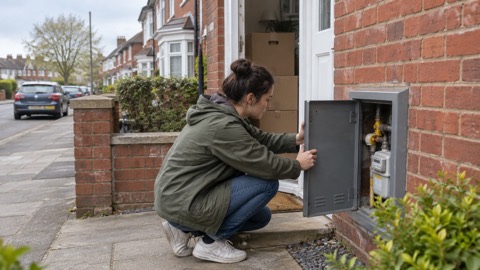
Every home with mains gas has an emergency control valve at the meter. The HSE's advice for owner-occupiers is to shut off the gas supply at the meter control valve if you know where it is, whenever you suspect a leak17. The HSE also advises switching off the appliance and shutting off the gas supply at the meter control valve if you think an appliance is spilling carbon monoxide5. Those are the two situations in which turning it off is the right move: a suspected leak, and a suspected carbon monoxide problem.
The best time to learn where your valve is, is now, while nothing is wrong. London Fire Brigade's flood preparation advice tells households to make sure they know how to turn off their gas, water and electrical supplies in an emergency18. The Greater London Authority says the same: know how to safely turn off your electricity, water and gas supplies19. In a real emergency you may be doing this in the dark, in a hurry, or with gas in the air, and the minutes spent hunting for a valve you have never touched are minutes that matter.
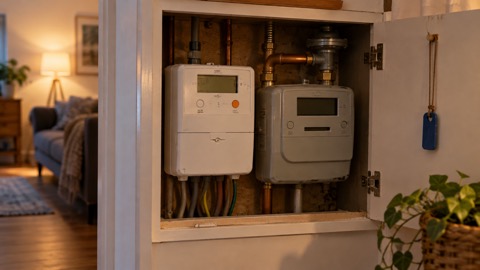
To turn the gas off at the meter, you turn the handle a quarter turn until it is across the pipe, which shuts the valve. The valve is at the meter, on the pipe where gas enters your home. If you cannot reach it, cannot turn it, or simply cannot find it, say so on the call to 0800 111 999: the engineer who comes will make the supply safe for you. Never take apart meter fittings or pipework yourself. The HSE's domestic gas safety advice is blunt on this point: never attempt DIY on a gas installation8.
Two related rules from the HSE are worth knowing before any emergency. Never block ventilation, because gas appliances need an adequate supply of air to help the complete combustion of gas5. And fit a carbon monoxide alarm in any room with a gas appliance, and have all gas appliances serviced annually by a Gas Safe registered engineer8. Both reduce the chance that a supply problem becomes a poisoning risk. Our page on unsafe appliances covers the warning signs in more detail.
What happens on the call to the National Gas Emergency Service
When you ring 0800 111 999, you will speak to the National Gas Emergency Service, which covers gas emergencies in your home or business15. London Fire Brigade describes the call simply: tell them what has happened and receive safety advice11. Be ready to give your address first, describe what you can smell or what has stopped working, and say whether anyone in the house has symptoms that could point to carbon monoxide.
The operator will talk you through the immediate safety steps, the same ones set out above, and will arrange for an engineer to attend. You should also use this number to report a gas or carbon monoxide emergency, or if a gas pipeline is struck, even if there is no obvious leak9. That last point catches people out: if you or a contractor has hit a pipe in the ground and nothing seems to be escaping, ring anyway. The network needs to know, and the call is free.
For households who cannot use a voice phone, there are alternative routes. For textphone (minicom) users, the emergency number is 0800 371 7879. Deaf BSL users can reach the service through SignLive, a video relay service that connects a BSL user to a hearing operator through a live interpreter. Whichever route you use, give the address early in the conversation so that help can be dispatched even if the connection drops.
If the gas is lost for a long period, National Grid will send you details about the incident4. That is your route to official information about what has happened and when supply is expected back, and it is one more reason to report your loss of supply rather than assuming the network already knows. For a fuller account of the service, see our page on the National Gas Emergency Service.
An engineer will come to make your home safe
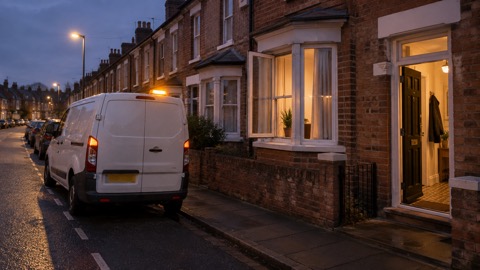
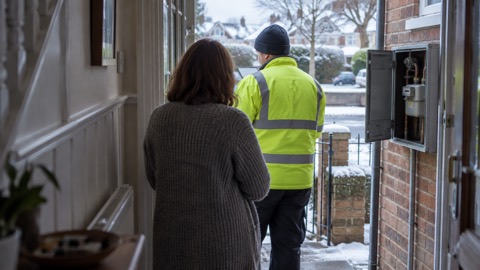
An engineer will be sent to make the property safe4. That is the core promise of the service: Wiltshire and Swindon Prepared describe it as sending out an engineer to keep you and your property safe, available 24 hours a day, 365 days a year2. If you reported a smell of gas, Manchester Fire and Rescue Service says an engineer will be with you within the hour, seven days a week, 24 hours a day3.
The engineer's job at this stage is safety, not repair. They will find the source of any leak, make the installation safe, and isolate the supply if that is needed. They will not fix a faulty boiler or service your appliances: that is work for a Gas Safe registered engineer, arranged separately. The Scottish Government's guidance gives the Gas Safe registration line as 0800 408 5500 for gas appliances20, and our page on finding a Gas Safe registered engineer explains how to check an engineer's card.
Ask the engineer for identification before you let them in. Engineers attending on behalf of the network carry ID, and if you have any doubt about a caller at your door, do not let them in and ring the emergency line back to check. This matters doubly during a widespread outage, when households are expecting visits and doorstep criminals take advantage of that expectation. Our page on how to check a network engineer is genuine goes through the checks step by step.
If the visit finds a problem with one of your own appliances, the engineer may isolate or condemn it. That can leave you without heating or hot water even after the network supply is restored, and there is help available: see our page on what help there is if your appliance is condemned.
When a whole street loses gas: what the network does
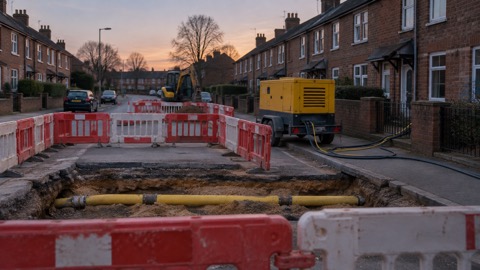
A loss of supply that affects your whole street, estate or town is a different event from a problem in your own home, and the network's response is different too. The HSE, reviewing how a large-scale gas supply emergency would unfold under previous arrangements, highlighted that isolating and then restoring gas supplies for so many domestic consumers is a complex process that could take weeks or months to achieve6. The reason is pressure. The gas network cannot simply be switched back on, since the order in which premises are restored must be coordinated to ensure that pressure in the network is maintained6. Restore too many homes at once and the pressure drops; restore them in a controlled sequence and the network stays stable.
Widespread gas loss is not a remote theoretical risk. Surrey's Community Risk Register rates the failure of gas supply infrastructure, R051, as Very High, noting that in winter a technical failure or accident affecting infrastructure can lead to loss of supply21. The same register rates a total failure of the national electricity transmission system, R050a, as Very High21. The two are linked: Wiltshire and Swindon Prepared point out that electricity powers the gas supply and water production, so a loss of electricity affects the other utilities too22. Without electricity, they note, we lose the ability to heat our homes as the gas will go off and the water may slowly stop from our taps22.
The causes named in official guidance are worth knowing, because they shape what kind of event you may be facing. Essex Prepared lists supply chain disruptions, fuel shortages and geopolitical conflicts as causes of gas supply failures, and fuel shortages or geopolitical instability as causes of power outages23. A supply failure with one of these causes is likely to be regional and prolonged, not a quick repair at the end of your road.
Storm Arwen in 2021 showed how quickly utility loss can spread. That was an electricity event, but the two networks are linked: official risk guidance notes that without electricity we lose the ability to heat our homes as the gas will go off, and that a national power outage could also result in the loss of gas alongside water, telecommunications and fuel22. Households affected by a storm should also read our guides to storms, snow and ice and power cuts.
During a long outage, the network's priority is safety first, then coordinated restoration. Your household's priorities run in parallel: keep warm safely, keep informed, and avoid the temptation to shortcut the restoration process. Our page on help from networks during a long outage sets out what support exists.
Priority visits and extra support for those who need them
Some households get more from the networks than a standard response. The Priority Services Register exists for households that need extra help, and one of the things it provides is advance notice of power cuts24. Registration is free, and you can ask your energy supplier or network operator to add you. Our page on extra support from networks and suppliers explains who qualifies and how to sign up.
Elderly residents and households with young children are among the groups networks treat as priorities during an outage, because losing heating hits them hardest and soonest. If you are on the register, say so when you call the emergency line, and mention it again to the engineer who visits. If you care for someone who is vulnerable and does not live with you, a widespread outage is the moment to check on them, by phone first and in person if you can travel safely.
The timescales for Priority Services Register households receiving alternative heating and cooking facilities during an outage differ between guidance documents: one says within 4 hours, the other within 8 hours. Treat both as the intended standard rather than a guarantee, and plan your own fallback for the first hours of any long outage. Our heating and cooking without mains power or gas guide covers the options, and the emergency kit guide covers what to have ready before you need any of it.
Never turn the gas back on yourself
This is the rule that saves lives, and every official source agrees on it. The gas network cannot simply be switched back on, since the order in which premises are restored must be coordinated to ensure that pressure in the network is maintained6. Turning your own supply back on outside that sequence can draw gas at the wrong pressure, can leave air in the pipes, and can put unburned gas into your home or your neighbours'. After a network event, each property is visited and relit or checked as part of the coordinated restoration, and only then is the supply live again.
The HSE's domestic gas safety advice reinforces the wider rules that apply at all times, not just during outages: have all gas appliances serviced annually by a Gas Safe registered engineer, never attempt DIY on a gas installation, never block air vents, fit a CO alarm in any room with a gas appliance, and know how to turn your gas supply off in an emergency8. The last of those is the one this page exists to teach; the others are how you make sure an outage does not end in a second emergency.
If you miss the reconnection visit, do not take matters into your own hands. Ring the emergency line and arrange another visit. Our page on what to do if you missed the reconnection visit covers the steps, and getting your supply back on after an outage explains the full process.
How long it takes to get gas back
For a single-home problem, the answer is fast: an engineer will be with you within the hour if you smell gas, seven days a week, 24 hours a day3, and the service runs 24 hours a day, 365 days a year2. A leak at your meter or an appliance fault is usually made safe the same day, though repairing the appliance itself is a separate job for your own engineer.
For a widespread loss of supply, the honest answer is that it can take a long time. The HSE's review of gas supply emergencies under previous arrangements found that isolating and then restoring gas supplies for so many domestic consumers is a complex process that could take weeks or months to achieve6. Restoration is deliberately staged, property by property, to keep network pressure stable6. Plan on that basis: a long outage means alternative arrangements for heating, cooking and hot water, not a wait of hours.
Not every loss of supply is total, and low pressure is its own problem. An NHS England case study describes a boiler failure caused by low gas pressure, with debris in the gas system suspected after discussions with a specialist contractor25. Low pressure can stop a boiler working while a hob still lights, which makes it look like a boiler breakdown rather than a supply problem. If several appliances have failed together, or neighbours report the same, report it on 0800 111 999 rather than calling out a heating engineer first. Our page on who to call about low supply pressure helps you tell the two apart, and boiler breakdowns in cold weather covers the appliance side.
Getting ready before it happens
Everything on this page is easier if you have done three things in advance, all of them free.
- Find your emergency control valve at the meter, and make sure everyone in the household knows where it is18.
- Save 0800 111 999 in every phone in the house, and know the textphone number 0800 371 787 if anyone in the household uses minicom1.
- Check your carbon monoxide alarms, and fit one in any room with a gas appliance if you have not8.
Carbon monoxide deserves a line of its own, because a gas supply problem and a carbon monoxide problem can arrive together. The NHS advises calling the free National Gas Helpline immediately on 0800 111 999 if you suspect carbon monoxide10, and the emergency line accepts carbon monoxide reports as well as gas leaks9. The Health and Safety Executive for Northern Ireland adds a detail that matters if anyone has symptoms: CO quickly leaves the blood and tests may be inaccurate if taken more than four hours after exposure has ceased26. Seek medical advice promptly, and tell the doctor about the timing. Devon and Somerset Fire and Rescue Service and the HSE both publish the wider carbon monoxide safety advice27, and our home emergencies guide covers it alongside fire and burst pipes.
Beyond that, the standard household preparations apply: a way to heat one room and cook a meal without mains gas, a torch rather than candles, and a way to keep informed. The getting started guide puts the whole picture in order.
Sources (27)
- Prepare for emergencies: emergency plan, Ready Scotland
- What you might need in a gas outage, Wiltshire and Swindon Prepared
- Stay fire safe, Manchester Fire and Rescue Service
- Gas supply issues, Buckinghamshire Council
- Gas safety: frequently asked questions, Health and Safety Executive
- Gas supply emergencies, Health and Safety Executive
- Power, gas and water: what if they fail, Surrey County Council
- Home fire safety, Northern Ireland Fire and Rescue Service
- Energy outages, National Energy System Operator
- Preparing yourself for emergencies, Greater London Authority
- Carbon monoxide safety, London Fire Brigade
- Prepare yourself, Greater Manchester Combined Authority
- Caravans and Camping - North Yorkshire Fire & Rescue Service, North Yorkshire Fire & Rescue Service
- Utilities failure, Richmond Council
- Safety in severe weather conditions, Devon and Somerset Fire and Rescue Service
- Safety advice for tenants, Devon and Somerset Fire and Rescue Service
- Gas safety: FAQs for owner-occupiers, Health and Safety Executive
- Preparing for a flood, London Fire Brigade
- Preparing for emergencies, Greater London Authority
- Chief Medical Officer report, Scottish Government
- Community Risk Register 2026 v1, Surrey County Council
- Failure of national electricity, Wiltshire and Swindon Prepared
- Utility failure: ongoing risks, Essex Prepared
- Priority Services Register, Derbyshire County Council
- Case study: interruption to hot water and heating, NHS England
- Carbon monoxide, Health and Safety Executive for Northern Ireland
- Carbon monoxide, Devon and Somerset Fire and Rescue Service
 Checks Before Calling Engineer
 Boiler Checks When Moving In
 Power Cut Kit Checklist
 National Gas Emergency Service
 Getting Supply Back After Outage
 Compensation for Supply Cuts
 Planned Pipe Works
 Help During a Long Outage
 Prepayment Meters
 LPG Homes in Winter
 Oil Boiler Breakdowns
 Boiler Breakdown in Cold Weather
 Boiler Fault Codes
 Boiler Pressure Gauge
 Frozen Condensate Pipes