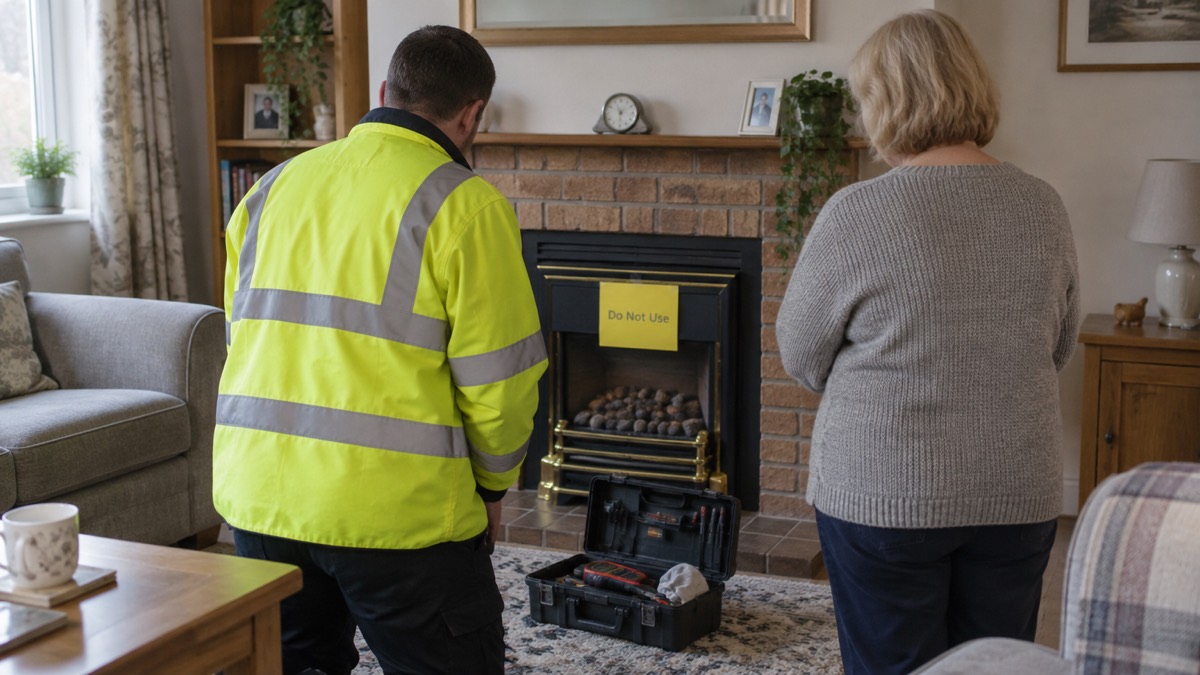
If a Gas Safe registered engineer has switched off your boiler, fire or cooker and left a warning label, the appliance has been judged unsafe. The Health and Safety Executive is blunt about what happens next: it is illegal for anyone to use a gas appliance if they suspect it is unsafe, and you should turn it off and not touch it until it has been checked by a Gas Safe registered engineer1. Both unsafe categories, "Immediately Dangerous" and "At Risk", carry the same message on the label: "Danger Do Not Use"1.
That leaves most households with two immediate problems: staying warm and cooking without the appliance, and getting it repaired or replaced. Help exists at several levels. Your gas supplier and network operator can offer extra support through the Priority Services Register, and network engineers can refer some customers to charities that arrange assessment and often a fully funded repair or replacement3. If you rent, your landlord carries legal duties for the appliances they provide5. The sections below take each of these in turn.
What "Immediately Dangerous" and "At Risk" mean for your appliance
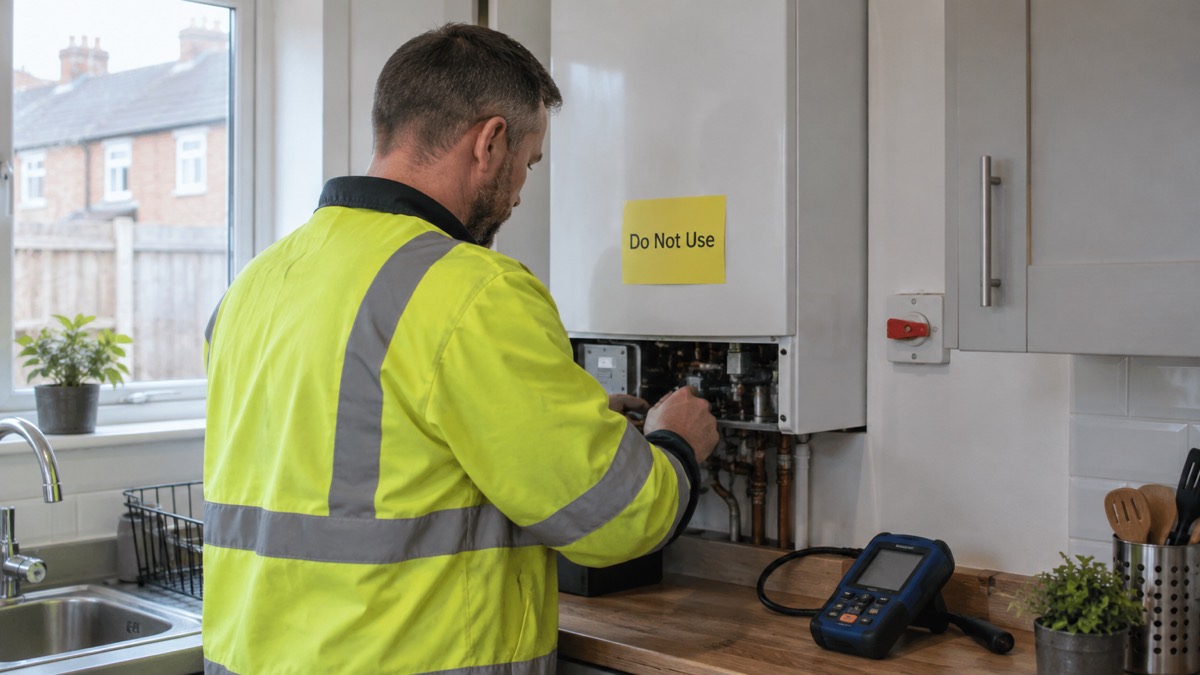
When an engineer finds a gas-related danger in your home, they attach a "Danger Do Not Use" warning label to the appliance2. The Gas Safe Register explains that there are two unsafe categories, "Immediately Dangerous (ID)" and "At Risk (AR)", and that both carry the same message on the warning label1. In practice, the distinction matters less to you than the label: either way, the appliance is out of use until a Gas Safe registered engineer has dealt with the fault.
The reason for the caution is straightforward. Handling gas appliances, pipelines or fittings without proper training and expertise can lead to serious hazards9. Gas appliances also need an adequate supply of air to help the complete combustion of gas, and blocking ventilation is one of the things you must never do1. An appliance that has been condemned may be leaking gas, burning incorrectly, or sending fumes into the room rather than out through the flue.
Carbon monoxide is the danger most associated with faulty combustion. Fire and rescue services recommend a carbon monoxide alarm in rooms where you have a fixed combustion appliance such as a gas fire, gas boiler, log burner or open fireplace10. Landlords must supply a carbon monoxide detector and alarm in any room used wholly or partly as living accommodation which contains a solid fuel burning combustion appliance, under the Smoke and Carbon Monoxide Alarm (England) Regulations11. Guidance also says to install a carbon monoxide alarm in any room used as living accommodation that contains a fixed combustion appliance, excluding gas cookers12. If your appliance has been condemned, an alarm gives you a second line of warning while the fault is investigated.
Keeping warm and cooking safely while the gas is off
With the boiler or fire out of action, the priority is a warm room you can live in and hot food without relying on the condemned appliance. Turn off all gas appliances that do not need to run while you are managing the situation, as fire and rescue guidance advises when a property is left13. Do not be tempted to use the condemned appliance "just for heat" while you wait for a repair.
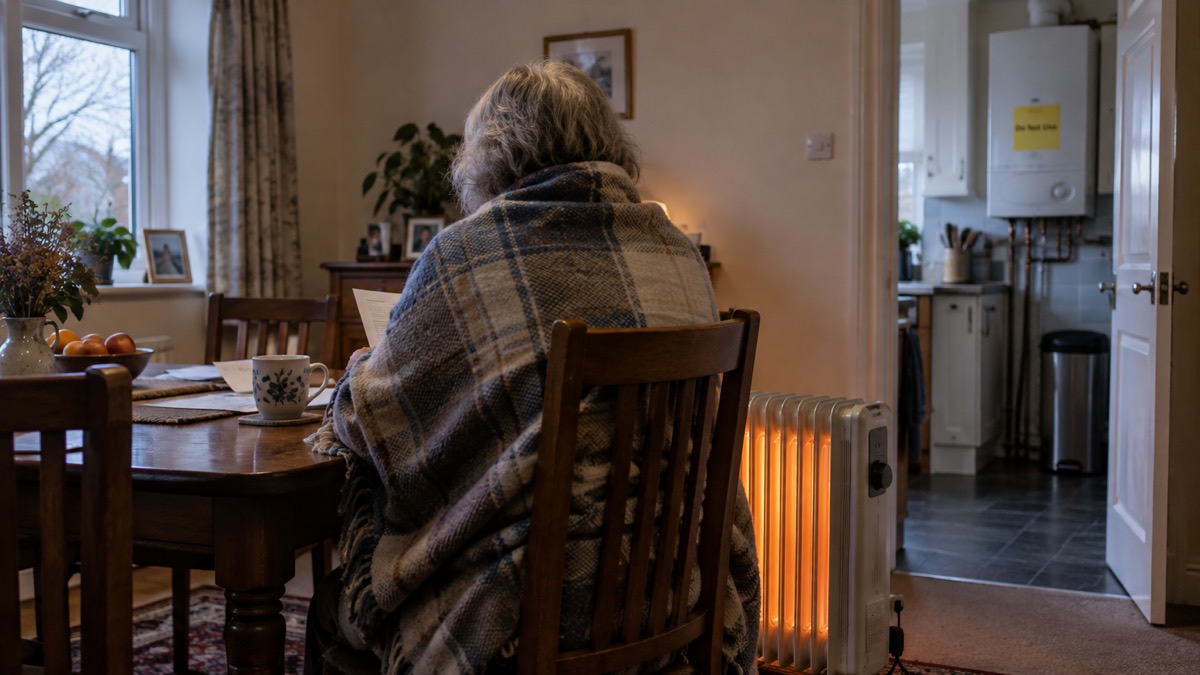
For warmth, use the layers you already have and keep one room as your main living space rather than heating the whole house. If you have a medical condition that makes cold dangerous, tell your supplier and network when you contact them, because that is exactly the kind of household the Priority Services Register exists for.
For cooking, use the hob only if it is a separate appliance that has not been condemned, or use a microwave, slow cooker or kettle. Never bring a camping stove or barbecue indoors: the carbon monoxide risk from any fuel-burning appliance in an enclosed space is the same one that got your boiler condemned. If you have home oxygen in the house, fire and rescue guidance is explicit: do not cook with gas or use open flames while oxygen is in use or for 30 minutes after it is turned off14.
If you have a carbon monoxide alarm and it sounds, follow the TASK steps from the Northern Ireland Fire and Rescue Service: turn off or extinguish all fuel burning appliances if safe to do so, open all doors and windows and go outside, seek medical assistance if unwell, and keep appliances off until checked by a qualified engineer15. The NHS also lists increased condensation inside windows as a warning sign to watch for16.
Help from your gas supplier and the Priority Services Register
The first call is usually to your gas supplier, and the second to your network operator. The Priority Services Register is a free service for eligible households: if you join and your gas, electricity or water supply is cut off, your suppliers will know you need extra support17. The register can also help with prepayment meter access18. Northern Gas Networks, which runs the register in its area, says simply: "If your gas supply is interrupted, we'll get in touch with you."8 The register exists so that households with extra needs get extra advice and support if their gas supply is ever affected19.
Eligibility is not limited to people on certain benefits. Households with older people, people with disabilities or medical conditions, families with young children, and people who rely on medical equipment are among those who can ask. If you are unsure, ring your supplier and ask whether you qualify.
Beyond the register, network operators run services beyond the meter. Cadent Gas says its engineers can refer customers to one of its two strategic partners, National Energy Action and Groundwork UK, for assessment and often a fully funded gas appliance repair or replacement4. This is the route that matters most if your appliance has been condemned and you cannot afford the repair. Cadent describes the position for customers in financial hardship plainly: they can either remain off gas, risk self-reconnection, or take out credit to afford the cost of repairs or replacements4. The referral route exists to avoid that choice.
| Who to contact | What they can do | When to call |
|---|---|---|
| Your gas supplier | Priority Services Register, prepayment meter help, account support17 | As soon as the appliance is condemned |
| Your network operator | Extra advice and support if supply is affected4 | If you cannot afford the repair |
| Gas Safe Register | Confirm an engineer is registered and qualified7 | Before any repair work starts |
If your supply itself has gone off, rather than just one appliance, see what to do when the mains supply to your home goes off and help from networks during a long outage.
Grants and schemes that can help repair or replace a boiler
There is no single national grant that simply pays to repair a condemned boiler, but several routes can help. The first is the network referral described above: funding can also be used in some circumstances to service, repair or replace unsafe essential gas appliances, to avoid leaving a vulnerable consumer without gas if they cannot afford repairs20. Ask your network operator whether you can be referred.
The second is the Boiler Upgrade Scheme, which is a grant for replacing a fossil fuel heating system with a low carbon one, not an emergency repair fund. Age UK's guidance says you can get a grant of between £2,500 and £7,500, depending on the technology you choose21. To be eligible, your property must have a fossil fuel heating system such as oil, gas, or direct electric; biomass support is only in rural areas or off the gas grid; and it is not for most new builds, social housing or properties already given government funding for a heat pump or biomass boiler21. If your boiler is beyond repair and you were planning to replace it anyway, this is worth investigating, but it will not get you heat this week.
The third is prevention, which is cheaper than cure. Gas appliances should be serviced annually by a Gas Safe registered engineer, which is a legal requirement for landlords, and you should never attempt DIY repairs on gas appliances or electrical installations22. Have appliances checked every year by a Gas Safe registered engineer23. Regular checks of fuel-burning appliances like gas boilers and wood burners are also recommended by NHS Inform24. A serviced appliance is less likely to be condemned in the first place.
For more on servicing and who gets checks free, see appliance safety checks: how often and who gets them free and boiler servicing: how often and what an engineer checks.
Where you must not use the appliance again until it is fixed
The rule is simple and it does not bend: do not use the condemned appliance, and do not reconnect it yourself. The Be Ready household emergency plan is explicit: "You can turn the water and electricity back on yourself but NOT THE GAS. This must be done by a qualified engineer."6 After a flood, Belfast City Council advises not to turn on gas or gas appliances until your system has been checked by a Gas Safe registered engineer25, and Scottish Borders Council gives the same advice, adding that flues or ventilation systems may be affected even if appliances appear to be working normally26.
There are specific places where a gas appliance should not be used at all, condemned or not. The Health and Safety Executive advises that you do not use a gas appliance in a room that you will be sleeping in, unless it has a flame safety device fitted or is a sealed unit with an external flue, and to seek professional advice from a Gas Safe registered engineer to confirm this is the case27. Since 31 October 1998, any room converted to use as sleeping accommodation should not contain a gas fire, gas space heater or gas water heater (including a gas boiler) over 14 kilowatts gross input unless it is room sealed3. Never block ventilation1.
If you have home oxygen, the warning is stronger still. Smoking or the use of any naked flames, such as candles, fires and cooking, anywhere near oxygen is extremely dangerous and increases the risk of significant injury in the event of a fire28. Do not cook with gas or use open flames while oxygen is in use or for 30 minutes after it is turned off14.
If you rent, your landlord has to act
Landlords have legal duties for the gas appliances and pipework they provide. Gas appliances should be serviced annually by a Gas Safe registered engineer, which is a legal requirement for landlords5. A gas servicing certificate should be issued to the tenant11. If you have your own gas appliance that the landlord did not provide, the landlord still has responsibilities for parts of the associated installation and pipework, though not for the actual appliance, and good practice is for them to send a reminder that tenant appliances should be serviced and checked each year1. You can approach your landlord and ask for your appliance to be included, at reasonable cost, within the gas safety maintenance and check they arrange with a Gas Safe registered engineer1.
After a fire or similar incident, it is the landlord's or building owner's responsibility to repair any damage to gas, electricity or water supplies29. If your landlord does not act on a condemned appliance, put your request in writing, keep the warning label and any paperwork, and contact your council's housing or environmental health team. For more, see broken boilers in rented homes: what your landlord must do.
Checking the engineer and getting a second opinion
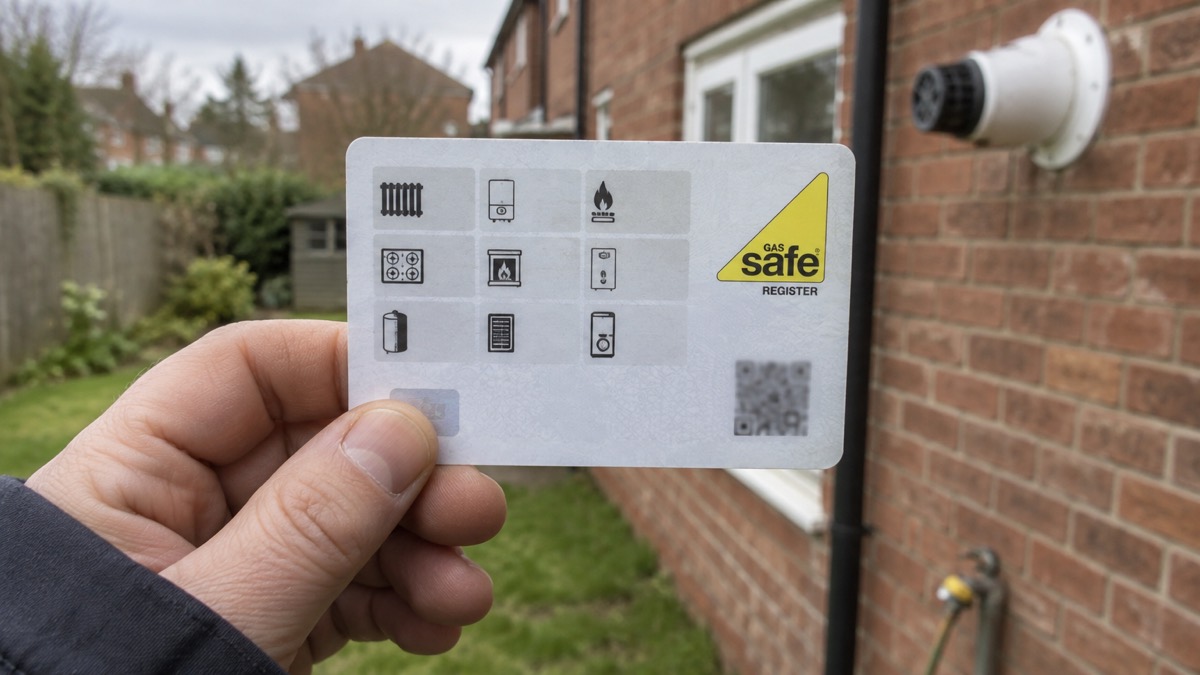
Anyone employed to work on gas appliances in domestic premises must be a Gas Safe registered engineer and competent in that area of gas work3. All Gas Safe registered engineers carry ID cards which tell you which appliances they are qualified to work on, and competencies are clearly marked on the back of the card1. Check the card, or look up the engineer or business on the Gas Safe Register website3. You can check that an engineer is registered by calling Gas Safe Register on 0800 408 55007.
A Gas Safe registered engineer must fit and check a gas appliance, and a non-registered engineer may not fit it3. It is not acceptable for a Gas Safe registered engineer to knowingly "sign off" gas work carried out by a person who is not registered; where this occurs, both the registered and unregistered installer may face prosecution30. If you want a second opinion on a condemnation, ask another Gas Safe registered engineer, and check that their card covers the type of appliance. Do not ask an unregistered person to reconnect or repair it, and do not use the appliance while you wait.
For more, see finding a Gas Safe registered engineer and checking their card and unsafe appliances: warning signs and being cut off.
Sources (30)
- Gas safety FAQs for householders, Health and Safety Executive, 2026
- Home gas safety tips, Gas Safe Register, 2026-10-29
- Gas safety FAQs for owner occupiers, Health and Safety Executive, 2026
- Services beyond the meter, Cadent Gas, 2026-10-29
- Fire safety at home, Greater Manchester Fire and Rescue Service, 2026
- Be Ready household emergency plan, UK Government, 2026
- Gas safety for tenants, Greater London Authority, 2026-10-25
- Priority Services Register, Northern Gas Networks, 2026-10-29
- Safe home heating, Warwickshire County Council, 2026-10-29
- Carbon monoxide, Greater Manchester Fire and Rescue Service, 2026-10-29
- Fire safety in rented accommodation, Cornwall Council, 2026-10-29
- Smoke alarms, Cheshire Fire and Rescue Service, 2026-07-27
- While you are away, Mid and West Wales Fire and Rescue Service, 2026-10-29
- Medication and Medical Devices | West Yorkshire Fire and Rescue Service, West Yorkshire Fire and Rescue Service
- Home fire safety, Northern Ireland Fire and Rescue Service, 2026-10-14
- Gas safety - Carbon monoxide awareness frequently asked questions - HSE, Health and Safety Executive (HSE)
- Keeping warm, healthy and safe in cold weather, Greater London Authority, 2026-10-25
- Help from your energy supplier, Buckinghamshire Council, 2026-10-29
- Priority customers, Northern Gas Networks, 2026-10-26
- Cross-government group on gas safety, Health and Safety Executive, 2026-04
- Help with heating costs, Age UK, 2026-09
- Prevention - Fire Kills, Fire Kills (firekills.campaign.gov.uk)
- Carbon monoxide, Greater Manchester Fire and Rescue Service, 2026-10-29
- Indoor air pollution, NHS Inform, 2026-08-05
- Flooding advice, Belfast City Council, 2026-10-29
- Flooding advice, Scottish Borders Council, 2026-10-29
- Carbon monoxide, Doncaster and Bassetlaw Teaching Hospitals NHS Foundation Trust, 2026
- Specialist health equipment, London Fire Brigade, 2026-10-29
- After an incident, Devon and Somerset Fire and Rescue Service, 2026
- Gas safety check - who can do it? - HSE, Health and Safety Executive (HSE)
 Checks Before Calling Engineer
 Boiler Checks When Moving In
 Power Cut Kit Checklist
 Stop a Condensate Pipe Freezing
 Repressurising a Combi Boiler
 Hot Water but No Radiators
 Resetting a Boiler Lockout
 Programmer Reset After Power Cut
 Boiler Leaking Water
 Boiler Overheating
 How to Bleed a Radiator
 Boiler On When Away in Winter
 Missed Reconnection Visit
 Prepayment Credit but No Gas
 Low Supply Pressure