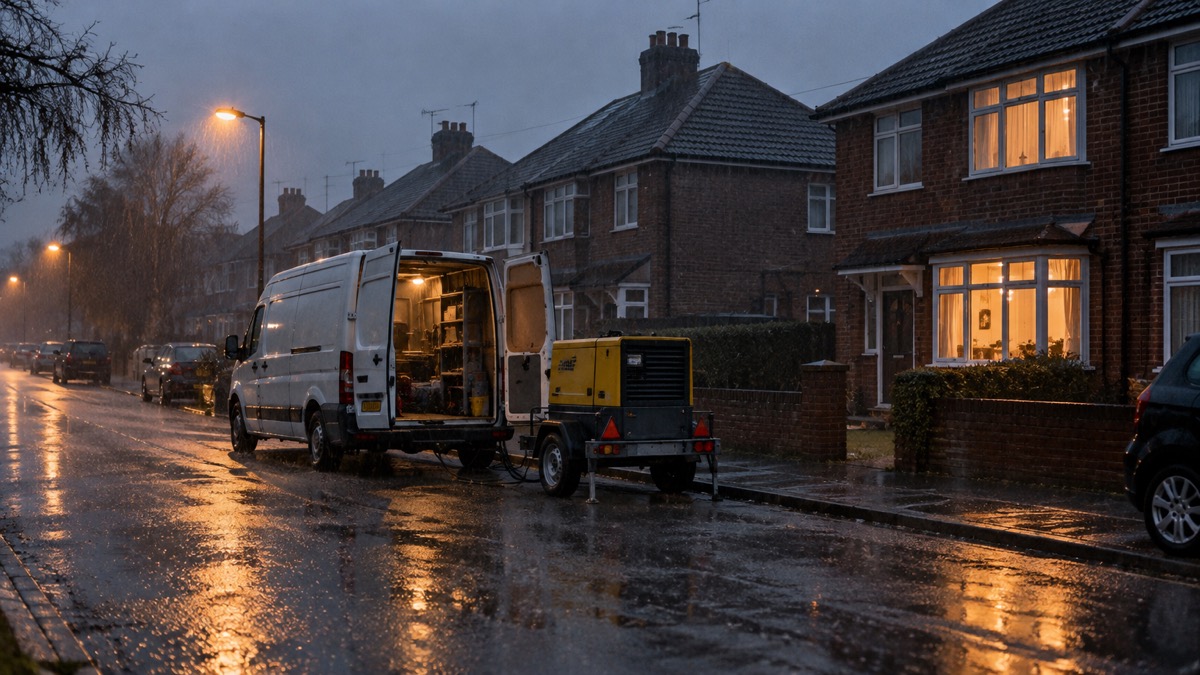
Being on a Priority Services Register is not just a note on your file. It triggers specific things your gas, electricity and water companies must do when your supply is interrupted, and it opens the door to fixed compensation payments when they fail to meet guaranteed standards. If your gas goes off, a listed customer should get temporary heating and cooking appliances within four hours. If your power is off for 12 hours or more in normal weather, you can claim £95 as a domestic customer, plus £40 for each additional 12 hours. If sewage enters your home, you are due a payment equal to your annual sewerage charge, capped at £1,0001.
This page sets out what registered households can expect and claim, in the order you would need it: what happens during an interruption, what help must arrive and how quickly, what payments apply and how to claim them, and where to complain when support fails. The rules differ between energy and water, and between England, Scotland, Wales and Northern Ireland, so those differences are flagged where they matter.
One thing to be clear about from the start: the register itself does not pay money. Ofgem states plainly that "you will not receive extra payments for being on a priority service register"2. The register gets you practical help and communication. The payments come from separate guaranteed standards schemes, which apply whether or not you are registered, though being registered makes it far more likely you will know your rights and be reached during an incident.
What registered customers can expect when the supply goes off
The Priority Services Register is a shared name for a set of separate schemes. Each company keeps its own register, so your electricity supplier, gas supplier, gas distributor, water company and telecoms provider may each hold a different record of you6. Eligibility is set by the gas, electricity and water suppliers themselves, and registration lets them know you need additional support, including when there is an interruption to your supply7. If you have a different supplier for your gas and your electricity, you need to contact them both8.
Once registered, the practical help falls into three broad groups.
- Communication: if you are registered with your local gas, electricity or water supplier, they will message you when there is an interruption to the supply in your area9. Registered energy customers can also get advance notice of planned power cuts8.
- Priority assistance: if your gas, electricity or water supply is cut off, your suppliers will know you need extra support10. For water customers this may include access to bottled water during a supply interruption, priority assistance, and tailored support if there is a power or gas outage11.
- Alternative supplies: if you are on the water Priority Services Register, your water company will arrange alternative supplies for you during an outage12.
The register is free to join. Cheshire Fire and Rescue Service's safety booklet directs people to check if they can join at thepsr.co.uk, which gives extra advice and support from your energy or water supplier13. Disabled people and carers can sign up to priority service registers so organisations know they may need more help in an emergency; the organisations involved include your local council, water company, and gas and electricity company14.
The register matters most during widespread incidents, and that is also where it has been shown to fall short. During the 2018 freeze and thaw, nearly a third of customers on Thames Water's priority services register were not directly reached15. The lesson for households is not to assume help will find you: keep your registration details to hand, contact your company when an interruption starts, and ask anyone you provide care for whether they are registered16.
Gas off: alternative heating and cooking within four hours
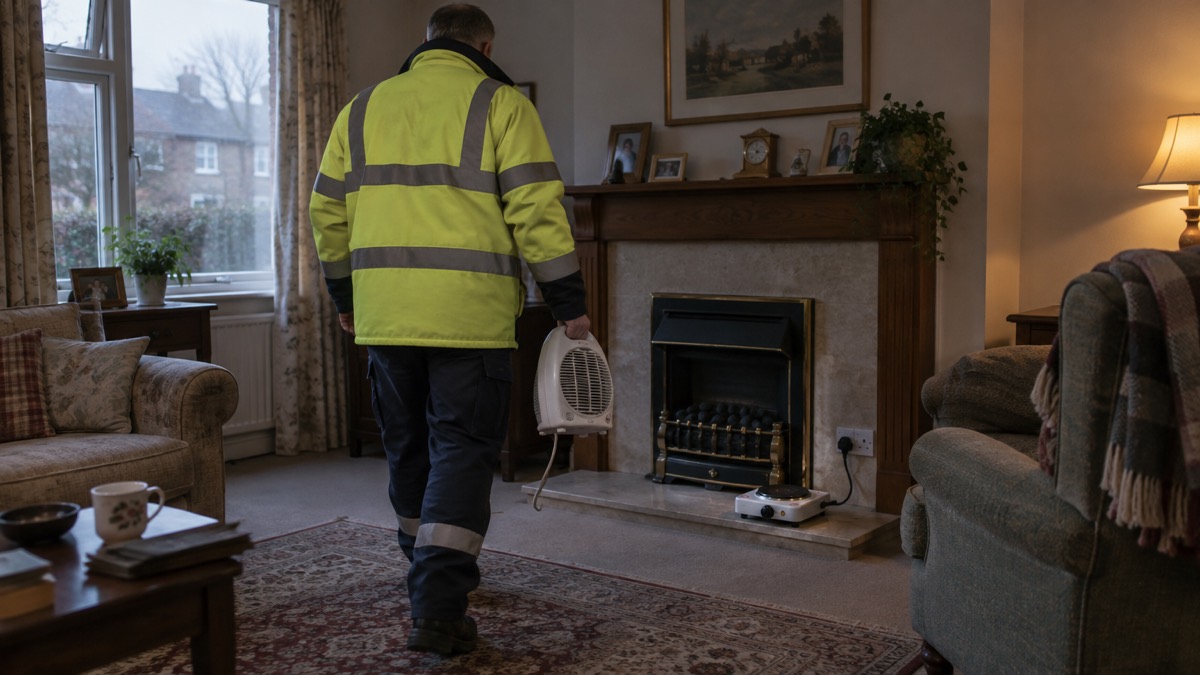
A gas supply interruption in winter is dangerous for anyone who relies on gas for heating and cooking, and the rules for registered customers reflect that. The Priority Services Register includes alternative heating and cooking facilities for certain types and lengths of interruption, provided by gas distribution networks to disabled, chronically sick and pensionable age customers17. The commitment has a time attached to it in practice: Southern Gas Networks states that "if there is a supply interruption and you're a listed Priority Service Register (PSR) customer we'll provide you with temporary heating and cooking appliances within four hours to make sure you stay warm and can have a hot meal"3.
The timescale is not the same in every case. Southern Gas Networks applies the four-hour commitment to listed Priority Service Register customers during a supply interruption3. Treat four hours as the standard a listed customer should expect and press for. Either way, the obligation applies to listed customers, so the practical steps are the same:
- Check you are on the register before any interruption: the alternative heating and cooking facilities are provided to disabled, chronically sick and pensionable age customers on the register17.
- If your gas goes off, contact the company and say you are a registered customer: Southern Gas Networks provides temporary heating and cooking appliances to listed Priority Service Register customers during a supply interruption3.
- Ask specifically for temporary heating and cooking appliances: the commitment is to provide them within four hours3.
- If nothing arrives within four hours, chase it: four hours is the stated standard for listed customers3.
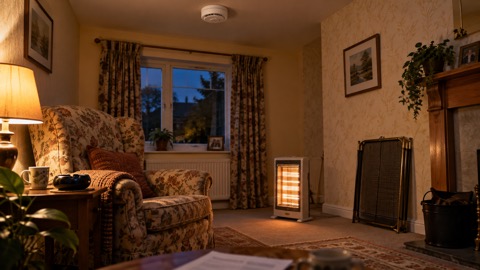
While you wait, follow the general safety advice for heating and cooking without mains gas: never bring a barbecue or camping stove indoors, and use only heaters designed for indoor use. Manchester Fire and Rescue Service warns that anyone installing, repairing or servicing gas appliances must be registered with the Gas Safe Register18, a point that matters again when your appliances are checked after the supply returns.
Power cut compensation: what you can claim and when
Power cut compensation comes from the Guaranteed Standards of Performance, which cover England, Scotland and Wales19. The amounts depend on the weather, the number of properties affected and how long you are off. Ofgem's current consumer guidance sets out the figures below.
| Situation | Payment for a home | Extra payments |
|---|---|---|
| Normal weather, off 12 hours or more | £95 | £40 for each additional 12 hours, up to £3604 |
| Severe weather, off 24 hours (Storm Category 1) or 48 hours (Storm Category 2) | £85 | £40 for each additional 6 hours, up to £2,0004 |
| Fewer than 5,000 properties affected for more than 12 hours, or more than 5,000 properties for more than 24 hours | £100 | £45 for every additional 12-hour period2 |
| Storm Category 1 | £90 for the first 24 hours | £45 for every 6 hours after20 |
| Storm Category 2 | £90 for the first 48 hours | £45 for every 6 hours after20 |
| Power off more than 4 times between 1 April and 31 March, each cut at least 3 hours | Extra £100 | Claimable on top of the above19 |
The reason there are two sets of figures for similar situations is that Ofgem publishes the standards in more than one guidance document, and the thresholds are described differently in each. One set of payments and additions comes from Ofgem's domestic consumer advice for England and Wales4; a higher set of initial payments and additions comes from Ofgem's power cut payment pages2. Where they overlap, the two sets do not match, so quote both when you claim and ask the network operator which standard applies to your cut. What is consistent across all of them is the principle: the longer you are off, the more accumulates, and there is a cap on the total in normal weather and a higher cap in severe weather4.
The severe weather categories matter because storms stretch the deadlines. In a Storm Category 1 event you are not due the first payment until 24 hours without power; in a Storm Category 2 event, not until 48 hours20. The repeated-cuts payment is separate again: if your power has gone off more than 4 times between 1 April and 31 March the following year, with each cut lasting at least 3 hours, you could get an extra £10019.
Being on the Priority Services Register does not change these amounts, but it changes what you know and when. Registered customers can receive advance notice of planned power cuts8 and messages during interruptions9, which makes it far easier to record the times you need for a claim.
Water supply interruptions: alternative supplies and priority help
Water companies are under a specific legal duty here. Under the Security and Emergency Measures Direction (2022), section 4.4.d, water companies are required to identify and prioritise vulnerable customers, following Ofwat's guidance for maintaining up-to-date Priority Services Registers21. In practice, if you are on the register, your water company will arrange alternative supplies for you during an interruption16.
What that support looks like was set out by Surrey County Council: it may include access to bottled water during a water supply interruption, priority assistance, and tailored support if there is a power or gas outage11. Ofwat provides information on what communication you should expect from your water company in the case of an interruption to your supply16, so if you are not told what is happening, that itself is something to raise.
Registration routes are straightforward. Sign up to your water supplier's Priority Services Register to let them know you need additional support, including when there is an interruption to your supply; you can do this via thepsr.co.uk16. Some companies offer several ways in: South West Water, for example, takes registrations through an online form, by calling 0344 346 1010, or by minicom on 0800 169 9965, with Text Relay also available3.
The 2018 freeze and thaw is the cautionary tale. Nearly a third of customers on Thames Water's priority services register were not directly reached during that event15, and a number of companies told Ofwat that their priority services registers were limited15. So the working assumption should be: register, but also act. If you believe you are registered but have not received support during an interruption, contact your water company as soon as possible16. Ask anyone you provide care for whether they are registered as well, since each company keeps its own register16.
Payments for sewer flooding: inside and outside your home
Sewer flooding carries some of the largest guaranteed payments in the whole scheme, because the harm is severe. The context is stark: the average cost to a home of being flooded is £20,000 to £30,00022. The Guaranteed Standards Scheme payments will not come close to covering that, but they are a fixed entitlement, not a goodwill gesture.
If effluent enters your building from a sewerage company's asset, such as a sewer or lateral drain, the company must make an automatic payment equal to the customer's annual sewerage charge, subject to a cap set by the scheme. If the amount the company is required to pay falls below the scheme's minimum, the company must pay that minimum instead, and this payment must be made for each incident1. Southern Water's household code of practice describes the same entitlement from the customer side: an automatic payment or credit equal to the annual wastewater charge for the current year, subject to the same minimum and maximum, for each event23.
For external flooding, where effluent enters your land or property, including outbuildings, the payment is 50% of your annual sewerage charge, up to a maximum of £5001. Southern Water states this as a payment or credit equivalent to half of your wastewater charges, with a £75 minimum and a £500 maximum, claimed within three months of the incident23.
| Type of flooding | Payment | Minimum | Maximum | How you get it |
|---|---|---|---|---|
| Internal (effluent enters your building) | Equal to your annual sewerage charge | £150 | £1,000 | Automatic, for each incident1 |
| External (effluent enters your land or outbuildings) | 50% of your annual sewerage charge | £75 | £500 | You must claim within three months1 |
The claim deadline is firm. For external flooding, the customer must claim the payment from the company within three months of the incident1. For internal flooding, the exception where no payment is due is if the customer has not made a claim within three months of the effluent entering the building, except where it was impractical to identify the affected customer1.
When no payment is due: exceptions and deadlines
The guaranteed standards have exceptions, and it is better to know them before you claim than to be told after. For sewer flooding payments, no payment is due if the entry of the effluent was caused by exceptional weather conditions, industrial action by the company's employees, the actions of the customer, or a defect, inadequacy or blockage in the customer's own drains or sewers1. The last two matter for households: if the flood traces back to your own pipework or something you did, the scheme does not apply.
For power cuts, the deadline for claiming is three months from when your supply was restored. Ofgem's review of the December 2013 storms put it directly: "all affected customers have three months from when their supply was restored to make a claim"5. Mark the date your supply comes back and treat it as your claim deadline.
A few practical rules cover the whole system:
- Register again when circumstances change. You will need to register again if you change suppliers or move home24. Each company keeps its own register, so a move or a switch can silently remove you6.
- Contact both suppliers if you have both fuels. If you have a different supplier for your gas and energy you need to contact them both8.
- Do not wait to be found. During major incidents, companies have failed to reach large shares of their registered customers15. Report the problem yourself and keep a note of times.
- Suppliers must reach out early over payment difficulties. Energy suppliers must make proactive contact at the earliest opportunity once payment difficulty is identified, and no later than after two consecutively missed monthly payments, one missed quarterly payment, or being told you cannot make the next scheduled payment4. This is a separate obligation from the outage standards but is part of what a vulnerable customer is owed.
Help with condemned gas appliances and safety checks
If a gas appliance is condemned during a supply interruption or safety check, registered customers have a route to help. Most energy providers on the register will offer a free annual gas check for homeowners who have not had a gas safety check in the last 12 months18. More formally, Ofgem's framework provides for a free gas appliance safety check from gas suppliers for disabled, chronically sick and pensionable age customers, and for children under 5 who must receive means tested benefits and own their own home17.
The eligibility criteria are deliberately narrow. Ofgem states they "are based on evidence from HSE and focus on those likely to be at an increased risk from gas appliances, in particular increased risk of carbon monoxide poisoning"17. So the check is aimed at households where a faulty appliance would do the most harm, and it is worth asking your supplier directly whether you qualify rather than assuming either way.
Who carries out any work on your appliances matters as much as the check itself. Manchester Fire and Rescue Service's advice is to make sure anyone who installs, repairs or services gas appliances is registered with the Gas Safe Register18. Westminster City Council's home fire safety guidance extends the point to other fuels: use engineers registered with the Gas Safe Register for gas appliances, the Heating Equipment Testing and Approval Scheme (HETAS) for solid fuel appliances, and the Oil Firing Technical Association (OFTEC) for oil appliances26.
Where to complain: Ofgem and Ofwat
Complaints split along the same line as the regulators. Energy complaints go to Ofgem; water complaints go to Ofwat, which regulates the water sector in England and Wales1. Ofwat can be phoned on 0121 644 75001.
Start with the company. If a company fails to make a Guaranteed Standards Scheme payment within a specified period, you are entitled to an extra payment, so contact your water company if you feel this applies to you16; the same principle applies to energy suppliers and network operators. Give the company the chance to put it right, and keep a record of every call, message and time.
If the company does not resolve it, escalate:
- Energy: complain to your supplier or network operator, then to Ofgem. Ofgem monitors suppliers' priority services registers through annual social obligations reporting at 31 December each year17, so failures on the register are something it tracks.
- Water: complain to your water company, then to Ofwat on 0121 644 75001. Ofwat and the Consumer Council for Water published an update report in November 2024 on customers' experiences of sewer flooding, which found some improvements since 2022 but said customers with multiple incidents are left behind, and called on companies to do more1.
- Telecoms: free similar services to the priority register are also available in the telecoms sector through Ofcom24.
The 2024 Ofwat and CCW report is worth citing in a complaint about repeat flooding: it documents that the regulator itself recognises multiple-incident customers are not being handled well1. From 2025 to 2030, companies will also be expected to meet performance commitments on external as well as internal sewer flooding1, which strengthens the position of households flooded outside the home.
How the four nations differ
The Priority Services Register is available to customers in England, Scotland and Wales27. Ofwat regulates the water sector in England and Wales, and some Guaranteed Standards Scheme standards apply in England but not in Wales, with minimum payment levels different in England and in Wales27.
The guaranteed standards for power cuts cover England, Scotland and Wales19. Ofwat regulates the water sector in England and Wales1, so water complaints in Scotland and Northern Ireland follow different routes. The energy consumer advice figures cited above for normal and severe weather payments come from Ofgem's guidance for England and Wales4.
Sources (27)
- Customer experiences of sewer flooding update report, Ofwat and CCW, November 2024
- Plan for a power cut, Ofgem
- Utility companies and priority services, Dorset Prepared
- England and Wales energy domestic consumer advice, Ofgem, November 2023
- Final December 2013 storms review, Ofgem, 6 March 2014
- Priority Services Register, Surrey County Council, reviewed 24 August 2026
- Prepare yourself: resilience advice, Greater Manchester Combined Authority
- Priority Services Register, Derbyshire County Council
- Protect yourself and your family, Dorset Prepared
- Keeping warm, healthy and safe in cold weather, Greater London Authority
- Health and welfare: wellbeing and safety, Surrey County Council
- Water supply interruptions or outages, Be Ready Campaign
- Safe and Well booklet, Cheshire Fire and Rescue Service
- Easy read: disabled persons and carers, Prepare Campaign, July 2024
- Thaw report, Ofwat, June 2018
- Water supply interruptions or outages, Prepare Campaign
- Priority Services Register review consultation document, Ofgem
- Stay fire safe, Manchester Fire and Rescue Service
- Help during a power cut, Ofgem
- Check if you can get a payment for a power cut, Ofgem
- Identifying and supporting persons who are vulnerable in an emergency, HM Government, 28 April 2025
- Northumbria Local Resilience Forum, Northumberland County Council
- Southern Water household code of practice, Southern Water, November 2022
- Priority Services Register: keeping warm in winter, Derbyshire County Council
- Stay warm safely this winter, Manchester Fire and Rescue Service
- Fire safety in the home, Westminster City Council
- Get prepared for emergencies, Prepare Campaign
 Carer's Emergency Plan
 Herbert Protocol Form
 In Case of Emergency Card
 Personal Alarms
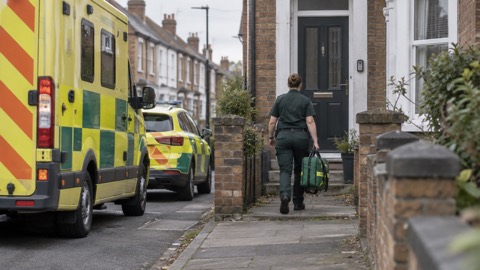 What Happens When Alarm Pressed
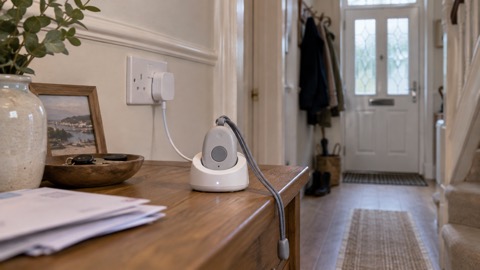 How Fall Detectors Work
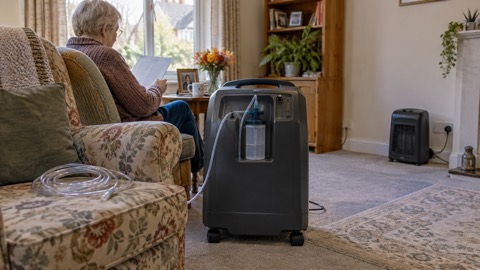 Home Oxygen Therapy Safety
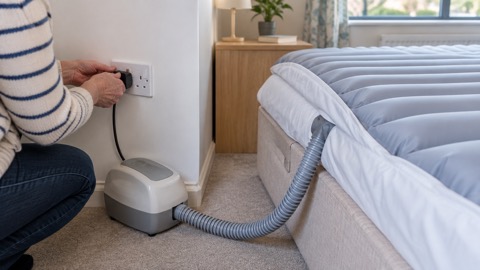 Airflow Mattress Fire Risk
 Fire Risk at Home
 Dementia and Emergencies
 Falls at Home
 Living Alone Safely
 Sight Loss and Emergencies
 Deaf and Hard of Hearing Safety