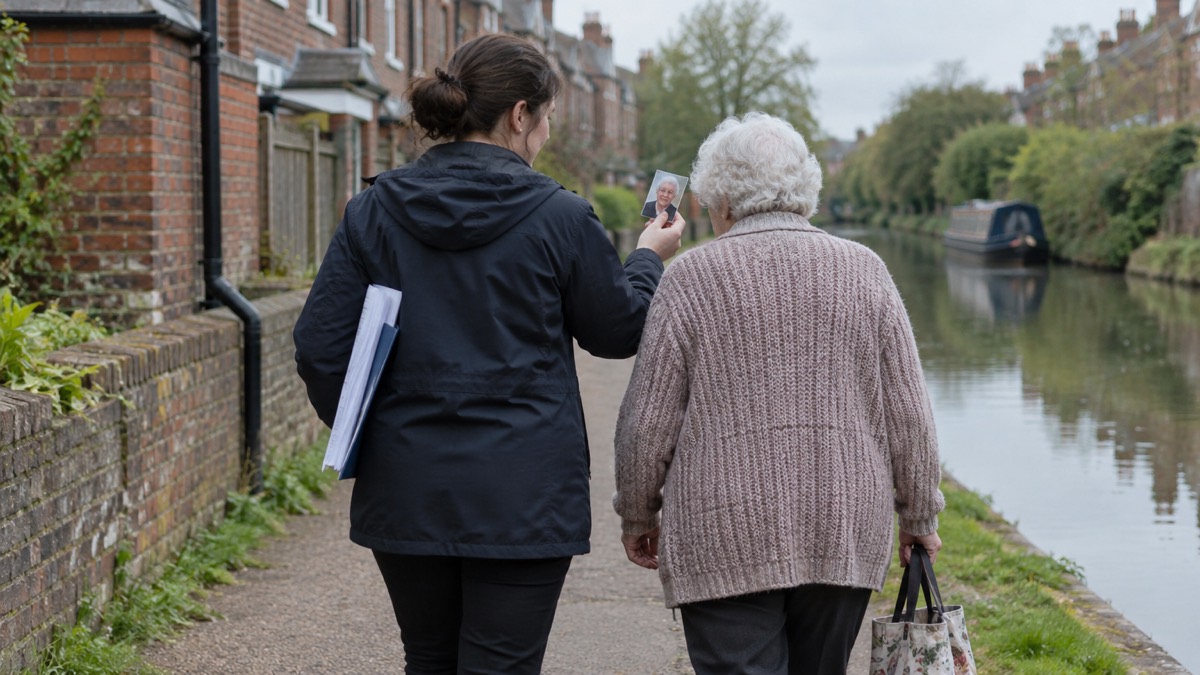
If you care for someone with dementia, the Herbert Protocol is a form you fill in before anything happens. It records details about the person, their past, their habits and the places they go, so that if they go missing the police have it at the start of the search rather than gathering it from you while officers are already looking1. It is a national scheme, run by police forces with other agencies, to encourage carers to compile useful information in advance2.
The form is for an adult with care and support needs who may go missing, whether they live in a care home or in their own home1. Carers, family members and friends can complete it, and so can the person themselves3. The police will only ask for it, or for the information in it, if the person is reported missing5. Until then it sits with you, ready.
This page sets out what the form asks for, why each detail shortens a search, and how to keep it safe and current. If you have not registered yet, start with What Is the Herbert Protocol and How Do You Register?, and for the wider picture of dementia and emergencies see Dementia and Emergencies: Safety at Home and Going Missing.
The information a Herbert Protocol form asks for
The form is a record of the person, not a medical file. Police describe it as containing details about the person, their past, their habits and the places they go1. West Yorkshire Police put it more concretely: key information recorded in advance such as medication required, mobile numbers, places previously located and a photograph4. Those four headings are a good way to think about the whole form.
- The person: name, date of birth, a recent photograph, and a description that would let a stranger recognise them.
- Their health: the medication they need, which matters if they are missing for more than a short time.
- Their contacts: mobile numbers for family, carers and anyone else who should be rung.
- Their habits and history: daily routines, places they have been found before, and places they are drawn to.
- Their past: the life they remember, which can explain where they might head.
The last two are the ones families most often underestimate. A person who grew up in a particular town, worked at a particular works or walked a particular dog route may return to those places when confused, and a form that names them gives officers somewhere to look first.
Why each detail helps police find someone with dementia quickly
The Herbert Protocol has been used many times to help police and other agencies quickly and safely locate missing people who have dementia6. Its purpose is to speed up and simplify the response when someone is reported missing4. The mechanism is simple: the information is already written down, so the search starts sooner.
Think about what happens without a form. An officer arrives at the door and needs a description, a photograph, a list of medications, the names of friends, the places the person has wandered to before. All of that has to be drawn out of a frightened relative, in the middle of the night, from memory. With the form, it is handed over or already on a police system.
"The information will help the Police and other agencies locate the missing person as quickly as possible and return them to safety."
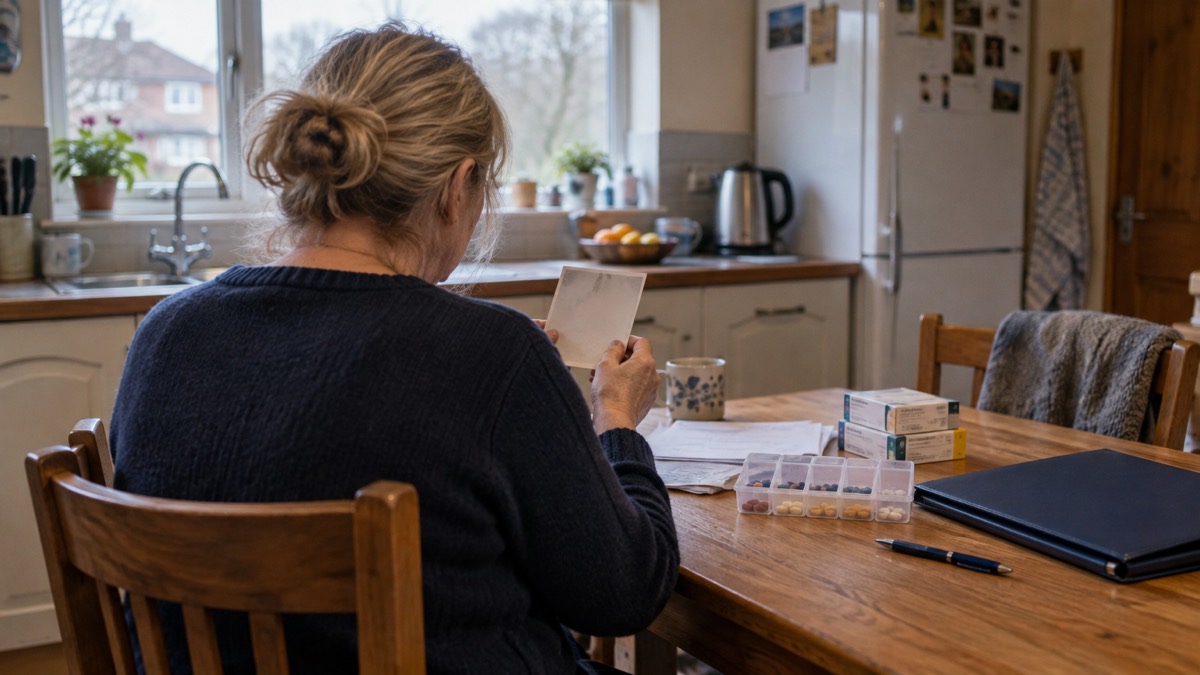
Each detail does a different job. A photograph lets officers and the public recognise the person. Medication tells responders what the person needs and how urgent the search is. Mobile numbers let police ring the people most likely to be contacted by the person, or to know where they might go. Places previously located turn a county-wide search into a short list of streets, parks and shops. The person's past does the same for older memories that may still be intact.
In some areas the information is logged on a secure police database which you only activate if the person goes missing7. In others it is held by you and passed over when you report them missing. Either way, the value comes from having it ready before the search begins.
Who fills it in, and when the police see it
The form is designed to be completed by the people around the person. Carers, family members and friends of someone living with dementia can complete it in advance, and the person themselves can fill it in too3. In a care setting, the care provider, the person at risk or their family can fill in the form, seeking permission from the person at risk or their next of kin; if neither is possible, the care provider should make a best interests assessment2.
| Situation | Who completes it | What to note |
|---|---|---|
| Living at home with family support | A family member or friend, or the person themselves3 | Keep a copy you can reach at any hour5 |
| Living alone with carers visiting | A carer or relative, with the person's agreement where possible4 | Make sure more than one person knows where it is2 |
| In a care home | The care provider, the person at risk or their family, with permission from the person or next of kin2 | Store it securely under data protection law, but where staff can find it quickly2 |
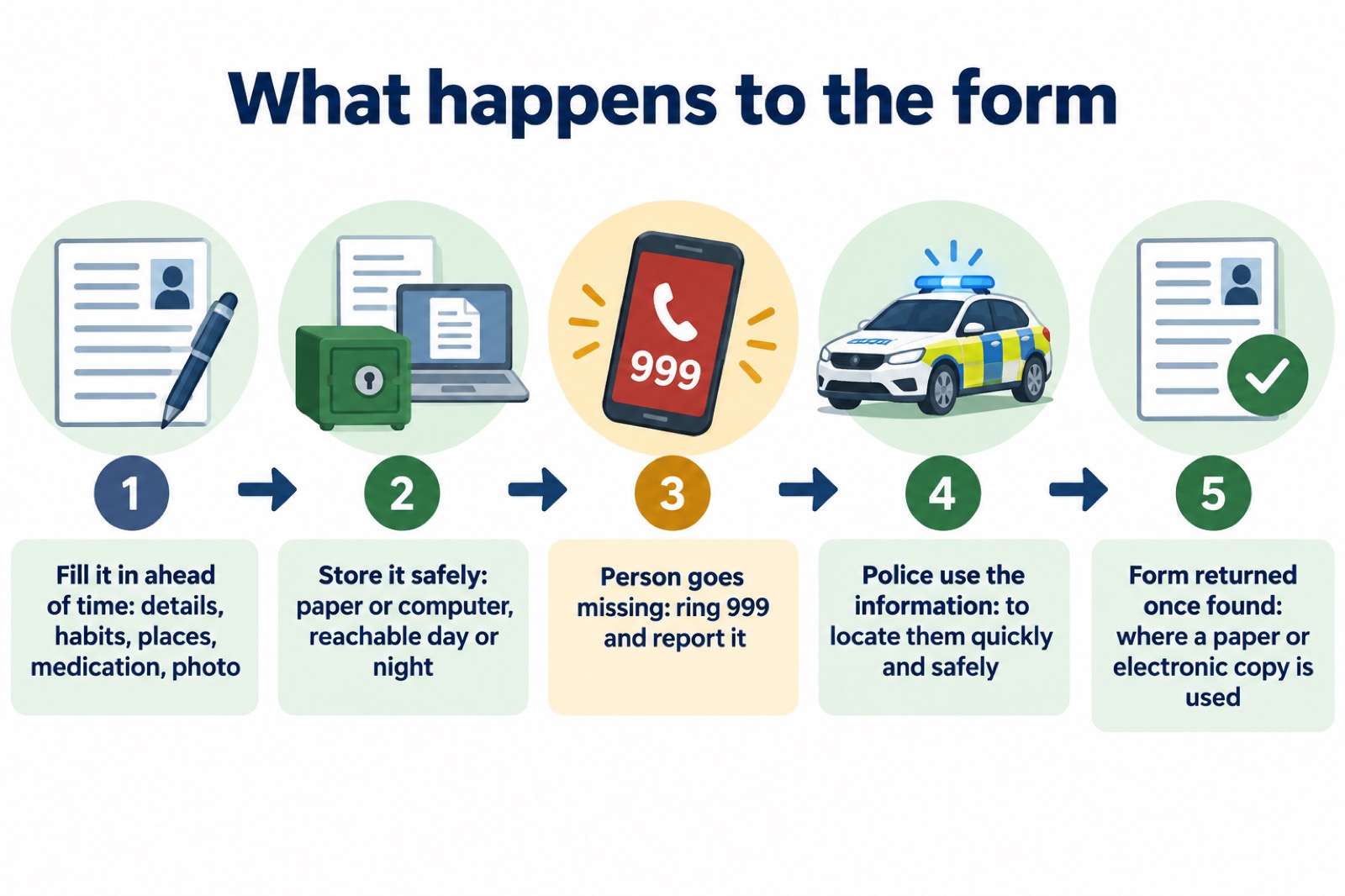
The police will only ask for the form, or the information in it, if the person is reported missing5. There is no need to hand it to them before then, and where a paper or electronic copy is used it will be returned once the person is found2. That means the form is not a report and filling it in does not flag the person as missing. It is a record waiting for a day you hope never comes.
If that day does come, ring 999. The form supports the search; it does not replace the call. Our guide to what to do if the person you care for goes missing sets out the call and the first hour.
Keeping the form safe and up to date, on paper or on a computer
Where a force still uses a paper or electronic copy, store it safely, either in electronic format on a computer or as a printed version5. It may need to be found quickly, at any time of day or night, by the person who begins the initial searches5. A form saved on a laptop that is in for repair, or filed in a drawer only one person knows about, fails that test.
- Keep a printed copy somewhere safe, or an electronic copy on a computer, so it can be found quickly at any time of day or night by the person who begins the initial searches2.
- Keep an electronic copy too, so it can be sent or printed again if the paper one is lost.
- In a care setting, store it securely in line with data protection law, but where you can find it quickly, and make sure other relatives, carers and staff know where it is2.
- Update it regularly so the information is always accurate3.
The photograph is the detail most likely to go stale. A picture from five years ago shows someone who no longer looks like that. Replace it when the person's appearance changes, and review the rest of the form at the same time: a new address, a new medication, a change in routine or a new place they have started walking to.
Where to get the form, and how it differs across the UK
The Herbert Protocol is a police scheme, so the form comes from your local force. If you cannot find your force's page, ring its non-emergency number and ask for the Herbert Protocol.
Arrangements in England, Wales and Northern Ireland are set by each police force, so the route to the form differs even though the purpose is the same.
If the person is in a care home
Care homes have a particular responsibility here, because staff change and the person who knows where the form is may be off shift. The form should be stored securely in the care setting, in accordance with data protection laws, but where you can find it quickly, and other relatives, carers or staff should know where it is2. That is a balance: locked away from people who should not see it, reachable by the people who may need it at three in the morning.
Families can help by asking, when a relative moves in, whether a Herbert Protocol form has been completed and who holds it. If the person lacks capacity to agree, the care provider should make a best interests assessment2. Review the form at care reviews, and give the home an updated photograph when you have one.
For more on planning around a care setting, see Carers: Planning for When You Cannot Be There and the Carer's Emergency Plan: What to Include. If the person lives alone, Living Alone: Staying Safe When No One Is Nearby covers the wider arrangements.
Sources (8)
- Herbert Protocol, Guernsey Police, 2026-10-29
- Herbert Protocol, Greater Manchester Police, 2026-10-29
- Herbert Protocol, Dorset Police, 2026-10-29
- Dementia awareness: Herbert Protocol, West Yorkshire Police, 2024-10
- Herbert Protocol, Police Service of Northern Ireland, 2026-10-29
- Dementia, Scottish Ambulance Service, 2026-10-29
- Planning ahead, Torbay and South Devon NHS Foundation Trust, 2025-10-21
- Herbert Protocol, Surrey Police, 2026-10-29
 Carer's Emergency Plan
 In Case of Emergency Card
 Winter Checks Older Relative