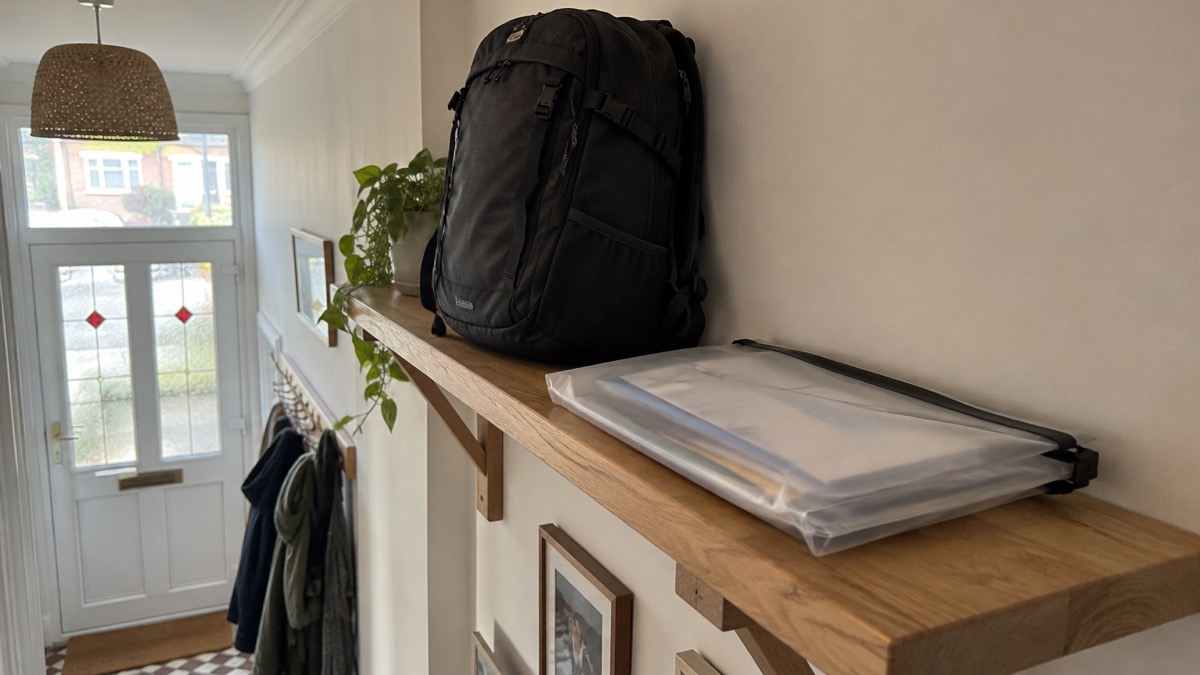
When an emergency hits, the paperwork you can prove matters almost as much as the supplies you can carry. The documents named again and again are passports, driving licences, birth certificates, insurance policies and prescriptions1, with National Insurance numbers, NHS numbers and bank account records added to the list by other councils2.
The work is an hour or two of copying, photographing and bagging, done once and then checked occasionally. This page sets out which documents to copy, how to store the copies so they survive water and are easy to grab, where to keep them if your home is at risk of flooding, and what to write down in case your phone and online accounts are unavailable.
Which documents to keep copies of
Council emergency guidance across England, Scotland, Wales and Northern Ireland names broadly the same set of documents. Wiltshire Council's emergency kit list asks for copies of important documents: passports, driving licences, birth certificates, prescriptions and insurance documents1. North Hertfordshire District Council adds bank account details, benefit and pension details, and asks for all of it in a waterproof container8. Lincolnshire County Council's list is the fullest: copies of insurance policies, passports, National Insurance numbers, NHS numbers and bank account records, again in a waterproof container2.
Grouped by what each document does for you in an emergency, the list looks like this:
| Group | Documents named in official guidance | Why you need it |
|---|---|---|
| Insurance | Insurance policies, insurance certificates, home insurance details1 | Contacting your insurer and making a claim after flood, fire or storm damage |
| Property | Your flood plan, your household emergency plan9 | Having your own plan of action to hand when you need it |
| Pets | Pet medications and medical records2 | Getting treatment or boarding for your pet away from home |
Two points are worth dwelling on. First, the NHS number earns its place because you may need treatment from people who have never met you; the National Insurance number because dealing with employers, benefits or pensions after an emergency is slow without it, and most people cannot recall either number from memory. Second, prescriptions are listed as documents, not just as medicine. A written list of what each person takes, at what dose, lets a pharmacist or doctor see what is needed even when your usual surgery is unreachable.
If you support someone as a carer, Norfolk County Council recommends keeping a copy of the carer's emergency plan with the other important documents for the person you support, for example in a folder with all the information you share with professionals12. The same logic applies to any household: the plan and the paperwork belong together.
Copies in your kit, originals somewhere safe
The guidance is to keep copies in your emergency kit, not the originals. Wiltshire's kit list says "copies of important documents"1; Lancashire's emergency pack advice says "keep copies of the following in a waterproof bag"3; Dumfries and Galloway Council asks for "copies of important documents like birth certificates and insurance policies"13. The reason is simple: a grab bag can be lost, soaked or left behind, and replacing an original birth certificate or passport is far harder than replacing a photocopy.
Keep the originals in a secure place at home that you can reach quickly if there is time. Wiltshire and Swindon Prepared's home advice puts it plainly for an evacuation: put your most vital documents somewhere easy to find, but only retrieve them if there is no immediate danger14. In a fire or a fast flood, you leave with the copies and the people, not with a search through a filing cabinet.
There is one arrangement worth copying from Westminster City Council's household guidance: agree with a trusted friend or relative to hold copies of each other's most important documents, or photographs of them15. That gives you a second set of copies stored away from your home entirely, so a fire or flood that takes your own copies does not take every version. Choose someone who does not live in the same house, and ideally not on the same street, so one incident cannot affect both sets.
Keep the copies dry: waterproof bags, wallets and containers
Every official list that mentions documents mentions waterproofing alongside them. Wiltshire asks for copies in the kit and documentation in a waterproof container1. Bradford Council's flood pack includes copies of important documents: passport, insurance certificates and your flood plan9.
What this means in practice is a choice of container, and the choice matters less than the habit:
- A purpose-made waterproof document wallet, sized for A4 paper, that zips or seals shut
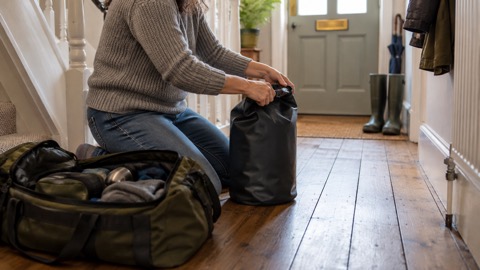
- Resealable watertight plastic bags, which the government's flooding guidance specifically names for storing documents such as birth certificates4
- A rigid waterproof case, which protects against crushing as well as water
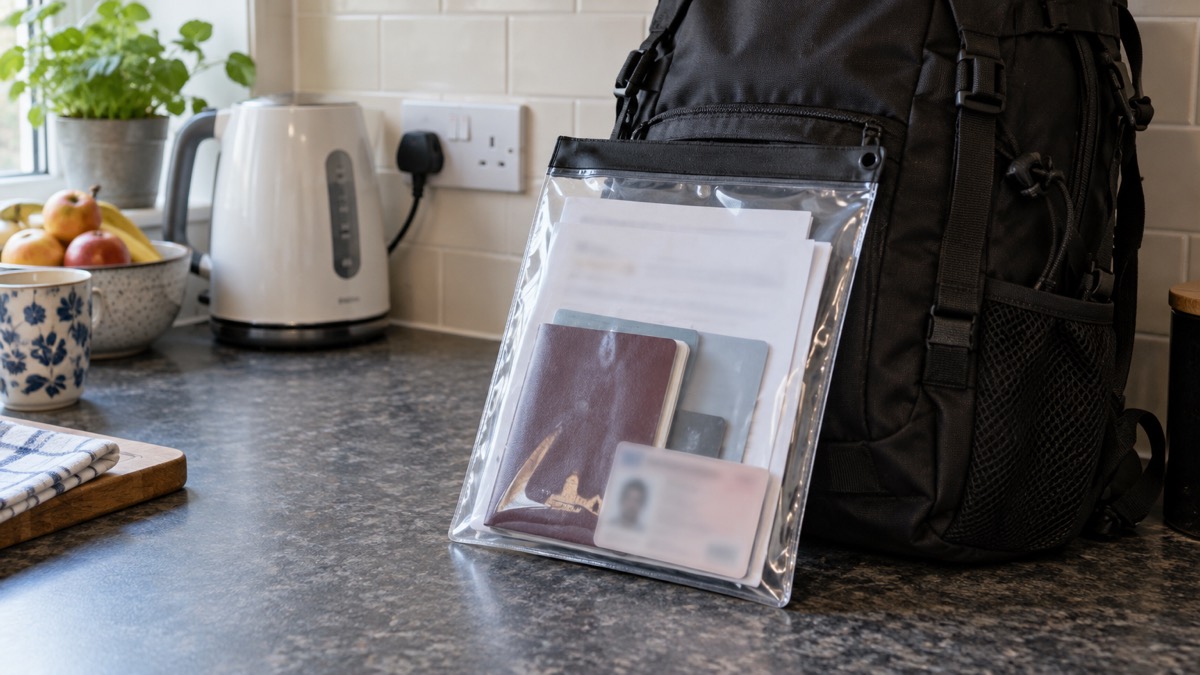
The government's flooding advice pairs the bag with the location: move sentimental or valuable items upstairs or keep them in a high place such as the top shelf or drawer of a cabinet, and store important documents such as birth certificates in resealable watertight plastic bags to protect them from water damage4. A bag that seals keeps out not just flood water but the rain and spilled water of any emergency, and it keeps the whole set of documents together so nothing is left behind in a drawer.
For more on the containers themselves, see Keeping Supplies Dry: Dry Bags, Pouches and Waterproof Cases.
If flooding is likely: high up, upstairs, off the floor
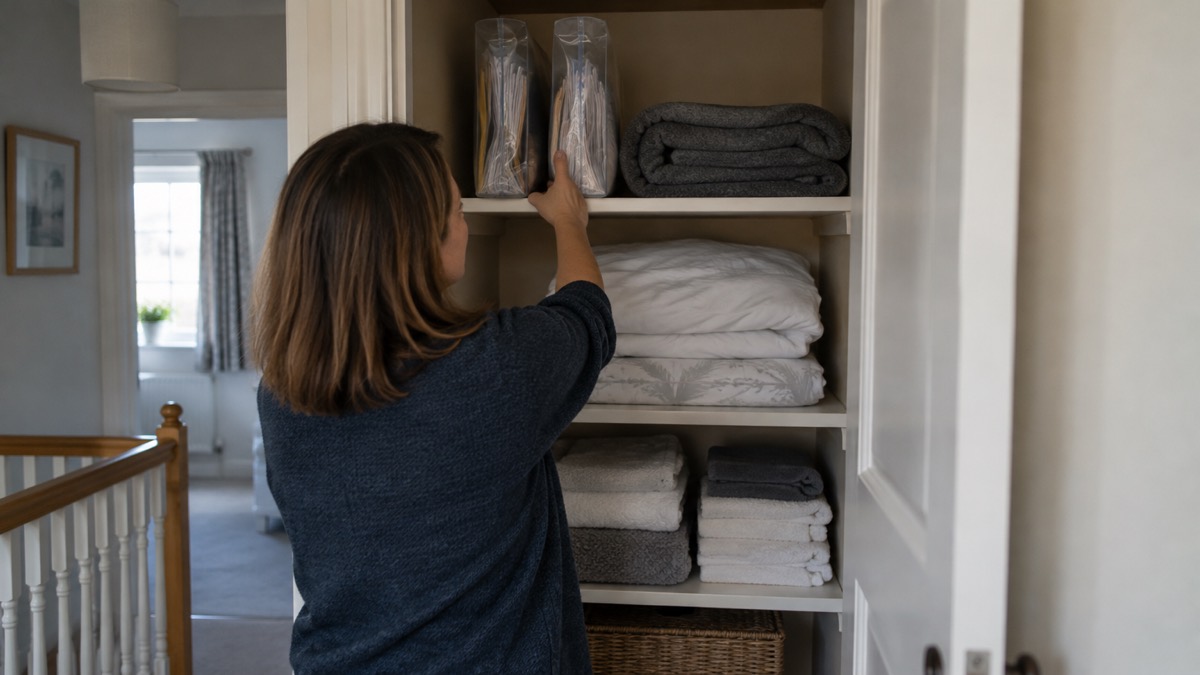
Water damage is the risk official guidance worries about most for documents, and nearly every flooding authority in the UK gives the same instruction. The Met Office's heavy rain advice says to store valuables up high, including electrical devices, important documents and furniture16, and its summer preparation checklist says to check your property's flood risk and think about what you store on the ground floor, keeping important documents upstairs17. West Midlands Ambulance Service's flooding safety advice for households at risk is to store valuables, furniture, electrical devices and important documents up high18. The Greater London Authority's flash flooding advice says to put your valuables and important documents on a high shelf to protect them from water damage19.
The Scottish Environment Protection Agency's guide for older communities adds the detail that matters if stairs are hard for you: somewhere raised well above floor level, in watertight containers20. A high shelf or the top of a cabinet achieves the same thing as an upstairs room if carrying things up stairs is not realistic.
When a flood is actually happening, the advice shifts from storing to moving. Nottinghamshire County Council's easy-read flooding guidance says to make sure important documents are safe and will stay dry, including details of your home insurance10. Suffolk's Flood Smart Living guide says to consider moving possessions and important documents upstairs if possible21. And Nottinghamshire's during-a-flood advice is to gather essentials and move valuable items above expected water levels22, which is the key phrase: the height you need depends on how high the water is expected to come.
Your household emergency plan belongs with your documents
A household emergency plan is a short written plan of what your household does in an emergency: who to call, where to meet, what to take. Hillingdon Council's guidance is explicit about where it lives: keep your plan with important documents such as passports and insurance, and save a copy to your phone11. The government's Be Ready campaign gives the same advice, suggesting you keep the plan with other important documents such as passports, birth certificates and insurance policies so it is easier to gather them quickly if needed23.
The Royal Borough of Windsor and Maidenhead's home emergency plan template lists important documents, copies of ID and home insurance, among the grab bag essentials24. Carmarthenshire Council's household emergency kit puts the plan first in its top ten items: your household emergency plan, including emergency contact numbers25. Scotland's Ready campaign publishes a home emergency plan document and states its purpose plainly: an emergency plan will help you and your household stay safe in an emergency26.
The reason for keeping plan and documents together is that they answer each other's questions. The plan tells you who to call; the documents give you the policy numbers to call about. The plan says where you would meet; a copy of the plan in the wallet means everyone who grabs the wallet has the same information. Northern Ireland's Household Emergency Life-saving Plan, published by nidirect, makes the underlying point: it is important that you and your family are prepared to deal with emergency situations you may find yourself in27.
If you want to build the plan itself, start with Getting Started: Preparing Your Household for an Emergency, and see What to Keep in a Household Emergency Pack at Home for the kit it sits alongside.
Save copies to your phone as well as on paper
Paper copies are the version that survives a dead battery; phone copies are the version you always have with you. Hampshire Fire and Rescue Service's grab bag guidance asks for both: important documents such as passports, insurance policies and other essential paperwork, and photographs or digital copies on your mobile phone as a back-up5. Hillingdon's advice to save a copy of your emergency plan to your phone11 points the same way.
Photographing documents is quick work: lay each document flat, fill the frame, and check the small print is legible before moving on. Photographs work even without signal, because they are stored on the phone itself. Keep them in a folder or album you can find without searching, and consider photographing the whole wallet's contents in one go so you can check later that nothing is missing.
Two cautions from the shape of the official advice. First, the phone copy is described as a back-up, not a replacement: the paper copies in the waterproof wallet are what the grab bag lists ask for3. Second, a phone can be lost, damaged or out of battery, which is why the written contact list in the next section matters. For what to do when phone and online services are disrupted more widely, see Cyber Attacks and Major IT Failures: A Household Guide.
Keeping records offline in case online services fail
The written-down habit exists because the things we rely on every day can become unavailable. Wiltshire and Swindon Prepared asks the question directly: what if you cannot access your phone or online accounts, how would you find those important numbers of family or your insurance? Its answer is to keep some written down somewhere safe in case you ever need them6. An online plan or an online copy of your documents is only reachable while online services work, so a printed copy in the wallet is the resilient version.
Offline copies to consider:
- Printed or photographed documents, as above, stored on the phone and in the wallet
- A written contact list on paper, covered in the next section
- A printed copy of your household emergency plan11
- Copies held by a trusted friend or relative away from your home15
The test to apply is simple: for each piece of information you would need in an emergency, can you reach it with no phone signal, no internet and no ability to return home? If the answer is no, it needs a paper copy in the wallet.
Phone numbers and information to write down
The Are You Ready booklet used by community resilience groups asks households to keep a record of contact details in case they are ever needed in an emergency, and its list is the most complete one published: work, doctor, schools, water supplier, electricity network operator, gas supplier, telephone and internet provider, home insurance company, home breakdown services, and an emergency friend28. Wiltshire and Swindon Prepared adds the reason: you may not be able to access those numbers on your phone or online6.
Write the list on paper and keep it in the waterproof wallet. Useful entries, drawn from the official lists:
- Family members and your emergency friend, including the person holding your document copies15
- Your doctor's surgery and, for health help, NHS 11129
- Your home insurance company and your breakdown service28
- Your water supplier, electricity network operator, gas supplier, and telephone or internet provider28
- Work and schools28
- Your bank, using the details on your bank account records8
Update the list when a number changes, and check it when you check the rest of your kit, the habit covered in Checking and Restocking Supplies: Expiry Dates and Replacing Items.
Cash and cards to keep with your documents
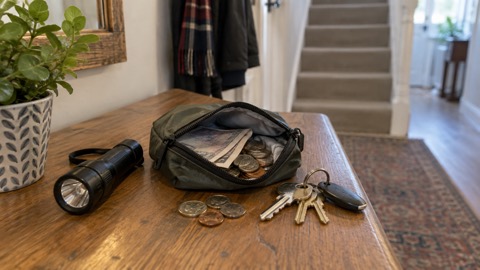
Official guidance pairs documents with money. Neath Port Talbot Council's emergency kit checklist lists cash and credit cards among the kit's contents7.
The reasoning is that card payments and cash machines both depend on power and networks, and an emergency can take either away. Keep the cash in the waterproof wallet with the documents, so one grab takes both, and keep the amount under review as part of your kit checks. For how much to set aside and how to store it, see How Much Cash to Keep at Home for an Emergency.
Grab bag or home kit: where the wallet lives
The documents wallet belongs with the grab bag, the bag you take if you have to leave home. The Are You Ready booklet's grab bag contents include copies of important documents in a waterproof wallet28. The Met Office's summer advice says to keep basic supplies in a grab bag, including copies of important documents and a change of clothes17. Hillingdon's grab bag list includes important documents, insurance paper and ID11. Hampshire's grab bag guidance pairs the paper documents with the phone copies5.
The home kit is the larger set of supplies for sheltering in place. The two overlap deliberately: the grab bag is the part of your preparations that travels, and the documents wallet is small enough to live in it permanently. If you are at home when an emergency happens, you gather the home kit; if you must leave, you take the grab bag, and the documents come with you either way.
For the full contents of each, see Grab Bags: What to Pack If You Have to Leave Home and What to Keep in a Household Emergency Pack at Home, and for the whole picture, Household Preparedness Checklist: Home, Grab Bag and Car.
Sources (29)
- Wiltshire Council emergency kit guidance, Wiltshire Council, 2026
- Emergency advice: get help and advice in an emergency, Lincolnshire County Council, 2026
- Emergency pack, Lancashire Prepared, 2026
- Flooding: be informed about hazards, prepare.campaign.gov.uk, 2026
- Reduce the risk of wildfire damage to your property, Hampshire and Isle of Wight Fire and Rescue Service, 2026
- Prepare yourself, Wiltshire and Swindon Prepared, 2026
- NPT Prepared emergency kit checklist, Neath Port Talbot Council, 2026
- Preparing for emergencies, North Hertfordshire District Council, 2015
- Create a flood pack, Bradford Council, 2026
- Flooding during a flood, easy read, Nottinghamshire County Council, 2025
- Household emergency plan, London Borough of Hillingdon, 2026
- Carer's emergency plan, Norfolk County Council, 2026
- Prepare for emergencies, Dumfries and Galloway Council, 2026
- Personal resilience at home, Wiltshire and Swindon Prepared, 2026
- Prepare your household for emergencies, Westminster City Council, 2014
- Stay safe in heavy rain, Met Office, 2026
- 10 things you should do now to prepare for summer, Met Office, 2026
- Staying safe in flooding, West Midlands Ambulance Service NHS Foundation Trust, 2026
- How to prepare for flash flooding, Greater London Authority, 2026
- Flooding guide for older communities, Scottish Environment Protection Agency, 2026
- Flood Smart Living, Suffolk County Council, 2024
- During a flood, Nottinghamshire County Council, 2026
- Get prepared for emergencies, prepare.campaign.gov.uk, 2026
- Emergency home emergency plan, Royal Borough of Windsor and Maidenhead, 2026
- Get prepared: household emergency kit, Carmarthenshire County Council, 2026
- Home emergency plan document, Ready Scotland, 2026
- Household Emergency Life-saving Plan help, nidirect, 2018
- Are You Ready booklet, Culham Parish Council, 2025
- Emergency advice, Basingstoke and Deane Borough Council, 2026
 30-Day Household Checklist
 Emergency Plan Template
 Supply Interruption Checklist
 Home Emergency Pack
 Grab Bags
 What to Keep in Your Car
 Cash to Keep at Home
 How Many Days Supplies Last
 Storing Your Supplies Safely
 Checking and Restocking Supplies
 Rucksacks and Holdalls
 Keeping Supplies Dry
 Foil Blankets
 Portable Jump Starters
 Supplies for Babies and Children