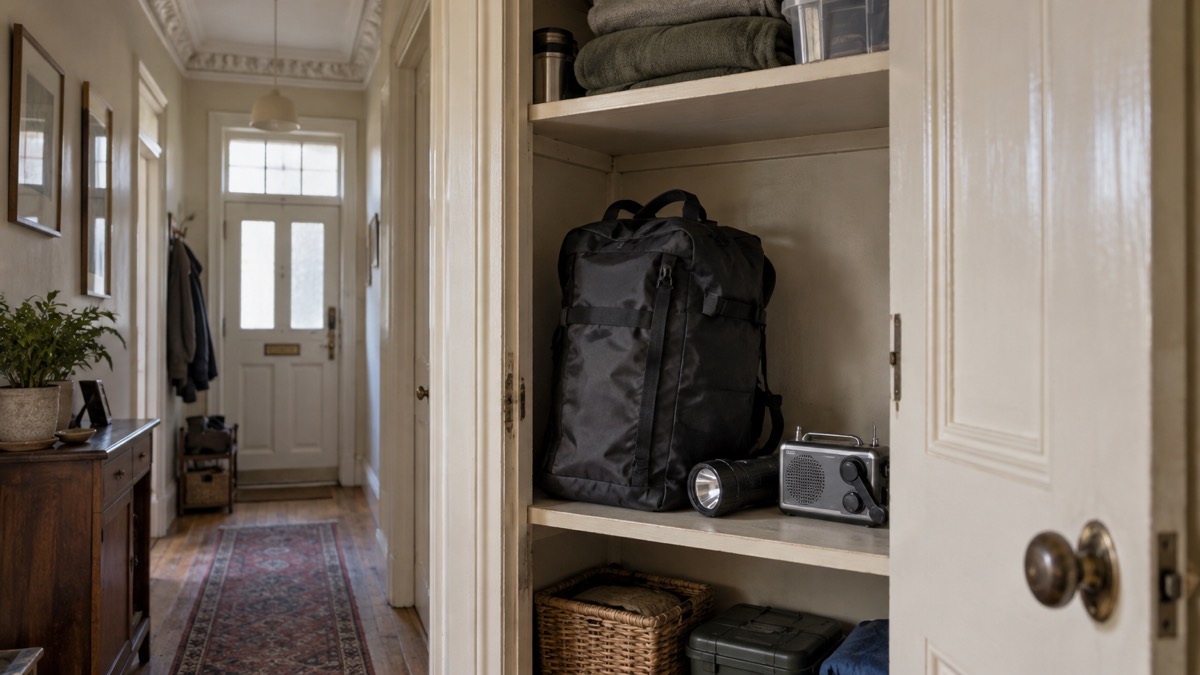
If you live in Scotland, Wales or Northern Ireland, the general UK advice on household supplies still applies to you, but each nation also has its own official sources, and for Scotland and Northern Ireland the UK government names them directly. The Be Ready campaign states plainly: "For local advice tailored to people living in Scotland or Northern Ireland, visit the Ready Scotland and NI Direct websites"1. That single sentence is the map for most of this page: Scottish households are pointed to Ready Scotland, Northern Irish households to NI Direct, and Welsh households are left to follow the general UK advice alongside local services such as the fire and rescue service.
Ready Scotland is the most developed of the three. It is an official Scottish Government campaign and information website2, the public information website for Safer Scotland, part of the Scottish Government, and its aim is to help make Scotland more resilient to emergencies3. It covers the full arc of household preparedness: practical tips to prepare your home, family and business for unexpected events, guidance on how to respond safely when emergencies happen, and advice on how to support others in your community during difficult times3.
This page walks through what each nation's official advice actually says about supplies and planning: what Ready Scotland tells households to keep ready, how to build a home emergency plan, how to prepare for severe weather, what NI Direct offers Northern Ireland, and where people in Wales should look. Where the advice is the same across the UK, we say so; where it differs, we set the differences out side by side.
Ready Scotland: the Scottish Government's emergency advice site
Ready Scotland is provided by the Scottish Government to help you prepare for and deal with emergencies8. It is the Scottish Government's website to help people be more resilient to emergencies, with tips on the steps you can take to prepare your home, family, community or business for the unexpected. The campaign is co-ordinated by the Scottish Government6. So when you read advice on ready.scot, you are reading Scottish Government advice, not a charity's or a retailer's.
What does the site actually cover? The Met Office's WeatherReady service says the Ready Scotland campaign encourages individuals, families, communities and businesses to think about what they can do to prepare for unexpected events, all year round6. That "all year round" point matters: this is not a winter-only message, even though much of the household-facing material is framed around cold weather.
The UK government's own documents confirm the site's role. The National Risk Register notes that the Ready Scotland website contains information on preparing for and responding to emergencies affecting Scotland9, and the UK Government Resilience Action Plan 2026 implementation report records that the Scottish Government is developing a Scotland-specific risk assessment, coordinating cross-policy efforts via a Crisis Preparation Oversight Programme, and promoting societal resilience through the Ready Scotland website10. In plain terms: Scotland runs its own risk picture and its own public-facing preparedness campaign, and Ready Scotland is where the household-facing part of that work is published.
Behind the scenes, Scotland's arrangements also have their own shape, and this occasionally changes who you contact. The majority of emergency preparedness work in Scotland is conducted at a local level, carried forward by strategic co-ordinating groups which comprise key local responders in each of Scotland's 8 police force areas11. Details for the Regional Resilience Partnerships can be found on the Ready Scotland website12. For most households this is background, but it explains why your council, rather than a single national body, is often the practical point of contact for local planning help.
| What you want | Where Ready Scotland points you |
|---|---|
| Household kit and plan | ready.scot prepare pages13 |
| Severe weather preparation | Ready Scotland's severe weather advice14 |
| Community planning help | Resources, templates and online training on Ready Scotland15 |
| Regional Resilience Partnerships | Details on the Ready Scotland website12 |
| Wider responder guidance | Preparing Scotland guidance on responding to emergencies16 |
An emergency plan helps your household stay safe
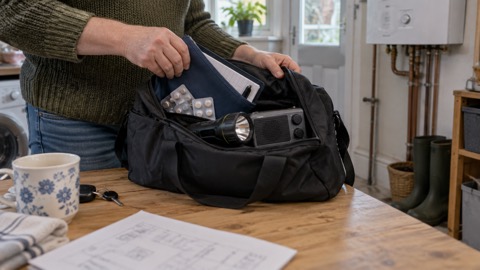
The heart of Ready Scotland's household advice is the pairing of a plan and a kit. The site's own home emergency plan document puts it directly: "An emergency plan will help you and your household stay safe in an emergency"17. The cold, snow and ice advice on Ready Scotland tells you to make a household emergency kit and make an emergency plan before cold weather arrives4, and Argyll and Bute Council's severe weather guidance fills in the practical detail: make a household plan and collect together an emergency kit which will help you whether you have to stay home or leave your house, and put it in a safe place which you can reach quickly, in a sturdy waterproof bag5.
Why a plan rather than just supplies? Because a kit covers the "what" and a plan covers the "who, where and how": who collects the children if you cannot get home, where you would meet, how you would switch off the water or power, and who to call. Wiltshire Council's guidance on emergency kits makes the underlying point about preparation generally: preparing an emergency kit in advance can mean that you have just what you need to make the emergency more manageable, or make time away from home more comfortable if you are evacuated18. A plan extends that same logic to your household's decisions.
The advice on how to build the plan is consistent across official sources, and none of it is complicated:
- Involve everyone in the house. Essex Prepared advises you to consult everyone in your house about the plan as you complete it19.
- Let children help. Ready Scotland notes that letting children help with the emergency plan and household kit can help them remember the information and feel safer20.
- Keep it somewhere findable. West Yorkshire Prepared advises keeping the plan in a safe and memorable place in your house and reviewing it regularly21.
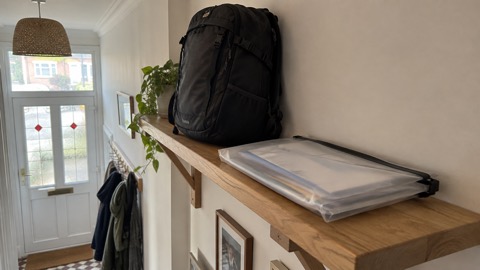
- Keep a copy with the kit. Ready Scotland's emergency kit advice says to make sure you include a copy of your household emergency plan in the kit22.
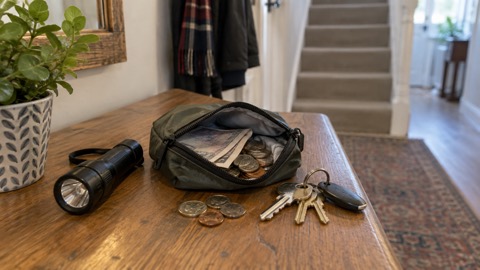
- Keep spare keys at home. Neath Port Talbot Council's emergency kit checklist includes spare keys to your home and car23.
Ready Scotland publishes a home emergency plan you can complete, built around a simple premise: an emergency plan will help you and your household stay safe in an emergency. If you want a fuller walk-through of what a household plan should contain, our getting started guide covers the same ground step by step, and our page on what to keep in a household emergency pack at home sets out the kit side of the pairing.
Preparing your home for severe weather
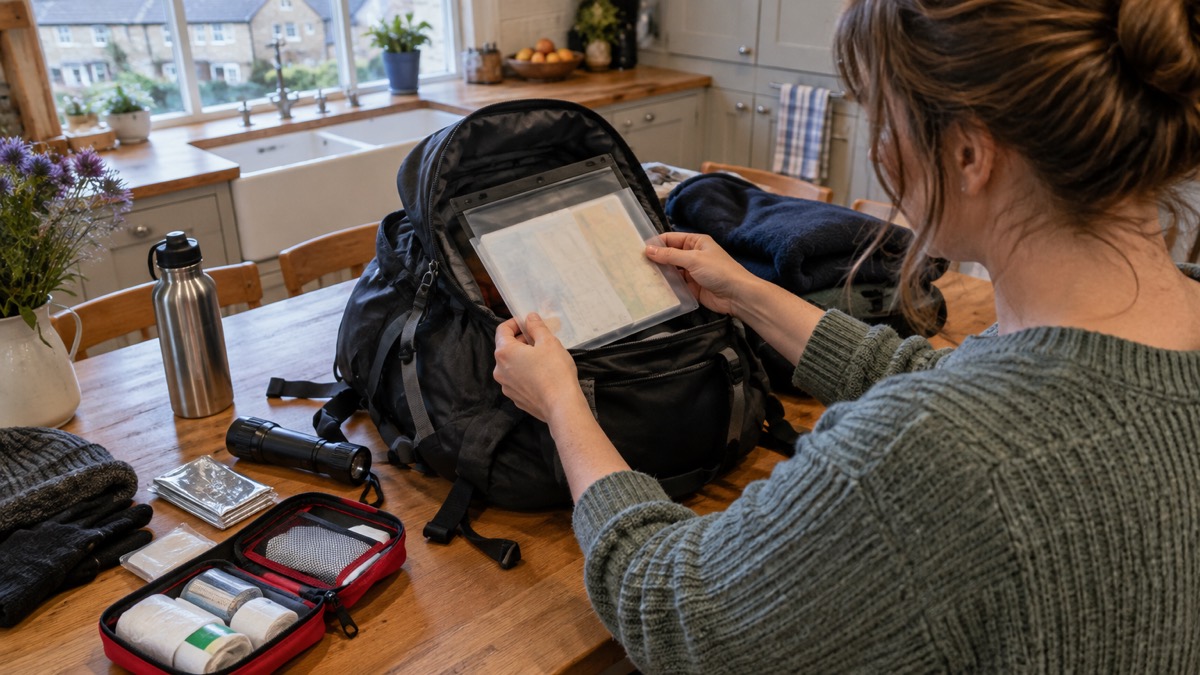
Much of the household-facing advice in Scotland is framed around severe weather, and winter in particular. Scottish Borders Council's winter weather pages tell residents to find out how they can prepare your home for severe weather on the Ready Scotland website14, and the same council repeats the message on its preparing for winter page24. Ready Scotland's own cold, snow and ice page gives the headline action: make a household emergency kit, make an emergency plan, before cold weather sets in4.
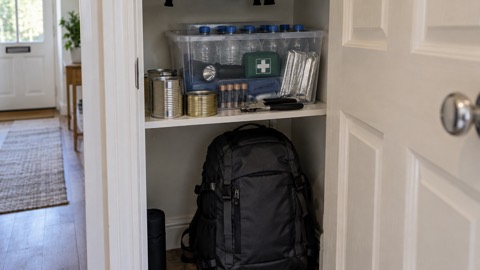
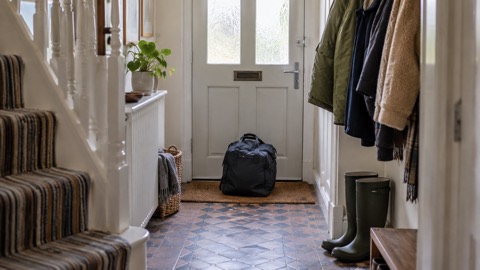
Argyll and Bute Council's guidance for being prepared at home and in your community gives the fullest official description of what that means in practice: make a household plan and collect together an emergency kit which will help you whether you have to stay home or leave your house, and put it in a safe place which you can reach quickly, in a sturdy waterproof bag5. The two scenarios matter. A kit for staying home is about comfort and information during a power cut or a snowed-in day; a kit for leaving home is about grabbing one bag quickly. Our pages on what to keep in a household emergency pack at home and grab bags treat those as two different lists, and the Scottish advice supports that split.
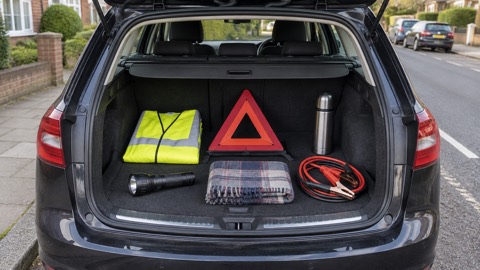
Other councils echo the same structure. Somerset Council advises that to be prepared for any emergency you can make up a home emergency pack, prepare an evacuation checklist, and keep a basic emergency kit in your vehicle depending on the time of year25. Cumberland Council's Cumbria Prepared service provides information on how to prepare your household for an emergency and how to be ready for winter and severe weather26. Highland Council's power cut preparation advice tells households to build a home emergency kit and points to Ready Scotland for advice on what to include13. The pattern across all of them is the same three layers: a home pack, an evacuation checklist or grab bag, and a car kit in the winter months.
For the car specifically, our car kit guide covers what to carry, and our storms, snow and ice guide covers the household side of severe weather in depth. The same principle applies on the road as at home: a basic kit, kept in the vehicle during the winter months, means you are not starting from nothing if conditions turn.
Ready Scotland's wider household planning
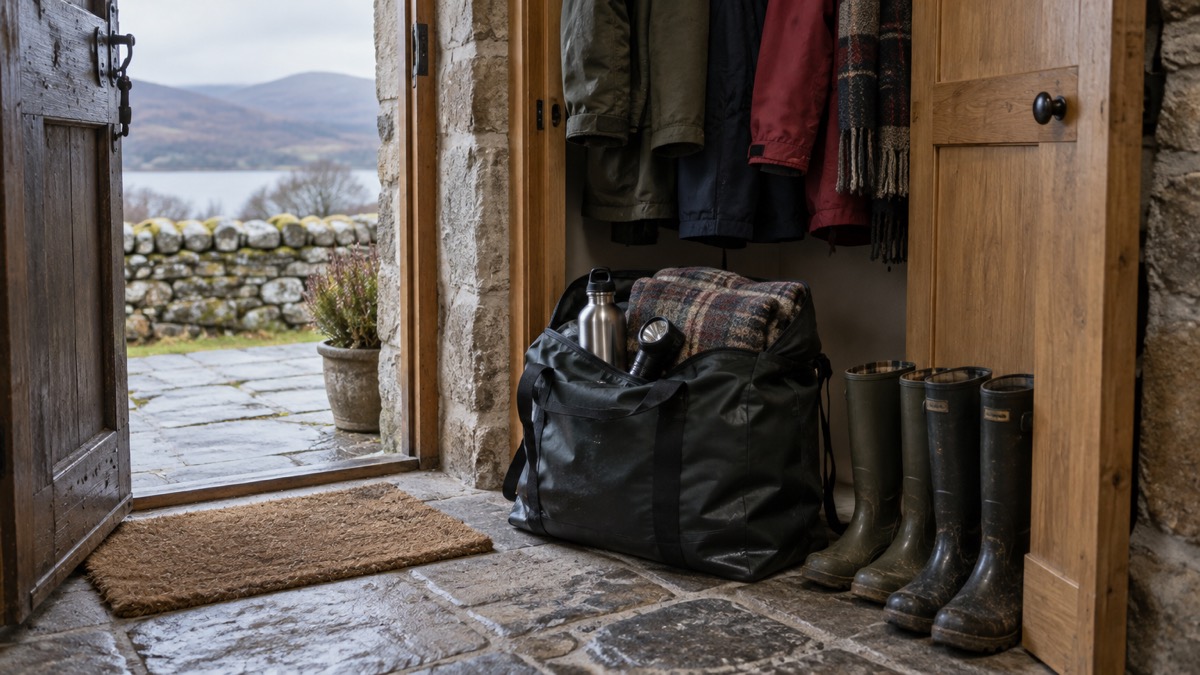
Ready Scotland's advice goes beyond the kit and the plan. The site encourages individuals, families, communities and businesses to think about what they can do to prepare for unexpected events, all year round6, and its content spans preparing the home, responding safely, and supporting others in the community3. For a household starting out, that wider material is best approached in three pieces.
The first piece is the kit itself. Highland Council's power cut page gives the direction: build a home emergency kit, and if you are not sure what to include, visit Ready Scotland for advice13. Our household preparedness checklist and the government's Be Ready checklist explained cover the contents in detail.
The second piece is community planning. The Scottish Government's community emergency planning guide, published in March 2026, is addressed to groups that want to help their communities cope better in an emergency and become more resilient by making a Community Emergency Plan together27. The guide explains the purpose plainly: a plan helps communities prepare for, respond to, and recover from emergencies using their own strengths, skills, knowledge and resources, while complementing official efforts27. Argyll and Bute Council describes the Ready Scotland website as a useful source of information for communities that want to develop Community Emergency Plans28, and the UK government's community pages confirm that the Ready Scotland website has information on supporting communities to prepare for emergencies, including resources, templates and online training15. Highland Council's emergency planning team also offers advice and guidance on the preparation of community emergency plans2.
The third piece is sharing what you have prepared. The Ready Scotland community planning guide suggests you could share your plan by posting it on your online communication channels or providing printed copies at community events29. That is community-level advice, but the same instinct applies at household level: a plan that only one person in the house knows about is much less useful than one everyone has seen.
Advice for Northern Ireland: NI Direct
For Northern Ireland, the UK government's Be Ready campaign names the official source directly: for local advice tailored to people living in Scotland or Northern Ireland, visit the Ready Scotland and NI Direct websites1. NI Direct is the Northern Ireland government services website, and it carries the Northern Irish equivalent of the household preparedness advice.
What NI Direct provides is broad rather than kit-specific. The Met Office notes that NI Direct Government Services provides winter help and advice for Northern Ireland each year6. The UK government's community pages add that NI Direct's Be ready as a community page has information and resources on how communities can plan for emergencies15. And for community-level contacts, details for the Emergency Preparedness Groups are available from the Northern Ireland Civil Contingencies Policy Branch30, a point repeated on the Be Ready campaign's own risk pages12.
Northern Ireland's emergency services also publish practical response advice. During Storm Eowyn in January 2025, the Northern Ireland Fire & Rescue Service issued safety guidance that shows the reporting routes households may need in a storm: stay clear of any damaged electricity equipment and report it immediately to NIE Networks on 03457 643 643, and report an obstruction at www.nidirect.gov.uk or call the 24-hour number on 0300 200 78997. Those numbers are worth keeping with your household plan, because damaged electricity equipment and blocked roads are among the most common problems a storm leaves behind.
For the contents of a household kit, Northern Irish households can follow the same general UK advice that applies across the four nations, using NI Direct for anything that is arranged locally. Our emergency kit section page is a good starting point, and the Be Ready checklist explained covers the UK-wide government checklist.
Advice for people in Wales
Wales is the odd one out of the three. The UK government's Be Ready campaign names Ready Scotland and NI Direct for Scotland and Northern Ireland1, but it does not name a single Welsh Government equivalent for household supplies. That does not mean Welsh households are without official advice: the general UK advice applies, and Welsh public services publish their own guidance.
The clearest Welsh official advice in the pack comes from South Wales Fire and Rescue Service. The service recommends that you have two things in mind to protect your household, especially if it contains young children, the elderly or the vulnerable: an escape plan and a night-time checklist31. That is fire safety advice rather than emergency kit advice, but it belongs in the same household planning, and it is the piece of official Welsh guidance most directly aimed at what a household should do. Our home emergencies guide covers escape planning in more depth.
For the kit itself, Welsh households can use the same practical contents lists. Neath Port Talbot Council's emergency kit checklist includes spare keys to your home and car23. The kit does not change at the border; what changes is who issues local warnings and who you contact, and those are your Welsh local authority and the emergency services.
Responding safely when an emergency happens
Ready Scotland's material on responding is about principles as much as items. The Scottish Government's guidance on responding to emergencies in Scotland, published under the Preparing Scotland banner in October 2017, outlines resilience principles, responder roles, legislation and best practice16. That document is mainly for responders, but its existence tells households something useful: Scotland has a defined framework for who does what, and the public-facing version of that framework is on Ready Scotland.
The community planning guide frames the same idea from the bottom up: resilient communities use their existing skills, knowledge and resources to prepare for, and deal with, the consequences of emergencies29. For a household, the practical version of that is knowing when to call for help and when to act yourself. NHS inform has self-help guides for a range of conditions32, and the Scottish Ambulance Service publishes guidance on when you should call 999, which is the reference point in Scotland for deciding whether a health problem needs an emergency response32.
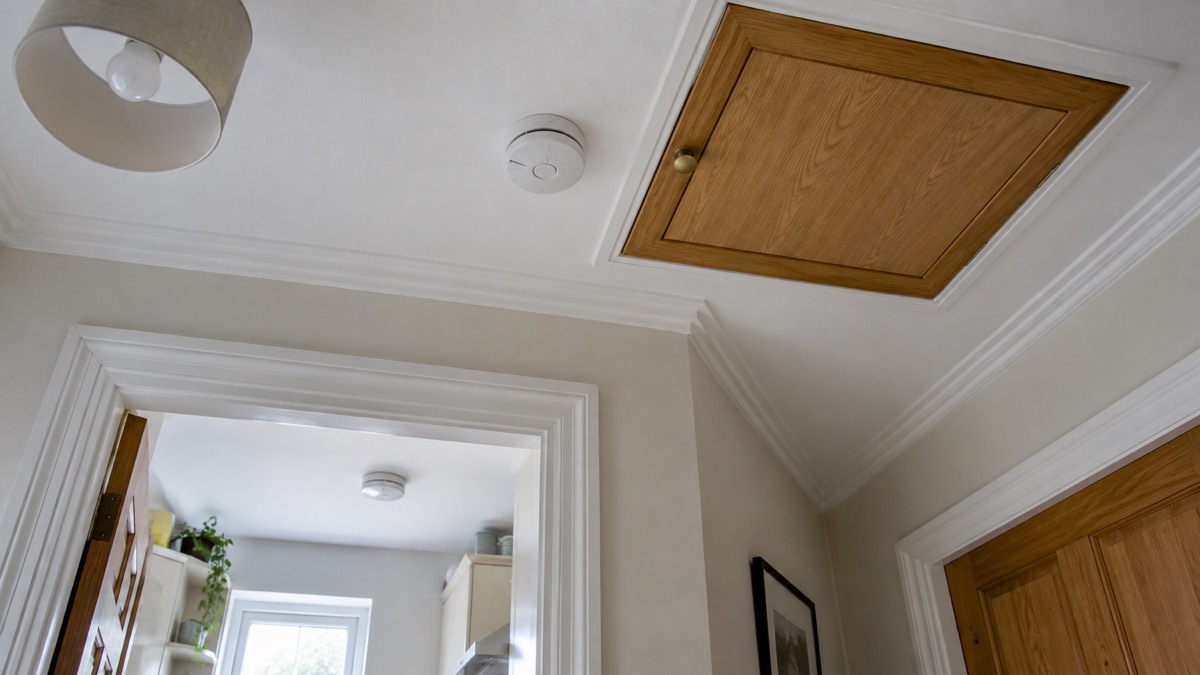
In Scotland there is also a specific help route that combines advice with practical support: the Home Fire Safety Visit, delivered by the Scottish Fire and Rescue Service, in which you get advice on making an emergency plan and free smoke alarms fitted. And since February 2022 interlinked alarms have been legally required in every home in Scotland, for homeowners and landlords. That legal requirement is Scotland-specific: no such duty applies across the rest of the UK in the same way, so a Scottish household checking its preparedness should check its alarms are interlinked as well as working.
Families, communities and businesses: who the advice is for
The last thing to understand about the Scottish advice is its scope, because it is deliberately wider than households. The Ready Scotland campaign encourages individuals, families, communities and businesses to think about what they can do to prepare for unexpected events, all year round6, and the site's content is organised around exactly those audiences: practical tips to prepare your home, family and business, guidance on responding safely, and advice on supporting others in your community3.
For businesses, the same Scottish arrangements apply as for communities. The majority of emergency preparedness work in Scotland is conducted at a local level by strategic co-ordinating groups in each of Scotland's 8 police force areas11, and the Scottish Government's pandemic flu guidance records that the UK Influenza Preparedness Strategy 2011 sets out the strategic approach for responding to an influenza pandemic in Scotland11. A business preparing in Scotland should therefore look at Ready Scotland's business material first, then at local responder arrangements, rather than assuming a single national scheme exists.
For families, the starting point is the one this page has returned to throughout: make the plan, build the kit, involve everyone in the house, and keep both where you can reach them quickly5. For communities, the March 2026 community emergency planning guide is the current Scottish document, with templates and training signposted through Ready Scotland29. And for anyone unsure where to begin, our getting started guide walks through the first steps, and the household preparedness checklist turns the official advice into a single list you can work through.
Sources (32)
- Be Ready campaign, UK Government, 2026
- Emergency planning, The Highland Council, 2026
- Prepared personal resilience, Scottish Borders Council, 2026
- Ready Scotland: cold, snow and ice, Scottish Government, 2026
- Be prepared at home and in your community, Argyll and Bute Council, 2026
- About WeatherReady, Met Office, 2026
- NIFRS statement on Storm Eowyn safety response, Northern Ireland Fire & Rescue Service, 2025
- Civil emergencies and contingencies: useful information, Argyll and Bute Council, 2026
- National Risk Register 2025, HM Government, 2025
- UK Government Resilience Action Plan 2026 implementation report, HM Government, 2026
- Pandemic flu guidance, HM Government, 2013
- Check the risks where you are, UK Government, 2026
- Prepare for a power cut, The Highland Council, 2026
- Preparing for winter, Scottish Borders Council, 2026
- Information for communities and community groups, UK Government, 2026
- Responding to emergencies in Scotland, Scottish Government, 2017
- Home emergency plan, Ready Scotland, 2026
- Planning for an emergency kit, Wiltshire Council, 2026
- Preparing your family, Essex Prepared, 2026
- Emergency plan, Ready Scotland, 2026
- Advice for households, West Yorkshire Prepared, 2026
- Make an emergency kit - Ready Scotland, Ready Scotland
- NPT Prepared emergency kit checklist, Neath Port Talbot Council, 2026
- Christmas safety tips, Warwickshire County Council, 2026
- Preparing for emergencies, Somerset Council, 2026
- How we plan for emergencies, Cumberland Council, 2026
- Community emergency planning guide: why, Scottish Government, 2026
- How to make a community emergency plan, Argyll and Bute Council, 2026
- Community emergency planning guide: make a plan, Scottish Government, 2026
- Check the risks where you are, UK Government, 2026
- Checklists and escape plans, South Wales Fire and Rescue Service, 2026
- When should you call 999, Scottish Ambulance Service, 2026
 30-Day Household Checklist
 Emergency Plan Template
 Supply Interruption Checklist
 Home Emergency Pack
 Grab Bags
 What to Keep in Your Car
 Important Documents
 Cash to Keep at Home
 How Many Days Supplies Last
 Storing Your Supplies Safely
 Checking and Restocking Supplies
 Rucksacks and Holdalls
 Keeping Supplies Dry
 Foil Blankets
 Portable Jump Starters