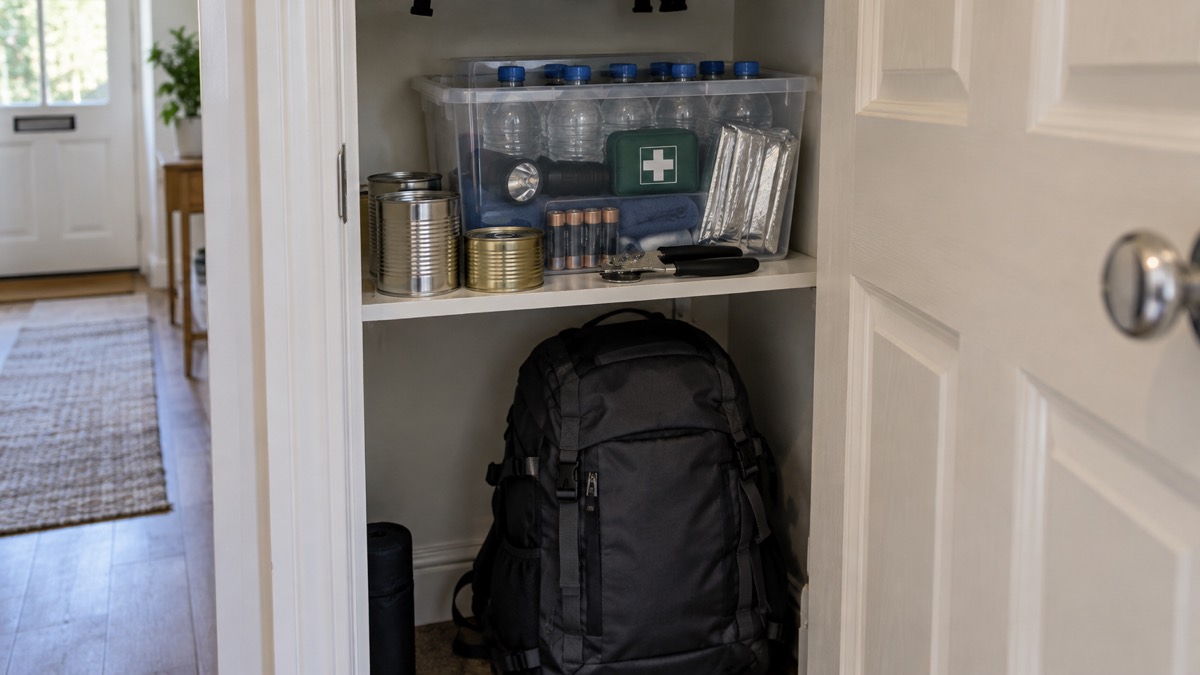
If a storm, flood, power cut or heavy snow disrupts normal life for a few days, a small emergency kit at home lets you and your family look after yourselves while the emergency services and utility companies deal with the wider problem. Rural areas are more likely to be cut off from the shops during snow1, but the same basic preparation serves any household. Councils and governments across all four nations give the same core advice, and this page brings it together into one practical list.
The headline number is three days. Scottish, English and Welsh official guidance all points to at least three days' supply of bottled water and food that does not need cooking and will not go off2,3. Some councils go further: Central Bedfordshire Council recommends a home emergency kit that lets you look after your family for at least 7 days of disruption4. Three days is the agreed minimum; a week gives you a comfortable margin, especially in rural areas that can be cut off from shops during snow2.
Why every household should keep a small emergency pack
The advice to keep a home emergency pack comes from local authorities and governments across the UK, and it is not aimed at any special group. Scottish Borders Council recommends that all households create a small emergency kit and keep it in a safe but accessible place1. Somerset Councils' guidance frames it as three linked habits: make up a home emergency pack, prepare an evacuation checklist of things to pack quickly, and, depending on the time of year, keep a basic emergency kit in your vehicle8.
The reason is that in a major emergency covering a widespread area, you may have to survive on your own for up to three days or more before help reaches every household9. That is not a prediction of disaster; it is a realistic picture of how long it can take to restore power, clear roads or restore water after a serious storm or flood. During that time the ordinary infrastructure you rely on, shops, pharmacies, taps and kettles, may not be working.
A household emergency pack is also the foundation for everything else. Once it exists, you can build on it: a grab bag in case you have to leave, a car kit for winter journeys, and a written household emergency plan so everyone knows what to do. Belfast City Council publishes a household emergency life-saving plan that gives you a list of useful contact numbers and tells you what you should have in your household emergency pack10. You do not need to buy everything at once. Most households can assemble the core list from what they already own, then add the gaps over a few weeks.
Water and food: at least three days' supply
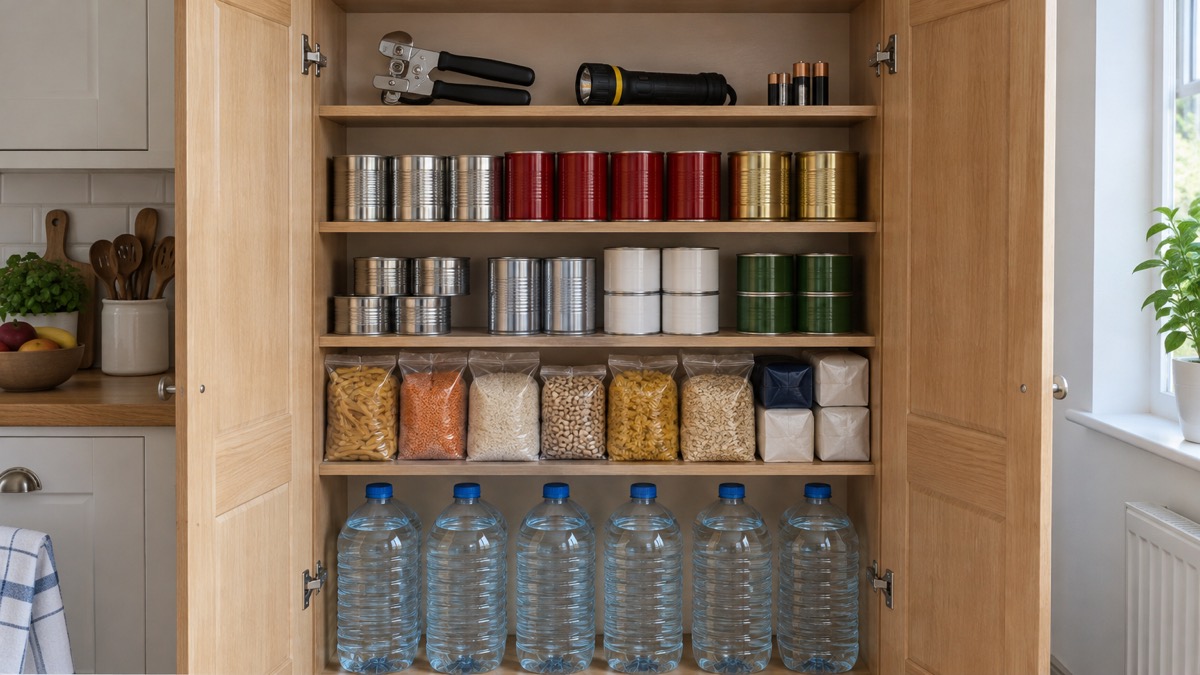
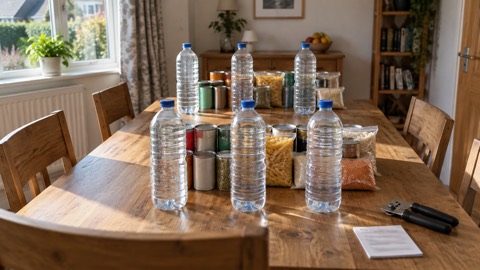
Water and food are the two things every official list agrees on, and the quantity is consistent across the UK. Ready Scotland advises a 3 days' supply of bottled water and food that does not need cooking and will not go off2. Lincolnshire's emergency advice says at least three days' supply of non-perishable food3. Lancashire Prepared says enough food and bottled drinking water to last three days11. Dumfries and Galloway Council says enough emergency food for three days and a can opener12, and Argyll and Bute Council advises keeping at least three days' supply of food, bottled water and other essentials, including medicines, and tinned and dry foods which store safely without need for electricity13.
What that looks like in practice:
- Bottled water: enough for drinking and basic needs for three days per person, plus more for pets if you have them.
- Food that needs no cooking: tinned meals, cereal, dried food, energy bars and fruit bars3,14. Nottinghamshire's advice is a supply of bottled water, ready to eat food (for example tinned) and a tin opener in your home15.
- A manual can opener: listed by councils from Lincolnshire to North Hertfordshire to Dumfries and Galloway, because an electric opener is useless in a power cut3,12,16.
- Pet food, water and routine medication if you have animals14.
Birmingham City Council's household emergency supplies list gives a fuller picture of the food side: long-life food such as canned food, dried food and energy bars, a manual can opener, and a camping stove if you want hot food14. Denbighshire's Emergency Supplies Kit adds that if food must be cooked, keep a small cooking stove and a can of cooking fuel9. Keep dates in mind: North Hertfordshire's guidance notes that items such as cereal and fruit bars should be kept up to date16. For more on quantities, storage and treating water, see Water in an Emergency and Emergency Food, and for the debate between three days and a week, How Many Days Your Supplies Should Last.
The core list: what goes in the pack
The fullest single checklist comes from Carmarthenshire Council, whose top ten things to include in a household emergency kit are: your household emergency plan including emergency contact numbers; a battery torch with spare batteries, or a wind-up torch; a first aid kit; important documents like birth certificates and insurance policies; bottled water and ready-to-eat food that will not go off, with a can opener if needed; spare keys to your home and car; spare glasses or contact lenses; toiletries and details of important medicines; pencil and paper, penknife and whistle; and pet supplies6. Northern Ireland's nidirect gives a closely matching list: useful phone numbers, battery or wind-up radio and torch, spare batteries, candles and matches, first aid kit, spare keys, spare glasses or contact lenses, spare mobile phone charger, toiletries and sanitary supplies, and special equipment for children and people with special needs5.
| Item | What it does for you | Source |
|---|---|---|
| Household emergency plan and contact numbers | Tells everyone what to do and who to call | 6,5 |
| Battery or wind-up torch, spare batteries | Light without mains power | 6,5 |
| Battery or wind-up radio | News and official advice when the internet is down | 5 |
| First aid kit | Treats minor injuries at home | 6,5 |
| Bottled water and ready-to-eat food, can opener | Three days of eating and drinking without power | 6,2 |
| Spare keys to home and car | Access if you lose your main set or must leave quickly | 6,5 |
| Spare glasses or contact lenses | You can still see and function if your main pair is lost or broken | 6,5 |
| Toiletries, sanitary supplies, medicine details | Keeps you clean and healthy, and records what you take | 6,5 |
| Pencil and paper, penknife, whistle | Notes, small tasks, and signalling for help | 6 |
| Pet supplies | Keeps animals fed and watered | 6 |
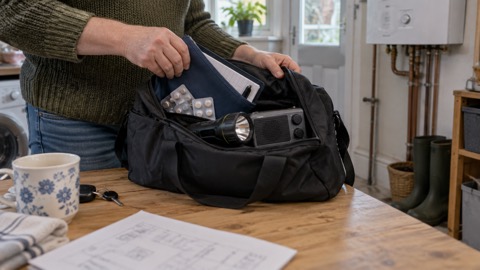
North Hertfordshire's emergency kit basics add practical items many lists miss: a portable power bank, first aid kit and manual, hand sanitiser and wet wipes, matches in a waterproof container, spare batteries, notepad and pencil, whistle, tools to turn off utility supplies, local maps, rubbish bags with plastic ties, dust mask, plastic sheeting and duct tape16. Hillingdon's grab-and-go bag checklist is similar but framed for leaving home: a copy of your household emergency plan, long-life food and snacks, bottled water, prescription medication, seasonal clothes, a wind-up or battery-powered radio, cash in small bills, important documents, insurance papers and ID, pen and notepad, torch, spare keys, phone charger, power bank, first aid kit, personal toiletries, blanket, baby items and pet items if applicable, map and whistle7.
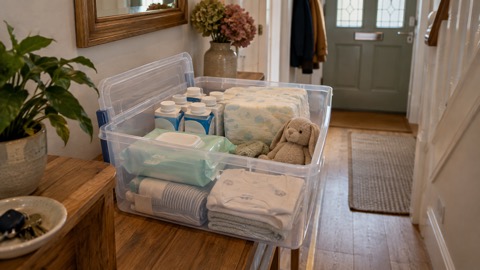
Tailor the list to your household. If you have a baby, pack what they need; if someone in the house has special needs, nidirect advises including special equipment for children and people with special needs5. See Supplies to Pack for Babies and Young Children and Extra Help in an Emergency for more.
Light, power and a way to hear news
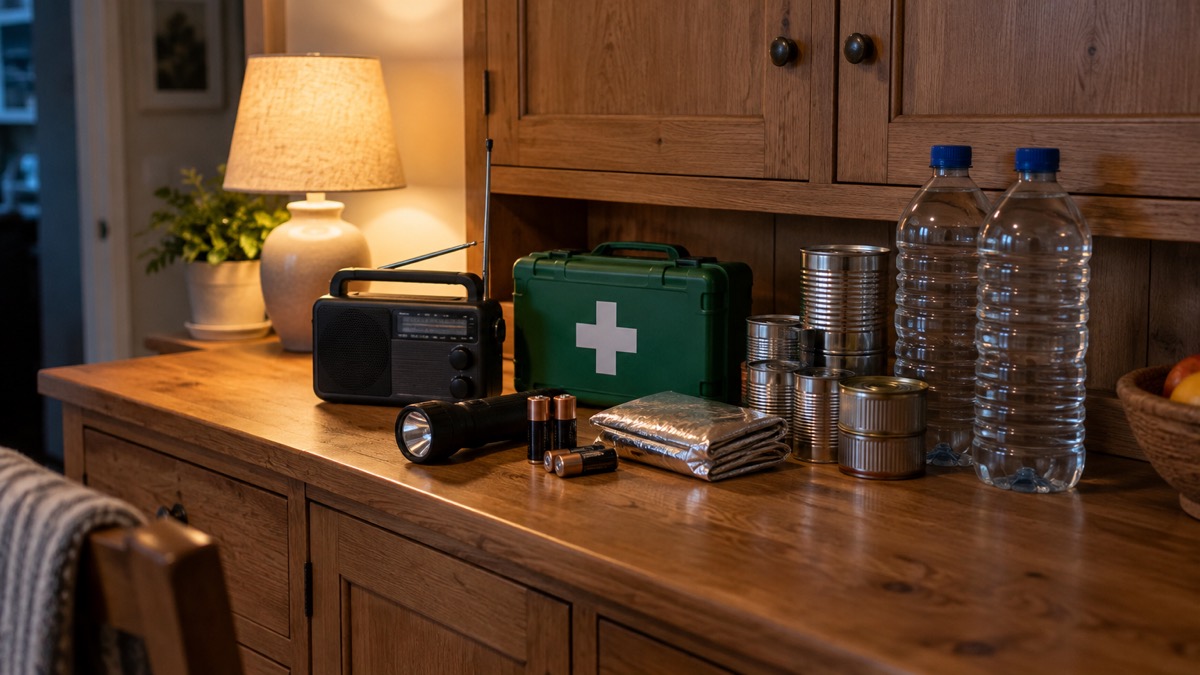
When the power goes, three things matter immediately: light, a way to charge your phone, and a way to hear official information. Dorset and Wiltshire Fire and Rescue Service advises preparing an emergency kit with items such as a torch, portable radio, replacement batteries, matches and bottled water17. The same advice appears in general emergency kit guidance: include a torch, radio, matches and a list of emergency contact numbers, and if it is not safe to go out, go indoors, close all windows and doors, and tune in to local radio, TV or the internet, where public information and advice from the emergency responders will be broadcast.
The radio matters more than people expect. Carmarthenshire's guidance captures the official line in three words: "Go in, stay in, tune in." Go indoors and close all windows and doors and tune in to local radio, TV or the internet, where public information and advice from the emergency responders will be broadcast6. In a widespread emergency the mobile network may be congested or down, and a battery radio keeps receiving official advice.
"Go in, stay in, tune in."
For light and information, the recommended combination is a torch plus extra batteries or a wind-up torch, and a portable battery powered radio plus extra batteries or a wind-up radio17. Matches should be kept in a waterproof childproof container, away from children17. If you are considering more than the basics, see Backup Power at Home for what larger options can and cannot do, and Emergency Lighting at Home for torches, lanterns and the safe use of candles.
First aid, medicines and toiletries
A first aid kit appears on every official list, and the government's Be Ready campaign gives the most detailed contents: waterproof plasters, bandages, a thermometer, antiseptic, eyewash solution, sterile dressings and gloves, medical tape for dressings, and tweezers18. The Be Ready checklist also lists essential medication and medical supplies alongside the first aid items19. Royal Borough of Windsor and Maidenhead's home emergency plan lists a first aid kit and essential medicines among its grab bag essentials20, and nidirect's flood advice says to include essential medicines in your emergency flood kit21.
Beyond the first aid kit, the NHS expects households to keep a reasonably stocked medical cabinet at home to deal with minor ailments. NHS Vallance Medical Centre puts it plainly: "We feel it is important that all households should keep a reasonably stocked medical cabinet at home to deal with minor ailments"22. The two lists work together: the medicine cabinet covers everyday minor illness, and the emergency pack makes sure a basic kit and your essential medicines travel with you if you have to leave or shelter without warning.
Toiletries are on every list too. Nottinghamshire's emergency planning advice includes sanitary items and toiletries15, Birmingham's list includes toiletries such as toothpaste and a toothbrush, hand sanitiser, rubbish sacks and toilet rolls14, and nidirect includes toiletries and sanitary supplies5. For hygiene when water is off, see Hygiene and Sanitation Supplies, and for treating injuries, First Aid at Home.
Documents, contact numbers and spare keys
The paperwork side of the pack is what most households forget, and it is what you will most regret not having if you have to leave home suddenly. Denbighshire's Emergency Supplies Kit advises keeping personal identification, cash and a credit card, copies of important documents such as birth certificates, marriage certificates, wills, deeds, insurance papers and immunisation records, an emergency contacts list and an extra set of house and car keys, all stored in watertight containers9. Carmarthenshire's checklist includes important documents like birth certificates and insurance policies, spare keys to your home and car, and your household emergency plan with emergency contact numbers6.
Neath Port Talbot Council's emergency kit checklist keeps it simple: a list of emergency contact numbers at home in the event of an emergency23. nidirect's version is more specific about who to include: your doctor, close relatives and local council5. Write the list down on paper. In a power cut or network failure you cannot rely on your phone's contacts, and a paper list in the pack works for everyone in the household, including visitors and older relatives.
Spare glasses or contact lenses belong in the pack for the same reason as spare keys: if your only pair is lost, broken or left behind in a hurry, you want a working replacement6,5. Hillingdon's grab bag checklist also includes cash in small bills, insurance papers and ID7. For a fuller guide to which documents matter and how to copy and store them, see Important Documents and How Much Cash to Keep at Home for an Emergency.
Where to keep the pack and what to put it in
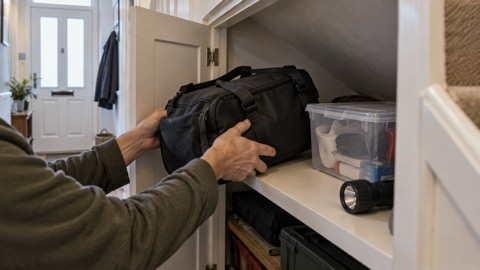
Storage advice is consistent: waterproof, and easy to reach. Carmarthenshire Council says to keep your kit in a safe place at home where you can reach it easily, and that your kit should be kept in a waterproof bag6. Dumfries and Galloway Council encourages the use of a waterproof container or bag for the pack, kept in an easily accessible place12. Lancashire Prepared adds that copies of important documents, including your household emergency plan, birth certificates and insurance documents, should be kept in a waterproof bag11.
A few practical points follow from that advice:
- One place, known to all. Anglesey's Home Emergency Plan says to have a first aid kit and make sure everyone in the house knows where it is24. The same applies to the whole pack: it is no use in a crisis if only one person knows the cupboard.
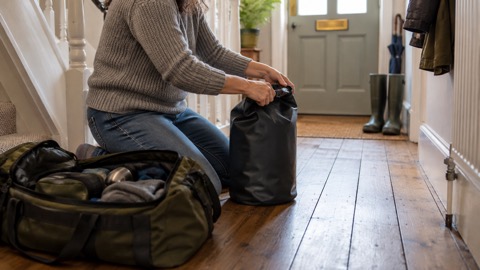
- Waterproof, not just water-resistant. Flood water and burst pipes ruin paper and batteries alike. Dry bags and waterproof pouches are covered in Keeping Supplies Dry.
- Separate the home pack from the grab bag. The home pack is for staying put; the grab bag is for leaving at short notice. Somerset's advice is to make up a home emergency pack and also prepare an evacuation checklist of things to pack quickly8.
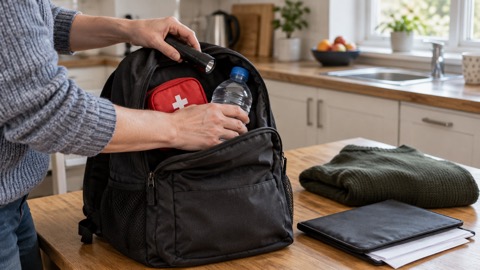
- Choose a container you can carry. If you may need to move it, a rucksack or holdall beats a box. See Choosing a Rucksack or Holdall.
For the wider question of where in the house to store supplies, and what not to store next to a boiler or in a loft that floods last, see Where and How to Store Your Supplies Safely.
Extra planning in rural and flood-risk areas
Two circumstances change what your pack should be: flood risk and rural location. Ready Scotland advises that people in flood-risk areas may wish to be ready to leave their home at short notice if required2, and that rural areas are more likely to be cut off from the shops during snow2. Both point the same way: more supplies, and a grab bag that is genuinely ready to go.
If your home is at risk of flooding, be ready to leave at short notice, and prepare a flood plan and an emergency flood kit in advance. The Scottish Environment Protection Agency's flooding guide for older communities sets out what a flood kit should include: your flood plan, a torch and portable radio with a supply of batteries, blankets and warm waterproof clothing and footwear, a first aid kit including any medication you are taking, bottled water, a charged mobile phone, non-perishable food supplies and pet food supplies25. Wiltshire and Swindon Prepared describe the same idea: a kit containing key items such as batteries, chargers, paracetamols and plasters to help minimise risk and help you if you need to leave your home quickly in a flood26.
Suffolk's Flood Smart Living guide adds the clean-up side that many lists miss: a flood kit of essential items could include mops, buckets, waterproof clothing, PPE, first aid kit, torch, radio and batteries, non-perishable foods and bottled water27. North Yorkshire Fire and Rescue Service, advising households at risk of flooding after heavy rainfall, says to prepare an emergency bag and flood kit28. The Met Office's thunderstorm advice applies the same logic to storms: check if your property is at risk, prepare a flood plan and prepare an emergency flood kit29.
For rural households, the practical step is to treat three days as a floor rather than a target. Argyll and Bute Council's winter advice to keep at least three days' supply of food, bottled water and other essentials is written for exactly the communities where snow closes roads13. See Flooding: A Household Guide and Storms, Snow and Ice for the full picture.
Getting ready for cold weather and snow
Winter deserves its own pass through the pack. The Met Office's WeatherReady winter checklist advises having basic supplies to hand and doing plumbing checks before the cold weather arrives30. That means checking the pack before the first frost: fresh batteries, in-date food, blankets where you can reach them, and pipes lagged so a freeze does not add a burst water main to your problems.
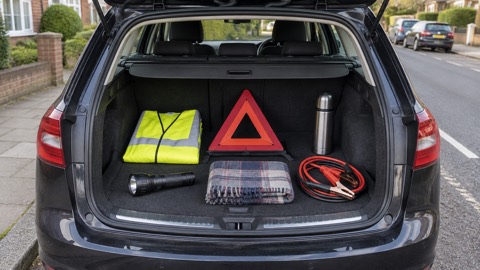
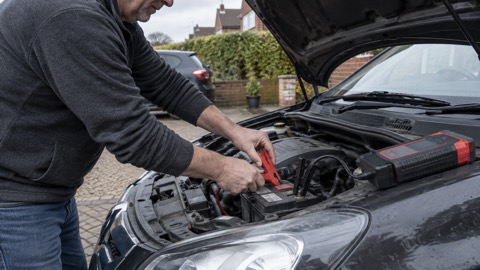
The car needs the same treatment. Ready Scotland's car emergency kit includes battery jump leads, a reflective warning sign, a map, a snow shovel, and some food and a warm drink in a flask2. The government's Be Ready campaign advises packing a few essential items in your car boot for wintry weather: a torch, in-car phone charger, warm clothes and blankets, high-visibility clothing, jump leads, food and drink, and a shovel for snow, with a first aid kit also helpful18. Neath Port Talbot's checklist likewise advises keeping a first aid kit in your car in the event of an emergency23.
At home, the winter additions to the pack are warmth and light. Birmingham's supplies list includes a sleeping bag or warm blanket for each person14, and Dorset and Wiltshire Fire and Rescue Service's power cut kit of torch, portable radio, replacement batteries and matches is written for exactly the winter night when the supply fails17. For heating and cooking without mains power or gas, see Heating and Cooking Without Mains Power or Gas, and for what to do when the lights go out, Power Cuts: A Household Guide.
Checking, refreshing and keeping the pack safe
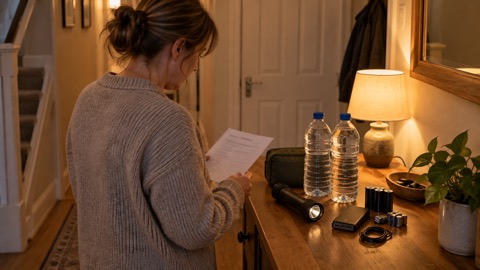
An emergency pack is not a one-off purchase; it is a small household system that needs occasional attention. Food and water have use-by dates, batteries lose charge over time, children grow out of spare clothes, and prescriptions change. A quick check a couple of times a year, and before each winter, keeps the pack ready rather than just present. See Checking and Restocking Supplies for a routine.
One more check is worth building in: product recalls. Electrical items are sometimes found to be unsafe after they have been sold, and an emergency pack is exactly the kind of place where items sit unused for long periods. Before you rely on any electrical item in your kit, check the government's product safety alerts and recalls pages on gov.uk, and replace anything that has been recalled.
Where to get help and more to read
If you or someone in your household depends on electricity for medical equipment, or is older, disabled or medically dependent, see Extra Help in an Emergency for what support is available and how to sign up. For flooding, see the Environment Agency's guidance on preparing a flood plan and an emergency flood kit in advance, and in Scotland SEPA's flooding guides set out the equivalent advice25.
To go further from here:
- The Government's Be Ready Checklist Explained for the official national checklist item by item
- Household Preparedness Checklist: Home, Grab Bag and Car for a single printable list covering all three
- Scotland, Wales and Northern Ireland: Official Advice on Supplies where the advice in your nation differs
- Pets and Animals in an Emergency for pet supplies in detail
- Community Resilience for working with neighbours so a whole street is ready, not just one house
Sources (30)
- Emergency planning advice, Scottish Borders Council, Scottish Borders Council, 2026
- Emergency kit, Ready Scotland, Ready Scotland, 2026
- Get help and advice in an emergency, Lincolnshire County Council, Lincolnshire County Council, 2026
- Emergency kits and grab bags, Central Bedfordshire Council, Central Bedfordshire Council, 2026
- Household emergency kit, nidirect, nidirect, 2026
- Get prepared, Carmarthenshire County Council, Carmarthenshire County Council, 2026
- Household emergency plan, London Borough of Hillingdon, London Borough of Hillingdon, 2025
- Preparing for emergencies, Somerset Council, Somerset Council, 2026
- Emergency Supplies Kit, Denbighshire County Council, Denbighshire County Council, 2020
- Emergency planning, Belfast City Council, Belfast City Council, 2026
- Emergency pack, Lancashire Prepared, Lancashire Prepared, 2026
- Create a household emergency life-saving plan, Dumfries and Galloway Council, Dumfries and Galloway Council, 2026
- Winter weather: be prepared, Argyll and Bute Council, Argyll and Bute Council, 2026
- Are you ready, Birmingham City Council, Birmingham City Council, 2026
- Preparing for an emergency, Nottinghamshire County Council, Nottinghamshire County Council, 2026
- Preparing for emergencies, North Hertfordshire District Council, North Hertfordshire District Council, 2015
- Storms and power cuts, Dorset and Wiltshire Fire and Rescue Service, Dorset and Wiltshire Fire and Rescue Service, 2022
- Be ready for emergencies, Be Ready campaign, UK government, 2026
- Be Ready Checklist, UK government, UK government, 2026
- Emergency home emergency plan, Royal Borough of Windsor and Maidenhead, Royal Borough of Windsor and Maidenhead, 2025
- Preparing for flood, nidirect, nidirect, 2025
- The family medicine chest, NHS Vallance Medical Centre, NHS, 2026
- NPT Prepared emergency kit checklist, Neath Port Talbot Council, Neath Port Talbot Council, 2026
- Home Emergency Plan, Isle of Anglesey County Council, Isle of Anglesey County Council, 2020
- Flooding guide for older communities, Scottish Environment Protection Agency, SEPA, 2026
- Winter hacks this winter, Wiltshire and Swindon Prepared, Wiltshire and Swindon Local Resilience Forum, 2026
- Flood Smart Living, Suffolk County Council, Suffolk County Council, 2024
- Advice for those at risk of flooding, North Yorkshire Fire and Rescue Service, North Yorkshire Fire and Rescue Service, 2023
- Stay safe in a thunderstorm, Met Office, Met Office, 2026
- WeatherReady winter checklist, Met Office, Met Office, 2026
 30-Day Household Checklist
 Emergency Plan Template
 Supply Interruption Checklist
 Grab Bags
 What to Keep in Your Car
 Important Documents
 Cash to Keep at Home
 How Many Days Supplies Last
 Storing Your Supplies Safely
 Checking and Restocking Supplies
 Rucksacks and Holdalls
 Keeping Supplies Dry
 Foil Blankets
 Portable Jump Starters
 Supplies for Babies and Children