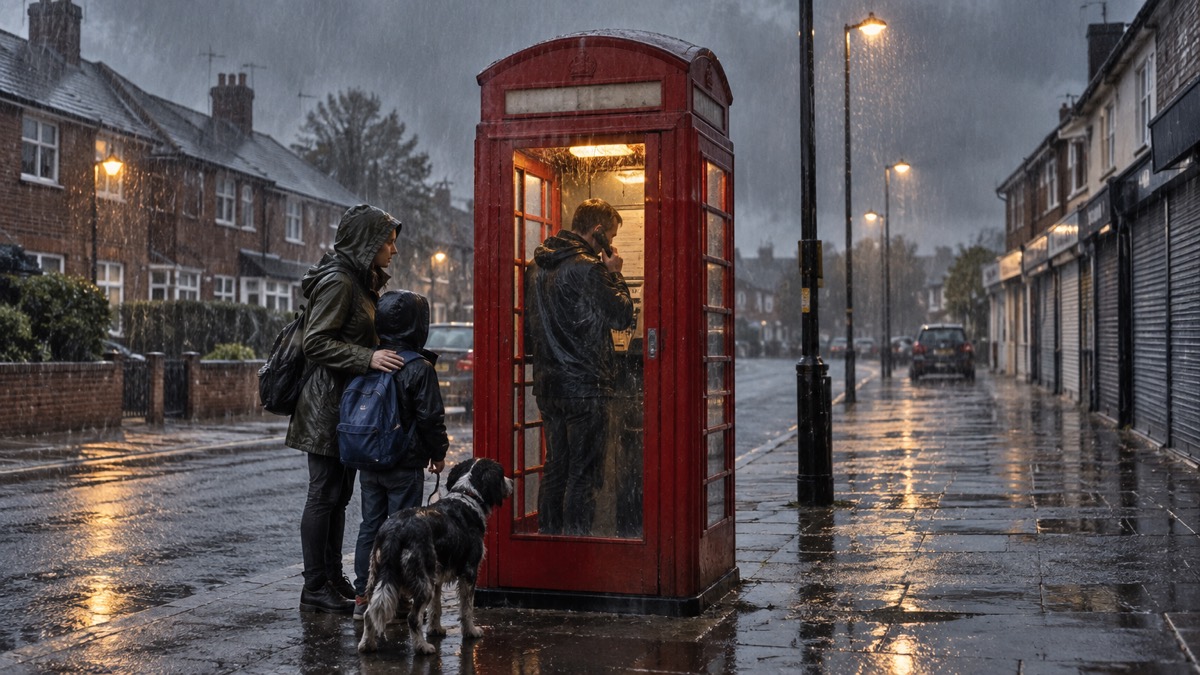
A household contact plan is one short piece of preparation: an agreement, made now, about how the people in your home will reach each other and where you will gather if an emergency separates you. North Devon Council's emergency planning guidance puts it plainly: "Agree how you will contact one another and where you could meet if you cannot return home."1 Surrey County Council adds that the plan should be drawn up with everyone involved, not written by one person and handed down: "Be sure to consult everyone in your household about the plan as you complete it."2
The reason for doing this in advance is simple. In a real emergency, mobile networks may be jammed, cordless home phones need power to work, and the people you most want to reach may be at work, at school or stuck on a train3. Decisions you would normally make in a calm minute, such as who collects the children and where everyone regroups, have to be made in that moment. A plan agreed beforehand, with numbers written on paper, removes the guesswork. Dumfries and Galloway Council describes its Household Emergency Lifesaving Plan in exactly these terms: "The plan can be agreed by a family or household in advance and kept safe for use in the future."4
This page walks through what goes into a contact plan, how to choose meeting points and an out-of-area contact, why a paper copy of your numbers matters, what to do when networks are busy or down, and how the plan fits into your wider household emergency plan.
Agree the plan before anything happens
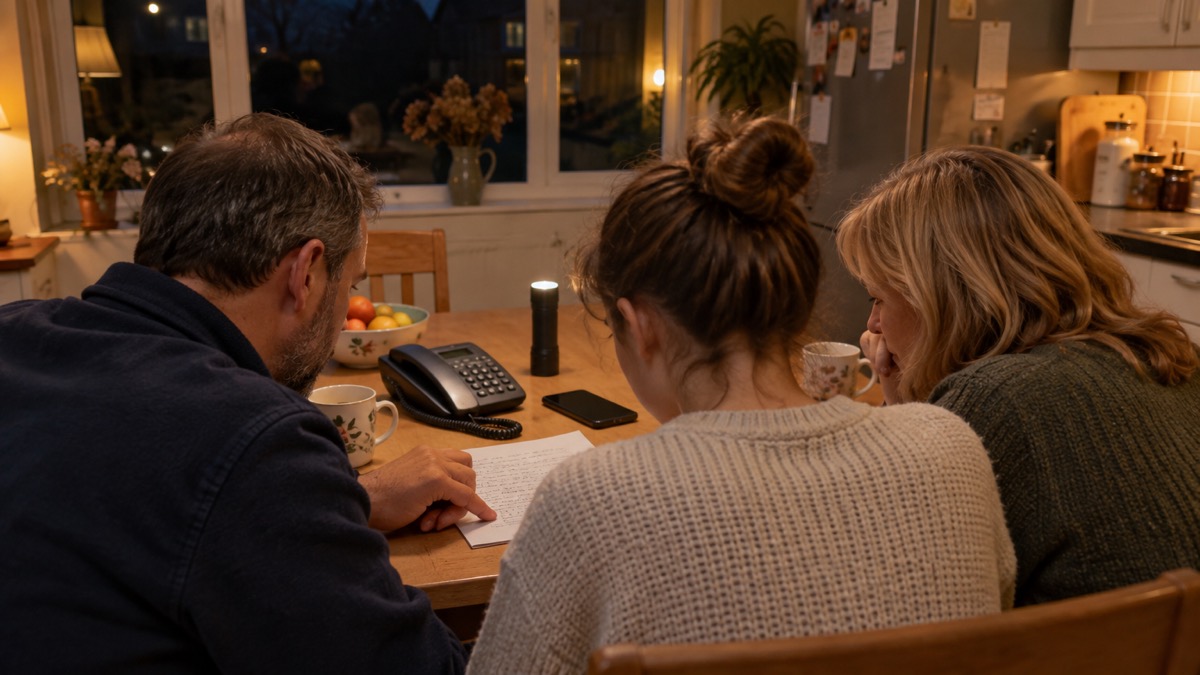
The first step is a conversation, not a document. Sit down with the adults and, where they are old enough, the children in your household, and work through three questions: how will we contact each other, who will we call first, and where will we meet if we cannot get home. Argyll and Bute Council's preparedness advice is to "Pre arrange meeting points where members of your family and those close to you can gather in an emergency."10 The UK government's outage guidance adds the timing: agree a meeting point "in case you cannot contact each other for a period of time", and choose places that are easy to find and open to the public, or agree to meet at a family member's home3.
Consulting everyone matters more than it sounds. A plan that only one person knows fails the moment that person is the one who cannot be reached. Surrey's guidance to consult everyone in the household as you complete the plan2 means each member should be able to answer the three questions without looking anything up: who do I call, where do I go, and what if that does not work.
Keep the finished plan somewhere safe and known. One copy at home, one in a grab bag or emergency kit if you keep one, and a copy of the key numbers in each adult's wallet or bag, is a sensible arrangement. The plan does not need to be long. A single sheet covering contacts, meeting points and any special arrangements, such as who helps an older relative, is enough for most households.
What goes in a household contact plan
A contact plan is a short document, and its contents are consistent across official guidance. At its heart are the phone numbers and addresses of people who need to know if you have been in an emergency11, together with the contact details of family members you would need to inform and useful local numbers such as your doctor's12. The Royal Borough of Windsor and Maidenhead's home emergency plan template lists "Emergency Contacts (written on paper)" as a core part of the grab bag essentials13, and Greater Manchester Combined Authority advises households to create an emergency contact list including important numbers such as the number to report a power cut, 1059.
A workable contact plan covers:
- Who is in the plan: every household member, plus anyone you would need to inform, such as relatives, neighbours, a carer or your child's school
- Phone numbers and addresses: the people who need to know if you have been in an emergency11
- Your out-of-area contact: one named person everyone calls first (see below)
- Meeting points: one near home and one further away5
- Local services: your doctor's number12, the power cut line 1059, and 999 for emergencies
- Special arrangements: who helps anyone who needs extra support, and their contact number14
- Pets: how you will look after them and who could take them in15
If you care for someone, the plan should be made with them, not for them. The government's easy-read guidance for disabled people and carers is direct: "Make a plan with the person you care for about how you will contact them in an emergency."11 NHS Norfolk and Suffolk's winter advice similarly suggests keeping important contact details in an easy-to-find location and identifying family members, friends or neighbours who may be able to help in an emergency16.
| Item | What it is for | Who it comes from |
|---|---|---|
| Emergency contact numbers, on paper | Reaching people when your phone is dead or unavailable | Windsor and Maidenhead13, Wiltshire and Swindon17 |
| Out-of-area contact | One person everyone calls to pass on news | Your own agreement, following official advice to agree contact arrangements1 |
| Two meeting points | Regrouping near home, or further away if you cannot get home | Scottish Borders community plan5 |
| Doctor's number | Health advice and repeat prescriptions | Nottinghamshire12 |
| 105 | Reporting a power cut | Greater Manchester9 |
| 999 | Life-threatening emergencies; calls are free | North Yorkshire Fire8 |
An out-of-area contact everyone calls first
The idea of an out-of-area contact is borrowed from a simple observation: when a serious emergency strikes one area, local phone networks and local people are all affected at once, while someone far away is usually untouched and reachable. So the arrangement is that every member of your household calls, or texts, the same named person outside the affected area first. That person becomes the single point where news is collected and passed on: "I'm safe, I'm at the school hall", "I'm stuck at work", "I'm on my way to Gran's". Instead of every family member trying to call every other, each makes one call, and the out-of-area contact relays the picture.
Buckinghamshire Council's pet emergency plan advice is to "include contact information for an emergency contact outside of your immediate area"18, and the same logic applies to people: someone nearby may be caught up in the same event. For your household, choose someone who lives far enough away to be unaffected by a local flood, storm or power cut, who is reliable about answering, and who knows the names and numbers of everyone in your plan. A relative or close friend works well. Tell them they are your out-of-area contact, and agree what you will ask them to do: mainly to note who has checked in and to pass messages between you.
Agree the fallback too. If the out-of-area contact cannot be reached, who is second? And agree that a text counts as checking in, since texts often get through when calls fail7. Programme the out-of-area contact into each phone, and put their number on the paper copy of your list, because in a real event you may be borrowing someone else's phone.
Where to meet if you cannot get home
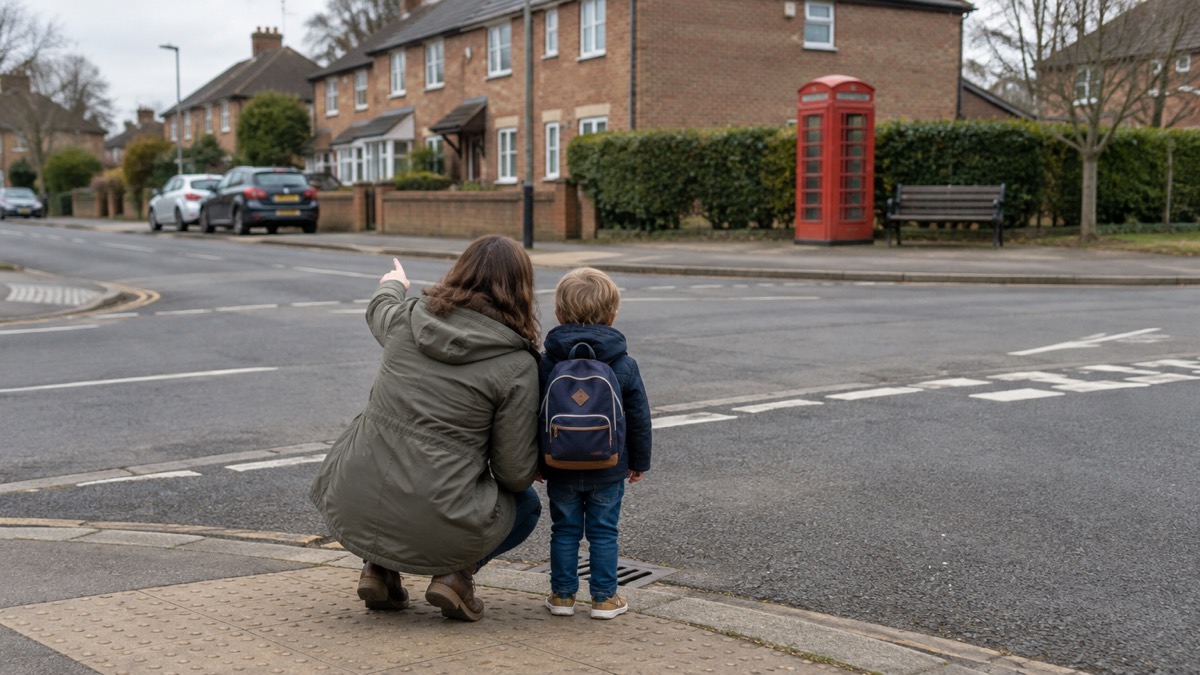
Meeting points answer the question that follows "I cannot reach anyone": where do we go? The clearest official advice in the pack comes from the Gavinton, Fogo and Polwarth community resilient plan in the Scottish Borders: "Identify two meeting places: one near home and one further away, in case you can't get home."5 The UK government's outage guidance adds the practical test for choosing them: places that are easy to find and open to the public, or a family member's home3.
The near-home point covers events where the house itself is the problem, such as a fire or a gas leak, where you evacuate a short distance and regroup. The further point covers events where the whole area is affected, such as flooding, and you cannot get back at all. For the near-home point, pick somewhere you can reach on foot in a few minutes that is safe and identifiable: a neighbour's driveway, a specific shop front, a village hall. For the further point, pick somewhere outside your immediate area that stays open and that everyone can find without directions.
Two rules make meeting points work. First, name them precisely: "the war memorial by the church", not "the town centre". Second, make sure every member of the household, including children old enough to be out alone, can name both points from memory. If anyone in your home would need assistance to leave, plan that in advance as well: the Northern Ireland direct household flood plan asks the question directly, "If you know you will need assistance to leave your home, who will you call?", and advises deciding who will help and noting their contact number14.
Keep your numbers on paper
The single most repeated piece of advice across UK preparedness guidance is also the simplest: write your numbers down. West Midlands Ambulance Service's public safety advice is to "Write down key phone numbers on paper, including the contact details of people you may need to reach urgently."6 Wiltshire and Swindon's preparedness guidance asks the question that sits behind it: "What if we can't access that, how would you find those important numbers of family or your insurance?"19 The answer is that you cannot, unless they exist somewhere other than your phone.
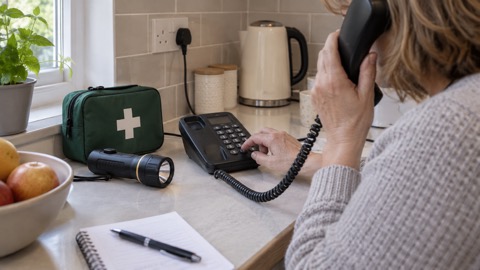
A dead phone battery, a lost phone, a jammed network or a broken screen can each leave you with no numbers at all, and in a power cut a cordless home phone stops working because it needs mains power12. A paper list costs nothing and survives all of these. Keep it somewhere safe and accessible19, and keep copies in more than one place: a drawer at home, your grab bag, your wallet, the car, and with your out-of-area contact.
What to write on the list:
- Everyone in the household, with mobile and work numbers
- Your out-of-area contact and a backup
- Family, friends and neighbours who could help, or who would need to know11
- Your doctor's number12
- Insurance numbers19
- The power cut reporting line, 1059
- 999, and remember 999 calls are free8
- Your child's school or childcare provider20
- Anyone who needs extra support, and who has agreed to visit them in person21
Carmarthenshire Council's emergency kit checklist puts "Your household emergency plan, including emergency contact numbers" at the top of the ten things to include in a household emergency kit22, and its get-prepared page repeats the same list23. Wiltshire and Swindon's at-home advice is briefer still: "Emergency contact numbers, on paper."17 If you keep an emergency grab bag, the paper list belongs in it. A fuller checklist of which numbers to keep is on our emergency numbers list page.
For carers, Staffordshire County Council's advice on planning for emergencies is to "Write down your plan and keep it somewhere easy to find"24, and the Scottish Government's hot weather guidance, when advising on looking out for others, says to "make sure they have important phone numbers written down"25. The same applies in reverse: make sure the older relative or neighbour you would check on has your number on paper too.
When mobile networks are busy or down
In a major emergency, the problem is rarely that phones do not exist; it is that everyone uses them at once. Nottinghamshire County Council's guidance is explicit: "consider how your family will stay in touch in the event of an emergency, mobile networks may be jammed, cordless telephones need power to work."12 Surrey County Council adds that mobile networks may become overloaded, so the authorities may call you to check on you2. In other words, plan for the possibility that your first three calls do not connect.
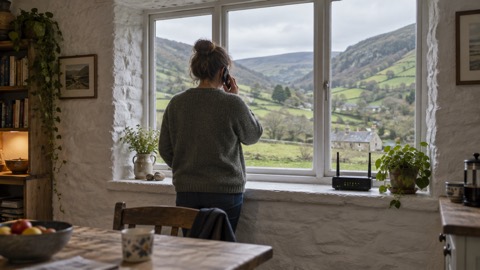
The government's phone and broadband outage guidance gives a sequence of fallbacks. If your landline is not working, try your mobile. If your mobile network is down but you have a working Wi-Fi connection, you may still be able to make calls over Wi-Fi by enabling Wi-Fi Calling on your device3. Our pages on Wi-Fi calling, mobile networks in a power cut and what to do when phones and the internet go down cover these fallbacks in detail.
Your contact plan should assume congestion and build around it:
- Call your out-of-area contact rather than trying every family member in turn
- Send texts rather than making voice calls7
- Keep calls short if you do get through
- Keep a charged power bank at home so a flat battery does not add to the problem16
- If you cannot reach anyone by phone, go to the meeting place you agreed in advance, just outside of the immediate area5
In the rare case that normal telephone systems fail entirely, including the 999 system, community plans show what happens next. The Gavinton, Fogo and Polwarth plan records that police or mountain rescue teams will be deployed to the area and will operate via Airwave or satellite radio systems, and will alert the community co-ordinator to the alternative method of contacting the emergency services5. That is a rural Scottish arrangement, but the principle holds: if phones fail completely, emergency responders have their own resilient communications, and your job is to follow their instructions rather than to keep dialling.
Texts and messages often get through when calls fail
When networks are congested, text messages behave better than voice calls. Wiltshire and Swindon's personal resilience advice states the reason: "Use non-voice channels as these are less likely to be broken up and will use less battery (e.g. texting or social media)."7 A text is a small burst of data that can slip through where a continuous voice call cannot, and it needs far less battery, which matters when you are rationing a phone you cannot recharge.
Build this into the plan itself. Agree that in an emergency, each household member's first action is to send one text to the out-of-area contact saying where they are and that they are safe, and that this counts as making contact. Agree a wording now, so nobody composes at length with a dying battery: something as short as "Safe, at [place]" does the job. Agree too that if a text will not send, you keep the phone on and try again periodically rather than making repeated draining calls.
People with additional communication needs should continue to use established accessibility services to contact the emergency services, including Relay UK, Emergency SMS and 999 BSL. The government's outage guidance adds an important caveat: during a widespread communications outage these services may also be affected, in which case seek help directly from emergency responders or go to your nearest police station, fire station, ambulance station or hospital3. Our pages on emergencySMS and 999 BSL and Relay UK explain how to register for these services before you need them.
For everyday family contact, non-voice channels such as texting or social media are less likely to be broken up and use less battery7. The key point for your plan is to name the channel in advance, so that everyone knows where to look for a message: one agreed text thread or messaging group, not five apps checked at random.
Children, older relatives and neighbours
A contact plan has to cover the people who cannot simply fend for themselves. For children, the first step is administrative: the Scottish Government's emergency plan guidance says to "Check your child's school or childcare provider has your up-to-date contact details."20 Warwickshire's advice to residents frames the wider task as knowing "How your family will stay in contact in an emergency"26. Ask the school how it would contact you in an emergency, agree who else may collect your child if you cannot, and make sure both the school and the child know who that is. Teach children the out-of-area contact's number and the near-home meeting point, so they know what to do if they cannot reach you.
For older relatives and anyone who lives alone, the government's Be Ready and Prepare campaign guidance is specific: "You could agree that if an outage happens and you cannot call, you or another trusted person they know will visit them in person."21 The same guidance says to remind them to follow emergency services advice if asked to evacuate21. This in-person fallback matters because an older person's phone may be a cordless handset that stops working in a power cut12, and because someone who cannot easily leave home cannot reach a meeting point. Lancaster City Council's community preparedness advice extends the duty to neighbours: after any major emergency, make contact with residents, especially those in isolated dwellings or vulnerable neighbours, tell them to contact you if they need help and keep an eye on them28.
Practical steps for the people around you:
- Agree who visits whom, in person, if calls fail21
- Make sure they have your number and the out-of-area contact's number written down25
- Note who has agreed to help and their contact number14
- For carers, make the contact plan together with the person you care for11
- Check school and childcare contact details each term20
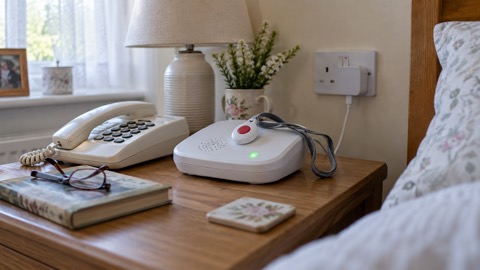
If someone in your household uses telecare or a personal alarm, its dependence on phone lines is a further reason to have the in-person fallback agreed; our page on telecare and personal alarms covers this. Households that need extra help generally will find more on our extra help page.
Fitting the contact plan into your household emergency plan
A contact plan is not a stand-alone document; it is the communications section of your wider household emergency plan. Argyll and Bute Council publishes a Household Emergency Plan template for individuals and families to plan how they would cope in an emergency, included in the guide on page 3729, and the Scottish Government's ready.scot emergency plan guidance is the national starting point for Scotland20. Fill in the contact sections of whichever template you use, or write your own sheet, and keep it with the rest of the plan.
The wider plan covers what the contact plan does not: what to keep in your emergency kit, how to manage a power cut or a flood, and what to do about heating, water and food. Carmarthenshire's kit checklist shows how the pieces connect, with the household emergency plan and its contact numbers listed first among the top ten things to include, alongside a torch, first aid kit, important documents, water, food, spare keys and pet supplies22. Your contact plan belongs in that kit, on paper, where it can be grabbed on the way out.
Communities can plan on the same pattern. The Scottish Government's community emergency planning guide advises groups to agree with local emergency responders how they will contact you and how you can contact them, so that you may activate your plan in response to a call from them30, and Argyll and Bute's guidance on responding and recovering asks communities to develop triggers for deciding whether to take action if emergency responders cannot contact them31. Households can mirror this on a small scale: agree what would trigger your plan, such as a named warning, a school closure or an emergency alert on your phone, and what each person then does.
Checking and updating the plan
A contact plan goes stale quietly: numbers change, children change schools, the neighbour who agreed to check on your mother moves away. Build in a review. The Scottish Government's guidance gives one concrete check to repeat: your child's school or childcare provider should have your up-to-date contact details20. Run through the whole plan at the same time, ideally once a year and after any change such as a new phone, a new job, a house move or a new school.
What to check:
- Every number on the paper list still reaches the person it names
- The school and childcare provider still have your up-to-date contact details20
- The out-of-area contact still knows they are your out-of-area contact
- Both meeting points are still suitable and still known to everyone
- Anyone who needs extra support still has their arrangements, and their helper's number, current
- Pet microchip details, and your address and phone number registered against them, are up to date15
- The paper copies are still where they are supposed to be, including the one in the grab bag
Birmingham City Council's pet advice is to "keep your pet's identification and contact details up to date in case they are lost"15, and Buckinghamshire's is to keep your address and phone number up to date and to include contact information for an emergency contact outside your immediate area18. Pets are part of the household, so their details belong in the same annual review. Buckinghamshire also suggests contacting your local emergency management office, animal shelter or animal control office for advice if you are unsure how to care for your pet in an emergency18; our pets and animals page covers the arrangements in full.
Finally, test the plan in a small way. Ask each household member, over dinner, who they would call first and where they would go. If anyone hesitates, the plan needs another look, not more paper.
Sources (32)
- Be prepared for emergencies, North Devon Council, 2026
- Homes prepared, Surrey County Council, 2026
- Phone and broadband outages, Prepare Campaign, 2026
- Create a household emergency lifesaving plan, Dumfries and Galloway Council, 2026
- Gavinton, Fogo and Polwarth Resilient Community Plan, Scottish Borders Council, 2018
- Be prepared, West Midlands Ambulance Service NHS Foundation Trust, 2026
- Personal resilience: yourself, Wiltshire and Swindon Prepared, 2026
- Bedtime routine and escape plan, North Yorkshire Fire and Rescue Service, 2026
- Prepare yourself, Greater Manchester Combined Authority, 2026
- Preparing for civil emergencies in Argyll and Bute, Argyll and Bute Council, 2026
- Easy Read: Disabled Persons and Carers, Prepare Campaign, 2024
- Preparing for an emergency, Nottinghamshire County Council, 2026
- Emergency home emergency plan, Royal Borough of Windsor and Maidenhead, 2025
- Household flood plan, nidirect, 2018
- Are you ready, Birmingham City Council, 2026
- Be prepared for winter emergencies, NHS Norfolk and Suffolk Integrated Care Board, 2026
- Personal resilience: at home, Wiltshire and Swindon Prepared, 2026
- Emergency grab bag, Buckinghamshire Council, 2023
- Prepare: yourself, Wiltshire and Swindon Prepared, 2026
- Emergency plan, Ready Scotland, 2026
- Get prepared for emergencies, Prepare Campaign, 2026
- Get prepared, Carmarthenshire County Council, 2026
- Get prepared, Carmarthenshire County Council, 2026
- Plan for emergencies and changes, Staffordshire County Council, 2026
- Hot weather, Ready Scotland, 2026
- Emergency advice for residents, Warwickshire County Council, 2026
- Be ready for emergencies, Be Ready Campaign, 2026
- Be prepared, Lancaster City Council, 2026
- Making your plan, Argyll and Bute Council, 2026
- Community emergency planning guide: respond and recover, Ready Scotland, 2026
- Responding and recovering, Argyll and Bute Council, 2026
- Emergency Alerts System factsheet, Prepare Campaign, 2025
 Free Alert Services
 Emergency Apps
 Digital Switchover Checklist
 When Phones and Internet Fail
 Official Warnings and News
 Emergency Radios
 Telecare on Digital Phone Lines
 Mobile Networks in Power Cuts
 Broadband Outages
 Router and Hub Power Cuts
 Wi-Fi Calling
 Satellite Messaging and SOS
 Satellite Messengers
 Calling 999 and 112
 Non-Emergency Numbers