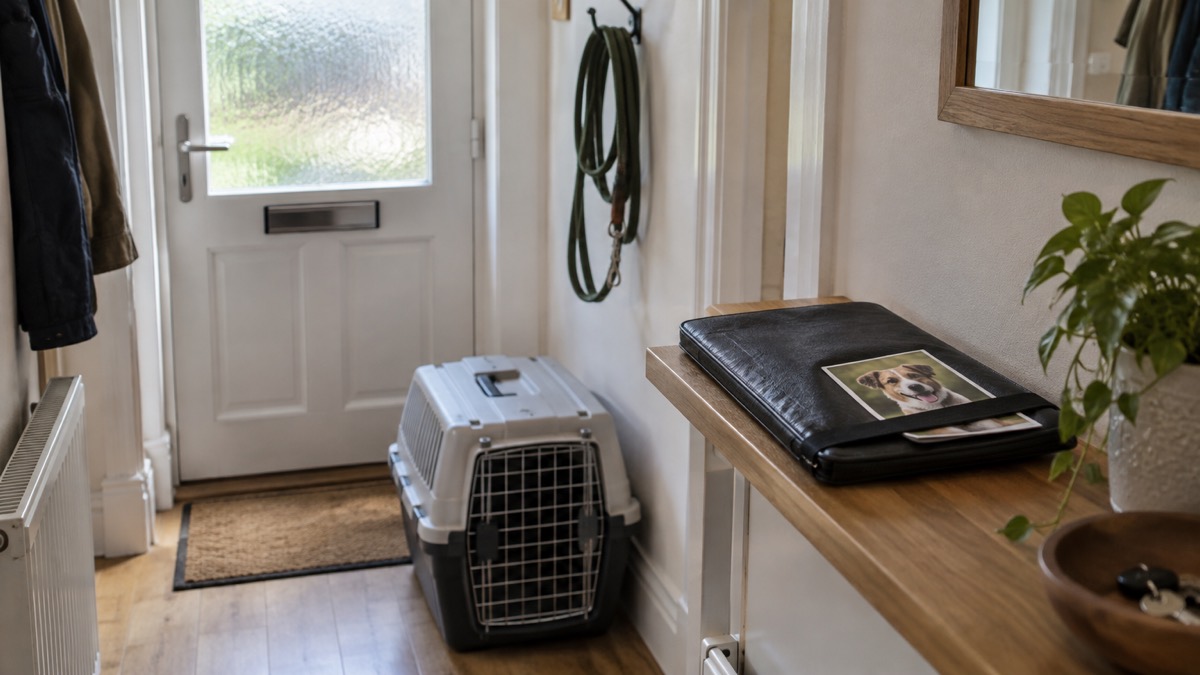
If you had to leave home in a hurry, or a flood warning arrived at night, would you be able to put your hand on your pet's paperwork? The records that matter are short: vaccination records, your vet's details, microchip details and a recent photo. West Yorkshire Prepared's advice is to keep documents like vaccination records, vet's details and microchip details in a safe, but accessible place1.
That balance, safe but reachable, is the whole job. Keep copies in a waterproof bag, keep the bag somewhere you can grab it, and keep a photo of your pet where you can find it fast. Councils across the UK give the same core list, and the national Be Ready campaign's checklist includes pet food and bottled water alongside your own supplies2.
The list below sets out every item worth having ready, with a few words on why each one matters. The sections after it explain how to store them, how to keep them dry in a flood, and what changes if your pet is an assistance animal.
The pet document checklist
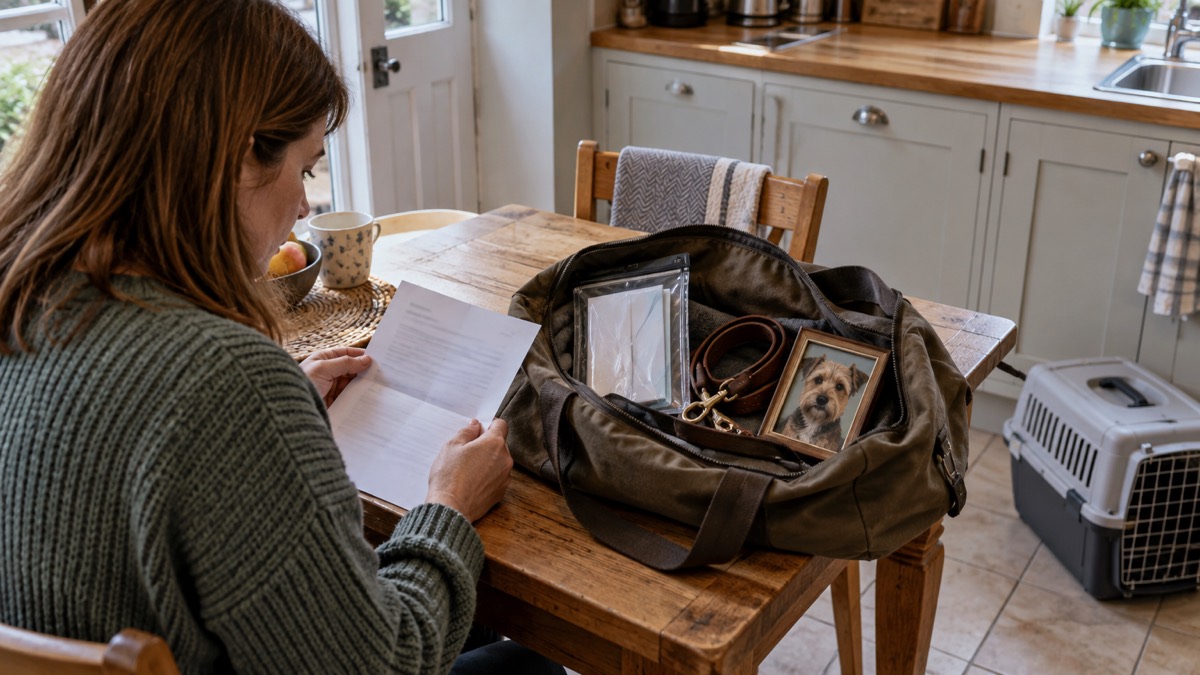
Work through this once, then check it each year when you check your smoke alarms.
Why each document earns its place
A current photo helps people find your pet if it gets lost
A photo is the item most likely to be used and least likely to be thought of. Lincolnshire County Council's emergency advice includes current photos of your pet in case they get lost10, and Slough Borough Council goes further: carry a photo of your pet with you in case there is a need to identify them6. Keep one on your phone as well as in the bag, so it is with you when you are out.
The photo does two jobs. It helps others recognise and return your pet, and it helps you prove the animal is yours. Take a clear photo of you with your pet to help prove ownership if you are separated5. Take it in good light, show the whole animal, and include any distinguishing marks. South Gloucestershire's guidance asks for exactly that: a recent photo showing distinguishing marks7. Keep current photos of your pet in case they get lost6, and carry a photo of your pet with you in case there is a need to identify them7.
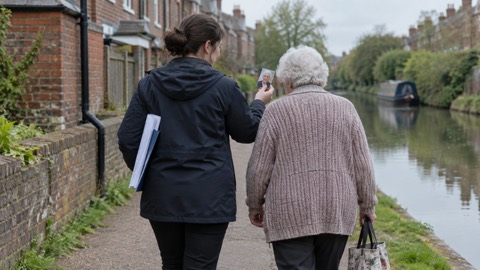
"Recent" is the test. The Herbert Protocol, a police scheme for missing people, asks for a recent photograph to be kept with the form11, and the same logic applies here: a photo from three years ago, before a change of coat or a new scar, helps less. Refresh it when your pet's appearance changes.
Microchip and contact details
A microchip only works if the details behind it are right. Keep your pet's identification and contact details up to date in case they are lost5. North Yorkshire Fire and Rescue Service makes the same point in its storm advice: apply any identification tags and ensure your pet is microchipped2.
Keep the number written down with the rest of the records. If your pet is found and scanned, a vet or council can match the number to your details, and a written note saves time if your phone is lost or flat. Slough Borough Council also advises an emergency contact outside your immediate area6, which matters if local lines are down.
Vaccination certificates and vet details
Vaccination certificates are the record most likely to be asked for away from home. Medway Council lists them in the pet grab bag3, and Nottinghamshire County Council lists photocopies of pet vaccination certificates among the document copies in a household emergency kit4. Keep the vet's details with them1.
If your pet needs out-of-hours care, see our guide to emergency vets and the 24-hour rule.
Keep the papers safe but where you can reach them quickly
The official advice is consistent: store important documents somewhere accessible, but do not put yourself at risk to fetch them. The National Risk Register advises storing important documents and items such as medication and identification in an easily accessible location in case of emergency or evacuation at short notice, and not attempting to retrieve them if it becomes dangerous to do so12. Wiltshire and Swindon Prepared puts it plainly: put vital documents somewhere easy to find, but only get them if there is no immediate danger13.
In practice:
- Keep the bag low-effort to grab. Medway Council advises storing the pet grab bag in an easy to reach place3.
- Keep papers off the floor. Cornwall Fire and Rescue Service suggests keeping important documents in a box up off the floor14.
- Keep the plan with the papers. The Be Ready campaign suggests keeping your household emergency plan with passports, birth certificates and insurance policies so it is easier to gather them quickly8. Hillingdon Council adds saving a copy to your phone15.
- Have insurance details to hand. London Resilience advises having your medicines and insurance documents to hand16.
In a flood, seal the documents in a waterproof bag
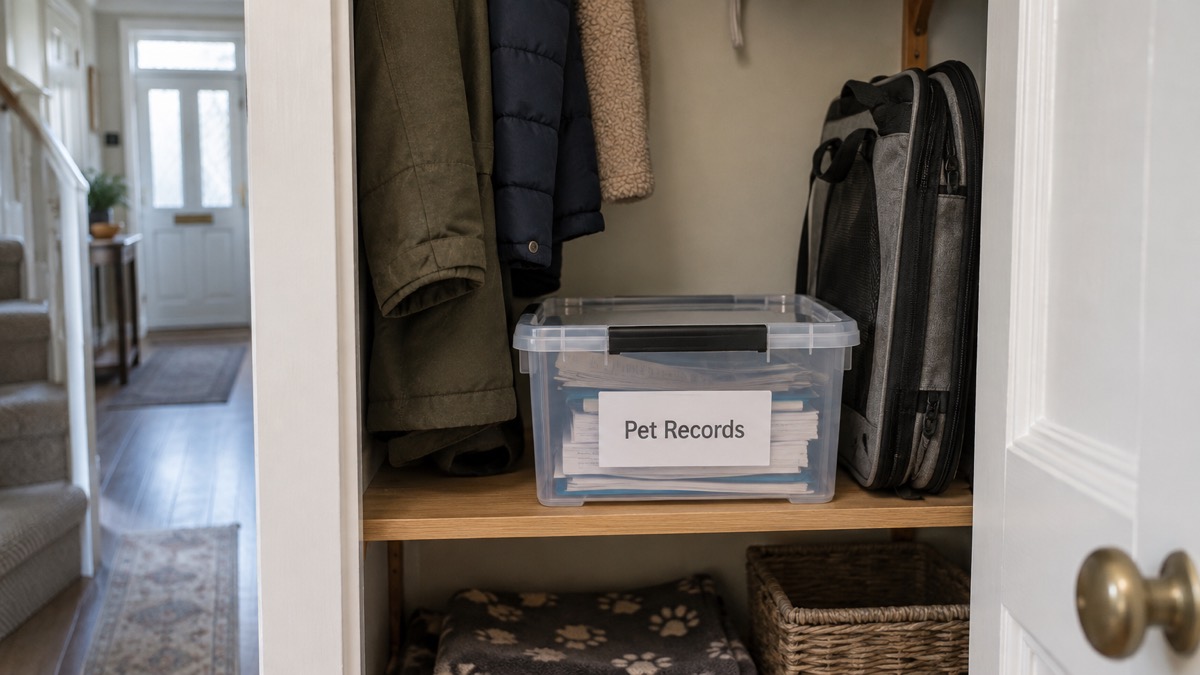
Water is the main threat to paper. Surrey County Council advises keeping all important documents in a waterproof sealed container17, and the Be Ready campaign advises storing important documents in resealable water-tight plastic bags and moving valuables upstairs or to a high shelf18.
For pet papers specifically:
- Bag them. Lancashire Prepared advises copies of important documents in a waterproof bag9, and Harrow's flood grab bag list puts documents in a waterproof wallet19.
- Include insurance. Northern Ireland Direct advises copies of your home insurance documents in a flood kit20, and Nottinghamshire County Council advises keeping important documents, including home insurance details, safe and dry during a flood21.
- Lift them. Surrey County Council's advice to move items upstairs or to a high place applies to the box as much as to furniture18.
Our guide to keeping pets safe before, during and after a flood covers the rest of the flood plan.
Papers for assistance animals, and copies for your home kit
If your pet is an assistance animal, its paperwork travels with yours. The Be Ready campaign's advice for disabled people and carers says an assistance animal's grab bag should contain important documents and veterinary records, supplies of food and water, a lead or harness, necessary medicines, toys and blankets22.
That list is a useful model for any pet bag. Medway Council's pet grab bag includes a lead or carrier for every animal, any medications, pet food, vaccination certificates, litter, paper towelling or bedding and toys3. Buckinghamshire Council's grab bag guidance adds food in an airtight, waterproof container, a water bowl and several days' supply of water, an extra supply of regular medicine in a waterproof container, a first aid kit, a collar with ID tag and a harness or leash, a carrier for each pet, and a picture of you and your pet together23.
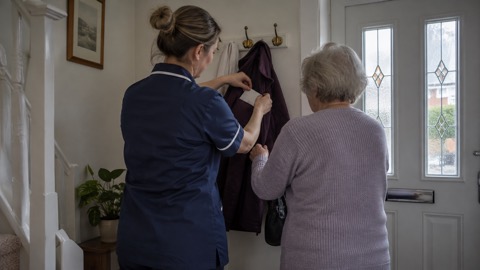
For the household kit, Scotland's Ready Scotland lists copies of important documents such as insurance policies, birth certificates and photo ID24, and Torfaen's checklist lists important documents such as insurance policies and birth certificates25. Dumfries and Galloway's household plan lists copies of important documents like birth certificates and insurance policies26. If you are a carer, Norfolk County Council recommends keeping a copy of the emergency plan with other important documents for the person you support27.
Sources (28)
- Pets, West Yorkshire Prepared, 2026
- Be Ready Checklist, UK Government, 2026
- Looking after your pets in an emergency, Medway Council, 2026
- Preparing for an emergency, Nottinghamshire County Council, 2026
- Stay safe during Storm Babet, North Yorkshire Fire and Rescue Service, 2023
- Prepare for an emergency, Slough Borough Council, 2026
- Preparing your pets for an emergency, South Gloucestershire Council, 2010
- Get prepared for emergencies, UK Government, 2026
- Emergency pack, Lancashire Prepared, 2026
- Get help and advice in an emergency, Lincolnshire County Council, 2026
- Herbert Protocol, Greater Manchester Police, 2026
- National Risk Register 2023, Cabinet Office, 2023
- At home, Wiltshire and Swindon Prepared, 2026
- Be prepared in case of an emergency, Cornwall Council, 2022
- Household emergency plan, Hillingdon Council, 2026
- Preparing yourself for flooding incidents, London Resilience Partnership, 2026
- Preparing for flooding, Surrey County Council, 2026
- Flooding, UK Government, 2026
- Resident grab bags, Harborough District Council, 2026
- Preparing for a flood, Northern Ireland Direct, 2025
- During a flood, Nottinghamshire County Council, 2026
- Advice for disabled persons and carers, UK Government, 2026
- Emergency grab bag, Buckinghamshire Council, 2023
- Emergency kit, Ready Scotland, 2026
- Emergency kit checklist, Torfaen County Borough Council, 2026
- Create a household emergency plan, Dumfries and Galloway Council, 2026
- Carer's emergency plan, Norfolk County Council, 2026
- Your pets, Wiltshire and Swindon Prepared, 2026
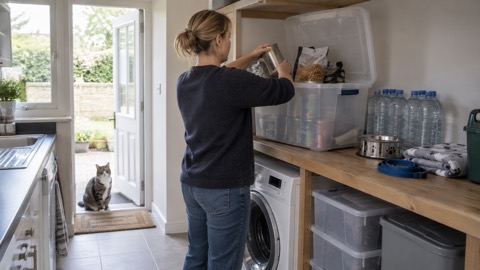 Storing Pet Food and Water
 Carer's Emergency Plan
 Herbert Protocol Form