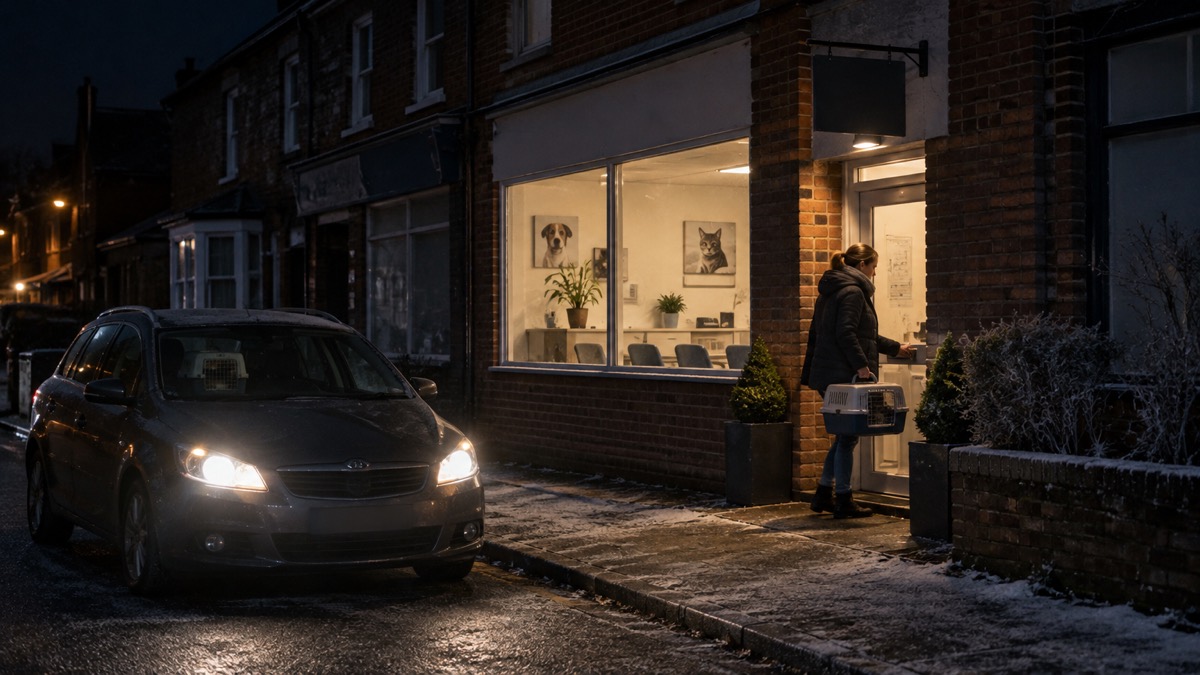
If your pet is suddenly injured or seriously ill in the middle of the night, the first thing to know is simple: you will not be turned away because the surgery is closed. All vet practices provide an out-of-hours service for emergency cases, according to the PDSA's emergency care guidance for pet owners1. That means every practice in the UK must make some form of emergency cover available around the clock, whether that is its own vets working a night rota or a shared emergency clinic that several local practices use together.
The second thing to know is just as practical: ring before you go. The PDSA is explicit that "it's best to ring ahead so they can prepare for an emergency case"1. The practice can tell you where to go, what to bring and what to do on the way, and the treating vet can get ready before you arrive. Turning up unannounced at a closed branch, or at the wrong site, costs minutes that a seriously ill animal may not have.
This page explains what out-of-hours cover does and does not include, why there is no guaranteed response time, how to check your own practice's arrangements before you ever need them, what to do if you suspect poisoning, and what to keep in a pet emergency kit so that a midnight dash is calmer and better prepared.
What the 24-hour rule means for you and your pet
The core promise is that emergency cover exists even when the consulting rooms are dark. A practice does not have to be open for routine appointments on a Sunday night, but it does have to make sure that a genuinely urgent case can be seen. In practice that is usually done one of two ways: the practice runs its own rota, or it shares an emergency clinic with neighbouring practices, and its normal phone number routes you to whichever is covering that night.
What the rule does not do is turn the out-of-hours service into a full daytime surgery. Out-of-hours provision everywhere is built around urgency. NHS Tayside describes its own out-of-hours service as being "for urgent medical problems only", warning that "providing repeat medication may delay treatment of patients with an acute problem"2. Veterinary out-of-hours cover works on the same principle: the middle of the night is for emergencies, not for boosters, nail clips or picking up a repeat prescription. If you ring at 3am for something that could safely wait until Monday, expect to be told so, and expect that the practice is protecting its capacity for the animal that cannot wait.
That distinction matters for how you use the service. Ask yourself honestly whether the problem is one that will get materially worse, or cause real suffering, before the surgery next opens. If the answer is yes, ring. If the answer is no, the kindest thing you can do for every other pet in the area is to wait. When you do ring, describe what has happened clearly: what your pet has done, eaten or been hit by, what you can see, and how the animal is behaving. The person answering can then judge the urgency and tell you what to do next.
No fixed response time: cover means availability, not a countdown
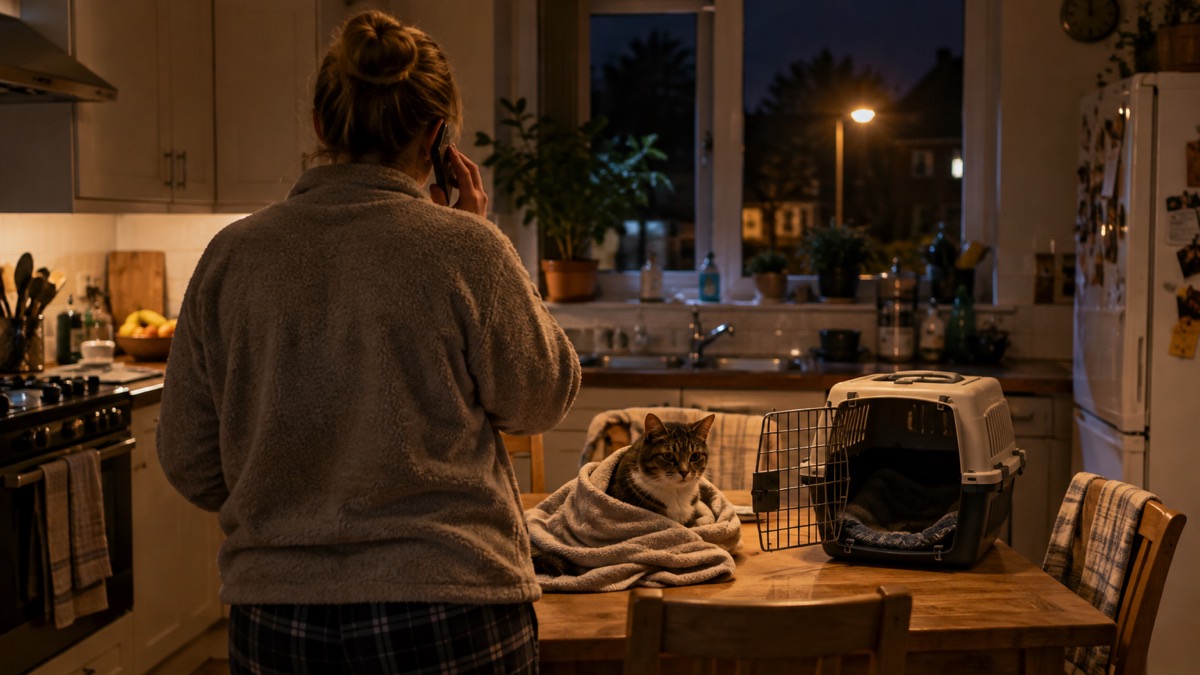
It is worth being clear about what "24-hour" does and does not promise. It means someone is reachable and emergency cases can be seen at any hour. It does not publish a target that says how quickly, because urgency varies from case to case and the most serious cases are seen first.
The wider emergency world works the same way, and it helps to understand the principle. Ambulance services in England categorise calls by urgency, and even the lowest priority category, category 4, carries a response time target of 3 hours to 90% of all incidents6. That is the slowest tier of a service whose entire job is responding, and it exists because resources go first to the most life-threatening calls. Fire cover is also built on availability rather than constant staffing: on-call firefighters are "trained and paid to be on standby to respond to emergencies", and are called on when needed rather than staffing stations 24 hours a day7. A 24-hour service, in other words, is a promise that help can be summoned at any hour, not a promise of an immediate arrival.
For your pet, the practical consequences are these. First, ring as early in the emergency as you can, because the clock starts when you make contact, not when you first notice the problem. Second, follow any instructions the practice gives you about first aid on the way, since you may be the only treatment your pet receives for a while. Third, do not interpret a short wait, or a phone assessment before you are seen, as neglect: it is triage, the same discipline every emergency service uses. If your pet's condition changes while you wait, ring back and say so.
If you need to move an injured animal yourself, do it carefully and with the right equipment. Our guide on how to move an injured dog or cat to the vet covers safe transport, including how to lift and immobilise a pet without being scratched or bitten.
Ring the vet before you set off
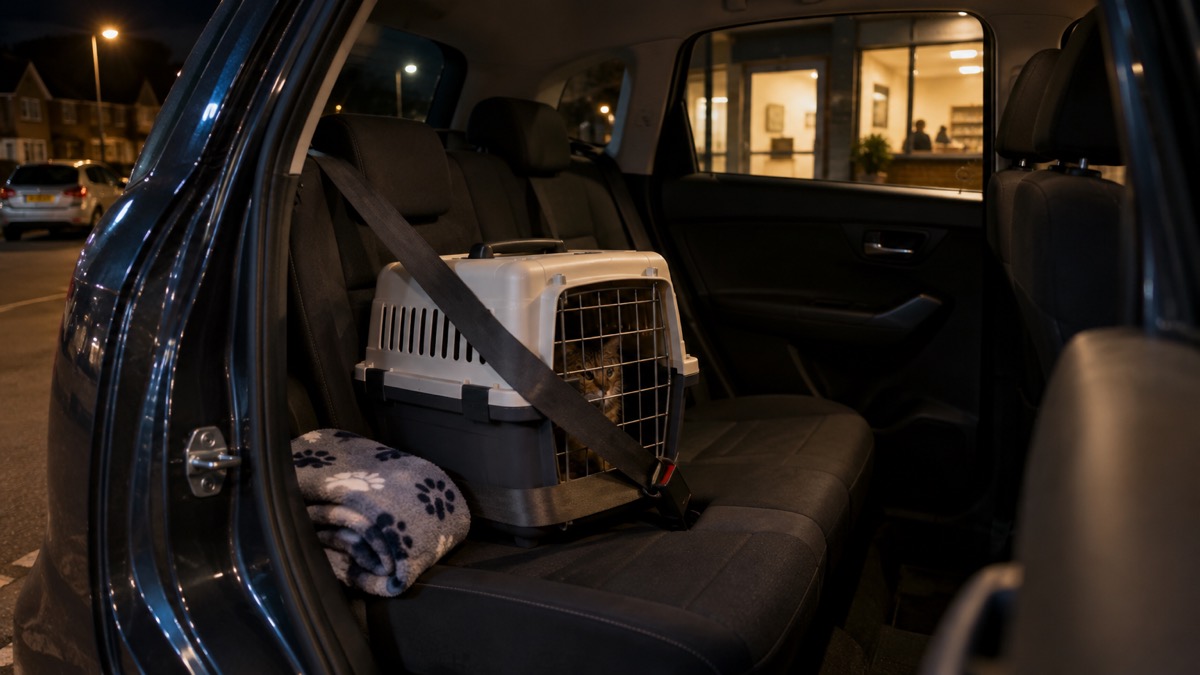
The single most useful habit in a pet emergency is the phone call before the journey. The PDSA's advice is unambiguous: "It's best to ring ahead so they can prepare for an emergency case"1. There are several reasons this matters. The practice may not be where you think it is at night: many share a single emergency site miles from the daytime surgery, and the phone call is how you find out. The vet on duty can prepare equipment, oxygen or medication before you arrive. And you can be told what to do, or not do, on the journey: for example, whether to offer water, whether to let the animal move freely in the carrier, or whether to apply pressure to a wound.
The same principle runs through official advice for human treatment too. Derbyshire County Council advises people who need to travel for dialysis, chemotherapy or radiotherapy appointments in winter weather to "call your healthcare provider first to make sure your appointment has not been cancelled" before setting out8. The reasoning is identical: a phone call before travel prevents a wasted, stressful journey at the moment when time matters most.
A few related points from official guidance are worth having in mind:
- If an ambulance is coming to your home for a person, lock away family pets first. The London Ambulance Service asks callers to "lock away family pets" before help arrives, so that crews can work safely9. An anxious dog and a stranger in uniform are a bad combination.
- If you have a speech or hearing impairment, register for the emergency SMS service now. The East of England Ambulance Service advises people to "register your mobile phone now and don't wait until you need the emergency-SMS service"10. In a pet emergency the same preparation applies to reaching your vet: know how you would contact them, and set up any relay or text service you need in advance.
Check your practice's arrangements before an emergency
The best time to learn how your practice's out-of-hours cover works is at a routine appointment, months before you need it. Ask two questions: who covers emergencies when you are closed, and which number do I ring? Then write the answers down and keep them where you will find them in a hurry.
Official emergency guidance across the UK is consistent on this point. Slough Borough Council's emergency preparation advice tells households to "carry a list of emergency telephone numbers with you", and says "this should include your vet and any other individuals or groups you might need to contact" during an emergency3. Lincolnshire's emergency advice includes "the name of your veterinarian" and "pet care items if required" in what households should have ready11. Norfolk's hospital trust guidance on pet care in an emergency tells owners to include pet care arrangements in their written household emergency plan12, and Buckinghamshire's grab bag guidance goes further on identification: "Have your pet microchipped. Make sure to keep your address and phone number up-to-date and include contact information for an emergency contact outside of your immediate area"4.
Birmingham City Council adds the other half of the picture: "keep your pet's identification and contact details up to date in case they are lost"13. A microchip with an old address is little use to anyone. Buckinghamshire also suggests contacting your local emergency management office, animal shelter or animal control office for additional advice if you are unsure how to care for your pet in an emergency4, which in UK terms means your council's animal welfare or dog warden service.
Beyond your own practice, build a small network before you need one:
- Ask friends or family if they would be able to look after your pet in an emergency, as West Yorkshire Prepared advises14. A dog that cannot go to a rest centre needs somewhere to go.
- Agree a plan with a trusted neighbour, and make sure they know your pet and where to find a lead or carrier, as Birmingham's guidance suggests13.
- Write your pet's details into your household emergency plan, including food, medication and transport arrangements12. Our page on including your pets in a household emergency plan walks through this step by step.
Suspected poisoning: phone your vet straight away
If you believe your pet has swallowed something harmful, treat it as an emergency from the first minute. Ring your vet, using the out-of-hours number if it is night or a weekend, and be ready to describe exactly what was eaten, how much, and when. The PDSA's advice to ring ahead so the practice can prepare applies with extra force here, because some poisons work fast and treatment often depends on knowing the substance1.
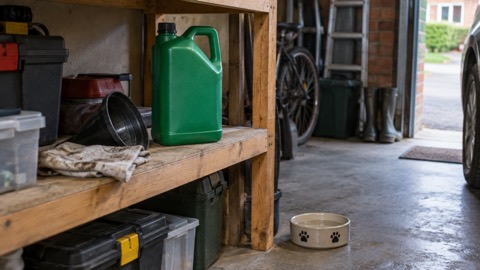
Do not wait to see whether symptoms develop, and do not try to make the animal vomit unless a vet tells you to. Keep the packet, plant or container of whatever was swallowed, and take it with you: the active ingredients listed on a label can change the treatment. For common hazards, our specific guides cover the signs and the first steps: antifreeze poisoning in cats and dogs, chocolate poisoning in dogs, rat poison and pets and poisonous garden and house plants.
The human guidance on poisoning shows how seriously these cases are treated, and the parallels are instructive. NHS guidance for accidental swallowing says that if any "red features" are present, you should "go to the nearest Hospital Emergency (A&E) Department or call 999", and suggests using What3Words to describe your location to the ambulance service15. The City of Edinburgh Council advises that if you think you may have been contaminated by a release of gas, toxic chemical or radiation, you should "contact the emergency services for help on 999"16. Shropshire Council's guidance on food poisoning adds the threshold for seeking help: contact your GP immediately "if your symptoms are severe and last more than 48 hours, or if there is blood in your diarrhoea"17. None of that replaces the vet for an animal, but it shows the pattern: poisonings are triaged as urgent, identification of the substance matters, and early contact beats watching and waiting.
Pet emergency kit: medication, food and the documents you need
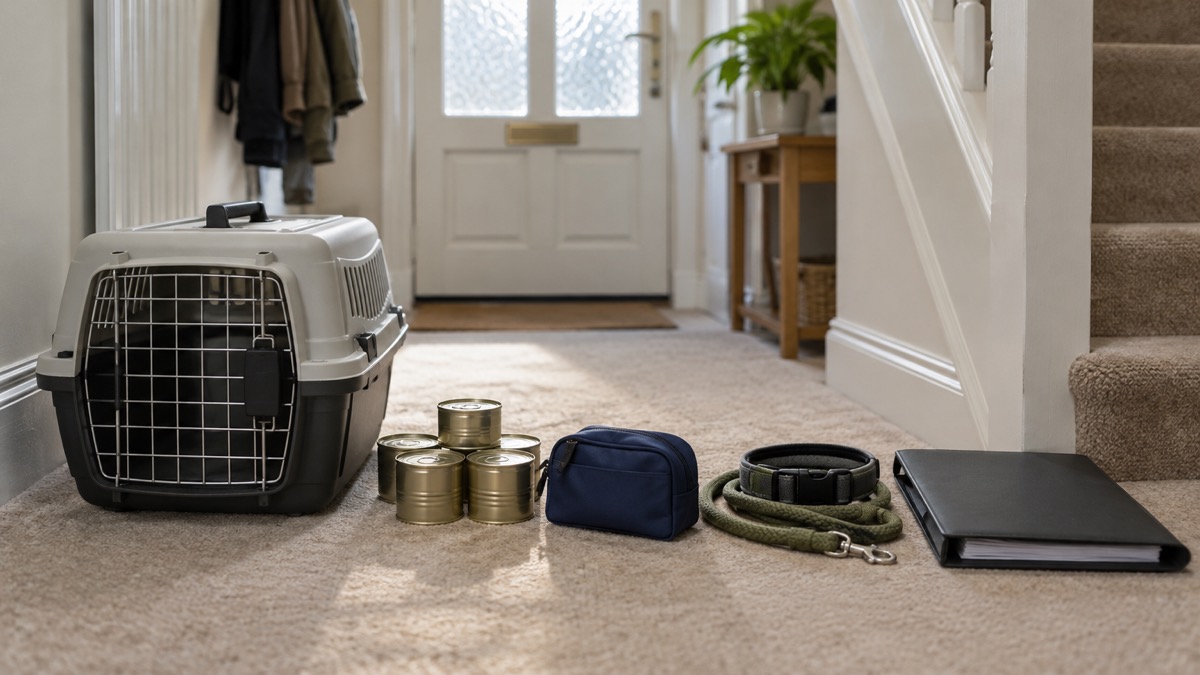
A pet emergency kit serves two different scenarios, and it is worth packing for both. The first is the sudden dash to the vet, where you need a carrier, a lead and your pet's medication history. The second is a household emergency such as a flood, evacuation or long power cut, where you may need to keep your pet fed, watered and medicated for days away from home.
Official guidance differs slightly on how much food to store, and it is honest to say so. Wiltshire and Swindon Prepared advise "a couple of days' supply of food (ideally tinned or long lasting)"5, while Slough Borough Council's pets and livestock guidance says to "have a week's worth of food, water, medication, cat litter, or any other supplies your pet needs on a regular basis"3. The more cautious figure is the week, and if you have the storage space it is the one to aim for; the couple of days is the minimum that gets you through the immediate aftermath of most incidents.
Here is what the official guidance, taken together, says a pet emergency kit should contain:
| Item | Why it matters | Source |
|---|---|---|
| Food, a couple of days to a week's worth, tinned or long lasting | Feeding your pet if you are cut off or evacuated | 3 |
| Water and a water bowl | Pets need their own supply in a household kit | 4 |
| Medication, an extra supply in a waterproof container | Regular treatment must continue through any emergency | 3 |
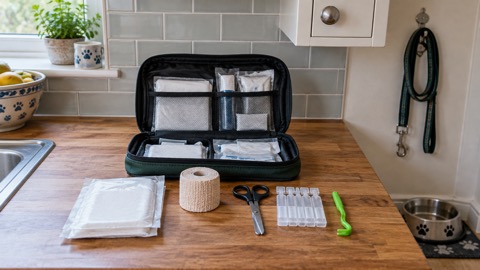
| First aid kit | Immediate care before you reach a vet | 11 |
| Collar with ID tag, harness or leash, and a sturdy carrier | Control and safe transport, ideally one carrier per pet | 4 |
| Vet records and the vet's contact number | The out-of-hours service needs your pet's history | 18 |
| Current photos of your pet | Identification if your pet is lost | 18 |
| Pet litter, litter box and sanitation supplies | Hygiene if you are away from home | 4 |
| Familiar items such as toys, treats or bedding | Reduces stress in an unfamiliar place | 4 |
Wiltshire Council's emergency kit guidance includes "emergency medication and food for pets" in the household kit19, and the Northern Ireland direct.gov household emergency kit advice says to "make sure to put some food in your kit for them and anything else they might need like a collar or lead, water bowl or medication"20.
For the first aid side of the kit, our page on pet first aid kits covers what they contain and how to choose one, and there is a detailed look at one example in our Wallace Cameron pet first aid kit review. For working out quantities of food and water properly, see how much pet food and water to store for an emergency, and for the paperwork, documents to keep for your pet in an emergency.
*A complete kit covers both the night-time dash to the vet and days away from home.
If your household is evacuated: where pets can and cannot go
Evacuation is the scenario where the 24-hour rule meets its limits, because the problem is not veterinary care but accommodation. Wiltshire and Swindon Prepared are direct about it: "not all shelters are suitable for pets and therefore it's important to consider where you might take them in an emergency"5. The same guidance tells pet owners to "listen to local emergency services when asked to evacuate or shelter at home"5, and Birmingham City Council's advice is to "plan so your pets have a safe place to stay"13.
That planning has three layers. The first is people: ask friends and family now if they could take your pet in an emergency14, and agree a plan with a trusted neighbour who knows your pet and where to find a lead or carrier13. The second is equipment: your carrier, lead, food and medication kit should be grabbable in one trip, which is what the kit in the previous section is for. The third is knowing what official help exists.
Rest centres are opened by councils when people cannot stay in their homes, and they are not automatically pet-friendly. Lewisham Council's guidance on evacuation states that "in some cases the RSPCA may be able to help accommodate pets or assist with minor injuries but if this is necessary, we will ask an inspector to attend"21. So the route to pet help at a rest centre runs through the council staff running it, who can call for RSPCA assistance. Cornwall Council adds that its Emergency Management team "hold a database of buildings all over Cornwall and can be opened at any time of day"22, which shows how rest centre provision is organised: buildings are identified in advance and opened as needed, and pet arrangements are made case by case rather than guaranteed.
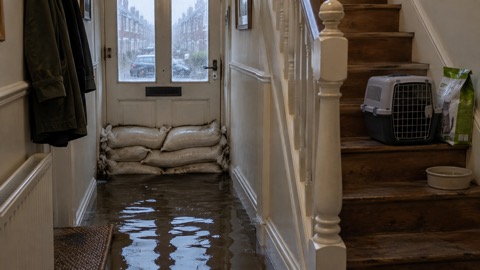
Our narrow guides go deeper on the specifics: can I take my dog or cat to an emergency rest centre? and what to do if you have to leave a pet behind in an evacuation. If the emergency is a flood, start with keeping pets safe before, during and after a flood, and for larger animals see horses and livestock in floods and snow.
Lost pets and strays: who to call
A pet that bolts in an emergency, or a stray you find during one, is a different kind of problem from a medical emergency, and it has its own chain of contacts. The foundation is identification: Birmingham City Council's advice is to "keep your pet's identification and contact details up to date in case they are lost"13, and Buckinghamshire's is to have your pet microchipped with current details and an out-of-area emergency contact4.
If you find a stray dog, the local authority dog warden is the official route. For the full picture, see what to do if you find a stray dog.
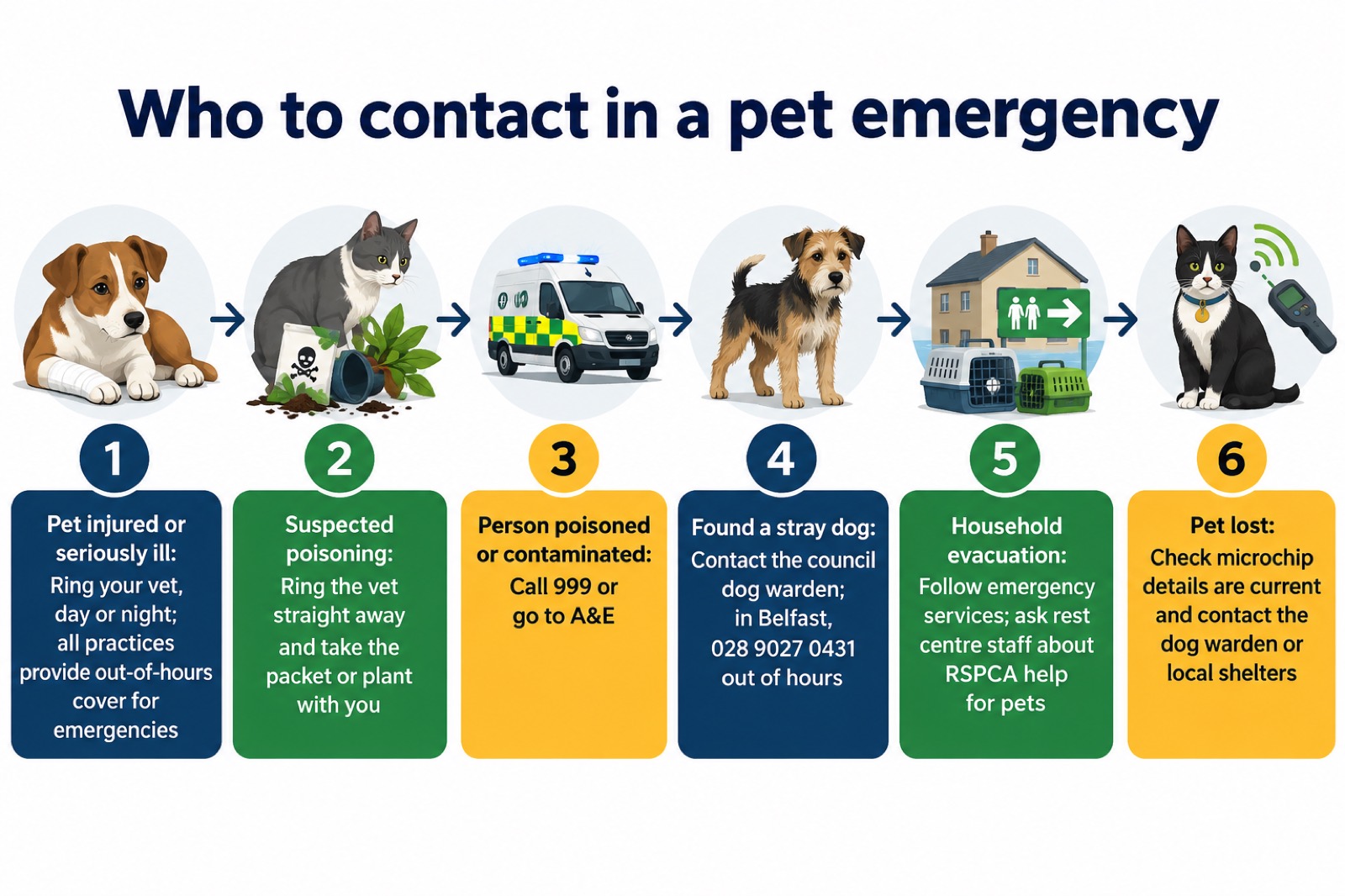
Getting the arrangements right, in every nation
What differs between England, Scotland, Wales and Northern Ireland is not the veterinary obligation but the local government machinery around it: dog warden services, rest centre arrangements and emergency contact numbers are run by each council, so the numbers and the exact help available vary by where you live.
The practical response is the same everywhere. Check your own practice's out-of-hours arrangements and write them down26. Include your pet in your household emergency plan12, microchip your pet and keep the details current4, and store a week's worth of food, water and medication3. Those steps work in Cardiff and Carlisle alike, and they are what turns a frightening night into a managed emergency.
For the wider picture of pets in emergencies, start with our pets and animals in an emergency section, and for the household side of the same preparations, getting started: preparing your household for an emergency.
Sources (26)
- Emergency care for pets, PDSA
- Out-of-hours service information, NHS Tayside
- Pets and livestock emergency preparation, Slough Borough Council
- Emergency grab bag guidance, Buckinghamshire Council
- Your pets: personal resilience, Wiltshire and Swindon Prepared
- Ambulance response programme, North East Ambulance Service
- Volunteering and helping others, Prepare Campaign
- Emergency help in winter weather, Derbyshire County Council
- What happens when you call 999, London Ambulance Service
- Contacting 999 with speech or hearing impairment, East of England Ambulance Service
- Get help and advice in an emergency, Lincolnshire County Council
- Pet care in an emergency, Norfolk and Norwich University Hospitals
- Are you ready: pets, Birmingham City Council
- Pets in emergencies, West Yorkshire Prepared
- Poisoning: accidental swallowing, Healthier Together
- Release of gas, toxic chemical or radiation, City of Edinburgh Council
- Food poisoning and waterborne infections, Shropshire Council
- Emergency kits and grab bags, Central Bedfordshire Council
- Planning for an emergency kit, Wiltshire Council
- Household emergency kit, nidirect
- What to do if you are evacuated, Lewisham Council
- Humanitarian assistance and evacuations, Cornwall Council
- First aid for poisons and toxins - PDSA, PDSA
- Emergency contact numbers, Belfast City Council
- Lost and found pets - PDSA, PDSA
- Emergency and out-of-hours care | Royal College of Veterinary Surgeons, Royal College of Veterinary Surgeons
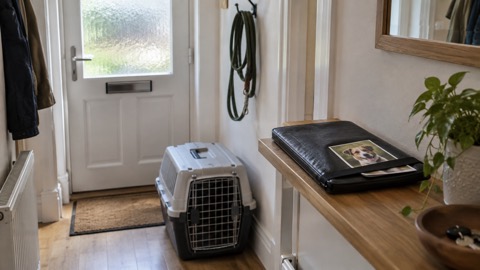 Pet Emergency Documents
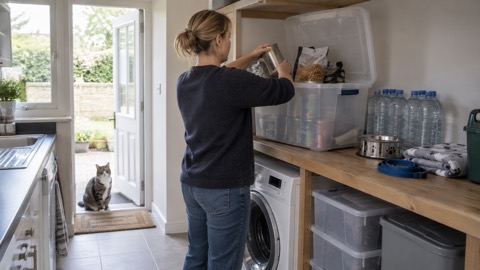 Storing Pet Food and Water
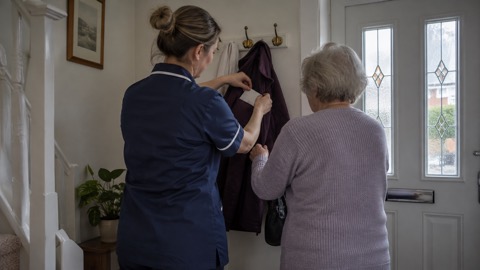 Carer's Emergency Plan
 Antifreeze Poisoning
 Pets in Cold Weather and Snow
 Pet First Aid Kits
 Keeping Pets Safe in Floods
 How Fast a Car Heats Up
 Keeping Pets Cool in Hot Weather
 Oak Processionary Moth and Dogs
 Pets in Your Emergency Plan