Home Emergencies: Fire, Carbon Monoxide, Gas Leaks and Burst Pipes
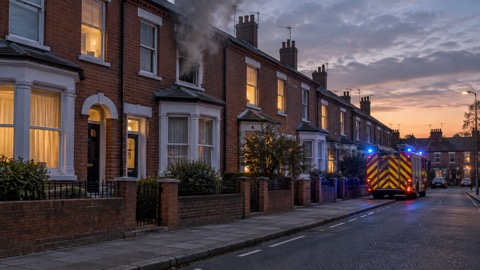
If a fire starts, get out, stay out and call 999. Do not try to tackle the fire yourself. If you smell gas, open a window if you can, leave immediately and call National Grid on 0800 111 999. Do not smoke or use naked flames until you are sure there is no leaking gas.1
If a carbon monoxide alarm sounds or you suspect poisoning, leave the building immediately, call the emergency services if anyone feels unwell and do not re-enter until it has been declared safe. For burst pipes, prepare now by finding your stop tap and checking that it works every six months.3
If a fire starts
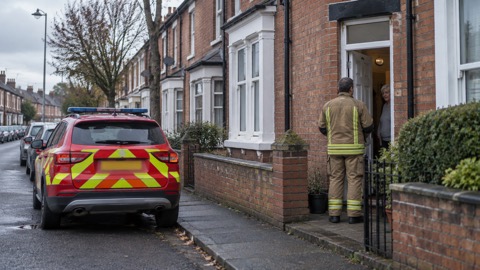
Devon and Somerset Fire and Rescue Service gives the essential instruction: “If there is a fire in your home get out, stay out, and call 999.” Call as soon as it is safe to do so. Do not go back inside.1
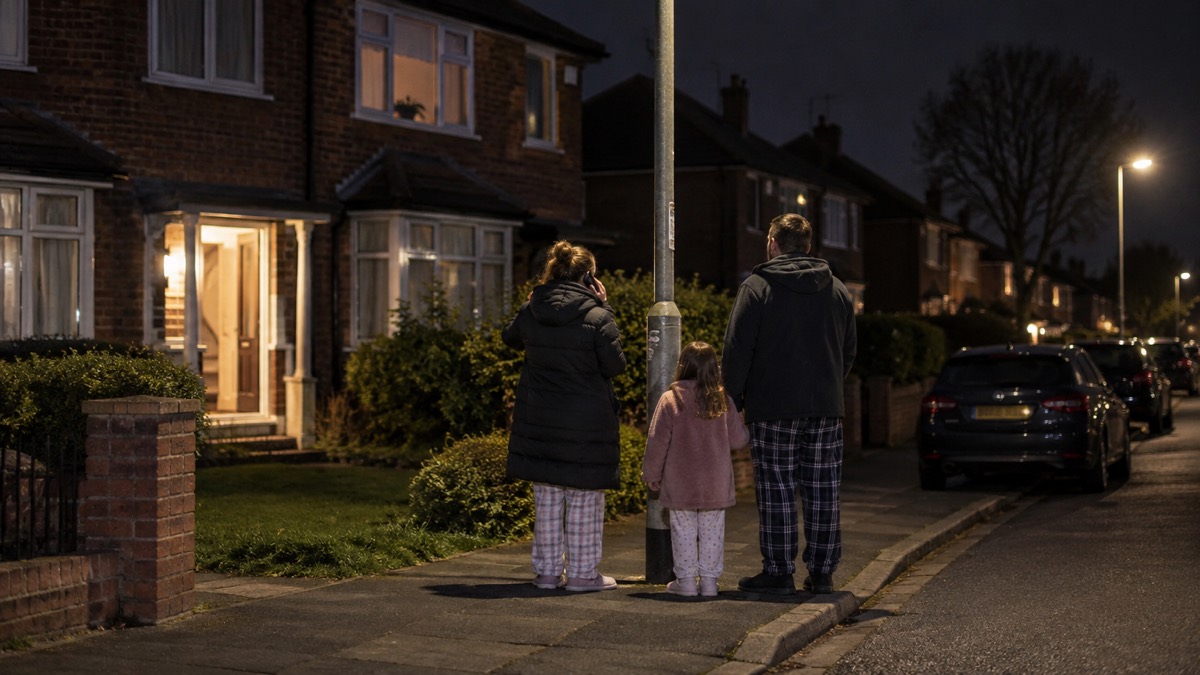
- Leave immediately. Use your planned escape route if it is available.
- Stay out. Do not return for belongings or to investigate what happened.
- Call 999. Leave firefighting to the professionals. Essex Prepared explicitly advises: “Don’t tackle fires yourself. Leave it to the professionals.”7
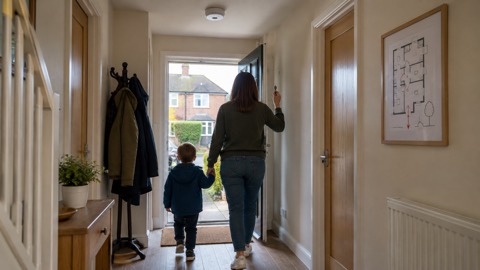
- Practise before an emergency. The government’s Prepare campaign says to plan and practise an escape route, making sure everyone knows what to do and how to escape.8
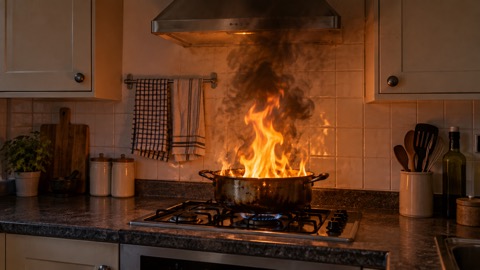
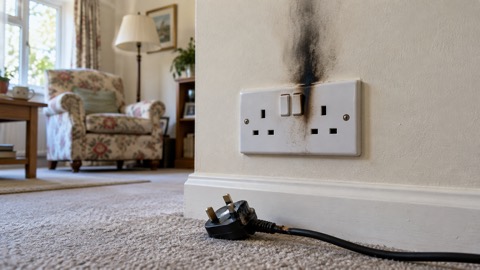
The full sequence is explained in what to do if a fire starts in your house, with a separate guide to making a household fire escape plan. If the fire involves cooking, use the specific guidance on kitchen fires and chip pan or saucepan fires. For an appliance or wiring fire, read electrical fires and what to do if an electrical fire starts. If clothing ignites, follow the dedicated advice for clothes catching fire.
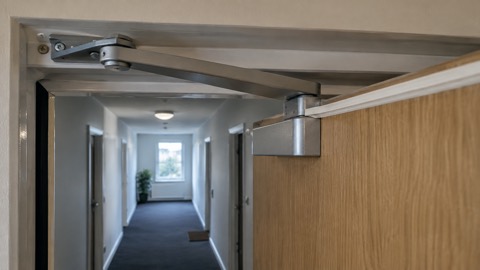
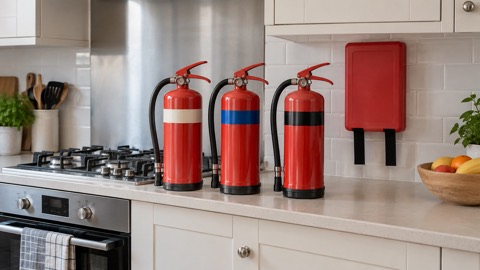
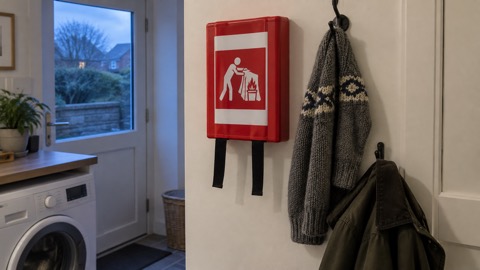
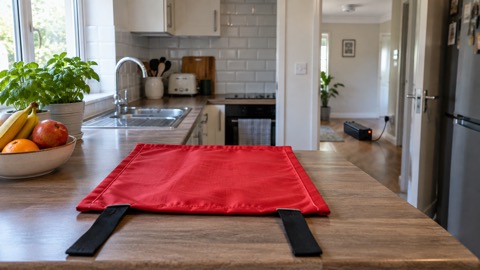
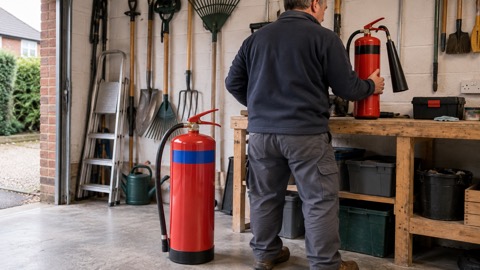
Flats require their own guidance. Read what to do if there is a fire in your block of flats, which covers the building’s arrangements and what a “stay put” instruction means. You can also check how fire and rescue services respond to a call. Fire extinguishers and blankets are not a substitute for escape: their types and limitations are covered in fire extinguishers and fire blankets.
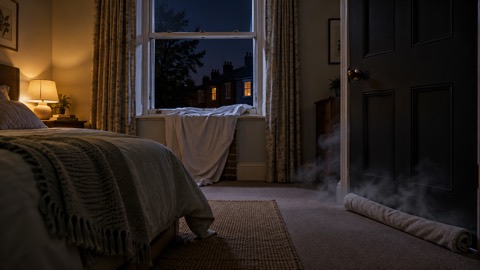
If you cannot get out
Scottish Fire and Rescue Service advises getting everyone into one room and taking a mobile phone if you can. Devon and Somerset Fire and Rescue Service says to choose a room with a window that opens easily and, if possible, a phone for calling 999.9
- Get everyone into the same room.
- Choose a room with an easily opened window where possible.
- Take a mobile phone if you can and call 999.
- Follow the fire and rescue service’s instructions.
The dedicated guide to being trapped by fire keeps this advice together. Do not delay calling while trying to work out what caused the fire.
Some households need to plan this situation in advance. Fire Kills advises older people and those with mobility issues to plan their escape carefully, consider keeping a phone by the bed to call 999 if they cannot get out, and speak to their local fire and rescue service for tailored advice.6 Use the fire risk checks for a vulnerable person’s home alongside that conversation.
For someone who is deaf or hard of hearing, suitable alarms are discussed below, while staying informed and in touch covers ways of contacting 999. Wider practical support for older and disabled people is brought together in extra help in an emergency.
If you smell gas
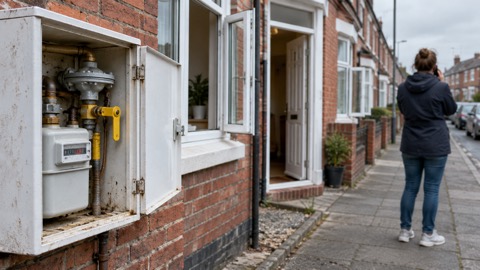
Warwickshire County Council describes the warning signs as a distinctive, sulphur-like smell or hissing sounds near gas appliances or gas meters. If you suspect a leak, its guidance says to open windows, avoid using electrical switches and contact a Gas Safe registered engineer or the emergency gas helpline immediately.10
Greater Manchester’s official preparedness guidance gives the immediate sequence:
- Open a window if you can.
- Leave the property immediately.
- Call National Grid on 0800 111 999.
- Do not smoke or use naked flames until you are sure there is no leaking gas.2
Keep the full what to do if you smell gas guidance with your household emergency plan. A carbon monoxide alarm is not presented here as a substitute for these actions; the separate question of whether a CO alarm can detect gas explains that distinction.
Responsibility for gas work is clear. The Health and Safety Executive states that gas work undertaken in homes must be done by a Gas Safe registered engineer.11 Do not attempt the work yourself. The gas and heating failures guide covers boiler servicing, unsafe gas appliances, ringing the emergency line and the engineer’s role.
If you suspect carbon monoxide
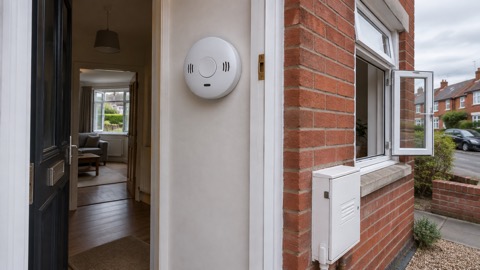
North Wales Fire and Rescue Service says that if your carbon monoxide alarm sounds, or you suspect carbon monoxide poisoning, leave the building immediately, call the emergency services if anyone feels unwell and do not re-enter until it has been declared safe.3
Symptoms listed by Mid and West Wales Fire and Rescue Service are:
- headaches;
- nausea, or feeling sick;
- dizziness;
- breathlessness;
- collapsing;
- loss of consciousness.
These symptoms can resemble flu, food poisoning, viral infections and tiredness, so do not wait for an alarm if you suspect exposure.12 Warwickshire County Council advises anyone suspecting carbon monoxide because of symptoms such as headaches, dizziness or nausea to take immediate action: leave the home, call 999 and seek medical attention.13
Scottish Fire and Rescue Service also lists turning off the gas and appliances, opening windows, getting everyone out, calling the emergency services or the Gas Emergency number 0800 111 999, and seeking medical attention if you feel unwell.14 The immediate priority remains getting people out, not spending time investigating.
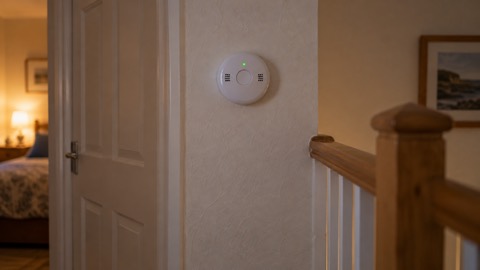
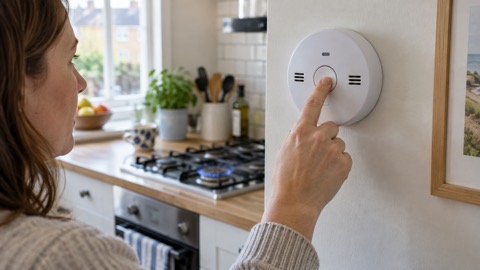
Read the fuller guidance on what to do if your CO alarm sounds and carbon monoxide poisoning symptoms. If the alarm is making a different sound, check why a carbon monoxide alarm may be beeping rather than ignoring it.
If a pipe bursts
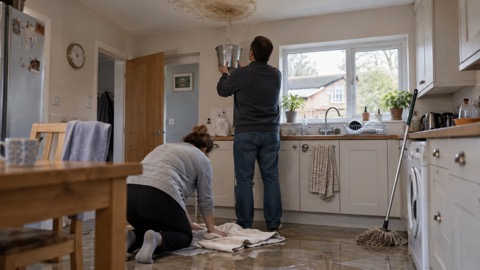
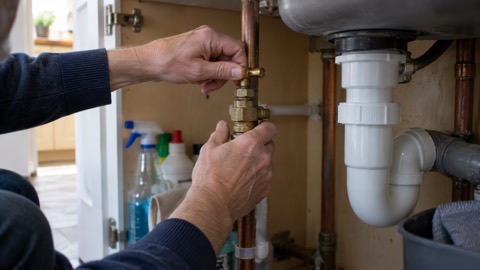
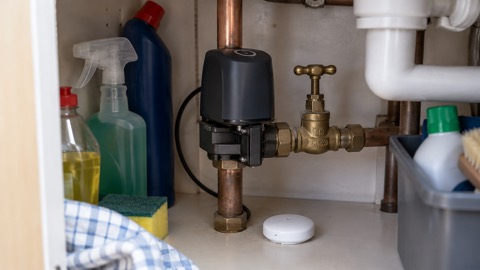
Preparation starts with the stop tap. The Met Office says to make sure you know where it is and check that it is working every six months. It is usually under the kitchen sink, but may be in a downstairs bathroom, kitchen cupboard, garage, cellar or under the stairs.4
After a burst pipe, the Met Office directs households to a WaterSafe registered emergency plumber to fix the pipe and advise on preventing it happening again.15 Keep the plumber’s contact route with your household details rather than searching for it while water is escaping.
- Find your stop tap now, before there is a leak.
- Check it every six months.
- Use the burst pipe guide for the full emergency sequence.
- Contact a WaterSafe registered emergency plumber for the repair and prevention advice.15
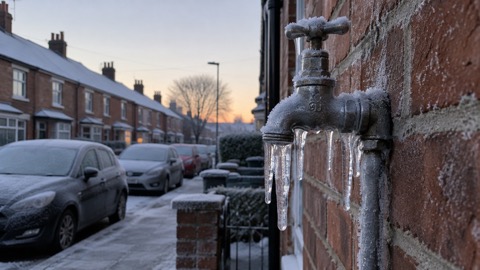
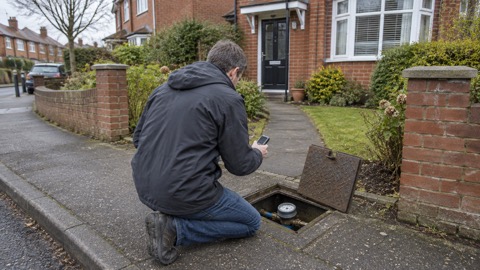
The guides to finding inside and outside stop taps and water leaks on your property explain locations and repair responsibilities in more detail. If freezing is involved, use frozen pipes: thawing them safely.
Your getting started preparations should also make the stopcock, gas valve and fuse box easy to find. Water entering from outside is a different problem: follow the flooding guide rather than treating it as an internal plumbing leak.
Smoke and heat alarms
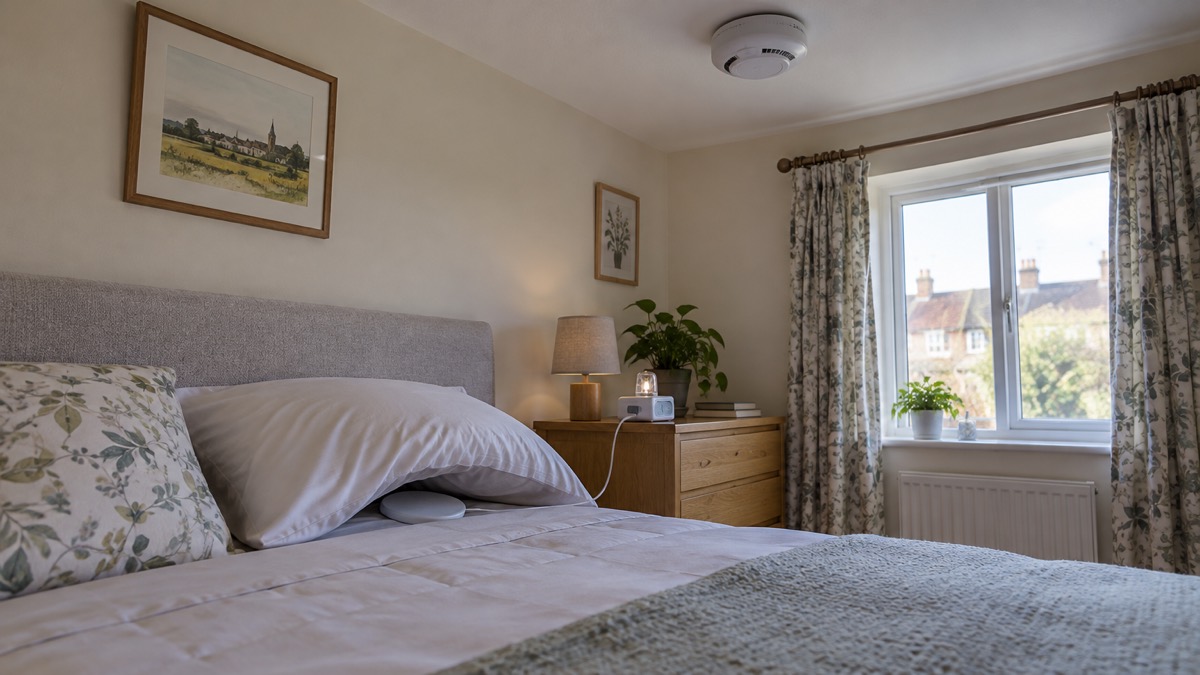
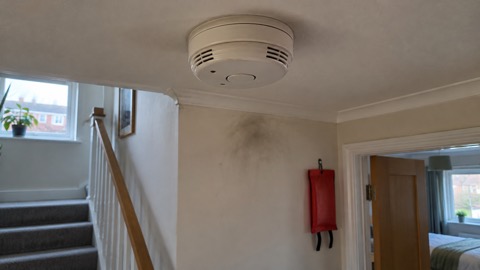
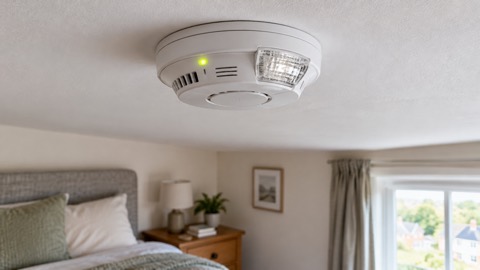
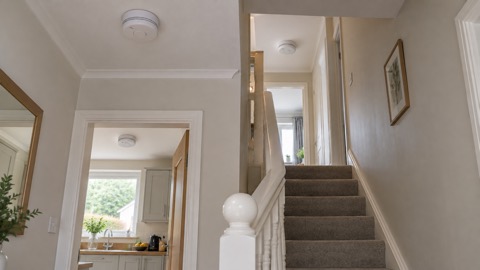
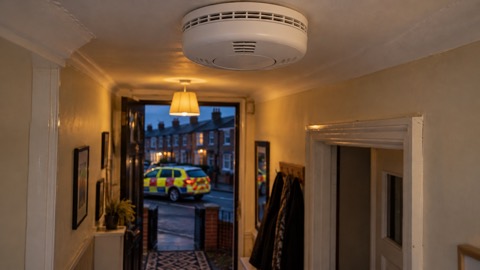
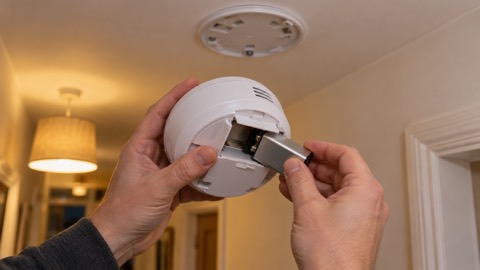
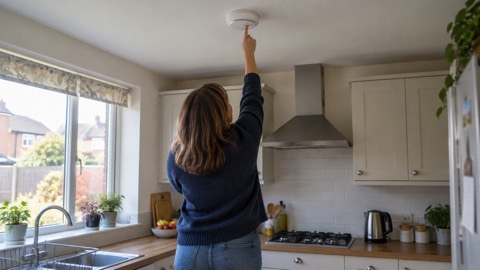
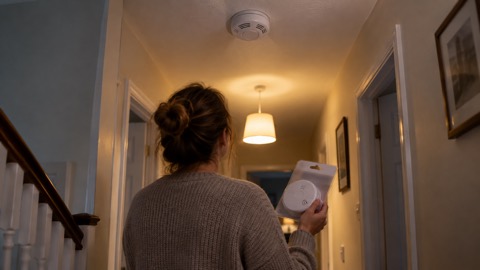
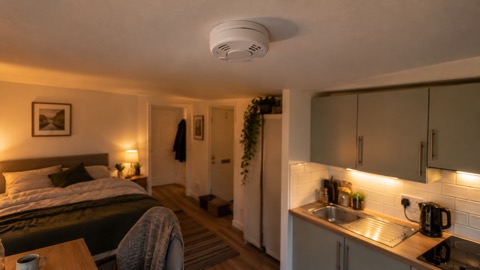
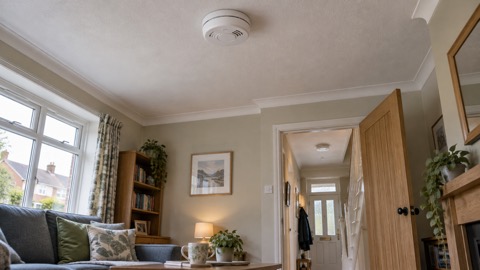
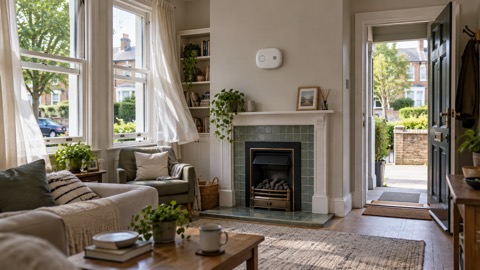
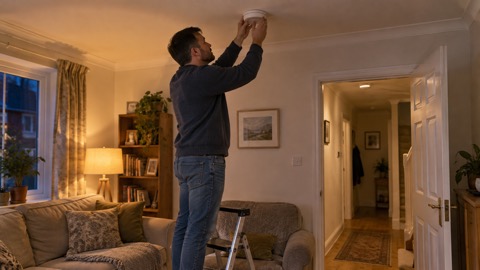
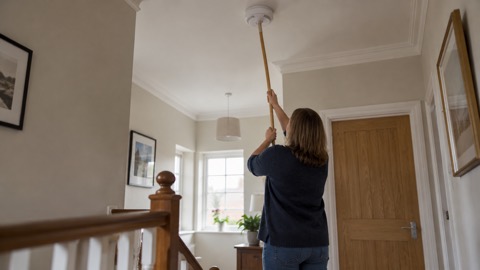
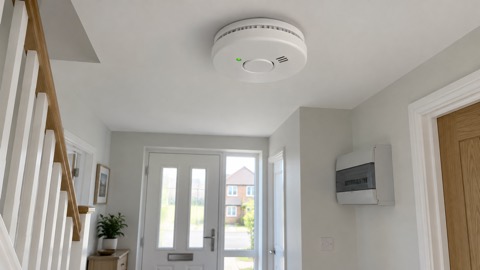
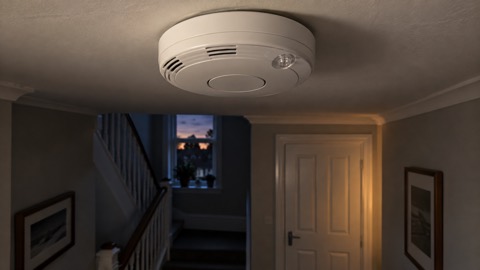
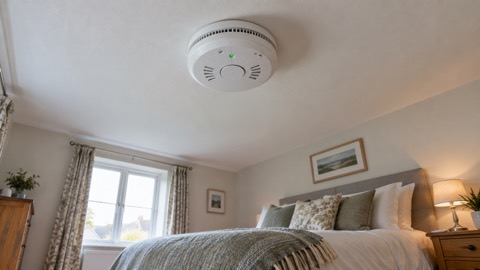
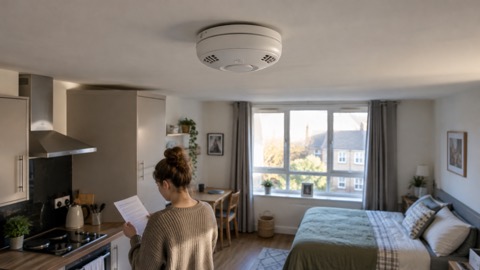
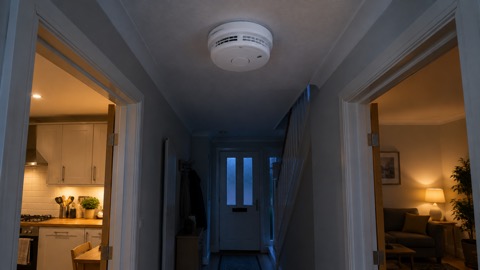
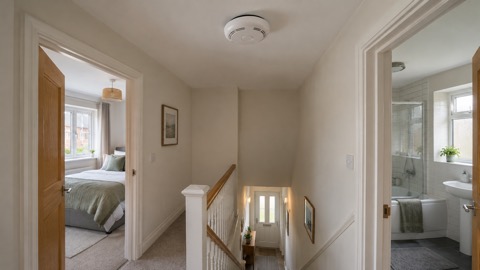
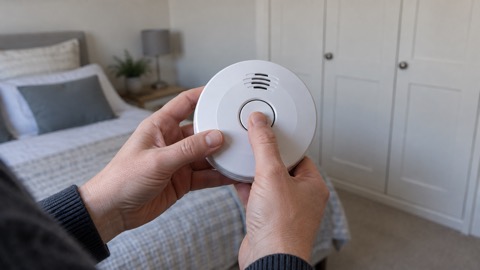
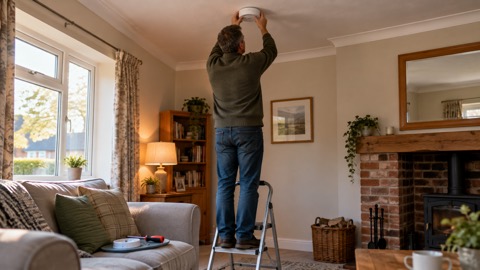
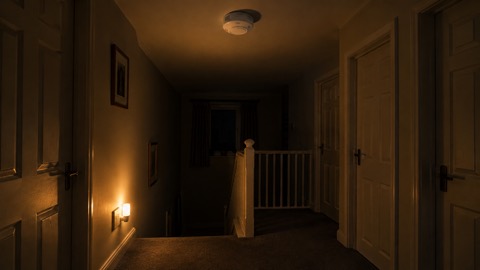
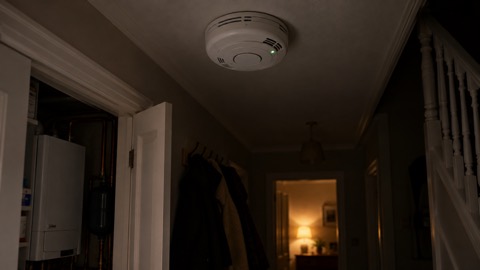
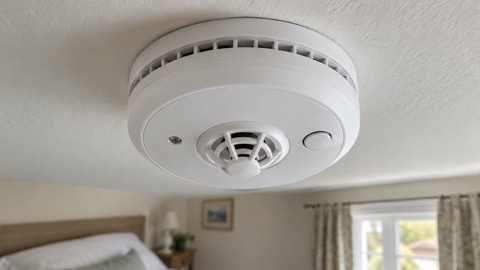
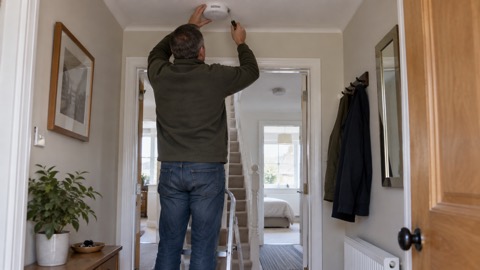
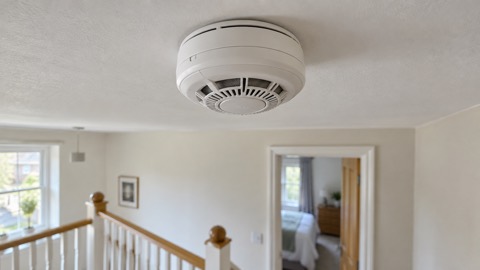
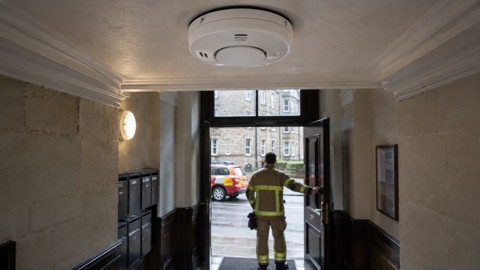
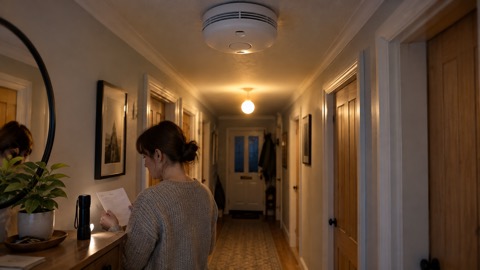
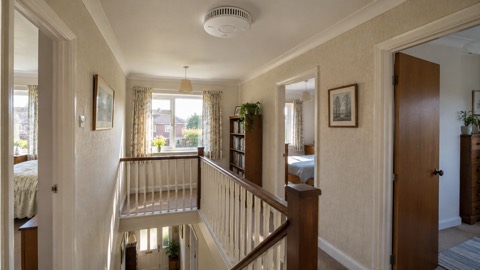
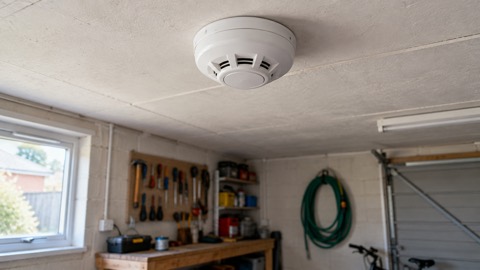
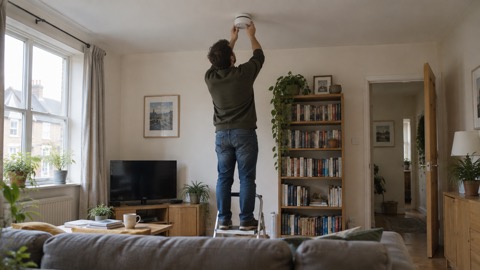
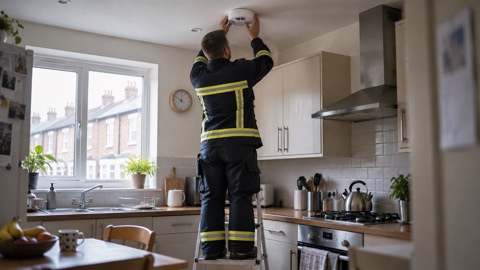
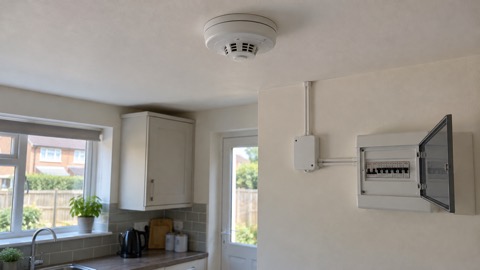
Devon and Somerset Fire and Rescue Service says you need at least one smoke alarm on each level of your home. It recommends one in the hallway and one at the top of the stairs, with additional alarms in bedrooms or sleeping areas.5
| Alarm or position | Official guidance |
|---|---|
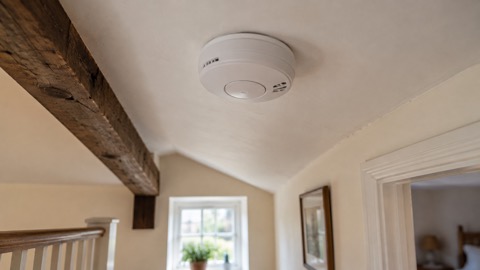
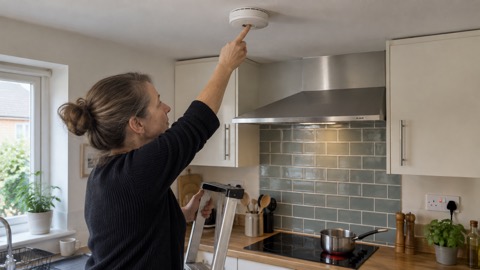
| Smoke alarm mounting | On the ceiling, near the middle of the room, at least 30cm from a wall or light.5 |
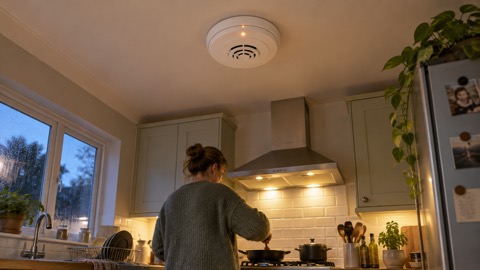
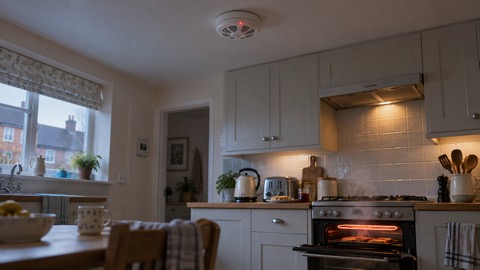
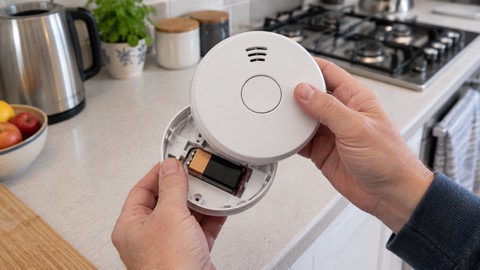
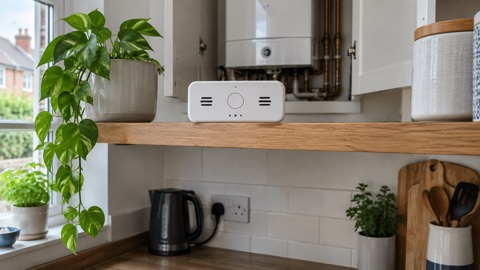
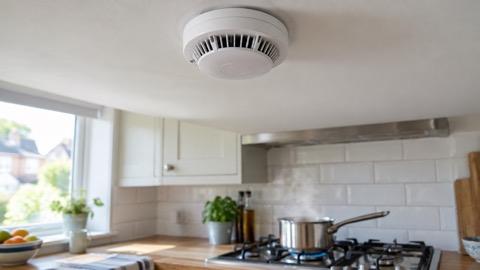
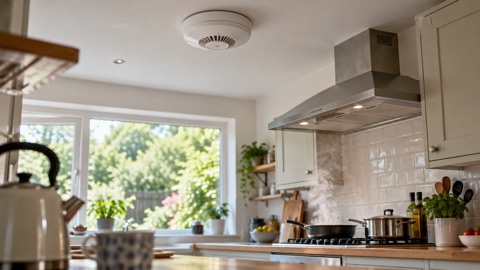
| Kitchen | Do not fit a smoke alarm where cooking could activate it accidentally; install a heat alarm instead.5 |
| Bathroom | Do not fit a smoke alarm where steam could activate it accidentally.5 |
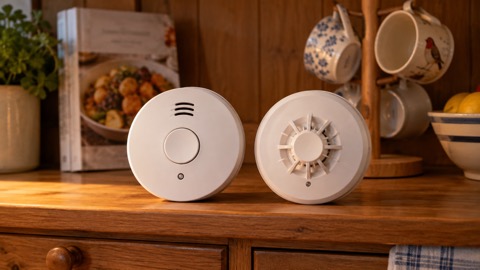
| Heat alarm | Suitable for kitchens and other rooms where steam, fumes or moisture could cause nuisance smoke alarms.16 |
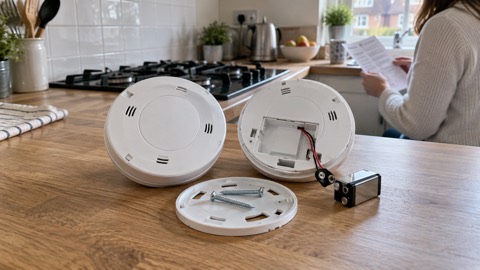
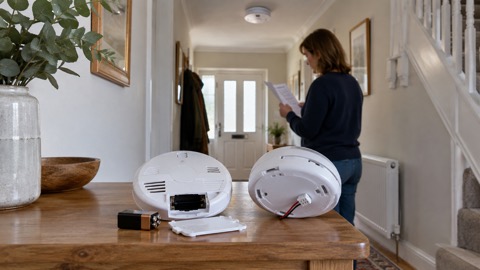
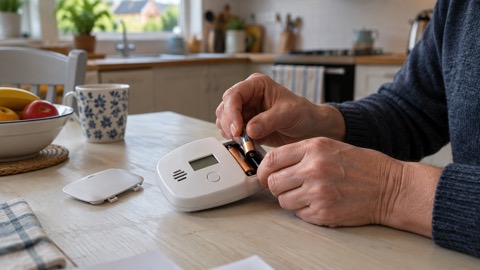
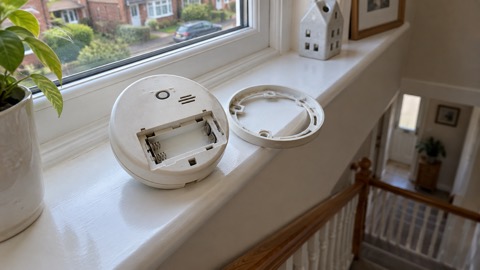
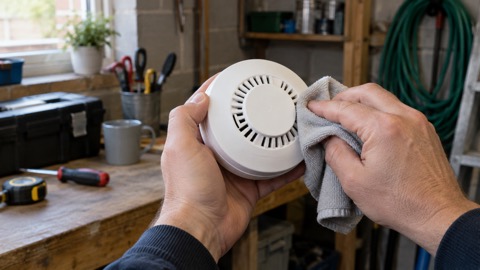
| Removable batteries | Replace them every year.17 |
Greater Manchester Fire and Rescue Service explains why this matters: many people killed in house fires are asleep, and a smoke or heat alarm can wake you and provide vital extra time to escape.16
When choosing smoke alarms, Lincolnshire County Council advises looking for the British Standard Kitemark and Loss Prevention Certification Board symbols. It also warns never to disconnect an alarm or remove its batteries because it has gone off by mistake.18
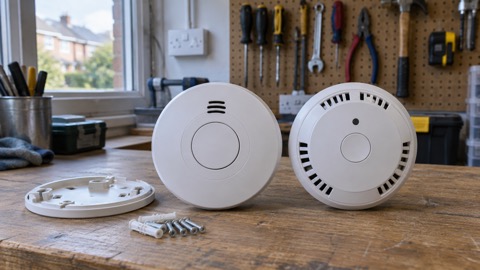
Use the detailed guides to smoke alarm types, heat alarms, where to fit smoke alarms and how many alarms a home needs. Comparisons cover heat alarm or smoke alarm, optical or ionisation alarms, battery or mains power and sealed or replaceable batteries.
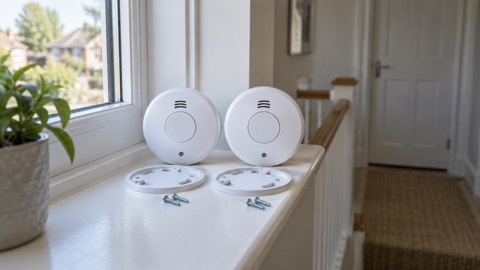
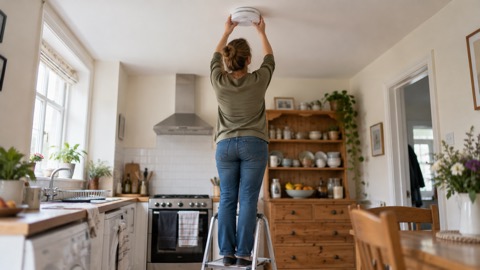
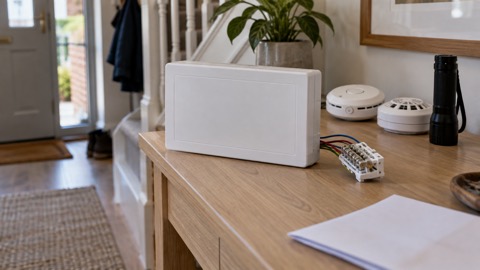
For linked systems, see how interlinked alarms work and wireless or wired interlinking. Maintenance pages explain testing alarms, when to replace them, false alarms and a chirping smoke alarm.
London Fire Brigade says special alarms are available for people who are deaf, hard of hearing or have a visual impairment.19 See smoke and CO alarms for deaf and hard of hearing people.
Carbon monoxide: causes and alarms
Carbon monoxide is colourless, odourless, tasteless and poisonous. The Health and Safety Executive warns that it can kill and that levels can quickly kill without warning.20 The Met Office states that around 30 people die each year following accidental exposure to high levels of the gas.21
Lincolnshire County Council explains that it can be produced when boilers, cookers, heaters, gas fires and solid fuel burners are faulty, incorrectly fitted or not regularly serviced, or when flues, chimneys and vents are blocked or poorly maintained. Warning signs of incomplete combustion include yellow or orange rather than blue flames, soot or yellow-brown staining, pilot lights that frequently blow out and increased condensation inside windows.18
Children, pregnant women, older people and those with heart or breathing problems are more vulnerable to its effects. Low-level exposure over a long period can cause permanent brain damage and, in more serious cases, death.22
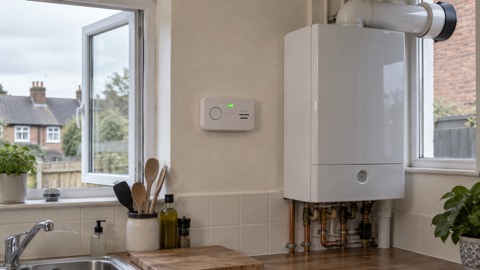
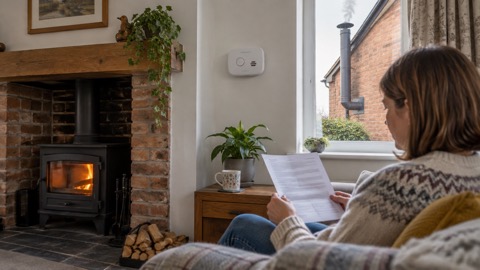
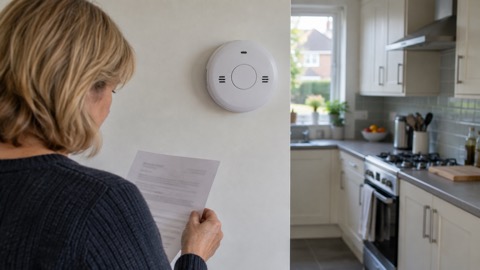
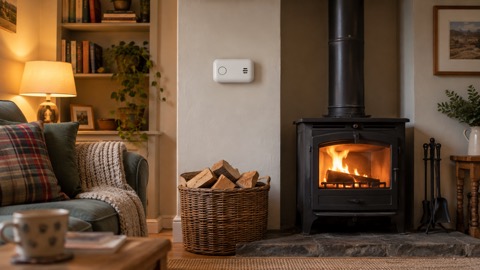
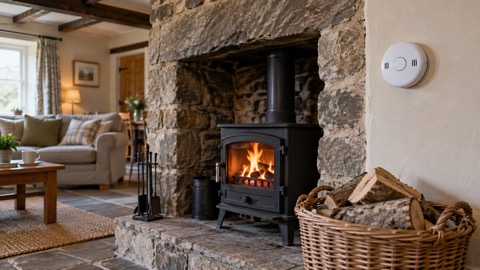
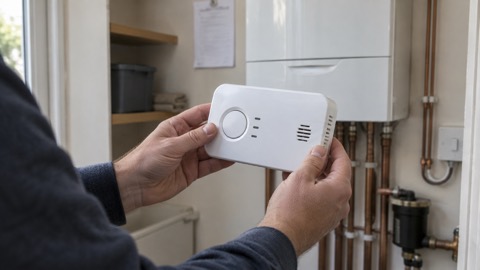
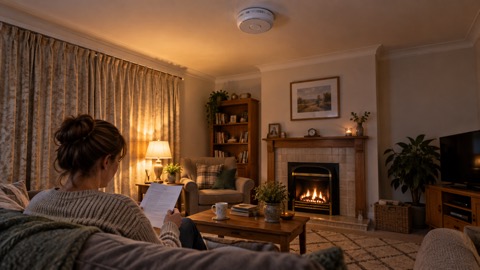
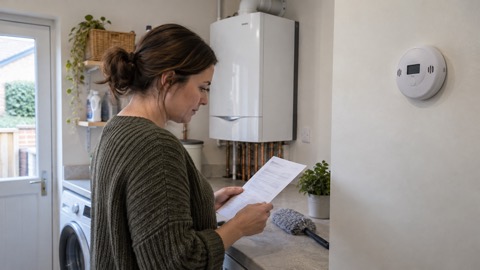
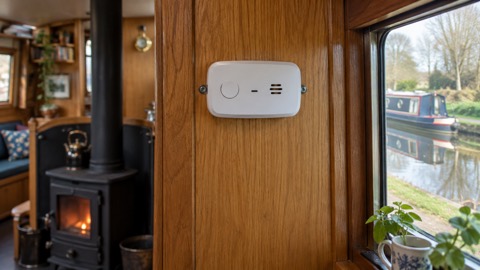
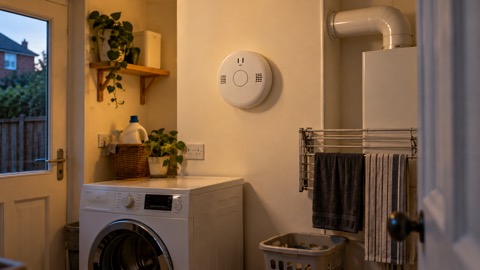
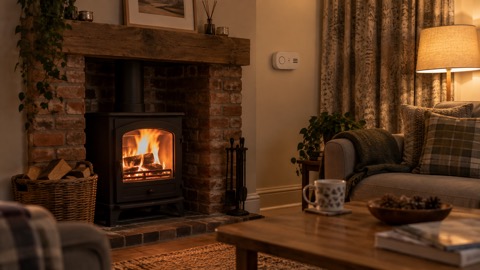
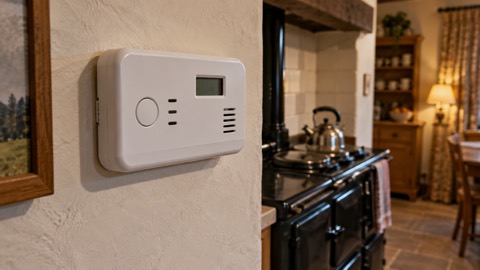
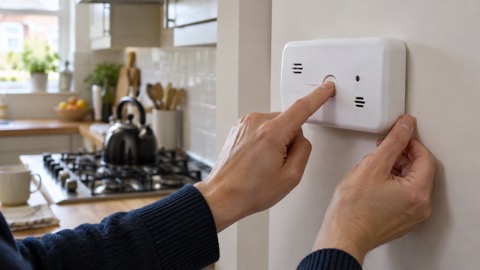
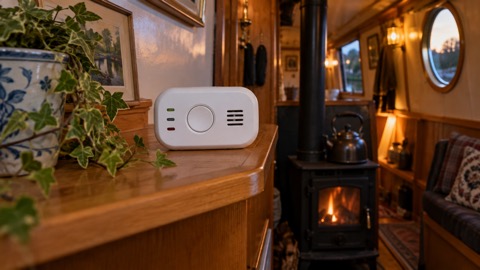
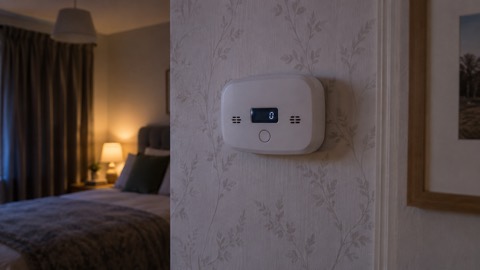
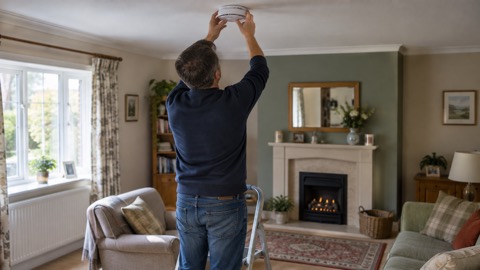
Fit a CO alarm in every room containing a fuel-burning appliance, make sure it can be heard throughout the home and consider keeping one in the bedroom. Buy only alarms certified to British Standard EN50291 with a British or European approval mark, such as the Kitemark. Avoid high humidity and direct sunlight, which can affect performance.18
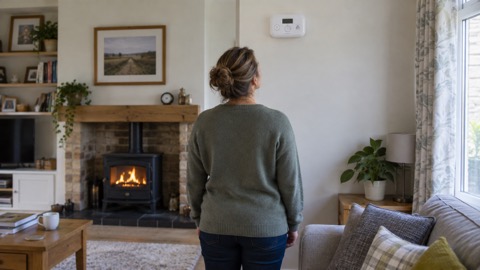
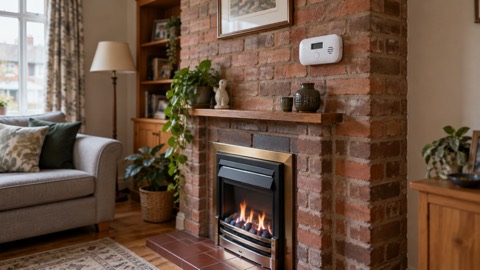
This includes rooms with fuel-burning heaters, stoves and solid fuel burners. The heating and cooking guide covers those appliances, barbecues and burning fuel indoors. For chimneys, open fires and wood burners, alarms provide early warning of fire or carbon monoxide; if a fire starts, get out, stay out and call 999.23 Never use cooking appliances for heating.24
Further guidance covers choosing CO alarms, where to put them, whether you need one, combined or separate alarms and alarm standards.
In Northern Ireland, HSENI says CO alarms are mandatory where a new fossil fuel appliance is installed, following the change to the Building Regulations that came into operation on 31 October 2012. It gives a unit lifespan of one to six years, depending on the manufacturer and batteries.25 See alarm rules and fire services in Wales and Northern Ireland.
Preventing fires at home
Start with a practised escape route and working alarms, then reduce the risks around cooking, heating, electricity and smoking. The fire safety checklist and bedtime fire safety checks turn these into a repeatable routine.
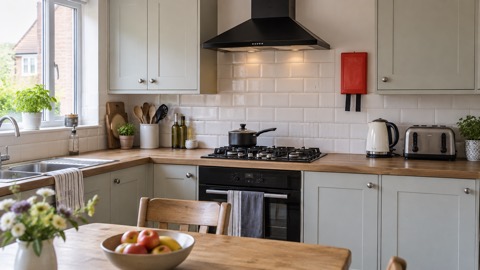
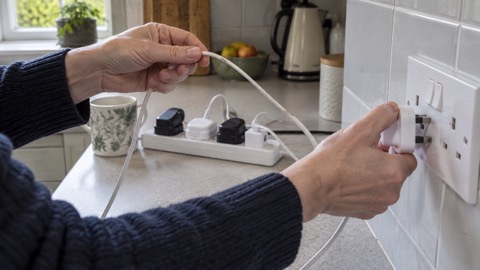
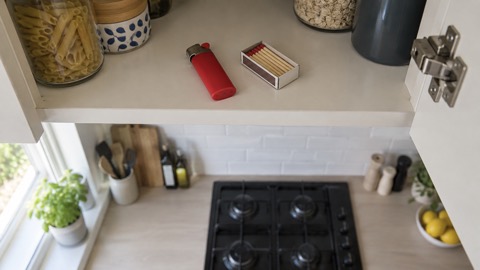
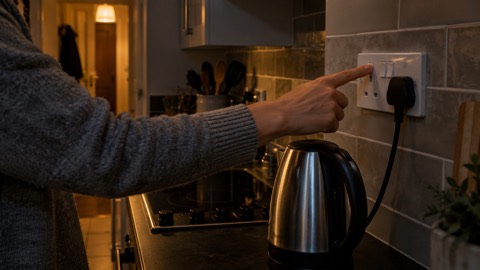
- Use the specific guidance for cooking and kitchen fires, overloaded sockets and faulty appliances and smoking, matches and lighters.
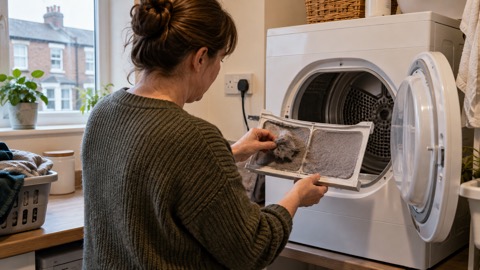
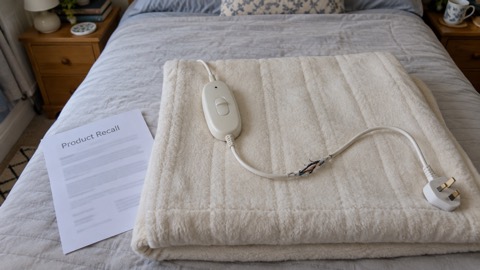
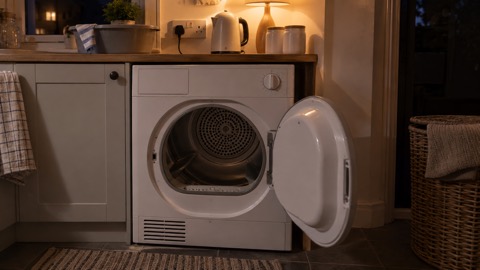
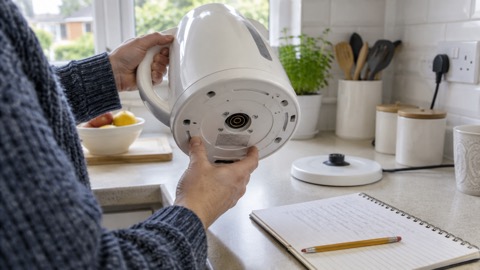
- Check whether it is safe to leave a tumble dryer or dishwasher on overnight and whether an electrical product has been recalled.
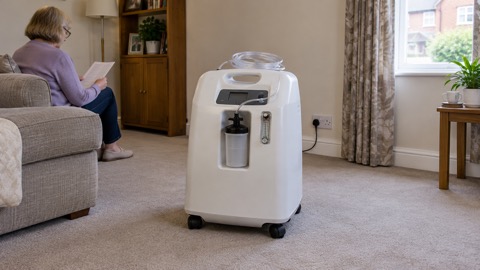
- Read about emollient cream fire risk and fire safety with oxygen therapy where either applies.
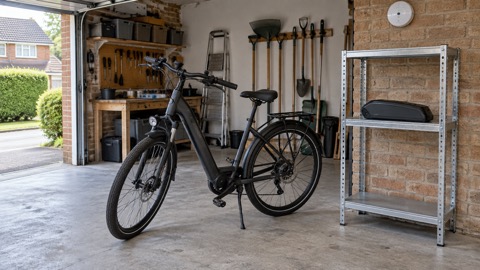
- Keep e-bikes and e-scooters within their dedicated charging and storage guidance. Backup power at home covers general lithium-ion battery safety for power banks and power stations.
Candles, electric blankets, portable heaters and wheat bags belong in the same prevention routine. Emergency lighting covers candles and flames, while heating and cooking without mains services covers the heating appliances.
For an open fire, Warwickshire County Council advises placing a fire screen in front of it to prevent sparks, embers or debris escaping, particularly when children and pets are present.23
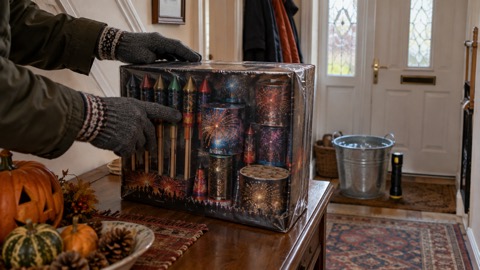
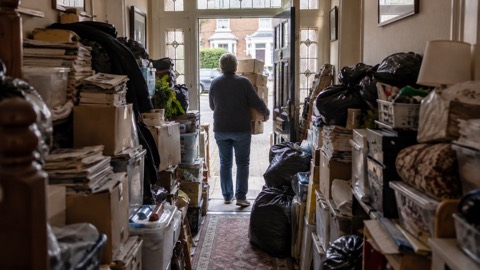
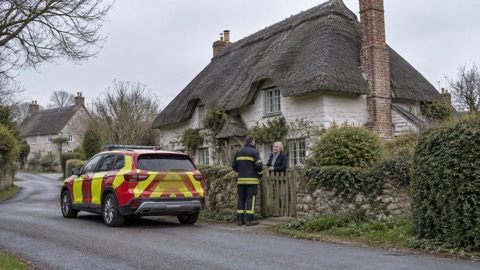
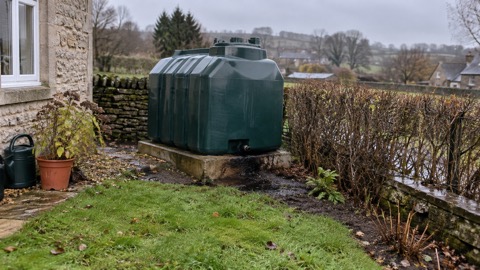
Less common circumstances still need planning. See guidance on hoarding and clutter, thatched properties, fireworks, sparklers and bonfires, children who set fires and leaking oil tanks. Before going away, use the checks for leaving your house empty. Flat residents can use the flat fire safety checklist.
Safety checks and free fire service visits
Fire Kills advises contacting your local fire and rescue service for a free home fire safety visit.6 Surrey County Council says its visits are free, can include fitting any extra smoke alarms needed for free and can work out an escape plan with you.26
A visit gives the household a chance to have its alarms and escape arrangements checked rather than relying on assumptions. It is particularly useful where someone would struggle to hear an alarm, leave quickly or use the usual escape route.
Prepare for the visit by noting:
- where your smoke, heat and CO alarms are;
- how everyone would leave the home;
- whether anyone has mobility, hearing or visual difficulties;
- whether a phone is kept by the bed for someone who may not be able to get out.6
Doncaster and Bassetlaw Teaching Hospitals NHS Foundation Trust says a healthcare professional may refer someone to the fire service for a full home assessment, or the person can refer themselves.27 Combine that help with the vulnerable person’s home checks, alarms for deaf and hard of hearing people and wider support for older and disabled people.
After a fire or a leak
Do not return until the emergency services or local authority say it is safe. Essex Prepared says they will tell you when you can go home and provide information about any specific actions to take. Once home, contact the relevant utility companies if damage has occurred.28
Report health and safety hazards to the local authority or emergency services. Greater Manchester’s guidance lists damaged power lines, washed-out roads, gas leaks, dead animals and chemical releases.2
If flooding accompanied the incident, Cornwall Fire and Rescue Service advises:
- return to evacuated buildings only when told it is safe;
- avoid electricity sources;
- have an approved service engineer check gas, electricity and water before turning them back on;
- beware of contaminated water and sharp objects in lying flood water;
- take extra care with candles and open fires;
- ensure you have a working smoke alarm because wet electrics increase the fire risk.29
The detailed after a fire guide covers the next stage, while water leaks and flooding deal with the source of water damage. For how to cool a burn after a fire or scald, follow first aid at home and seek appropriate medical help rather than delaying treatment.
Who to call and who is responsible
Keep these numbers and responsibilities with your household plan. In an immediate emergency or risk to life, call 999.1
| Situation | Who to contact | Essential action |
|---|---|---|
| Fire | 999 | Get out, stay out and do not tackle the fire yourself.1 |
| Smell of gas | National Grid, 0800 111 999 | Open a window if you can, leave immediately and avoid flames and smoking.2 |
| Suspected carbon monoxide | Emergency services if anyone is unwell; Gas Emergency, 0800 111 999 | Leave immediately and do not re-enter until declared safe.3 |
| Burst pipe | WaterSafe registered emergency plumber | Have the pipe fixed and ask for prevention advice.15 |
| Wider hazards | Local authority or emergency services | Report damaged power lines, gas leaks, chemical releases and other listed hazards.2 |
| Home safety assessment | Local fire and rescue service | Ask for a free home fire safety visit.6 |
Gas work in homes must be undertaken by a Gas Safe registered engineer.11 Belfast City Council also gives 028 9027 0428 for investigating complaints about fumes or carbon monoxide entering a property.22 For general smoke alarm information, London Fire Brigade directs households to their local council.19
The Wales and Northern Ireland guide sets out the national arrangements and alarm rules. For contacting 999 when deaf or hard of hearing, use staying informed and in touch. Keep these arrangements alongside your household emergency preparations so that everyone knows where to find them.
Sources (29)
- If You Have a Fire, Devon and Somerset Fire and Rescue Service, 2026
- Prepare Yourself for Emergencies, Greater Manchester Combined Authority, 2026-10-29
- Carbon Monoxide Safety, North Wales Fire and Rescue Service, 2026
- Frozen or Burst Pipes, Met Office, 2026-10-26
- Advice for Parents and Guardians, Devon and Somerset Fire and Rescue Service, 2026
- Escape from a Fire, Fire Kills, 2026-03-25
- Fire Safety at Home, Essex Prepared, 2026-10-29
- Domestic Fire, UK Government Prepare Campaign, 2026-10-12
- Home Escape Plan, Scottish Fire and Rescue Service, 2026-10-26
- Safe Home Heating and Gas Leaks, Warwickshire County Council, 2026-10-29
- Carbon Monoxide and Gas Work, Health and Safety Executive, 2026
- Carbon Monoxide Safety and Symptoms, Mid and West Wales Fire and Rescue Service, 2026-10-29
- Smoke Alarms and CO Detectors, Warwickshire County Council, 2026-10-29
- Carbon Monoxide Detectors, Scottish Fire and Rescue Service, 2024-04-16
- WeatherReady Emergency Plumbing Advice, Met Office, 2026-10-26
- Smoke and Heat Alarms, Greater Manchester Fire and Rescue Service, 2026-10-29
- Smoke and Carbon Monoxide Alarms, North Yorkshire Fire and Rescue Service, 2026-02-20
- Fire Alarms and Carbon Monoxide Detectors, Lincolnshire County Council, 2026-10-29
- Easy Read Fire Safety Booklet, London Fire Brigade, 2026
- Carbon Monoxide Hazards, Health and Safety Executive, 2026
- Keeping Your Home Warm in Winter, Met Office, 2026-10-26
- Home Safety and Carbon Monoxide, Belfast City Council, 2026-10-29
- Safe Home Heating, Warwickshire County Council, 2026-10-29
- Carbon Monoxide Awareness, Warwickshire County Council, 2026-10-29
- Carbon Monoxide Alarms, Health and Safety Executive Northern Ireland, 2026
- Home Fire Action Plan, Surrey County Council, 2026-08-24
- Carbon Monoxide Patient Advice, Doncaster and Bassetlaw Teaching Hospitals NHS Foundation Trust, 2026-10-25
- Recovering from an Emergency, Essex Prepared, 2026-10-29
- Flooding Safety and Returning Home, Cornwall Fire and Rescue Service, 2026-10-29
 What to Do If Fire Starts
 How to Make a Fire Escape Plan
 Fire in a Block of Flats
 Kitchen Fires and Cooking Safety
 Electrical Fires and Sockets
 Smoking, Matches and Lighters
 E-bike Charging Safety
 Hoarding and Fire Risk
 Thatched Properties Fire Risk
 Fireworks and Bonfire Safety
 What to Do After a House Fire
 How Fire Services Respond
 Alarms for Deaf People
 Smoke Alarm Types and Choosing
 Heat Alarms and Where They Go
 Interlinked Alarms
 Alarm Standards and Grades
 Fire Extinguishers and Blankets
 Wales and NI Alarm Rules
 Carbon Monoxide Symptoms
 Suspected Carbon Monoxide
 Carbon Monoxide Alarms Guide
 If You Smell Gas
 What to Do If a Pipe Bursts
 Frozen Pipes Thawing
 Stop Taps and Valves
 Water Leaks Finding and Repair
 Why a CO Alarm Is Beeping
 Smoke Alarm Keeps Chirping
 Testing Smoke and CO Alarms
 Replacing Smoke and CO Alarms
 Where to Fit Smoke Alarms
 How Many Smoke Alarms
 Where to Put a CO Alarm
 Do I Need a CO Alarm
 Can a CO Alarm Detect a Gas Leak
 Trapped by Fire What to Do
 Putting Out a Chip Pan Fire
 Electrical Fire Safety
 Appliances Left On Overnight
 Checking Product Recalls
 Emollient Creams and Fire Risk
 Oil Tank Leaks
 Oxygen Therapy Fire Safety
 Stop Smoke Alarm False Alarms
 If Your Clothes Catch Fire
 Home Fire Safety Checklist
 Bedtime Fire Safety Checks
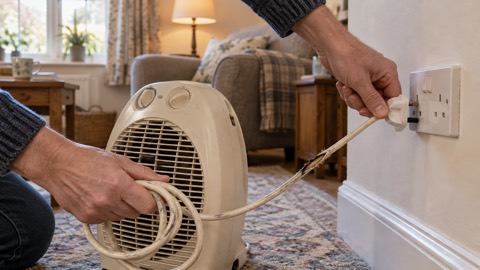 Fire Risk Checks for Carers
 Fire Safety in Flats
 Checks Before Leaving Home
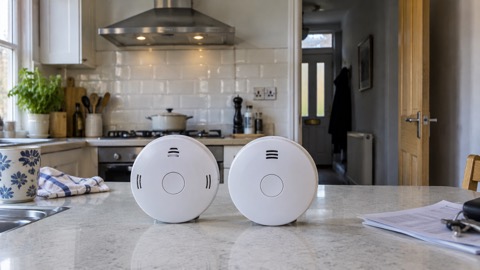 Heat Alarm or Smoke Alarm
 Combined vs Separate Alarms
 Sealed or Replaceable Alarms
 Battery or Mains Smoke Alarms
 Wireless or Wired Alarms
 Optical or Ionisation Alarms
 CO2 vs Powder Extinguishers
 Children Who Set Fires Help
 FireAngel FA3313 CO Alarm
 FireAngel FA3322 CO Alarm
 FireAngel FA3820 CO Alarm
 FireAngel FA6812 CO Alarm
 FireAngel FA6813 CO Alarm
 FireAngel FA6829S CO Alarm
 FireAngel CW1-PF CO Alarm
 FireAngel W2-CO-10X CO Alarm
 FireAngel FP1820W2-R CO Alarm
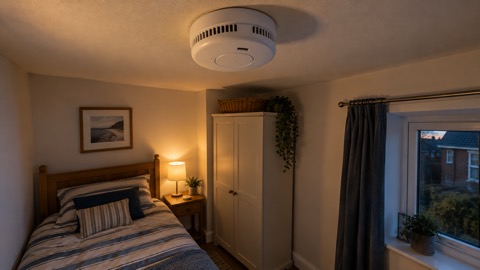 FireAngel FP2620W2-R Alarm
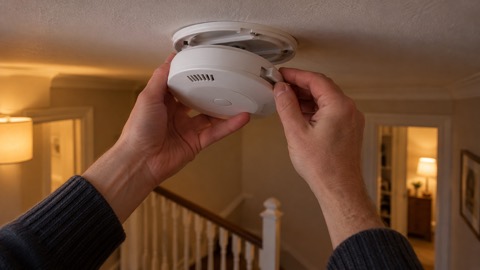 FireAngel ST-632 Smoke Alarm
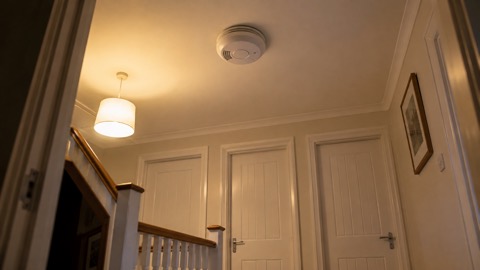 FireAngel ST-750 Smoke Alarm
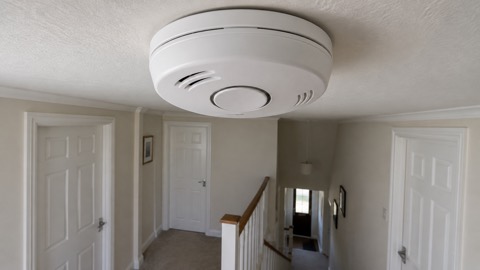 FireAngel SW1 Smoke Alarm
 FireAngel SW10 Smoke Alarm
 FireAngel SB1 Smoke Alarm
 FireAngel SM-SN-1 Smoke Alarm
 FireAngel FA6611 Smoke Alarm
 FireAngel FA6615 Smoke Alarm
 FireAngel FA6720-R Heat Alarm
 FireAngel FA8620BW Alarm
 FireAngel HW1 Heat Alarm
 FireAngel HW10 Heat Alarm
 FireAngel HM-SN-1 Heat Alarm
 FireAngel Spec+ SP520 Alarm
 FireAngel Spec+ SP530 Alarm
 FireAngel Spec+ SP540 Alarm
 FireAngel One Smart Alarm
 Kidde 2030-DSR Smoke Alarm
 Kidde 2030-DCR CO Alarm
 Kidde 10Y29 Smoke Alarm
 Kidde Firex KF20 Smoke Alarm
 Kidde Firex KF30 Heat Alarm
 Kidde K7DCO CO Alarm
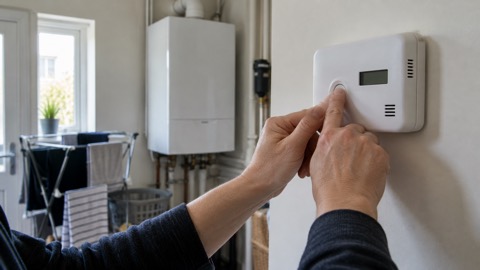 Kidde K5DCO CO Alarm
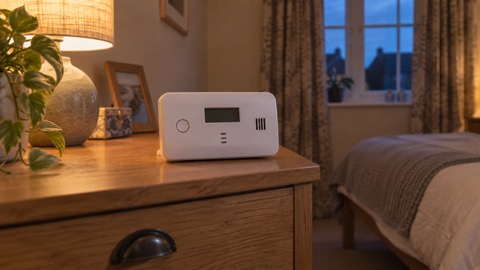 Kidde K10LLDCO CO Alarm
 Kidde K10LLCO CO Alarm
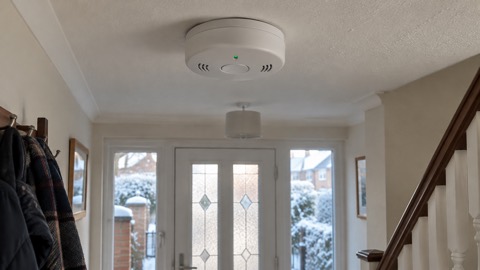 Kidde K10SCO Smoke and CO Alarm
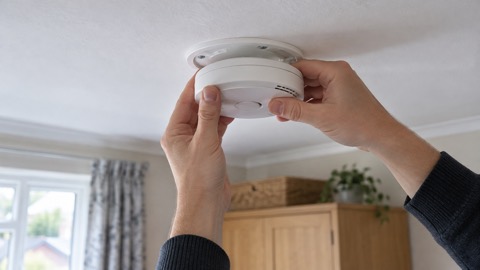 Firehawk FHB10 Smoke Alarm
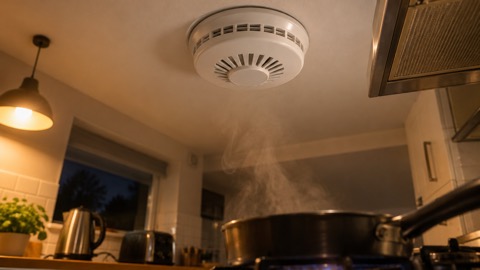 Firehawk FHH10 Heat Alarm
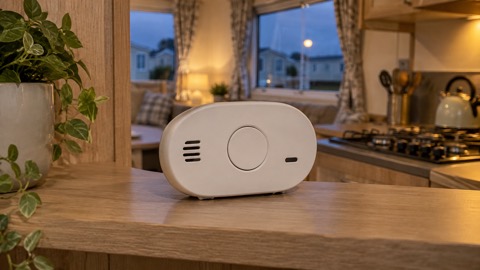 Firehawk CO10-RF CO Alarm
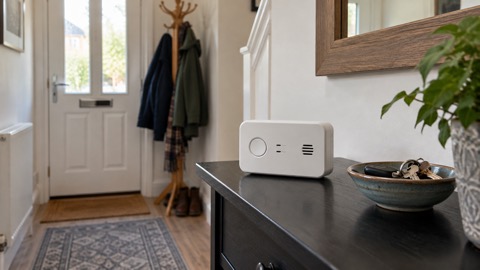 Firehawk CO7B CO Alarm
 Aico Ei146e Optical Smoke Alarm
 Aico Ei144e Heat Alarm
 Hispec HSA/BC/10 CO Alarm
 Hispec RF10-PRO CO Alarm
 Hispec RF10-PRO Smoke and Heat
 UltraFire UBCO1 CO Alarm
 UltraFire UBCO1D CO Alarm
 BLACK+DECKER BDCO10 CO Alarm
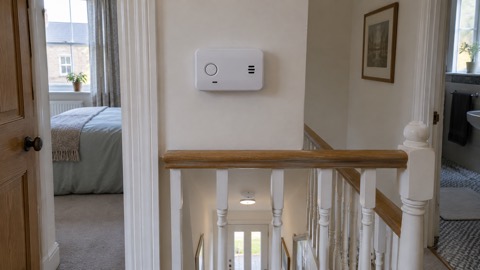 BLACK+DECKER RF CO Alarm
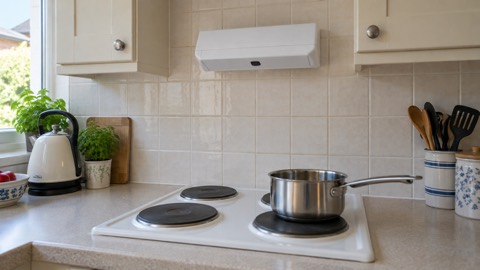 FireChief FSW1 Stove Guard
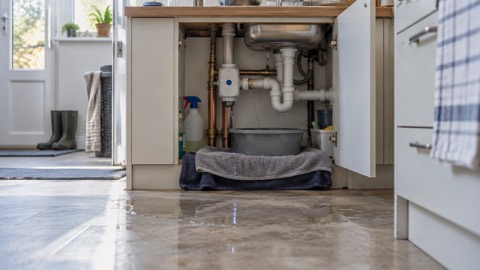 Surestop Stopcock Switch
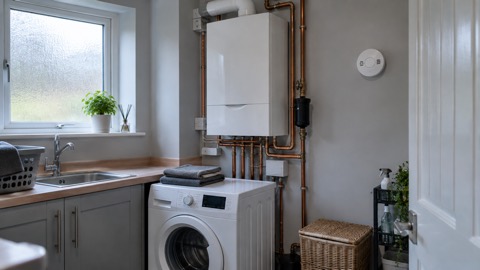 Aico Ei208 Carbon Monoxide Alarm
 Aico Ei3016 Optical Smoke Alarm
 Aico Ei3024 Multi-Sensor Alarm
 FireAngel FA8720BW Heat Alarm
 FireAngel SCB10-R CO Alarm
 FireAngel SP500 Smoke Alarm
 FireAngel SP510 Heat Alarm
 FireAngel FA6620 Alarm
 FireAngel ST-620 Smoke Alarm
 FireAngel HT-630 Heat Alarm
 FireAngel ST-622 Smoke Alarm
 FireAngel FA8922BW-R Alarm
 Aico Ei3014 Heat Detector
 Aico Ei650RF Smoke Alarm
 Aico Ei603RF Heat Alarm
 Duracell MN1604 9V Battery
 Duracell AA MN1500 Batteries
 GP AA GN15A Batteries
 GP Batteries GP1604S 9V Battery
 GP Batteries GP1604A 9V Battery
 Firehawk FHB10-RF Smoke Alarm
 Firehawk FHH10-RF Heat Alarm
 Bull Cygnus Fire Alarm Recall
 Energizer 9V Alkaline Battery
 Energizer 9V Lithium Battery
 Energizer AA Alkaline Batteries
 Ebac Dehumidifier Recall
 Raymax 9V Batteries
 Raymax AA Batteries LR6
 Ajax WallSwitch Mains Relay
 Ajax WaterStop Water Shutoff