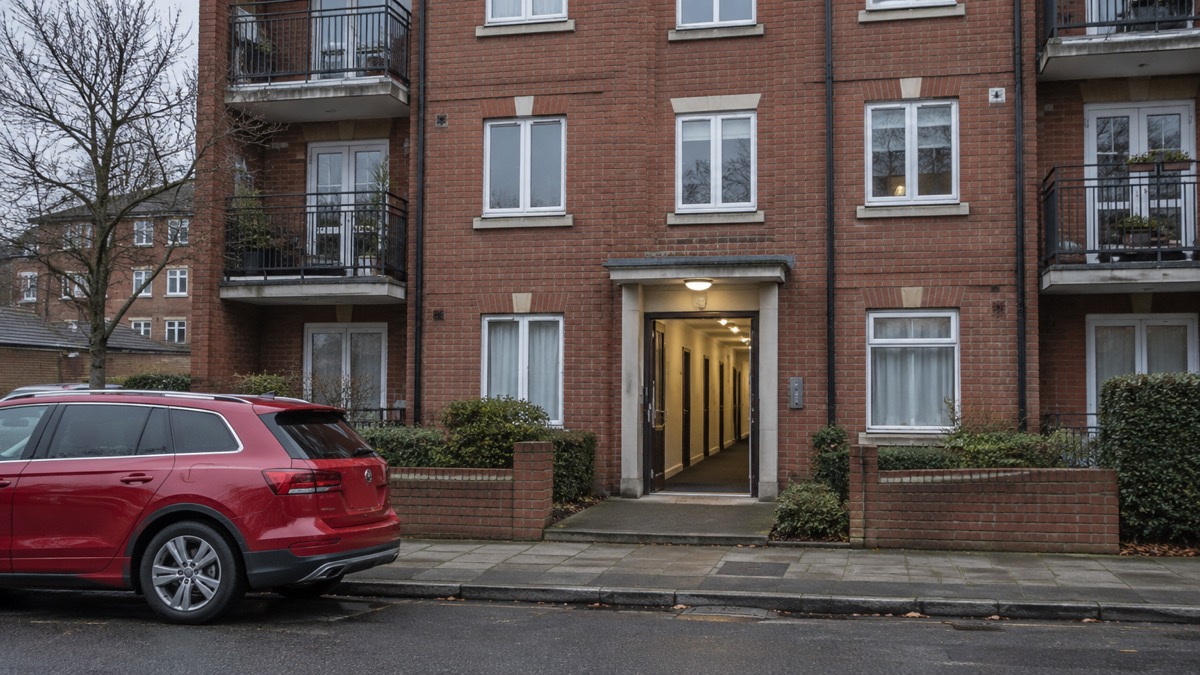
A fire in a flat is different from a fire in a house. You share walls, corridors and a staircase with neighbours, and the front door of your flat is a fire door that is there to hold back smoke and flames. That means flat fire safety comes down to a few things you can check yourself: keep your escape route clear, make sure your smoke alarms work, test your front door, and know what to do if a fire starts inside your flat or somewhere else in the building.
The single most important action is to get out, stay out and call 999 as soon as you are safe to do so1. If the fire is inside your flat, alert everyone, get out immediately, do not try to put it out, close all doors behind you, use the stairs rather than the lift, and call 999, never assuming someone else has2. If you cannot get out, get to a room with a window, close the door and call 9993.
The rest of this page is a checklist you can work through now, followed by sections on the risks that cause most flat fires: faulty appliances, e-bike and e-scooter batteries, electric blankets and heaters, and candles and fireworks. Each section says what to do, why it matters, and who to contact if something is wrong with your building.
The flat fire safety checklist
Work through this list once, then repeat the weekly items as a habit. Each item is here because it changes what happens in a real fire.
Check your appliances against current fire-risk recalls
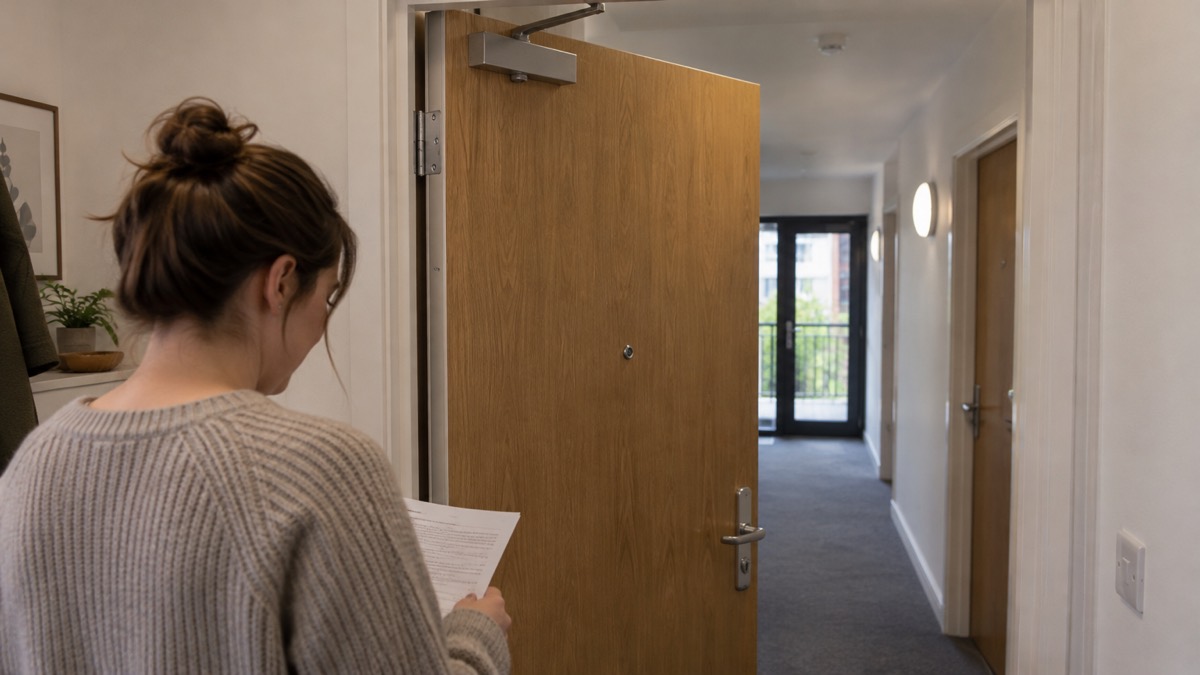
Most flat fires start with something plugged in. The most important thing you can do is regularly check whether your appliances have been recalled, using the Government's product recall site, the manufacturer's website or Electrical Safety First's recall register18. You can also check the Trading Standards website for the latest product recalls19, and use Electrical Safety First's online product checker to see if any of your appliances have been recalled20.
Keep appliances clean and in good working order to prevent them triggering a fire10. When you buy something new, register it at registermyappliance.org.uk so you receive free recall alerts if there is a problem21. That service automatically informs you of product recalls or safety alerts about your product22. You can also search the Government's list of product safety alerts, reports and recalls and register your appliances so you are notified if your product is recalled23.
Recalls happen more often than most people realise, and they cover the appliances a flat relies on:
| Product | Date | What is wrong |
|---|---|---|
| Ebac air dehumidifiers | 21 April 2026 | A sensor assembly defect could cause the unit to overheat and ignite |
| Dunelm Warm and Cosy electric blanket cables | 20 July 2026 | The copper wire within the cable can fray, presenting a risk of fire |
| Kobe 2kw Oil-Filled 9 Fin Radiator | 29 July 2026 | A plug defect that may overheat and catch fire |
| Bull and Cygnus Fire Alarm Detection System | 12 August 2026 | A communication defect that may delay fire detection |
| B&Q GoodHome Saturnia Electric Blanket | 15 December 2025 | An electric component can overheat, risking fire and electric shock |
| Valiant Radiator Fan (batches 967, 968 and 970) | 7 November 2025 | The battery may fail during charging or normal use, leading to thermal runaway |
The B&Q GoodHome Saturnia Electric Blanket recall is a good example of why checking matters. The official notice says the product presents a risk of fire and electric shock as an electric component can overheat, and that this could result in the product or the surrounding furniture overheating and catching fire24. If you own one, stop using it and follow the recall instructions.
For a step-by-step guide to checking any appliance, see How to Check If an Electrical Product Has Been Recalled. For the wider picture on overloaded sockets and faulty appliances, see Electrical Fires: Overloaded Sockets and Faulty Appliances.
Safe charging for e-bikes, e-scooters and lithium-ion batteries
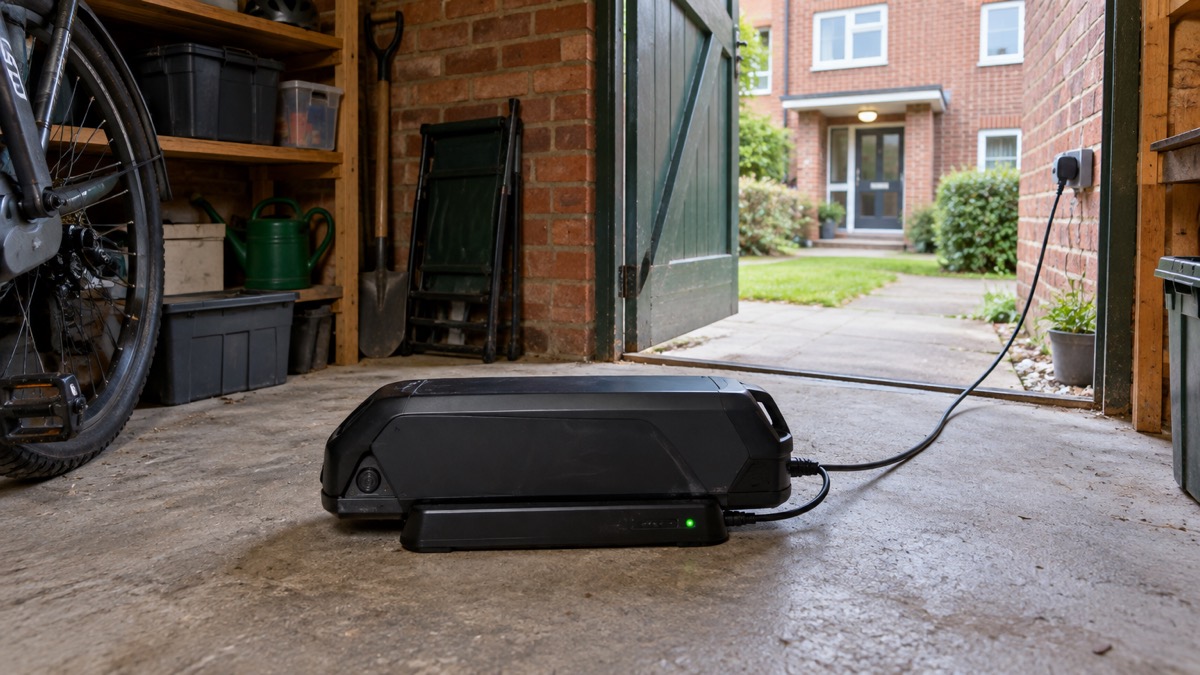
E-bikes and e-scooters with lithium-ion batteries can catch fire quickly and with little warning25. Many of these fires happen in homes while batteries are charging26, and the cause is usually a battery that is damaged, faulty or incorrectly charged26. In a flat, that risk is worse because a fire on a corridor or in a hallway can cut off the way out for you and your neighbours.
Follow these rules:
- Buy from reputable retailers. Buy e-bikes, e-scooters, chargers and batteries from reputable retailers8.
- Charge outside if you can. Charge preferably outside, in an enclosed space like a detached garage, shed or a designated charging area for high-rise flats. If you cannot avoid charging indoors, do not do it on an escape route, which matters particularly in shared housing and high-rise flats7.
- Never charge on an escape route or in a communal area. Avoid storing or charging e-bikes and e-scooters on escape routes or in communal areas of a multi-occupied building, because a fire can affect people's ability to escape8.
- Do not cover chargers or battery packs when charging, as this could lead to overheating or even a fire8.
- Do not charge overnight. It is never a good idea to charge an electrical product overnight, especially ones containing lithium-ion batteries. Fires at night, when people are sleeping, are particularly dangerous because your reaction time is massively reduced7.
For more detail on buying, storing and disposing of e-bike batteries, see E-bikes and E-scooters: Charging and Storing Them Safely.
Electric blankets and portable heaters: checks before winter
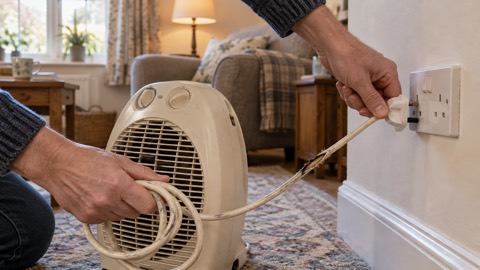
As the weather turns, electric blankets and portable heaters come out of cupboards, and that is when faults show. Make sure any portable heaters and electric blankets you use are in good working order17. Check the cable for fraying, look for scorch marks, and stop using anything that looks worn or damaged.
Some fire and rescue services run free testing events. Oxfordshire Fire and Rescue Service, for example, held free electric blanket, heated throw and heat pad safety checks at ten locations between 21 September and 9 October 202628. Ask your local fire service whether it runs similar events, and take advantage of them if it does.
Heaters carry their own risks. The Valiant Radiator Fan was recalled from end users on 7 November 2025 for batches 967, 968 and 970, because the battery may fail during charging or while in normal use, leading to thermal runaway16. Check any heater you own against the recall lists before you plug it in.
If you use a heater, keep it clear of furniture and never drape anything over it. If you have a kitchen, consider fitting a heat alarm there29. For more on alarms, see Heat Alarms: What They Do and Where They Go.
Your home fire action plan
What you do in a fire depends on where it is. The advice from the fire services is consistent, and it is worth reading twice before you need it.
If there is a fire inside your flat: alert everyone and get out immediately. Do not try to extinguish the fire. Close all doors behind you, always use the stairs rather than a lift, and call 999, never assuming someone else has2. Stay low if there is smoke11. Once you are out, stay out1.
If there is a fire elsewhere in the building: what to do depends on the evacuation strategy for your building30. Follow the advice provided by your building management team or housing association11. Know your escape route and what to do if there is a fire inside your home or somewhere else in the building5.
If you cannot get out: get to a room with a window, close the door and call 9993. If your front door becomes hot, wet it down3. For more, see What to Do If You Cannot Escape a Fire.
A home fire safety check can help you plan. Some fire services offer an online check that gives you a personalised fire action plan showing the potential causes of fire in your home and safety advice to help reduce the risk17. For a full guide to planning an escape, see How to Make a Fire Escape Plan, and for what to do if a fire starts in your block, see What to Do If There Is a Fire in Your Block of Flats.
Candles, Halloween and fireworks
Candles and flames cause a surprising number of flat fires, and the risk rises at Halloween when pumpkins with candles go by doorways and paths. Never leave candles unattended15. Keep matches, lighters and candles out of reach of children15. Place candles, pumpkins or any flame out of the way of trick-or-treaters, doorways and paths31.
Teach children what to do if their clothing catches fire: stop still, drop to the ground, cover the face with hands and roll over and over to put the flames out31. For more, see What to Do If Your Clothes Catch Fire.
For fireworks, follow your fire service's seasonal advice. The safest approach is to attend an organised display rather than set off fireworks near a block of flats. For the full picture, see Fireworks, Sparklers and Bonfires: Staying Safe.
When the alarm system in your block is recalled
Most flat fire safety is in your own hands, but some of it is in your building's. On 12 August 2026, a product recall was published for Bull and Cygnus Fire Alarm Detection Systems32. The fault is a loss of communication in the system, which may cause delayed fire detection and alarm activation in the case of a fire, increasing the risk of injury or loss of life32. Any loss of communication is indicated on the fire alarm panel through visual and audible fault indicators, so an outage is readily identifiable32.
If you are worried about your building's alarm system, contact your housing provider or managing agent17. Fire and rescue services work closely with housing providers and managing agents to support fire safety in blocks of flats13. For more on alarms in flats, see Interlinked Alarms: How Linking Works and Smoke Alarms: Types and How to Choose One.
Sources (32)
- Fire safety in flats and high-rise buildings, Devon and Somerset Fire and Rescue Service, 2026
- Home fire safety, Northern Ireland Fire and Rescue Service, 2026
- If you are trapped by fire, Essex Prepared, 2026
- High-rise living, South Wales Fire and Rescue Service, 2026
- Fire safety in high-rise flats, Mid and West Wales Fire and Rescue Service, 2026
- Flat fire safety: stay safe over 18m, Greater Manchester Fire and Rescue Service, 2026
- Battery fires, Devon and Somerset Fire and Rescue Service, 2026
- E-bikes and e-scooters fire safety, Mid and West Wales Fire and Rescue Service, 2026
- Maintain appliances and recalls, Greater Manchester Fire and Rescue Service, 2026
- Cut the risk of fire in your home, Wiltshire and Swindon Prepared, 2026
- High-rise homes, flats and apartments, Cheshire Fire and Rescue Service, 2026
- Digital easy read fire safety booklet, London Fire Brigade, 2026
- Flat safety, Greater Manchester Fire and Rescue Service, 2026
- What you can do to help keep your building safe - Greater Manchester Fire Rescue Service, Greater Manchester Fire Rescue Service
- Fire safety advice in your flat, Greater Manchester Fire and Rescue Service, 2026
- Product recall: Valiant radiator fan, Office for Product Safety and Standards, 2025
- Avoiding accidental fires at home, nidirect, 2026
- Total recalls: making white goods safer, London Fire Brigade, 2026
- Top ways to reduce your risk of having a fire at home, Devon and Somerset Fire and Rescue Service, 2026
- Stay fire safe, Greater Manchester Fire and Rescue Service, 2026
- Safe and well booklet, Cheshire Fire and Rescue Service, 2026
- Product recalls, Bath and North East Somerset Council, 2026
- Fire prevention, Fire Kills, 2026
- Product recall: B&Q GoodHome Saturnia electric blanket, Office for Product Safety and Standards, 2025
- Lithium-ion batteries, Hampshire and Isle of Wight Fire and Rescue Service, 2026
- E-bikes and e-scooters, London Fire Brigade, 2026
- Spot the warning signs: could your e-bike or e-scooter start a fire?, London Fire Brigade, 2026
- Free electric blanket testing | Oxfordshire County Council, Oxfordshire County Council
- Kitchen safety, Lincolnshire County Council, 2026
- What you can do to help keep your building safe, Greater Manchester Fire and Rescue Service, 2026
- Halloween candle safety | Scottish Fire and Rescue Service, Scottish Fire and Rescue Service
- Product recall: Bull and Cygnus fire alarm detection system, Office for Product Safety and Standards, 2026
 Home Fire Safety Checklist
 Bedtime Fire Safety Checks
 Fire Risk Checks for Carers