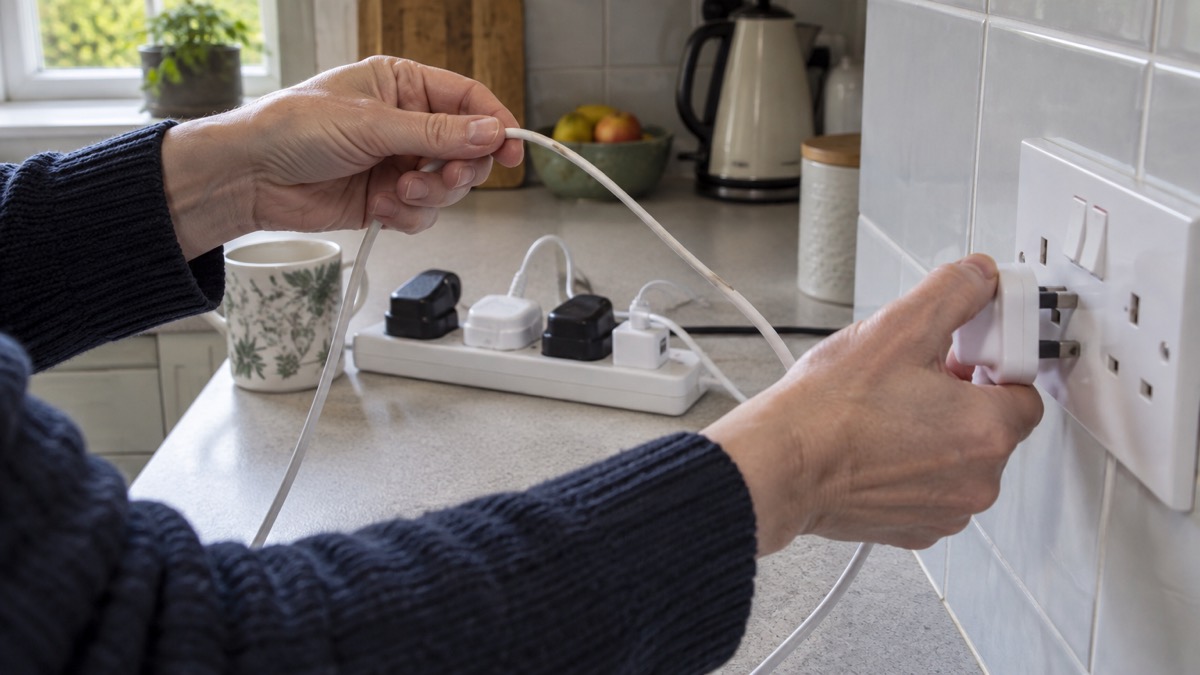
Electrical faults and everyday electrical items are a common cause of fires in the home. Faulty wiring, damaged plugs and misused electrical items can overheat and start fires, and faulty electrical appliances cause thousands of fires in UK homes each year1. Electrical fires are one of the top five causes of accidental fires in the home3, and the Scottish Fire and Rescue Service lists faulty wiring, overloaded circuits and malfunctioning appliances among the most common causes of fires in the home4.
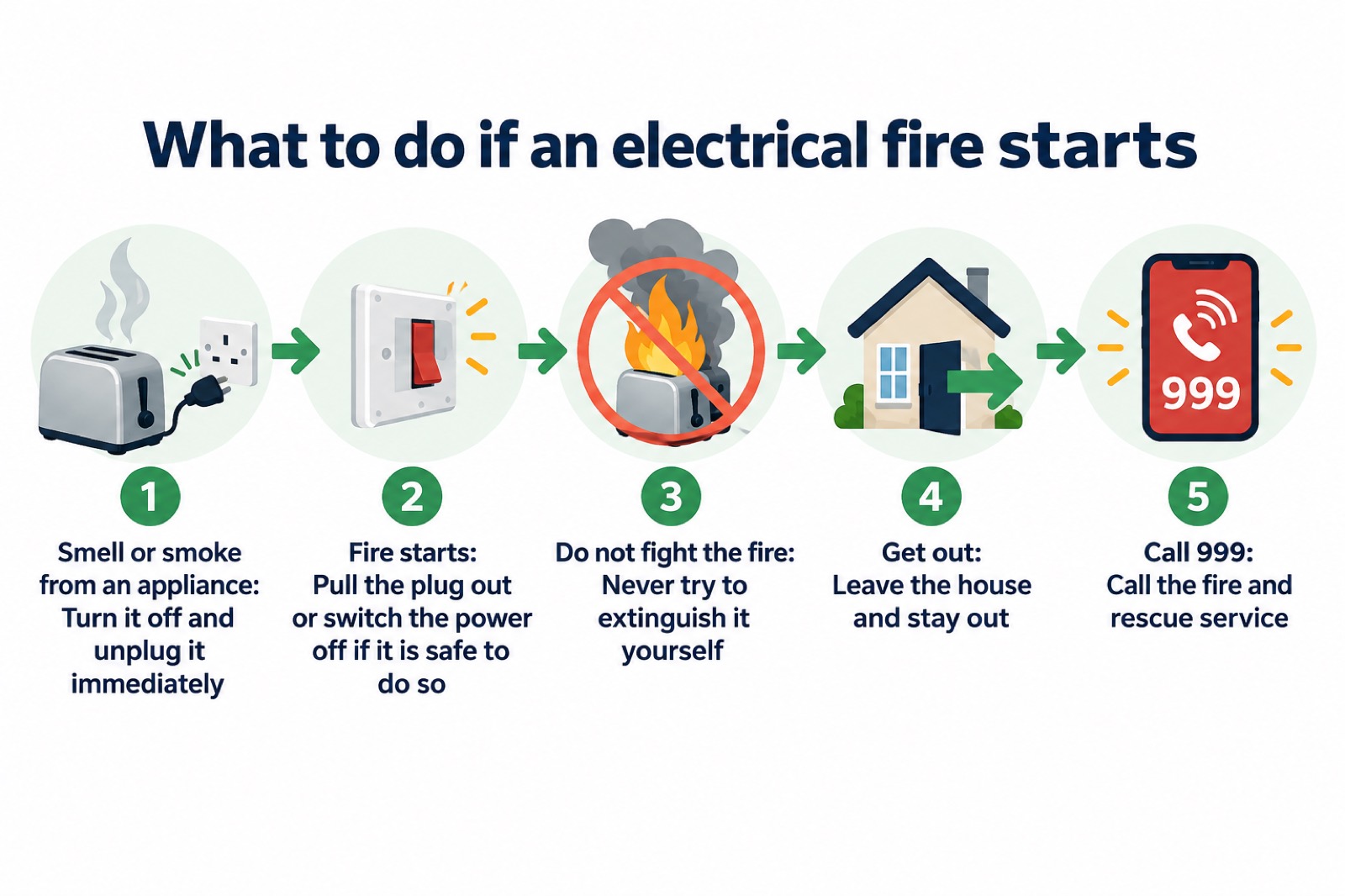
The good news is that most of these fires follow patterns that are well understood, and the habits that prevent them are simple and free. This page sets out what to do the moment something smells of burning, the warning signs of dangerous electrics, how to avoid overloading sockets and extension leads, how to look after tumble dryers and chargers, and how to register your appliances so you hear about recalls. If a fire does start, the advice from every fire and rescue service is the same: get out, stay out and call 999, and never try to fight a fire yourself5.
If an appliance smells of burning: what to do straight away
If any electrical appliance is giving off a burning smell, turn it off and unplug it immediately7. A burning smell from electrics is a warning sign, not a curiosity: stop using the appliance, unplug it, and have it checked or replace it.
The Fire Kills campaign lists the warning signs of a dangerous electrical appliance: scorch marks on plugs or sockets, fuses that blow repeatedly, flickering lights, burning smells, or sparks from outlets or appliances. If you notice any of these, stop using the appliance immediately, unplug it and have it checked or replace it8. Manchester Fire and Rescue Service gives a fuller list of danger signs to look for on any electrical item1:
| Danger sign | What it means |
|---|---|
| Exposed coloured wires | Insulation has failed; do not use the item |
| Melted or damaged plastic | The item or its plug has overheated |
| A burning or unusual smell | Internal components are failing |
| Sparks or smoke | Stop using it immediately and unplug it |
| Scorch marks on plugs or sockets | Overheating has already happened |
| Items that feel hot or are overheating | A fault is developing1 |
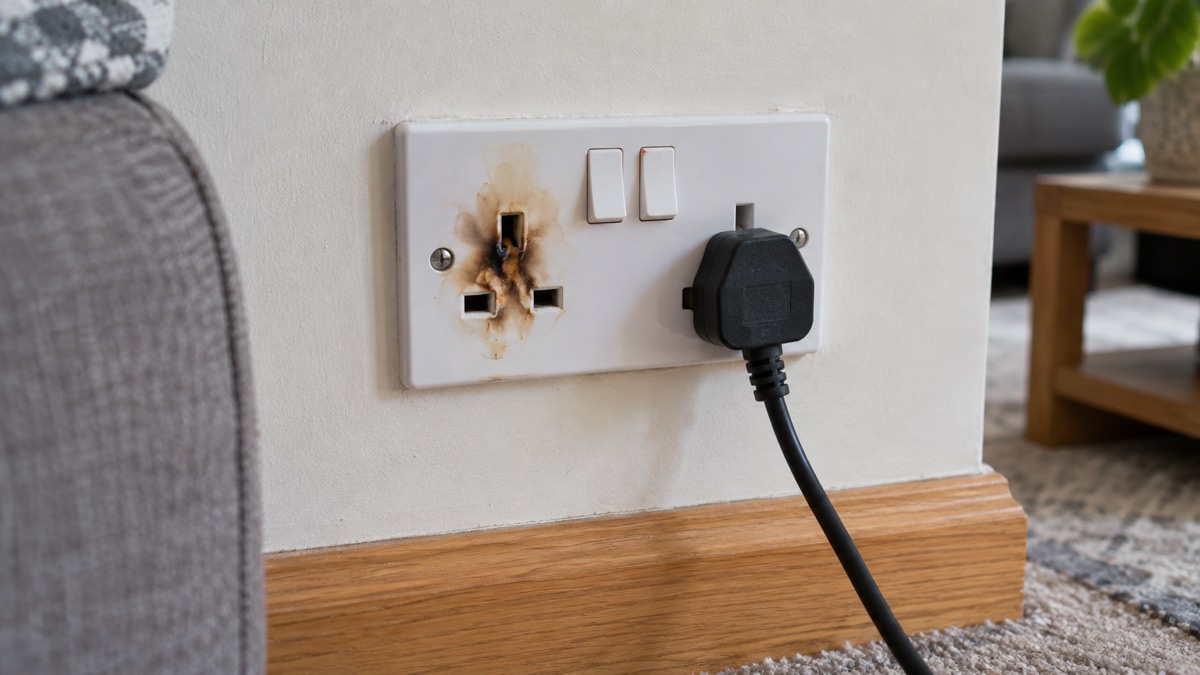
Check all appliances, plugs, sockets and leads for damage such as scorch marks or exposed wiring, and replace anything damaged9. Make it part of a wider habit: London Fire Brigade's schools team suggests working your way around your home as a family, spotting potential causes of fire, and agreeing how to prevent them becoming a problem13.
One important distinction: a burning smell from an appliance is an electrical matter, but a burning smell you cannot trace, or fumes that make you feel unwell, could be carbon monoxide from a fuel-burning appliance. The Northern Ireland Fire and Rescue Service's TASK advice for suspected carbon monoxide is to turn off all fuel burning appliances if safe, open doors and windows and go outside, seek medical assistance if unwell, and keep appliances off until checked by a qualified engineer9. If you suspect carbon monoxide, follow the advice on what to do if your CO alarm sounds.
Everyday habits that stop electrical fires
Most electrical fire prevention is routine rather than dramatic. The habits below come from fire and rescue services across England, Scotland, Wales and Northern Ireland, and they share the same shape: switch things off when you are not using them, unplug rather than leave items in standby, and keep leads away from heat and water.
Warwickshire County Council Fire and Rescue Service advises unplugging appliances when you are not using them, instead of leaving them in standby mode14. Devon and Somerset Fire and Rescue Service's kitchen safety advice goes further: turn off electrical appliances when you are not using them, and have them serviced regularly15. Essex Prepared's home safety advice is blunt about the basics: do not overload electrical sockets, and treat faulty appliances and wiring as a leading cause of house fires16.
The most valuable habit is a bedtime routine. The Northern Ireland Fire and Rescue Service's bedtime fire safety check is to switch off and unplug all electrical appliances not designed to stay on, and to avoid leaving chargers on overnight9. The UK government's domestic fire guidance gives the same instruction, with the same exception: turn off and unplug electrical appliances unless they are designed to be left on, like your freezer2. Warwickshire Fire and Rescue Service repeats it: unplug appliances when you go to bed or when you go out unless they are designed to be left on, like freezers5.
A full bedtime routine covers more than electrics, and you can find the whole list on our bedtime fire safety checks page. The electrical part of it is short:
- Switch off and unplug all appliances not designed to stay on9
- Do not leave chargers on overnight9
- Keep electrical leads and appliances away from water, heat and flames15
- Keep tea towels, clothes and electrical leads away from the cooker and hob17
- Check your cooker is off before going to bed or leaving your home8
Two more habits complete the picture. First, never leave electrical appliances such as dishwashers or washing machines running overnight or when you leave the house, according to nidirect's advice on avoiding accidental fires at home18. A fault that would be spotted in minutes when someone is in the room can burn a house down when nobody is there. Second, keep the area around the cooker clear and do not have combustible items close to portable heaters or open fires, as the Northern Ireland Fire and Rescue Service advises9. Our kitchen fires page covers cooking safety in full.
Overloaded sockets and extension leads
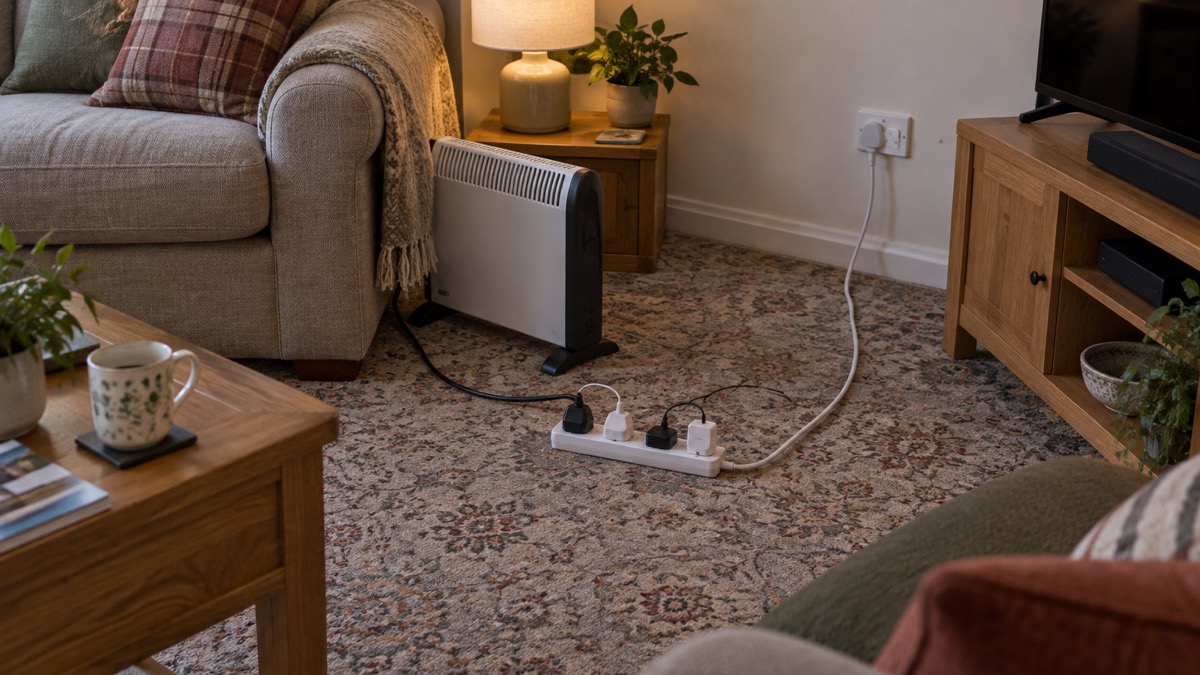
Overloading is the electrical risk most households create without realising. Warwickshire Fire and Rescue Service explains the mechanism: overloading outlets by connecting too many appliances to a single socket can cause overheating, and that overheating can spark a fire14. Mid and West Wales Fire and Rescue Service adds a point that catches many people out: an extension lead may have space for four appliances, but you should never plug in appliances that together draw more power than the lead can take, because the risk of overheating and fire exists even though the sockets are free19.
Never overload an extension lead or socket: overloading risks overheating and possibly fire, even where there is space for four appliances8. The practical rules that follow come from that warning:
- Check the current rating, usually 13 amps, and make sure the total power drawn by all plugged-in appliances does not exceed this limit
- Never daisy-chain extension leads, that is, plugging one lead into another
- Fully uncoil extension leads before use, because a coiled lead cannot shed heat
- When possible, use one plug per socket rather than adaptors8
North Wales Fire and Rescue Service makes the same point about amp limits: extension leads and adapters have a limit on how many amps they can take, so be careful not to overload them, to reduce the risk of fire20. Devon and Somerset Fire and Rescue Service's kitchen advice is simply not to overload extension leads, because it can cause fire15, and nidirect lists never overloading sockets among its core advice for avoiding accidental house fires18. The UK government's domestic fire guidance adds a check to pair with it: do not overload plug sockets, and look for signs of dangerous or loose wiring2.
High-power appliances are the ones that push a lead over its limit. Kettles, washing machines, dishwashers and heaters draw far more than a phone charger or a lamp, and plugging several of them into one lead is how overheating starts. The safest arrangement is one plug per wall socket where possible, because an extension lead or adapter will have a limit to how many amps it can take8. If you find yourself relying on adaptors and extensions in one room, that is a sign you need more wall sockets, which is a job for a registered electrician.
Extension leads used with backup power kit
Households preparing for power cuts often end up running several appliances from one socket through a power station or an extension lead, and the same overload rules apply with less margin for error. If you use a portable power station, a generator or a battery backup during a power cut, plan which items you will plug in before the cut happens, and check that the total they draw stays within the rating of the lead you connect them through. The Fire Kills campaign's rules, the 13 amp limit, no daisy-chaining and fully uncoiling the lead before use, apply just as much to a lead fed by backup power as to one in a wall socket8.
North Wales Fire and Rescue Service's warning about amp limits on extension leads and adapters is the one to keep in mind here: be careful not to overload them, to reduce the risk of fire20. During a power cut it is tempting to run a fridge, a lamp, a phone charger and a router from one lead, but a fridge's compressor draw can take a lead close to its limit on its own. Prefer plugging items directly into the power station's own outlets where it has them, and use the extension lead only for low-power devices. Our backup power at home guide covers choosing and using that kit, and our power cuts guide covers what to keep running.
One power cut habit matters for electrical safety too. Northern Ireland's strong winds and power cut advice is to leave your fridge or freezer switched on with the door shut to keep a low temperature21. That is consistent with the bedtime rule: freezers are designed to be left on, so they are the exception to switching everything off2. When the power comes back, appliances that were running before the cut will start again, so check nothing has been left in a state you did not intend.
Tumble dryers: clean the lint after every use
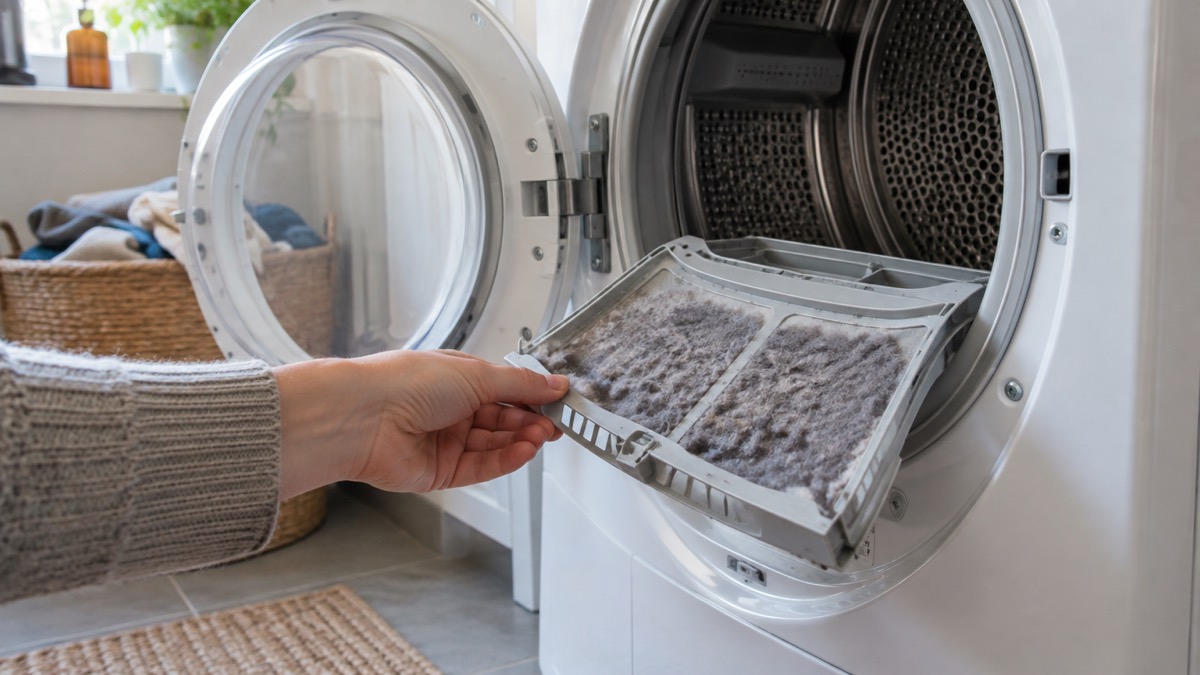
Tumble dryers cause enough fires that fire and rescue services give them their own advice. Mid and West Wales Fire and Rescue Service's instruction is simple: clean the lint trap after every use, because the build up of lint or fluff can cause fire10. Devon and Somerset Fire and Rescue Service says the same: clear out the lint from your tumble dryer after every use, and follow the manufacturers' guidelines for cleaning and maintenance22. London Fire Brigade's white goods advice is to clean your tumble dryer filter after every load23, and its wider electrical items guidance is to empty fluff regularly in line with the manufacturer's instructions24.
The reason is mechanical. Warwickshire Fire and Rescue Service explains that clogged lint can restrict airflow, leading to overheating25, and Manchester Fire and Rescue Service describes where the danger sits: if fluff is allowed to accumulate in the filter, near blocked vents, and at the rear of your dryer, you increase the risk of the fluff catching fire from the heat created by the dryer26. So the filter is the main job, but not the only one. Warwickshire also advises making sure your tumble dryer has proper ventilation25.
Two more rules protect you. First, never leave a tumble dryer running unattended: Mid and West Wales Fire and Rescue Service says do not turn the tumble dryer on before you leave the house or go to bed10. Second, avoid extension cords or adapters for tumble dryers, as they can overheat and create an electrical fire risk25. Plug a dryer directly into a wall socket.
Washing machines need attention too. Electrical appliances, especially ones that run at high speeds and contain motors, like washing machines, should be serviced once a year by a qualified electrician20. Combined with cleaning the filter, ventilating the dryer and never leaving it running alone, these habits cover the basics of white goods fire safety. Our page on whether you can leave a tumble dryer or dishwasher on overnight covers this in more detail.
Chargers and devices left charging
Charging is where electrical fire risk meets everyday convenience, and the advice is consistent across the UK. Devon and Somerset Fire and Rescue Service says never leave a device charging unattended22, and Manchester Fire and Rescue Service's electrical fire safety leaflet says never leave electrical items unattended when charging, and unplug them before going to bed or leaving home3. London Fire Brigade is specific about the most common case: never leave phones or laptops plugged in to charge overnight24.
Where you charge matters as much as when. The Northern Ireland Fire and Rescue Service advises not charging devices on flammable surfaces such as bedding9. A phone under a pillow or on a duvet cannot shed heat, and the battery or charger can heat the fabric around it. Charge devices on a hard surface, in a room you are using, and unplug them when you leave the house or go to bed3.
Charger quality is the other half of the risk. Devon and Somerset Fire and Rescue Service says always use the charger that came with your device and do not buy a fake replacement22. Mid and West Wales Fire and Rescue Service, in its Welsh-language electrical safety guidance, warns that when left plugged in overnight, phone chargers could overheat and cause fires27, and its English-language guidance says the same19. The reason fake chargers are dangerous is that they are often made with poor quality components that fail to meet UK safety regulations, which means they can cause injury, electric shocks and even fires27. London Fire Brigade adds: do not buy cheap counterfeit chargers for items that use lithium batteries24.
Devices with large lithium batteries, such as e-bikes and e-scooters, carry a charging risk of their own; our e-bikes and e-scooters charging safety page covers that in full.
Register your appliances to hear about recalls
Faulty appliances are recalled more often than most people realise, and the only way a manufacturer can tell you your machine is affected is if it knows you own it. Devon and Somerset Fire and Rescue Service advises using the Register My Appliance service to register your appliances and get a notification if a product gets recalled22. Mid and West Wales Fire and Rescue Service recommends registration so that if there are any safety concerns or product recalls for any of the appliances in your home, you can be informed as soon as possible10.
The service is straightforward. You will need the brand name, model, serial number and purchase date11. You can register appliances bought in the last 12 years26, and the website is provided by AMDEA, the Association of Manufacturers of Domestic Appliances, to enable manufacturers to act quickly in case of a recall, in partnership with the Fire Kills Campaign26.
Registration asks only for the brand name, model, serial number and purchase date11. It is not limited to new purchases: you can register older or second-hand appliances too. The manufacturer will only contact you in the event of a recall, and your details will not be used for marketing.
Second-hand appliances need extra care. London Fire Brigade advises taking extra care with second-hand appliances, ensuring they have been safety checked and are not listed on the product recall register23. If you have bought or been given a used machine, check it against the recall lists before you plug it in, and register it afterwards so you hear about any future fault.
What to do if you own a recalled appliance
Recalls of everyday appliances do happen. Check your appliances are not subject to a product recall by checking the Office for Product Safety and Standards for any alerts or recalls26. If a recall affects a machine you own, the first instruction is to stop using it until it has been checked.
If you own an affected appliance, the first instruction is to stop using it. Check the list of recalled items on the Electrical Safety First website, which explains what to do with your recalled appliance4. Also check for product recalls with the Office for Product Safety and Standards for any alerts or recalls28. Our page on how to check if an electrical product has been recalled walks through the process.
If you have not registered, you can still protect yourself by checking those lists against the appliances in your home, particularly older tumble dryers and anything bought second-hand. Registration simply means the manufacturer comes to you, rather than you having to go looking.
When to call a registered electrician, and when to call 999
Some electrical risks are in the wiring, not the appliances, and those need a professional. The Scottish Fire and Rescue Service describes one of the most effective ways to prevent electrical fires as having your electrical system inspected regularly by a qualified electrician, to identify potential issues before they become a problem4. The warning signs that it is time to arrange that inspection are the ones listed earlier: scorch marks on plugs or sockets, fuses that blow repeatedly, flickering lights, burning smells, or sparks from outlets or appliances8. Look as well for signs of dangerous or loose wiring, as the UK government's domestic fire guidance advises2.
If a fire does start, the advice is unanimous and simple. Warwickshire Fire and Rescue Service says: pull the plug out or switch the power off if it is safe to do so, then get out, stay out and call 9995. Manchester Fire and Rescue Service's electrical safety guidance says do not attempt to extinguish the fire; get out, stay out, call 99929, and its escape plan guidance adds that you should never try to fight a fire yourself6. Greater Manchester's resilience team advises teaching children how and when to call 999 and what to do in an emergency such as a fire at home12. Our pages on what to do if a fire starts in your house and what to do if an electrical fire starts cover this in detail, and every household should have a fire escape plan prepared in advance.
Water and electricity need separate care. Keep electrical items, plugs and sockets away from water1, which includes not putting a vase of flowers on top of the TV20. If your home floods, Cornwall Fire and Rescue Service advises turning off the electricity supply at the mains if you can do so safely, never attempting to turn off electricity while standing in water, and having all electrical circuits fully dried out and checked by an electrical engineer before switching back on30. After a flood there is an increased risk of fire from wet electrics, so ensure you have a working smoke alarm30; our smoke alarms page covers choosing one.
Finally, report what you find. Greater Manchester Combined Authority advises reporting hazards to health and safety, such as damaged power lines, to the local authority or emergency services12. If an electrical product itself is unsafe, stop using it, unplug it, check the recall lists4, and replace it. If you or someone you live with would struggle to react to a fire, because of sight, hearing or mobility, ask your local fire and rescue service about a home fire safety check and about specialist alarms, covered on our smoke and CO alarms for deaf and hard of hearing people page.
Sources (30)
- Electrical safety at home, Manchester Fire and Rescue Service
- Domestic fire: be informed about hazards, UK Government Prepare campaign
- Electrical fire safety leaflet, Manchester Fire and Rescue Service
- Electrical safety at home, Scottish Fire and Rescue Service
- Electrical fire safety at home, Warwickshire County Council
- Know your escape plans, Manchester Fire and Rescue Service
- Fire safety for people with sight difficulties, Devon and Somerset Fire and Rescue Service
- Fire prevention advice, Fire Kills campaign
- Home fire safety, Northern Ireland Fire and Rescue Service
- White goods safety, Mid and West Wales Fire and Rescue Service
- Register your appliance, Cornwall Fire and Rescue Service
- Prepare yourself, Greater Manchester Combined Authority
- Fire safety education at home | London Fire Brigade, London Fire Brigade
- Electrical fire safety: plugs and appliance wiring, Warwickshire County Council
- Kitchen fire safety, Devon and Somerset Fire and Rescue Service
- Home safety advice, Essex Prepared
- Christmas safety tips, Warwickshire County Council
- Avoiding accidental fires in the home, nidirect
- Electrical safety in your home, Mid and West Wales Fire and Rescue Service
- Looking after the electrics, North Wales Fire and Rescue Service
- Strong winds weather warning - information and advice | nidirect, nidirect (Northern Ireland government)
- Top ways to reduce your risk of having a fire at home, Devon and Somerset Fire and Rescue Service
- White goods electrical safety, London Fire Brigade
- Electrical items in the home, London Fire Brigade
- Tumble dryer safety, Warwickshire County Council
- Maintain appliances and recalls, Manchester Fire and Rescue Service
- Diogelwch trydanol yn y cartref, Mid and West Wales Fire and Rescue Service
- Maintain appliances and recalls, Manchester Fire and Rescue Service
- Electrical safety in your home, Manchester Fire and Rescue Service
- Flooding advice, Cornwall Fire and Rescue Service
 Home Fire Safety Checklist
 Bedtime Fire Safety Checks
 Fire Risk Checks for Carers
 What to Do If Fire Starts
 How to Make a Fire Escape Plan
 Fire in a Block of Flats
 Kitchen Fires and Cooking Safety
 Smoking, Matches and Lighters
 E-bike Charging Safety
 Hoarding and Fire Risk
 Thatched Properties Fire Risk
 Fireworks and Bonfire Safety
 What to Do After a House Fire
 How Fire Services Respond
 Alarms for Deaf People