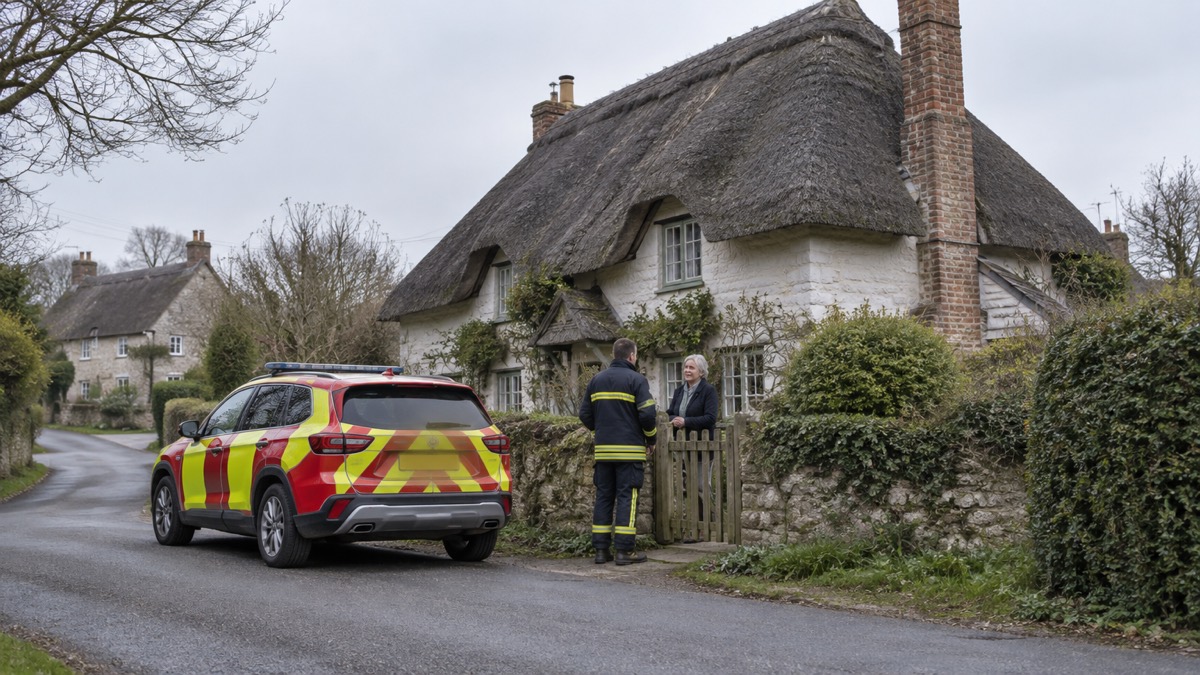
A fire in a thatched home is not more likely than a fire in any other house. Dorset and Wiltshire Fire and Rescue Service put it plainly: "although there is no increased risk of fire within thatched properties, the impact of a fire is far greater"1. The reason is the roof itself. Thatch is a thick layer of dry, combustible material sitting directly over the timbers of the house, so once it takes hold there is little to slow it down. Suffolk County Council's thatched property safety guide warns that "thatch fires spread at a fast pace and are very difficult to extinguish, often leading to irreversible property damage"2.
The numbers behind that warning are stark. Devon and Somerset Fire and Rescue Service report that "nearly a quarter of thatched property fires we attended over recent years saw the whole building damaged"3. A thatch fire typically needs at least eight fire appliances to attend and can burn for over 24 hours1. Most thatched roof fires start in the chimney3, which means the risk sits largely with things you control: how you run your stove or open fire, how often the chimney is swept, and what happens in the garden and in neighbouring gardens.
The good news is that every fire and rescue service that publishes thatch guidance gives the same, practical set of precautions, and most of them are cheap or free. This page sets out what they say, in the order that matters: how thatch fires start, how to run a stove safely under thatch, how often to sweep, what warning signs to look for in the roof space, and how to handle bonfires, fireworks and sky lanterns near your home.
How thatch fires start
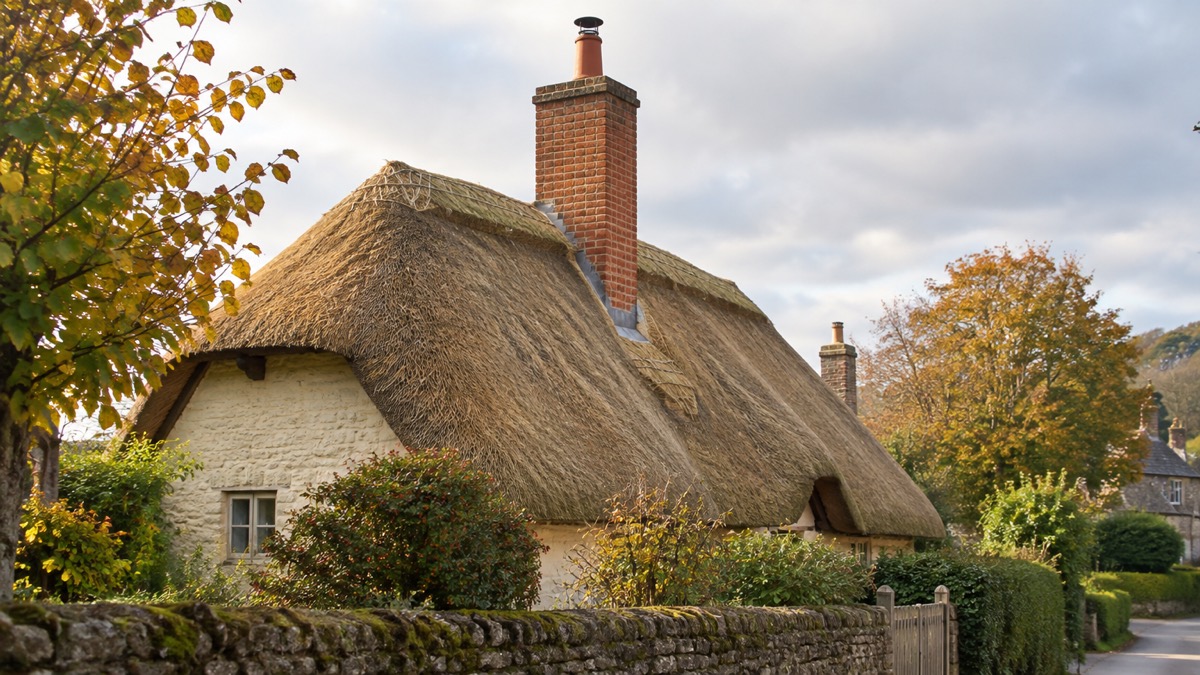
Most thatched roof fires start in the chimney, though Devon and Somerset Fire and Rescue Service note they can also be caused by badly installed electricity cables or embers3. Warwickshire County Council add that most thatch fires start in the roof space, the void between the ceiling and the underside of the thatch where a smouldering fire can grow unseen5. That combination, a chimney that runs through the thatch and a hidden void around it, is what makes the thatched roof different from a tiled one.
Chimney fires are the leading cause of thatch fires4. A chimney fire happens when soot and fuel residues that have slowly built up inside the flue catch fire. The Scottish Fire and Rescue Service warn that a chimney fire "could send burning soot into your living room, start fires within the roof space, or on other floors of the house"6. In an ordinary house that is dangerous enough; in a thatched house, burning material in or around the chimney is in direct contact with the roof covering. Devon and Somerset Fire and Rescue Service state that in thatched properties "the potential for wider damage is very high"7.
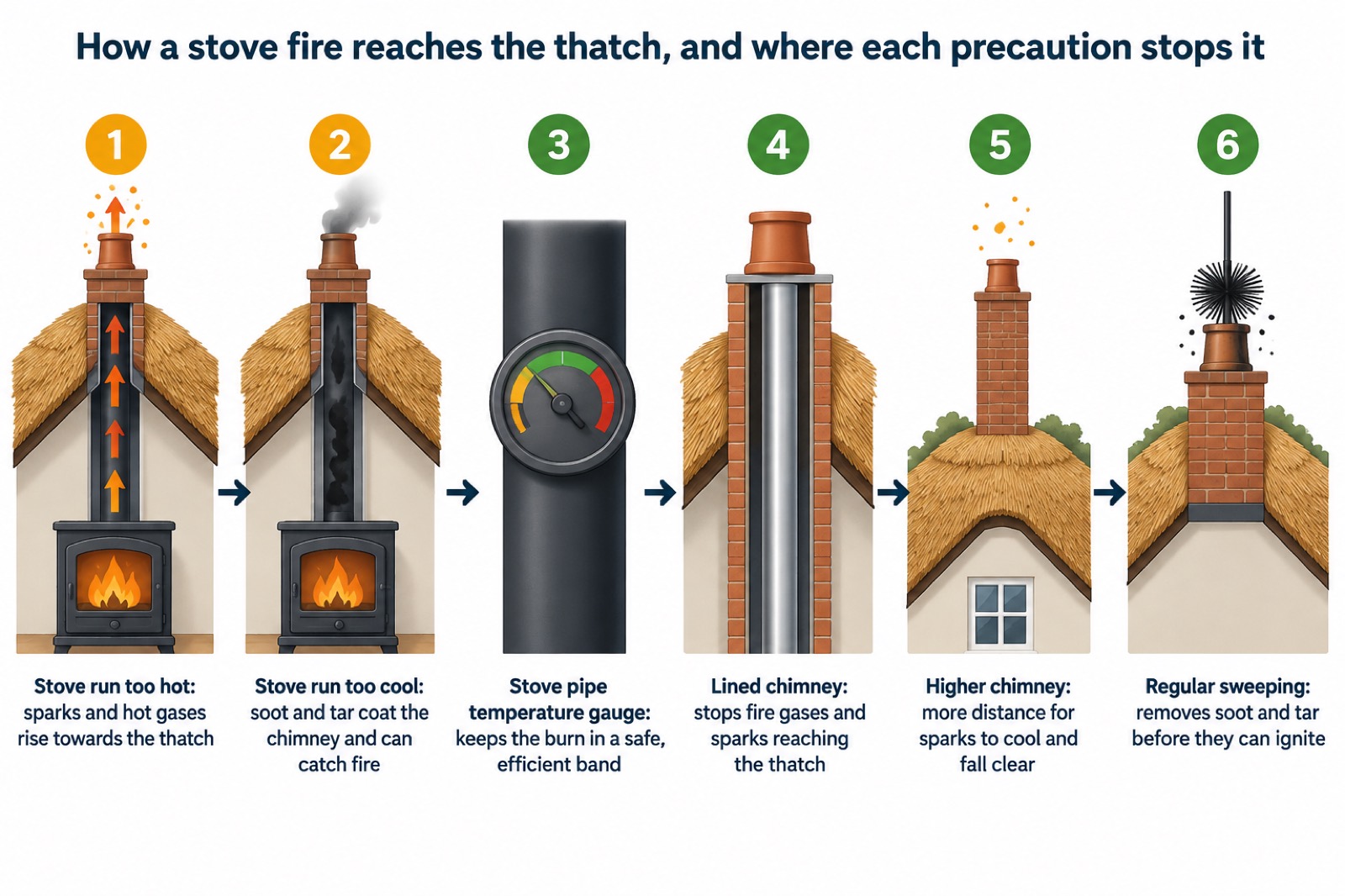
The mechanism is simple enough to be worth understanding. A spark or hot gas leaving a chimney that is too short, or escaping through a cracked or unlined flue, lands in or heats the thatch. Devon and Somerset Fire and Rescue Service warn that "just one spark is all it takes to ignite a thatch roof"8. Thatch is not quick to catch from a single ember in every case, but it does not need a flame, only enough sustained heat, and once the surface layer is alight the fire moves through the coatwork faster than crews can get at it.
Two other causes sit outside the hearth. Badly installed or deteriorating electrical cables in the roof space can ignite the thatch or the timbers near it3. And hot work by contractors, or fires lit in gardens close by, can send embers onto the roof. The sections below cover each of these in turn, starting with the biggest one: the chimney.
Stove temperature: too hot sparks the thatch, too cool coats the chimney
If you heat your thatched home with a wood-burning stove, this is the section that matters most. Devon and Somerset Fire and Rescue Service are direct about the risk: stoves "present a bigger risk of a fire in your thatched property than a traditional open fire"3. The reason is the way a stove is used. A stove is designed to run hot and steady, and the flue gases leaving it are hotter than those from an open fire, so anything wrong with the chimney or the burn rate has more energy behind it.
The service describes a two-sided trap. "Using your stove at high temperatures risks sparks catching the thatch; while using it at a low temperature can coat the chimney with soot and tar leading to a chimney fire"3. Run the stove hard and you send sparks and hot gases up a flue that ends close to combustible material. Run it cool, slumbering overnight or damping the air right down, and the gases cool before they leave the chimney, depositing soot and tar on the flue walls. The UK government's Ready to Burn guidance notes that during use "soot and tar build up in the chimney reducing the efficiency and increasing the risk of chimney fires"9. Those deposits are exactly what catches light in a chimney fire, and a chimney fire in a thatched property is the leading route to losing the roof.
Use a stove pipe temperature gauge
The way out of the trap is to know the temperature rather than guess it. Devon and Somerset Fire and Rescue Service advise: "Use a stove pipe temperature gauge. This will help you use your stove at a safe and efficient temperature"3. A stove pipe temperature gauge is a small magnetic or probe thermometer that clips to the flue pipe a short distance above the stove and shows the running temperature of the gases leaving the appliance. With one fitted, you can keep the burn in the band where the stove runs cleanly, hot enough that tar does not condense in the chimney, and not so hot that sparks and glowing particles are carried up towards the thatch.
A gauge costs little and takes a minute to fit, and it turns stove use from guesswork into something you can check every time you light the fire. Check it when you reload the stove and when you damper it down for the night, because those are the moments the temperature swings furthest in both directions.
Line the chimney and consider its height
Two further measures change the physics between the fire and the thatch. First, Devon and Somerset Fire and Rescue Service advise: "Line your chimney. This stops fire gases and sparks from reaching the thatch"3. A liner is a continuous metal or other suitable tube running the length of the flue, so gases and sparks are carried up inside it rather than seeping through old brickwork and mortar joints into the thatch around the chimney. In an old property with a brick flue, lining also removes the cracks and degraded joints that a visual loft check might otherwise reveal.
Second, the service recommends raising the height of the chimney, because increased distance between the chimney top and the thatch reduces the chance of sparks setting the thatch alight10. A taller stack gives sparks further to travel, more time to cool, and more chance to fall clear of the roof rather than onto it. Both measures are work for a professional sweep or installer, but they are one-off jobs that change the risk every day afterwards.
Chimney sweeping frequency
Sweeping is the single most effective routine precaution, because it removes the fuel a chimney fire needs. Lincolnshire County Council state that "the risk of having a chimney fire reduces when chimneys are swept regularly. It also reduces the risk of a build-up of carbon monoxide"11. That second point matters as much as the first: a blocked or heavily coated flue cannot clear the gases properly, and carbon monoxide is a risk to the household as well as the roof. If you have any appliance that burns fuel, fit a carbon monoxide alarm alongside the sweeping routine.
How often depends on what you burn. The fire and rescue services publish consistent figures, and for a thatched home you should follow the most frequent interval that applies to you.
| Fuel or appliance | How often to sweep | Source |
|---|---|---|
| Wood | Every three months when in use (quarterly) | 4 |
| Bituminous coal | At least twice a year | 14 |
| Smokeless fuels and smokeless coals | At least once a year | 4 |
| Oil-fired appliances | Once a year | 16 |
| Gas appliances | Once a year, if designed for sweeping | 16 |
For a thatched property, the wood interval is the one most households need. Devon and Somerset Fire and Rescue Service, who attend around 300 domestic chimney fires a year, specify "wood, every three months"4, and the Scottish Fire and Rescue Service leaflet says the same: "Wood Quarterly when in use"12. Somerset Council's household fire safety guidance agrees that wood means "quarterly when in use"13. In practice that means a sweep at the start of the season, again mid-winter, and again before spring, plus one more if you burn into the warmer months.
Timing matters as well as frequency. Devon and Somerset Fire and Rescue Service advise that "most importantly, have it swept before your first fire"8. A flue that has sat since last spring will have loosened deposits, possibly bird nests or debris, and the first fire of the autumn is the moment that material is heated. Book the sweep before the cold weather arrives, when sweeps are also less busy.
Use a registered or certified chimney sweep, and ask them while they are there about the condition of the flue, the liner if you have one, and the chimney stack above the thatch. A sweep who knows the property is thatched will look at the right things. For more on running heating and cooking when the mains supply fails, see heating and cooking without mains power or gas.
Warning signs of a problem with the thatch or chimney
A thatch or chimney problem usually announces itself before it becomes a fire, if you know where to look. Devon and Somerset Fire and Rescue Service list the signs that suggest a problem with your thatch or chimney3:
- Stained plaster or wallpaper around the chimney, inside the house
- Dark deposits in the loft or on the chimney
- Soot on cobwebs in the roof space
- Crumbling of the chimney's lining
- Scorching to wooden lintels
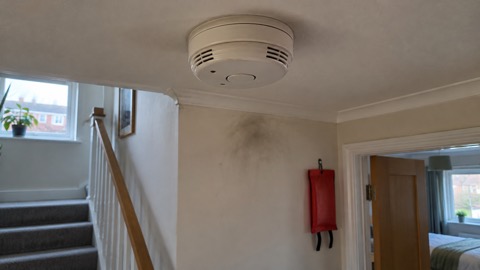
Any one of these means gases or soot are escaping the flue where they should not be, or that heat is reaching timber it should never touch. Staining on a bedroom or landing ceiling around the chimney breast is the sign householders most often notice first, and it should never be painted over and forgotten: it is evidence of a leak in the system that carries hot gases through your roof.
Checking the chimney yourself
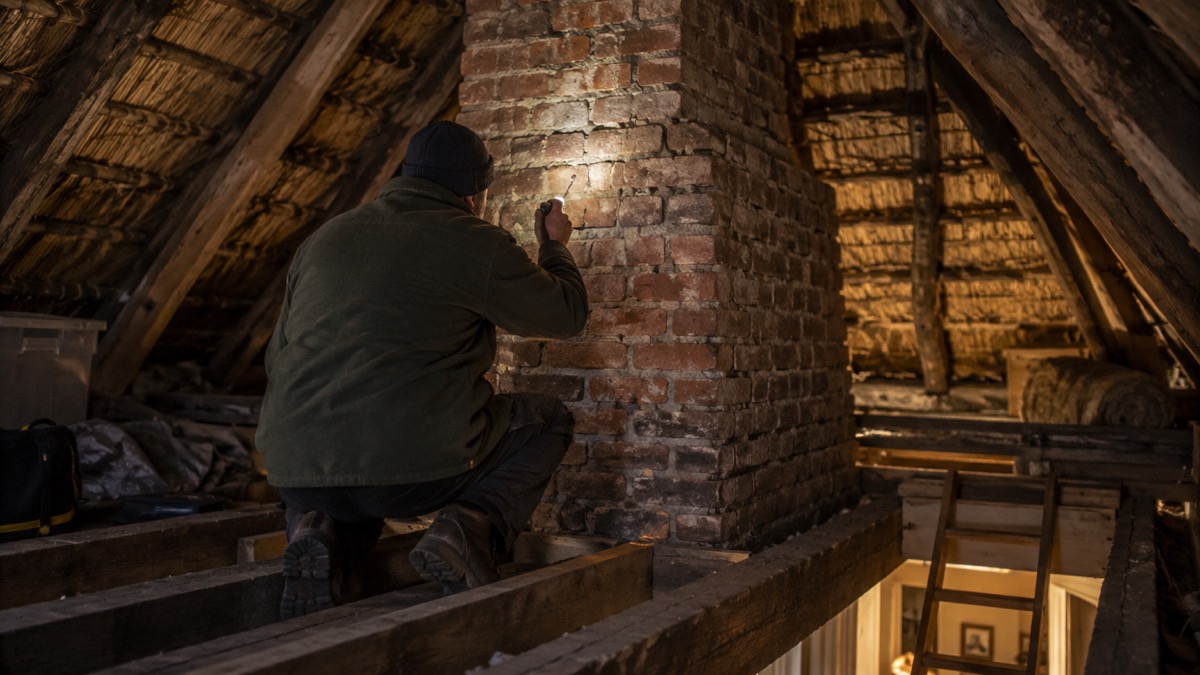
There is a check you can do yourself, and the Scottish Fire and Rescue Service set it out. Go into the loft or roof space, if you are physically able, while the fire is alight, and "check for smoke or soot coming from cracks and defective brickwork or mortar joints"6. In the dark of a loft with the fire burning below, even a small leak shows as smoke movement or fresh soot marks that were not there before. Take a torch, do not touch the chimney or any pipework, and do not use the loft hatch as a ladder. If you see smoke or fresh soot, let the fire die down safely and do not relight it until the chimney has been inspected and repaired.
A visual check does not replace sweeping or professional inspection, and there is a free service worth calling on. Cornwall Fire and Rescue Service state: "If you are the owner of a thatch property, you qualify for a free home fire safety check"17. Devon and Somerset Fire and Rescue Service say the same about their home fire safety visits: "If you live in a thatched property, you are eligible for a free home fire safety visit"10. Contact your local fire and rescue service and ask; the visit is free, and crews will look at the specific risks of a thatched roof, including alarms and escape routes, which the next section covers.
No bonfires, fireworks or sky lanterns nearby
The risk to a thatched roof does not stop at the hearth. Devon and Somerset Fire and Rescue Service are blunt: "Don't have bonfires or use fireworks and sky lanterns nearby. It is a good idea to chat about this with your neighbours"3. Their safety campaign on the causes of thatch fires goes further: "If you live in a thatched home, you should never have a bonfire or set off fireworks and sky lanterns"10. North Wales Fire and Rescue Service add that you should not burn rubbish or garden waste near a thatched property18.
The reason is the same spark rule that governs the chimney. A bonfire throws embers well beyond its own edge, fireworks drop burning debris, and a sky lantern carries a live flame through the air with no way of steering it. Devon and Somerset Fire and Rescue Service's fireworks guidance says not to use fireworks near thatched properties or crops, especially during periods of dry weather19, and says of sky lanterns: "do not launch if you're near built-up areas or roads, crops, thatched buildings, hay bales, trees, and power lines"19. A dry thatch in summer is at its most receptive to a stray ember.
Agreeing outdoor fire rules with neighbours
Because the danger comes from neighbouring land as much as your own, the conversation with neighbours is part of the precaution, not a courtesy after it. Fire and rescue services frame it that way: Devon and Somerset say it is a good idea to chat with your neighbours about bonfires, fireworks and sky lanterns3. Bonfire guidance from Lincolnshire County Council supports the same approach from the other side, advising anyone lighting a bonfire to "warn your neighbours beforehand, they are much less likely to complain"20. A neighbour who knows your roof is thatched, and who knows to tell you before lighting anything, is a real layer of protection.
When you talk, be specific rather than general. Ask to be told in advance of any bonfire or firework display, ask that fires be sited well away from your roof and any overhanging thatch, and ask that sky lanterns not be released at all. The government's Ready to Burn guidance also asks householders to "be considerate towards your neighbours when lighting bonfires, outdoor burners and BBQs and always take care not to cause a smoke nuisance"9, so the expectation of consideration runs both ways. For wider advice on fireworks and bonfires, see fireworks, sparklers and bonfires: staying safe.
Alarms, escape and the roof space
A thatch fire moves fast, so the household's own detection and escape plan have to be ready before it starts. Every fire and rescue service advises working smoke alarms on each floor. In a thatched property, the roof space is where the fire is likely to be growing while the household sleeps, so treat any alarm or detection covering the loft and the stairway as part of the thatch precautions, not just general fire safety. For choosing and placing alarms, see smoke alarms: types and how to choose one and where to fit smoke alarms.
Two further points come straight from the services' thatch and chimney guidance. First, the loft itself: North Wales Fire and Rescue Service advise, "Use a bulkhead light fitting in your loft space. Avoid exposed light bulbs, which are more of a fire hazard"18. An exposed bulb in a loft under thatch can be knocked, can sit against stored items, and can heat material near it; a bulkhead fitting encloses the lamp. Keep the loft free of stored items near the chimney and the electrical runs, since badly installed electricity cables are a known cause of thatch fires3.
Second, the hearth. If you use an open fire as well as, or instead of, a stove, use a sparkguard. Mid and West Wales Fire and Rescue Service state that "sparkguards can prevent a serious property fire"16, and Cornwall Fire and Rescue Service say the same17. During Storm Éowyn, when households were heating with open fires during power cuts, the Northern Ireland Fire and Rescue Service advised that "if using an open fire to keep warm use a fire guard"21. A sparkguard stops embers spitting onto rugs and flooring, which matters in any home and more in one whose roof will not give a fire anything to slow it down.
Finally, plan the escape. A fire that starts in the roof space above bedrooms can cut off the normal route down. Make a fire escape plan that covers a fire starting above the bedrooms, keep door keys where they can be found in the dark, and know what to do if you cannot escape. If a fire does start, follow the steps in what to do if a fire starts in your house, and afterwards see what to do after a fire.
Where to get help
Fire and rescue services across the UK offer free home fire safety visits, and thatched properties are specifically identified as eligible. Cornwall Fire and Rescue Service state that thatch property owners qualify for a free home fire safety check17, and Devon and Somerset Fire and Rescue Service confirm that people living in thatched properties are eligible for a free home fire safety visit10. Contact your local service through its website or the non-emergency number to arrange one; the visit covers alarms, escape routes and the specific risks of your home.
For the chimney itself, use a registered sweep and, for lining or raising the stack, a qualified installer. Report any warning sign, staining, dark deposits, soot on cobwebs, crumbling lining or scorched lintels, to a professional before lighting the fire again3. And if you ever suspect a chimney fire, get out, stay out and call 999: a chimney fire in a thatched property is not a small event, it is the leading cause of thatch fires4, and the earlier crews arrive, the more of the building they can save.
Sources (21)
- Thatched properties safety advice, Dorset and Wiltshire Fire and Rescue Service, 2022-08-03
- Thatched property safety guide, Suffolk County Council, 2023
- Thatched properties, Devon and Somerset Fire and Rescue Service, 2026
- Open fires and chimney safety, Devon and Somerset Fire and Rescue Service, 2026
- Thatched roof fire safety, Warwickshire County Council, 2026-10-29
- Chimney safety, Scottish Fire and Rescue Service, 2026-10-25
- Facts about chimney fires, Devon and Somerset Fire and Rescue Service, 2022-12-07
- Chimney fire safety, Devon and Somerset Fire and Rescue Service, 2023-09-01
- Ready to Burn guidance, UK government, 2023-10
- Safety causes of thatch fires and how to avoid them, Devon and Somerset Fire and Rescue Service, 2021-11-18
- Chimney safety, Lincolnshire County Council, 2026-10-29
- Chimney safety leaflet, Scottish Fire and Rescue Service, 2024-01
- Household fire safety, Somerset Council, 2025-01-30
- Chimney fire safety, Oxfordshire County Council, 2026-10-29
- Chimney safety, Manchester Fire and Rescue Service, 2026-10-29
- Chimneys, open fires and wood burning stoves, Mid and West Wales Fire and Rescue Service, 2026-10-29
- Chimney fires, Cornwall Fire and Rescue Service, 2026-10-29
- Stay safe this winter, North Wales Fire and Rescue Service, 2016
- Fireworks safety, Devon and Somerset Fire and Rescue Service, 2026
- Bonfire safety, Lincolnshire County Council, 2026-10-29
- NIFRS Storm Éowyn operational update, Northern Ireland Fire and Rescue Service, 2025-01-24
 Home Fire Safety Checklist
 Bedtime Fire Safety Checks
 Fire Risk Checks for Carers
 What to Do If Fire Starts
 How to Make a Fire Escape Plan
 Fire in a Block of Flats
 Kitchen Fires and Cooking Safety
 Electrical Fires and Sockets
 Smoking, Matches and Lighters
 E-bike Charging Safety
 Hoarding and Fire Risk
 Fireworks and Bonfire Safety
 What to Do After a House Fire
 How Fire Services Respond
 Alarms for Deaf People