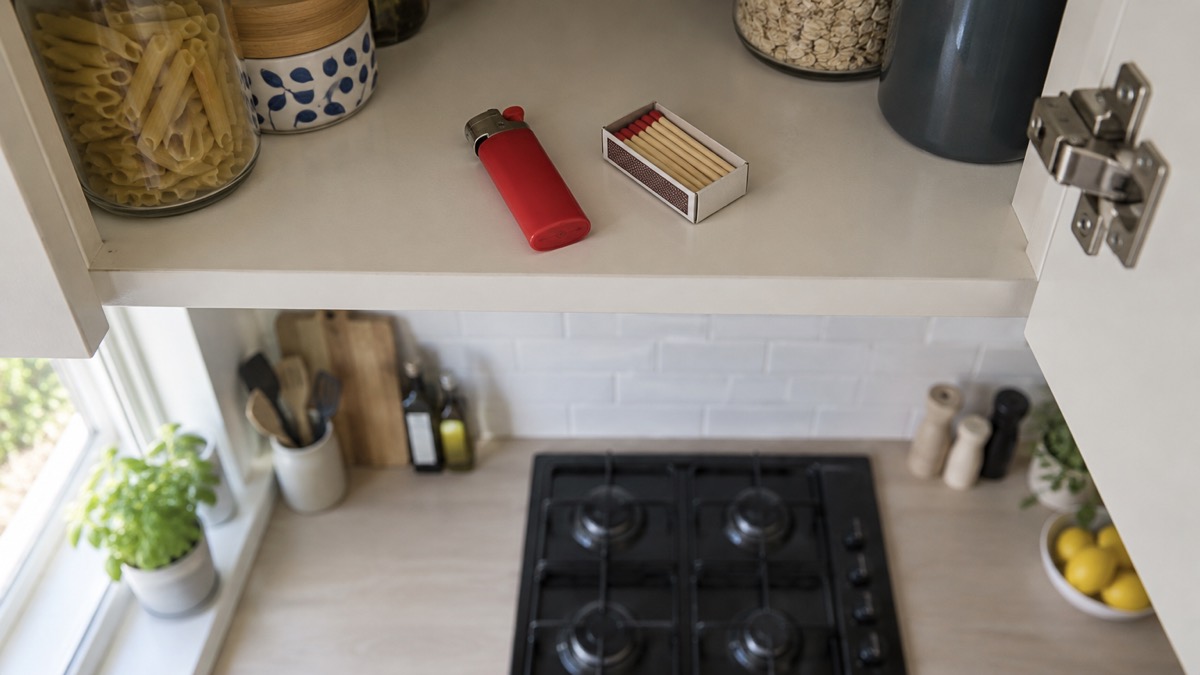
Smoking materials cause more fatal house fires in the UK than anything else. Devon and Somerset Fire and Rescue Service states it plainly: "Smoking is the biggest cause of fatal fires"1. Nationally, someone dies from a fire started by a cigarette roughly every six days1, and fires started by smoking materials account for one third of all accidental fire deaths2. Smoking-related house fires are more likely to cause death and injury than any other cause of house fire1.
The numbers are stark because of how these fires start. Cooking causes more accidental fires overall, over 50 per cent of them, but smoker's materials are the main cause in fatal fires in the home3. A dropped cigarette does not flare up at once: it smoulders, often in a sofa or bedding, sometimes while the person who dropped it has fallen asleep. By the time there are flames, the room can be full of smoke.
The good news is that every fire and rescue service in the UK gives the same short list of habits that prevent nearly all of these fires: never smoke in bed or when tired, never leave anything lit unattended, stub cigarettes out properly every time, keep lighters and matches away from children, and fit a working smoke alarm. This page sets out that advice, what to do about each risk, and where to get help to quit, which fire services themselves describe as the best prevention there is.
Why smoking is the top cause of fire deaths
Fire and rescue services across all four nations are unanimous on this. Greater Manchester Fire and Rescue Service says smoking is the top cause of accidental fire deaths nationally and in Greater Manchester6, and the Northern Ireland Fire & Rescue Service calls it "the number one cause of accidental fire deaths in the home"7. Lincolnshire's fire safety guidance states that more people die in fires caused by smoking than from any other cause8, and the London Fire Brigade calls smoking the leading cause of fire fatalities9.
The scale is easiest to see in the figures. Smoking materials such as cigarettes and cigars accidentally start almost 2,000 fires in the home every year4. In London alone in 2026, the Brigade reported the equivalent of more than two smoking-related fire incidents every day, with four people killed and 55 people injured10. In Northern Ireland, the Fire & Rescue Service reported smoking materials as the leading cause of fatal house fires, accounting for 43 per cent of such deaths over the past ten years11.
Two things make smoking fires unusually deadly compared with, say, kitchen fires. First, they often start where a person is sleeping or drowsy, so the fire has time to grow before anyone reacts. Second, they smoulder before they flame, which means a smoke alarm may be the only warning. That is why the same services that rank smoking as the top cause also put smoke alarms at the centre of their advice: a working smoke alarm greatly reduces the risk of injury or death due to fire12, and you are 4 times more likely to die in a domestic fire if you do not have one3.
If a fire does start, what you do in the first minute matters. Read what to do if a fire starts in your house and make a fire escape plan before you need one.
Never smoke in bed, and never smoke when tired
This is the most repeated instruction in UK fire safety advice, and every service phrases it the same way. Greater Manchester Fire and Rescue Service: "Never smoke in bed or when you're tired. It's easy to fall asleep with a cigarette burning and set furniture, clothes or bedding alight"5. The Scottish Fire and Rescue Service adds the armchair and sofa to the warning: if you're drinking or are feeling tired, never smoke in bed or on an armchair or sofa13.
The reason is simple. A cigarette burns for several minutes, and a person who is tired, has been drinking, or has taken drowsy medication can fall asleep long before it is out. The cigarette drops, the bedding or clothing catches, and the person sleeps through the critical minutes. nidirect's guidance for Northern Ireland households puts it as a rule for all accidental house fires: never smoke in bed or when feeling drowsy or tired14.
The Northern Ireland Fire & Rescue Service lists the situations in which you should never smoke at all7:
- Never leave any smoking materials unattended
- Never smoke in bed
- Never smoke if you have taken medication that makes you feel drowsy or if you have consumed alcohol
- Never smoke near oxygen therapy equipment or an airflow mattress
- Do not smoke near clothing, bedding or dressings contaminated with emollient creams
The last two points matter for households where someone is ill or being cared for. Oxygen therapy equipment and airflow mattresses are common in homes with serious illness, and emollient skin creams soak into fabric and make it easier to ignite. If someone in your home uses oxygen, read our page on fire safety when someone uses oxygen therapy, and for creams, see are emollient creams a fire risk?.
The London Fire Brigade's 2026 warning adds one more habit to watch: avoid smoking on armchairs and sofas, especially if you think you might fall asleep10. If you need to lie down, don't light up, as Mid and West Wales Fire and Rescue Service puts it: "You could doze off and set your bed on fire"15.
Alcohol makes smoking fires far more likely
Alcohol deserves its own mention because it appears again and again in the fatal fire figures. Nationally, more than half of home fire fatalities involve alcohol or drug-related behaviour, usually people falling asleep while cooking or smoking16. The Northern Ireland Fire & Rescue Service notes that alcohol significantly affects behaviour and is a major contributing factor in fire-related deaths and injuries, and that many fire deaths where alcohol is a contributing factor involved people who lived alone7.
The Scottish Fire and Rescue Service makes the link directly: many fires started by cigarettes happen to people who have also been drinking and are sleepy13. That combination, a lit cigarette, alcohol and a soft chair or bed, is the pattern behind a large share of smoking fire deaths.
The practical advice follows from the pattern. If you are drinking:
- Smoke outside rather than indoors17
- Never smoke in bed or on an armchair or sofa13
- Do not light candles or start cooking17
- Stub cigarettes out fully before leaving them18
The Northern Ireland Fire & Rescue Service's student safety advice applies the same rules to an evening with friends: avoid cooking, do not light candles, avoid electric heaters and smoke outside17. The same service noted during the festive period that the risk of accidents is greater after alcohol is consumed19.
Putting cigarettes out properly, every time
The government's Prepare campaign gives the instruction in four words: "Stub cigarettes out properly and dispose of them carefully, put them out, right out"20. A cigarette that looks finished can still be smouldering inside, and that is how bin fires and sofa fires start hours after the smoker went to bed.
The habits that fire services ask for are simple:
- Always stub cigarettes out fully in an ashtray14
- Never leave a lit cigarette, cigar or pipe lying around6
- Do not leave lit cigarettes, cigars or pipes unattended, as they can easily over-balance as they burn down2
- Empty ashtrays regularly, and make sure cigarettes are completely extinguished before they go into the outside bin17
That last point catches many people out. A cigarette stubbed in an ashtray can stay hot enough to ignite bin contents, so the Northern Ireland Fire & Rescue Service's advice is to make sure cigarettes are extinguished correctly and ashtrays emptied safely21. Tip ashtray contents into the outside bin only when you are certain nothing is still burning, and never into an indoor bin or a bag of rubbish in the house.
Use a proper ashtray, one that is deep and stable and cannot be knocked over. Devon and Somerset Fire and Rescue Service lists inappropriate ashtrays, such as butter tubs, among the warning signs of fire risk in a smoker's home22. An overflowing ashtray is on the same list, because stubs balanced on a full ashtray fall off easily.
Why smoking fires go unnoticed: they smoulder first
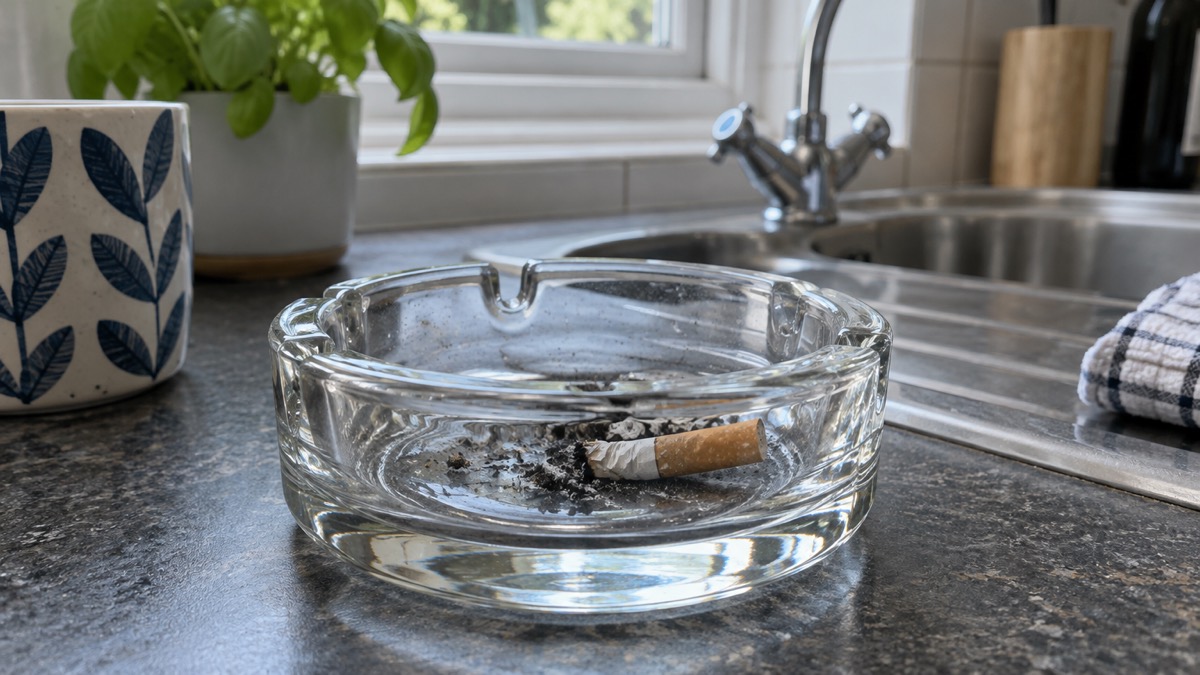
Fires started by smoking materials can smoulder and go unnoticed at first23. This single fact explains most of the death toll. A chip pan fire is loud, bright and immediate; a cigarette dropped down the side of a cushion can burn slowly and smokelessly for a long time before flames appear, and the person closest to it may be asleep.
The same behaviour appears outdoors. Dorset and Wiltshire Fire and Rescue Service warns that residual heat and embers can cause hidden smouldering fires underground, sometimes for a number of days, before spreading to surface vegetation24. A cigarette end that seems harmless can hold heat far longer than it looks like it should.
This is why smoke alarms matter more for smokers than for anyone else. A smouldering fire produces smoke before it produces flames, and an alarm in the right place buys the minutes that a fast fire would not give you. Suffolk's home fire safety guide notes that you can have linked alarms installed, so that when one alarm detects a fire they all go off together, which is useful in a large house or over several levels25. For choosing and placing alarms, see our guides on smoke alarms, where to fit smoke alarms and interlinked alarms.
It is also why you should never leave a room with anything still burning, and never assume a cigarette has gone out because it has stopped glowing. Check it, wet it if in doubt, and only then walk away.
Matches and lighters: keeping them out of children's hands
Children and fire-starting tools are a dangerous mix, and fire services treat this as part of smoking fire prevention. The London Fire Brigade's advice is to keep matches and lighters out of children's reach, and to buy child resistant lighters9. The Northern Ireland Fire & Rescue Service goes further: never let children play with matches or cigarette lighters, teach children not to play with fire, and keep matches and lighters where children are not tempted to play with them7.
Warwickshire's guidance adds two points for the whole household. Teach children about the risk of smoking causing fires, and keep lighters, matches and smoking materials away from flammable substances, including petrol, cleaning solvents and other flammable liquids26. Lighters and matches stored on a windowsill above aerosols or cleaning fluids are a small hazard waiting to happen.
For a smoker with shaky hands or limited grip, the London Fire Brigade's carers' guidance makes a practical point: lighters are safer than matches, as a dropped match can start a fire27. If you are choosing for an older person, that is worth knowing.
Devon and Somerset Fire and Rescue Service lists the warning signs that a smoker's home has a rising fire risk, useful if you check on a relative22:
- Burns on carpets, furniture, bedding and clothing
- Evidence of smoking in bed
- Carelessly discarded cigarettes or matches
- Overflowing ashtrays or inappropriate ashtrays such as butter tubs
- Lighters or matches within the reach of children
If a child in your household has started playing with fire rather than just handling lighters, fire and rescue services run intervention schemes for exactly this: see children who set fires.
Smoking outside: the safest way to smoke if you still smoke
If you smoke and are not ready to quit, every fire service gives the same next-best step: smoke outside. Devon and Somerset Fire and Rescue Service says the best way to protect yourself and others from the dangers of smoking at home is to smoke outside28. Warwickshire's guidance explains why it works: smoking outside eliminates the risk of accidental fires caused by dropped cigarettes or ashes26. Somerset's household fire safety advice puts it in family terms: the best way to protect your family from the dangers of smoking inside the home is by choosing to smoke outside3.
Dorset and Wiltshire Fire and Rescue Service ranks the options in order: the best protection is to give up smoking altogether, or only ever smoke outside2. Greater Manchester Fire and Rescue Service calls a smokefree home, meaning smoking outdoors, a real reduction in the risk of a fire in your property6.
Smoking outside only works if you do it properly:
- Take extra care to ensure cigarettes are put right out and disposed of safely29
- Use a proper ashtray or a sturdy container outdoors, not a flowerpot or grass
- Never drop cigarette ends on the ground or throw them out of car windows24
- Do not smoke near anything flammable, including petrol, solvents and dry vegetation26
A cigarette end dropped into a plant pot is a common way for a "safe" outdoor habit to cause a fire anyway, because potting compost and dry roots smoulder well.
Discarded smoking materials outdoors: grass and heath fires
Cigarettes do not only cause house fires. The London Fire Brigade is direct about the outdoor risk: "Anything burning can start a grass fire. Cigarettes and barbecues are commonly to blame"29. In warm, dry weather, grass, heathland and countryside can catch from a single end dropped from a car window or trodden into dry ground.
Dorset and Wiltshire Fire and Rescue Service, whose area includes large tracts of heathland, asks everyone to extinguish smoking materials properly, and not to throw cigarette ends on the ground or out of car windows, but to take their litter home24. Their warning about underground smouldering is worth remembering: embers can hold heat below the surface for days before spreading to surface vegetation24, so a fire that seems to have gone out may not have.
The practical rules for summer and dry spells:
- Extinguish smoking materials fully before you move on24
- Take cigarette ends home rather than dropping them24
- Never throw ends from a car window24
- Treat dry grass, heath and woodland as flammable in warm weather29
For the wider picture of fire risk in hot, dry conditions, see our guide to heatwaves and drought.
Stopping smoking: the surest prevention there is
Fire and rescue services are consistent on this. Greater Manchester Fire and Rescue Service: "The best way to prevent a smoking related fire at home is to stop smoking"5. The London Fire Brigade's carers' guidance says the same, and asks carers to start by encouraging the person they care for to quit27. Mid and West Wales Fire and Rescue Service: "Giving up smoking is the best way to prevent a fire in your home due to smoking materials"15. Dorset and Wiltshire Fire and Rescue Service advises stopping smoking, alongside smoking outside2.
This is fire safety advice, not health advice, but the two point the same way. Essex County Fire and Rescue Service notes that smoking is harmful to your health and is the most common cause of fatal fires16.
Help to quit is free on the NHS. Greater Manchester Fire and Rescue Service's own leaflet states that the best way to stop smoking is through a combination of medication and support, both of which are available on the NHS30, and points smokers to makesmokinghistory.co.uk for local help5. Dorset and Wiltshire Fire and Rescue Service directs people to the NHS at www.nhs.uk/smokefree31, and the London Fire Brigade's guidance says to find help and advice on quitting on the NHS Smokefree website27. If you care for someone who smokes, the London Fire Brigade asks you to talk to them about the risks relating to smoking and provide the associated fire safety advice27.
Smoke alarms and the checks that protect a smoker's home
Every habit on this page reduces the chance of a fire starting. A smoke alarm is what protects you when one starts anyway, and for a smoker it is not optional. A working smoke alarm greatly reduces the risk of injury or death due to fire12, and you are 4 times more likely to die in a domestic fire without one3.
Because smoking fires smoulder first, think about coverage as well as presence:
- Fit alarms on every level of your home and test them regularly
- In a large or multi-storey house, consider linked alarms, which all go off together when one detects a fire25
- If anyone in the household is deaf or hard of hearing, specialist alarms exist: see smoke and CO alarms for deaf and hard of hearing people
Alongside alarms, the habits that close the loop are the ones above: stub out properly, empty ashtrays safely, keep lighters from children, and never smoke in bed. Our fire safety checklist for your home and bedtime fire safety checks pull these together into routines.
Caring for someone who smokes
If you look after a relative, neighbour or client who smokes, the fire risk is higher and the warning signs are visible. Devon and Somerset Fire and Rescue Service's home safety partnership guidance lists the signs to look for, from burns on furniture to overflowing ashtrays and lighters within children's reach22. The London Fire Brigade's carers' guidance asks carers to talk to the person about the risks and provide the fire safety advice27, and to start by encouraging them to quit27.
Where the person receives care, build fire safety into their daily routine. The fire and rescue service's advice is plain: never smoke in bed, and take extra care when smoking while tired, because it is easy to fall asleep with a cigarette burning and set the bed, sofa or clothes on fire27. The consequences of getting this wrong are real: fires caused by smoking materials result in more deaths than any other type of fire in the UK32, and in Greater Manchester over 40% of accidental fire deaths are caused by smoking materials32.
Practical steps for a carer:
- Encourage the person to quit, or to smoke only outside27
- Make sure fire risk is in the care plan, including bedding and emollient creams27
- Swap matches for a lighter, since a dropped match can start a fire27
- Check for burns on furniture, smoking in bed and overflowing ashtrays22
- Confirm a working smoke alarm, and consider linked alarms in a larger home25
Our checklist of fire risk checks for a vulnerable person's home goes through this in order, and extra help in an emergency covers the wider support available to older and disabled households.
Sources (32)
- Smoking safety at home, Devon and Somerset Fire and Rescue Service
- Smoking and e-cigarettes: causes of fires, Dorset and Wiltshire Fire and Rescue Service, 2024-11-19
- Household fire safety, Somerset Council, 2025-01-30
- Smoking fire safety, North Yorkshire Fire and Rescue Service, 2026-03-09
- Smoking and fire safety campaign, Greater Manchester Fire and Rescue Service, 2026-10-29
- Smoking safety in your home, Greater Manchester Fire and Rescue Service, 2026-10-29
- Home fire safety, Northern Ireland Fire & Rescue Service, 2026-10-14
- Smoking and vaping safety, Lincolnshire County Council, 2026-10-29
- Smoking safety in the home, London Fire Brigade, 2026-10-25
- Brigade warns Londoners about dangers of smoking following weekend fires, London Fire Brigade, 2026-10-19
- NIFRS reveals highest house fire fatalities in 25 years, Northern Ireland Fire & Rescue Service, 2026-01-23
- Home safety advice, Essex Prepared
- Smoking safety at home, Scottish Fire and Rescue Service, 2024-02-06
- Avoiding accidental fires in the home, nidirect, 2025-10-16
- Smoking fire safety tips, Mid and West Wales Fire and Rescue Service, 2026-10-29
- Fire safety in the home, Essex County Fire and Rescue Service, 2025-02
- Student fire safety, Northern Ireland Fire & Rescue Service, 2026-09-15
- Home fire safety guide, Wirral Community Health and Care NHS Foundation Trust, 2025-01-24
- Cooking still the leading cause of house fires during the festive period, Northern Ireland Fire & Rescue Service, 2021-12-07
- Domestic fire, UK Prepare Campaign, 2026-10-12
- NIFRS home fire safety appeal after four fatalities across weekend, Northern Ireland Fire & Rescue Service, 2025-12-15
- Home safety partnerships: carers, Devon and Somerset Fire and Rescue Service
- Caring for smokers, Greater Manchester Fire and Rescue Service, 2026-10-29
- Heath fires and countryside safety, Dorset and Wiltshire Fire and Rescue Service, 2026-05-05
- Fire safety in the home, Suffolk County Council, 2021-11
- Fire safety tips: smoking, vaping and using e-cigarettes, Warwickshire County Council, 2026-10-29
- Caring for smokers: carers and support workers, London Fire Brigade, 2026-10-25
- Student safety, Devon and Somerset Fire and Rescue Service
- Grass and wildfires, London Fire Brigade, 2026-10-25
- Smoking and fire safely leaflet, Greater Manchester Fire and Rescue Service, 2022
- Advice for carers: caring for someone who smokes, Dorset and Wiltshire Fire and Rescue Service, 2025-11-19
- Safer Together: Fire Risk Identification and Management, Northern Ireland Fire & Rescue Service
 Home Fire Safety Checklist
 Bedtime Fire Safety Checks
 Fire Risk Checks for Carers
 What to Do If Fire Starts
 How to Make a Fire Escape Plan
 Fire in a Block of Flats
 Kitchen Fires and Cooking Safety
 Electrical Fires and Sockets
 E-bike Charging Safety
 Hoarding and Fire Risk
 Thatched Properties Fire Risk
 Fireworks and Bonfire Safety
 What to Do After a House Fire
 How Fire Services Respond
 Alarms for Deaf People