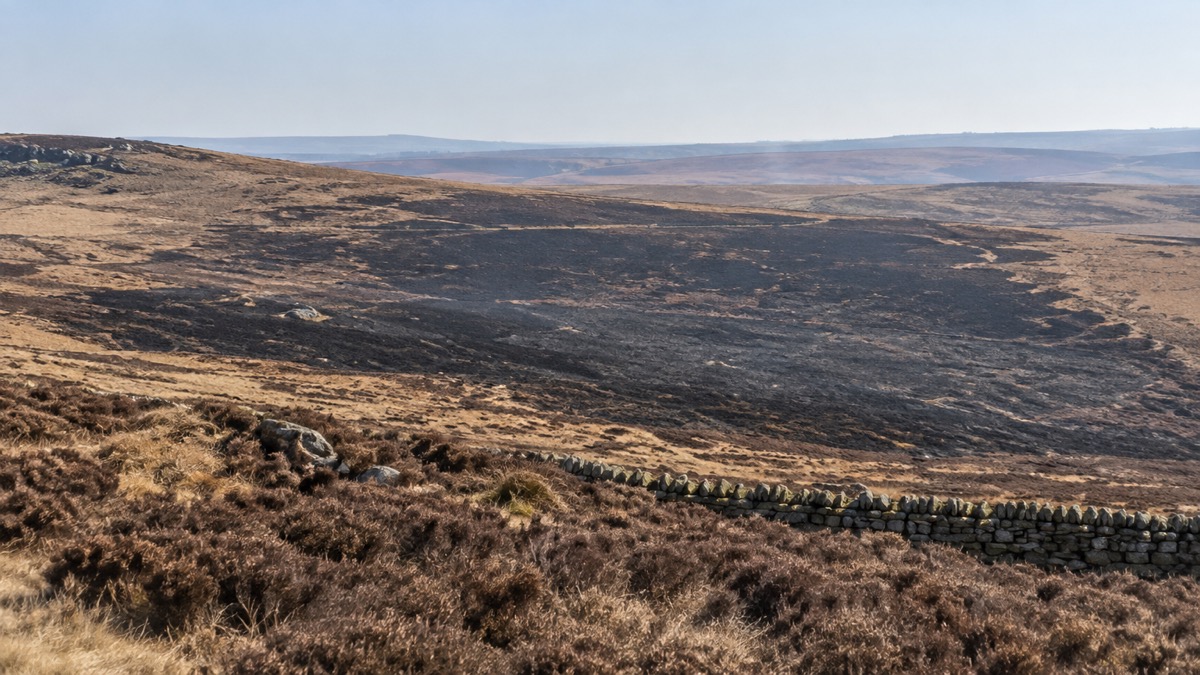
Wildfires burn in the UK every year, and more people now live where wildfires are a risk1. If you see a fire in the countryside, the instruction from every fire and rescue service is the same: leave the area as soon as possible and call 9992. Do not wait to see whether it grows, and do not assume someone else has already reported it. Fire services ask to be alerted as early as possible, because a fire caught while it is small is far easier and safer to bring under control3.
Most wildfires in the UK are caused by human activity4: discarded cigarettes, barbecues, glass left in the sun, and fires set deliberately. That means most of them are preventable, and the habits that prevent them are simple. The risk is highest in hot, dry and windy weather, and the fire services report that the season is getting longer, extending from spring into summer and, on government projections, into late summer and autumn5.
This page covers what to do if you see a fire, how the risk is rated across the UK, what never to do outdoors in dry weather, how to protect a home near grassland or moorland, and where to get help from your fire service. For the moment-by-moment actions if a fire is close to you, see What to Do If You See or Are Near a Wildfire.
If you see a fire in the countryside: get to safety and call 999
Every fire and rescue service in the UK gives the same first instruction. Manchester Fire and Rescue Service puts it plainly: "If you see a fire in the countryside, report it immediately. Leave the area as soon as possible and dial 999"2. Northern Ireland's fire service says the same for its area: if you see a fire in the countryside, dial 999 and report it to NIFRS11. The number is the same in England, Scotland, Wales and Northern Ireland.
Leave before you call if you need to: your safety comes before the report. Move away from the fire and away from the direction the smoke is blowing, and get to a road, track or open ground where you cannot be cut off. Wildfires are unpredictable and spread fast, endangering wildlife, livestock, domestic animals, the environment, property and people12.
Two things make a rural 999 call genuinely useful. The first is an exact location. North Yorkshire Fire and Rescue Service advises providing information to fire control from apps such as What3Words or Ordnance Survey Locate in rural areas, to help fire and rescue services find your exact location8. If you do not have either app, describe the nearest road, a footpath number, a car park, or a landmark you can see. The second is what the fire is doing: how big it is, what is burning (grass, gorse, heather, forestry), and whether it is near buildings, livestock or people.
Do not tackle the fire yourself unless it is very small and you have a clear escape route, according to the government's Fire Kills campaign13. Dry grass and heather can carry fire faster than you can move over rough ground, and a change in wind can put the fire behind you in seconds. If in doubt, report it and leave.
How big is the wildfire risk in the UK?
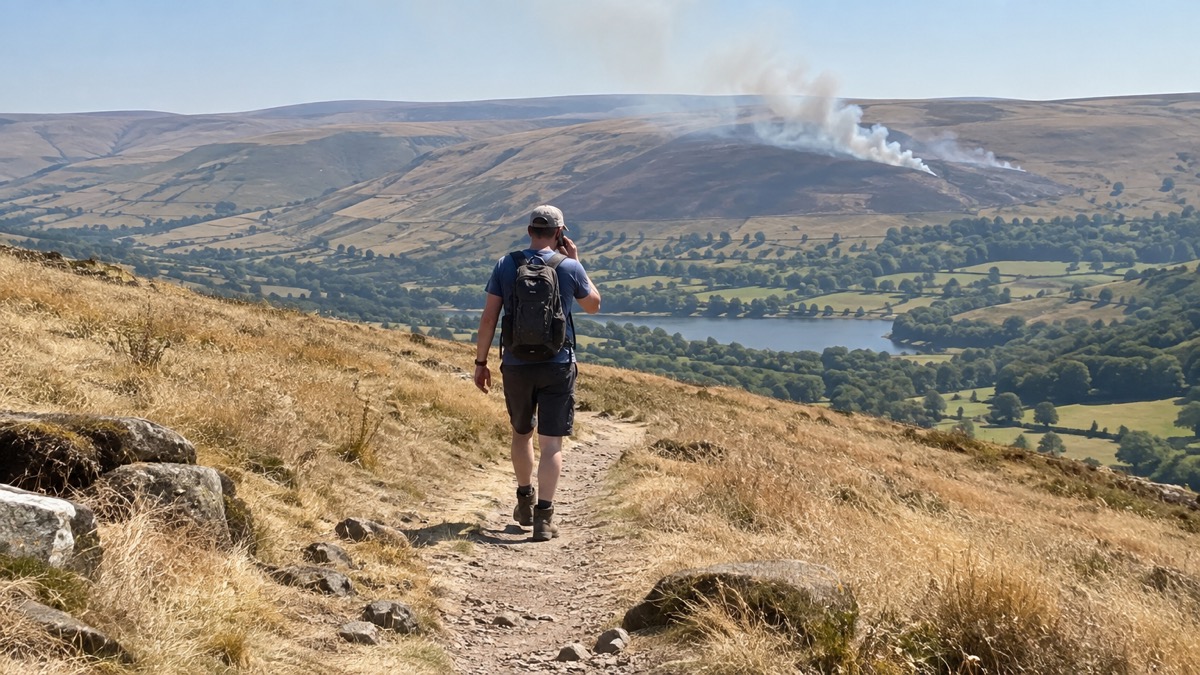
Wildfires are on the UK's national risk register. They are recorded as a High risk, with a likelihood and impact score of 2/3 and risk reference NRR427. That places them among the risks local emergency planners actively prepare for, not a remote possibility.
A wildfire, in UK terms, is an uncontrolled fire that spreads rapidly through vegetation such as forests, grasslands, heathlands and moorlands14. Scottish Fire and Rescue Service classifies wildfires as large, uncontrolled outdoor fires exceeding 1,000 square metres of burned area on appropriate land types15. They are generally more likely to start and spread on grassland or moorland, which makes them particularly damaging to open habitats and recreational sites16. They are more common in rural locations but can spread into urban areas17.
Wildfires in the UK are less frequent than in some other parts of the world, but they can cause significant damage to ecosystems, disrupt communities, and require a coordinated response from emergency services and land managers to control and extinguish them14. Every year they destroy large areas of countryside and wildlife habitats, causing long-lasting damage to the environment4. In Lancashire, the local preparedness partnership describes them as a real danger to life and property and a threat to wildlife and the environment18.
The risk is also growing. The Welsh Government's resilience assessment states that the wildfire risk is increasing, the wildfire season is getting longer, and more wildfires are occurring simultaneously, especially during summer heatwave conditions5. NHS Inform records that wildfires are a growing risk in Scotland which can negatively affect air quality19. For a household, the practical meaning is this: if you live near grassland, heath, moorland or forestry, or you walk, camp or picnic in the countryside in dry weather, wildfire is a risk worth a few minutes of preparation.
Most wildfires are started by people
The single most important fact about UK wildfires is that most of them are started by human activity4. The government's preparedness campaign states it directly: "Most wildfires in the UK are caused by human activity"4. The Welsh Government agrees for Wales: the majority of wildfires are caused by humans, either deliberately or accidentally5. Scottish Fire and Rescue Service says the vast majority of wildfires in Scotland are caused, usually accidentally, by people who do not realise how easy it is for a rogue campfire ember or a dropped cigarette to develop into something bigger16.
The common accidental causes are discarded cigarettes, barbecues and glass14. Oxfordshire's fire service adds that most wildfires are started by accident20. A smaller but significant share is arson: deliberate fire-setting, which should be reported to the police immediately, or anonymously to Crimestoppers on 0800 555 11110.
This is why fire services concentrate their prevention advice on a handful of everyday behaviours. A dropped cigarette, a disposable barbecue left on dry grass, or a glass bottle lying in sunlight can each start a fire that closes a moor for years. The sections below set out exactly what to avoid and when.
| Cause | How it starts a fire | What to do instead |
|---|---|---|
| Discarded cigarettes | Ignite dry vegetation directly10 | Put cigarettes out fully and dispose of them safely21 |
| Barbecues and campfires | Coals and embers ignite dry grass and vegetation22 | Avoid them in the countryside; have a picnic instead21 |
| Glass bottles | Sunlight refracting through glass acts like a magnifying glass on dry grass or leaves20 | Take rubbish home, especially glass21 |
| Deliberate fire-setting | Fires set on purpose5 | Report to the police or Crimestoppers on 0800 555 11110 |
Hot, dry and windy weather: when the risk is highest
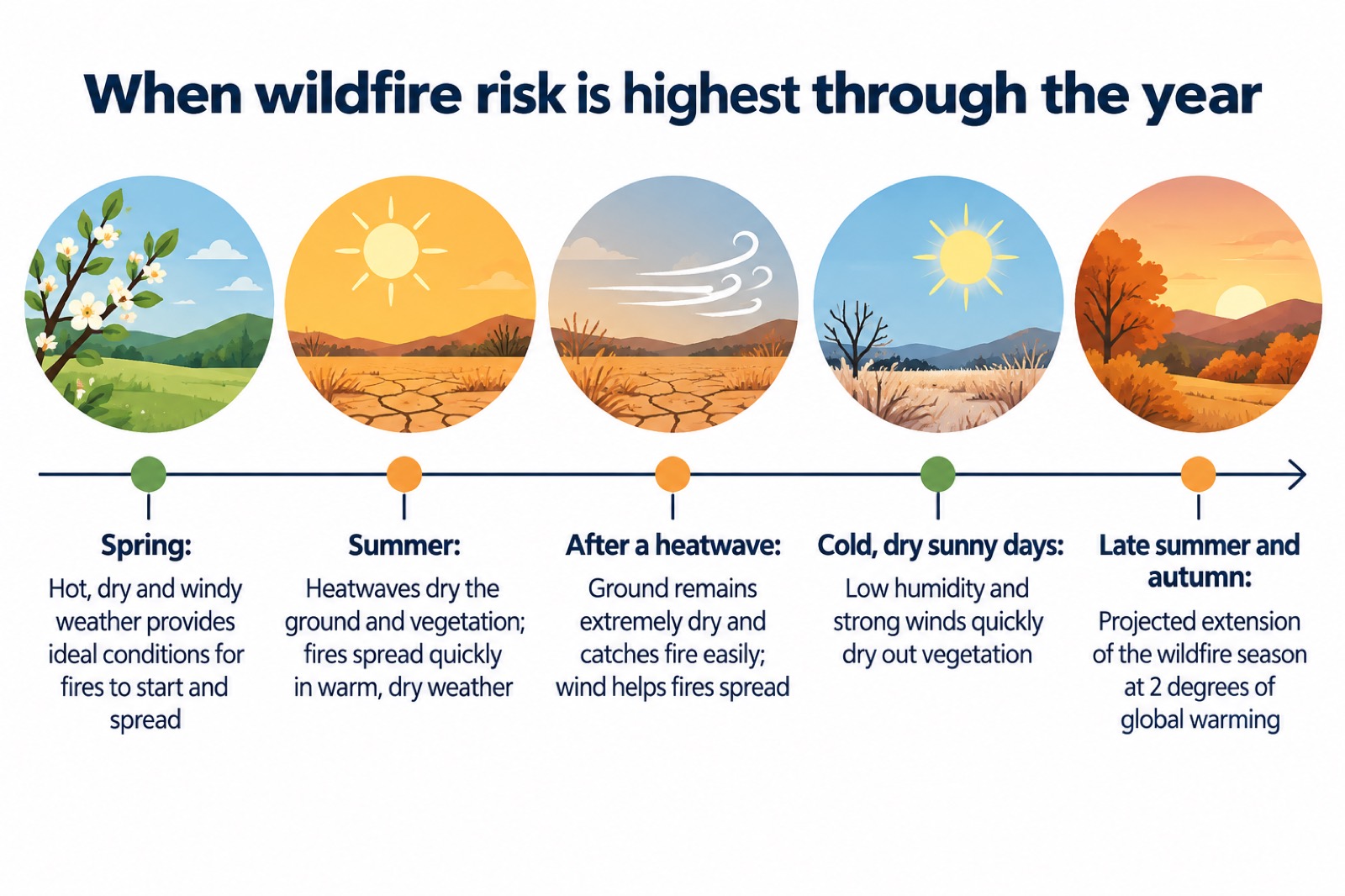
Wildfires usually occur in the spring and summer months, when hot, dry and windy weather provides ideal conditions for them to start and spread18. Heatwaves, which are most common in the summer months when slow-moving high pressure settles over an area for days or weeks23, dry out the ground and the vegetation until it will burn readily.
The risk does not end when the heat does. Surrey County Council's fire and rescue guidance warns that after prolonged heatwaves the ground is still extremely dry and can catch fire easily, and that wind also helps fires spread24. A cool, breezy day in the week after a heatwave can carry a higher fire risk than a still, hot one.
Nor is heat the only dangerous pattern. Scottish Fire and Rescue Service notes that cold, dry days with strong sunshine are also risky: the combination of low humidity and strong winds can quickly dry out vegetation and fuel wildfires15. In Scotland, that makes early spring a peak period as well as summer.
Fire services warn the public when the risk rises. The Scottish Fire and Rescue Service issues warnings when there is a higher risk of wildfires, providing information on the areas most likely to be affected19. One such warning, issued on 22 August 2025, stated that a very high risk of wildfire was in place across the whole of Scotland through the weekend until Monday 25 August, and noted that the vast majority of wildfires are started by human behaviour25. In Lancashire, the local preparedness partnership advises signing up to receive alerts and information about risks in your area18. Check your own fire service's website and social media before any trip to open country in dry weather.
Barbecues, cigarettes and glass: what not to do outdoors
The prevention advice from fire services is consistent across the UK, and it is short. Avoid having open fires or using barbecues in the countryside26. Do not discard cigarettes, matches or glass bottles, as they can ignite dry vegetation10. Take rubbish home, especially glass bottles, and dispose of smoking materials safely; North Yorkshire Fire and Rescue Service suggests a picnic is a safer option than a barbecue when visiting moorland and rural areas21.
Glass deserves particular attention because the mechanism surprises people. Oxfordshire's guidance is explicit: "Never discard glass bottles or broken glass outdoors. Sunlight refracting through glass can act like a magnifying glass" and ignite dry grass or leaves20. Scottish Fire and Rescue Service says the same: glass in direct sunlight can cause a fire, so ensure none is lying around, leave no litter and take it home12.
Disposable barbecues are the item most often restricted. Disposable barbecues and open flames can easily ignite dry grass and vegetation, particularly during periods of prolonged hot weather22. Suffolk Fire and Rescue Service advises avoiding them in open countryside, parks and moorland areas10. In Surrey, the restriction goes further: the county council states that disposable BBQs should not currently be sold or supplied due to wildfire risk, with no set end date and enforcement by Trading Standards24. If you do use one where it is permitted, Oxfordshire's fire service warns that disposing of it before it has completely cooled can cause serious fires, putting people, wildlife and the environment at risk20.
A summary of what to do and avoid outdoors in dry conditions:
- Do not drop cigarettes or matches; put them out fully and dispose of them safely10
- Do not light campfires or barbecues in the countryside26
- Take all rubbish home, especially glass bottles21
- Choose a picnic rather than a barbecue on moorland and in rural areas21
- Never move or bin a disposable barbecue that is still warm20
- Report unattended fires or signs of smoke immediately by calling 99920
For more detail on barbecues specifically, see Barbecues and Wildfire Risk in Dry Weather.
Protecting your home: a cleared zone around the house
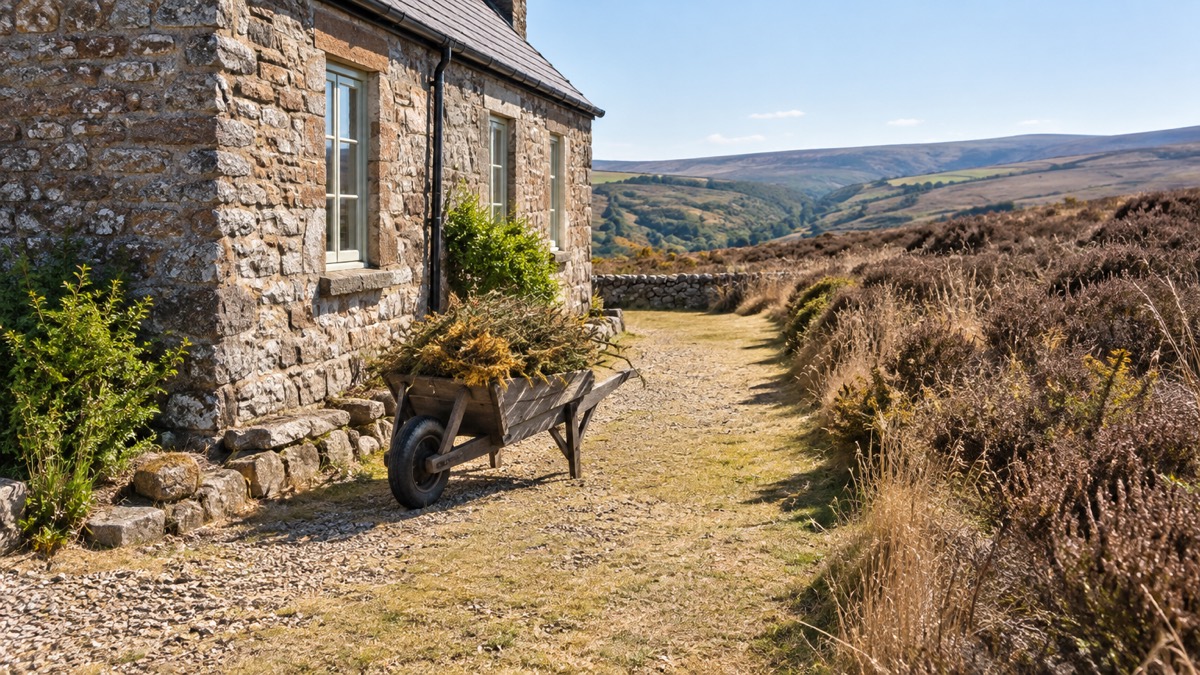
If your home is in a rural area or near grassland, heath or moorland, fire services advise creating two things: a fire escape plan, and a wildfire safety zone around your home17. A wildfire safety zone is a cleared strip of land that acts as a barrier between your home and a potential fire17. It works by slowing or stopping the spread of fire, and by protecting your home from catching fire from embers, direct flame contact or radiant heat27.
The fire services' figures for how wide this zone should be differ. North Yorkshire Fire and Rescue Service advises aiming for a cleared zone of 5 to 10 feet around all sides of your home, by removing combustible materials such as felled trees and long grass8. Scottish Fire and Rescue Service and the Scottish readiness campaign both advise a cleared zone of 10 metres around all sides of the home9, and Devon and Somerset Fire and Rescue Service likewise advises making a 10-metre safety zone, removing combustible materials, wood piles, felled trees and other debris27. If your garden allows it, clearing to the larger figure gives you the more protective margin; if it does not, clear as much as you can.
What to remove and keep short within the zone:
- Felled trees, wood piles and other debris27
- Long grass: Devon and Somerset Fire and Rescue Service notes that shorter grass has a lower flame height and the fire is easier to control, and that grass under 10cm is a lower risk28
- Trees, shrubs and flammable materials, creating a barrier between your home and potential fire9
Wildfires burn moorland, heather, gorse, grass, forestry and natural woodland17, so the materials to clear depend on what surrounds you. Residents can also work together: Dorset and Wiltshire Fire and Rescue Service's Firewise programme notes that by working together, residents can make their own property and their neighbourhood safer from the risk of wildfires1. For a fuller walkthrough, see Protecting Your Home and Garden From a Wildfire.
Garden waste and bonfires: tell fire control first
If you have to burn vegetation or have a bonfire, advise your fire control room first. In Dorset and Wiltshire, the local resilience forum gives a direct number: call Dorset and Wiltshire Fire Control on 0306 799 0019 before burning7. Other services run similar arrangements, so check your own fire service's website for its number. The reason is simple: a member of the public reporting smoke from your bonfire will generate a full fire response, and fire control knowing in advance prevents crews being sent to a fire that does not exist, crews that may be needed at a real emergency.
Wildfires place a huge drain on resources that might be required at another emergency, and can hinder the ability to respond to other emergencies15. Every avoidable call-out in dry weather matters. The same everyday habits apply near homes as in open country: put out and discard cigarettes carefully, do not drop litter, and avoid campfires and barbecues when the risk is high28.
Getting ready to leave: what to take if you have to evacuate
If a wildfire approaches, you may be told to leave, or you may decide to leave before you are told. North Yorkshire Fire and Rescue Service advises considering the essentials you would need if you have to leave your property, including medication, money, clothing, food, valuables and pets8. Pack these so they can be gathered in minutes, not hours.
A grab bag for a wildfire evacuation should cover:
- Medication you take regularly8
- Money and valuables8
- Clothing and food for a day or two8
- Pet carriers, leads and food8
- Phone, charger, and a torch with spare batteries
- Keys, and important documents
Plan where you would go and how you would get there, and agree a meeting point if the household separates. The Fire Kills campaign advises planning an escape route and making sure everyone in the household knows it13. Working smoke alarms matter too: Greater Manchester Fire and Rescue Service may fit free smoke and heat alarms during a Home Fire Safety Assessment visit, depending on the fire risk29. Our general emergency kit guide covers what a UK household should keep ready for any evacuation, and Pets and Animals in an Emergency covers planning for animals.
Wildfire smoke and your health
Wildfires often occur during dry periods, and the smoke and ash from such fires can affect respiratory conditions4. Wildfire smoke contains a complex mixture of pollutants, including particles and gases that can harm human health19. UK government analysis of wildfires and health lists the risks as injuries, respiratory and cardiovascular effects from smoke exposure, and mental health issues, and notes that smoke from wildfires can degrade air quality significantly, leading to increased air pollution-related mortality6.
If smoke from a wildfire is affecting your area:
- Stay indoors with windows and doors closed19
- Reduce physical activity outdoors, particularly if you have a lung or heart condition
- Be aware that the smoke and ash from wildfires can affect respiratory conditions4
- Seek medical help if symptoms worsen
Heatwaves and wildfires often occur together, and heat itself brings its own risks, from vulnerable people struggling to keep cool to dehydration and sunburn23. See Heat Exhaustion and Heatstroke: Signs and What to Do and Air Pollution, Ozone and Hay Fever in Hot Weather for those.
Where to get help and safety advice from your fire service
Your local fire and rescue service provides advice specific to your area, because conditions and local arrangements differ. The government's preparedness campaign notes that local fire and rescue services and other organisations including landowners also provide wildfire advice and guidance, and advises always checking for specific advice that applies to your local area4.
Help available to households includes:
- Free home fire safety visits. The Fire Kills campaign advises contacting your local fire and rescue service for a free home fire safety visit13. In Oxfordshire, a firefighter will visit your home to advise you on any risks and how to stay safe30, and the service asks you to contact it if the fire risk is very high on a weekend or after 5.30pm on a weekday30.
- Wildfire warnings. The Scottish Fire and Rescue Service issues warnings when there is a higher risk of wildfires, showing the areas most likely to be affected19. In Lancashire, sign up to receive alerts and information about risks in your area18.
- Reporting deliberate fire-setting. Contact the police immediately, or report information anonymously to Crimestoppers on 0800 555 11110.
- Drought and water restrictions. The same dry conditions that raise fire risk lead to hosepipe bans: South West Water's temporary hosepipe ban came into effect at 00:01am on Saturday 8 August for all its customers in Devon, Cornwall, parts of Dorset and Somerset and the Isles of Scilly, to protect water supplies during drought conditions31. See Hosepipe Bans: How Temporary Use Bans Work.
Wildfires pose a significant threat to the safety of firefighters and to members of communities, and have a huge impact on property, infrastructure, the environment and the economy15. Every cigarette disposed of properly, every bottle taken home and every barbecue replaced with a picnic reduces that burden. For the wider picture of hot, dry summers and what they mean for your household, see our Heatwaves and Drought guide.
Sources (31)
- Firewise, Dorset and Wiltshire Fire and Rescue Service, 2025-06-20
- Countryside safety, Manchester Fire and Rescue Service
- Countryside safety, Cheshire Fire and Rescue Service, 2026-07-14
- Wildfires, Prepare (UK government campaign), 2026-10-21
- Resilience and risks in Wales, Welsh Government, 2026-09-07
- Heat summary chapter 10: wildfires and health, UK government, 2024-12-19
- Wildfires risk, Wiltshire and Swindon Local Resilience Forum, 2026-10-25
- Protecting your home from wildfires, North Yorkshire Fire and Rescue Service, 2026-06-15
- Protecting your home from wildfire, Scottish Fire and Rescue Service, 2026-01-15
- Warm weather safety, Suffolk Fire and Rescue Service, 2026-10-29
- Crack Down on Fire Risks this Easter - Northern Ireland Fire & Rescue Service, Northern Ireland Fire & Rescue Service
- Wildfire prevention, Scottish Fire and Rescue Service, 2026-10-25
- Escape, Fire Kills campaign (UK government), 2026-03-25
- Wildfire, Essex Prepared, 2026-10-29
- Understanding wildfires in Scotland, Scottish Fire and Rescue Service, 2026-10-25
- Wildfire prevention, Forestry and Land Scotland, 2026-10-29
- Wildfires, Readiness campaign (Scottish government), 2026-05-12
- Protect yourself: wildfires, Lancashire Prepared, 2026-10-29
- Outdoor air pollution, NHS Inform Scotland, 2026-10-14
- Help prevent wildfires, Oxfordshire County Council, 2026
- Summer safety advice as temperatures rise, North Yorkshire Fire and Rescue Service, 2026-06-26
- How to stay safe during a heatwave, Devon and Somerset Fire and Rescue Service, 2026-06-23
- Heat wave risk, Wiltshire and Swindon Local Resilience Forum, 2026-10-25
- Wildfire, Surrey County Council, 2026-08-18
- Wildfire warning 22 to 26 August 2025, Scottish Fire and Rescue Service, 2025-08-22
- Heath fires and countryside safety, Dorset and Wiltshire Fire and Rescue Service, 2026-05-05
- Wildfires in rural areas, Devon and Somerset Fire and Rescue Service, 2026
- Safety if concerned about wildfire risk in your area, Devon and Somerset Fire and Rescue Service, 2022-07-28
- Smoke and heat alarms, Greater Manchester Fire and Rescue Service, 2026-10-29
- Keep safe and well, Oxfordshire County Council, 2026
- Environment FAQs, South West Water, 2026-10-28
 Flood Warning Checklist
 First Steps After a Flood
 Insurance Claim Records
 England 2026 Drought Areas
 Past UK Droughts and Heatwaves
 Saving Water at Home
 Drought Stages in England
 Water Company Drought Plans