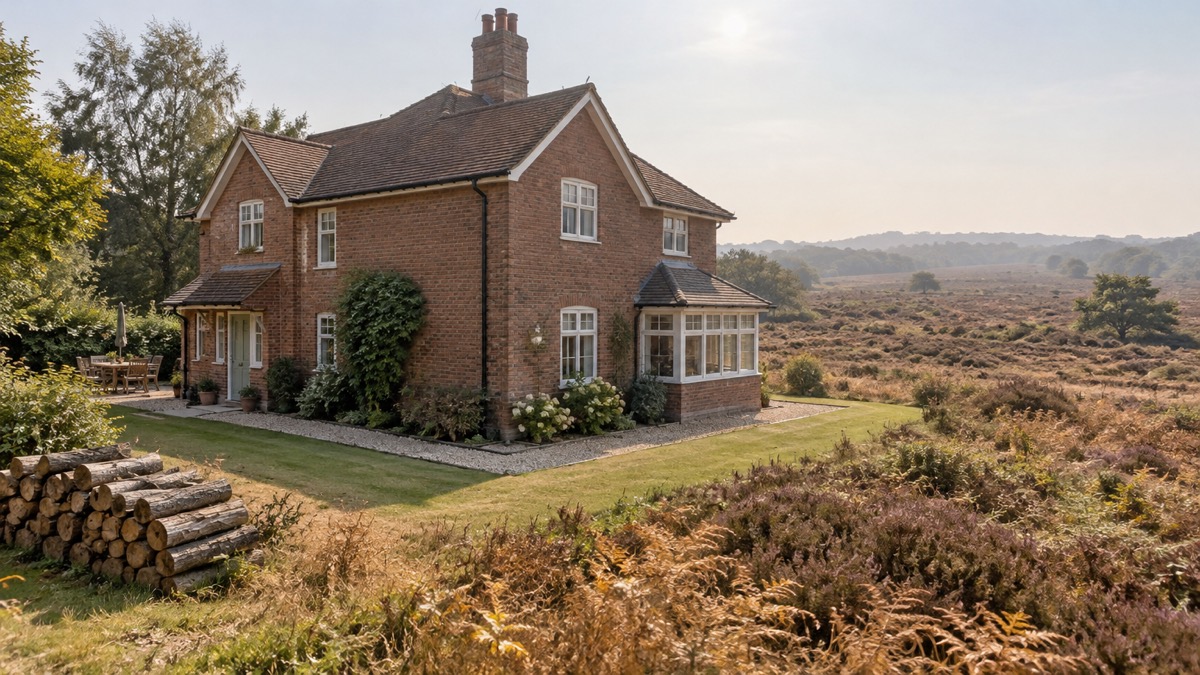
If you live in the countryside, on the edge of a moor or near woodland, a wildfire is not something that only happens on the news. Fire services across the UK say the single most useful thing you can do is create a cleared safety zone around your home, removing the things that burn: long grass, felled trees, wood piles, dead leaves in the guttering and dry garden cuttings. The advice varies slightly between services, with some asking for a cleared zone of 5 to 10 foot around all sides of your home1 and others asking for 10 metres2. Whichever figure you work to, the principle is the same: starve a fire of fuel close to the house.
The second thing is to keep your garden tidy through the dry months. Cut back dry grasses, heather, bracken and gorse, clear flammable debris from gutters, and do not let cuttings dry out in the garden, because they are fuel in a fire5. Most countryside fires are started by carelessness rather than deliberately, so the everyday choices you make about barbecues, bonfires and litter matter as much as the clearing work6.
And if you see a fire, report it immediately on 999, giving your location and any other relevant information, then leave the area8. This page sets out what to do to your property before a fire threatens, how to manage garden waste and bonfires safely, what starts most fires, and what to have ready if you have to leave.
Clear a safety zone around your home
The core of home wildfire protection is a strip of land where trees, shrubs and flammable materials are cleared away, creating a barrier between your home and a potential fire3. Different fire and rescue services express the width differently. North Yorkshire Fire and Rescue Service suggests aiming for a cleared zone of 5 to 10 foot around all sides of your home by removing combustible materials such as felled trees and long grass1. Ready Scotland and the Scottish Fire and Rescue Service both describe a 10 metre rule, asking households to clear a 10 metre area around all sides of their home2. Dorset and Wiltshire Fire and Rescue Service likewise advises a 10 metre safety zone, removing combustible materials, wood piles, felled trees and other debris4.
The difference between 5 to 10 foot and 10 metres is significant, and the two figures are not reconciled. If you are unsure, the wider clearance gives more protection, but even a modest cleared strip close to the walls removes the easiest fuel for a fire to reach. What matters most is what you take out of the zone: anything that will catch and carry flame. That includes long grass, felled trees, wood piles, stacked timber, dry leaves and other debris1.
Trim back your own plants to create more space and reduce fire risk3. If you live in a rural area or an area prone to grass or wildfires, check your property and surroundings for fire hazards and manage vegetation, to reduce the risk of a fire spreading to your property10. This is not a one-off job: it needs repeating through the growing season, especially before and during dry spells.
Gutters, garden waste and cuttings: removing the fuel
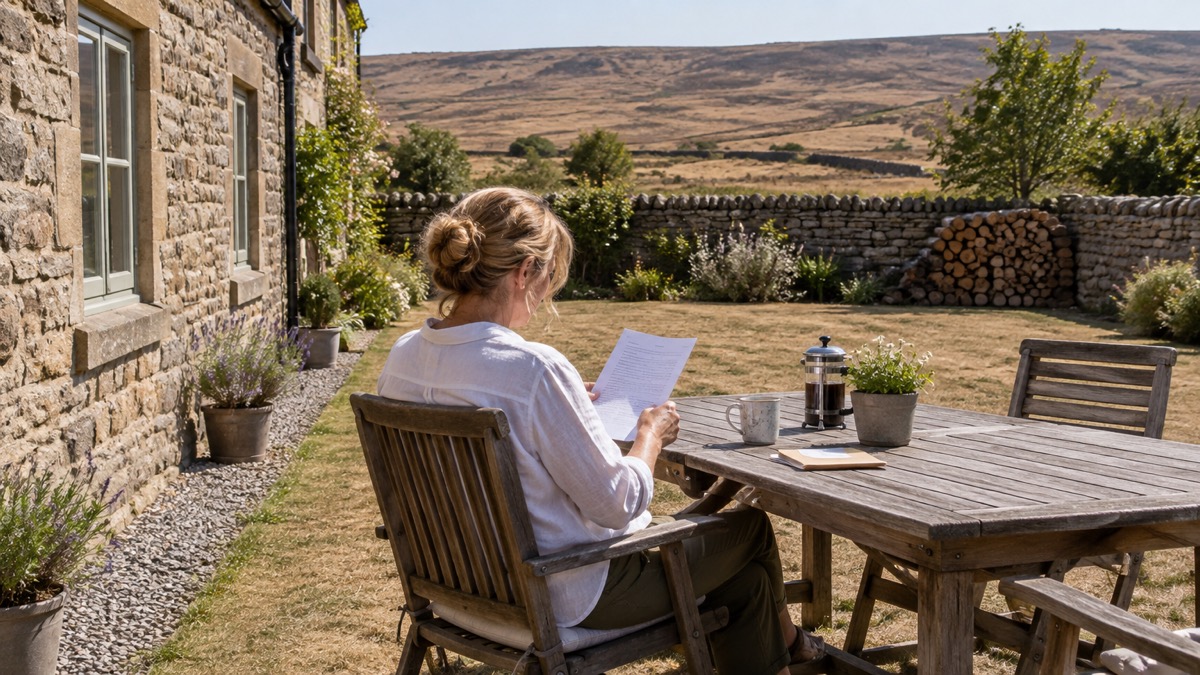
A fire does not need a wall of flame to reach your house. It can travel on the small stuff: dead leaves in the guttering, dry cuttings left to heap up, piles of leaves against a wall. North Yorkshire Fire and Rescue Service advises clearing flammable debris such as dead leaves from guttering1. It also warns not to throw cuttings onto adjacent land or let them dry out in your garden, because they are fuel in the event of a fire1. Surrey Fire and Rescue Service puts it more broadly: reduce or remove areas of high fuel close to your home, including vegetation, bushes or piles of leaves5.
London Fire Brigade's extreme weather summer guide adds a routine: regularly remove combustible waste including accumulations of dust, leaves, sticks and cardboard, as these can ignite11. That is a simple habit rather than a project: a few minutes with a rake and a bin bag after windy weather, and a check of the gutters before summer.
What should you do with the cuttings instead? Most garden waste, like grass cuttings and leaves, can be recycled by composting or by being taken to a Household Waste Recycling Centre12. Composting keeps the material on site but in a controlled heap rather than a dry, loose pile against a fence. If you have a lot of material, the recycling centre is the safer route.
| What to clear | Why it matters | Where the advice comes from |
|---|---|---|
| Dead leaves in gutters | Flammable debris close to the roof | North Yorkshire Fire and Rescue Service1 |
| Cuttings left to dry in the garden | They are fuel in a fire | North Yorkshire Fire and Rescue Service1 |
| Piles of leaves, bushes and vegetation near the house | High fuel close to the home | Surrey Fire and Rescue Service5 |
| Dust, sticks, cardboard and leaf accumulations | Can ignite | London Fire Brigade11 |
| Wood piles and felled trees | Combustible material in the safety zone | Dorset and Wiltshire Fire and Rescue Service4 |
Cutting back dry grass, heather, bracken and gorse
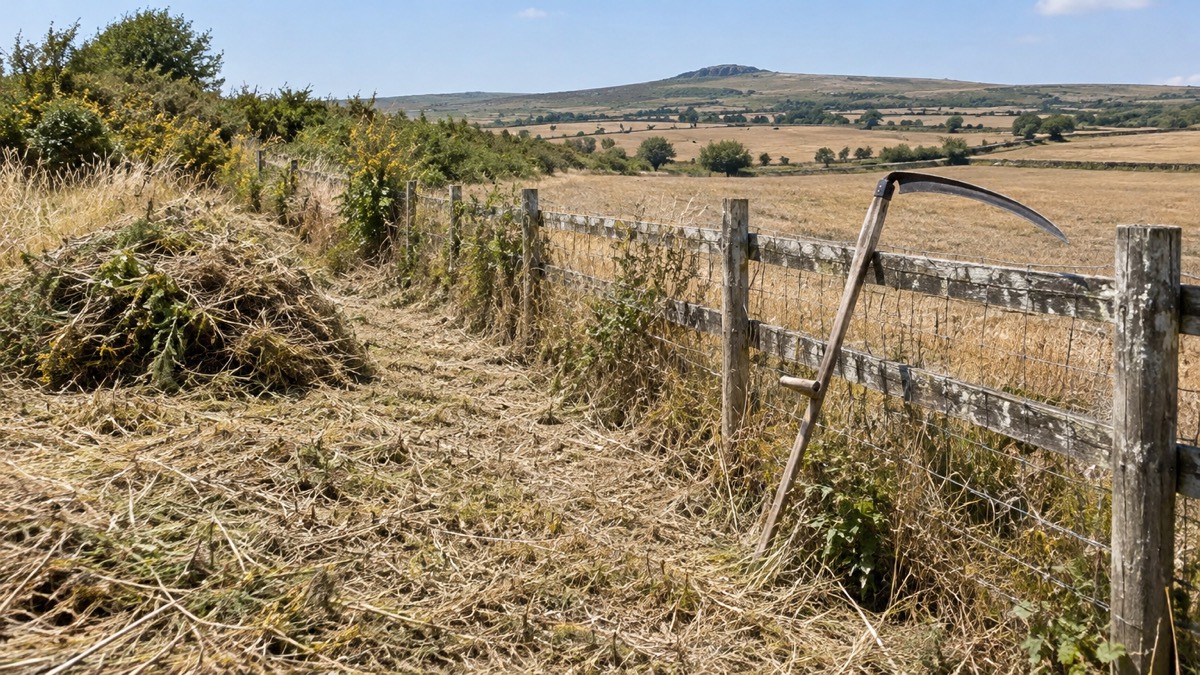
The plants that carry a countryside fire fastest are the dry, fine and resinous ones. South Wales Fire and Rescue Service advises maintaining a buffer zone around your home and cutting back dry grasses, heather, bracken and gorse13. Ready Scotland lists the vegetation that fuels wildfires as moorland, heather, gorse, grass, forestry and natural woodland2. If your garden backs onto any of these, the boundary between your land and the wild land is where the work matters most.
Cutting back is seasonal work. The Fire and Rescue Services in Wales note that farmers and landowners can burn heather, grass, bracken and gorse up until 15 March, up to 31 March in upland areas, with a Burn Plan in place14. That is a legal framework for land management, not a guide for householders, but it tells you when the vegetation is dry enough to be a concern and when controlled burning is permitted. For a household garden, the practical version is simpler: keep the grass short near the house, cut back gorse and bracken on your boundary, and repeat through the summer.
North Wales Fire and Rescue Service's message on grass and gorse fires is that a few simple precautions and a little extra care could keep you, your family, communities and the environment safe16. That is the tone of all this work: it is not about transforming your garden into a bare buffer, but about reducing the places where a fire can take hold and gather pace.
What starts most garden and countryside fires
Most wildfires are not started by lightning or spontaneous combustion. Cumbria Fire and Rescue Service says some fires are started deliberately, but most are due to carelessness6. Greater Manchester Fire and Rescue Service says the same: some fires are started deliberately, but many are due to carelessness7. Oxfordshire County Council puts it plainly: most wildfires are started by accident17. Cheshire Fire and Rescue Service attends around 80 garden or allotment fires every year, most of them started by accident18.
The deliberate minority is still significant in some settings. Around 40% of farm fires are started deliberately, many as an act of mindless vandalism19. Every year fire is responsible for the destruction of thousands of acres of countryside, open spaces and wildlife habitat20. In summer, grass and mountains can become very dry, which means that if you deliberately or accidentally start a fire outdoors, it can spread quickly14.
The practical lesson is that the ordinary things people do in a garden or on a walk carry most of the risk: a barbecue left smouldering, a cigarette end, a piece of glass focusing the sun, a bonfire that gets away. Wildfires are a particular risk during dry weather spells, when they can devastate wildlife and habitats as well as people and property21. Fire services issue warnings at these times, and the safest approach is to treat any flame or spark outdoors as something that needs watching until it is completely out.
Bonfires, barbecues and garden burning: doing it safely
If you are going to burn garden waste or light a barbecue, the fire services are clear about the conditions. There are no specific laws preventing you from having a bonfire in your garden, but there are laws that deal with the nuisance they can cause, such as smoke affecting neighbours, traffic on the road or nearby properties22. That means the decision is partly about courtesy and partly about safety.
For a bonfire, keep a means to control it at hand, such as a garden hose23. Never leave a lit fire unattended24. Always add fuel, such as cuttings and branches, a bit at a time24. Keep buckets of water, a garden hose or a fire extinguisher nearby in case of an emergency, and pour water on the remains of the bonfire before leaving25. Have a garden hose to hand in case the fire starts to get out of control26.
For barbecues, the advice is more cautious still. Disposable barbecues and open flames can easily ignite dry grass and vegetation, particularly during periods of prolonged hot weather27. Fire services recommend a picnic or sandwiches rather than a disposable barbecue, and say that if you use one away from home you should be very careful, as they have caused many wildfires in recent years28. If you do use one, place it well away from the house, shed or fences29.
| Activity | Key safety points | Source |
|---|---|---|
| Garden bonfire | Keep a hose to hand, never leave it unattended, add fuel a bit at a time, pour water on the remains | 23 |
| Disposable barbecue | Avoid where possible; if used, place well away from house, shed and fences | 28 |
| Burning garden waste | Consider smoke effects on neighbours; compost or recycle instead where possible | 12 |
| Barbecue in dry weather | Open flames can easily ignite dry grass and vegetation | 27 |
Report a fire on 999 straight away
If you see a fire in the countryside, report it immediately. Leave the area as soon as possible and dial 9999. When you call, give your location and any other relevant information8. Fire and rescue services want to be alerted to fires as early as possible via 999 calls20. Reporting fires immediately by calling 999 is the single most important thing a bystander can do30.
Giving your location clearly matters more in rural areas, where addresses are sparse and landmarks are few. If you live in a rural area, make sure your home number or name is clearly visible from the road or main access point, so that firefighters can easily locate your address in the event of a fire31. If you are reporting a fire you have come across while out walking, give the nearest road, track or named feature, and stay on the line until the call handler has what they need.
If you suspect someone is setting fires deliberately, you can anonymously report deliberate firesetting to FireStoppers7. Do not confront anyone or put yourself at risk. Report what you saw and let the fire service and police deal with it.
Planning what to take if you have to leave
If a wildfire is heading your way, you may have very little time. The planning is best done now, when there is no pressure. Ready Scotland advises that if you live in a rural area, you should think about creating a fire escape plan and a wildfire safety zone around your home2. North Yorkshire Fire and Rescue Service suggests considering the essentials you would need if you have to leave your property, including medication, money, clothing, food, valuables and pets1.
Moray Council's emergency planning advice adds practical detail: if there is time, take any medication, warm clothes, any special foods, personal documents and valuables with you. Before you leave, make sure fires are off or out, switch off gas and electricity and lock up doors and windows32. Scottish Borders Council's personal resilience guidance adds that you should put away garden furniture and other loose items, and secure larger items that could be moved in high winds, such as trampolines33. That last point is about storm preparation, but the same instinct applies before you leave a property in an emergency: secure what could become a hazard.
A simple grab list, kept somewhere you can find it in a hurry, covers most of it:
- Medication, including anything you take regularly1
- Money, cards and personal documents1
- Warm clothes and special foods32
- Valuables1
- Pets1
- A phone charger and a way to stay informed
Where to get help and more information
For general countryside fire safety, the fire service in your nation publishes its own guidance: England and Wales through the local fire and rescue service, Scotland through the Scottish Fire and Rescue Service and Ready Scotland, and Northern Ireland through the Northern Ireland Fire and Rescue Service. The principles are the same across all four nations, but the contact details and local warning arrangements differ.
If you have a lung condition and there is smoke in the air, keep windows closed and follow your usual medical advice. If you are worried about your breathing, contact NHS 111. For more on staying safe in hot, dry weather, see our guides to wildfires and grass fires, what to do if you see or are near a wildfire, and barbecues and wildfire risk in dry weather. If you are preparing your household more broadly, our hot weather preparation checklist and emergency kit guide cover the wider essentials.
Sources (33)
- Protecting your home from wildfires, North Yorkshire Fire and Rescue Service, 2026-06-15
- Wildfires, Ready Scotland, 2026-05-12
- Protecting your home from wildfire, Scottish Fire and Rescue Service, 2026-01-15
- Rural wildfires, Dorset and Wiltshire Fire and Rescue Service, 2026
- Wildfire, Surrey County Council, 2026-08-18
- Safety outdoors, Cumbria Fire and Rescue Service, 2026-10-29
- Countryside safety, Greater Manchester Fire and Rescue Service, 2026-10-29
- Wildfire warning for western, central and eastern Scotland, Scottish Fire and Rescue Service, 2026-04-23
- Staying safe, Greater Manchester Fire and Rescue Service, 2026-10-29
- Be Moor Aware, Greater Manchester Fire and Rescue Service, 2026-10-29
- Extreme weather summer guide, London Fire Brigade, 2024-05
- Bonfire safety, Lincolnshire County Council, 2026-10-29
- Wildfires, South Wales Fire and Rescue Service, 2026-07-29
- Wildfires and open fires, Mid and West Wales Fire and Rescue Service, 2026-10-29
- Wildfire Wise, Mid and West Wales Fire and Rescue Service, 2026-10-29
- Grass and gorse fires, North Wales Fire and Rescue Service, 2026-10-29
- Help prevent wildfires, Oxfordshire County Council, 2026
- Safe and well booklet, Cheshire Fire and Rescue Service, 2026-04
- Farm fire safety, Mid and West Wales Fire and Rescue Service, 2026-10-29
- Countryside safety, Cheshire Fire and Rescue Service, 2026-07-14
- Be wildfire aware in the countryside, Surrey County Council, 2026-09-07
- Bonfires and burning waste, Cheshire Fire and Rescue Service, 2026-10-14
- Garden incinerators, Mid and West Wales Fire and Rescue Service, 2026-10-29
- Garden safety, North Yorkshire Fire and Rescue Service, 2026-08-11
- Bonfire safety, Mid and West Wales Fire and Rescue Service, 2026-10-29
- Bonfires and garden safety, Dorset and Wiltshire Fire and Rescue Service, 2026-07-08
- How to stay safe during a heatwave, Dorset and Wiltshire Fire and Rescue Service, 2026-06-23
- Barbecues, Dorset and Wiltshire Fire and Rescue Service, 2026
- Barbecue safety, Mid and West Wales Fire and Rescue Service, 2026-10-29
- Stay safe during hot weather, London Borough of Bexley, 2026
- Wildfires, Dorset and Wiltshire Fire and Rescue Service, 2026
- Emergency preparations you can do, Moray Council, 2026-10-29
- Prepared personal resilience, Scottish Borders Council, 2026-10-29
 Flood Warning Checklist
 First Steps After a Flood
 Insurance Claim Records
 Barbecues and Wildfire Risk
 Hosepipe Ban Exemptions
 Hosepipe Ban Fines and Reporting
 Hosepipe Bans and the Garden
 Hosepipe Ban Rules
 Pools, Ponds and Car Washing
 Private Water Supply Drying Up
 What to Do Near a Wildfire