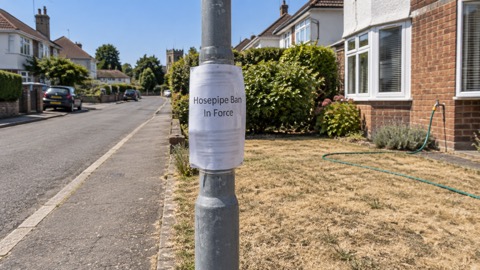
If your water company has brought in a hosepipe ban, the short answer is no: you cannot fill a paddling pool with a hosepipe. A ban on using a hose pipe covers watering the garden, washing your car and filling a paddling pool1. The same restriction appears in company after company: Affinity Water says you won't be able to use a hosepipe for watering gardens, washing cars, windows and patios, or filling swimming and paddling pools2, and the government's preparedness campaign says that if a hosepipe ban is in place where you live, you can't use a hosepipe connected to your mains water supply for things like watering your garden, filling a paddling pool or washing your car3.
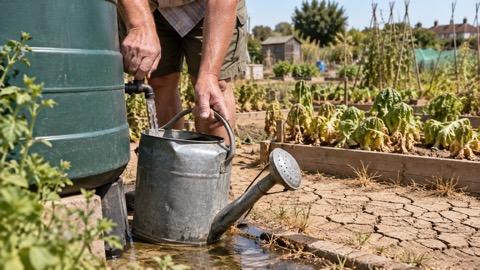
What you can do is fill a paddling pool with a hand-held container using water from a tap, which Bristol Water lists as the way a pool may still be filled4. You can also water the garden with a watering can or water collected in a water butt, just not with a hosepipe or sprinkler2. Breaking the rules is not a matter of etiquette: a Temporary Use Ban is a legal restriction under the Water Industry Act 1991, and failing to comply can lead to a fine of up to £1,0005.
This page sets out what a ban stops, the narrow exemptions that still allow a hosepipe, how car washing and garden watering are treated, and how enforcement works. Rules differ between water companies and can tighten, so always check your own company's pages as well as reading the general position here.
Can I fill a paddling pool during a hosepipe ban?
No, not with a hosepipe. South East Water's Sussex restrictions state that filling or maintaining a domestic swimming or paddling pool with a hosepipe is prohibited8. Affinity Water's list of prohibited purposes includes filling or maintaining a domestic swimming or paddling pool, and drawing water by hosepipe for domestic recreational use such as filling a hot tub2. Cambridge Water goes further and names a domestic swimming pool, paddling pool, hot tub or cold-water plunge pool as prohibited activities5.
The route that remains open is the humble bucket. Bristol Water's household guidance says a swimming pool, paddling pool or hot tub may be filled only with a hand-held container using water from a tap4. That is the practical answer for most families: carry the water, do not run the hose. It is slower and it uses less, which is the point of the restriction.
It helps to understand why the rules bite on something as small as a paddling pool. Hosepipe bans exist to manage longer periods of dry weather9, and companies bring them in when water is in short supply, usually after a long dry or hot spell10. In 2026 the pressure was severe: Southern Water said the warmest spring on record, followed by a record-breaking heatwave, had left river levels 25% lower than expected for the time of year7. A paddling pool filled by hose is a small thing on its own, but multiplied across a supply area it is exactly the kind of discretionary use a ban is designed to stop.
The rules are not identical everywhere. South East Water's Kent guidance notes that filling or maintaining a domestic swimming or paddling pool, including constructed non-inflatable hot tubs, is restricted, and that drawing water by hosepipe for domestic recreational use such as hot tubs and inflatable paddling pools is also banned11. If you live in an area where a ban has been tightened, as happened in Sussex in October 2026, previously permitted exemptions may no longer apply8. Check your company's current notice rather than relying on what a neighbour did last summer.
When a pool can still be filled: construction, medical and animal welfare exemptions
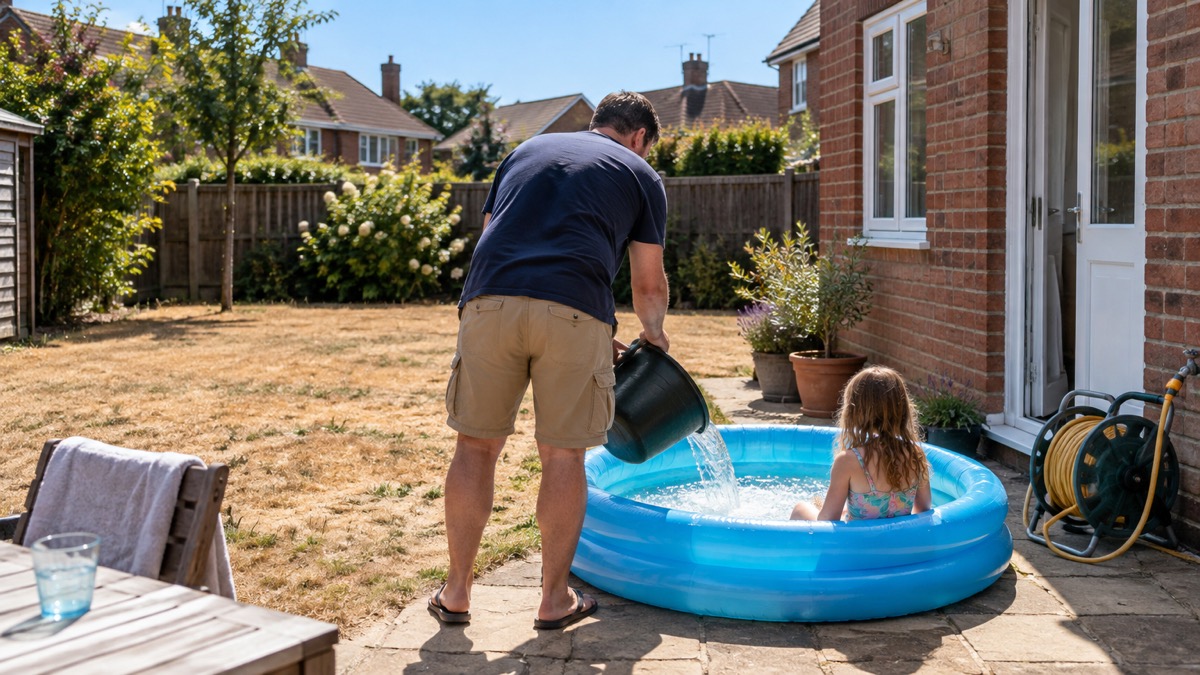
A hosepipe ban is not absolute. Every company publishes a set of exceptions, and they follow a similar pattern. Wessex Water says you can fill a pool, paddling pool or hot tub if it is under construction and needs to be filled as part of its construction, if you use a bucket or other container, if it is filled using a water recycling system that does not use mains water, if it is designed for medical or therapeutic use, if it is needed for medical or veterinary treatment or animal welfare, or if it is used as part of a religious ceremony in a place of worship or community setting12.
Bristol Water's list is close: during construction, medical reasons, veterinary treatment, fish or other aquatic animals being kept in the pool, or use as part of a business4. Its exceptions page adds the religious ceremony and water recycling routes, and repeats that a bucket or other container is acceptable13. Cambridge Water allows a private pool to be filled with a hosepipe only if it is used for a medical reason, veterinary treatment, keeping fish or aquatic animals, or in a place of worship or as part of a religious ceremony5.
There is a Welsh variation worth knowing. Dŵr Cymru's exemptions page says filling a domestic swimming pool or paddling pool is exempt only where it is a fixed structure being filled from empty after substantial construction or renovation work, and no hosepipe use is allowed for subsequent top-ups14. That is narrower than the English lists above, which is a reminder that the detail is set by each company within the legal framework.
| Exemption | What it covers | Example source |
|---|---|---|
| Construction | Filling a pool as part of building work | Wessex Water12 |
| Hand-held container | Filling with a bucket from a tap | Bristol Water4 |
| Recycled water | A system that does not use mains water | Wessex Water12 |
| Medical or therapeutic | Pools designed for, or needed for, treatment | Cambridge Water5 |
| Veterinary or animal welfare | Treatment, or decontaminating animals | Wessex Water12 |
| Fish or aquatic animals | Keeping fish or other aquatic animals | Bristol Water4 |
| Religious ceremony | Use in a place of worship or community setting | Wessex Water12 |
If you think an exemption applies to you, read your company's own wording before acting. The exemptions are specific, and a general belief that "it's for health reasons" is not the same as meeting the published condition.
Car washing and garden watering under a Temporary Use Ban
A Temporary Use Ban, the formal name for what everyone calls a hosepipe ban1, sweeps up a long list of outdoor jobs. Essex & Suffolk Water's list of prohibited purposes covers watering a garden, cleaning a private motor vehicle or trailer, watering plants on domestic or other non-commercial premises, cleaning a private leisure boat, filling or maintaining a domestic swimming or paddling pool, drawing water for domestic recreational use such as filling a hot tub, filling or maintaining a domestic pond, filling or maintaining an ornamental fountain, cleaning walls or windows of domestic premises, cleaning paths or patios, and cleaning other artificial outdoor surfaces, all using a hosepipe15.
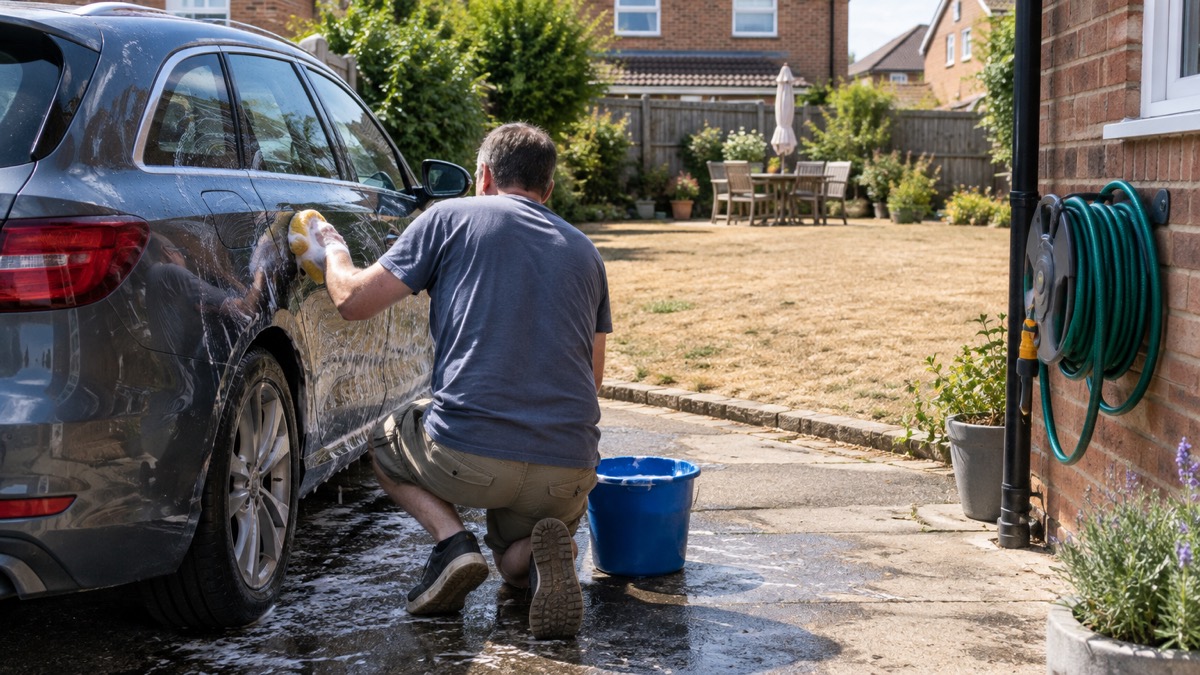
The practical effect for a household is simple. You must not use a hosepipe, sprinkler or pressure washer to water gardens, lawns or allotments, fill paddling pools, or clean vehicles and outdoor surfaces16. South West Water's restrictions say hosepipes should not be used for watering gardens, washing cars, patios and boats, or hot tubs17. Westminster City Council's drought advice puts it in plain terms: if your water company has declared a Temporary Usage Ban or hosepipe ban, you should avoid filling a paddling pool, washing your car and watering your garden18.
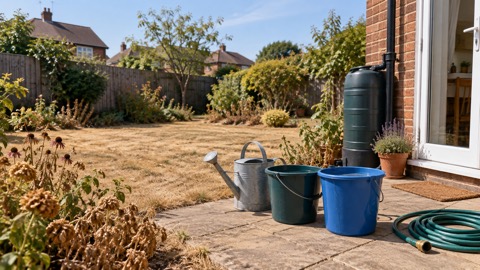
What is allowed matters just as much. Affinity Water says you can water your garden using a watering can or water collected in a water butt, just not with a hosepipe or sprinkler2. Southern Water lists the everyday uses that continue: water for drinking, cooking, showering and washing your clothes, a watering can or bucket for the garden, and a commercial car wash for the car7. So the car can still be cleaned, just not on the drive with your own hose.
For more on what a ban does and does not cover, see what you can and cannot do in a hosepipe ban and the wider guide to how Temporary Use Bans work.
Fountains, ponds and the animal welfare exception
Garden water features sit on the prohibited list, but with a narrow animal welfare carve-out. Bristol Water says plainly: do not use a hosepipe to fill or top up a garden pond, water feature or fountain13. Thames Water says filling ornamental fountains with a hosepipe is prohibited, unless it is necessary to supply sufficient oxygen to a pond to keep fish healthy20.
The fish exception is the one most pond owners will rely on. Bristol Water says you may use a hosepipe to top up a pond where it is necessary to maintain a minimum water level and protect the health and welfare of the fish4. Dŵr Cymru's Welsh guidance is similar: fish ponds may be topped up with a hosepipe where necessary to protect the health and welfare of fish or other aquatic animals, using only the amount of water necessary6. The test is necessity and minimum quantity, not convenience.
If you keep fish, plan for the ban rather than reacting to a crisis. A water butt or stored rainwater can carry you through routine top-ups, and the hosepipe becomes the emergency measure for welfare, used sparingly and only as far as the exemption allows. For more on garden watering within the rules, see watering the garden, allotment and new lawn in a hosepipe ban.
Fines of up to £1,000 and how water companies enforce a ban
A hosepipe ban carries legal force, and companies are able to take enforcement action where the rules are breached4. Cambridge Water states that under the Water Industry Act 1991, anyone who fails to comply with a temporary use ban could be prosecuted and fined up to £1,000 by a Magistrates' Court5. Affinity Water, Bristol Water and Southern Water all give the same maximum figure of £1,0002, and the Consumer Council for Water notes that breaking the rules could land you a fine of up to £1000 which is enforceable by law9.
Enforcement usually starts with a conversation. Southern Water says it aims to communicate first, providing information about why it is important not to use a hosepipe during restrictions, but enforcement may follow for repeated or serious breaches7. That is the pattern to expect: a warning and an explanation, then formal action if the behaviour continues.
"Under the Water Industry Act 1991, anyone who fails to comply with a temporary use ban could be prosecuted and fined up to £1,000 by a Magistrates' Court."
Bans stay in place until the water situation improves, and your company will announce when they are being removed and provide regular updates9. They are not permanent, and they are not uniform: Bristol Water's ban began at 00:01am on 27 August 2026 across its supply area21, while South West Water's came into effect at 00:01am on Saturday 8 August 2026 for customers in Devon, Cornwall, parts of Dorset and Somerset and the Isles of Scilly22. Dŵr Cymru lifted its Ceredigion ban on 4 September 2026 after treated water storage levels improved23. For the current picture, see England's 2026 drought: where restrictions apply.
Who can still use a hosepipe: medical needs and the Priority Services Register
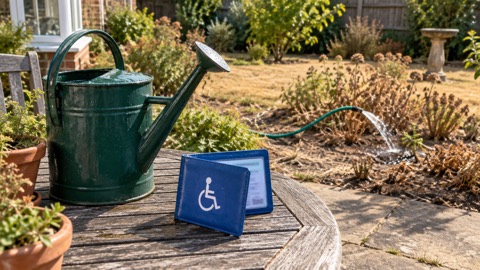
Some households can still use a hosepipe because of medical or mobility needs, but the exemption is not automatic and it is not the same at every company. Southern Water says customers on its Priority Services Register with medical or mobility needs, including Blue Badge holders and those on its WaterSure tariff, are exempt7. Affinity Water says customers on the Priority Services Register, on the WaterSure tariff, and Blue Badge holders can continue to use a hosepipe if unable to make adjustments such as using a watering can due to medical reasons2. Essex & Suffolk Water says customers who are Blue Badge holders or those with mobility issues, who are unable to use a watering can, are exempt and do not need to apply or contact the company15.
Bristol Water's wording is more conditional: customers who hold a Blue Badge, or are on the Priority Services Register or receive support through the WaterSure Plus tariff and are unable to make reasonable adjustment due to a health condition or disability, may be exempt13. The Consumer Council for Water's general summary is that if you have mobility problems and are on your water company's Priority Services Register, the hosepipe ban shouldn't apply to you9.
The common thread is need plus inability to manage another way. If you can water with a can or a bucket, the exemption is unlikely to cover you. If you cannot, and you are on the register or hold a Blue Badge, ask your company to confirm your position in writing before you use a hosepipe. For the full picture, see hosepipe ban exemptions: Blue Badge holders and others.
Stricter bans and how to check your company's rules
A hosepipe ban is usually the first step, not the last. The Consumer Council for Water says that if the drought continues, your water company might ban all water use classed as non-essential, which would affect businesses that use water, such as car washes9. That is a different and broader restriction from the Temporary Use Ban most households experience.
Because rules vary and change, the only reliable check is your own company's current notice. South East Water's Sussex pages show how quickly exemptions can be withdrawn8, and Affinity Water extended its Temporary Use Ban to its East region in August 2026, covering the Tendring Peninsula and north-east Essex, with immediate effect24. A ban that applied to your neighbour last month may not describe your position today.
- Read your company's hosepipe ban or Temporary Use Ban page, not just a news summary.
- Check the start date and whether any exemptions have been removed since.
- If you rely on a medical or mobility exemption, confirm it with the company.
- Watch for announcements about lifting, which come with regular updates9.
For the background on how restrictions are declared and escalated, see how drought is declared in England and what each stage means and drought permits, orders and emergency rota cuts. If you are looking for ways to use less water whatever the rules say, our guide to saving water at home when supplies are low has the practical steps.
Sources (24)
- Hosepipe bans, Consumer Council for Water, 2026-08-04
- Hosepipe ban FAQs, Affinity Water, 2026-10-29
- Droughts, UK Government preparedness campaign, 2026-10-19
- Hosepipe ban household FAQs, Bristol Water, 2026
- Temporary hosepipe ban FAQs, Cambridge Water, 2026-10-28
- Hosepipe ban frequently asked questions, Dŵr Cymru Welsh Water, 2026-10-28
- Temporary Use Ban advice, Southern Water, 2026-10-28
- Sussex hosepipe restrictions FAQs, South East Water, 2026-10-28
- Hosepipe bans FAQ, Consumer Council for Water, 2026-08-04
- Stay safe during hot weather, London Borough of Bexley, 2026
- Temporary Use Bans Kent FAQs, South East Water, 2026-10-28
- Hosepipe ban exemptions, Wessex Water, 2026-10-28
- Hosepipe ban exceptions, Bristol Water, 2026
- Exemptions, Dŵr Cymru Welsh Water, 2026-10-28
- Temporary Use Ban, Essex & Suffolk Water, 2026-10-28
- Thames Water Temporary Hosepipe Ban | Restrictions, Exemptions & FAQs, Thames Water
- Stay Safe this Summer - Cornwall Council
- Advice and support: drought, Westminster City Council, 2026-08-06
- Temporary Use Bans, South East Water, 2026-10-28
- Hosepipe ban FAQs, Thames Water, 2026-10-28
- Drought 2026, Bristol Water, 2026-08-27
- Hosepipe ban, South West Water, 2026-10-29
- Drought, Dŵr Cymru Welsh Water, 2026-09-04
- Hosepipe ban, Affinity Water, 2026-08
 Flood Warning Checklist
 First Steps After a Flood
 Insurance Claim Records
 Barbecues and Wildfire Risk
 Hosepipe Ban Exemptions
 Hosepipe Ban Fines and Reporting
 Hosepipe Bans and the Garden
 Hosepipe Ban Rules
 Private Water Supply Drying Up
 Wildfire Home Protection
 What to Do Near a Wildfire