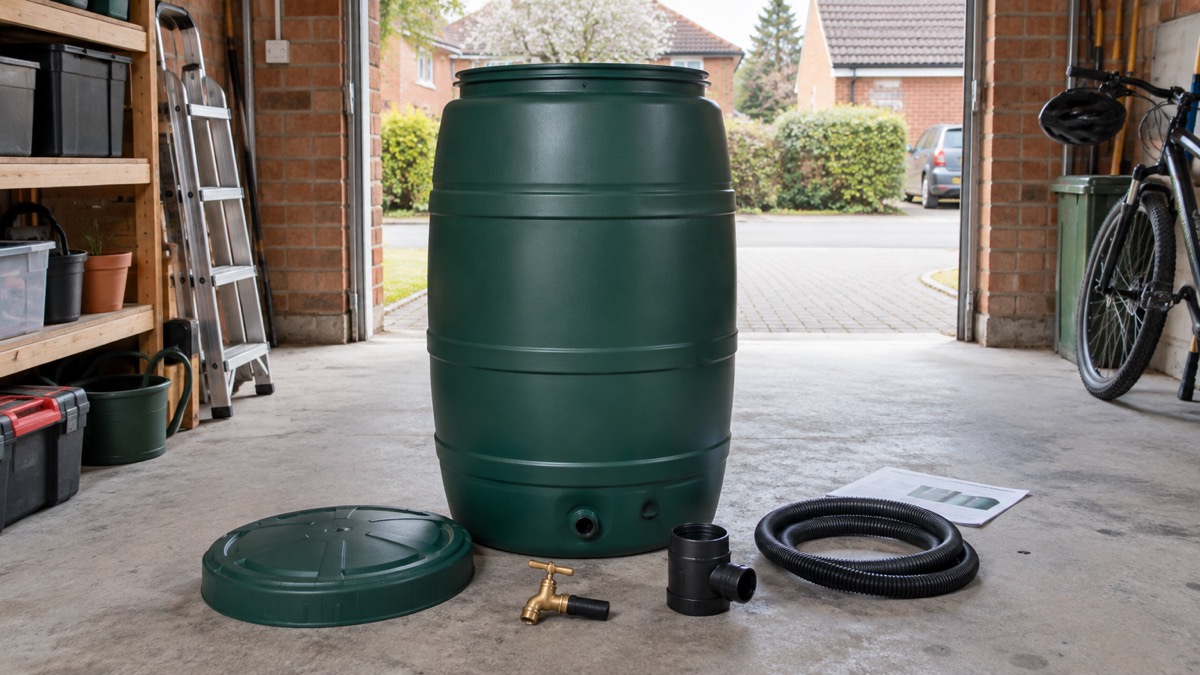
A water butt collects the rain that runs off your roof, by intercepting a downpipe and diverting the flow into a tank until you need it. Westminster City Council advises households to install one for rainwater storage from their downpipes, and notes that the water can be connected to greywater uses such as toilet flushing and garden watering1. Suffolk County Council's flood guidance describes the same idea from the other direction: water butts collect rainfall from the roofs of the property and any outbuildings, and the water can then be used in the garden2.
The reason to have one is simple. Every litre of rain you use on the garden or for washing the car is a litre you do not draw from the mains, and a litre that does not run straight into the drains. Wessex Water lists installing a water butt among the measures that help manage rainwater runoff and reduce pressure on the sewer network3, and Westminster's flood planning advice asks residents to consider installing rainwater butts to reduce flood pressure on drainage systems as well as to conserve water4. In dry spells, when water companies impose hosepipe bans, a full butt is the water your garden is allowed to have.
Why a household wants one
A water butt is the simplest form of rainwater harvesting: a tank, a tap, a stand and a fitting on the downpipe. Unlike the larger systems described on our rainwater harvesting page, it needs no pump, no underground excavation and no plumbing into the house, and it can be fitted in an afternoon.
The case for one rests on three things. First, water saving: the NHS's climate adaptation advice for households is to look at water efficiency when replacing appliances and to install generous water butts to collect rainwater9. Second, flood and drainage relief: slowing the rain that leaves your roof reduces the load on sewers during heavy rain, which is why water companies and councils both recommend butts3. Third, resilience: when a hosepipe ban arrives, or when a supply interruption means you cannot flush the toilet, stored rainwater is the water you still have. The government's drought guidance is explicit on this point, telling households to use a watering can instead of a hosepipe in the garden and to install a water butt if they can, to capture rain10.
Councils are increasingly backing the idea. Maidstone Borough Council ran a rainwater harvesting campaign that procured 555 free 210-litre water butts for eligible residents in priority neighbourhoods11, so it is worth checking whether your own council offers anything similar before you buy.
Choosing a size and shape
The standard water butt holds around 240 litres; the RHS uses this as its reference size when estimating how many times a butt will fill in a year5. Maidstone's council scheme used 210-litre butts11, and the NHS advice to install "generous" butts points the same way: within the butt range, bigger is usually better, because the limiting factor is how much rain you can catch during wet weeks and hold for the dry ones9.
The number that surprises most people is the yield. The RHS estimates that in dry south-east England, the roof of a small shed alone can yield 2,500 to 3,500 litres of rainwater a year, enough to fill around 10 to 15 standard 240-litre butts5. A house roof is larger still. In practice a single butt fills quickly in wet weather and then overflows, which is why linking several butts together, covered below, is the usual next step.
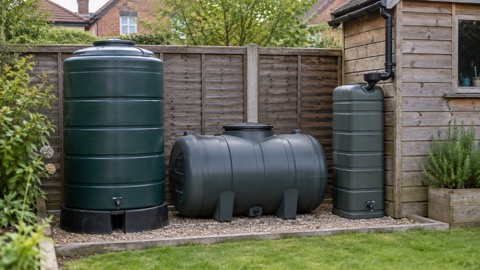
Shape matters as much as volume. A tall, narrow butt holds the same as a short, wide one but takes less ground area, which suits a passageway beside the house; a slimline butt fits against a wall under a downpipe where a round one would block the path. Whatever the shape, check before buying that it comes with, or accepts, a tap at a height that lets you slide a watering can underneath, and a close-fitting lid, which the RHS advises to keep out plant disease spores and discourage algal growth5.
If your ambition runs beyond a few hundred litres, our pages on tank sizing and above-ground tanks cover the larger options, and water butt or underground tank sets the two side by side.
How a water butt fills from a downpipe
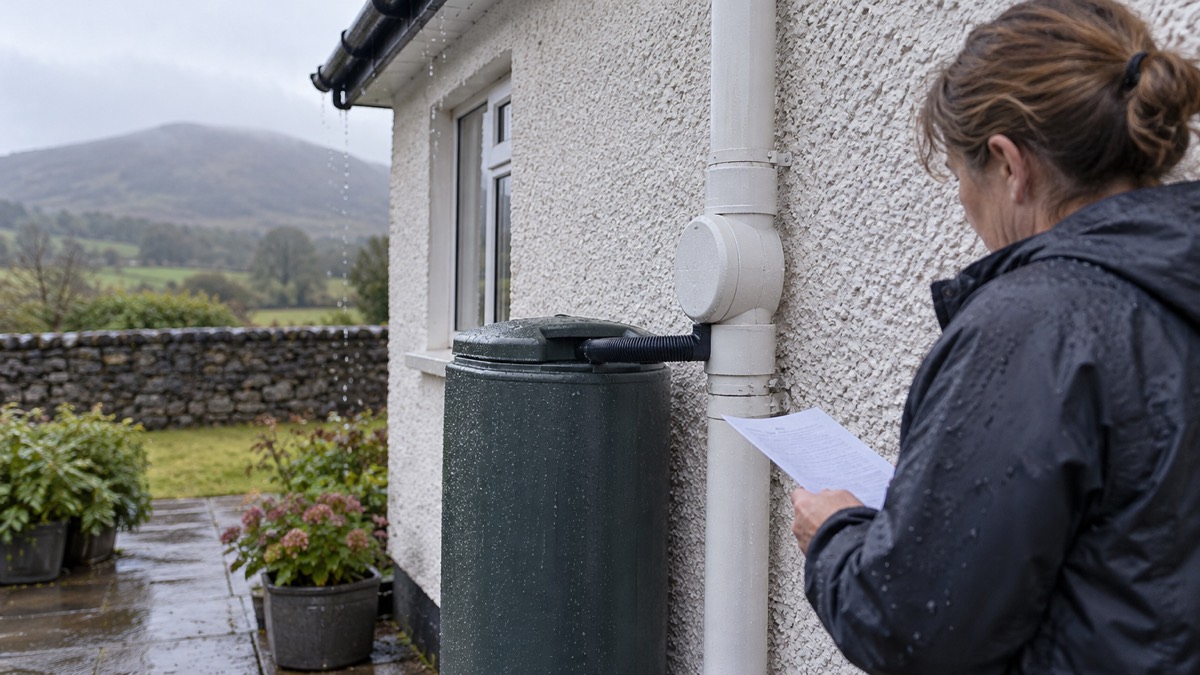
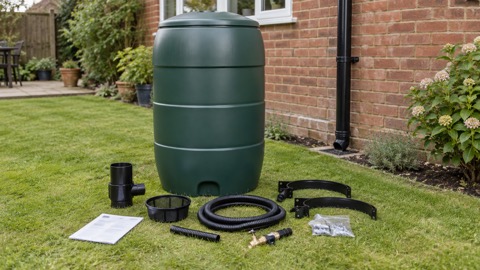
A water butt fills itself. Rain lands on the roof, runs into the gutter, and travels down the downpipe as it always has. A rain diverter, fitted into the downpipe above the butt, channels that flow through a short hose into the tank; when the butt is full, the diverter sends the excess back into the downpipe, so nothing spills at ground level. The RHS describes the basic requirement as a gutter with a downpipe, or a rainwater downpipe kit5.
Two fittings make the set-up work properly. The first is a filter at the entry point, which the RHS notes prevents leaves and debris entering the butt5; without one, the tank silts up and the tap blocks. Our rainwater filters page covers the downpipe, inline and in-tank types. The second is the diverter itself, and the same principle extends indoors: Waterwise notes you can fit a diverter to a bath or shower to collect grey water for watering garden beds and borders12. Grey water from a bath is not the same as roof rainwater and should be used promptly on the garden rather than stored; our grey water garden page covers the differences.
Fitting a diverter to a plastic downpipe is a straightforward job: mark the height, cut a section out of the pipe, clip the diverter in place and run its hose to the butt's inlet. If your downpipe serves a shared drain or you are unsure what it connects to, check first, and see our page on connecting a water butt to a downpipe for the detail.
Where to put one: a level, stable spot near a downpipe
The butt must sit under the diverter, which means its position is largely chosen for you by the downpipe. Within that constraint, the aim is a spot where the butt stands upright and stays upright: the tap needs to be at a height you can get a watering can under, and the whole assembly needs to stay put once it is filled. Choose ground that does not shift, and check the butt is sitting squarely before you fill it.
Before you finalise the spot, check the ground. Paving slabs or a purpose-made stand on firm soil is right; bare earth or gravel that shifts when wet is not. A butt that sits level when empty may not stay level once it is filled, so re-check it after the first fill and adjust the stand or slabs until it sits squarely.
One thing worth doing while you are working at the side of the house: find your stop tap, and check that it works. Knowing where it is forms part of the same household preparedness the butt belongs to.
Fitting a water butt in a small garden
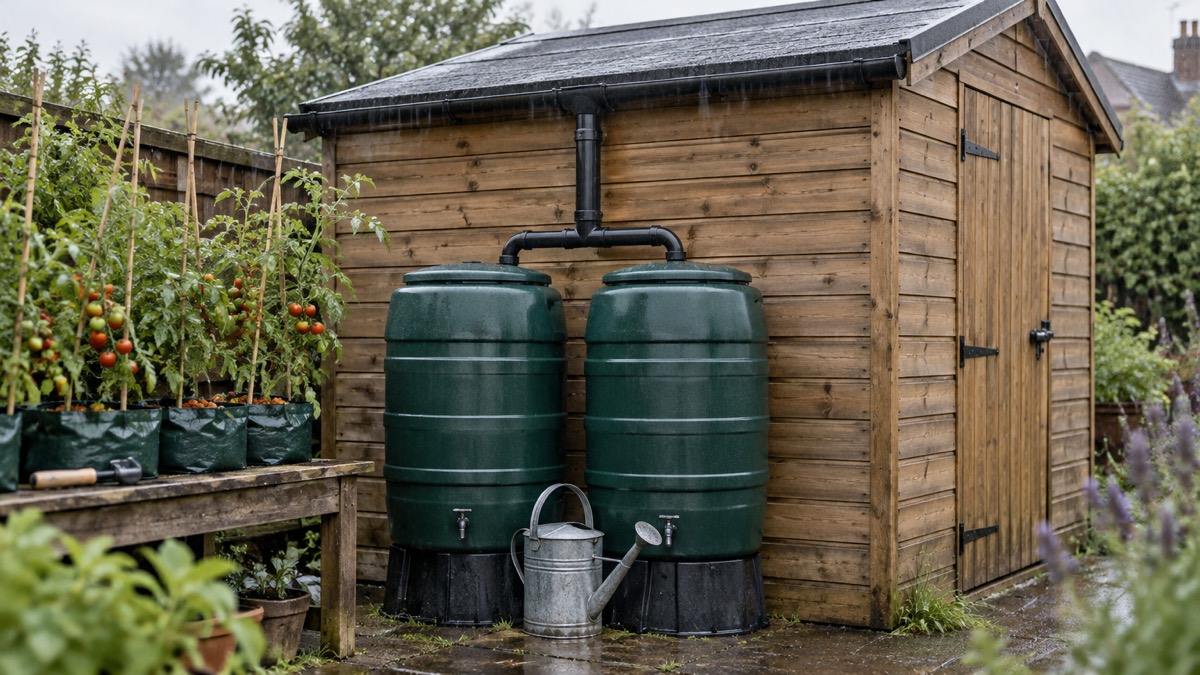
A small garden is not a barrier, and may be the strongest reason to fit a butt, since a paved or compact garden sheds rain quickly into the drains. Suffolk's guidance is that butts collect rainfall from the roofs of the property and any outbuildings2, which means a shed or greenhouse gutter is a perfectly good feed, and often the only place a butt can go. A shed roof yields less than a house roof, but as the RHS figures show, even a small shed in the driest part of England produces thousands of litres a year5.
Where one butt is not enough, link them. The RHS advises joining multiple butts with connector kits or siphons5: the first butt sits under the diverter, and when it fills, water passes through to the next in line. Linking works with butts of different sizes and lets you tuck the second and third wherever space allows, rather than all under the downpipe. In a tight spot, a slimline butt against a wall, or a wall tank of the kind described on our Multitank rainwater wall tank page, keeps the footprint small.
The other small-garden trick is to use height. A butt on a sturdy stand at the top of a slope or step will gravity-feed a watering can, or even a short run of drip hose, without any pump. What you cannot do is expect a low butt to push water uphill or along a long hose on its own; that is what the pump options in the next section are for.
What happens when the butt is full
A correctly fitted diverter makes a full butt uneventful: the water that cannot fit simply continues down the downpipe to the drain, exactly as it did before the butt existed13. This is why the diverter, not the butt, is the fitting that matters most, and why the butt's inlet must be below the diverter outlet with a fall along its hose.
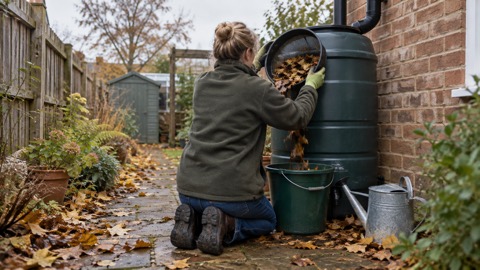
Problems start when the flow is obstructed elsewhere. Gutters blocked with leaves cause water to spill at the joints rather than reach the downpipe, so keeping gutters clear is part of the butt's maintenance, not just the roof's5. If water is pooling or a drain is backing up at ground level, the government's flood help pages advise that for an overflowing sewer you should contact your water company14. Our water butt cleaning page covers the routine side of keeping the inlet, filter and gutters clear.
Linked butts change the overflow picture slightly: the last butt in the chain is the one whose diverter, or overflow port, returns water to the downpipe, so make sure the final butt in the line has somewhere for excess to go rather than simply spilling beside the tank.
What the stored water can be used for
Stored rainwater is a working supply for anything that does not need to be drinkable. The government's water supply interruption guidance is clear on both halves: the water can be used for flushing toilets or watering plants, but do not drink it, as it could contain bacteria or disease15. Greater Manchester's resilience guidance says the same16, and United Utilities adds washing cars to the list of reuses17.
In the garden, the RHS gives more specific advice: use rainwater on established plants, but avoid it on seedlings, because it may contain damping-off diseases; it is described as perfect for houseplants, particularly orchids and carnivorous plants, which dislike the minerals and treatment in tap water5. Wiltshire and Swindon Prepared's water-saving advice during drought is to use watering cans rather than hosepipes, and to use rainwater rather than tap water if you have a water butt installed18.
Two more uses come from the fire and rescue services. London Fire Brigade advises parents to empty paddling pools and buckets as soon as they have been used and turn them upside down19, and Mid and West Wales Fire and Rescue Service adds that the water from a paddling pool can be used to water the garden20. So the summer routine that follows both pieces of advice is: empty the pool onto the beds at the end of the day, and let the butt refill the next time it rains.
For a fuller picture of what harvested rainwater can and cannot be used for around the house, see what harvested rainwater can be used for.
Attaching a hose to the tap
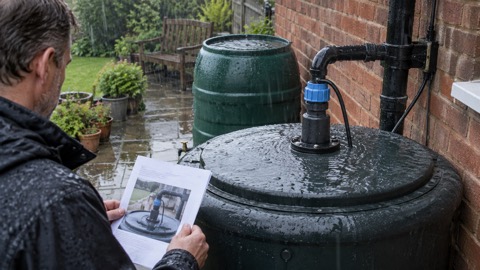
A tap on a water butt will fill a watering can, but it will not drive a hose. The water pressure at the tap comes only from the height of the water above it, and a butt standing a half-metre off the ground delivers very little. The RHS's answer is to use a submersible or external pump if you want hose pressure from stored rainwater5; our rainwater pumps page explains the two types and what each involves.
There is a rule to know before you reach for any hose during a restriction. South East Water's hosepipe ban FAQ states plainly: "However, you cannot use a hosepipe connected to mains water to fill a water butt."8 The government's drought guidance explains the underlying rule: during a hosepipe ban you cannot use a hosepipe connected to your mains water supply for things like watering your garden, filling a paddling pool or washing your car10. A hose or pump running from the butt itself is a different matter, because it is not drawing on the mains supply, which is the whole point of the stored water.
If you are choosing a pump, match it to the job: a small submersible dropped into the butt for a sprinkler or a long hose run, or an external pump beside the tank if you want to move the pump between butts. Either way, drain and store it before winter, and see our rainwater system winter checklist for the seasonal jobs.
What gets into rainwater from the roof, and how long the water keeps
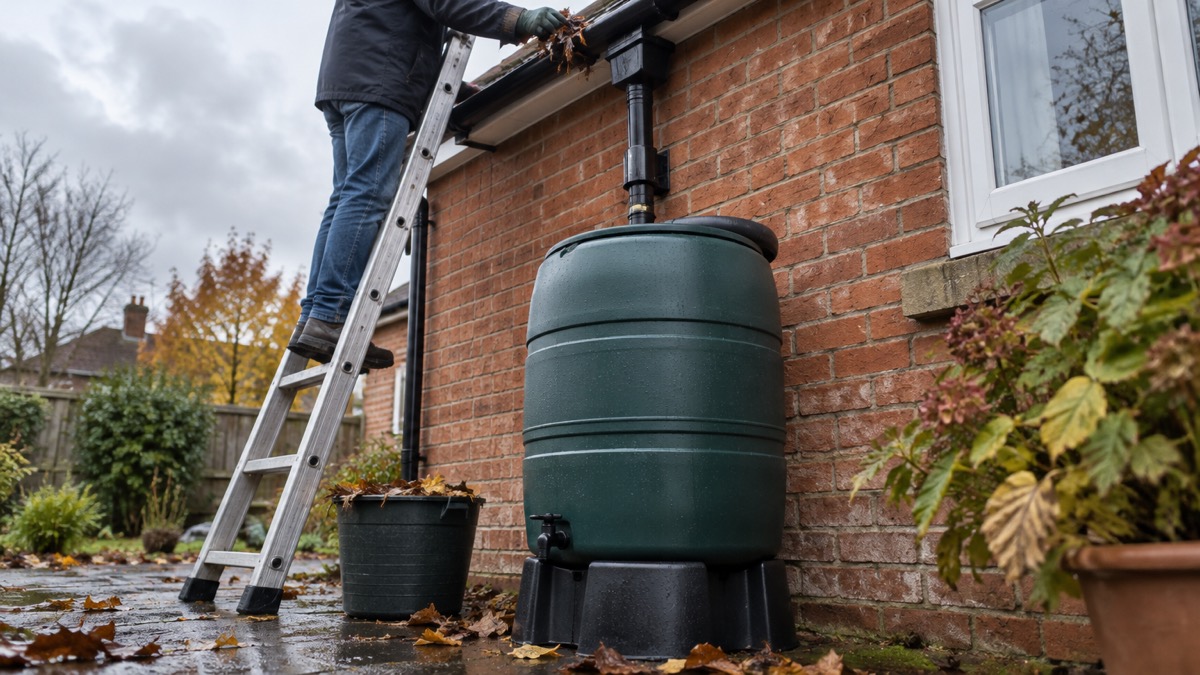
Rainwater is clean when it leaves the sky and less clean by the time it reaches the tap. On the way over the roof and through the gutter it picks up leaves, bird droppings and dust, which is why the filter matters5, and why the RHS advises keeping gutters clear to reduce waterborne plant diseases such as Phytophthora and Pythium5. The close-fitting lid does the rest, keeping out disease spores and discouraging algae5.
Stored rainwater does not keep indefinitely. The RHS's advice is to use stored water frequently to keep it fresh, and if the water smells, to empty and clean the butt rather than adding chemicals5. The annual clean is with warm water and a little washing up liquid5. The principle is echoed in official guidance on stored water generally: the Drinking Water Inspectorate's guidance on private supply storage tanks says a tank should hold enough for peak demand and the maximum interruption period, but must not be so large that water is allowed to remain static for lengthy periods21. A butt that sits full and unused for months is exactly the static condition to avoid.
On Legionella, the garden risks are real but manageable. NHS inform's summer health campaign notes Legionella bacteria can be found in compost, and advises wearing gloves while gardening, considering a mask for dusty work and washing hands afterwards22. The same caution applies to water butts and hoses: do not create a fine spray from stored water that you or others might breathe in, and prefer a watering can to a hose for the butt's water. Our Legionella and stored rainwater and drinking rainwater pages cover the detail.
For comparison, stored tap water keeps for much less time: NHS guidance in Scotland is to throw away any unused stored tap water after 24 hours23, and boiled water kept in a covered container in the fridge for up to 48 hours24. Rainwater in a butt is a different case, because it is never drinking water in the first place, but the same logic of using it and refreshing it applies.
Where this fits in your household plans
A water butt is one layer of water preparedness, not the whole of it. The government's Be Ready checklist asks households to hold bottled water for 3 days, at 3 litres per person per day for drinking, with more needed for other tasks such as cooking and washing25. The same figure appears in the power cuts guidance26, and Greater Manchester's guidance adds that 10 litres per person per day will make you more comfortable by also providing for basic cooking and hygiene needs16. Wiltshire and Swindon Prepared's national power outage guidance adds a practical note: hold a small amount of bottled water and make sure it is not past its expiry date27. Bradford Council's flood pack advice is to keep at least a three-day supply of water for each person in your household28.
The butt's role in an interruption is the flush. Affinity Water's incident support guidance notes that during a supply interruption you will not be able to flush your toilet, but if you have a water butt you could collect water from there to pour into the toilet29. A bucket of rainwater poured into the pan will clear it, and a full 240-litre butt5 gives a household a meaningful reserve for this, which bottled water at 3 litres per person per day25 never could. What the butt cannot do is provide drinking water: that must come from the bottled store, because rain butt water could contain bacteria or disease15.
So the household plan is straightforward. Keep the bottled water for drinking, dated and replaced27. Fit the butt, keep it clean and use it constantly through the growing season so the water stays fresh5. Know where your stop tap is, usually under the kitchen sink30, so a burst pipe does not drain the house while you search for it. And if a hosepipe ban is declared, switch the garden to a watering can filled from the butt, which is exactly what the government's drought guidance recommends10. For the wider picture, see our water in an emergency guide and the garden rainwater harvesting kit checklist.
Sources (31)
- Drought advice, Westminster City Council, 2026-08-06
- Flood Smart Living, Suffolk County Council, 2024-11
- Causes of sewer flooding, Wessex Water, 2026-10-28
- Plan and prepare for floods, Westminster City Council, 2026-09-03
- Water butts, RHS advice profile 313, Royal Horticultural Society, 2026
- Why Everyone Wants a Water Butt in 2026 | Rainwater Harvesting, Rainwater Harvesting (rainwaterharvesting.co.uk)
- Water supply interruptions or outages, Prepare campaign, 2026-10-12
- Sussex hosepipe restrictions FAQs, South East Water, 2026-10-28
- Climate adaptation, Birmingham Women's and Children's NHS Foundation Trust, 2026-10-29
- Droughts, Prepare campaign, 2026-10-19
- Borough rainwater harvesting campaign, Maidstone, Local Government Association, 2026-03-19
- 2026: a year we prepare, not react, Waterwise, 2026-03-05
- Large Water Butts UK 150-1000 Litres | Enduramaxx, Enduramaxx
- Help during a flood, GOV.UK, 2026-10-25
- Water supply interruptions or outages, Be Ready campaign, 2026-10-12
- Loss of essential services, Greater Manchester Combined Authority, 2026-10-29
- Reduce flooding risk, United Utilities, 2026-10-28
- Spotlight on Wessex Water: saving every drop, Wiltshire and Swindon Prepared, 2026-10-25
- Advice for parents: water safety, London Fire Brigade, 2026-10-25
- Water safety in the garden, Mid and West Wales Fire and Rescue Service, 2026-10-29
- Water storage, private supply networks, Drinking Water Inspectorate, 2025-11-05
- Summer health campaign, NHS inform, 2026-08-06
- Chlorine, drinking water quality FAQs, Drinking Water Quality Regulator for Scotland, 2026-10-28
- Private water supplies, Argyll and Bute Council, 2026
- Be Ready Checklist, Be Ready campaign, 2026
- Power cuts, Be Ready campaign, 2026-10-21
- What is a national power outage, Wiltshire and Swindon Prepared, 2026-10-25
- Create a flood pack, Bradford Council, 2026-10-29
- Incident support, Affinity Water, 2026-10-28
- At home: personal resilience, Wiltshire and Swindon Prepared, 2026-10-25
- WeatherReady weather hacks, Met Office, 2026-10-25
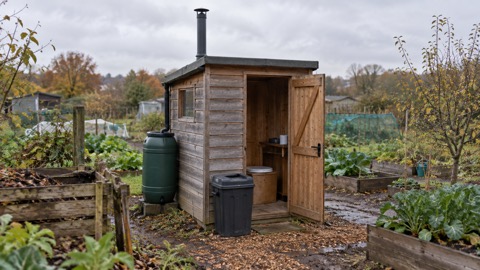 Composting Toilet Kit Checklist
 Garden Harvesting Kit Checklist
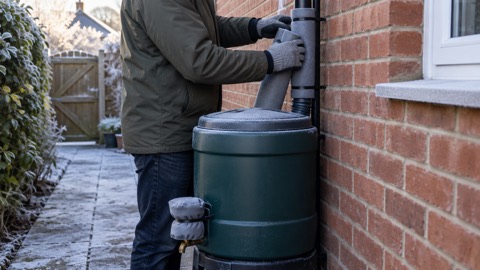 Rainwater Winter Checklist
 Above-Ground Rainwater Tanks
 Composting Toilets
 Direct vs Gravity Feed Systems
 Planning Permission for Systems
 Private Water Supply Running Low
 Private Water Supply Regulations
 Private Water Supplies Scotland
 Treating a Private Water Supply
 Rainwater Filter Types
 How Rainwater Harvesting Works
 Rainwater System Maintenance
 Pumps for Rainwater Tanks